Seance on a Wet Afternoon (1964)

2009 #64
Bryan Forbes | 111 mins | TV | PG

Seance on a Wet AfternoonDespite being an early-60s British domestic drama, Seance on a Wet Afternoon has a plot that one might describe as high-concept: a medium kidnaps a little girl so she can prove her abilities by revealing where the girl is. But, unsurprisingly, the execution is more in line with its roots: more drama than overblown thriller, not so much about the kidnap plot as the psychological state of Kim Stanley’s medium, Myra Savage, and her downtrodden husband, played by Richard Attenborough.

It certainly doesn’t start high-concept either, beginning with a near-15-minute dialogue-driven enigmatically expository two-hander. Some would consider the whole film too slow, I’m sure, but once it gets past this (to be frank, over-long) opening it maintains an appropriate pace. It never threatens to become a thrill-a-minute rollercoaster ride, but what it does do is build tension and gradually unveil the true natures of the two leads. In this regard it becomes something of a showcase for Stanley and Attenborough.

In a word, Stanley’s performance is stunning. Initially just a Hyacinth Bucket-esque overbearing wife, as the film continues we learn more about her almost solely from what Stanley brings to the role. By the final scene, when the truth of her character is laid bare, there’s little doubt that she’s given an extraordinary performance. She was Oscar-nominated for her role, losing out to Julie Andrews in Mary Poppins. I love Mary Poppins as much as the next well-adjusted human being, but Andrews’ relatively simple role isn’t a patch on the complexity Stanley has to offer.

In the face of this stiff acting competition, Attenborough holds his own throughout. His transformation is more understated perhaps — the ‘revelation’ here being that he is not downtrodden but in fact incredibly supportive, something that will only dawn on the viewer late on but shed a subtly different light on what has gone before — plus there is a degree of skill in portraying a character doing reprehensible things but who remains the audience’s surrogate ’til the last.

Bryan Forbes’ direction is also first-rate. He keeps things clear and simple during dialogue scenes, but adds scale with location work in busy London streets, and flair during a few tense sequences. The best of these is the second seance, where the kidnapped girl sleeps in a room next door. As she begins to stir, the viewer is torn between wanting the Savage’s plan to succeed and wanting the girl to be rescued from their misguided scheme. Such a dichotomy of feeling is entirely reliant on the skill displayed by Stanley, Attenborough and Forbes up to that point, building our allegiance to these characters in spite of what they’ve done.

Unfortunately, the film isn’t without its flaws. The story doesn’t always hold up — some of the police procedure is dubious at best, while the Savages’ scheme comes off as much through chance and luck as planning. In fairness, our ability to spot the former is probably in part thanks to decades of police procedurals filling the TV schedules, while the latter actually fits the under-confident, ill-prepared, dubiously-sane protagonists, and coincidence is mostly confined to the plot’s early stages. Some elements of the plan make you wonder how they ever thought they’d get away with it, though at the same time you have to allow that maybe they just weren’t that self-aware.

The real key to the film, however, is what’s slowly revealed over its course: Myra Savage’s mentality, as well as the truth about the history of her abilities and marital situation. To reveal any details would ruin the carefully controlled slow explanation of who these people are and what background they come from, all of which builds to a beautifully performed final few scenes. Seance on a Wet Afternoon may have a high concept driving its plot, but the true delights are to be found in its characters and the actors’ performances of them.

4 out of 5

Sky Captain and the World of Tomorrow (2004)

2009 #63
Kerry Conran | 102 mins | TV (HD) | PG / PG

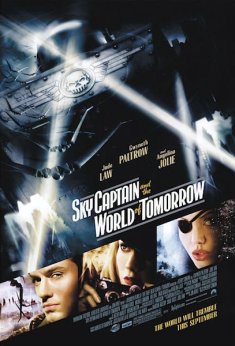
Sky Captain and the World of TomorrowIf the Indiana Jones series was a bit more sci-fi (even than Crystal Skull, that is), it might be rather like this. First time writer-director Kerry Conran evokes ’40s cinema serials more thoroughly than Lucas or Spielberg ever dared with a globe-hopping tale of a mad scientist’s giant robots doing all sorts of damage in a quest for… well, that would spoil the ending.

In the telling, Sky Captain is every inch a Boy’s Own adventure, packing every facet of that genre of storytelling into its brisk running time. There’s secret bases, ray guns, giant robots, flying aircraft carriers, snow-bound Himalayan treks, creature-infested secret jungle islands, huge underground bases, space rockets, planes that are also submarines, tree bridges over impossibly deep gorges… If it’s part of the genre, it’s probably here, and all finally executed with ’00s-level special effects. In some respects it does move between set pieces and locations in an episodic fashion, but then that’s more a trait of the films it emulates — i.e. episodic serials — than a flaw in Conran’s plotting.

Still, some might view Sky Captain as little more than an exercise in filmmaking — it was one of the first movies to be shot entirely on blue-screen, around the same time as Sin City and a couple of others. There’s more to it than that, but it’s also hard to ignore the style this creates. The shooting process is far from perfect if one were trying to recreate real life, but here the whole look is so stylised that it hardly matters. The period setting is nicely evoked, combining myriad influences into an intricately realised retro-future style, coupled with a lovely sepia sheen over everything. It’s beautifully lit, while individual shots and editing are frequently reminiscent of a style from the ’40s (and earlier). Again, Conran is being deliberately evocative of films of the period, rather than a modern film set then; more La Antena than Star Wars.

Another much-discussed feat of technology is the resurrection of Sir Laurence Olivier as the film’s villain. Unfortunately, his brief appearance is underwhelming. Perhaps we’ve become too accustomed to modern technology resurrecting deceased actors for ‘new’ performances (not that it happens that often); but then again, what was done with Oliver Reed for Gladiator — four years before this — seemed more impressive than the small amount of hologram we see here, even though the digitally created shots were equally brief. It’s a shame, because using Olivier for this key role is quite neat, certainly better than casting a glorified extra. In fairness, then, it’s a part so small that very few appropriately-big names would agree to it, which perhaps permisses resurrecting Olivier after all

Among the real performances, the acting is a bit flat. Perhaps this is deliberately in-keeping with the emulated style, though Jude Law is always this bad so maybe not. Similar comments could be made of the screenplay, if one were being unkind. What it does manage is a good amount of humour — an essential part of the genre, as any Indiana Jones fan will tell you, but it’s by no means guaranteed in these over-serious times (thankfully, the likes of Star Trek and Transformers are occasionally breaking down this barrier to fun).

Breaking free of any self-imposed period constraints, Conran also produces a few exciting action sequences, such as a plane chase through the streets of New York. It’s incredibly hard to create spectacle these days, but Sky Captain occasionally manages it. There are also lots of fun little references to other things for the keen viewer to pick out. 1138 crops up, inevitably, but my favourite is some dialogue lifted from Orson Welles’ War of the Worlds.

Sky Captain is a healthy dose of retro-styled fun. Perhaps that makes it an acquired taste, but there’s certainly nothing wrong with that.

4 out of 5

My review of the proof-of-concept short that inspired Sky Captain can be read here.

The Taking of Pelham One Two Three (1974)

2009 #43
Joseph Sargent | 104 mins | download | 15 / R

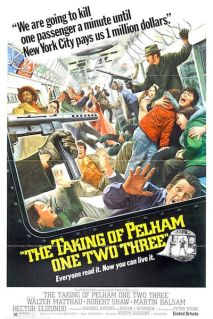
The Taking of Pelham One Two ThreeMovies have taught us many things, and here’s another: don’t take the train from Pelham Bay Park at 1:23. In the past thirty-five years said train has been taken hostage three times, and while once every 11⅔ years may not sound a particularly high average, I’d wager it’s higher than for most trains.

The most recent was this summer, in a Tony Scott-directed remake which unfortunately replaced the titular numbers with, well, numbers in a re-titling move just waiting for reviewers to accuse it of illiteracy. It was criticised for more than just that of course, but one positive is that the original ’70s film cropped up in plenty of places at the time. By which I mean it was on TV once and offered as iTunes’ 99p Film of the Week. But don’t knock shameless tying-in — it means I’ve seen it.

Having not seen either remake (the second was a 1998 TV movie) I can’t compare, but the original is a taught, well-paced thriller. It takes place in something startling close to real-time — a pacing trick I always find pleasing for no explicable reason — but still doesn’t rush things, without ever being slow. Much like the criminals at its heart, then.

Their leader is Robert Shaw, who makes a terrific villain: calm, uncompromising, and British, the primary prerequisite of a perfect Hollywood bad guy. As the unlikely hero, Garber, Walter Matthau is a terrific foil at the other end of the phone, dryly sardonic as he attempts to effectually organise a dozen services. There are also the occasional injections of humour; never inappropriate, instead making the situation feel all the more real.

Unfortunately, for almost every great element there’s a flawed one. The ending is a bit dubious, with the much-hyped escape plan nothing exciting — they simply override the one plot device that stands between them and the most obvious plan. Equally, Shaw’s death, while quite a neat ending for a villain, doesn’t seem to make a whole lot of sense for his character. Mr Green’s sneezing is a handy device, though for my money its ultimate use became obvious the moment Garber first heard it.

And though the credits snappily define all 18 of the hostages (The Homosexual, The Pimp, etc), for the most part it doesn’t really matter — most of them never even speak; at best, only one or two are really characterised. It’s a shame, because having such clear types could be put to good use in all sorts of ways, be it just for laughs, subverting stereotypes, or something as deep as social commentary.

The original Taking of Pelham One Two Three is still an excellent film, but these little niggles take the edge off its quality.

4 out of 5

Shadow of the Vampire (2000)

2009 #56
E. Elias Merhige | 81 mins | TV | 15 / R

Shadow of the Vampire“What if Max Schreck really was a vampire?” is the simple, thoroughly daft, and equally promising, premise of this low-budget horror/drama/comedy.

Having the advantage of such a good concept to kick things off, all starts well, but the longer it runs the more it loses it. Screenwriter Steven A. Katz seems unsure of what Shreck/Orlok actually wants or what the rules governing his existence are, leaving him little more than a threat for the sake of a threat. Still, Willem Dafoe’s performance in the role is brilliant, reveling in the chance to overact — and yet, somehow, subtly overact — as a silent movie vampire. The rest of the cast are fine; in particular, the obsessive and mildly unhinged Murnau seems to suit Malkovich down to the ground. It’s also scary in places, as it should be, because it’s a vampire horror movie that just happens to take the making of another real one as its starting point. Unfortunately, as the plot becomes confusing and ill explained towards the end, so the scares dissipate alongside the viewer’s understanding.

My confusion over the film’s third act may have an external explanation, however. The BBFC list the PAL running time as 88 minutes, but BBC Four’s showing only just hit 81. It certainly felt like there was a chunk missing somewhere in the middle — a slew of characters just disappear and there’s an unexplained leap in the plot — but I can’t think of a reasonable explanation for why or how the BBC would cut seven minutes out of the middle of a film, and the only detailed plot descriptions I can find don’t describe anything I missed.

Nonetheless, even allowing for omissions Katz gives up on any semblance of following the facts toward the end (and throughout, apparently): almost everyone involved is slaughtered, even when they clearly survived in reality, while one character is driven out of his mind, even when he clearly wasn’t… well, presumably. That said, we all know Schreck wasn’t a vampire — his life isn’t nearly mysterious enough to allow for the possibility, should you even believe in such a possibility being possible — so with that leap already taken, why not take as many others as you fancy? Perhaps because it’s not as clever, and not nearly as much fun, as fitting the preposterous tale around the known facts.

Merhige’s direction is occasionally very interesting, such as a couple of grand shots early on, but at other times is perfunctory. To be kind, one might say he goes too far in the aim of replicating silent film style — certainly the intertitles that needlessly replace chunks of the plot are a step beyond. He does manage to create and maintain a weird, unsettling atmosphere, which remains even when all sense disappears.

It’s difficult to accurately assess a film when it appears a good chunk has been lost somewhere in the middle, especially when one suspects some of its major flaws — namely, a lack of coherence at the end — may be due to this omission. On the other hand, I can’t find any evidence that something has been cut, so maybe it just doesn’t make sense? Either way, even on the evidence of what I’ve seen it feels like Shadow of the Vampire takes a good idea, runs well for a while, but winds up uncertain of what to do with it. Though it remains interesting, I won’t be rushing to see any fuller form.

3 out of 5

Brute Force (1947)

2009 #73
Jules Dassin | 94 mins | TV | 12

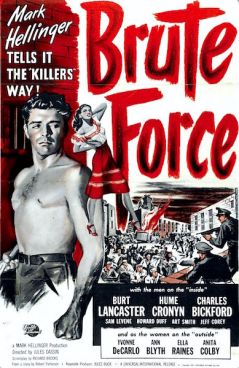
Brute ForceJules Dassin’s prison-set noir concerns a group of inmates trying to escape from the cruel regime of a vicious warden, allowed free reign by an ineffectual governor and target-driven bureaucrats (nothing changes, eh?)
Tonally, it’s varied. Early on it’s quite humourous, with a weak warden, jaunty calypso-singing inmate (who occasionally threatens to tip the whole thing over into a musical) and amusingly drunk doctor. Then there are the flashbacks to the outside world, laden with undercooked romance and awkward dialogue. In the final act it turns decidedly grim: warden Munsey lives up to his lowly reputation, goading one prisoner to suicide and beating another close to death, while the other wardens listen on from outside; one of the good guys betrays his mates, ultimately leading to wholesale slaughter as the escape plan goes awry. A balanced, varied tone is not necessarily a problem, but the flashbacks are almost uniformly unwelcome asides and, by separating the distinctly comical from the resolutely grim by placing them firmly at either end of the film, they don’t quite gel as a whole.

Still, the climactic prison break — including the build-up — is a brilliant extended sequence. Tense, epic and exciting, it concludes with a fantastic action sequence. It also delivers a powerful moral message, underlined by its direct delivery from a prison staff member rather than an inmate. It goes some way to make up for the earlier flaws, like the dialogue that’s occasionally typical of the period’s worst — “I’m just a guy who… explained his entire backstory in one slightly long and unwieldy sentence to someone who already knew it”.

What gets forgotten in all this, perhaps most depressingly, is the fate of those on the outside. We’re told early on that Collins’ love is refusing treatment for her cancer until she sees him again. This seems ready-made to provide justification for a prisoner to escape; indeed, the whole film is skewed this way, as we never discover many of the inmates’ crimes, and those we do hear are either done for good reason or not that bad. But it toes the more obvious moral line by having no one escape, and while the cancer isn’t mentioned again after the slaughter, it leaves what might otherwise seem a morally justifiable cheat (the prisoners are the good guys here — we expect and want them to triumph — but that they don’t is ‘correct’) with a bitter taste.

3 out of 5

Transporter 3 (2008)

2009 #27
Olivier Megaton | 100 mins | DVD | 15 / PG-13

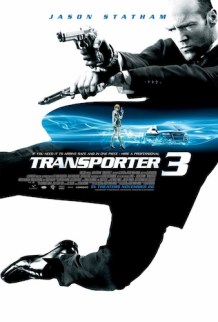
Transporter 3I very much enjoyed the first Transporter film. No, it wasn’t high art, but it did what it did very well — even managing a few outstanding moments — and in a pleasantly efficient running time too. 2005’s sequel kept the latter but sadly lost the former, pushing things too far into the realm of CG-aided silliness. With sequel director Louis Leterrier off bringing some of his much-needed CG silliness to the Hulk franchise, it falls to the amusingly-monikered Olivier Megaton to try to navigate this cars-and-kung-fu series back onto the right road.

Film credits sometimes baffle me. As you may guess, Transporter 3 has a perfect example: “Written by Luc Besson and Robert Mark Kamen. Based on characters created by Luc Besson and Robert Mark Kamen.” I honestly can’t comprehend the need for that second credit. Some may not even comprehend the need for the first one in a film like this, and usually they’d be right. Here, however, Besson and Kamen seem to have decided the presence of writers should be remembered and so stuck in an awful lot of character development. Not only is it not wanted — one of the best things about the first two films was their efficient 80-something minute running times, while this sprawls out to a full hundred — but it’s not very well done either.

Equally, the plot really makes very little sense for much of the film. Worse, when someone eventually explains it, it turns out to be no great shakes, especially as by that point the viewer’s just about pieced it together. I can’t compare it to the first two because, to be honest, I can’t really remember what their plots were, but I don’t remember thinking they were quite so ill conceived. It’s almost a shame, because it isn’t wholly a rehash of the first two — it’s still little more than an excuse to string together some fights and chases, but that doesn’t mean it can’t be different. There’s also a weak villain — never much of a threat, with an attempt at character development that is (of course) misplaced — who’s granted a logic-defying death (albeit with a nice surround sound mix). Overall, the film lacks both the humour and excitement of earlier instalments.

Megaton over-directs and over-edits the action (and a lot else besides) too often — it would be nice to tell what’s going on. Someone also needs to tell him that speeding up footage of two cars racing doesn’t make it more exciting, it just makes it look silly. And he misses apparently-obvious things that would improve sequences. For example, we know Frank’s bracelet flashes between yellow, orange and red as he gets too far away from the car — a conveniently visual warning system — so when someone takes the car and Frank has to run (and cycle) after it to avoid his wrist-bomb going off, we expect a fairly tense chase where the light on Frank’s bracelet-bomb constantly changes colour. But there’s just one half-glimpsed shot of the bracelet in the entire sequence. It’s a glaring omission that robs the setpiece of much of its ingenuity, rendering it a bog-standard chase.

After all the criticism of Transporter 2’s reliance on CGI, most of this sequel features no significant use of it — and that, of course, is a good thing. A car driving at high speed on two wheels between two articulated lorries is just silly if it’s all done with computers; done for real, as it is here, it’s somewhat impressive — exactly as it should be. (By ‘for real’ I mean a real car, real lorries, etc. I’m sure rigs of some kind must’ve been used to actually pull it off.) Unfortunately, after almost an hour and a half of keeping it real, Megaton mucks it all up again by resorting to CGI to pull off the ludicrous climax. Personally, I’d find it pleasantly ludicrous if they’d managed to film a real car doing that stuff on a real train, but the CGI just compounds the silliness.

When a film that exists solely to provide some nice action sequences can’t even do those well, you know you’re in trouble. Transporter 3 should be a mildly diverting piece of action fluff; just a bit of violent fun. I’m not sure if it’s trying to be something more with its added character development, or just generally failing in its primary aims. Either way, it’s still fluffy, but not actually much fun.

2 out of 5

The end is nigh…

No, this isn’t a review of 2012, or any of the numerous other apocalyptic blockbusters that are foisted on us every year. Nor the Watchmen Ultimate Cut, which has that famous phrase of doom and gloom plastered over its back cover. No, this is simply an observation (and little more than that, I’m afraid) that there are a mere 31 days of 2009 left. Indeed, 31 days of this decade.

Cripes.

So, with such limited time remaining, my yearly goal is once again under threat. Long gone are the days of reaching 100 films in September, t’would seem. But fear not, faithful reader, for this time last year I’d only made it to 81, meaning I’m just one behind myself (#80 was Transformers 2. Look, there’s a review already! Isn’t it impressive that I reviewed it on Blu-ray before it was even in the shops? … What do you mean “no”?) — and last year I did indeed make it to 100… just.

20 films, 31 days. Considering my average so far (7.3 films per month) I should only make it to 87. Well, 87.3. But, what was that? Yes, I’m only one behind last year and I did it then (did I say that already?)

Heck, maybe I’ll even push it to 101 this year.

[I didn’t.]

2009’s summary posts will be republished in November.

Transformers: Revenge of the Fallen (2009)

2009 #80
Michael Bay | 150 mins | Blu-ray | 12 / PG-13

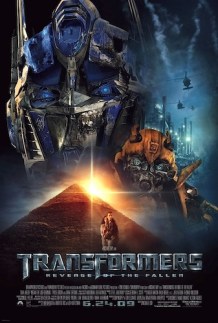
Transformers: Revenge of the FallenIf Transformers was “from the director of The Rock and Bad Boys”, then Revenge of the Fallen is “from the director of Pearl Harbor and Bad Boys II”. If you don’t get what I mean by that… well, let me explain…

The most striking thing about Transformers 2, as it inconveniently isn’t called, is that it’s over-long and indulgent. Has Bay never heard of an edit suite? The writers of a delete key? Anyone of quality control? There are too many ideas, when some should’ve been dropped for clarity and speed; the film could — nay, should — have been seriously trimmed down at every stage of production. By my reckoning, as much as an hour could be lost while still retaining all the best bits of action, humour and plot. Consequently, it’s simply not as much fun as the first film, exacerbating rather than fixing all its flaws and losing most of its charm (it didn’t have the last in spades, but it had enough).

There are good bits though. The humourous scenes highlight this contrast the most: some are genuinely amusing, others simply not, and typically go on too long. All the stuff with Sam at college — why? Especially his mum accidentally eating drugs. Or the jive-talking twins, who’d be this decade’s Jar Jar Binks if only they were as memorable. There are countless other examples — if you’ve read almost any other review you won’t need me to mention the robot balls. When the writers don’t try so hard, however, there are pleasurably funny scenes.

This applies to the action too. Some of it is exciting, but Bay has no genuine concept of rest or pause — sequence after sequence is thrown at the viewer with mind-numbing intensity. There are good beats liberally scattered throughout, but so many sequences means no stand-outs are left because there’s no time to properly process any of them. As in the first film, robot-on-robot fighting is hard to decipher. These Transformers are too realistic (as it were) — they’re all made up of thousands of gunmetal-grey parts; as soon as they come into contact you can’t tell which bit belongs to who and what exactly is hitting where. Even with the extended slow-mo shots — of which there are a lot more than in the first film — by the time you’ve actually worked out what you’re looking at, Bay cuts to the next confusing ShakyCam moment.

When things do slow it’s for brazen ‘character development’ or clunky plot exposition, both coming in great big tell-don’t-show info-dumps. At one point, one character literally urges another to “explain the plot”. The character scenes are equally forced, the dialogue functioning at a level of state-the-obvious inanity. Bay treats women with a similar absence of subtlety — every scene featuring a female is shot like a moving version of FHM, all skimpy clothes and slow-mo jiggling. The only exception is Sam’s mother.

Technically, the CGI is almost flawless, only the occasional brief shot failing to achieve little less than photo-real perfection. Bay’s typical tech fetish is also in evidence, suggesting he looked at a couple of car and military mags when he picked up that inspirational FHM. Bizarrely, however, the sound mix strikes me as a flawed technical element. I found it so odd that I had to download the digital copy and listen in plain old stereo to check there wasn’t something haywire in my surround setup. By the end it’s sounding as you’d expect (largely), but throughout there are unusually spartan patches, lacking in the music or hard-hitting explosive sound effects one expects. Perhaps we should be grateful that it’s less bombastic and wall-of-noise than you normally find in such action films, but it renders the soundtrack disconcerting at times.

On its cinema release, Revenge of the Fallen unsurprisingly jumped on the recent bandwagon of having an IMAX release, although at least some parts of the film were shot for the format — just like The Dark Knight, although with nothing like the same level of attention lavished on this in press coverage. According to the BBFC, the IMAX-exclusive version ran 91 seconds longer — 151:16 as opposed to 149:45. According to my player, the Blu-ray runs 149:53. It seems that, despite Bay’s promise of releasing the slightly-extended IMAX cut, complete with Dark Knight-style shifting aspect ratios, Paramount have been less faithful than Warner. Perhaps they considered the typical Transformers 2 fan incapable of grasping such a concept. Not that it really matters — if there’s one thing this film doesn’t need it’s to be any longer.

At times it’s like an uncomfortable amalgamation of Saturday morning cartoon and more adult-orientated action-comedy. On the one hand you’ve got a top-secret organisation with a semi-plausible acronym for a name (NEST) that sees soldiers and good giant robots travelling the world fighting bad giant robots, all without the public noticing. On the other, you’ve got whole sequences about drug use, almost brutal fight scenes, and lad’s mag-level slow-mo shots of girls running, changing and having their short dresses hiked up by robotic tails. (To be fair, there’s only one robotic tail.) In other words: if you’re an average 13-year-old boy, this is the Best. Movie. Ever.

For the rest of us, Revenge of the Fallen is, at best, the kind of blockbuster that might benefit from a second viewing, though probably after some time has passed. It’s not likely to create a better impression of the character development or comedy, but perhaps the MacGuffin-packed plot (there are at least three) would be easier to comprehend, the mythology-dumps easier to stomach, and the massive fights easier to follow. At worst, it’s a hurried production that would have benefitted greatly from some judicious editing from script level upwards. This is what happens when a studio allows someone like Bay an essentially limitless budget and less than two years to turn a blockbuster around.

3 out of 5

Transformers: Revenge of the Fallen is released on DVD and Blu-ray in the UK tomorrow.

Watchmen: Director’s Cut (2009)

2009 #79
Zack Snyder | 186 mins | Blu-ray | 18 / R

This review contains spoilers.

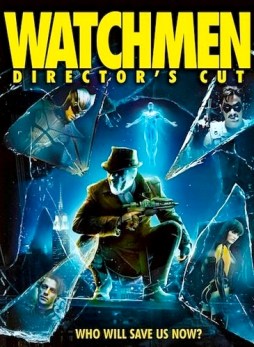
Hitting US Blu-ray so long ago that it’s shameful I haven’t watched it ’til now, and finally arriving in the UK next Monday, the Director’s Cut is Zack Snyder’s final vision of Watchmen: The Movie. The Ultimate Cut (currently available in the US but with no confirmed UK release), which integrates the animated Tales of the Black Freighter into the main feature, is, in Snyder’s words, “an experiment”. Maybe one day he’ll change his mind and say that’s actually his definitive version; I suppose these days — when it seems every major film has a proliferation of different cuts across theatrical release, home entertainment release, and home entertainment re-release — such a thing as a “definitive version” doesn’t necessarily exist. But that’s a debate for another day: for now, this — not The Ultimate Cut, and certainly not the theatrical cut — is Snyder’s Watchmen.

That said, I wouldn’t be inclined to say it’s vastly different to the previously seen version. There are some obvious new scenes and extensions, especially if you’re familiar with the original novel, but ultimately I didn’t find the additional 24 minutes created a vastly different experience. Most of the flaws still remain, from the unfixable — Malin Akerman is somewhat miscast; sometimes episodic storytelling (a largely unavoidable side effect of faithfully adapting a novel that is very much a story in 12 parts, as opposed to a story divided into 12 chunks) — to those that Snyder could potentially have rectified — the alley fight/Manhattan interview crosscutting still doesn’t quite work; Bubastis is inadequately explained; too little time is devoted to the large cast of secondary characters in New York to give Adrian’s plan the same emotional kick it has in the novel; and so on.

By the same token, none of the great bits are ruined, while some are enhanced. Although mostly faithful to the novel, the changes Snyder and co have made are almost all for the better: Rorschach’s “what do you see?” beats the fan-favourite landlady scene (goodness knows why it’s a fan favourite), and Matthew Goode’s slightly built, faintly Germanic Veidt seems a more natural fit for the character now than Gibbons’ more butch version (possibly only in my opinion, that one). Best of all is the modified climax, which retains all the significance of the original but, by changing the way in which it’s brought about, streamlines and tidies up the storytelling. The giant squid is a great comic book image, but this is superior plotting, especially in the abridged form a film adaptation must take.

As for the new bits themselves, some are slightly misguided — Rorschach’s escape from Blake’s apartment, for example, is wholly unnecessary; it shows him injuring a policeman, an incident now referred to over the next few scenes, but we don’t need to see it to follow the references, and showing it gets in the way of the previously perfect match-cut from the Minutemen photo in Blake’s apartment to the same one in Hollis Mason’s. By and large, however, the extensions add depth via little lines and moments. The most noticeable are a better building of Laurie’s backstory, and Hollis Mason’s death. The latter is a little ancillary to the main plot, its excision from the theatrical version easily justified to keep the running time down, but in itself is a well-played and tragic scene that adds further resonance to the end of Dan’s story.

Whatever you thought of Watchmen after the theatrical cut, this extended version is likely to change your opinion no more than any other re-viewing would. That said, with a little extra room to breathe and a few worthwhile extensions, and in spite of the odd tweak that doesn’t work, this is the superior cut of the film.

5 out of 5

Most of the comments in my lengthy review of the theatrical cut still stand, so I invite you to read it here.

Watchmen: Director’s Cut placed 3rd on my list of The Ten Best Films I Saw For the First Time in 2009, which can be read in full here.

Three in 3D

As you may have noticed, Channel 4 have just had a 3D week. Arguably lacking in content, it included three films. I subjected myself to all of them to provide you with the following…

#75
Flesh for Frankenstein
1973 | Paul Morrissey | 95 mins | TV | 18 / R

“The best thing about the extra dimension is that it provides some genuinely impressive visuals throughout, and not in the gimmicky, thrust-stuff-into-the-audience way — naturally there are some of those shots, but… there are also shots that demonstrate why 3D could be genuinely valuable, to visuals if not necessarily to storytelling.”

2 out of 5


#77
Friday the 13th Part III
1982 | Steve Miner | 91 mins | TV | 15 / R

“They have a whale of a time shoving stuff out into the audience for almost no reason — just like the stereotype of 3D films, of course. That’s part of the fun of trashy 3D movies so I’m not criticising it, but what sadly doesn’t work is the ColorCode 3D system chosen by C4.”

2 out of 5


#78
Hannah Montana/Miley Cyrus: Best of Both Worlds Concert
2008 | Bruce Hendricks | 72 mins | TV | U / G

“The only real exception is the 3D — being a very recent production, that was flawless.”

1 out of 5


It’s quite easy to see why 3D’s never taken off before. Even here, there are some good and/or notorious 3D films they haven’t bothered to show, which is a shame. Now they’ve distributed all those glasses, maybe they’ll consider just slipping some 3D films into the schedule now and again in the future. Doubt it, but it could be fun.