I’ve been an unexpectedly busy bee today, so I’ve only just finished putting together June’s monthly progress report this evening, without yet embarking on the header image — which take a surprisingly long time to create, so I’ll do that tomorrow.
[Edit: That lasted for five hours (during which the front page looked like this, fact fans) before I finished the usual style of header image. Much prettier.]
Anyway, here’s all the exciting lists and facts and stuff:

#126 Power Rangers (2017)
#127 Three Billboards Outside Ebbing, Missouri (2017)
#128 Superman II (1980)
#129 A Monster Calls (2016)
#130 Nausicaä of the Valley of the Wind (1984), aka Kaze no tani no Naushika
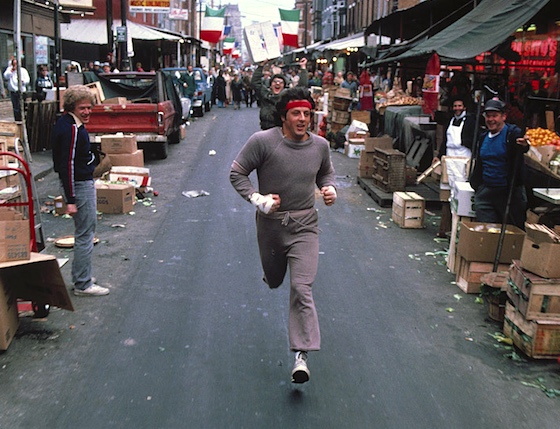
#131 Rocky II (1979)
#132 Shrek Forever After (2010)
#133 Doubt (2008)
#134 Gaslight (1944)
#135 Zatoichi’s Revenge (1965), aka Zatôichi nidan-giri
#136 The Florida Project (2017)
#137 A Thousand and One Nights (1969), aka Senya ichiya monogatari
#138 Rocky III (1982)
#139 Sanjuro (1962), aka Tsubaki Sanjûrô
#140 National Lampoon’s Vacation (1983)
#141 Swingers (1996)
#142 Amadeus: Director’s Cut (1984/2002)
#143 If You Meet Sartana… Pray for Your Death (1968), aka Se incontri Sartana prega per la tua morte
#144 Becoming Bond (2017)
#145 Dudes & Dragons (2015), aka Dragon Warriors


- I watched 21 new films this month. A step down from the last couple, but by any other measure a very good month indeed — that puts it in the top 10% of all months in 100 Films history. Some of those other measures follow…
- For starters, it’s the best June ever, easily passing 2015’s 16 to become the first June with 20+ films. Only July, November, and December now haven’t had a 20+ month.
- That’s the fifth month in a row with 20+ films, a new record. The previous best was four (obviously) from January to April 2016.
- It also more than doubles the June average of 9.5, pulling it up to 10.5. That leaves just July and August with all-time averages below 10.
- It passes the rolling average of the last 12 months too (previously 18.5, now 19.1), but not the average for 2018 to date (previously 24.8, now 24.2).
- Plus, as mentioned last month, I watched a film on June 29th, leaving just half-a-dozen dates on which I’ve ‘never’ watched a film.
- This month’s Blindspot film: Hayao Miyazaki’s environmentalist sci-fi Nausicaä of the Valley of the Wind, which I liked, but not as much as the thematically-similar Princess Mononoke.
- This month’s WDYMYHS film: epic music biopic Amadeus, which, again, I liked, but not as much as everyone else seems to.
- This month I finally achieved my first Platinum Award on iCheckMovies — that’s the level you get when you complete a list. The list in question was IMDb’s Sci-Fi one, which I finished off by watching Stalker last month and Nausicaa this month. That means I have now seen the 50 greatest sci-fi movies of all time… according to IMDb voters.
- Because I don’t already have enough film series on the go, this month I added a couple more — namely, the Animerama trilogy and the Sartana series of spaghetti Westerns. Both came out on Blu-ray this month and I thought for once I ought to make an effort to actually watch stuff I was buying.

The 37th Monthly Arbitrary Awards
 Favourite Film of the Month
Plenty of strong films this month, including multiple Best Picture nominees and winners, but my personal favourite was a sequel. Kneel before… no, not Zod (I’m afraid to say I found Superman II a disappointment), but Sanjuro, Akira Kurosawa’s entertaining follow-up to Yojimbo. (And if you want my pick of all those Best Pics, Three Billboards is a close runner-up for this category.)
Least Favourite Film of the Month
I’ve never been a fan of the Power Rangers franchise, but the reboot had some degree of promise with its Chronicle-esque setup. It doesn’t deliver, though: it takes too long for the superheroic-type stuff to turn up, and when it does it’s a cheesy cheap-CGI mess.
Most Initially Irritating But Then Surprisingly Addictive Song of the Month
This month’s comical earworms have included Rock Me Amadeus (sadly not included on Amadeus’s soundtrack) and Fanfare Ciocarlia’s version of the James Bond theme (which plays over Becoming Bond’s end credits). But the song I keep coming back to is Holiday Road by Lindsey Buckingham of Fleetwood Mac fame. It’s only two minutes long, which felt like forever when it played during Vacation’s opening credits, but now I can’t stop listening to it.
Best Title of the Month
I’ll come clean with you, dear reader: half the reason I bought Arrow’s Sartana box set was because the film’s titles are so good. If You Meet Sartana… Pray for Your Death is, literally, just the start.
The Audience Award for Most-Viewed New Post of the Month
I guess I haven’t been the most interesting blogger this month: the hit count for June was my lowest since November, and some 23% less than the average for the rest of 2018. Ah well. However, one post that wasn’t so afflicted was this month’s winner, whose view count within the month is second only to Avengers: Infinity War’s straight-into-my-all-time-top-ten tally from April. Said winner was my 34th TV review, which covered The Americans season 6, a few midseason episodes of Westworld, a bit of Archer, and the Car Share finale. (In a very, very, very distant second place was The Snowman.)






























This month: a superhero movie that’s a bit like James Bond, a spy actioner that wishes it was James Bond, and a James Bond that’s a bit like James Bond but many people wish was proper James Bond.
#21 Black Panther 3D (2018)
#22 Mission: Impossible – Ghost Protocol (2011)
#23 What We Did on Our Holiday (2014)
#24 On Her Majesty’s Secret Service (1969)
I enjoyed Black Panther just as much on a rewatch. The 3D is quite mild, with only occasional moments or scenes that pop, but it was worth it for the scenes in the IMAX ratio, which often come with the appropriate grandeur. When they enter Wakanda for the first time and the image smoothly enlarges from 2.39:1 to 1.90:1… gorgeous.
Ghost Protocol remains a great action blockbuster. Previously I’d always thought the “different directors bring a different style” ethos of the M:I movies went out the window from M:i:III onwards, but, rewatching them all, I’m getting a much better feel for the stylistic differences between Abrams, Bird, and McQuarrie’s contributions. And talking of IMAX ratios on Blu-ray, I’m still cross at Bird for not including them here. The forthcoming Fallout will also have scenes with an expanded aspect ratio for IMAX screenings, and McQuarrie recently stated on Twitter that he intends for those to be retained on the Blu-ray. Fingers crossed.
Finally, On Her Majesty’s Secret Service is the first Bond film I’ve watched since seeing Spectre at the cinema, almost three years ago now! And the last one before that was a rewatch of Skyfall in February 2013, almost five-and-a-half years ago. Wow. Seems it’s long overdue that I reengage with a franchise that I love — and a Blu-ray boxset that’s 68% unwatched. In that respect, you could argue OHMSS resumes a chronological rewatch that I started in October 2012 and left off in January 2013, but I’m not sure five-and-a-half years counts as “a pause”, really.

“Your mission, should you choose to accept it — I wonder, did you ever choose not to?”


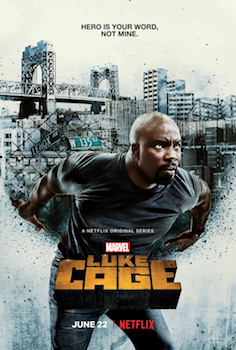 The ninth season of the MCU on Netflix takes us back to Harlem for the continuing adventures of the eponymous bulletproof black man. It’s hard to imagine a more timely superhero for America (maybe if he was an immigrant too), not that the series’ is actually all that concerned with such issues, aside from passing nods and references. Instead, it’s more of a gangster crime drama: the still-standing
 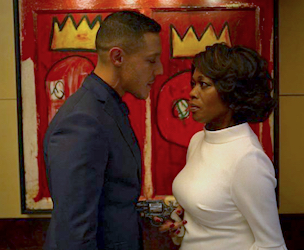 Mike Colter remains a likeable lead, but, again, it’s a villain who steals the show: as Mariah, the brilliant Alfre Woodard is perhaps the best thing about the whole series. Her performance is consistently fantastic, selling every twist and turn of character the writers throw at her. The season is as much about what events do to her as it is about Luke. She isn’t entirely alone, though: there are plenty of great performances, and scenes to showcase them, throughout the season. Occasionally there are some really bloody terrible ones though, like the time detective Misty Knight and her captain argue loudly about a shared secret while they’re in a room full of other cops. Is that bad writing, bad acting, bad direction, or all of the above?
 The flip side to all that is that this interconnectedness will perhaps be comic book fans’ favourite thing about the show — the way it casually references other series, or suddenly brings their characters in for a guest spot, is just like how comic books operate. It’s pretty constant too: barely an episode goes by without a significant reference to or cameo appearance by someone from another Marvel/Netflix show; and these aren’t all mere Easter eggs, but sometimes quite important or vital pieces of plot or character development.
 And so Westworld’s sophomore run rides into the sunset, and I think it’s left behind more questions than answers.
 Exhibit A is the “Hale was Dolores all along” revelation. It’s a neat twist, almost up to season one levels, were it not undermined by the season’s own structure: Hale hasn’t been Dolores all along, and the muddled timelines make it hard to recall how many scenes we’ve had with “Halelores” (as the writers apparently dubbed her). In fact, one of the ways they hid her in plain sight was to limit her screen time: apparently she only popped up in episodes three and seven. Those scenes are littered with
  This month, I have mostly been missing Preacher’s third season, which started this week. Well, I only watched