Unknown's avatar

About badblokebob

Aiming to watch at least 100 films in a year. Hence why I called my blog that. http://100films.co.uk

Rocky (1976)

2018 #57
John G. Avildsen | 120 mins | Blu-ray | 1.85:1 | USA / English | PG / PG

Rocky

His name is Sylvester Stallone. He’s the star of a new film called Rocky. He has been described as handsome, tough, talented, sexy, sensitive, dynamic, and brilliant. He’s been compared to Brando, Newman, Pacino, and De Niro. He’s been called “a top contender for an Academy Award”.

His name is Sylvester Stallone, but you will always remember him as… Rocky.

So goes the narration to Rocky’s original trailers and TV spots. We don’t get trailers like that anymore, do we? Now we just get Bryce Dallas Howard pretending to roar like a T-Rex while encouraging us to join Odeon Première Club. (I’ve been forced to sit through that far too often, and I’ve only been to the cinema four times this year.) But I digress. The narration also indicates the road Stallone could’ve gone down — imagine if he’d made a career writing and starring in movies like this, following through on all those comparisons the trailer made, rather than going down the action meathead route. A weird thought now, isn’t it?

If you’ve never seen Rocky, you might assume it’s broadly similar to the films Stallone would mostly go on to star in, but it isn’t, really. It’s the story of a smalltime coulda-been boxer left slumming it, when, through sheer luck, he gets a shot at the big leagues. Yes, it’s an underdog sports film — the movie that “inspired a nation” (as a friend once said to me, “inspired them to do what, I don’t know. Get up and turn it off, probably”) — but it’s staged with a level of realism that such fantasies don’t normally reach for. And it’s certainly nothing like the indestructible super-action-hero of sundry later Stallone vehicles.

Meat, standing in for a head

Indeed, Rocky manages to both embody what we now think of as ’70s-style filmmaking — gritty and cynical and kinda miserable — with the other side of ’70s filmmaking — the decade that, between the likes of Jaws and Star Wars, gave us the populist blockbuster as we know it. So, on the one hand, Rocky lives in a dingy little bedsit, spending his days enforcing for a loan shark and plodding the derelict streets of a decrepit city; on the other, he still has hopes and ambitions, and these come to pass when he’s selected to fight world champion Apollo Creed — a real underdog sports story. This duality carries through right to the end (spoilers!): our hero loses the fight, your typical “’70s” downbeat finale; but he also goes the distance, an achievement no one else has managed, and he gets the girl. Considering the movie we’ve just watched, it’s a perfect climax: it maintains the film’s two apparently-irreconcilable (but demonstrably reconcilable) tonal halves right to the very end.

Another major part of the film is Rocky’s faltering attempts to woo a shy pet shop worker, Adrian (Talia Shire). Most of their relationship is beautifully portrayed — tentative, cautious, sweet, and quite touching — a complete 180 from how you’d expect a character defined as “a boxer” to behave. Unfortunately, one key moment hasn’t aged so well. There’s a scene at the end of Rocky and Adrian’s first date where he badgers her into going into his apartment, which she clearly doesn’t want to do; then, despite her obvious discomfort, he tries to get her to sit with him; when she won’t, he walks towards her and, hanging off an overhead pipe, looms over her, demanding to know what’s wrong; then, as she heads for the door, he stops her, one hand over the locks and the other against the wall, trapping her in the corner; and then he informs her he’s going to kiss her, but she doesn’t have to kiss him back, and then he does. And she kisses him back, of course.

Adriaaan!

This scene plays very, very differently in a post-#MeToo world than I imagine it has at any other point in the past 42 years. I mean, I’m sure some people realised its awkwardness quite some time ago — women before men, no doubt — but there’s no avoiding it now. And it’s an odd scene, because clearly the filmmakers know Adrian would be uncomfortable — as I say, her whole attitude portrays that; and I presume they know why she’d be uncomfortable too; and yet it still ends with her giving in to Rocky’s persistent advances. Well, I guess the best we can say is it’s of its era, but its content, and how it makes us feel about Rocky as a character, risks becoming a barrier nowadays. His behaviour doesn’t continue in that vein, thankfully… or is that actually worse, making such behaviour normal rather than a warning sign? Are such conversations relevant about a 42-year-old movie?

Conversely, the film’s depiction of race feels kind of progressive. Most of the white guys we meet are bums eking out an existence, legally or otherwise, while the black guy (surrounded by a mostly black entourage, too) is successful, respected, dressed in finery, and in a position to offer the white guy a one-in-a-million shot at success. Maybe this contrast was just a coincidence, but it feels like it’s making some kind of point. Of course, once they get in the ring for the climax, the black guy is the “bad guy” and our hero is a white guy, so…

Black vs white

I don’t think Rocky was consciously built to sustain such readings, mind — these are just things that struck me while watching it in 2018. At heart it’s a straightforward, inspirational tale — “a charming, grimy and beautiful fairytale”, as John Simon described it in New York Magazine — about someone with unrealised potential getting a final shot. Arguably it gains more power from being semi-autobiographical: Stallone penned the screenplay (and later insisted on starring) as a similar last-shot attempt at his chosen career. It ultimately netted him two Oscar nominations, one for writing and one for acting, though he won neither — but then, what could be a more fitting mirror of the film itself?

4 out of 5

Rocky is on ITV tonight at 11:15pm.

It was viewed as part of my What Do You Mean You Haven’t Seen…? 2018 project, which you can read more about here.

The Doozy of a Monthly Update for May 2018

There’s a lot to say about this rather special May, so let’s just crack on with it.


#91 Captain Underpants: The First Epic Movie (2017)
#92 Phantasm (1979)
#93 Laura (1944)
#94 ManHunt (2017)
#95 Anon (2018)
#96 Absolutely Fabulous: The Movie (2016)
#97 Trekkies (1997)
#98 Trekkies 2 (2004)
#99 FernGully: The Last Rainforest (1992)
#100 Stalker (1979)
#101 Shrek the Third (2007)
#102 The Hangover Part III (2013)
#103 Terminator 2: Judgment Day 3D (1991/2017)
#104 Jigsaw (2017)
#105 Batman: Gotham by Gaslight (2018)
#106 O Brother, Where Art Thou? (2000)
#107 Inferno 3D (1953)
#108 Adventures of Zatoichi (1964), aka Zatôichi sekisho-yaburi
#109 Coco 3D (2017)
#110 The Pixar Story (2007)
#111 Game Night (2018)
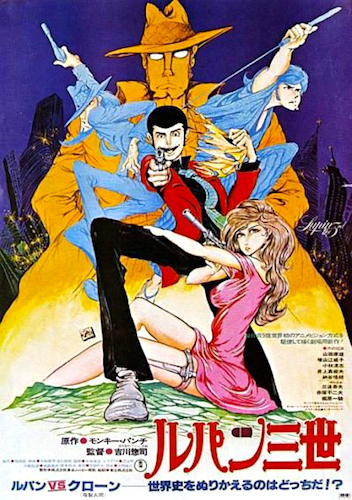
#112 Lupin the Third: The Secret of Mamo (1978), aka Rupan Sansei: Rupan tai Kurōn
#113 Live by Night (2016)
#114 Christine (2016)
#115 The Wild Bunch (1969)
#115a The Wild Bunch: An Album in Montage (1996)
#116 Allied (2016)
#117 Colossal (2016)
#118 It (2017)
#119 Solo: A Star Wars Story (2018)
#120 Deadpool 2 (2018)
#121 All the Money in the World (2017)
#122 Finding Dory 3D (2016)
#123 The Warriors (1979)
#124 American Made (2017)
Laura

Game Night

Lupin the Third: The Secret of Mamo

Deadpool 2

The Warriors

.


  • S’funny: it happened three weeks ago, so this is old news to me now, but this is officially an “I reached #100!” update.
  • Speaking of it being “old news”… the previous record for the earliest I’d made it to #100 was 28th May in 2016. At the end of March I very much doubted I’d even be close to that this year. But, come the end of April, I would’ve been disappointed if I didn’t smash that record. And I did, reaching #100 on 10th May.
  • This is the 10th year I’ve made it to my eponymous goal, out of 12 attempts. All the viewing I did beyond #100 means 2018 is already my 6th best year.

That’s enough about #100 — how about the usual monthly perspective?

  • Well, May 2018’s total was 34 films. That surpasses the record set just last month to become my New. Best. Month. Ever!
  • Obviously that means it’s the best May ever, but it’s also the first time May has featured 20+ films (the previous best was 16).
  • Never mind 20+ — what about 30+? This is only the third month ever to cross that milestone, and the first time there have been two back to back.
  • Oh, and it maintains my ten-per-month minimum for the 48th month — four solid years. My longest run before this was seven months.
  • Naturally, this kind of behaviour smashes averages. May’s increases from exactly 12 to exactly 14. The rolling average of the last 12 months also shoots up by nearly two whole films, from 16.8 to 18.6. And the average for 2018 so far goes up even more than that, from an already-high 22.5 to a whopping 24.8. If that average were to continue, it would be remarkable: only four months in the history of 100 Films — i.e. 2.9% of months — would meet or surpass that figure.
  • Despite watching more films than there were days in the month, I managed to miss seeing one on May 23rd, which is one of the seven remaining dates on which I’ve ‘never’ watched a film (as first mentioned in July 2017’s update). The ball is now in June’s court to get that figure down to a nice round half-dozen.

Whew, enough numbers! Here’s some stuff about the actual films…

  • I rewatched The Terminator back in December because T2 3D was hitting Blu-ray that same month and I hadn’t seen either film for years. Well, five months later, I finally (re)watched said sequel.
  • Even worse, I rewatched Finding Nemo back in July 2017 to remind myself what happened in it before I watched Finding Dory. Ten months later, I’ve finally watched that sequel.
  • This month’s Blindspot film: Sam Peckinpah’s bloody, quick-cut Western The Wild Bunch. Controversial for both those reasons on its release back in the ’60s, by golly if it isn’t still striking for them today!
  • This month’s WDYMYHS film: Andrei Tarkovsky’s acclaimed sci-fi mystery Stalker. It’s slower than his Solaris and I didn’t like it as much, but it did make me want to watch that again. Maybe I’ll pick it up in the current Criterion UK sale…


The 36th Monthly Arbitrary Awards

Favourite Film of the Month
Well, this is tricky — so many films, so much choice. At the risk of sounding like I’m picking a runner-up, I really, really enjoyed Game Night and will give it a glowing review sometime near the UK home ent release, but I’ll probably give it four stars. Nonetheless, I guess it would’ve been the winner here if I hadn’t watched The Warriors last night, which I loved and will give the full five.

Least Favourite Film of the Month
Fortunately, this was a bit easier. While there were some underwhelming films this month, the only one I outright disliked was Phantasm. On the bright side, I watched it because the series’ Blu-ray box set was on offer and I was considering a purchase (I had the first film recorded off TV), so it saved me something like £36.

Best Animated Film of the Month
I watched seven animated films this month, which seems enough to warrant its own category. Two of them were Pixar films, both of which I enjoyed. Two more were American computer animations, which provoked a more mixed reaction. Another two were traditionally animated movies, both of which I enjoyed more than I expected to. But the victor is the last one: the barmy and kind of brilliant anime Lupin the Third: The Secret of Mamo.

Bonkers Sex Scene of the Month
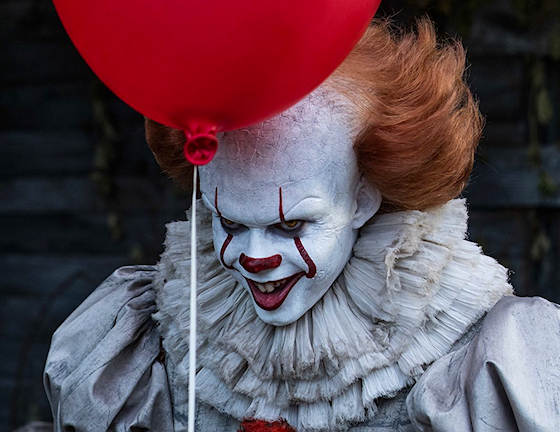
Much to everyone’s relief, they chose to delete the infamous preteen orgy from It, which for all kinds of reasons is perhaps the all-time champion of this category. Brad Pitt and Marion Cotillard getting it on in the middle of a sandstorm seemed to provoke a lot of comment too, but that doesn’t quite beat the accidental weightlessness of having sex with a pilot midflight in American Made. Supposedly the scene was inspired by director Doug Liman bumping into star Tom Cruise while they were flying together. Well, what happens in the air stays in… the movie, apparently.

The Audience Award for Most-Viewed New Post of the Month
Maybe if I’d seen Deadpool 2 or Solo sooner, and reviewed them similarly fast, this might be a different story, but, for the second time this year, the view count is topped by my monthly TV column. (In second place was underrated Netflix/Sky Cinema original Anon.)


My Rewatchathon continues at pace:

#17 Superman (Expanded Edition) (1978/2000)
#18 Deadpool (2016)
#19 Mission: Impossible III (2006)
#20 Dick Tracy (1990)

I know this is already a pretty long update, but I have thoughts on almost all of these…

This was the first time I’ve watched Superman for… decades, probably. It’s definitely the first time I’ve seen the “expanded” cut, but as it’s only eight minutes longer and mostly small extensions I didn’t give it a new number. Two of its longer scenes are very good additions, though, so it’s a worthwhile cut of the film. The even-longer TV version (over three hours!), a full print of which was discovered in Warners’ vault and released on US Blu-ray last year, is reportedly too long, slowing the pace to a crawl with unnecessary asides. I’ve sometimes thought about importing it for completism’s sake, but I doubt I’ll bother.

When I reviewed Deadpool two years ago, I gave it a full 5 stars. That was rounded up from a 4.5 because of how much fun I had. Even then, I predicted it might not hold up so well to rewatches. Well, I was right. Not that I now think it’s bad, but without the refreshing novelty you get on a first viewing, I thought it was more of a solid 4.

M:i:III will be the subject of a “Guide To” post nearer the release of Fallout. I considered giving Dick Tracy the same treatment, but I’m not sure I can be bothered. I watched it when I was very young and I think I liked it — I remember having some kind of tie-in book that I enjoyed a lot. The film used to have a bad rep, but apparently has undergone some kind of reevaluation recently. I’m not sure it’s merited. Some things are great — the production design and cinematography are incredible, hyper-stylised in a way that almost looks a couple of decades ahead of its time — but others aren’t, like the disjointed story, or the Danny Elfman score that seems to have been recycled from Batman off-cuts.


Life, uh, finds a way (again) on the big screen… and not much else, as UK release dates start getting bumped for the sodding World Cup.

On the small screen, catching up with last year’s Oscar nominees: The Post and Three Billboards finally came out on UK DVD & Blu-ray last week, and Darkest Hour (not The Darkest Hour) is out on Monday, though we still have to wait until the 25th for The Shape of Water, three-and-a-half months after the US. What is this, the ’90s?

Solo: A Star Wars Story (2018)

2018 #119
Ron Howard | 135 mins | cinema | 2.39:1 | USA / English | 12A / PG-13

Solo: A Star Wars Story

The fourth movie in the modern age of the Star Wars franchise hit headlines for all the wrong reasons last weekend, as its opening box office frame failed to live up to expectations by quite some margin. As I pointed out on Twitter, by most standards Solo had an excellent debut; but by Star Wars standards, yeah, it was well short. Why did this happen? Theories abound. Did the manbabies’ “Boycott Solo” campaign succeed? Doubtful. Do audiences have “franchise fatigue”, with Solo debuting just five months after The Last Jedi? Possibly, though it doesn’t hurt Marvel films. Were audiences worn out from big blockbusters, after Avengers: Infinity War and Deadpool 2 preceded this in quite a short space of time? Could be. Did the stories of behind-the-scenes strife reach mainstream awareness and put people off? Perhaps. Is it just that people simply aren’t interested in a standalone “Young Han Solo” movie?

None of those sound like a definitive explanation. I guess it was a combination. And I’d like to say it’s a shame because Solo deserves to find a wide audience, but… well, maybe it’s already found the audience it deserves. It’s a decent space adventure flick, but I was sadly a bit underwhelmed by it. Frankly, I wish I liked it more than I did. Not just because I want to like every movie, but because I feel like this should’ve been a movie I really enjoyed — a fun sci-fi/heist/Western adventure kinda deal — but I didn’t love it. I thought it was mostly kinda fine.

Space Western

There’s not a thing in it I’d single out as poor: the actors are fine (in the trickiest role, Alden Ehrenreich makes for a decent Han Solo), the script is fine (I’d’ve liked more humour — what’s the betting that was toned done after Lord and Miller were fired?), the action scenes are fine (the train heist from the trailer is the best one, though even that lacks a certain je ne sais quoi), the design work is fine (as well as familiar Star Wars stuff, there’s some striking new characters and vehicles)… If there’s one thing I’d criticise it’s possibly the cinematography, because half the film seemed too damned dark, but that might’ve just been the projection (it wouldn’t be the first time I’ve had that complaint about this cinema). Other than that, it looked… fine.

Thing is, “fine” only gets you so far. Solo never really makes you laugh, never really makes you excited, never really makes you feel anything — it just sort of toddles along fairly pleasantly. In fact, I’d also say it’s less than the sum of its parts, because some of those bits that are “just fine” are almost more than that. And maybe, if the whole film was working, those bits would play well. But… it’s just not quite there. The neatest thing about the entire film is how it solves the problem with the famous line from A New Hope about how the Millennium Falcon “made the Kessel Run in less than 12 parsecs” — parsec being a unit of distance, not (as the quote makes it sound) time. I mean, I’m not sure that justifies an entire movie…

Lando, baby

The thing that most annoys me about Solo’s mediumness, and its relatively poor box office, is that it’s left very, very open for a sequel. Without spoiling anything, we can more-or-less extrapolate how Han and Chewie get from here to a cantina in Mos Eisley, but there are other plot bits left dangling. It’s been fairly well reported that the cast are signed up for three films, and I guess Lucasfilm really meant that, rather than locking them in just in case. And the reason it annoys me is because I want to know what happens next, but with the stink of failure that now surrounds Solo (a drum the media have been only too keen to beat, for no reason other than clickbait) I’m not sure Disney will be too keen on taking that punt.

On the bright side, the Star Wars franchise currently has an admirable predilection for tying its whole canon together. It happened in Rogue One, with Forest Whitaker’s character having originally appeared in The Clone Wars, and it happens here too, with a cameo that is gonna confuse anyone who’s only watched the films and not paid any heed to other media — I shall say no more, but I imagine casual fans were left scratching their heads. So, if we don’t get Solo 2, I guess certain people will pop up in some animated series or comic book or something. Which I probably won’t get round to watching or reading. Hey-ho.

Falcon-flying fun

Maybe the “it’s fun!” tweets and reviews I read before seeing Solo undermined it for me, because I was expecting it to be fun, fun, fun, but instead thought it was just fine, fine, fine. Maybe I’ll enjoy it more when I watch it again on Blu-ray. At least it’ll have the extra pizzazz of 3D for me then. Anyway, this rating feels harsh, but, considering my reservations, the next one up seems generous. It’s another three-and-a-half-star film, but, as ever, I only deal in absolutes here.

3 out of 5

Solo: A Star Wars Story is in cinemas everywhere, for the time being.

Review Roundup

This may look like a pretty random selection for a review roundup… and it is. But they do have two things in common: I watched them all in 2017, and I gave them all 3 stars.

Yeah, not much, is it?

Anyway, in today’s roundup:

  • The Girl on the Train (2016)
  • Lions for Lambs (2007)
  • Tea for Two (1950)


    The Girl on the Train
    (2016)

    2017 #113
    Tate Taylor | 112 mins | streaming (HD) | 1.85:1 | USA / English | 15 / R

    The Girl on the Train

    Based on a bestselling novel, The Girl on the Train stars Emily Blunt as Rachel, an alcoholic divorcee whose commuter train passes her old home every day. She tortures herself by observing her ex (Justin Theroux), his new wife (Rebecca Ferguson) and their child, as well as her former neighbours Scott (Luke Evans) and Megan (Haley Bennett), who she imagines living a perfect life. But after Rachel sees something that shatters the image she’s created, she wakes up from a black out, with mysterious injuries, and to the news that Megan has gone missing…

    The whole story unfurls with a good deal of histrionics and a questionable level of psychological realism, but as a straightforward potboiler it has some degree of entertainment value. In fact, if it had been made with a little more panache then it may even have been seen as a throwback to the kind of melodramas they produced in the ’40s and ’50s. Because it doesn’t seem to have that level of self-awareness, I guess it’s just the modern-day equivalent.

    3 out of 5

    Lions for Lambs
    (2007)

    2017 #121
    Robert Redford | 92 mins | streaming (HD) | 2.35:1 | USA / English | 15 / R

    Lions for Lambs

    The US intervention in the Middle East is obviously one of the most significant geopolitical events of our age, but how many films have really got to grips with it? Some, like The Hurt Locker, have given a sense of its impact to those on the ground. Lions for Lambs tried to take a more intellectual standpoint, with three interconnected storylines: a young and ambitious US senator (Tom Cruise) details a new military strategy to an experienced and sceptical journalist (Meryl Streep); a college professor (Robert Redford) tries to engage a talented but apathetic student (Andrew Garfield); and two soldiers become stranded in Afghanistan (Michael Peña and Derek Luke), providing a link between the other two stories.

    Screenwriter Matthew Michael Carnahan originally conceived the work as a play, before realising the Afghanistan section needed the scale of a movie. Nonetheless, his original conception shows through: the film is very talky and stagey, and the other two storylines could certainly be performed on stage with no changes necessary. You can also tell it’s driven by disillusionment in the US’s actions, and it has everyone in its critical sights: the government, the media, the education system… It feels more like a polemic than a movie, lecturing the viewer; although, like everyone else, it doesn’t seem to offer any firm answers.

    Streep and Cruise both give excellent performances. I suppose being a smarmy senator isn’t much of a stretch for the latter, but Streep’s turn as an insecure journalist is the highlight of the film. You need acting of that calibre to keep you invested in a movie like this, and it almost works, but ultimately the film has too little to say.

    3 out of 5

    Tea for Two
    (1950)

    2017 #162
    David Butler | 94 mins | DVD | 4:3 | USA / English | U

    Tea for Two

    Musical comedy starring Doris Day (radiant as ever) and Gordon MacRae (given little to do as her love interest).

    The songs are largely forgettable, with a couple of sweet exceptions, but at least there are other things to recommend it, like some impressive dancing from Gene Nelson, particularly during a routine on a flight of stairs. There’s a solid helping of amusing one-liners too, most of them claimed by Eve Arden as Day’s wry assistant Pauline, the rest by S.Z. Sakall as her embattled uncle. Said uncle is, by turns, a bumbling old codger and an underhanded schemer who uses tricks to try to ruin his niece’s happiness just so he can win a bet. Best not to dwell on that too much…

    The same goes for the rushed ending, in which our heroine is in financial ruin, so her assistant basically whores herself out to a rich lawyer so they can still put on the show. Hurrah! And talking of things not to dwell on, there’s also the title, which has absolutely nothing to do with the story (other than it being probably the best song). Conversely, the name of the play it’s based on — No, No, Nanette — is bang on. Ah well.

    Nonetheless, Tea for Two is all-round likeable entertainment; the kind of movie you put on for a pleasantly gentle Sunday afternoon.

    3 out of 5

  • Deadpool 2 (2018)

    2018 #120
    David Leitch | 119 mins | cinema | 2.39:1 | USA / English | 15 / R

    Deadpool 2

    The quickest way to review Deadpool 2 is simply to say it’s like the first one, but more — in a good way.

    A slightly longer (and possibly confusing unless you read it slowly) way to review it would be to say that I enjoyed it less than I enjoyed the first one the first time I saw it, but I enjoyed it more than I enjoyed the first one the second time I saw it. To clarify: when I first watched Deadpool, I loved it, and gave it five stars (just about). When I rewatched it two years later in preparation for the sequel, I was less bowled over. I think a lot of its initial effectiveness was due to the freshness of its whole schtick, which has naturally gone away on a rewatch (not helped by the saturation of it in DP2’s marketing campaign). In particular, I was surprised how sparse I found the humour to be on that rewatch. Maybe that prepared me for this one: the gags aren’t literally non-stop — it sometimes pauses to attempt emotion or to convey plot — but when they do come they’re thick and fast, so much that I’m sure some will get missed (there are too many to remember specific examples, but there was stuff I thought was very funny that didn’t get much of a reaction in my screening. Or it could just be only me that liked those gags, of course.)

    So, although DP2 couldn’t equal the sheer newness of watching DP1 for the first time, it’s refined the formula in such a way that I do think it’s a more enjoyable film. Maybe “refined” isn’t always the right word — in some cases it’s just chucked in even more stuff — but I think other elements have been honed. For example, the first film’s plot was a no-great-shakes origin story on which to hang gags and action. The sequel’s plot is still only scrappily adhered to, with the point once again being to deliver humour, but it does have a stronger throughline overall. Partly that comes from the villain, Josh Brolin’s Cable, who has a clear goal that conflicts with what Deadpool’s up to. Partly it comes from some thematic stuff about fatherhood and family. I’m not saying DP2’s overburdened in this department — it’s still an action-comedy — but I couldn’t tell you what the first film was about, thematically, and this one it’s made very evident.

    That Deadpool, he'll say anything

    That said, sometimes it’s bit heavy-handed. I can see what they were going for by giving the film a heart and some emotion — it builds off the first film, for one thing, where Vanessa was such a motivator for Wade; and they’re trying to add depth and texture to the film — but… it doesn’t work when it’s given too much focus. Everything else in the film is a pisstake turned up to eleven, and the fourth-wall breaking means Deadpool can make a gag about clichés or crappy writing even as the film ploughs ahead and does it anyway. So why isn’t he making gags whenever the film pauses for an emotional heart-to-heart type scene? Why does that sappiness flow on (and on) untouched? Okay, maybe the character cares too much to be wisecracking at those moments… but do we? Does the soppiness fit with the foul-mouthed, gore-splattered irreverence that characterises the rest of the movie? I’m not sure it does.

    Other things they’ve oomphed up, but to appropriate effect, included references to the X-Men and the action scenes. In the case of the former, I was surprised how many X-references there were in the first film, but DP2 has even more, including a superb one-shot cameo and a surprise appearance by a character who’s been in a ‘real’ X-Men film but here is done more faithfully. As to the latter, the first film had some fun action beats, but here you can feel the benefit of hiring John Wick/Atomic Blonde director (and former stunt coordinator) David Leitch — everything is slicker, quicker, and bigger. Again, it’s more, but in a good way. Humour aside, if you just wanted a straightforward action flick, I think it would satisfy on that level too.

    Cable, ready for action

    As for its level as a satire of superhero movies, some people have criticised the way it calls out genre tropes but then does them anyway, like Deadpool exclaiming “CGI fight!” right before there’s a CGI fight. But I think that’s almost the point. It’s not trying to deconstruct the genre, just poke fun at it with self-awareness while still being very much a part of it. Would it be cleverer if it went a step further and actually subverted stuff more often? Maybe. Probably. But there is humour in the self-awareness, even if it’s an easier kind for the filmmakers to fall back on — they don’t have to avoid clichés, so long as they humorously point out they’re indulging in them.

    Ironically, there are two or three occasions where Deadpool specifically makes a joke along the lines of “well that’s just lazy writing”, which were particularly amusing to me because (as I recall) they were at moments where the writing didn’t need to do more than it did. By which I mean, the writers could’ve been “not lazy” and dressed those moments up, but, functionally, they didn’t need to; so it’s not really lazy writing, just not needlessly tarted up writing… if that makes sense. It’s like movies with MacGuffins: usually they invest time explaining what the MacGuffin is and why it matters, but functionally it could be anything, all that matters is everyone wants it. Deadpool 2 doesn’t have a MacGuffin, but if it did it would be called “MacGuffin” and it would be explained simply as “a thing everyone wants” and Deadpool would say “well that’s just lazy writing”. (Flip side to all this: I can’t recall the exact circumstances of all the “lazy writing” jokes, so I’m prepared to accept they might not actually fit this theory.)

    X gon' give it to ya

    All of that said, Deadpool 2’s primary goal is plain, clear, and simple: it wants to entertain you by almost any means necessary, be that elaborate action sequences, almost non-stop gags, cultural references, deep-cut comic book Easter eggs, or even changing history (er, kinda). Mostly, it works — it wants to be fun and, if you’re on its wavelength, it is. Sometimes, more is more.

    4 out of 5

    Deadpool 2 is in cinemas everywhere, still. My review of the extended Super Duper $@%!#& Cut is here.

    Shrek the Third (2007)

    2018 #101
    Chris Miller | 93 mins | Blu-ray | 1.78:1 | USA / English | U / PG

    Shrek the Third

    Shrek the Third is notorious as The Bad One; the one where the bubble burst on the phenomenon that had sustained two well-reviewed and immensely financially successful films. The list of failed threequels is long — so long, you almost wonder why anyone bothers to make them — and while Shrek the Third does indeed do little to buck that trend, it could be worse.

    The title isn’t just a variation from calling the film Shrek 3, but also hints at the plot: when the king dies, Shrek is next in line to the throne. But he’s been struggling so much at royal engagements that he wants out of that life anyway, never mind a promotion. Fortunately, there is a possible alternative: a young lad called Arthur. While Shrek, Donkey and Puss set off to find this spare heir, Princess Fiona and a cohort of other fairytale princesses must fend off an attack from Prince Charming, who still has eyes on the throne.

    It’s not a terrible plot for a Shrek movie, but it’s not particularly original either. Thematically, Shrek’s disinterest in being royalty was covered in the last film, though at least this time it’s bolstered with a fatherhood angle. The choice of villain, however, straight up takes the last film’s secondary antagonist and recycles him as a primary antagonist — if there’s a more literal example of sequels representing diminishing returns, I can’t think of it.

    Action princesses

    As for everything else, there are some good ideas and funny bits here and there, but there’s also something that’s just… off. It’s not consistently amusing or creative enough. It doesn’t have the same effortless energy and pace as the first two. And some of its ideas sound decent on paper, but just don’t work in the film. For example, the fairytale twist on a high school where they find Arthur — Shrek’s got good mileage out of spoofing the real world before, so you can see the genesis of the idea, but it just doesn’t land here, with the setting being an irritant rather than an amusing parallel.

    Although the film still credits Andrew Adamson, writer and/or director of both previous films, as among its executive producers, I reckon there must have been debilitating changes behind the scenes, because the whole production just comes up short. Like, where the previous films offered legitimately exciting action scenes, the ones here could be decent but come off flat. It shouldn’t matter — this is a fantasy comedy, not an action movie — but it’s just one part that’s emblematic of the whole. Another is the song choices, which, like the fairytale high school thing, are seemingly okay but actually just wrong. As in, most of them are good songs, but they so often don’t actually quite fit the movie — I mean, Live and Let Die during a funeral?

    Shrek the Third isn’t entirely without merit, but something seems to have gone awry between conception and execution, and it doesn’t zing in the way its predecessors did.

    3 out of 5

    Fight, Zatoichi, Fight (1964)

    aka Zatôichi kesshô-tabi

    2018 #76
    Kenji Misumi | 88 mins | Blu-ray | 2.35:1 | Japan / Japanese

    Fight, Zatoichi, Fight

    It’s a bit ironic that whoever chose the English-language titles* for the Zatoichi films decided to emphasise fighting in the name of this eighth instalment, because it’s perhaps the least concerned with Ichi’s sword skills so far. That’s not to say there aren’t a couple of nifty sequences of blade-clashing fun, but they’re not the film’s focus. You might think that’s antithetical to the series’ purpose, and yet Fight, Zatoichi, Fight is widely regarded as one of the series’ finest instalments, perhaps even the best of all.

    It begins, as so many Zatoichi films do, with our hero on the run from some gangsters who want to kill him. Ichi accepts a ride from a pair of passing palanquin carriers, but his would-be assailants spot this and resolve to attack further down the road. Before they make their move, Ichi hears a woman struggling along with her baby, and insists she take the palanquin instead. The assassins don’t see the switch, however, and so attack nonetheless, killing the mother. Her papers reveal she was returning to her husband, the baby’s father, and Ichi, blaming himself for her death, insists he make the 65-mile journey to return the infant personally.

    This is where Fight differs from the norm, because it’s at least as concerned with Ichi’s need to care for the child as it is with him fending off the assassins, who naturally pursue him on his way. The impromptu sidestep into de facto fatherhood leads to plenty of goofy comedy, much of it around bodily fluids, like when and where the baby pees, the stench of its used nappies, and also a scene where Ichi tries to get the kid to suckle on him while they wait for actual milk. Another amusing sequence sees Ichi hire a prostitute for the night, but only so she can look after the baby and he can get some sleep. But he keeps waking back up nonetheless, each time insisting on doing just one more thing for the child.

    Family unit

    You see, Ichi really cares for the kid, and this is where the other side of the equation comes in: as well as comedy, the situation also brings up a good deal of character-driven seriousness, as Ichi is forced to reflect on the lifestyle he has chosen for himself. No one is better than Shintaro Katsu at playing both sides, transitioning between warm humorousness and grim introspection in the blink of an eye.

    But it’s not only internally that Ichi has cause to consider his lifestyle. Halfway along their journey, Ichi inadvertently saves the life of a female pickpocket, Ko, who he then employs to be the baby’s nanny — mainly so he can teach her better ways and reform her. But she’s a pretty young lady, so naturally she falls for blind old Ichi, and for the child too, and suddenly they’re a little family unit. Ko wants it to stay that way, for them to raise the baby together; and, despite his protestations to the contrary, Ichi has come to really like the child, and would probably like that life too. But, without spoiling anything, events transpire to make Ichi realise such an existence just isn’t possible for him, and he must do the right thing for the child’s sake. In the end, despite the laughter along the way, Fight, Zatoichi, Fight is a pretty emotional and sad film, with our hero ending up as he began, and as he always must: alone on the road.

    Lest you think it’s too downbeat, let’s talk about the action! Despite being on babysitting duties, there are still some great fight scenes: there’s one where assailants keep bursting into a hut where Ichi’s trying to change the baby’s nappy (now that’s multitasking); and a gambling scene where he catches a cheating boss in the act, with an ensuing fight outside where Ichi keeps shh-ing his attackers because the baby’s asleep. Then the finale lives up to the series’ recent penchant for exciting visuals: the amassed villains surround Ichi with flaming torches in an effort to confuse his hearing, and as our hero slashes away at them even his clothing catches fire. Sure, we know he must prevail, but there’s real jeopardy in this one.

    Fiery climax

    So, in many respects, Fight, Zatoichi, Fight has it all. It’s even got a unity of story and structure that feels almost rare in the series — everything connects up, pays off, has relevance; unlike other films, which often seem to start with a bit of superfluous action or something. But what it has most of all is a storyline that is unique and emotional, and therefore memorable and affecting. It’s easy to see why the film is so often elevated as one of the series’ very best. It’s probably best appreciated as part of the series, rather than as a newcomer’s entry point, because part of its effectiveness lies in it being different from the norm. That said, it stands as an excellent film in its own right.

    5 out of 5

    (A quick caveat: although this is the first Zatoichi film I’ve given full marks, I would, with hindsight, award the same to the first movie as well.)

    Fight, Zatoichi, Fight placed 20th on my list of The 26 Best Films I Saw For the First Time in 2018.

    * I say “chose” because a literal translation would be something like Zatoichi’s Journey of Blood and Laughter. ^

    Vintage Tomorrows (2015)

    2017 #120
    Byrd McDonald | 67 mins | streaming (HD) | 16:9 | USA, Canada, Czech Republic & UK / English

    Vintage Tomorrows

    Heard the term “steampunk” but don’t really know what it is? Or have an idea, but you’d like a fuller picture of the whole subculture? Then this is the film for you, my friend, because Vintage Tomorrows is basically Steampunk 101.

    For those that don’t know, steampunk is a kind of alternate history, where Victorian-esque technology and fashion rub against advanced technology — think steam-powered cars; clockwork machinery; and cogs. Lots of cogs. Although little more than an hour long, Vintage Tomorrows does a good job of providing an overview of the movement, encompassing the cool literature, fun costumes, impressive self-built gizmos, and so on. It also doesn’t ignore the political dimension: how steampunk does — or, frequently, doesn’t — deal with the dark side of the Victorian era: the poverty, oppression, racism, colonialism, misogyny, and so forth. Mainly, the subculture still needs to “grow up” and tackle that stuff. With plenty of featured interviewees, it’s also interesting to hear the different ideas that different people have about what exactly steampunk is and should be — there are clearly dissenting voices, rather than a homogenous whole. I guess that’s probably true of any subculture, but I imagine particularly one that’s quite counter-cultural.

    That said, when some people start placing steampunk in the context of widespread movements like the Beat Generation, hippies, punk, hip-hop — asserting that it’s following in their footsteps — I think they’re possibly going a bit far. It may be inspired by the same mentality (the rejection of the mainstream, the desire to create something different, the search for your own identity and people who share it), but to imply steampunk is having the same influence on wider culture that those earlier movements did… I don’t think so. Not yet, anyway. In the future? Who knows.

    Fire!

    Indeed, some pretentious assumptions come to the fore when the interviewees get on to the subject of modern technology. They don’t like sleek, minimalist, Apple-esque design — it’s not complicated or tactile enough for them. Fine, if that’s your taste — but it is just your taste. A lot of people love that stuff. And, actually, it’s not a different subculture that loves it, it’s the mainstream. If the mainstream didn’t like it, something else would’ve swept it aside by now. But a level of self-absorption seems to go hand-in-hand with those at the forefront of niche movements, so I guess we should expect such attitudes.

    Set aside those occasionally presumptive attitudes, and there’s a lot to like about steampunk. Well, if it meshes with your sensibilities, anyway. It’s not something I’d want to partake in myself, but it looks like a fun alternate reality to be a part of. And if Hollywood saw fit to give us a few more movies that fit into the genre (because there haven’t been many, I believe), I certainly wouldn’t complain.

    4 out of 5

    Muppet Review Roundup

    In today’s roundup:

  • The Muppets Take Manhattan (1984)
  • Muppets from Space (1999)


    The Muppets Take Manhattan
    (1984)

    2018 #48
    Frank Oz | 90 mins | streaming (HD) | 16:9 | USA / English | U / G

    The Muppets Take Manhattan

    Apparently (so I read somewhere) at the time this was intended to be the end of the Muppets — the performers were fed up and wanted to move on to other things, and they conceived this third movie as a capstone on the whole affair. That seems inconceivable now — I mean, just how much Muppet stuff has followed it? To date, five more movies, at least two TV series I can immediately think of, plus other specials, countless guest appearances, a theme park attraction…

    I think that tiredness shows through in the finished product. Or maybe it’s just the changing attitudes — they’d just made The Dark Crystal, which maybe indicates they had a hankering for more serious fare. Supposedly the first draft was dismissed by director Frank Oz as being “way too over jokey”, which is surely a terrible criticism of a Muppet screenplay, but Jim Henson encouraged him to tinker with it to emphasise the characters and their relationships. This was partly in response to The Great Muppet Caper, a particularly wacky effort that hadn’t done well at the box office, so they were toning it down.

    Well, I regard the Muppets as primarily comedy characters, and so it’s no wonder this one seems to miss the mark. There’s some occasional funny stuff, the odd good skit, but mostly Take Manhattan just kinda plods along. Personally I thought Caper was a bit of a poor sequel, but this is less good again. It straight up lacks some of the things that make the Muppets so memorable — there isn’t a single fourth wall break, for instance. There’s all together too much focus on plot, even though it’s a very thin one, and the gang spend most of the movie split up, meaning it lacks their camaraderie. So much for focusing on the relationships!

    Muppets in Manhattan

    There are still celebrity cameos, at least, though I feel they’ve aged particularly poorly. Well, there’s Joan Rivers (even if her younger self is always unrecognisable to those of us who mainly knew her in later made-of-plastic years), Elliot Gould, and Liza Minelli, so it’s not all bad. Other than that, the credits explicitly name who the cameos are, but I didn’t even recognise half the names. In fact, the best one is some other Henson puppets: the cast of Sesame Street! Though the presence of puppets isn’t always welcome: a furious Miss Piggy rollerskating after a mugger, filmed in wide shots that I can only assume feature a human in a Miss Piggy suit, is the stuff of nightmares.

    Nonetheless, I shall give The Muppets Take Manhattan a 3 — just. That’s the same as I gave Muppet Caper, which is a shame (that film was more of a 3.5 whereas this is a 2.5), but it’s not so bad that I can give it an outright 2. It’s middling. It’s fans-only, I guess. Some bits work, some bits are good, but overall it’s not quite there as a Muppet movie.

    3 out of 5

    Muppets from Space
    (1999)

    2018 #75
    Tim Hill | 85 mins | streaming (HD) | 16:9 | USA / English | U / G

    Muppets from Space

    I’m afraid things aren’t going to pick up here: Muppets from Space is the lowest rated Muppet movie on IMDb. Personally, it would not be my pick for the worst film starring our felty friends… but it’s not that great, either.

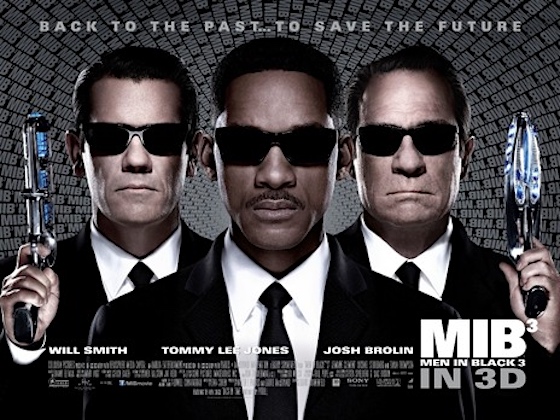
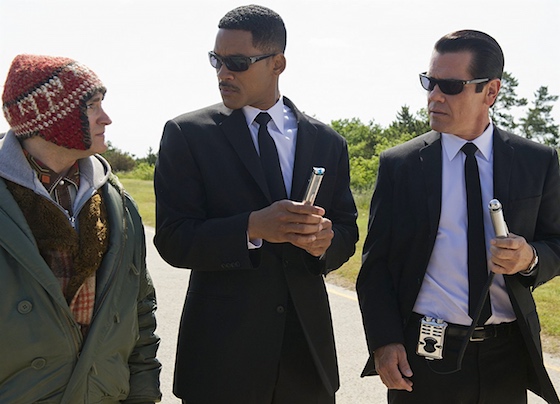
    Hailing from the same era that gave us the likes of Independence Day (which gets directly spoofed), Men in Black (some of them show up), and The Phantom Menace (no references that I could detect, but they came out the same year, so…), you can see why the Muppet movie makers would’ve been inspired to move into the sci-fi realm. The plot concerns finally explaining just what Gonzo is, which is not only unnecessary but feels kind of against the spirit of the thing — no one knows what he is, there’s only one of him, that’s kind of the joke. Well, not after this film…

    Related to that, there’s almost a good thematic thing about belonging, and who your real family is or can be, but it’s only loosely nodded at early on before sort of popping up right at the end, without enough building blocks in between to really make it work as a payoff. But we don’t come to the Muppets for the themes, we come for the gags, and in that respect From Space is… fine. Well, I mean, it’s not really all that funny… or interesting… It just kind of toddles along until an underwhelming ending (it would’ve been better if (spoilers!) it turned out the aliens weren’t Gonzo’s people, thereby leaving what he is a mystery). And there’s a Dawson’s Creek cameo, because they were filming in the studio next door, which obviously feels terribly dated now, but that’s how these things always go I guess.

    So, I didn’t actively dislike it in the way I did Muppets Most Wanted (that’s why I’m giving it a 3 rather than a 2), but that might be the kindest thing I can say about it. Like Muppets Take Manhattan, it sits firmly in the middle of the field — not expressly unlikeable, if you enjoy the Muppets, but with nothing to elevate it.

    3 out of 5

  • Trekkies & Trekkies 2

    In today’s roundup:

  • Trekkies (1997)
  • Trekkies 2 (2004)


    Trekkies
    (1997)

    2018 #97
    Roger Nygard | 83 mins | streaming | 4:3 | USA / English & Klingon | PG / PG

    Trekkies

    There are quite a few fan documentaries out there nowadays (a few years ago… wait, ten years ago? Bloody hell. Anyway, back then I reviewed the likes of Starwoids, Ringers: Lord of the Fans, and Done the Impossible: The Fans’ Tale of Firefly and Serenity). But before all of those, and I think the first of its subgenre, was Trekkies, which examined the phenomenon of Star Trek fandom — or, rather, the wild, weird extremities of it.

    Trekkies begins with the proclamation that “Trekkies are the only fans listed by name in the Oxford English Dictionary.” That’s not true anymore (“Whovian”, at least, is in there), and that speaks to an interesting truth about this entire documentary. When it was released 21 years ago, Trekkies was exposing a niche thing to wider awareness, and these fans were seen as weirdos, fundamentally. Watching it today, though, you see that it’s mostly just cons and cosplay — stuff that’s been virtually mainstream for a few years at this point. It may’ve once seemed odd for these people to define their lives as “Star Trek fan”, but now, for many people (especially younger people), it’s perfectly routine to be defined by which fandom you’re in.

    Gabriel Koerner in 1997

    That said, Trekkies still managed to find some people who are pretty weird by any standard. At the time the filmmakers received some criticism for this — for creating a film that got laughs out of “look at the weirdos!” while ignoring the more normal side of fandom. That’s not a wholly baseless critique, but I didn’t think the film was cruel. As well as going “aren’t these people nuts!”, I think it does try to dig into why they do it, what they get out of it. I’m not sure how well it reveals the former (I mean, how did any of them go from liking a TV show to… this? It must be some personality thing), but it does a decent job of showing what benefits it brings them. And there are some incredible stories (mainly from interviewed cast members) about how Trek has changed, or even saved, people’s lives.

    Trekkies may’ve lost the uniqueness it once had, with elements of the lifestyle it depicts coming to increasing prominence, but it still remains an interesting look at that kind of world, with some very memorable characters. And if you think it might’ve aged into irrelevance after all this time, there’s a bit about the importance of Captain Janeway as a role model for female leadership and what women can do — we’re still having debates and arguments about that sort of thing over twenty years later, which is, frankly, depressing.

    4 out of 5

    Trekkies 2
    (2004)

    2018 #98
    Roger Nygard | 93 mins | download | 4:3 | USA / English, German, Italian, Portuguese, French & Serbian | PG / PG

    Trekkies 2

    Such is the strangeness of Time that, just 24 hours after I watched Trekkies, I jumped forward seven years to catch up with some of that film’s featured fans in this lesser-seen follow-up. It’s not just repeat visits to old friends, though — if you thought America had a monopoly on crazies, well, Trekkies 2’s got news for you!

    This time out director Roger Nygard and host Denise Crosby take us to Germany (visiting the set of a fan film); the UK (with a guy who turned his flat into a starship, which he’s listed on eBay for $2 million (a couple of years later it sold for c.$840,000, which was still 16 times what he paid for it)); Italy (where fandom is apparently centred around food); Brazil (where a collector has a rare playset from the ’60s… which Crosby accidentally knocks over); Australia (where the fans mainly seem to be female and obsessed with the sexy male cast members); France (which is really just “more international fans”, to be honest); and Serbia (where the series and its values has brought a lot of hope to people in a tumultuous region).

    We also meet more US fans, as the sequel tries to rectify some of the first film’s shortcomings. For example, there’s a much greater section on filk music (which is, basically, music tied to sci-fi/fantasy fandom), as well as some crazy-funny Star Trek punk tribute bands — there’s a whole scene of that kind of thing in Sacramento, randomly. Plus we’re shown the lighter side of fandom, like the theatre company staging a satirical Trek-ified version of Romeo & Juliet.

    German fan film

    And, as I mentioned, we catch up with some old friends, including Barbara Adams, the lady who wore her Trek uniform while on jury duty (and who has a hilarious Trek vs Wars debate with a coworker that’s like something out of The Office), and the film’s break-out star, Gabriel Koerner. A super-geeky teen in the first movie, seven years later he has a wife and has turned his hobby into a career in visual effects. It just goes to show, there’s someone and something for everyone.

    Indeed, overall it’s not quite as “look at the freaks!” as the first film. It takes time to explicitly discuss what’s going too far and what’s normal, and it also highlights how Trek fandom has been a force for good, like raising money for charity, or giving hope in war-torn regions. Consequently it’s not as funny as last time, but probably in a good way — this one’s a bit more thoughtful, a bit fairer to its subjects as people. Ultimately, I think the two films work quite well as a pair. There’s also been talk of a Trekkies 3, which I hope happens — as I mentioned about the first film, attitudes to this kind of fandom have changed massively in the past decade or so (for example, the rise of Comic-Con and its influence), so it would be very interesting to explore that.

    For my money, the most insightful moment in either film comes from Pierluigi Piazzi, a Brazilian publisher of Star Trek books, when he says that “this is a wonderful way to be crazy. Everybody’s crazy, but it’s wonderful this way.”

    4 out of 5