The other week I was interviewed by film blog The Clapper Bored about… well, this blog. What I do, why I do it, how it’s gone, that kind of thing. If you’re interested you can now read the interview here.
100 Films: The Interview
Reply


The other week I was interviewed by film blog The Clapper Bored about… well, this blog. What I do, why I do it, how it’s gone, that kind of thing. If you’re interested you can now read the interview here.
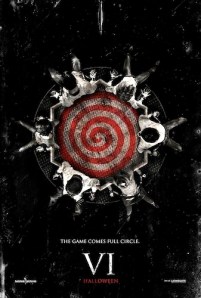 The Saw franchise dragged itself to a seventh (and final? The advertising said so; no one cares enough to spoil it any more so I’ve no idea if it genuinely was) instalment this past Halloween, but here I am playing catch-up with the sixth — you know, the one that got soundly trounced by Paranormal Activity in cinemas.
It doesn’t start well. The opening sequence is awful, sinking to torture porn levels again (something I feel the Saw series mostly manages to rise above, if only slightly) in one of the worst examples I’ve personally seen. It’s unquestionably gratuitous, the only people who could possibly take an interest in it being those who want to see characters quite literally tortured — in this case, by hacking off bits of their own bodies. Some of the traps in Saw are clever or intriguing, even when they’re gruesome, but this is just the second murder from Se7en reenacted in an overlong fashion with prosthetics and too many gory close-ups. It’s uncomfortable to watch — not because it’s scary, but because it’s scary that anyone might find this kind of sequence enjoyable.
And then, almost suddenly, it gets good. It’s probably the best Saw movie since the first.
 OK, it’s far from flawless. It’s still tangled up in the over-complex ongoing story, and peppered with flashbacks, varying from flash frames to large chunks, to try to help you follow it. On the one hand that’s lazy storytelling; on the other, much welcomed — the plot would surely be impossible to navigate without it.
But, as with all later Saw films, this is all a sideshow to the main attraction: the standalone ‘Game of the Film’, the Saw equivalent of ‘Monster of the Week’. Saw VI takes on a political dimension by tackling the thorny issue of American health insurance. It hardly presents a well-considered and in-depth debate, true, but the “evils of the insurance business” angle is a welcome motivation and adds something to both the plot and the denouement. The latter has the best twist a Saw movie has had for a while (following the non-twist of the fifth’s ending, a muddled one in the fourth, and a distinctly mixed effort in the third). It actually caught me unawares, so that’s some successful misdirection they pulled off right there.
 Following it, there’s a nicely edited closing montage. Not particularly relevant — in other entries it’s used to expose the twist, here the twist is pretty self explanatory — but it’s oddly, briefly, rewarding for those of us who’ve sat through all the films so far (and, to be frank, if you haven’t sat through the others, you’d be mad to jump on at this point). Plus there’s an intriguing post-credits scene. No idea what it means or signifies, but it’s clearly laying the groundwork for something in the future.
Aside from that foul opener, the traps and games show a level of innovation and forethought the other films have sometimes lacked. In fairness, the game-of-the-film and its traps are often the best bit of any Saw film, and though some of these could be better sold — the moderately infamous shotgun carousel would be improved if we had a vested interest in the six competitors (though that would mean boosting the running time by having to introduce them all, so maybe it is better this way) — they are all amongst the series’ most engaging.
It wouldn’t do to not mention some of the other flaws — it’s far from perfect, of course. The plot is riddled with holes and improbabilities (even aside obvious ones about the construction of the traps and kidnapping of victims), while the acting is hardly top-drawer — there aren’t even guest stars big enough to rival Saw V’s “Luke from Gilmore Girls”, “Darla from Buffy / Dexter’s girlfriend” or “Chloe’s boyfriend from 24” — but then you don’t expect watertight plotting or RSC acting from a Saw film.
 Note: this is an Extended or Extreme or Whatever Edition again. Minor differences only, I believe, which you can find listed here.
Fortunately this franchise entry doesn’t live or die by its relation to the ongoing plot arc or its final twist. But combine that solid surprise with the plot’s ripped-from-the-headlines basis and it earns a third star. At the risk of damning with faint praise, this is largely the best Saw since the first.

 The near future: most of mankind now lives through ‘surrogates’ — robots that look like perfect versions of ourselves (generally), which we control from elaborate machines sat around in our homes. The anonymity of the online world brought into the real one, essentially.
It is, on the one hand, an intriguing premise. On the other, it’s thoroughly daft.
Part of the problem is that Surrogates exerts too much effort establishing this world. The opening montage covers 14 years of future history to take us from the world we know to the world of the story, but in the process is so crammed with improbabilities I wouldn’t know where to begin listing them. The premise is dreadfully implausible; this just serves to highlight it. The whole film might fare better if it just asked the audience to suspend their disbelief — to just accept this world, not try to imagine it developing from our own — because as it is, the very unlikelihood of this coming to pass colours a lot of what happens after (at least, it did for me).
What happens after is a murder mystery-cum-action/adventure, and one that fails to satisfy on either front. It’s mainly a thriller, so the action sequences are rather tacked in — “I suppose we could manage one there, and another here, and that’s a little bit action-y” —  while almost every plot ‘twist’ is startlingly unsurprising (though it does manage one half decent one).
Someone involved clearly thought they were being Profound and that the story explored issues of “what it means to be human” and all that kind of stuff. The concept does invite such musing, but it’s not well executed here. Mostow is more at home in the handful of action sequences, even if they are quite cheaply realised as well as being tacked on, and struggles to bring anything to the screenplay’s heavy-handed cod-philosophising that dictates events in too many of the subplots.
Plus, at only just over 80 minutes (before credits), it feels much longer. That’s never a good thing.
It’s a shame it’s been so mucked up, because there might be a good idea or two squirrelled away inside Surrogates. Conversely, that might be the problem: it’s a neat concept, but difficult to develop into a movie. Certainly it would need more skilled hands than these; hands that could avoid the pitfalls of a plot so predictable it becomes hard to list other movies that have the same story — you just know it.
 If you want to muse on what makes us human in a world of near-identical robotic replicas, watch Blade Runner. If you want a plot about a future world where we coexist with robots peacefully until Something That Can’t Happen Does Happen, watch (the slightly underrated) I, Robot. If you want to get a little frustrated and lament missed opportunities, with a few flashes of inspiration, then rent Surrogates.

And that completes the reviews for 2010!
60 seconds, naturally, which is also the length of this film. No surprises there.
At the length of a TV advert, there are two things that are hard with a 60-second short film: one is making them say or do much in such a brief period of time; the other is reviewing the result. Pummell’s point, more or less, is about how the same length of time can feel like a different length of time at either end of life. The film says it much more eloquently than that sentence.
There’s also a final shot that underscores the concept with the idea of youth having an effect on old age. In the sense of a baby and its effect on its grandmother, that is, not some kind of Benjamin Button-esque fantasy.
Though still as slight as a well-conceived advert, Pummell’s film succeeds by not over-reaching itself. He has a single philosophical thought, conveyed succinctly with a mixture of image and sound. That’s worth 60 seconds, surely.

How Long is a Minute? can be found on the BFI DVD release of Pummell’s feature, Bodysong, or as one of many one-minute films at stopforaminute.com.
 A Good Woman adapts Oscar Wilde’s 1892 play Lady Windermere’s Fan, switching the setting to the Amalfi Coast in 1930. If one didn’t know better, one would believe that’s when and where it was always set.
And if one does know better, apparently one should hate it. Most reviews, which are largely negative, focus on it being a poor conversion of the play. I’ve never seen nor read the original and thought it slotted seamlessly into its new ’30s setting (even though I am of course aware that Wilde was not writing (or doing much else) by the 1930s).
It remains a very funny piece — well, I presume “remains” rather than “becomes”, because it seems this is purely thanks to Wilde’s outstanding wit rather than any particular skill in adaptation or acting. While I have nothing against either, it’s the witticisms — or one-liners, if you prefer — that give the film most of its quality.
Another point reviewers like to pounce on is the US cast members. Scarlett Johansson is neither here nor there, as per usual, but I thought Helen Hunt was quite good. It’s undoubtable that they’re overshadowed by British thesps like Tom Wilkinson and Stephen Campbell Moore however, but that’s just par for the course.
 So it seems one’s perception of the film lies in what it is compared to. Compared to Wilde’s original, it may indeed be a pale imitation, relocated to an inappropriate country and period, with lacklustre performances and incongruous Wilde-penned lines crowbarred in. Taken without the context of the work it’s adapted from, however, I thought it was a flawed but, more importantly, highly amusing film.
 I saw the Richard Attenborough-starring remake of Miracle on 34th Street when I was younger and, while I don’t remember a great deal about it, I enjoyed it well enough at the time. As usual, however, all the People Who Know These Things say the original is much better.
I can’t compare (I don’t remember a great deal about the remake, remember), but I can say this version is a great Christmastime film, requisitely magical and heart-warming. The court case finale (or “second half”, more or less) is particularly enjoyable, not least The Bit With The Post Bags. I do like a good court room victory.
Edmund Gwenn is a marvellous, twinkly, thoroughly plausible Santa; John Payne a suitably lawyery lawyer, in the tradition of other crusading screen lawyers both before and since. And he looks so much like someone I could’ve sworn I’d seen him in something else; but I haven’t, so I’ve no idea who he looks like.
It’s wrong to post a review of such a Christmassy film in the middle of January — though not as wrong as the original release date which, at the insistence of Fox’s head Darryl F. Zanuck, was in May (May!) with promotion that played down the Christmas setting.  Which, considering the whole story is about a man who thinks he’s Santa Claus, and whether or not he really is, is an impressively underhand piece of marketing.
Still, my January timing may explain the brevity of these remarks, but I’m not hanging onto this review for 12 months (Inglourious Basterds bugged me for most of last year, even if I only had myself to blame) — so, if you’ve not seen Miracle on 34th Street, do try to remember it come this year’s festivities — I believe they begin in about six months, knowing shops these days — because it’s worth a watch.

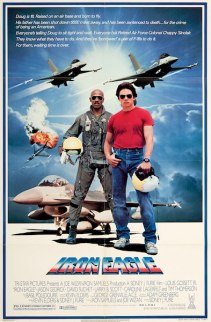 You know how sometimes you see a bit of a movie on TV and you end up watching just long enough to get caught up so much you’re in for the long haul, no matter what the quality? No? Maybe it’s just me (usually around this time of year, it seems). Iron Eagle is, naturally, my latest example of this phenomena.
Quite what drew me to Iron Eagle I’m not sure. Perhaps it was seeing a young David Suchet. Perhaps it was the ludicrous ease with which a bunch of teenagers pilfered a variety of highly sensitive materials from an airforce base in the sequence I happened to catch upon ending a recording I’d been watching. Whatever it was, after being suckered for ten minutes I had to rewind and give it a full go. (Sadly my digibox’s rewind didn’t quite get back to the beginning of the film, but I don’t think it’s likely to change my opinion.)
The whole of Iron Eagle is like the sequence I mentioned: daft and implausible. The plot, for those unaware of the film (which included me), is that an American pilot is captured by Qatar due to flying into their airspace, even though he was hundreds of miles outside it. When he’s sentenced to execution and the US Government refuses to do anything practical to get him back, his teenage son — who he’s been illicitly teaching to fly fighter jets — resolves to steal one and go get his dad. Hells yeah! Or something.
 Like I said, daft and implausible. And that isn’t necessarily a problem, but as you watch Iron Eagle you can’t help but wonder if the filmmakers are trying to convince viewers it could be plausible. And it isn’t. Not in the slightest.
Suchet would make an excellent villain — the role he’s cast in — but he’s criminally underused. He’s even dispatched out of hand at the end. None of the other performances are really worth noting. Jason Gedrick, as the son, may look the part — in an ’80s kinda way — of the kid who’s actually a hot-shot pilot, but his acting chops are choppy. He went on to be in Boomtown, incidentally, a much underrated cop show that I really rather liked. I don’t really recall him in it.
Talking of Other Things People Have Done, did you recognise the director’s name? Furie helmed not only the risible Superman IV (I’m not sure I’ve seen all of that, but I’ve seen enough to know it’s risible) and… The Ipcress File. The Ipcress File! 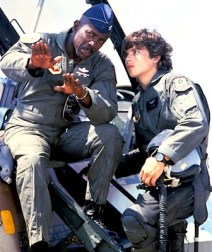 I’ve not seen that either, but I think we all know this is a serious step down. Poor man. His career went on to include Iron Eagle II and the direct-to-video Iron Eagle IV. Yes, there are four of them, and apparently they’re even worse and not in keeping with the spirit of this first. Poor man.
On the bright side, the son likes to listen to music while flying his fighter jet (as you can see, the plausibility just goes on and on), one of his choice tracks being Queen’s One Vision. Anything featuring a Queen song multiple times can’t be all bad.
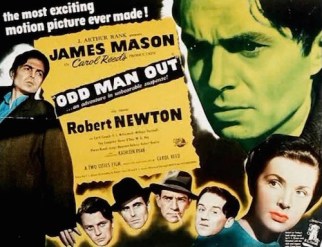 It may be a bit of a cop out to begin a review by pointing you to another, but I must recommend Colin’s heartfelt appreciation at Ride the High Country. It certainly inspired me to watch the film, which had been sat on my V+ box for over a year. As you’re going to read that (assuming you haven’t already), I’ll just offer a couple of observations I jotted down.
The consciously episodic story, screenwritten by R.C. Sherriff, author of the exceptional World War One play Journey’s End, presents us with an array of characters. James Mason is ostensibly the star, but he spends much of the film in a daze, drifting from group to group. And that’s fine — it leaves the way open for other characters to shine. For instance I liked the driver, Pat, played by Cyril Cusack. My notes don’t say why, but I thought his character was rather good — not a good guy, perhaps, but a good character. The real star, if anyone, is Kathleen played by Kathleen Ryan, who comes into her own during the film’s final act and its conclusion. I’d throw an adjective in front of “conclusion”, but perhaps you should discover it for yourself.
This episodic structure does make for some lengthy, perhaps even borderline dull, asides. I could do without F.J. McCormick’s Shell and, especially, 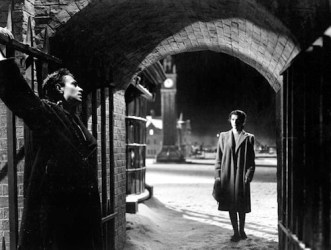 Robert Newton’s Lukey. (You’ll also note Newton’s performance is criticised in Colin’s piece so, in aid of not sounding like I’m too easily influenced, I’d like to point out I didn’t make the connection between his comments and my own notes on Newton until afterwards.) Shell and Lukey have a bit of a point in the end, but I didn’t enjoy getting through them in comparison to the rest of the film.
What the structure really facilitates is the depiction of a cross-section of Northern Irish life, and particularly their reaction to “the organisation” — it doesn’t take a genius to guess what that means. As the opening scroll said, this is indeed concerned “only with the conflict in the hearts of the people when they become unexpectedly involved”, but by leaving out detail of the politically contentious background to the unrest, it perhaps robs the characters’ indecision of any basis. All bar a couple of exceptions fall into the “don’t want to pick a side, don’t want to get involved” camp, foisting Johnny out of anything to do with them ASAP, but at least it suggests such a view was widespread across people of all backgrounds.
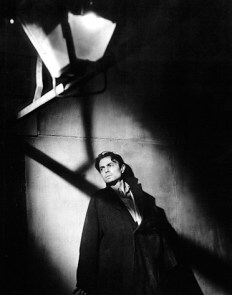 The score, by William Alwyn, is really nice, particularly in certain places — for example when it begins to snow and Johnny wanders the streets, or at its most effective during the haunting climax, as Kathleen hauls a near-dead Johnny through the falling snow towards the safety of the shipyard as the police finally close in.
My notes also say “discuss the use of the kids? And Johnny’s visions?” I’m afraid to say I forget why. Comments on these elements are welcomed.
I hesitate to make a comparison between Odd Man Out and The Third Man, director Carol Reed’s more famous film noir, because I’ve not seen the latter for far too long; but I imagine this holds its own, because it’s certainly an engaging and suitably unusual entry in the genre.
2010 has been kinder to 100 Films after the last two years, where I first barely scraped to 100 and then failed to reach it (not that I’ve gone on about it). This year, I made it to 100 in September before going on to a grand total of 122 — which, if you’re interested, makes it my second best year, behind the first by seven films.
But now 2010 is over — well, obviously, it finished a week ago — but I mean that 100 Films’ 2010 is over, this being the final post related to those 122 films… other than the half-dozen reviews I’ve yet to post, that is (and that too is an improvement on last year, when I had 20 left over). This final look back has my usual mix of features: a ‘Bottom Five’, a ‘Top Ten’, some ‘Also Ran’s, and ‘Didn’t Run’s too.
I’m sure you don’t need reminding at this point (but just in case) that this is all a review of my 2010 — the films I saw for the first time, not those that hit cinemas for the first time. If you’d like a list of the 122 titles that had a chance of reaching either of these lists, please look here.
Sitting comfortably? Good. Then how about:
 Max Payne
This year’s only single-star film nearly didn’t sink to such depths, but it was ultimately deserved. It’s an action movie without much action; a thriller without any thrills; a fantasy movie that isn’t meant to be one. It’s also a load of rubbish and you should avoid it. Play the game instead.
 Righteous Kill
De Niro and Pacino, together, for a whole film! Cor! Except it’s more bore (see what I did there?) in Jon Avnet’s needlessly complex thriller, with filmdom’s most guessable twist — there’s a good chance you’ll’ve got it from the trailer. Watch their one shared scene in Heat on loop instead.
 The Seeker: The Dark is Rising
Another British children’s fantasy book series reaches the big screen, but unlike uber-success Harry Potter or the Narnia series, this is ruined the traditional way: Americanisation. Though set in Britain with a largely British cast, ruinous changes abound. A few good moments can’t redeem it.
 Elektra
If you thought Daredevil was bad, don’t even consider going anywhere near its spin-off. I liked Daredevil, but I could find little to enjoy in this sloppy, ill-considered fantasy/action flick. It’s this kind of incohesive tosh that kills whole genres. How do such risible screenplays even get made?
 The Emperor’s New Groove
I could’ve put something like Iron Eagle as my last choice, but I just don’t care enough about it to hate it. Emperor’s New Groove, on the other hand, is a Disney animated film — I always want to like Disney’s animated films (I guess it’s a childhood thing) and this one is rubbish. Boo.
This year’s top ten seems inordinately coloured by comedy — perhaps, more than ever, it’s not so much the “best films I’ve seen” as “my favourite films I’ve seen”. Look out for a few more serious honourable mentions at the end.
 10) Clue
I think it’s safe to say Clue isn’t the greatest film ever — indeed, I’ve ranked nine above it (ho ho), and there are certainly Better films I’ve left off this list — but I enjoyed it immensely, now that I’ve finally seen it. I can’t help but think its lowly-to-non-existent reputation means a lot of others who’d enjoy it haven’t seen it either.
 9) Is Anybody There?
Comedy-drama — or “dramedy”, if you’re American — often comes in for stick for being neither funny enough to be a comedy nor dramatic enough to be drama. And, sometimes, this is rightly so. When pitched right, however, it’s like real life, and that’s the tone Is Anybody There? hits. An affecting exploration of loneliness, regret, hope, and more.
 8) Sherlock Holmes
The Guy Ritchie-directed reinvention of Sherlock Holmes could — perhaps should — have been a blockbusterised disaster. Instead, he’s still the genius detective we know and love, only now with added ass-kicking abilities. No, it’s not the definitive Holmes, but it is a jolly good and surprisingly inventive take on the character.
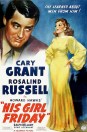 7) His Girl Friday
Sharp, fast, intelligent, hilariously funny — they don’t make films like this any more. Quite literally. Instead, we have the risible …Movie series pumped out at us every year. Something to do with the lowest common denominator Hollywood world we live in, I’m sure, though that’s an explanation rather than an excuse.
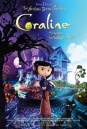 6) Coraline
Last year two documentaries formed the centre point of my top ten, this year it’s two children’s films — but both are ready to be enjoyed by adults too. In fact, Coraline’s so dark and scary in places one might argue it’s more aimed at a slightly older audience. Plus Eamonn Holmes hates it. What more recommendation do you need?
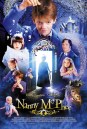 5) Nanny McPhee
More childish than Coraline, perhaps, but there’s an awful lot to enjoy nonetheless. Far more than the Mary Poppins rip-off it looks like from the outside, Nanny McPhee rattles along through a colourful but grounded tale that imparts moral messages without battering you round the head. It’s properly magical.
 4) Anatomy of a Murder
Procedural crime dramas relentlessly fill our TV schedules these days, but few can hold a candle to Otto Preminger’s masterpiece. The precision-engineered storytelling masterfully refuses to deviate from the case at hand, and who but James Stewart could be a lawyer defending a murderer and still have us cheering for him to win?
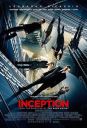 3) Inception
Christopher Nolan’s latest managed the rare feat these days of being a genuine blockbuster with an original story, and converting that into high praise and box office too (and without the ticket-selling boost of 3D). More impressively, it did this while baffling much of its audience. Remains to be seen if it benefits or suffers from repeat viewings.
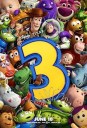 2) Toy Story 3
Returning to a beloved franchise over a decade later would be a mistake in the hands of most filmmakers, but this is Pixar. Toy Story 3 is a worthy successor to its ’90s predecessors; a funny and moving tale that tackles big, emotional themes while still providing a kid-friendly adventure-comedy. It may well be the best film of 2010.
 1) Kick-Ass
I’ve not had so much debate over my #1 film before (though 2008’s 2 & 3 kept me busy for a while). Despite provoking outrage in some quarters, Kick-Ass is an arresting deconstruction of the superhero myth, both as “what if someone really did it?” and how the genre has been presented on our screens. Funny, exciting, it really does… yeah, you can add the pun.
As usual, I just want to highlight a few other films, for various reasons.
I normally mention the 5-star films first, but this year I found it tougher than usual (or, at least, tougher than last year) to settle on the final few slots in my top ten. The films that consequently just missed out by a sliver of fate — and the way my opinions wavered on that particular day — were The Hurt Locker, M and Speed Racer. A few others survived almost as long, but those are the ones I really struggled with.
Secondly, then, I must mention the 16 films that earned themselves 5-star ratings this year. A very respectable seven of them made it into the top ten, namely Anatomy of a Murder, Coraline, His Girl Friday, Inception, Kick-Ass, Nanny McPhee and Toy Story 3. It always seems silly to include 4-star films over some of those that achieved full marks, but that’s life. Two more are among those ‘almost’s — The Hurt Locker and M — while the other seven main listers I left out were The Damned United, Guess Who’s Coming to Dinner, Miracle on 34th Street, Die Puppe, Slumdog Millionaire and The Spiral Staircase. Finally, from outside the main list, was The Special Edition of Beauty and the Beast — or Beauty and the Beast SE to you and I.
Penultimately, a quick mention for a few noir-ish oldies. None of them quite managed to squeeze into my top ten, but this year I’ve really enjoyed the likes of Ministry of Fear, The Outrage, Odd Man Out and, of course, The Spiral Staircase. Plus, the cake-centric intro to my Ministry of Fear review is still one of my favourite things I’ve written for this blog.
And finally, while I’m on older pictures, a quick nod to the rest of the Ernst Lubitsch silents I watched in a rather intensive week back in January. Die Puppe was my favourite, but it was great all round to indulge in a chronological run of one filmmaker’s early work. I find silent movies to be a rather rich flavour of film — there’s much to appreciate, but too many too close together and it gets a bit sickly. I rather gorged on them that week, hence why there’s been no repeat (as yet) of my Silent Week concept. Hey-ho.
As ever, allow me to remind you that this hasn’t been a Top 10 of 2010 (only my 2010), but as new films do feature it’s worth considering that there were, as always, a number of notable releases this year that I’ve yet to see. Unsurprisingly — I mean, I only made three trips to the cinema and only saw seven 2010 films in total.
In my annual tradition, then, here’s an alphabetical list of 50 films — chosen for a variety of reasons, from box office success to critical acclaim via simple notoriety — that are listed as 2010 on IMDb and that I’ve not seen.
This year, I considered changing my remit to cover films released in the UK in 2010, for a more accurate account of what I might actually have seen. Using IMDb’s dates means various films fall through the cracks — foreign films that take time to get here usually, but also productions like Season of the Witch, which was made in 2009 but not released ’til early 2011. But I hate it when you see all of [X Year]’s Best Picture nominees turn up in an [X+1 Year]’s list of best films simply because over here they were released a couple of days into January instead a couple of days before it. IMDb’s year of production is, one might argue, as arbitrary a way of dividing them up as UK release date, but it does last longer in the consciousness — and it stops The Best Picture Of [X Year] turning up in a My Favourite Films Of [X+1 Year] list. I suppose I’m at a slight advantage though: by definition I don’t have to have seen these films, whereas a magazine / website / film review programme / blogger has to have had the chance to see something (and, obviously, to have used that chance) to put it in their year-end Top 10.
But hark at me, I’ve waffled on for an age about something fundamentally unimportant. Here’s the damn list.
127 Hours
4.3.2.1
The A-Team
Black Swan
Buried
The Chronicles of Narnia: The Voyage of the Dawn Treader
Clash of the Titans
Despicable Me
Easy A
Eat Pray Love
Exit Through the Gift Shop
The Expendables
The Fighter
Four Lions
The Ghost (aka The Ghost Writer)
Green Zone
Harry Potter and the Deathly Hallows: Part 1
Hot Tub Time Machine
How to Train Your Dragon
Iron Man 2
Jonah Hex
The Karate Kid
The King’s Speech
Knight and Day
The Last Airbender
Legend of the Guardians: The Owls of Ga’Hoole
Let Me In
Machete
Monsters
Nanny McPhee and the Big Bang
Piranha 3D
Predators
Prince of Persia: The Sands of Time
Red
Resident Evil: Afterlife
Salt
Saw 3D
Scott Pilgrim vs. the World
Shrek Forever After
Shutter Island
The Social Network
Tangled
The Town
Tron: Legacy
True Grit
The Twilight Saga: Eclipse
Unstoppable
Vampires Suck
Wall Street: Money Never Sleeps
Winter’s Bone
That’s the end, then. And if you read it all, you encountered somewhere in the region of 78 films (slightly more if you followed the Lubitsch link). That was worth coming all the way down here for, wasn’t it?
Right, I’m off to watch some more films. I’ve got another 100 to get through you know.
And that’s the end of my repostathon, too!I did it!
After last year’s slight shortfall, that’s the big news this year. And unlike 2008, where I scraped to 100 in the year’s dying days, I instead made it in the dying days of September — leaving a whole three months to spare! Sadly I didn’t use those to beat my previous best, 2007’s 129, but there’s always next year.
So, here’s the list of all I saw. Slight change this year: the list is in numerical order, aka order viewed. Because I don’t post reviews in order any more, and because there’s an alphabetical list of all reviews, this seems the most unique — and therefore vaguely worthwhile — way of doing it. I go back and forth on whether numerical or alphabetical is ‘right’ every year, so don’t be surprised if it changes back in 2011.
After the lists comes the usual array of fascinating statistics. If you’d like to skip straight down to those — scrolling can be an awfully tiring business after all — then please click here. Otherwise, on with the 131 things I have to mention…
 #1 Slumdog Millionaire (2008)
#2 His Girl Friday (1940)
#3 The Man Who Sued God (2001)
#4 Ich möchte kein Mann sein, aka I Wouldn’t Want to Be a Man (1918)
#5 Die Puppe, aka The Doll (1919)
#6 Die Austernprinzessin, aka The Oyster Princess (1919)
#7 Sumurun (1920)
 #8 Anna Boleyn (1920)
#9 Die Bergkatze, aka The Mountain-Lion (1921)
#10 Ernst Lubitsch in Berlin: From Schönhauser Allee to Hollywood (2006)
#11 Anatomy of a Murder (1959)
#12 Wallander: The Secret, aka Mankell’s Wallander: Hemligheten (2006)
#13 Air Force One (1997)
 #14 Million Dollar Baby (2004)
#15 What About Bob? (1991)
#16 Star Wars: The Clone Wars (2008)
#17 Saturday Night Fever (1977)
#18 Kung Fu Panda (2008)
#19 Elektra (2005)
#20 M (1931)
#21 Speed Racer (2008)
 #22 Frankenstein (2004)
#23 Doctor Faustus (1967)
#24 Deja Vu (2006)
#25 Juno (2007)
#26 The September Issue (2009)
#27 Choke (2008)
#28 Clue (1985)
#29 Death Wish (1974)
 #30 Seraphim Falls (2006)
#31 Waitress (2007)
#32 The Illusionist (2006)
#33 Lesbian Vampire Killers (2009)
#34 Saw V (2008)
#35 Titanic (1997)
#36 The Condemned (2007)
#37 Ghost Town (2008)
 #38 Alice in Wonderland (3D) (2010)
#39 Kick-Ass (2010)
#40 Wallander: The Revenge, aka Mankell’s Wallander: Hämnden (2009)
#41 Evangelion: 1.11 You Are (Not) Alone, aka Evangerion shin gekijôban: Jo (2007/2009)
#42 Burn After Reading (2008)
 #43 Inkheart (2008)
#44 First Blood (1982)
#45 Sherlock Holmes (2010)
#46 Righteous Kill (2008)
#47 The Chronicles of Narnia: Prince Caspian (2008)
#48 Taken (2008)
#49 Sherlock Holmes (2009)
#50 Sword of Sherwood Forest (1960)
 #51 Tu£sday (2008)
#52 Insomnia (1997)
#53 Coraline (2009)
#54 Knowing (2009)
#55 Ivanhoe (1952)
#56 National Treasure: Book of Secrets (2007)
#57 Max Payne (Harder Cut) (2008)
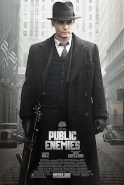
#58 Public Enemies (2009)
 #59 Final Destination (2000)
#60 2012 (2009)
#61 The International (2009)
#62 True Lies (1994)
#63 Guess Who’s Coming to Dinner (1967)
#64 Mulan (1998)
#65 Get Smart (2008)
#66 Guess Who (2005)
 #67 Pale Rider (1985)
#68 Is Anybody There? (2008)
#69 Inception (2010)
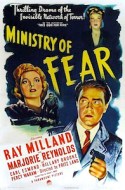
#70 Ministry of Fear (1944)
#71 Panic in the Streets (1950)
#72 Terminator Salvation: Director’s Cut (2009)
#73 Dragonslayer (1981)
#74 Star Trek: First Contact (1996)
 #75 Nanny McPhee (2005)
#76 Final Destination 2 (2003)
#77 Total Recall (1990)
#78 Late Spring, aka Banshun (1949)
#79 Sherlock Holmes Faces Death (1943)
#80 Ocean’s Eleven (1960)
#81 Star Trek: Insurrection (1998)
#82 Bride & Prejudice (2004)
 #83 Final Destination 3 (2006)
#84 Matchstick Men (2003)
#85 The Damned United (2009)
#86 Snake Eyes (1998)
#87 Daylight (1996)
#88 Night at the Museum (2006)
#89 The Seeker: The Dark is Rising (2007)
#90 Bhaji on the Beach (1993)
 #91 The Band Wagon (1953)
#92 Force of Evil (1948)
#93 Brigadoon (1954)
#94 The History Boys (2006)
#95 Gigi (1958)
#96 Robin Hood: Director’s Cut (2010)
#97 Mystery Science Theater 3000: The Movie (1996)
#98 It Happened Here (1965)
 #99 Hercules (1997)
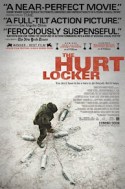
#100 The Hurt Locker (2008)
#101 Road to Rio (1947)
#102 The Emperor’s New Groove (2000)
#103 The Good German (2006)
#104 Witchfinder General (1968)
#105 Grindhouse (2007)
#106 Meet Me in St. Louis (1944)
 #107 Star Trek: Nemesis (2002)
#108 The Night Listener (2006)
#109 Born Free (1966)
#110 Rambo: First Blood Part II (1985)
#111 Living Free (1972)
#112 The Spiral Staircase (1945)
#113 Solaris (1972)
#114 Toy Story 3 (2010)
 #115 Odd Man Out (1947)
#116 The Outrage (1964)
#117 The Wolfman: Unrated Version (2010)
#118 Surrogates (2009)
#119 Rambo III (1988)
#120 Miracle on 34th Street (1947)
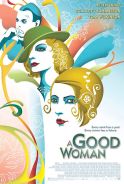
#121 A Good Woman (2004)
#122 Iron Eagle (1986)

Alternate Cuts
#100b Angels & Demons: Extended Version (2009)
#115a The Special Edition of Beauty and the Beast (1991/2002)
Shorts
 #20a Zum Beispiel: Fritz Lang (1968)
#40a Pixels (2010)
#66a 1945-1998 (2003)
#88a The Met Ball (2010)
#100a Tales of the Black Freighter (2009)
#103a How Long is a Minute? (2001)
#118a Verity (2010)
In the end, as you can see, I watched 122 new feature films in 2010 — my second-best year. (All films are included in the stats that follow, even if there’s no review yet.)
Plus, I watched two features I’d seen before that were extended or altered in some way — three if you count Evangelion: 1.11. (All 124 films are included in the statistics that follow, unless otherwise indicated.)
I also watched seven shorts this year (none of which shall be counted in any statistics).
The total running time of new features was 208 hours and 12 minutes. The total running time of all films (including shorts) was 213 hours and 50 minutes.
This year I’ve re-watched just one film from the list already, which was Clue. Toy Story 3 and Inception very, very nearly managed it though…
Last year, for the first time, DVD slipped from the top spot of my viewing format of choice, bested by TV. The story’s even worse this year. TV is more definitively the leader with 68 films, including 24 in HD. Both those numbers beat DVD. Second is Blu-ray with 29, a massive increase from last year’s six. And so DVD comes third (or fourth, if you split TV in two) with just 22. How the mighty have fallen, and all that.
Of the rest, there’s 2 downloads (one in HD) and, more depressingly, my cinema tally: I saw just 3 films on the big screen this year (just one in otherwise-abundant 3D). That’s down on previous years’ totals of (in chronological order) nine, ten, and last year’s six. Quite by bad coincidence, I started this blog at a time when I began going to the cinema an awful lot less — just one year earlier and it would’ve been bursting with theatrically-viewed films. My record on this front is now a bit meagre, really. Finally, VHS stays dead — having dropped from five in my first year to zero last year, I don’t even have a machine set up any more. Poor VHS. (What I failed to notice last year was how that’s almost an exact inversion of Blu-ray, which progressed over the first three years from zero to two to six. Neat.)
The most popular decade was, as ever, the ’00s, with a round 60 films. The competition is for second place, then, and this year it goes to the ’90s with 15. Despite few trips to the cinema, new-boy decade the 2010s managed a fairly respectable 7, leaving it joint 5th. In an improvement on the last two years, every decade since 1910 is represented this year. In chronological order, 3 films were made in both the 1910s and the 1920s, 1 was from the ’30s, 10 from the ’40s, 6 from the ’50s, 8 from the ’60s, 4 from the ’70s and 7 from the ’80s. Diverse.
The average score this year was 3.6. That includes 16 five-star films (joint lowest with the first year) and just 1 one-star film (an improvement on last year’s four). As usual, the majority of films — 62 — scored four stars. There were also 31 three-star films and 14 two-star films. All numbers fall more or less in line with my previous tallies, which is a nice mark of consistency — indeed, the average is the same as 2008, which is only 0.1 less than 2007 and 2009. I’m alternating; how lovely.
7 films appear on the IMDb Top 250 Films at the time of posting. Their positions ranges from 6th (Inception) to 241st (Kick-Ass). As ever, there are too many other lists around to consider them all.
At the end of all previous years I’ve included lists of 50 notable films I’d missed from that year’s releases (and, as usual, 2010’s lot will be in my next post). This year I’ve managed to see 4 more from 2007 (bringing the total number seen from that 50 to halfway, 25) and 9 more from 2008’s list (bringing that total to 13). From the freshest batch — i.e. 2009’s selection — I’ve seen 8. Hopefully further films from all the lists will crop up as I go through 2011 — heck, maybe one day I’ll have even seen them all! Probably not though.
A total of 99 solo directors and a record 10 directing partnerships appear on the list this year. The most-represented is Ernst Lubitsch with six films, followed by Vincente Minnelli with four. Those with two films to their name are James Cameron, Gurinder Chadha, Clint Eastwood, Jonathan Frakes, Fritz Lang, Ridley Scott and James Wong. Also, R.J. Cutler manages one feature and one short. The remaining 89 directors and all 10 partnerships have, naturally, one each.
36 of the films are currently in my DVD/Blu-ray collection (plus three of the shorts). I’ve also got one digitally downloaded (it was free).
Last year I still had a huge pile of reviews to post well into January; this year, only a handful. And quite aside from them, there’s my ever-so-exciting Top 10 and Bottom 5!
Stay tuned.
Or, y’know, go away and come back later.
 100Films.co.uk