The Silent Child (2017)

2018 #57a
Chris Overton | 20 mins | TV (HD) | 2.35:1 | UK / English & British Sign Language

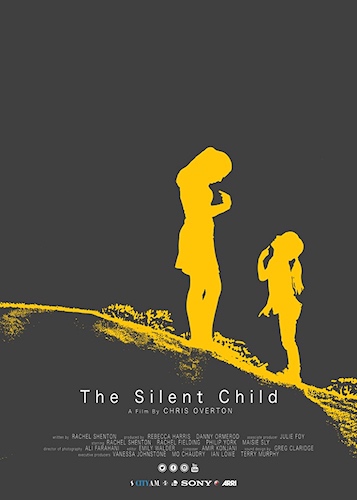
The Silent Child

Oscar statue2018 Academy Awards
1 nomination — 1 win

Won: Best Live Action Short Film.


It’s not often you see short films screened in prime time slots on the nation’s biggest TV network — and by “not often” I mean “never” — but then it’s not often two former soap stars make a timely and affecting drama that wins an Oscar, either.

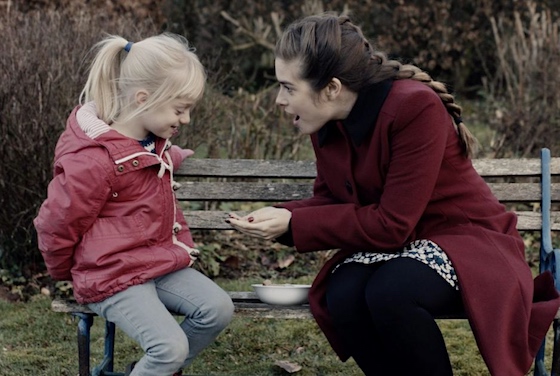
Such is the case with The Silent Child, which stars former Hollyoaks actress Rachel Shenton (who also wrote the screenplay) as social worker Joanne, who’s called in to help young deaf girl Libby (Maisie Sly) prepare to start school. Libby’s upper-middle-class parents (Rachel Fielding and Philip York) have clearly done nothing to help the child, too concerned with making her ‘normal’, and that’s left her obviously miserable. As Joanne begins to teach Libby sign language, she comes out of her skin and brightens up. But her mother remains unconvinced this is the right direction for her child, beginning to see Joanne as more of a threat than a help.

There’s a clear social-conscience motivation behind the creation of this film, highlighted by a downbeat ending that’s well calibrated to anger you into wanting change. It’s depressing that this isn’t set 50 years ago, but is the situation today. It seems hard to believe any parents would be so horrid and low-key abusive as Libby’s, but then I bet they voted Tory, so, y’know. Even then, the cold hard stats presented at the end are sobering. The cumulative effect is powerful and worthwhile.

Libby and Joanne

As a film, it’s well made. Director Chris Overton (Shenton’s partner, who also once appeared in Hollyoaks) and his DP Ali Farahani clearly have a good eye: despite the low budget, it’s often attractively shot, with a misty, cold beauty to its countryside locations. Overton has also managed to coax a charming, subtle, and surprisingly nuanced performance from young Maisie Sly. Shenton is also likeable as her well-meaning but hand-tied friend. Some of the supporting performances are a little ropier, but hey, when you’re making a short film for just £10,000, you get what you can. I’ve seen worse.

There are lots of little touches that suggest Shenton and Overton probably want to develop this into a feature film — hints at subplots, that kind of thing — and there’s definitely room for it to grow, too: while it does work as a piece in its own right, this doesn’t feel like the whole story. I’d be surprised if, after the Oscar success and chatter that’s followed (the film was among the top trends on Twitter for the entire night after its BBC One airing), that doesn’t happen. Certainly, it’d be nice to see things turn out a little more hopefully for little Libby.

4 out of 5

The Silent Child is available on BBC iPlayer until 29th April 2018.

Cars 3 (2017)

2018 #54
Brian Fee | 102 mins | download (HD+3D) | 2.39:1 | USA / English | U / G

Cars 3

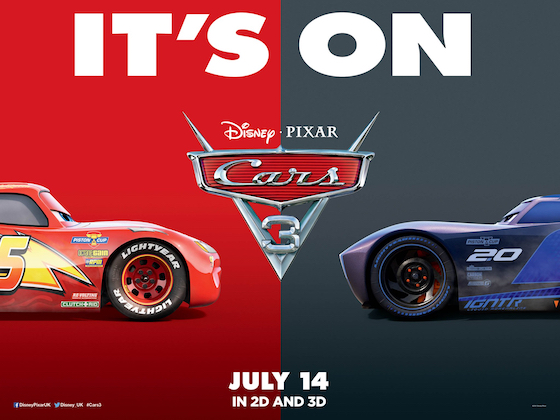
At this point I think it’s fairly well known that the Cars movie series continues not because of any artistic desire on the part of Disney/Pixar, but because the toys the films generate sell like hotcakes. Indeed, that situation hasn’t necessarily changed with this third instalment: apparently Cars 3 features 65 different individual racers, more than both the previous films combined. And several of those appear kitted out in different paint jobs. Disney gotsta make that toy money! The disregard with which they hold the actual movies is perhaps demonstrated by the fact this third one is helmed by a first-time director, Brian Fee, whose previous credits are as a storyboard artist on a couple of Pixar productions. Maybe they lucked out, then — or maybe they actually knew what they were doing promoting him — because I think this is easily the best film in the Cars trilogy.

Beginning with nary a reference to the events of Cars 2, racer Lightning McQueen (Owen Wilson) is back doing what he loves: racing. That’d be American-style racing, i.e. constantly turning left for hundreds of laps. Anyway, turns out there’s a new generation of hot young racers, who are less on their way up and more already here, led by Jackson Storm (Armie Hammer). They use advanced training techniques and statistics to beat the old guard — soon all of Lightning’s contemporaries are choosing to retire or being forced out, leaving him the last one standing… until he crashes in the final race of the season. Is his career over? Well, what do you think? With the backing of a new sponsor, Sterling (Nathan Fillion), and all the latest high-tech gear, Lightning sets to work training with young wannabe-racer-turned-coach Cruz Ramirez (Cristela Alonzo). But as he struggles to regain his mojo, perhaps there’s something to be said for the old ways after all…

Storm vs Lightning

Although I wouldn’t say sports movies are my bag, I think Cars 3 probably benefits from taking a more clean approach to that genre, ditching all the spy hijinks distractions of the last one. That purity of genre keeps it straightforward and focused. It also re-centres itself on Lightning McQueen, shoving Mater (Larry the Cable Guy) back into a cameo-sized supporting role, which is about where he belongs (I wouldn’t say he’s likeable in small doses, but he’s tolerable). It still finds room for humour and levity, just in a more natural, less goofy way.

Around that, it actually takes a run at some weighty themes — specifically, old age and obsolescence — and carries through on them too, with a finale that goes for more of a “finding worth in what you do next” ending rather than a “still got it (for now)” one. Such maturity means it’s perhaps more suited to Pixar’s grown-up fans than their young ones — it’s a surprisingly serious movie, in fact, without being po-faced about it. That said, you could probably play down the thematic stuff and just be entertained: there are still good set pieces, both action-based and comical, to keep the right family-friendly tone.

It makes for a winning combination. Cars 3 may not trouble the upper echelons of Pixar’s greatest achievements, but it is the best of their Cars movies — the first of the trilogy I remember genuinely enjoying, rather than just finding tolerably okay. That might sound like a low bar to set, but Cars 3 clears it admirably.

4 out of 5

Cars 3 is available on Sky Cinema from today.

Beetlejuice (1988)

The 100 Films Guide to…

Beetlejuice

The Name In Laughter
From The Hereafter

Country: USA
Language: English
Runtime: 92 minutes
BBFC: 15
MPAA: PG

Original Release: 30th March 1988 (USA)
UK Release: 19th August 1988
Budget: $15 million
US Gross: $73.7 million

Stars
Michael Keaton (Batman, Birdman)
Alec Baldwin (The Hunt for Red October, Glengarry Glen Ross)
Geena Davis (The Fly, Thelma & Louise)
Winona Ryder (Heathers, Edward Scissorhands)

Director
Tim Burton (Pee-wee’s Big Adventure, Edward Scissorhands)

Screenwriters
Michael McDowell (The Nightmare Before Christmas, Thinner)
Warren Skaaren (Beverly Hills Cop II, Batman)

Story by
Michael McDowell (see above)
Larry Wilson (The Addams Family, The Little Vampire)

The Story
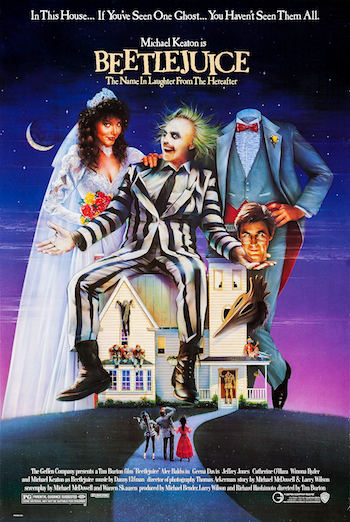
Adam and Barbara Maitland are living an idyllic life in their lovely small-town house… until they die. What’s worse is that they’re condemned to haunt their old home while a family of city-slickers move in and destroy everything they loved about it. To get them out, Adam and Barbara may be forced to call on disgraced ‘bio-exorcist’ Betelgeuse…

Our Heroes
Adam and Barbara Maitland are a sweet couple living a quite life in a quaint little town, until they’re killed in an accident (swerving their car to avoid a very cute dog, to be fair) and have to cope not only with haunting their old home, but also with the afterlife’s bizarre bureaucracy.

Our Villains
Betelgeuse, Betelgeuse, Betelgeuse! He may be offering to help the Maitlands, but in the end he’s their biggest problem. Before that, though, there’s Charles and Delia Deetz, the new occupants who seem determined to ruin the Maitlands’ beloved home.

Best Supporting Character
The Deetz’s daughter, little goth Lydia. She’s the only human who can see the Maitlands, and quickly finds she gets on with them better than her own parents.

Memorable Quote
Juno: “What’s wrong?”
Barbara: “We’re very unhappy.”
Juno: “What did you expect? You’re dead!”

Memorable Scene
When the Deetzes hold a dinner party for some of their city friends, Adam and Barbara attempt to frighten them away by puppeteering them into a bizarre rendition of Day-O (The Banana Boat Song). As well as the supporting cast gamely engaging in a dance routine (er, kind of), they really sell it by simultaneously looking confused and troubled about what’s going on with their bodies. Unfortunately for Adam and Barbara, however, the stunt backfires…

Memorable Music
The famed collaboration between Tim Burton and Danny Elfman dates right back to the director’s first film, making this their second together. But that recognisable Elfman style — so familiar from, er, every other Tim Burton movie (as well as others, of course) — is already very much in evidence. The main theme almost sounds like a greatest hits package for the composer, which does make you wonder how much it’s style and how much he’s been ripping himself off ever since…

Truly Special Effect
According to IMDb, the visual effects budget was just $1 million, leading Burton to decide to make the effects look “as tacky and B-movie as possible” — which is interesting because a lot of them are pretty good, bearing in mind that the film hails from the late ’80s. Obviously they’ve aged now, therefore, but it’s so packed with creative and varied visual trickery that I assume it once played as a kind of effects showcase. It’s only that in an historical sense now, but there’s still a lot of striking and memorable stuff here.

Letting the Side Down
Betelgeuse, Betelgeuse, Betelgeuse! Ironically, I’d like the whole film a lot more if the title character wasn’t in it. Okay, I know not everyone’s going to feel this way — I imagine some people love him — but, for me, he’s by far the worst thing about the film. He starts off with just a couple of small appearances that are only a little irritating, but when he enters the story properly… ugh.

Making of
Believe it or not, the original script was a straight horror film. Betelgeuse was a winged demon, only transforming into a man to interact with humans, whose goal was to rape and kill the Deetzes rather than just scare them off. Lydia was a minor character, with a younger sister who could see the Maitlands. I don’t know how exactly it went from that to a comedy, but maybe it was for the best.

Next time…
An animated TV series, which reconfigured Betelgeuse as the hero and teamed him up with Lydia, ran for 94 episodes between 1989 and 1991. Apparently it was a big hit, and aired on both ABC and Fox simultaneously, becoming “one of the few shows in American television history to be aired concurrently on two different broadcast networks.” Aside from that, a sequel movie has long been mooted, and continues to be an on-again-off-again prospect to this day.

Awards
1 Oscar (Makeup)
2 BAFTA nominations (Make Up Artist, Special Effects)
3 Saturn Awards (Horror Film, Supporting Actress (Sylvia Sidney), Make-Up)
5 Saturn Award nominations (Supporting Actor (Michael Keaton), Director, Writing, Music, Special Effects)
Nominated for the Hugo for Best Dramatic Presentation

Verdict

I knew that I’d seen Beetlejuice many years ago, but I could barely remember anything about it, other than a general sense that I didn’t like it much. So watching it again now was almost like a first viewing, and was almost a revelation too: it’s a very enjoyable film. Pretty much my only problem with it is Betelgeuse himself (as discussed above); but, in fact, he only makes up a relatively small proportion of the movie: he’s in just 17½ minutes, less than 20% of the film. The good qualities in the remainder keep it up at a 4-star level.

The Villainess (2017)

aka Ak-Nyeo

2018 #35
Jung Byung-gil | 124 mins | streaming (HD) | 2.35:1 | South Korea / Korean | 18

The Villainess

After taking bloody revenge on the people who killed her father, skilled combatant Sook-hee (Kim Ok-vin) is arrested and then forcibly recruited into a secret government agency who want her murderous skills. In exchange for ten years of her life and abilities, she’ll get a new identity and her freedom. As Sook-hee adapts to her new situation, flashbacks fill us in on her past — and the role it still has to play in her future.

There are obvious similarities to Luc Besson’s Nikita in that setup, but, frankly, I haven’t seen that movie in a long time, so I’m afraid you’ll have to look elsewhere for a more in-depth comparison than “hey, this is a bit like that!” The Villainess isn’t selling itself on the freshness of its premise, anyway — to most potential viewers, the primary attraction is the freshness of its action sequences. On that, it delivers, and then some.

It starts as it means to go on, opening with an eight-minute tightly-choreographed (fake-)single-take mostly-first-person killing spree. It’s a giddy display of violence that’s sure to entertain those of us who are so inclined. Many more hyper-kinetic, just-as-awesome action sequences follow over the next couple of hours. A motorbike chase that is also a sword fight (!) was a particularly memorable one for me (as I mentioned in last month’s Arbies). That’s also done in a ‘single take’ — if there’s one thing director Jung Byung-gil loves, it’s a fake single-take action sequence. If there’s another, it’s spurting blood — apparently if you strike anyone anywhere you’ll hit an artery and the red stuff will be squirting all over the place.

A sword fight... on bikes!

While the action scenes will be the focus for many viewers, there’s also a surprisingly effective emotional story at the film’s core. It even stops being an action movie for a bit in the middle to become a kind of romantic drama, which sounds ridiculous, but it works. There are plenty of twists and revelations involved in the storyline, so no spoilers here, but I will say it’s ultimately a pretty bleak film — it goes places I don’t think many straight-up action movies would dare. Well, certainly not Hollywood ones, anyway.

And none of that is to say it betrays its action roots — this isn’t one of those films that’s trailed like an action movie but, actually, only has a couple of stunts and is mostly something else. No, this really, really pays off just as a two-hour adrenaline kick; but it’s also, simultaneously, something more complicated. Put both sides together and I think there’s a good chance this will, deservedly, become regarded as a genre classic.

4 out of 5

The Villainess is available on Netflix UK from today.

Bad Boys II (2003)

The 100 Films Guide to…

Bad Boys II

Country: USA
Language: English & Spanish
Runtime: 147 minutes
BBFC: 15
MPAA: R

Original Release: 18th July 2003 (USA & Canada)
UK Release: 3rd October 2003
Budget: $130 million
Worldwide Gross: $273.3 million

Stars
Martin Lawrence (National Security, Wild Hogs)
Will Smith (Ali, I Am Legend)
Jordi Mollà (Blow, Riddick)
Gabrielle Union (Bring It On, Think Like a Man)

Director
Michael Bay (The Rock, The Island)

Screenwriters
Ron Shelton (White Men Can’t Jump, Hollywood Homicide)
Jerry Stahl (Twin Peaks Episode 11, Urge)

Story by
Marianne Wibberley (The 6th Day, National Treasure)
Cormac Wibberley (Charlie’s Angels: Full Throttle, National Treasure: Book of Secrets)
Ron Shelton (Bull Durham, Tin Cup)

The Story
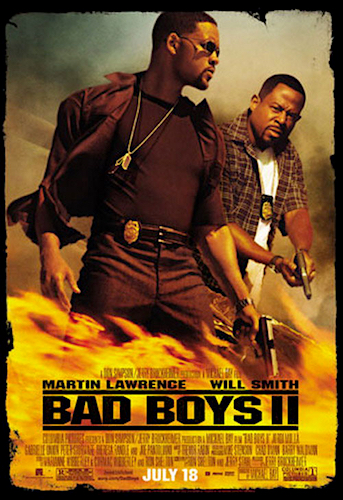
Miami’s finest (or, at least, funniest) narcotics cops attempt to stop the flow of ecstasy into the city, before the cartel masterminding it can escape to Cuba.

Our Heroes
Wisecracking Miami narcs Marcus Burnett and Mike Lowery. If you don’t like them, this isn’t the film for you — it spends an awful lot of time just hanging out with them rather than getting on with the plot.

Our Villain
Cuban drug lord Tapia. I guess they realised the first film’s villain didn’t get enough screen time, because there’s a lot more invested in this one. Unfortunately, he’s not very interesting, and Jordi Mollà’s performance is terrible.

Best Supporting Character
Marcus’ little sister, Syd, a DEA agent. She’s dating Mike, which is a secret from Marcus, and is undercover trying to catch Tapia’s gang, which is a secret from them both. (See also: Next Time.)

Memorable Quote
“We ride together, we die together. Bad boys for life.” — Mike Lowery

Memorable Scene
After a car chase, pile-up, and shoot out with our heroes, the gang of criminals hijack a car carrier to continue their pursuit of Syd. Marcus and Mike give chase along the freeway, at which point the criminals decide to start offloading cars…

Previously on…
The first Bad Boys was Michael Bay’s feature debut, and propelled Will Smith’s career towards movie stardom.

Next time…
A third film has been in on-and-off development for years — the last news seems to be that it might start shooting later this year. Definitely in the works this year is a spin-off series based around Marcus’ sister, Syd.

Verdict

Probably the Michael Bay-iest Michael Bay movie that Michael Bay ever Michael Bay-d— er, made. If the first Bad Boys suggested where Bay’s style would go, Bad Boys II is him in full flow. It’s got all the hyper-kinetic editing, vague sense of space, and demonstrates the same lack of restraint over length (as well as, well, everything else) that Bay would show again and again during the Transformers series. It’s just. So. Long. There are loads of skit-like comedy asides that could be cut. Keep some, sure — it’s an action-comedy, that’s the style — but all of them? I guess it’s something of a hang-out movie in that regard, more about spending time with the characters than getting on with the plot.

It’s also packed to bursting with major action sequences, some of which border on classic but, again, are let down by Bay’s direction. For example, the freeway chase is good, but with a better sense of space and interrelation between its various elements (rather than the tumult of semi-connected images we do get) it could’ve been exceptional. Similarly, the climax is massively overblown in a way that only Bay (well, and now the Fast & Furious films) could do, and yet I didn’t recall a second of it from my previous viewing. It goes to show there’s more to making something memorable than just going Big.

This Letterboxd review sums it up well: “It’s impossible to love, but also hard to hate. It’s ambitious, relatively well shot, too long to call a piece of chuck-on fun, and generally just weird.”

For the record, although I’ve given both films a 3, the first is up towards a 3.5 and this is down towards a 2.5.

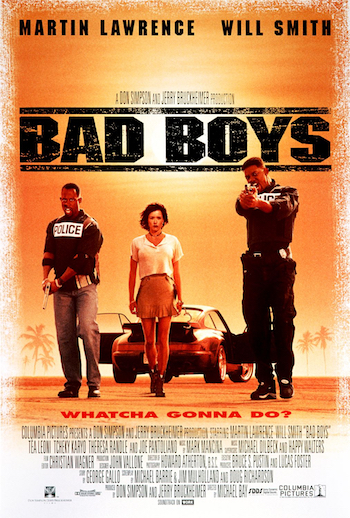
Bad Boys (1995)

The 100 Films Guide to…

Bad Boys

Whatcha gonna do?

Country: USA
Language: English
Runtime: 119 minutes
BBFC: 18
MPAA: R

Original Release: 7th April 1995 (USA)
UK Release: 16th June 1995
Budget: $19 million
Worldwide Gross: $141.1 million

Stars
Martin Lawrence (Blue Streak, Big Momma’s House)
Will Smith (Six Degrees of Separation, Independence Day)
Téa Leoni (Deep Impact, Jurassic Park III)
Tcheky Karyo (Nikita, GoldenEye)
Joe Pantoliano (Empire of the Sun, Memento)

Director
Michael Bay (Armageddon, Transformers)

Screenwriters
Michael Barrie & Jim Mulholland (Amazon Women on the Moon, Oscar)
Doug Richardson (Die Hard 2, Hostage)

Story by
George Gallo (Midnight Run, The Whole Ten Yards)

The Story
When millions of dollars’ worth of heroine is stolen from police evidence, the two cops that brought it in must find the thieves and retrieve the drugs, while also protecting the only surviving witness who’s seen the crooks.

Our Heroes
Marcus Burnett and Mike Lowery, a pair of wisecracking cop buddies, one a family man with a wife and kids, the other a smooth womaniser. Never seen that before.

Our Villain
Drug lord Fouchet. Murder happy and clearly a master at planning heists. Other than that, we barely get to know him.

Best Supporting Character
A witness to some of Fouchet’s crimes, Julie ends up in witness protection with Marcus, who she thinks is Mike, which they have to hide from Marcus’ family. Hilarity ensues!

Memorable Quote
Mike Lowrey: “Now back up, put the gun down, and get me a pack of Tropical Fruit Bubblicious.”
Marcus Burnett: “And some Skittles.”

Memorable Scene
After a shoot-out at the airport, Fouchet escapes in a sports car. Marcus, Mike, and Julie give chase, with the normally slow Marcus driving, as they find themselves in a game of chicken with the concrete crash barriers at the end of the runway…

Making of
Bad Boys was a relatively low-budget production, but, fortunately for director Michael Bay’s ambitions, he was already a wealthy man from directing commercials and music videos — so when the budget ran out before shooting a key part of the climax, he was able to pay for it out of his salary; and when they needed a swish car for the heroes to drive, Bay lent his own Porsche 911 to the production.

Next time…
A sequel came eight years later, with a third in on-and-off development ever since — the last news seems to be that it might start shooting later this year. Definitely in the works this year is a spin-off series based around a character from the second film.

Verdict

The debut feature from director Michael Bay, Bad Boys displays a lot of the things he would become known for: fast-cut action scenes; a sense of style over substance; a little light lasciviousness… Even from his first film, some of his flourishes look over the top. Maybe they’ve just aged badly — it certainly feels of its time, i.e. the mid-’90s (with some ’80s holdovers). Anyway, it’s kept aloft by the buddy act of its two stars, who are pretty funny at times. Bay allows the film to run a mite too long though, and the villain is underdeveloped, both of which hold it back even more than Bay’s sometimes-cheesy direction.

The Past Month on TV #31

Murder abounds in this month’s reviews: Jessica Jones and Cormoran Strike are both on the trail of killers with a personal connection; Shetland’s top cop has deaths old and new on his hands; and Lucifer offers weekly homicide with a fantasy spin.

Meanwhile, the only thing getting murdered on Nailed It are the recipes.

Jessica Jones  Season 2
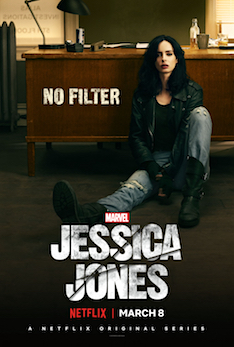
Jessica Jones season 2When the first season of Jessica Jones debuted 28 months ago it was practically a cultural phenomenon. Its fresh, unique take on the superhero genre marked it out as noteworthy even at a time when there are innumerable other films and series in that space. A large part of that was the intelligent and grounded way it engaged with some thorny issues, making it a critical darling and attracting audience admiration too. So I’ve been a little surprised that no one really seems to be talking about season two. Perhaps it’s just me and my little internet bubble, but since the flurry of pre-release reviews I’ve heard nary a whisper. I’m sure there must be reviews and recaps out there, which I wasn’t seeking out so as to avoid spoilers, but I didn’t stumble across any either.

Anyway, this season sees Jessica and co on the trail of the secretive medical organisation who gave her superpowers. I suppose saying any more than that might count as spoilers, depending on your point of view — they structure these seasons like novels, or long movies, meaning explaining the setup for the overall narrative can see you giving away things that don’t happen for three or four episodes. I mean, for example, in season one Kilgrave didn’t even appear until something like episode three or four, and wasn’t a major presence for another couple of episodes. A similar thing goes on this season. Some people criticise this form of storytelling on a fundamental level, wanting a more episodic approach, but it’s how these shows function — if you don’t approve of it, their very form will always offend you. You either give up on them, or take it at face value and roll with it. Sometimes it does make it feel like they’re moving too slowly, but there is a structure to the thing when viewed as a 13-hour whole.

It’s a worthwhile caveat to note that I watched the season in five multi-episode clumps over the course of five days. You definitely get a decent chunk of story when you watch several episodes back-to-back. It would play differently if spread more thinly, I’m certain, but whether that’s a negative (making everything feel slower) or a positive (allowing more time to process each beat of plot and character), I couldn’t say. Nonetheless, I would say that giving the pace a kick up the arse wouldn’t hurt.
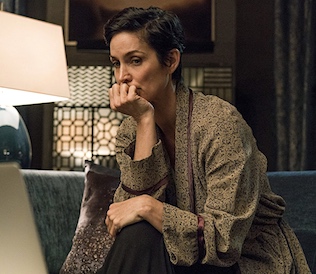
This season's best thingAnd that’s not to say these series never work in episodic form. For instance, events at the start of episode five, AKA The Octopus, see Jessica begin to force herself to be a better person. It’s one of the season’s strongest episodes, in part because of this burst of character development. Okay, it’s a bit blunt, in that she’s told she needs to improve and we see her consciously trying, but it pays off in a scene where she has to be empathetic to question a mentally-impaired witness. It’s not only Jessica who benefits from development: supporting cast members like Malcolm, Trish, and Jeri get meaty subplots to tuck into. Jeri’s is the best — indeed, her storyline might be the strongest bit of the entire season. There’s a fantastic, nuanced performance from Carrie Anne Moss — it feels like they’ve really worked to make use of her in a storyline that’s far more emotional and nuanced than what she’s had previously in these shows.

Conversely, Trish’s storyline feels slapdash. She falls off the wagon… until she runs out of her new drug, after which she’s fine. Well, more or less, because then they make it all about how she’s envious of Jessica’s powers. That’s a fine thread to pull — it’s been there all along — but some of the steps she takes as a result… it feels a bit much. Fundamentally it’s a good idea for her subplot, but I’m not sure it’s been well enough executed.

As for the main story thread, although the season starts off in the mould of a superhero thriller (like most of these Netflix/Marvel shows), around the halfway mark it morphs into a family drama. A family drama where people have superpowers, and get shot, and debate the ethics of murder and running away to non-extradition countries, but, y’know, some families are unique. It also does the material the courtesy of digging into it. Several times the season reaches what looks like an ending, and in other shows would be, then pushes past it into what happens next; the psychological reality for these characters. That’s what the whole season is about, really: these characters as people, not as heroes or villains or whatever.
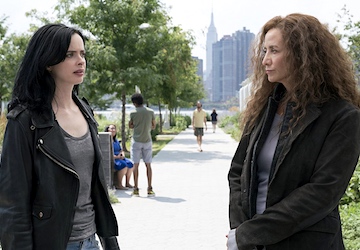
Heroes, villains, or just people?For me, it lost its way a bit again in the final pair of episodes — there are still really good bits, but others feel like a wearisome rehash of plot beats familiar from other superhero/thriller series. Eventually it comes to a good ending — there’s a surprising resolution to the plot, plus an epilogue that lays some intriguing hints for a third season (an inevitability, surely?) — but the faffery of episodes 12 and 13 to get us there… there were more streamlined ways to do this, I think. Or, considering the mandated episode count they have, more interesting ways to have spent the time. So it’s not perfect, but it’s still one of the best of the half-dozen Netflix/Marvel shows.

Strike  Career of Evil
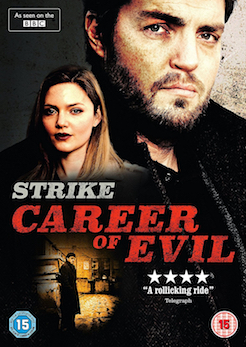
Strike: Career of EvilThe latest Strike adaptation (and the last for at least a couple of years) was the best so far, I thought — a mysterious, reasonably complicated case, and plenty of character stuff for our likeable pair of heroes, too. The latter is certainly a big part of the series and its appeal, sometimes to the detriment of the actual investigation storyline, I suspect. By which I refer to the fact that some fans of the books have complained that the series isn’t devoting enough time to each adaptation, necessitating big cuts to the plot to fit into just two hours. I’ve not read them myself, and such editing didn’t feel noticeable during the first series, but Career of Evil did feel a little hurried at times. It’s hard to deny that the BBC have raced through their adaptations a little too fast. And now we have to wait goodness-knows-how-long to find out if Robin manages to stay married to her new husband. At the start I thought this would be a series that avoided the clichéd will-they-won’t-they between the male and female leads, but clearly it isn’t. Really, I don’t care too much if they get together or not, but her husband’s a bit of a dick and I look forward to her ditching him.

Shetland  Series 4
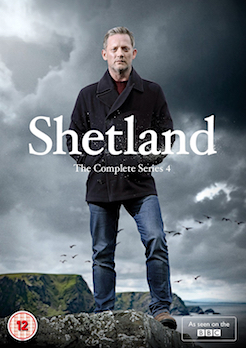
Shetland series 4In almost the polar opposite to Strike, Shetland is no longer based on the books that inspired it (even though I believe there are one or two they’ve not adapted), and it takes a whole six episodes to tell its story. Actually, I feel a bit daft calling Strike’s case “complicated” now, because it’s as nothing to this series of Shetland, which sees DI Perez and his team struggling with both a 23-year-old cold case, which has resurfaced because the convicted murderer has just been awarded a mistrial, and a new murder with clear echoes of the first. If that wasn’t enough, the investigation leads them to Norway, where both the suspicious activities of an oil drilling firm and the plotting of a far right nationalist group come into play. Shetland has always had a bit of Scandi Noir about it (must be something to do with the cold northern environs), but it strays even further into that territory by, you know, actually going there.

All this while dealing with the continued fallout of events from last series in a respectful, mature, understated, and relevant manner. It might look like “just a cop show”, but there’s some depth here; and when everything finally comes together and the truth is revealed in the final episode, there are some revelations and developments that really hit home — it’s sad and horrifying, without wallowing in it or going tonally overboard. Good news: a fifth series has already been commissioned.

Nailed It!  Season 1
Nailed It!Not a reality show about manicurists (that’s what it sounds like, doesn’t it? If I was making a reality show about manicurists I’d be annoyed this took my title), but rather Netflix’s answer to The Great British Bake Off (possibly literally: they were miffed they didn’t get a chance to bid for it when it went to Channel 4). It’s not about super-skilled amateur bakers, though, but rather normal folk who attempt the kind of grand bakes you sometimes see online… and fail miserably. It’s like that bit of An Extra Slice where they look at viewers’ photos, only turned into a whole programme. It’s also very American — brash, loud, fast, unnuanced… It’s also the way it’s shot and edited, very much more like American reality series than British ones, but I shan’t bore you with a Media Studies-esque explanation of that.

So, for all those kinds of reasons, the first episode nearly put me off, but I stuck with it and it turns out it’s quite fun once you get used to it. It’s not as nice as Bake Off, but they’re not mocking the contestants either. Sure, they want them to mess up (they’re given ludicrously tight deadlines and bloody hard bakes), but it’s in a spirit of fun. Another difference between the UK and US shows: on Bake Off taste and decoration are equally important, leaning towards the former; on Nailed It, they do taste the bakes, but all that really matters is how they look. I mean, if you could distill what the rest of us think of as Americanism into a baking show…

Lucifer  Season 1
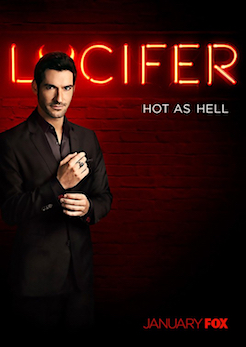
LuciferHaving finally finished Castle last month, there was a gap in our viewing schedule for a light crime-of-the-week cop show. Lucifer seemed to fit the bill. For one thing, it’s been knocking around for a few years now, meaning there’s a nice backlog of episodes to get through. Loosely inspired by a DC comic, it’s about the actual Devil quitting Hell and setting up a life in Los Angeles, where — for one reason or another — he ends up helping the police investigate murders. Meanwhile, he enters therapy, and there’s an angel knocking around who wants to drag him back to Hell. The series nicely balances the bog-standard US-cop-show case-of-the-week stuff with the ongoing fantastical subplots, powered by a cast of engaging characters with conflicting motives. Best of all is the lead, Tom Ellis, giving a deliciously charming and slightly camp turn as the Prince of Darkness himself as he tries to become a better person. I’m not sure the series has really made any waves (especially on this side of the pond, what with it being an Amazon Prime exclusive here), but it’s really rather good. I mean, it’s not going to be challenging Quality TV for greatest-of-all-time status — it’s still a case-of-the-week buddy show when you boil it down — but it’s done well and a lot of fun.

Also watched…
  • The 90th Academy Awards — A solid but uneventful ceremony this year, I thought; a bit like everyone was playing it safe after last time.
  • Absentia Season 1 Episodes 7-10 — I was quite positive about this last month, but the second half of the series squandered my goodwill. It got a bit too daft, and the characters were too stupid (especially the husband). If it gets recommissioned I’m not sure I’ll bother.
  • The Great Stand Up To Cancer Bake Off Series 1 Episodes 1-3Bake Off’s channel change means it’s on its third charity, with its most unwieldy title yet. Watching celebrities fail at baking is still just as amusing though.
  • Not Going Out Series 9 Episodes 1-2 — Some people seem to write this sitcom off without a second thought, I guess because from the outside it looks a bit old-fashioned. Maybe it is. But it makes me laugh pretty consistently — what else do you want from a sitcom? Plus, this year’s second instalment, Escape Room, was a great bottle episode.

    Things to Catch Up On
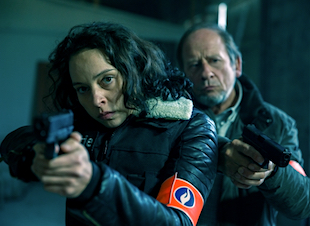
    13 CommandmentsThis month, I have mostly been missing The X Files season 11, which finished earlier this week in the US (and comes to the same end here in the UK with a double-bill on Monday). I watched (and reviewed, natch) its first episode last month, but that was so uninspiring that I haven’t yet bothered to continue. I’m expecting the rest of the season to be an improvement (not that I’ve read any reviews — I’m just basing that on the show’s own form), but still, here we are. Other than that, I can’t think of anything new that I’ve missed; although I did happen to see an ad on Channel 4’s app for Belgian import 13 Commandments, which they reckon “makes Se7en look like Sesame Street”. As Se7en’s my favourite film, I feel I should give that a shot, but I don’t know when I’ll find time for its 13 episodes.

    Next month… Look away! Netflix’s vile family dramedy returns for a second series of Unfortunate Events.

  • Long Way North (2015)

    aka Tout en haut du monde

    2017 #33
    Rémi Chayé | 78 mins | streaming (HD) | 2.35:1 | France & Denmark / French | PG / PG

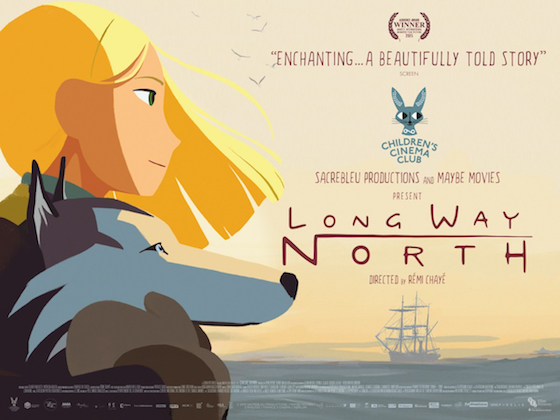
    Long Way North

    I can’t remember what brought this French-Danish animation to my attention, but I’m glad something did because it’s a beautiful little film that deserves to be better known. Set in the late 19th century, it’s about a young Russian girl, Sasha, who embarks on an adventure to the North Pole, following in the footsteps of her missing grandfather.

    Regular readers may recall I ranked it among the top movies I saw last year, when I cited the “understated beauty in its deceptively simple visual style”. Indeed, the animation initially seems so plain that it feels like watching a draft animatic, but that conceals its ability to reveal subtleties when needed. In the end, the distinctive look is part of the film’s considerable charm.

    I also mentioned its “equally subtle but strong feminist streak”, another positive aspect. Sasha is strong-willed and capable, but not without her faults, which makes her an engaging heroine. The film doesn’t overplay its “girls can too” side, which only makes it more successful, I think.

    There’s none of the epic action sequences or broad humour that most English-language animation assumes kids need to keep them engaged, but instead Long Way North offers good characters on a proper old-fashioned exploration adventure. Highly recommended.

    5 out of 5

    Long Way North placed 13th on my list of The 17 Best Films I Saw For the First Time in 2017, which can be read in full here.

    Make/Remake: Deaths at a Funeral

    In 2007, Frank Oz directed a gaggle of British thesps (plus Peter Dinklage) in a darkly comic farce set during an English funeral.

    Just three short years later, director Neil LaBute and a gaggle of American comedians (plus Peter Dinklage) remade it in the US.

    Why did they so speedily re-do an English-language film in English? Goodness only knows. But I watched both versions almost back to back, so here are my thoughts…

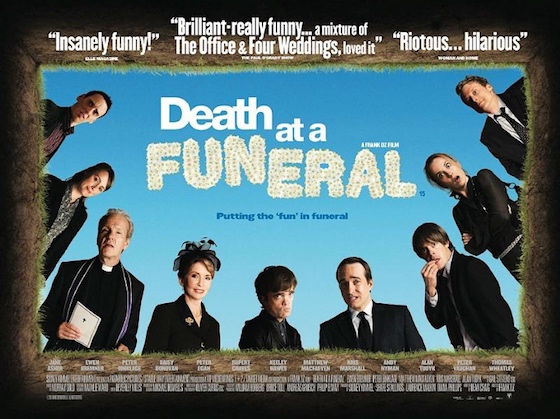
    Death at a Funeral
    (2007)

    2018 #44
    Frank Oz | 91 mins | streaming (HD) | 1.85:1 | UK, USA, Germany & Netherlands / English | 15 / R

    Death at a Funeral (2007)

    The plot of both versions is identical: a group of family and friends gather at the home of the family’s patriarch for his funeral. A variety of subplots unfold from there, but the main one revolves around the appearance of a guest that no one knows, and what he wants.

    The thing that surprised me most about Death at a Funeral is how well-liked it is online. I vaguely remember it coming out but thought it had been mostly ignored, but it has a fair amount of ratings on IMDb (a similar number to films like All About Eve or Dumbo), and relatively high user scores on sites like Letterboxd too. I thought maybe people (well, Americans) had come to it via the remake and it seemed a lot better by comparison, but that has less than half as many ratings on IMDb, so…

    I was mulling on this a lot because often I like films a bit more than the online consensus, but I wasn’t feeling it with this one. I certainly enjoyed it, but it takes a while to warm up, the laugh rate isn’t quite high enough, and some of the storylines feel overly familiar (how many times have we seen someone accidentally take drugs and try to hide it? I don’t know, but it feels like I’ve seen it a lot). Nonetheless, it develops into a decent little farce. I suppose it’s a black comedy too, what with it being set at a funeral and some of the events that unfurl, but other people have pushed the boundaries of “black comedy” so far in the past couple of decades that it didn’t feel that dark to me.

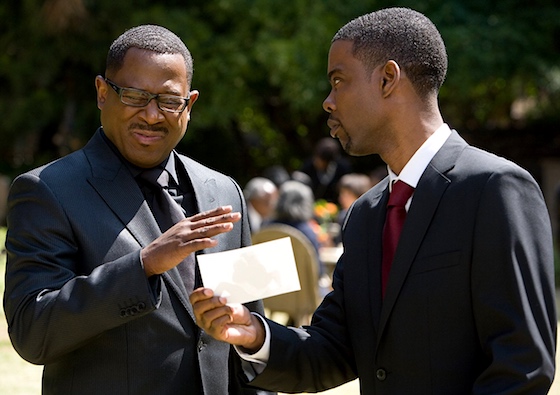
    Peter Dinklage with one of the few British actors who hasn't been in Game of Thrones

    The cast is a quality array of recognisable British faces, many of them not known for comedy (Matthew Macfadyen, Keeley Hawes, Rupert Graves), which lends some surprising strength to a couple of scenes. Others that are more familiar from the genre (Andy Nyman, Ewen Bremner, Kris Marshall) keep the guffawing in check. And there are some Americans too, including an exposed performance from Alan Tudyk (who’s doing a British accent) and a pre-Thrones Peter Dinklage (who isn’t), but they both fit in well.

    The film’s best gag, in my estimation, comes courtesy of the entire cast, in a way; an in-joke that I wasn’t 100% sure was deliberate: the end credits begin with each cast member’s name accompanied by a brief shot of them corpsing. Corpsing, during a film called Death at a Funeral. Well, I do like an in-joke.

    Anyway. Although this original British version of Death at a Funeral wasn’t quite as hilarious as I’d hoped for, it’s worth a watch as a well-performed and amusing farce. And it does improve somewhat when compared to to its remake…

    3 out of 5

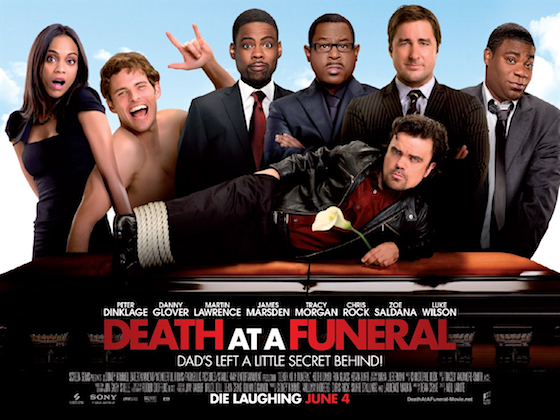
    Death at a Funeral
    (2010)

    2018 #46
    Neil LaBute | 89 mins | streaming (HD) | 2.35:1 | USA / English | 15 / R

    Death at a Funeral (2010)

    Where the original was a little underwhelming, this is just kinda shit. It’s the most pointless remake since Gus Van Sant’s Psycho.

    That comparison isn’t a bad one, because this is a scene-for-scene remake — sometimes shot-for-shot, line-for-line. Even the title sequence is an inferior riff on the original. Not only that, but some bits aren’t even done as well. If it worked the first time, why are you changing it? Maybe the original cast and crew made it look more effortless than it was. Some of it doesn’t even translate very well. For example, there’s a joke in the original about how “tea may solve many things”. Here, that’s translated to be about coffee. Yes, it’s been adapted to suit the different culture, but in the process has lost the cultural significance (to Brits, tea is more than just a popular beverage).

    I guess he's showing him the screenplay

    There are some new gags, most likely the result of the cast improvising (this version is more populated by comedians than the British one). Some of them are even funny. Unfortunately, more often the cast don’t hold up. Most of the performances are like an under-rehearsed am-dram version of the same screenplay. They certainly don’t have the acting chops to sell the more emotional moments. James Marsden is quite good in the Alan Tudyk role, though. Peter Dinklage plays the same part, but not as well — it’s less nuanced, less believable.

    Director Neil LaBute previously found notoriety as writer-director of the Nic Cage Wicker Man remake. This does nothing to rehabilitate his reputation (what is this guy’s obsession with re-doing and ruining British films?) Again like Van Sant’s Psycho, it’s more interesting as a cinematic exercise than as a film in its own right.

    2 out of 5

    Transformers: The Last Knight (2017)

    2018 #47
    Michael Bay | 155 mins | Blu-ray (3D) | 1.90:1 + 2.00:1 + 2.35:1* | USA, China & Canada / English | 12 / PG-13

    Transformers: The Last Knight

    Here we have the fifth Transformers film in 11 years from director Michael Bay. At this point you ought to know what you’re getting — the style hasn’t fundamentally changed since at least the third movie, arguably since the first, so if you dislike those then most probably there’s nothing for you here. I say “probably” because I’ve seen at least one review from someone who despised the fourth film but enjoyed this one, so clearly there’s always room for variability.

    We’re dealing with variations on a theme, then, and The Last Knight brings a few fresh-to-the-franchise plot spins to add a different flavour and texture this time out. Firstly, a prologue tells us that Transformers were already in England about 1,600 years ago, when they fought alongside King Arthur and Merlin, the latter of whom didn’t wield magic but actually Autobot technology (and is played by Stanley Tucci, hamming it up something rotten). This relates to the present day because… well, I could explain it to you, but it gets fiddly and, frankly, if you care then you’ll find out when you watch it. But, basically, in present day America Transformers are hunted and Cade (Mark Wahlberg) is an outlaw helping hide some of them and rescue others. When a MacGuffin from Arthurian times attaches itself to him, he winds up on his way to England to meet Sir Anthony Hopkins, the last in a long order of… oh, yeah, I said I wasn’t going to explain it. Anyway, only Marky Mark and Clever English Totty (Laura Haddock, playing the kind of Oxford professor who dresses like a secretary in a porn film) can save the world. Who do they need to save the world from? Optimus Prime! Dun dun duuuun!

    Now he's called Nemesis Prime, for no good reason

    It’s all nonsense, of course, but then the inherent concept of Transformers never made any sense so what does it matter? Adding in Arthurian legend and making Optimus Prime a baddie doesn’t make it any dafter than it already was. And that’s only the half of it — there are more disparate story threads and subplots than a particularly complicated miniseries. Despite being shorter than the last movie, it’s still indulgently long — and needlessly so, too. There’s a ton of stuff that could be cut to streamline the plot, from individual shots and lines (the Arthurian prologue is probably twice as long as it needs to be) to whole characters (a street girl Cade basically adopts, Izabella, contributes nothing of major significance in the end). After about an hour, the story basically stops and starts again — that’s how long it takes to get to Sir Hopkins. Stuff from the first hour remains relevant, certainly, but I’m sure there were other ways to handle it. By getting through the first hour of the movie in half the time, for one thing. For another, don’t introduce major-seeming characters that you’re then just going to set aside and ignore for the next hour while you introduce whole new ones.

    It’s remarkable how the Transformers movies can have way too much plot and not enough plot all at once. If you want to follow it you have to pay attention, not only because there’s a lot of mythology to take in, but also because Michael Bay chops it all up into bite-size chunks amongst frenetic action sequences. The film is cut like one long trailer — but that’s been Bay’s MO for a while, so, as I said at the start, no one should be surprised. It remains, in its own way, impressive. As I previously said in my review of Age of Extinction, it’s almost avant-garde: a tumble of images and sound that give you an impression of what’s occurring rather than straightforward traditional storytelling. And I say it’s impressive because it must be so much work to create — all the camera setups involved; events staged for a single, fleeting, couple-of-seconds shot; and then edited together with non-stop dynamism, rarely pausing for any notable period.

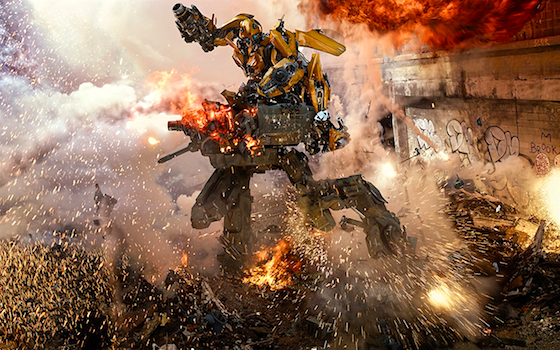
    Non-stop Bayhem

    And if you think that’s mad, wait until you see how Bay uses aspect ratios. Thanks to Christopher Nolan and The Dark Knight blazing a trail, we’ve now had a fair few movies that use the IMAX format for select sequences, and emulate that on home media by allowing the aspect ratio to change — for laypeople, that’s when the black bars at the top and bottom disappear and the picture fills the screen. As I say, generally this is used for specific sequences, or occasionally for a particularly grand individual shot; and usually there are two ratios, approximately 2.40:1 (with the black bars) and approximately 1.78:1 (without). Bay uses… more than that. And he does so almost indiscriminately. They’re so all over the place that you can’t miss them. Like, there are standard shot-reverse-shot conversations between two characters, but each character has a different aspect ratio… and then, as if that wasn’t bad enough, halfway through the scene one side will switch to another ratio! It just leaves you wondering why and how it ended up this way. What was the intention? What was the point? Well, that’s not a new question with Bay — he still uses five shots when one would do, so why not extend that same thinking to the film’s aspect ratio?

    Despite the faffing around, much of it still looks impressive in a purely visceral sense. Like every modern tentpole, it cost a fortune to make ($217 million), but at least it looks like it did: there are so many grand sets and large-scale set pieces, much of it built or performed for real — not the giant robots, obviously, but there are car chases and human stunts and so forth that they did in real-life rather than in a computer. The money is splashed all over the screen, to the nth degree. Is that inherently a good thing? Eh. But it makes you wonder where some other $200m+ movies spend their money — especially when you consider that apparently production difficulties resulted in a lot of material being filmed but never making it into the final cut. How much? Well, supposedly a whole hour of footage was ditched from the original cut to get to the theatrical version. As I’ve already said, the film’s too long as it is, but it’s a shame there are no deleted scenes available because I’d be kind of fascinated to know what more was meant to be there, and to see how much money it looks like they wasted on it.

    They really did hang Marky Mark out the side of a speeding vehicle, donchaknow

    In what we did get to see, the size of the endeavour and the impressive quality of the imagery is emphasised by how it was filmed. A large proportion of the movie was shot in IMAX 3D (apparently 98%, but I’m certain there was more than three minutes in non-IMAX aspect ratios), and there are innumerable moments that benefit from the depth and scope of the format. Post-conversion has come a long way, but I’m not sure it can always equal doing it for real, especially on a format with the quality of IMAX. That said, the visual splendour didn’t strike me as much as it did in Age of Extinction. Perhaps that’s because, as Richard Brody put it in his New Yorker review, Bay’s “sense of speed works against his sense of scale and of detail. All the best moments in the movie — pure images, devoid of symbol and, for that matter, nearly empty of sense — go by too fast, are held too briefly, are developed too little.” There are some great shots in here, but the rapid editing just races past them. If you wanted to find and appreciate the shots fully, you’d have to damn near go through the whole thing frame by frame. I’m not sure they’re that good.

    Although Bay and his directorial style always get a critical slating for these movies (more so than others he’s made in the same period — Pain & Gain and 13 Hours both attracted a reasonable amount of praise), they let him keep making them, and he keeps wanting to. The former makes sense: although you rarely find someone who admits to liking them, they keep making money (The Last Knight is the series’ lowest grosser worldwide, thanks to a particularly poor US showing, but it still took over $600m). As for the latter… no, I don’t know why he keeps coming back. Can you think of another blockbuster-level director who’s made five films in the same series? No one instantly comes to mind for me, and even those who are close (Lucas with Star Wars; Spielberg with Indiana Jones) did so over a long period of time with many films in between. I mean, if Bay wants to do it then why not — it’s his life and career — but I don’t quite understand it.

    The three-headed robot dragon that I almost forgot

    As I said nearly 1,500 words ago (I never imagined I’d have so much to say about this movie — and I haven’t even mentioned the three-headed robot dragon, or the C3PO-alike comic relief butler), everyone should know what they’re getting with the Transformers films by now. The Last Knight shares the same pros and cons as the other entries in the series, to one degree or another — by which I mean that, for instance, I found the plot a little more coherent than last time (though still totally barmy), but I wasn’t quite as bowled over by the visuals (which are at least half the point of these films, I feel). On balance, I’d say it’s one of the franchise’s better instalments.

    3 out of 5

    Transformers: The Last Knight is available on Sky Cinema from today.

    * The listed ratio for The Last Knight is 1.90:1, because that’s the tallest, but its shifts into various other ratios are very obvious, as I discuss in the review. The three I’ve listed are the most obvious, but one of the trailers was shown to use eight slightly different ratios, so who knows how many there really are? ^