December 2010

Happy New Year!

In one minute, technically. But you didn’t read this in that minute, did you.


The final tally

So here we are, the final few new films I watched in 2010. This doesn’t replace my usual pair of closing summary posts, incidentally — they’ll be along as normal at some point in the next week or two.

And, as you’ll see in just a few lines, I sadly didn’t beat my previous record of 129 films. Hey ho — I made it to 100 (and comfortably over it), and after failing last year and barely scraping through the year before, I’m more than happy with that.

Those final few films, then:


#116 The Outrage (1964)
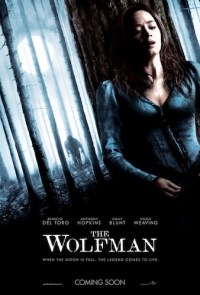
#117 The Wolfman: Unrated Version (2010)
#118 Surrogates (2009)
#118a Verity (2010)
#119 Rambo III (1988)
#120 Miracle on 34th Street (1947)
#121 A Good Woman (2004)
#122 Iron Eagle (1986)


A cancellation

You may have noticed last month that I hinted The Lord of the Rings: The Return of the King would be the first film I watched this month, becoming #115d. “Where’d it go?” you may consequently have wondered.

Well, I did watch it, and it was set to become #115d, but once I sat down to write about all three Lord of the Ringses I found I didn’t have a great deal to say about them at this time, besides some vague introductions and/or conclusions to each article. I rather overestimated myself in adding all three to the roster for this year, I think, especially while I was toiling away on watching and reviewing to reach #130 (not to mention general real world stuff).

So those theatrical LotR reviews are gone, for now. Maybe they’ll turn up next time I watch them, though goodness knows when that might be.


Next time on the all-new 100 Films in a Year monthly update…

It all begins again as we head into 2011, for the fifth time.

500 films in 5 years? Hopefully.

130 next year? We’ll see…

2010’s summary posts will be republished in November.

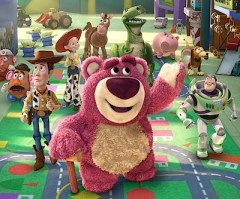
Toy Story 3 (2010)

2010 #114
Lee Unkrich | 103 mins | Blu-ray | U / G

Didn’t get Toy Story 3 for Christmas? Pick it up in the sales, then, because it’s bloody good.

Look:

Much was written about Toy Story 3 when it was released this summer, so I’m not sure how much I have to add, but here we go. It’s no surprise either — that’s what happens when a preeminent and popular studio releases a sequel to a beloved and acclaimed film franchise 11 years after the last instalment. High expectations abounded. For once, they weren’t necessarily unrealistic: if anyone could pull off such a feat, it’s Pixar.

It was somewhat amazing when Toy Story 2 equalled — some (including me) would say bettered — the first film. We may be more used to quality sequels these days but, as major franchises like The Matrix and Pirates of the Caribbean readily prove, they’re still far from guaranteed. To even try again with a threequel seems madness (no one’s told Chris Nolan this either, it seems). But they tried, and they succeeded: Toy Story 3 is at least the equal of the first two, if not once again slightly better — something that is, as far as my memory can muster, unheard of.

Individual adjectives serve admirably: it’s hilarious, emotional, exciting, scary; a great comedy, a great action/adventure. And Ken’s fashion show sequence is worth the price of admission all by itself. It’s kid-friendly, of course, but it’s not just for kids — it’s for young adults, who’ve grown up with these films and these characters and, in a way, are letting them go along with Andy; and for adults, who may have left childish things behind but can hopefully still appreciate the thematic sentiment.

Darker sequences support this interpretation, I think — the furnace climax, for instance, which carries a palpable sense, even to a savvy adult viewer, of “will they really do that?” doom. With the intention being that this is the series’ closing instalment — and with Andy grown up and leaving so that, however things end for the toys, this is The End for viewers — there are times when one wonders just how dark Pixar may be willing to push it. The potential that some or all of the toys may be lost along the way is a genuine fear, a move of blue-moon rarity for modern Children’s Films. This is in addition to the usual Pixar style of including jokes and references to skim over the kids’ heads.

I suppose TS3 may not be quite as effective if the first two films weren’t part of your childhood. I feel they were on the edge of mine — I was certainly too old to actually have any of the toys, for instance; I imagine anyone who had their own Buzz or Woody will feel even more emotional seeing them go through what they do here. Similarly, it pays to be aware of events and jokes in the preceding films. You don’t need to know intricate plot details, but there are plenty of pleasing references to catchphrases and moments.

Is Toy Story 3 faultless? Probably not. But I can’t think of any right now. Sublime.

5 out of 5

Toy Story 3 placed 2nd on my list of The Ten Best Films I Saw For the First Time in 2010, which can be read in full here.

Nanny McPhee (2005)

2010 #75
Kirk Jones | 94 mins | TV | U / PG
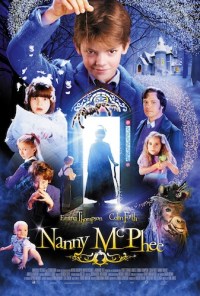
Nanny McPhee is brilliant. But to expand more directly on that sentence would be a conclusion, and so, before that, I present a collection of thoughts on bits I liked. Let’s call it “a review”.

The story is excellent, the kind of tale that imparts moral messages and lessons without you even realising — perfect for kids… and adults. It rattles along throughout, but particularly during the opening, which is surely what you want in a kids’ film: keep their attention! Emma Thompson’s screenplay is a delight. She’s in full control of her material, which allows her to set up rules — such as Nanny McPhee having five lessons to teach — and than almost immediately subvert them — though to tell you how would be to ruin a bit of the fun. Humour is rife, and without even realising it you develop a care for the characters.

Some have criticised the film for having no likeable characters. I can only think they were actually watching something else. Are the children a menace? Certainly — but they clearly have hearts of gold; they’ve been neglected and to an extent rejected; they’re acting up for attention. And they care about each other and always band together — they aren’t squabbling brats, they’re a gang, sticking together to defend themselves from a world that they perceive is out to get them. This is never clearer than when Angela Lansbury’s evil, rich Aunt turns up to take one away, and they do all they can to prevent it. And there are consequences; consequences, in fact, that matter to them, rather than more of the semi-neglectful treatment they’re used to.

And even if you can’t engage with the troublesome children, surely Nanny McPhee coming in to sort them out is therefore a blessing? To say the children are a naughty, nasty rabble but McPhee is an oppressive, overbearing force is just trying to have your cake and eat it — pick a side, or pick both, oh awkward viewer. (And by “viewer” here I mean “one IMDb commenter I read”.)

The cast are exemplary without exception. Thompson, ‘uglying up’ as the titular nanny, conveys all the quiet authority necessary at the start, then softens without ever losing the sense she’s doing what is required; as she states, she never chooses sides. Colin Firth is naturally suited to being a dashing-if-bumbling type, so is also spotless as the father who does care but has forgotten how to show it, with the weight of the realities of the world — otherwise known as Money — pressing down on him. They’re ably supported by an array of British talent: Celia Imrie as a pink, fluffy, and dastardly potential fiancee; Imelda Staunton as a beleaguered ex-army chef; David Jacobi and Patrick Barlow as a Tweedledum and Tweedledee-style pair of comedy funeral attendants; Angela Lansbury as the controlling old Aunt.

Not to mention Kelly MacDonald, the film’s sweetness and light — not like Anne Hathaway’s caricatured (deliberately) White Queen in Tim Burton’s Alice, thank goodness, but more Cinderella-y; the downtrodden but caring servant, who, when given the chance, — well, I wouldn’t want to spoil the ending. You’ll probably guess it anyway. But that’s not the point; indeed, that’s Good Writing, isn’t it — everything must be seeded well in advance, otherwise it’s all a deus ex machina. But this isn’t a time to rant about storytelling mores.

Even the rabble of children are pitch-perfect. With a cast this young that’s as much the skill of Thompson’s writing and Kirk Jones’ directing as any genuine acting talent, but that doesn’t make it any less of an achievement. As the eldest and therefore leader, Thomas Sangster is superb as ever. He gets the most to do, evolving from the awkwardest of the awkward to reveal intelligence and caring. The scene where he visits his father at work to ask him not to marry is almost heartbreaking, the boy’s well-meaning confused for his previous obstructiveness; and what he does next just shows how much he’s evolved. If there’s one flaw among the children it’s that Eliza Bennett (seen to good effect in Inkheart, shot just a year later) isn’t given much to do as the eldest girl; that’s an inevitable side effect when you’ve got a mass of kids fighting for time alongside several significant adult parts.
Around the large cast, there’s plenty more to see. The primary-coloured sets and costumes work marvellously, a delightful mash between reality (the actual buildings, sets, costumes, etc, all look real and period-accurate) and fantasy (the bright colours!) It could’ve been garish; instead, it’s vibrant. The effects are properly magical. They don’t overwhelm, always serving the story rather than themselves, which is probably what makes them all the more effective. The climax is another highlight — though what occurs at the wedding (oh, it’s obvious there’ll be one) I shan’t spoil by describing.

I confess, Nanny McPhee took me by surprise. It always sounded a bit too much like Mary Poppins; it might be passably nice but little more, I thought. But no. It’s its own film, with its own magical nanny. It’s a children’s film, but with plenty for adults to engage with — assuming it doesn’t simply unleash your inner child, which it may well do. It’s exciting, funny, touching, magical and charming, quite often all at once. It’s brilliant.

5 out of 5

Nanny McPhee placed 5th on my list of The Ten Best Films I Saw For the First Time in 2010, which can be read in full here.

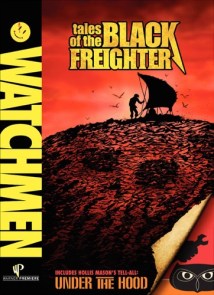
Tales of the Black Freighter (2009)

2010 #100a
Daniel DelPurgatorio & Mike Smith | 25 mins | DVD | 15 / R

In the world of Watchmen, superheroes are real, and so comics have turned to other avenues; mainly, pirates. Threaded through the novel is a boy reading one of these pirate comics, which we also get to see excerpts from, because it (rather obliquely) mirrors the arc of one of the tale’s major characters. As a comic-within-a-comic — indeed, a comic commenting on a comic — it works well as a conceit. But when it comes to adapting the novel to the big screen, how do you convert that?

In this case, as an animation… which was then removed from the feature. It’s back in the home-video-released Ultimate Cut though, which I’ll cover at a later date. First, what of Tales of the Black Freighter as a standalone animation, which is how it was released in the run up to Watchmen’s theatrical run last year.

Appropriately, the short emulates an ’80s Saturday morning cartoon style… albeit in cinematic widescreen, evocative 5.1 Surround Sound, and with horrific R-rated gore. Yes, this probably wouldn’t actually have been shown on Saturday morning TV, even in America. Nonetheless, considering Watchmen’s ’80s setting, it’s a solid choice for this adaptation, which could well have gone down a more modern-styled route.

The story itself is a bit slight. It barely runs 20 minutes once you take off credits at either end, and even at this length feels a little drawn out. It’s a morality play, one that it would take mere minutes to cover the key points of, including a twist ending that seemed surprising in the original. Knowing what was coming, I can’t say if it’s as surprising on screen as it felt on the page; the cartoon is at the disadvantage of presenting the story in one 20-minute chunk, whereas in the graphic novel it’s scattered in small chunks throughout, delaying the reveal and making it harder to piece together the clues.

Overall, however, I did find the story easier to follow in this form. Perhaps Zack Snyder and Alex Tse’s screenplay strips away some of Alan Moore’s typically pretentious narration, or perhaps it was just the benefit of consuming it in one sitting rather than in morsels woven through an already-complex narrative, but keeping track of what’s happening is easier here. Does it lose something when taken out of that context though? Probably, but then I never felt it added much to the graphic novel in the first place. It’ll be interesting to see how it fits into the film when I finally get round to watching The Ultimate Cut — I already have some reservations waiting to be expressed in my review.

I did enjoy Tales of the Black Freighter, though I wouldn’t readily recommend it to others without specific reason. One can easily imagine it as an episode of an anthology series about this mysterious vessel; indeed, thinking of it that way makes me long to see more episodes. But it’s still an odd tale, one created primarily to serve a purpose alongside the main story of Watchmen. I think it does stand alone, but in doing so it becomes reliant on the final twist, which takes a time coming. I’m not sure how many would be interested in the story if they weren’t fans of the novel or film.

It’s got an excellent song over the end credits, mind. Definitely the highlight.

3 out of 5

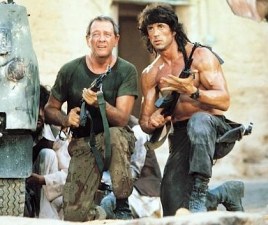
Rambo III (1988)

2010 #119
Peter MacDonald | 97 mins | TV (HD) | 18 / R

As I mentioned in my review of the preceding Rambo film, Rambo III is the one Hot Shots! Part Deux really took to task, and not without reason. Having seen that spoof several times since my youth, a few large chunks of this second sequel felt all too familiar…

Stallone — here serving as writer and star — does leave his character rather open for mockery. Rambo lives as a recluse in a monastery, helping them perform repairs on their temple. Except when he stick-fights for “a little extra money”, and then when he goes off to Afghanistan to defeat half the Russian army single-handed. He does all this showcasing the body of a plastic action figure coated in a year’s supply of Johnson’s Baby Oil, using weapons like explosive-tipped arrows, good for tasks like taking out helicopters. Or obliterating individual soldiers.

It’s thoroughly OTT at every turn, but unfortunately comes several decades before the Ironic Action Movie — unlike Shoot ‘Em Up or (what I’ve read about) The A-Team, it doesn’t know it’s ridiculous.

This is underscored by Stallone again attempting to pack heavy-duty political relevance into the plot. This time it’s Afghanistan, occupied by the Russians with American-supported rebels resisting. How times have changed. Indeed, the situation that area of the world finds itself in now does add a different colour to the film — some might argue the Americans now occupy almost the same position the Russians did back then, for instance — but I’ll leave the specifics of such things to reviewers more versed in the last 25 years of Western intervention in the Middle East.
And did you know, this was the most expensive movie ever made at the time of its release? I didn’t. So there you go.

Rambo III is surely entertaining for some action movie fans, but I can’t say I found it particularly satisfying. Attempts at making a serious political point are misplaced in such a ridiculously implausible action movie, while the action itself is passable rather than particularly enticing. If I were in a generous mood I might afford it an extra star, but I think I’d rather watch a Hot Shots.

2 out of 5

Rambo III is showing on ITV4 and ITV4 HD tonight at 11pm.
Rambo III is on ITV4 tonight, Tuesday 11th February 2014, at 10pm.

Star Trek: Nemesis (2002)

2010 #107
Stuart Baird | 112 mins | TV (HD) | 12 / PG-13

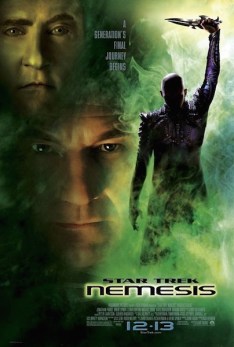
After the widespread disappointment with Insurrection, the ninth big screen outing for Star Trek, fans hoped the tenth, Nemesis, would mark a return to their old adage “even ones good, odd ones bad.” They had reasons to be hopeful: a new director, an Oscar-nominated screenwriter, and (potentially) the final outing for the beloved Next Generation crew. Surely they’d be given a fitting send-off?

Sadly, it wasn’t to be: Nemesis was a critical and commercial flop, the only Trek not to open at #1 in the US, the lowest-grossing of the entire franchise. And quite rightly, because it isn’t very good.

While Insurrection was accused of being dull because it was largely about a dispute over who got to live on a planet, the political side of that kept it engaging. Nemesis’s plot, on the other hand, just doesn’t go anywhere fast. Attempts to liven it up with some action sequences often come off as tacked-on asides, while discussions about just who Picard’s clone is and what he wants feel hollow — of course he’s a nasty piece of work, otherwise your film is completely villain-free!

Picard’s clone is played not by Patrick Stewart, but by a shaved Tom Hardy. Yes, that Tom Hardy. We should be glad Nemesis didn’t kill off his career, which at the time consisted of small roles in Band of Brothers and Black Hawk Down but has gone on to acclaimed leads (or other significant parts) in TV such as Stuart: A Life Backwards, Oliver Twist and Wuthering Heights, and on the big screen in Bronson, Inception and (soon) The Dark Knight Rises and Mad Max 4. He’s not got much to work with here, Only the clonelythough the knowledge of better things to come means his presence somehow lifts his scenes a notch.

The film ends with the most pointless heroic sacrifice I’ve seen for a while. OK, the well-loved character’s dead, but that identical clone — you know, the one they downloaded all the character’s memories into — is still hanging around. Give me strength.

It’s a shame the Next Generation lot had to go out on such a duff note, their series of movies conforming more to the usual sequel pattern of diminishing returns (their first, First Contact, is highly praised, with the next two increasingly slated) than the original series crew’s good/bad alternation. Still, at least it cleared the way for what Trek probably needed more than anything: a good, clean, rebooting.

2 out of 5

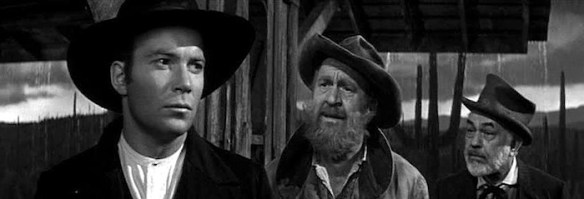
The Outrage (1964)

2010 #116
Martin Ritt | 92 mins | TV | 12

The OutrageIf you’ve ever seen Akira Kurosawa’s classic Rashomon, the opening minutes of The Outrage will leave you in no doubt that you’re watching a Hollywood remake. From the dilapidated-location-in-heavy-rain opening scene on, Michael Kanin’s screenplay sticks closely to Kurosawa’s, and Martin Ritt’s direction doesn’t stray too far either. But don’t mistake this effort for a thoroughly pointless rehash a la Gus Van Sant’s Psycho — though it can’t better the original, The Outrage has much going for it.
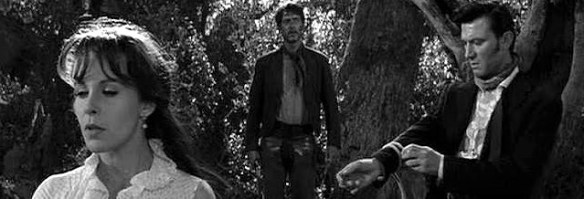
Naturally the story is as fascinating as ever, not just for the fact it offers different versions of what happened, but for what the protagonists feel the need to modify in their accounts — after all, they’re happy to confess to several crimes, so why obscure the facts in other ways. Was Rashomon so conclusive, though? I don’t remember it being so. Yes, The Outrage’s final retelling is still just one person’s perspective, but it’s set up as an objective and definitive one. Plus I didn’t get what was going on with the crying baby, which I seem to remember being in Rashomon but I don’t recall being baffled by. Maybe that’s just me.

Kanin’s reconfiguration of the story as a Western is seamless thanks to numerous intelligent tweaks and changes — if you didn’t know this wasn’t the tale’s original location, you’d have no reason to suspect otherwise. Ritt backs it up with some striking cinematography. It might not be as innovative as Kurosawa’s camera-into-the-sun antics, but he still produces a good-looking and meticulously composed picture.

Paul Newman is excellent, unrecognisable under thorough makeup and consistent characterisation as Mexican outlaw Carrasco. The rest of the fairly starry cast are also very good, the majority treated to interestingly conflicted or gradually revealed characters, not least Claire Bloom as the rape victim and possible murderess — and possibly many other things, depending which version you choose to believe; and possibly all of them, too.

The Outrage doesn’t seem to be very well remembered, rarely seeming to qualify even as a footnote in discussion of Rashomon (unlike, say, The Magnificent Seven for Seven Samurai), which I think is unfair. There wasn’t much chance Ritt’s film could outdo the original at its own game, but what it does manage is the almost-as-impressive achievement of retelling the story differently, and well.

4 out of 5

The Outrage is showing on More4 tomorrow, Wednesday 15th December, at 11:20am.

Verity (2010)

2010 #118a
Stephen Cheung | 9 mins | streaming

There’s probably a worthwhile biopic to be made about Verity Lambert. In 1963, she became not only the youngest-ever producer of a BBC television programme, but the first female one too; the programme she was charged with launching was Doctor Who, which she took from a short-commission no-hoper to a firm part of the national culture — and we all know what’s happened to it since she left in 1965. Her extensive career continued until her death in 2007, encompassing such televisual landmarks (for good or ill) as The Naked Civil Servant, Quatermass, Minder, G.B.H., Eldorado and Jonathan Creek.

This nine-minute effort from student screenwriters Thomas Cowell and Joey Guy is, unsurprisingly, not that biopic. Wisely, it focuses on the start of Lambert’s producing career, dramatising the events around her being chosen by Sydney Newman (then the BBC’s Head of Drama) to shepherd his idea for an educational science-fiction children’s drama, its initial ratings failure and, shortly after, its ratings success. The film’s tagline — “men, bitches and Daleks” — sums up its thematic concerns: Lambert argues with the man who hired her, faces animosity from other female members of staff, and saves the day by forcing the Daleks into the series despite Newman’s forbiddance.

Verity in VerityBefore I set off really critiquing the film, let’s just remember this: it’s a student effort. In that context, I’ve seen far worse — heck, I’ve been involved in the production of worse. Cowell and Guy have set themselves an almost Herculean task by choosing a period tale, which obviously necessitates all sorts of extra effort in terms of costumes, locations, dialogue… And to make it worse, they’ve chosen the ’60s, evoked so faultlessly in almost 40 hours (and counting) of Mad Men. Of course a low/no-budget student film can’t compete with an expensive, acclaimed US TV series; and actually, Verity does a fair job of recreating its era… visually.

The comparison with Mad Men comes up in more than just the visuals though, because that also deals extensively with gender politics in the ’60s. Here, Verity can’t compete. Dialogue is too on the nose — some of the language they use freely is implausible for the era; the way they often bluntly state their point is implausible for any time. “I’m making history” is an unlikely thing for anyone to say ever.

In terms of these specific events, it doesn’t fare much better. Accuracy to facts can occasionally be ignored if it makes for a good story, and Verity’s outright rebellion against Newman’s “no bug-eyed monsters” mandate might appear to be that, but its execution is left wanting. She storms into his office and informs him the Daleks will be in the series, Verity in Sydney's officewhich he accepts with merely a muttered “damn” when she leaves. Sorry, what? There’s nothing believable in that scene, never mind accurate.

After the ratings success of the Daleks’ first appearance, Newman can’t help but think of the “merchandising opportunities”. Really? A lot of stuff was indeed produced during Dalekmania in the mid-’60s, but this is still the state-funded BBC and 14 years before Star Wars — not to mention that Verity brandishes a Dalek toy, which wouldn’t be produced until 1965. (If you really want it rubbed in, the prop she’s holding is clearly a new series toy.)

Ten minutes isn’t much to play with, true, but I think it’s fine for a version of this story. Cowell and Guy have picked their scenes well, it’s just that the actions and words they’ve filled the scenes with don’t ring true. This is only partially the fault of the cast’s rampant overacting — though, in fairness, I think Rachel Watson is fighting against an affected southern/period accent as Verity, and Brian Clarke gives quite a good performance as Newman.

Sydney Newman in VerityTechnically, the piece is just as much a mixed bag. Stephen Cheung’s direction picks out some decent angles, avoiding the flat point-and-shoot trap some student filmmakers are apt to fall into, while the sepia-ish wash helps the period tone and adds a small amount of welcome gloss. The editing is a little rough around the edges, particularly at scene changes and toward the end. YouTube claims it’s viewable in 1080p — whether something went wrong in shooting, editing or at YouTube’s end I don’t know, but it isn’t that high quality. (This last point doesn’t impact on my score at all, it’s just an observation.)
I’d like to say Verity is a good effort, but though it has a few things going for it — and even allowing for the fact it’s a student film — it would clearly benefit from better research and greater subtlety in characters’ actions and dialogue. Must try harder.

2 out of 5

Verity is available on YouTube.

Three years later, the BBC told the same story in Mark Gatiss’ TV movie An Adventure in Space and Time, which is properly brilliant.

The Wolfman: Unrated Version (2010)

2010 #117
Joe Johnston | 119 mins | Blu-ray | 15 / R

The “extended director’s cut” (as the Blu-ray blurb describes it) of The Wolfman begins with a new CG’d version of Universal’s classic ’30s/’40s logo, the one that I’m sure opened many/most/all of their beloved classic horror movies. As well as being a self consciously cool opening shot, it’s a succinct way for director Joe Johnston to signal his intentions: this is not your modern whizzbang horror movie, but something more classically inspired.
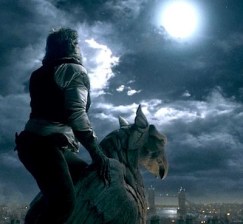
Aside from a murderous opening teaser, the film makes this clear pretty quickly — or rather, quite slowly. The plot and character are allowed to unfurl at a gradual rate, building up to bursts of action later on rather than trying to keep the audience’s adrenaline pumping with a constant barrage of set pieces. This rationale seems to be particularly true in the 16-minutes-longer extended version, which adds additional dialogue-centric scenes from the outset. It also adds flaws like blatant continuity errors: in the original cut, Gwen writes to Lawrence to persuade him to come; in the extended version, she visits him in person, rendering future references to her letter baffling.

An extensive illustrated list of the numerous changes can be found here. Despite the “unrated” branding implying “more gore” as per usual, there’s hardly any of that added. Instead it’s mainly character moments of varying degrees of relevance, plus an array of inconsequential tweaks. I appreciate the attempt to bring a slower, creepier style back to modern horror films, but Johnston over-eggs it at times. This becomes especially evident when the majority — perhaps even the totality — or plot developments and, particularly, twists are guessable far in advance. Trying to lose 16 minutes for the theatrical cut was probably a good idea, though some of my favourite moments lie amongst what was excised.

The other downside comes when Johnston tries to have his cake and eat it. The plot may retain its relatively leisurely pace throughout, but room is found for three or four CGI-packed action sequences. I think the film indulges too much in CGI. It’s a useful tool when used well and all that, and it’s undoubtedly found itself well employed in out-and-out blockbusters, but its obvious presence in even low-key scenes here — it’s used to realise a tame bear and sacrificial deer, for instance — feels incongruous; a sore thumb when so much of the script, plotting and pacing is old school.

There’s plenty of computer work on show in the transformations, fights and deaths too, of course, but I feel a similar sense of incongruity there: after the filmmakers went to publicised effort to make the Wolfman himself a creation of makeup rather than computers, it’s a shame they couldn’t extend the practical approach to more effects, particularly others involving the werewolves. As it stands, The Wolfman’s CGI is unoriginal, the same pretty-real-but-undoubtedly-computer-generated stuff we’ve seen in every blockbuster for the past five to ten years. Even Anthony Hopkins’ decapitated noggin feels like something I saw in some 12A blockbuster in the last half decade.
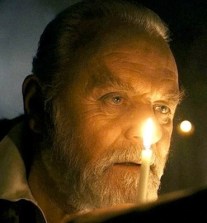
The gore all round, however, was rather good. I’m no gore fiend, but considering the subject matter and the film’s more adult bent, it was appropriately gruesome and, at points — such as the (brief) reveal of Ben Talbot’s mutilated body — scary and plausible; indeed, it was scarily plausible. The same can’t be said of the abundant jump scares though. Such artificial frights are widely considered the scourge of horror movies, and The Wolfman certainly has more than its fair share of cheap ones. Generally speaking, in most films I find such moments to be neutered by the events and signposts being so damned predictable; Johnston is frequently not guilty of this, at least, pulling off some genuinely surprising jolts. And some of them are even legitimate, if such a distinction is possible.

Despite the avowed interest in story, I nonetheless found the scary bits and action sequences to be The Wolfman’s most engaging. Leaving aside the predictability I already noted, the cast are at least partly to blame. I’ve never much rated Benicio del Toro as an actor (with exceptions) and here he does little to change my mind. Indeed none of the cast excel themselves — Hopkins, Blunt and Weaving may not be bad per se, but there’s little to endear them either. Hopkins stands out as either rather good or rather hammy, depending on your point of view; and either way, he’s distinctly Hopkins-y. Plus ça change.

Max Von Sydow’s cameo-sized role (only found in the extended cut) is possibly the film’s best bit. Aside from the fact he’s usually good value, the relevance of the scene itself is unclear. That might sound like a problem, but I choose to see it as making the sequence — and the character — rather intriguing. The rest of the supporting cast are largely British faces recognisable from TV and similarly-sized film roles, playing the parts you’d expect them to and existing primarily as monster ready-meals. Equally, Danny Elfman’s score is disappointingly generic and clichéd, particularly so whenever the film is being the same.
Considering Johnston’s background in family-friendly films, he always seemed an uncertain choice for an adult horror movie. In some respects there was nothing to fear — the adultness is clearly undiluted — but he’s nonetheless made an adequate movie, rather than the exceptional one a classically-styled horror revival deserved. On the bright side, it’s immeasurably better than Universal’s last foray into their horror back catalogue, Van Helsing. In fact, placed in such company, The Wolfman almost begins to look like a masterpiece.

3 out of 5

The Wolfman begins on Sky Movies Premiere tonight at 10pm, and is on every day at various times until Thursday 16th December.

Solaris (1972)

aka Solyaris

2010 #113
Andrei Tarkovsky | 159 mins | TV | PG / PG

I don’t know if you’re aware of a website, dear reader, called iCheckMovies.com? It’s one of those (many, I believe) sites where you can tick off which movies you’ve seen — in this case, not just any movie (though that’s changing ‘soon’), but movies from certain well-known lists. Well, it used to be just well-known(-ish) lists, but it’s constantly broadening its horizons and… Anyway. My point is this: some movies only crop up on one list (lots of the Shorts, for instance), while others manage two or three or four, but (as you’d no doubt expect) some crop up on loads. It’s a handy way to see that, too.
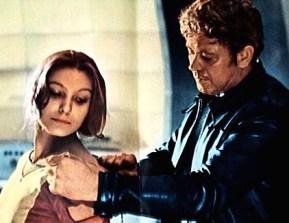
Solaris, for instance, is on IMDb’s list of the best sci-fi films (#39) and films from the ’70s (#43); it’s on They Shoot Pictures…’s 1,000 Greatest Films (#227), Empire’s 500 Greatest Movies (#285), 10th on Total Sci-Fi’s 100 Greatest Sci-Fi Movies, 53rd on Arts and Faith’s 100 Spiritually Significant Films, and included in Roger Ebert’s Great Movies; not to mention half a dozen other general greatest/must-see lists featured on iCheckMovies.

What does all that matter? Not a great deal, I suppose — film appreciation is subjective ‘n’ all — but it does leave it with a weight of expectation. The fact that it’s the better part of three hours long, in Russian, and notoriously slow-paced, adds a different kind of weight. It’s quite easy to see how Soderbergh felt able to remake it into just 90 minutes (and he still made a slow-paced film).
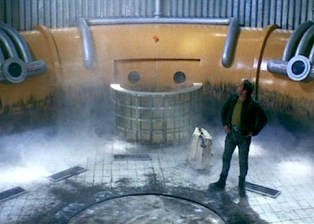
And it’s true, parts are like an endurance test — Berton’s seemingly endless drive through a future cityscape (actually just ’70s Tokyo), for instance — but, though still glacially paced, most of the film has some discernibly relevant content. Provided you’re not expecting Star Wars, that is, but who in their right mind would be? Talking of things being discernibly relevant, the film occasionally switches into black & white for no reason I can readily discern. Explanations welcome in the comments.

Though ostensibly science fiction — it’s set on a space station orbiting a possibly sentient planet that’s doing Funny Things to the crew — Solaris isn’t concerned with the scientific implications of any of its concepts. While I’m going to come up short on providing detailed analysis, it seems to me Tarkovsky’s adaptation is more concerned with memory, loss, grief and what it means to be human/alive. The planet, which somehow creates tangible people — not mere shared hallucinations — from the memories of the crew, is used as a way in to these things Tarkovsky clearly wishes to consider. The sentient(?) planet is not an end in itself; the film spends no time considering what this different kind of consciousness (if it is a consciousness) means, how it might work, or any other scientifically-bent notions that other films or filmmakers might choose to focus on. It also doesn’t centre on the romantic side of events, the route Soderbergh chose to pursue; or, if it does, it does so coldly and clinically and doesn’t feel romantic in the slightest. Alternatively, that could be the point.

Solaris is one of those films I think we can safely say is Not For Everyone. There’s much to ponder for the so inclined, not least the intriguing ending. I feel certain I, much like the scientists in the film itself, have barely scratched the surface.

4 out of 5

Read my considerably more thoughtful (if I do say so myself) review of Steven Soderbergh’s remake here.