In case you’re unfamiliar with the concept of Blindspot, it’s where you pick 12 films you’ve never seen but feel you should have and resolve to watch one per month over the course of the year. Some people review them every month too, but I’m far too disorganised in my posting schedule for such things (I still have pieces on four of my 2016 picks in draft stage).
It’s also what I used to call “What Do You Mean You Haven’t Seen…?” (aka WDYMYHS), but in a foolhardy move to mark my 10th blogiversary (did I mention that yet?) I’ve decided to make these two goals. I mean, when you’re already trying to watch 100+ films in a year, why not specify what almost a quarter of them will be? Okay, I don’t have a 100% track record with even trying to watch 12 a year, but I have hit 91.7%, so…
In the past I’ve developed a complicated system using multiple “greatest films” lists to dictate what my picks should be, but I’ve used a variation on that for WDYMYHS this year, so instead I’ve just chosen these 12 myself. The criteria? I went through every unwatched DVD and Blu-ray I own and tried to pluck out films that it shocked me I haven’t seen — and I am me, so I dread to think what you all think (probably “why does he think we care about what films he has or hasn’t seen?”) I’ve tried to keep some variety in era, genre, country, etc, though there’s a slight bent towards sci-fi because, as an avowed SF fan, those gaps glowered at me the most.
Anyway, that’s enough ado. Here are the 12, in alphabetical order:
2016 #3
Steve McQueen | 134 mins | streaming (HD) | 2.35:1 | USA & UK / English | 15 / R
2014 Academy Awards 9 nominations — 3 wins
Winner: Best Picture, Best Supporting Actress, Best Adapted Screenplay. Nominated: Best Director, Best Actor, Best Supporting Actor, Best Film Editing, Best Costume Design, Best Production Design.
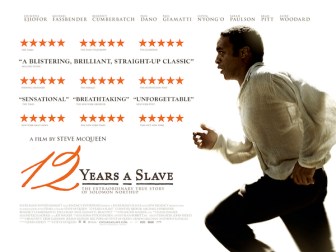
As we know, the Oscars are racist and always have been, especially recently. Like two years ago, when they didn’t give a load of nominations and several awards to a film about slavery from a black director and black screenwriter.
Oh, wait…
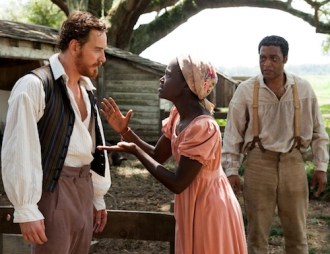
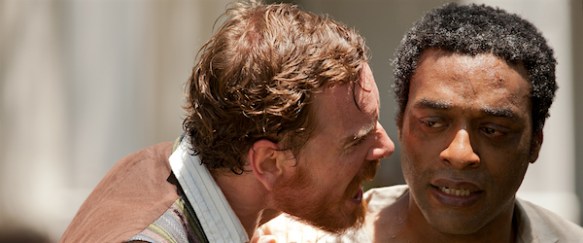
That film was, obviously, 12 Years a Slave, the true account of Solomon Northup (Chiwetel Ejiofor), a free black man who was kidnapped from his New York home and sold into slavery in the South. His story provides an overview, of sorts, of the experience of working as a plantation slave, both for a relatively decent master (Benedict Cumberbatch) and an evil SOB (Michael Fassbender).
One person who didn’t win an Oscar was Ejiofor (he lost to Matthew McConaughey, but he did win the BAFTA). His nomination was certainly deserved, though, because it’s an incredible lead performance — restrained most of the time, evoking Solomon’s internal life subtly rather than showily, but with carefully executed break-outs of emotion. Indeed, I’m slightly baffled by online commenters who felt the film was cold and lacking emotion or character. At the risk of getting on a high horse, I wonder if it was just too subtle for some? Ejiofor isn’t sat there tearing his heart out, but I thought there was considerably more to his performance than “looks happy in flashbacks, looks miserable in slavery”.
Nonetheless, the supporting performances are uniformly excellent, too. Paul Giamatti and Brad Pitt may be mere cameos, the presence of such actors highlighting their roles more than their function within the narrative does, but there are very strong turns from Cumberbatch, Paul Dano, Sarah Paulson, and in particular Oscar-winning Lupita Nyong’o, who will break your heart, and Michael Fassbender, who is overdue the gong for his many varied and accomplished performances. (I doubt his forthcoming triple of X-Men 6, video game adaptation Assassin’s Creed, and prequel-sequel Alien: Covenant will do anything for him in that regard, but he’s not yet 40, and that’s the prime part of a man’s life for Oscar winning, apparently.)
Steve McQueen’s direction is classical but effective, rarely drawing attention to itself when it has more important things to convey. That’s not to sell it short, though. A scene in which Fassbender’s plantation owner forces Solomon to do something unthinkable is achieved in a single roaming take that lasts nearly five minutes; a tour de force of camerawork, performance, and behind-the-scenes choreography, which only serves to heighten the tension and horror of the experience by never cutting.
Unsurprisingly, 12 Years a Slave is not an easily digestible film — it’s about a disgusting part of human history, and doesn’t shy away from some of its horrors. That said, it’s watchable thanks to the top tier performances, consummate direction, and moving storytelling.
2016 #2
Guy Ritchie | 103 mins | streaming (HD) | 16:9 | UK & USA / English & Russian | 18 / R
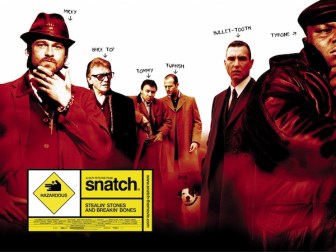
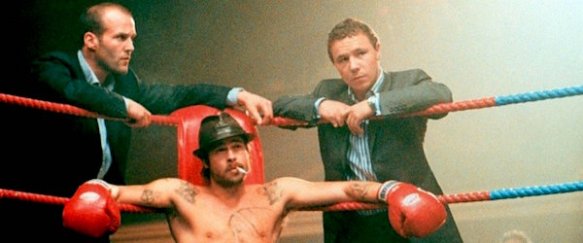
Guy Ritchie’s second feature met with relative indifference 16 years ago, consensus deeming it Lock Stock Mk.2 and finding Ritchie needed to branch out if he was to meet his debut’s promise. (It only took a further four films to realise that for himself.) The consensus is very different today: taking IMDb’s Top 250 as a bellwether, Snatch is #94 and Lock Stock is #138.
I thought it was like Pulp Fiction refashioned in the style of Lock Stock, but with more-connected stories that play concurrently.
If you read enough blogs, you’ve probably seen Blind Spot lists/projects/whatever manifesting on them over the last week. For readers who don’t know what this Blindspot* thing is, it’s essentially “What Do You Mean You Haven’t Seen” by another name. For readers who don’t know what “What Do You Mean You Haven’t Seen” is, it’s essentially Blindspot with a more idiosyncratic name.
And if you have no idea what any of these words mean, I shall explain: you pick 12 films you’ve never seen but really want to / feel you should have / etc, then spend the next year watching one per month.
First: my 12 picks, in order of must-see-ness. Then, a few interesting (maybe) facts about them. After that, I’ll tell you how I picked them.
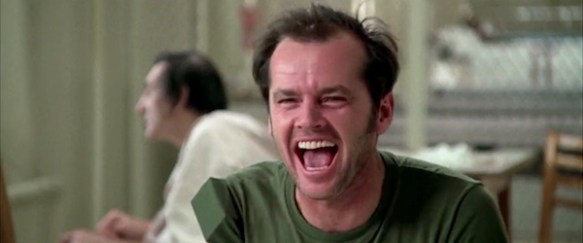
One Flew Over the Cuckoo’s Nest
Grave of the Fireflies
The Pianist
12 Years a Slave
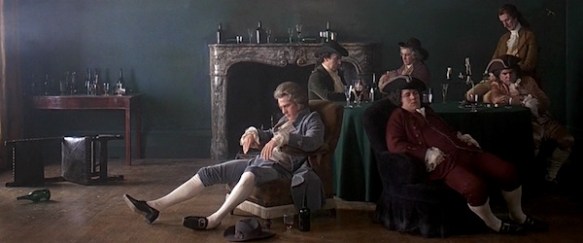
Barry Lyndon
Ben-Hur
The Maltese Falcon
Snatch.
The Sting
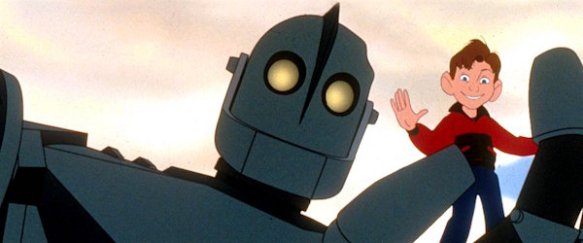
The Iron Giant
The Deer Hunter
Howl’s Moving Castle
A few facts about this year’s 12:
There’s a spread of 72 years between the oldest (The Maltese Falcon, 1941) and newest (12 Years a Slave, 2013). The latter is the most recent film I’ve yet included on WDYMYHS.
The 1970s make up 33% of the list. The 2000s are next with 25%. There’s one film apiece from the 1940s, 1950s, 1980s, 1990s, and 2010s.
The total listed running time is 27 hours and 3 minutes, making the average length of a film 2 hours and 15 minutes.
58% of the list are over 2 hours long; 25% are over 3 hours! Only two are under 90 minutes.
The shortest is The Iron Giant (86 minutes), the longest is Ben-Hur (212 minutes).
Just one film this year is in black & white (it was 50/50 last year).
Just two aren’t originally in English… but as they’re anime, there’s a 50/50 chance I’ll watch them with the English dub anyhow.
This year features only the third animated film to make it in to WDYMYHS… and the fourth… and the fifth. Previously animation has made up 5.6% of WDYMYHS titles. This year it’s 25%.
Whereas other people just seem to choose their films, I have to turn it into A System. (I’m the guy who posts 3,000 words of statistics about his own viewing every year — what did you expect?) I must admit that I was feeling a bit uninspired this year though, so my system is nothing like as complicated as the last two years (which you can read about here and here, if you like).
Essentially, I decided I fancied achieving some more awards on iCheckMovies. So I looked at all the lists I was getting close on — “close” in this case being any with 12 or fewer films to the next award (because of the 12 films on this list, y’see). That came to 43 lists. 43! Going through them, I noted down any unseen films that I own or have ready access to. That came to 209 films, of which 110 were on more than one list. Even with 43 lists, the most prolific film (One Flew Over the Cuckoo’s Nest) was on just 9, which I guess is testament to the randomness and wide-ranging spread of lists I was using.
Such low ‘scores’ meant the films were all ranked quite close together, so I also threw in that grand arbiter of film quality popularity, the IMDb Top 250, to see if it shook out a top 12. And, with the implementation of some familiar WDYMYHS rules, it did. Said rules were: no repeat directors (ta-ra, Amadeus and Nausicaä of the Valley of the Wind!), and that a WDYMYHS film I failed to see isn’t allowed on the next year’s list (cheerio, Princess Mononoke and City of God!)
At first I wasn’t quite sure about these selections, but having sat with them for a bit I feel better about them. As a whole group, they’re perhaps a bit more… mainstream (for want of a better word), and less quirky (for want of a better word), than my systems have generated in the past few years. Maybe that’s just a matter of perspective, though: there are two anime movies on there, and, though they’re both Studio Ghibli, I don’t know that we can call anime “mainstream” even now.
Anyway, there they are. Hopefully I’ll do better than 75% this year. Even if I don’t, getting round to seeing some of these is better than not getting round to any.
* No one can seem to agree if it’s one word or two. Regular readers will know how much this bugs me.^
The quest for 100 films has little regard for it being the first day of a new year, however — it’s still the start of a new month, which means it’s time to reflect on the last. And as it’s the last month of 2015, to reveal just what my final tally actually was…
#183 Shaun the Sheep Movie (2015)
#184 Mission: Impossible – Rogue Nation (2015)
#185 Terminator Genisys (2015)
#186 A Most Wanted Man (2014)
#187 Tomorrowland: A World Beyond (2015)
#188 Begin Again (2013)
#189 Escape from Tomorrow (2013)
#190 Le Mépris (1963), aka Contempt
#191 Star Wars: The Force Awakens (2015) #192 About Time (2013)
#193 Happy Feet Two (2011)
#194 Morning Glory (2010)
#195 Dreamgirls (2006)
#196 Aladdin and the King of Thieves (1996)
#197 AfterDeath (2015)
#198 Heaven Can Wait (1943)
#199 Slow West (2015)
#200 Dressed to Kill (1946)
#200 is the final Basil Rathbone Sherlock Holmes film. It’s taken me almost eight years to get through that series — longer than they took to make — so it seemed an appropriate choice for such a momentous number.
With four WDYMYHS films left, I managed to watch… one. That was Le Mépris. On the one hand, not watching 25% of my list is a bit of a failure. On the other, watching 75% of it means I’ve watched nine films this year that I should’ve seen but hadn’t got round to, and almost certainly wouldn’t’ve got round to without WDYMYHS. So it shall continue next year, though I’ve not decided on the selection process yet.
Remember back in my October update, when I mentioned re-watching the Veronica Mars movie to get 2014 finished? Bloody well didn’t bloody happen, did it! I’ll do it in January.
Apropos of not very much, the version of Rawhide sung by the elephant seals in Happy Feet 2 is awesome.
The headline news here is, of course, that this year I reached #200.
That’s my highest final tally ever, by 64 films — 47% higher than the next best year! You could add together my two poorest years (2009 and 2012) and you’d still be nine films short of 2015’s solo total. Anyway, more whole-year stats in my next post — for now, let’s just look at December.
This month I watched 18 new films. Most importantly, that exceeds this year’s ten-per-month goal, making 2015 the first time I’ve done it for a whole calendar year. (It’s also the 19th consecutive month.) It’s only the second-highest December ever, just behind 2008’s 19, but it does pass the December average (10.86; now 11.75) and beats December 2014’s total of 15, the 11th month this year to beat its previous equivalent (only November let the side down). In terms of 2015, it beats the monthly average of 16.67, and is actually the third highest month of the year, settling in behind the record-breaking feats of September and October.
I always end these analyses with a look ahead to the rest of the year… which is now over. So what for 2016? Having reached 200 films in a year, will I be seeking to equal it next year? Perhaps even to better it? I can confirm that…
No. No I won’t.
There are so very, very many films that I want to see — and they keep making more of the darn things! So many that even watching 200 new films isn’t enough to make a serious dent in the “to see” list. But there are also TV series I want to watch, books I want to read, audio dramas I want to listen to — not to mention movies I want to re-watch — and the film fixation engendered by a goal as vast as 200 new films in a year is counterproductive to doing anything but watching new films. So of course 100 Films will continue, and maintaining my ten-per-month streak would be nice, but if this time next year I’ve watched 200 new films and not watched many TV series, or read books, or listened to audio dramas, then I won’t be dancing a victory dance. Quite the opposite. Whatever the opposite of “dancing a victory dance” is.
In conclusion, my personal goal for next year is… well, 100 films — that’s why it’s the name of the blog. But I’ll be aiming to maintain my ten-per-month run, making the target 120+ Films in a Year. Plus lots of TV and books and audio drama and films I’ve seen before and special features and goodness knows what else. There still won’t be nearly enough time, anyway.
Thanks to the advent calendar, 44 films were reviewed this month(!) Here’s a full alphabetical account:
Favourite Film of the Month
It’s not been a bad month, but there aren’t a great many stand-out options here. Although I hugely enjoyed the new Star Wars, and some other 2015 blockbusters I caught up on weren’t as bad as expected, the winner is easily best-of-year contender Mission: Impossible – Rogue Nation.
Least Favourite Film of the Month
It’s not been a bad month, but there are still a few three-star-level contenders here. In the end, I decided to pick the film I felt I was most likely to never bother to watch again, and while there are a few I’m not likely to ever revisit, the least likely was AfterDeath.
Best Use of Time Travel
Was it to visit a wondrous future city of joyous technological advancement? Or to spend more precious time with your dying father? Or to send a cyborg to protect your mother from your robot enemy before your best mate arrives to stop that enemy murdering her before you’re born then trying to disable said robot enemy before it’s ‘born’? Or to get Emilia Clarke naked? How about using it to make Rachel McAdams fall in love with you in About Time. That and the dad thing.
Best Theme Tune
Oh sure, there’s John Williams on Star Wars… but of course there was. And I’ve already said how much I liked Rawhide in Happy Feet 2, but it’s not functioning as theme tune there. So the winner is composer Joe Kraemer finally giving Lalo Schifrin’s Mission: Impossible theme a suitable big-screen rendition not once but twice in Rogue Nation.
The Audience Award for Most-Viewed New Post of the Month
When you think about it, this should come as no surprise. In a month that featured 47 new posts (it sounds a little insane when you put it like that), the most-read is one that was a hive of activity for 25 days: the 100 Films Advent Calendar 2015.
…will be 31 days into 2016. Before all that, though, I’ll thoroughly look back and dissect 2015 — the largest year of 100 Films ever!
(Dog-loving regular readers will be pleased to know that (further to September’s update) Millie is still with us, and coping admirably with there already being a new Irish Wolfhound puppy in the family.)
2015 #190
Jean-Luc Godard | 103 mins | DVD | 2.35:1 | France & Italy / French, English, German & Italian* | 15
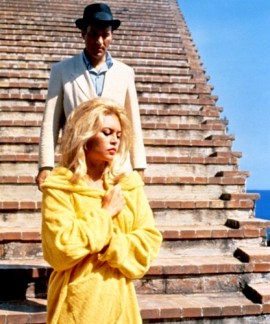
Le Mépris establishes its two main themes with its two opening shots. First, a static shot of the film’s cinematographer, Raoul Coutard, filming a scene from the film, over which writer-director Jean-Luc Godard reads out the credits, which never appear on screen. This is a movie about moviemaking, and its inherent artifice. Second, a shot of Brigitte Bardot’s naked bottom. This is a movie about a man being in love with Bardot (well, the character she plays), and another man lusting after her, and what happens when the first man pats a different bottom. Maybe.
The first man is Michel Piccoli, playing a playwright turned screenwriter who is only in it for the money, to buy a flat to share with Bardot to keep her happy. But she doesn’t want it. Or she does. Or maybe she doesn’t. The second man is Jack Palance, playing an American studio executive who’s paying the writer, but who seems to covet Bardot. It’s his assistant/translator whose bottom gets patted, in a relatively innocent matter. As innocently as an attractive Frenchman in Italy in the ’60s ever pats a woman’s bottom, anyway. The film is being directed by Fritz Lang, playing Fritz Lang, who comes out with some words of wisdom but mainly is present to represent the art of cinema. The playwright doesn’t see it as art, because it’s not a play. The producer doesn’t want it to be art, because he wants to make money.
All of this plays out over a day or two in some very long scenes. Indeed, the centrepiece is a 34-minute quiet, passive-aggressive argument between the playwright and Bardot in the aforementioned flat. They go round in circles about staying together or being apart. The point? Your guess is as good as mine. Perhaps it’s the unknowableness of the other gender (whichever gender you are). Perhaps it’s just the unknowableness of other people fullstop. Perhaps it’s the unknowableness of our own emotions — eventually Bardot decides she does want to leave the playwright to run off with the producer, but no one seems to know why.
Apparently it’s somewhat autobiographical. Maybe that explains everything.
There are attractive performances from all concerned, and gorgeous saturated cinematography by Coutard. The location manager has also done superlative work, from the run-down mostly-deserted Cinecittà studio the film opens in, to the stunning and unusual holiday home in Capri where it comes to a head. Even if you’re left a little baffled by the exact point of what you’re watching, at least it’s pretty to look at.
This review is part of the 100 Films Advent Calendar 2015. Read more here.
* All 4 languages are prominently spoken at times, but it’s mainly French, with a big dose of English from Jack Palance. On the Criterion DVD, the German and Italian parts aren’t even unsubtitled.^
2015 #152
Stanley Kubrick | 137 mins | Blu-ray | 1.66:1 | UK & USA / English | 18 / R
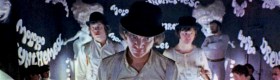
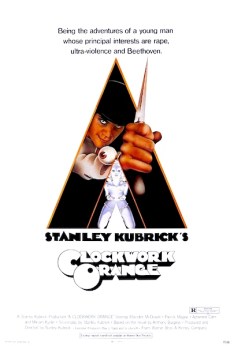
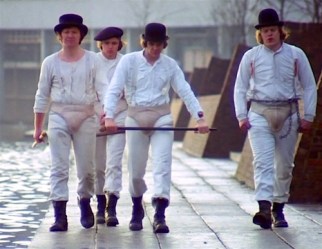
Yet more dystopian sci-fi! Who doesn’t love some dystopian sci-fi? Here we’re in the ’70s, though (makes a change from the ’80s), with writer-director Stanley Kubrick adapting Anthony Burgess’ novel into a film so controversially violent the director himself eventually banned it from release in the UK for decades. Almost 45 years on, it’s testament to the film’s power that it is still in parts shocking.
Set in a glum future Britain, the film follows eloquent juvenile delinquent Alex (Malcolm McDowell), whose violent acts eventually catch up with him when he’s imprisoned. Being the cocky little so-and-so that he is, he manages to get himself on a programme for rehabilitation and release… though that may not be all it’s cracked up to be.
The first half-hour or so of A Clockwork Orange is brilliant. I think there’s a reason this is the part that the majority of clips used when discussing the movie are lifted from, and it’s not just to do with spoilers: here is where the best imagery, and the most potent examinations of violence and the male group psyche, are to be found. It’s shocking and uncomfortable at times, funny and almost attractive at others (hence the perceived need for the ‘ban’), but the cumulative effect is precise and striking.
However, everything from Alex’s admission to prison onwards could do with tightening, in my view. It may be sacrilege to say this, but I think the film would benefit from having a good 15 to 20 minutes chopped out. All the prison bureaucracy stuff is funny, but is it relevant? “Relevance” isn’t the only deciding factor about what goes into a film, of course, but I feel like we’ve seen plenty of red-tape spoofing elsewhere. Maybe that’s just an unfortunate byproduct of the film’s age. Other parts just go on a bit too long for my taste — there’s barely a sequence after Alex’s arrest that I didn’t feel would benefit from getting a wriggle on. I don’t think this is me bringing a youth-of-today “everything must be fast cut” perspective to the film, I just found it needlessly languorous at times. Maybe I was missing a point.
McDowell’s performance is fantastic throughout. I’ve seen Alex referred to as a villain (not often, but by at least one person), which strikes me (and, I’m sure, many others) as remarkably reductionist and point-missing. He’s not a hero, certainly — a mistake I think some critics of the film made, in part because the use of voiceover invites us to identify with him, and I guess anyone other than the hero having a voiceover narration was fairly new 45 years ago (feel free to correct me on that point). But he’s not a villain, especially when he comes up against the terrifying forces of the establishment. McDowell’s performance, and Kubrick/Burgess’ storytelling, is thankfully more complex than that.
That continues right through to the ending, which is quite different in the novel and film — though I say this as someone who’s not read the book, so apologies if this is off base. Reportedly Burgess ends with Alex moving away from violence of his own free will, primarily because he’s grown up and grown out of it; the point basically being that all young men go through a violent phase (even if Alex’s is extreme) and then grow out of it. Kubrick ends on a much more ambiguous note… so ambiguous, I’m not really sure what it’s saying… or even what all the ambiguities actually are…
A Clockwork Orange remains a striking film, and not just because of the ultra-violence. It’s at its best early on, with the remainder not always working for me, but it’s a fascinating experience nonetheless.
2015 #100
Terry Gilliam | 143 mins | DVD | 1.78:1 | UK / English | 15 / R
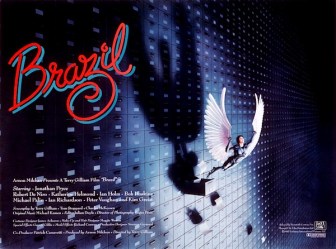
I normally aim for a “critical” (for want of a better word) rather than “bloggy” (for want of a better word) tone in my reviews, just because I do (that’s in no way a criticism of others, etc). Here is where I fail as a film writer in that sense, though, because I’m not even sure how I’m meant to review Terry Gilliam’s dystopian sci-fi satire Brazil, a film as famed for its storied release history as for the movie itself.
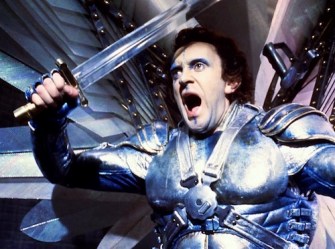
It’s a film I’ve long looked forward to watching, utterly convinced it was “the kind of thing I’d like”, but then almost put off by the fact that I should like it. I was rather pleased when it finally popped up on this year’s What Do You Mean You Haven’t Seen because it’s precisely the kind of film (or “one of the kinds of films”) that project was meant to ‘force’ me to watch. And, thankfully, I did really enjoy it. It’s clever, it’s funny, it’s massively imaginative in both its visuals and its storytelling, and its influences on the 30 years of dystopian fiction that have followed is… well, fairly clear, because it also has influences of its own, so whether future works are influenced by the original influence or whether the influencee has become the influencer is an over-complex matter for over-complex people to discuss ad infinitum.
I can tell you, factually, that there are at least four versions of Brazil: differing European and American theatrical versions; the “Love Conquers All” version (which according to the Criterion DVD is a cut for syndicated TV that made all the changes Gilliam refused to make, but may never have actually been released outside of that box set (IMDb implies it was never shown)); and the “Final Cut” that Gilliam assembled for Criterion in 1996 that is now the version released everywhere always (to the best of my knowledge). I’m sure there’s a thorough list of differences somewhere, but one good anecdote from Gilliam’s audio commentary tells how the ‘morning after’ scene was cut from the European release so last-minute that it was literally physically removed from the premiere print. (Gilliam regretted it immediately and it was restored for the video release.)
I can also tell you that I now struggle to read the word “Brazil” without hearing the “Braaziiiil” refrain from the soundtrack.
Brazil was 30 this year, but its particular brand of retro-futurism hasn’t dated, and its themes and issues are as relevant as ever. It’s a bit of a head trip of a film, which is what one should always expect from the guy who did the cartoons for Monty Python, I figure. I don’t know if it always gets its due in the consensus history of sci-fi cinema — in “best ever” lists and that kind of thing — though I’m not doing anything today that will help improve that.
The best I can say is that, if you like a bit of dystopian SF but have somehow (like me, until now) missed Brazil, that’s a situation you want to rectify lickety-split.
2015 #97
John Carpenter | 109 mins | Blu-ray | 2.35:1 | USA / English | 18 / R
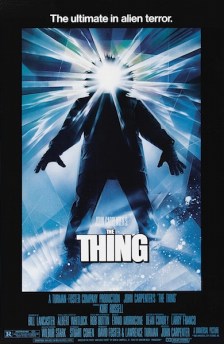
It’s just an ordinary day at the US Antarctic research base staffed by helicopter pilot MacReady (Kurt Russell) and his compatriots, until a helicopter buzzes overhead dropping grenades on a dog it’s pursued across the ice fields. The dog finds sanctuary in the US base; the helicopter and its crew are less fortunate. Realising it’s from a Norwegian facility an hour’s flight away, MacReady and the doctor brave inclement conditions to investigate. They find numerous corpses and the base burnt to ruins. What horrors befell the Norwegian base? And have they inadvertently brought them into their own…?
I think we all know the answer to that second question. It wouldn’t be much of a movie if the answer was, “nope, they’re good.”
Derided by some on its release for being naught but wall-to-wall gore, The Thing naturally developed a cult following among horror/sci-fi fans. The funny thing watching it today is that, while the special effects still retain the power to shock in their gross extremity, they’re limited to a handful of quick-fire sequences; indeed, those seeking out The Thing to get their blood-and-guts fix nowadays often seem to declare it “boring”.
Naturally, they’re missing the point. At its heart, John Carpenter’s film is a psychological thriller: an alien is in the group’s midst; it has taken on the form of one or more of them; who can you trust? How can you tell? It’s both a dilemma in an abstract “sci-fi concept” sense, and no doubt a parallel from an era when spying and the threat of ‘the other’ infiltrating society were still major issues. I suppose it’s a facet that’s come round again these past few years, with the increasing rise of home-grown terrorists, previously decent citizens lured and brainwashed by propaganda. The most enduring themes are always timely, I guess.
Even if you don’t want to get deep about it, The Thing has the “who’s human?” thrills to keep you engaged on that level. Accusations of boredom no doubt stem from the fact it’s a bit of a slow burn, the early acts building suspicion and unease as MacReady and co investigate. Even after the true nature of the threat is revealed, Carpenter paces himself, though the frequency of incidents begins to mount inexorably as we head towards the climax. Well, that’s just good structure.
If the film has one problem, it’s there are too many characters. We know MacReady: he’s Kurt Russell, and he’s singled out early on as the hero — though we come to suspect even he may not be ‘right’ as the film goes on. As for the rest, I believe there are eleven of them, and at best they are loosely sketched. At least a couple are easily conflated and therefore confused, and for the rest, there just isn’t time to get to know them properly, so we’re less invested in what happens to them. There’s a reason most “who will survive?” movies have something like five or six characters in peril, not twelve.
In spite of all that, The Thing does remain best remembered for its extraordinary effects. Even though you know it’s rubber and silicon and corn syrup and whatever else, and even though the intervening thirty-odd years and lashings of CGI have enabled even more, even darker imaginings to be brought before our eyes, the visceral physicality of these effects, the way they play on long-established fears, and apply those to the human body in nauseatingly contorted ways, is plenty enough to render them still effective; certainly so within the context of a film that is, as I say, really more of a thriller than a gore-fest.
For me, it’s the psychological quandaries that are gripping and exciting, rather than any enjoyed disgust at the emetic special effects. However, knowing the characters a little better — thus caring if they’d been replaced or not, and also perhaps allowing us a chance to try to guess for ourselves — would have just made it that bit superior.
2015 #29
Buster Keaton & Clyde Bruckman | 77 mins | DVD | 4:3 | USA / silent (English) | U
Poorly reviewed and a box office flop on its release, Buster Keaton’s The General has undergone a stark re-evaluation since: the United States National Film Registry deemed it so “culturally, historically, or aesthetically significant” that it was added to the registry in its first year, alongside the likes of Citizen Kane, The Wizard of Oz and Star Wars; these days, it rates on both public-voted popular lists (the IMDb Top 250 at #133) and critics’ polls (34th on Sight & Sound’s 2012 poll). Does it live up to such a reputation?
Set at the outbreak of the American Civil War, Keaton plays a Southern train engineer who is refused permission to sign up for the army. When agents of the North hijack a train, he sets out to prove himself by giving chase. Hilarity ensues.
Believe it or not, The General is based on a real incident from the war… which was considerably grimmer than the farce presented here. Like the film, however, the South did win… except in real life the South were the bad guys (right?), so that’s no good. Anyway, such things shouldn’t trouble us here — this is a comedy, not a history lesson. That said, I must confess I didn’t laugh all that much — although some of it is quite funny — but, in spite of that, I rather loved it. Whatever the intention, it worked for me as a kind of comedic action-adventure (a genre we more often associate with more modern eras, I’d wager), rather than as an out-and-out comedy. Some of it is quite genuinely tense rather than purely amusing.
It was reportedly a very expensive film, and it looks it: there are tonnes of extras, not to mention elaborate choreography… of trains! Who knew old steam trains were so agile? There’s impressive physicality on display from Keaton, but the well-timed movements of those big old locomotives are quite extraordinary, especially for the era (I mean, for the past couple of decades you’ve been able to do pretty much anything thanks to a spot of computer-controlled what-have-you. Not much of that going on in the 1920s.)
Sometimes watching Classic Movies is almost a chore of noteworthiness or “good for its time” import; other times, they still offer pure enjoyment, however many decades later. I’m not sure a silent comedy is ever going to curry favour with all modern viewers, but The General is one that still has the power to transcend the (perceived) limitations of its era.







 2014 Academy Awards
 As we know, the Oscars are racist and always have been, especially recently. Like two years ago, when they didn’t give a load of nominations and several awards to a film about slavery from a black director and black screenwriter.
 who will break your heart, and Michael Fassbender, who is overdue the gong for his many varied and accomplished performances. (I doubt his forthcoming triple of
 Guy Ritchie’s second feature met with relative indifference 16 years ago, consensus deeming it








 #183
#183  #192 About Time (2013)










































 Favourite Film of the Month
 Le Mépris establishes its two main themes with its two opening shots. First, a static shot of the film’s cinematographer, Raoul Coutard, filming a scene from the film, over which writer-director Jean-Luc Godard reads out the credits, which never appear on screen. This is a movie about moviemaking, and its inherent artifice. Second, a shot of Brigitte Bardot’s naked bottom. This is a movie about a man being in love with Bardot (well, the character she plays), and another man lusting after her, and what happens when the first man pats a different bottom. Maybe.
 They go round in circles about staying together or being apart. The point? Your guess is as good as mine. Perhaps it’s the unknowableness of the other gender (whichever gender you are). Perhaps it’s just the unknowableness of other people fullstop. Perhaps it’s the unknowableness of our own emotions — eventually Bardot decides she does want to leave the playwright to run off with the producer, but no one seems to know why.
 Yet more dystopian sci-fi! Who doesn’t love some dystopian sci-fi? Here we’re in the ’70s, though (makes a change from the ’80s), with writer-director Stanley Kubrick adapting Anthony Burgess’ novel into a film so controversially violent the director himself eventually banned it from release in the UK for decades. Almost 45 years on, it’s testament to the film’s power that it is still in parts shocking.
 unfortunate byproduct of the film’s age. Other parts just go on a bit too long for my taste — there’s barely a sequence after Alex’s arrest that I didn’t feel would benefit from getting a wriggle on. I don’t think this is me bringing a youth-of-today “everything must be fast cut” perspective to the film, I just found it needlessly languorous at times. Maybe I was missing a point.
 Kubrick ends on a much more ambiguous note… so ambiguous, I’m not really sure what it’s saying… or even what all the ambiguities actually are…
 I normally aim for a “critical” (for want of a better word) rather than “bloggy” (for want of a better word) tone in my reviews, just because I do (that’s in no way a criticism of others, etc). Here is where I fail as a film writer in that sense, though, because I’m not even sure how I’m meant to review Terry Gilliam’s dystopian sci-fi satire Brazil, a film as famed for its storied release history as for the movie itself.
 I’m sure there’s a thorough list of differences somewhere, but one good anecdote from Gilliam’s audio commentary tells how the ‘morning after’ scene was cut from the European release so last-minute that it was literally physically removed from the premiere print. (Gilliam regretted it immediately and it was restored for the video release.)
 It’s just an ordinary day at the US Antarctic research base staffed by helicopter pilot MacReady (Kurt Russell) and his compatriots, until a helicopter buzzes overhead dropping grenades on a dog it’s pursued across the ice fields. The dog finds sanctuary in the US base; the helicopter and its crew are less fortunate. Realising it’s from a Norwegian facility an hour’s flight away, MacReady and the doctor brave inclement conditions to investigate. They find numerous corpses and the base burnt to ruins. What horrors befell the Norwegian base? And have they inadvertently brought them into their own…?
 Even if you don’t want to get deep about it, The Thing has the “who’s human?” thrills to keep you engaged on that level. Accusations of boredom no doubt stem from the fact it’s a bit of a slow burn, the early acts building suspicion and unease as MacReady and co investigate. Even after the true nature of the threat is revealed, Carpenter paces himself, though the frequency of incidents begins to mount inexorably as we head towards the climax. Well, that’s just good structure.
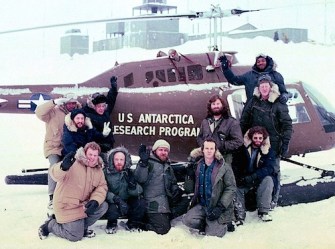 For me, it’s the psychological quandaries that are gripping and exciting, rather than any enjoyed disgust at the emetic special effects. However, knowing the characters a little better — thus caring if they’d been replaced or not, and also perhaps allowing us a chance to try to guess for ourselves — would have just made it that bit superior.
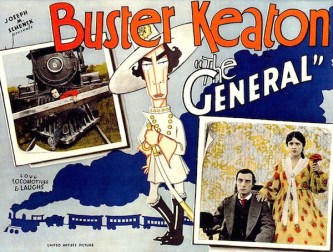 Poorly reviewed and a box office flop on its release, Buster Keaton’s The General has undergone a stark re-evaluation since: the United States National Film Registry deemed it so “culturally, historically, or aesthetically significant” that it was added to the registry in its first year, alongside the likes of
  It was reportedly a very expensive film, and it looks it: there are tonnes of extras, not to mention elaborate choreography… of trains! Who knew old steam trains were so agile? There’s impressive physicality on display from Keaton, but the well-timed movements of those big old locomotives are quite extraordinary, especially for the era (I mean, for the past couple of decades you’ve been able to do pretty much anything thanks to a spot of computer-controlled what-have-you. Not much of that going on in the 1920s.)
 100Films.co.uk