
A slightly earlier than normal TV review this month, to get ahead of all the Christmas telly — but there’s still plenty to discuss…

The Punisher Season 1
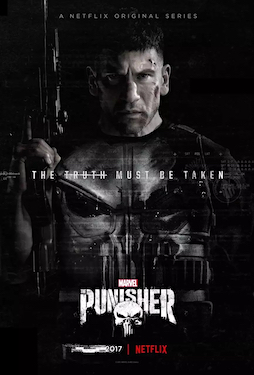 The fourth live-action iteration of Frank Castle, Marvel’s murderous anti-hero (and people moan about Spider-Man reboots), debuted in Daredevil season two and was greeted so positively that now he’s got his own spin-off series. And “spin-off” is not an inaccurate descriptor, because this very much launches out of the events of Frank’s storyline in Daredevil — which makes it all the more annoying that Netflix care not for “previously on”s: Daredevil season two was over 18 months ago; a little refresher would be nice.
You see, the plot revisits the Punisher’s origins: his family were killed in the crossfire of a gang shoot-out, leading him to kill the criminals responsible. He thinks that mission is complete, but the season begins (more or less) with him discovering new intel that suggests his family’s murder may not have been so random, and it links back to his actions when he was in the military. This also serves as a launchpad for the series to tackle other war-related issues, primarily the psychological wellbeing of veterans. With such serious themes it’s perhaps no surprise that there’s very little here that’s outright comic-book-y here — no superpowers, for sure; not even veiled references to the big names of the MCU movies, which we’ve had in every other Marvel Netflix show. In fact, if it weren’t for the fact the series is so obviously spun out of Daredevil and has the Marvel logo at the start, you could be forgiven for thinking it wasn’t a Marvel show at all.
Some people think this removes the Punisher’s USP. In and of himself he’s just a violent man out for revenge — action cinema is stuffed to bursting with such anti-heroes. What makes Frank unique is he’s that kind of character but in a world where super-powered and super-moral people exist. So would The Punisher have been more interesting if, instead of a very grounded military conspiracy storyline, it had something to do with Frank clashing with superpowered people? I don’t know. It certainly would’ve been a different show. As it stands, this may be a show for people who don’t typically like Marvel shows. So was Jessica Jones before it, but this is for different people who don’t like Marvel shows — people like Jason Statham, maybe.
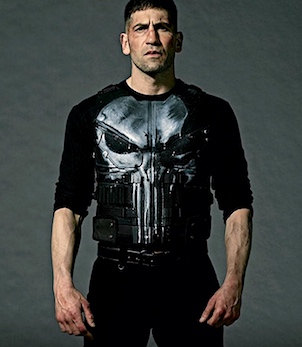 In the title role, Jon Bernthal is fantastic. You can absolutely believe him as a revenge-driven psychopath capable of killing anyone and everyone, but also as a kind-of-charming strong-but-silent type with a heart and moral code who will definitely do the right thing. I’ve seen some critics and viewers opine that now is the wrong time for a series about a hero who just murders indiscriminately. I say those people definitely haven’t watched this Punisher. Although the plot is a conspiracy thriller, the series invests a lot of time in the emotional world of Frank Castle, making him human and moral rather than just a single-minded murder-machine. Bernthal makes what could be a very one-note role into a plausible human being; one who you believe might be able to find redemption and leave someday. And maybe that makes him even more tragic — he could find it; it’s possible… but likely? There’s the rub. As it’s also trying to engage with issues facing combat veterans once they return home, it makes for a clearly different, more serious flavour for an MCU production. How successfully it explores these weighty issues is more debatable.
Many of these Marvel shows take their whole first season to fully complete the hero’s origin story, but The Punisher is stuck with the fact that Castle already became The Punisher during his Daredevil appearance. So do they just ignore that story shape? No, of course they don’t — they shift it on to the villain! Therefore any comic book fan who knows what one character will ultimately become (no spoilers here!) is constantly teased with possibilities throughout the season until, eventually, as we should’ve known from the start, the transformation occurs in the finale. Why not really surprise us: do the transformation earlier and then wrap a character up within one season, rather than leaving them dangling for a possible next time? Comic books have to leave things dangling — they will all run for ever and ever; there can be no permanent solutions — but these TV series will end — whether it’s after a single season, or two, or five, or ten, they are without exception finite. That means you’re allowed to wrap a character up and move on to others.
So, The Punisher is not an unmitigated success, but it does lend another flavour to the Marvel-Netflix landscape. I certainly hope we get to see more of Bernthal’s take on the character in the future.
Detectorists Series 3 Episodes 2-6
 The third and final series of BBC Four’s sitcom about a couple of mates whose hobby is metal detecting was every bit the equal of the first two runs, which saw the show place on my list of 10 Favourite TV Series of the Last 10 Years back in February. Its brilliance lies in how perfectly weighted it is: the characters are quirky, but also normal; their problems are grounded and realistic, without being glum and unduly serious; it’s frequently hilarious, but without slipping into gurning ‘Comedy’ territory; it’s kind and gentle, but without being dull; and it’s all very lovely and kind-hearted, without being twee or saccharine. It’s also beautifully put together by writer-director (and star) Mackenzie Crook — the storyline across the series was precisely constructed, and the photography is often a gorgeous showcase for the English countryside. A real gem that will be missed, though at least it came to a perfect conclusion.
The Good Place Season 1 Episodes 3-13
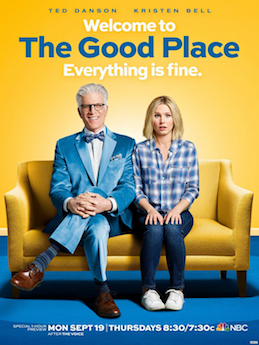 I only heard about this after its Big Twist was much-discussed online, so starting it was an exercise in knowing there was a big reveal awaiting. Fortunately, that knowledge doesn’t overshadow everything that comes before it. For those who still aren’t aware of it (especially as it’s only on Netflix on this side of the pond), it’s about a woman (Kristen Bell) who dies and goes to Heaven only due to an admin error, so she tries to better herself so that she’s deserving of her place. Other complications emerge as the season goes on, but that’s the premise. There’s a lot of plot for a sitcom — although it’s not necessarily immediately obvious, it tells a 13-episode story; this makes Netflix quite a natural home for it, actually, as it’s not your typical “every episode is fundamentally standalone” sitcom. But it’s also very funny in amongst all that, mining not only the characters and their foibles, but also the uncommon situation they’ve found themselves in. The shocker in the finale is just the icing on the cake. I hear season two has gone off the boil somewhat, but I’ll find out for myself once it’s all wrapped up.
Things to Catch Up On
 This month, I have been missing so much stuff. There’s been the fourth series of Peaky Blinders on BBC Two (which concludes this week, so we’ll whizz through it sometime in the new year); the second season of The Crown on Netflix (also waiting for the new year now); the same streamer’s first ever miniseries, Godless; the immensely acclaimed Blue Planet II (now available in UHD on iPlayer, too!); and I’m behind on Arrow and The Flash so haven’t reached the four-show Arrowverse crossover. And those are just the ones I can remember right now.
Next month… is January, but sometime before that I’ll likely review some Christmas TV.
 After its move to Channel 4, which was as controversial as it was high-profile, I wasn’t sure if I was going to continue bothering with GBBO. What would it be without Mel and Sue’s effortless chemistry and terrible puns, or Mary Berry’s kind twinkle? But cake always wins, and after a few weeks I caved and am now gradually catching up (I mean, too much cake in one go is bad for you, right?) Unsurprisingly, it’s still fundamentally the same show. Sandi Toksvig and Noel Fielding seemed like random picks for the new hosts, but they have the right mix of daftness, quick wit, and empathy to fill Mel and Sue’s shoes, and function surprisingly well as a double act too. New judge Prue Leith is no Mary Berry, but she can do the job. The judging’s hardly the most important bit anyway, is it? That’s the bakes, and they’re as incredible as ever. It’s funny that something that was a tough technical challenge back in series two or three is now just an unmentioned part of something much grander and more complicated. GBBO may have been slightly tarnished by the whole kerfuffle of changing networks and losing popular presenters, but the revised show has turned out to be less a soggy bottom and more a batch of ten almost-but-not-quite-identical sweet treats.
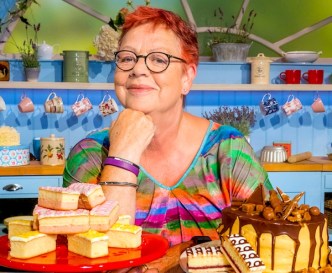 One thing that’s actually been improved by the Bake Off franchise’s move to C4 is this companion show. It always felt a bit cramped before, squeezed into a half-hour when it wanted to be longer, and not allowed to really cut loose with its content because, although it was on the more irreverent BBC Two, it was still on The BBC. In its new home, it’s only been extended by about seven or eight minutes (presumably a result of C4’s commitment not to cut the series’ running time — the old 30 minutes of material plus ads wouldn’t quite fill a 45-minute slot) but that seems to have made the world of difference, allowing it room to breathe and throw in a few more gags. It’s got distinctly cheekier too, which befits host Jo Brand and the kind of guests they have on (mostly comedians). And somehow it never stops being funny how people at home have messed up baking.
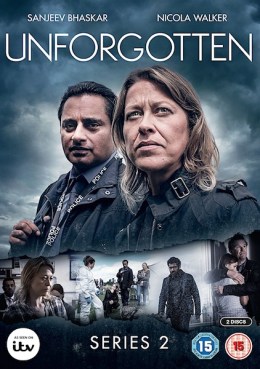 I get the impression ITV’s cold-case thriller was a bit of a surprise success when
 This month, I have mostly been missing the return of Star Trek to TV, in the form of Discovery. It’s “a Netflix original series” everywhere outside the US and Canada, so I imagine I’ll catch up during one of my irregular Netflix subscriptions (after the whole first season is available to binge, of course). Also missed: Rellik, the new thriller with a Memento-esque structure from the writers of
  The first of this month’s quartet of trips to Westeros, Stormborn, demonstrated better than
 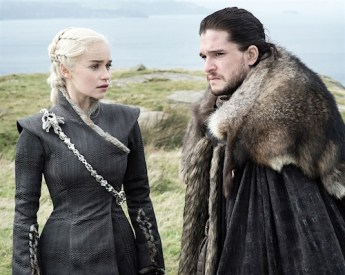 The most epic so far came in The Spoils of War. Apparently it’s been dubbed the Field of Fire — if there’s one thing Game of Thrones is consistently good at, it’s giving its big events cool monikers. (The “Field of Fire” is also an event from the series’ backstory, I believe, so maybe some of the reviews I read just got confused.) But it’s not just cool shots of fiery destruction that make this episode so satisfying: it’s the way that changes the game. Not to mention characters coming together after so long apart, both on the battlefield and not. That two girls talking in a crypt can be as thrilling as a dragon blowing shit up is… well, how character investment works, I guess. Some reckon this is the series’ best-ever episode. I wouldn’t go that far, but it is right near the top.
 Elisabeth Moss, star of both Mad Men, a series partly about the sexual politics of the ’60s workplace, and The Handmaid’s Tale, a series about the sexual politics of a world where women are baby-making slaves, returns as Det. Robin Griffin for a second run of Top of the Lake, which is now a series about the sexual politics of present-day Australia.
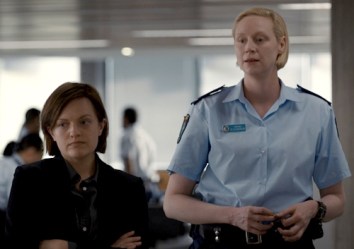 There are some great performances in there too, mainly from the female characters — no surprise, really, considering creator and co-writer/co-director Jane Campion is clearly interested in exploring women’s place in the world. Moss carries things, with Robin competent but combative at work (she needs to be, as the Australian police force seems stuck in the ’70s with its gender politics) even as her personal life is a tumultuous mess. Nicole Kidman gets to play it kooky as the adoptive mother of Robin’s child, who’s gone all spiritual and lesbian recently. The most entertaining is Gwendoline Christie as an enthusiastic constable who latches on to Robin, eager to be her protégé. She brings the bulk of the humour, with great lines and moments aplenty, but also brings emotional depth when needed.
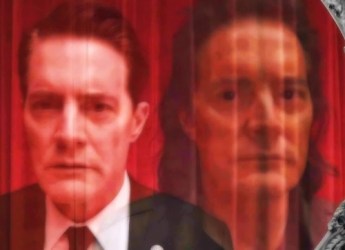 I must be honest with you, dear readers: the longer this Twin Peaks revival goes on, the less I feel I’m enjoying it. It works best when Lynch is trying to out-Lynch himself. Those episodes are crazy and borderline nonsensical and insanely challenging to what constitutes filmed entertainment, but at least they’re interesting; and if you don’t get it you can dismiss it as “it’s Lynch, innit”. It’s actually the ‘normal’ stuff — the investigations and machinations in South Dakota, Las Vegas, and Twin Peaks itself — that are beginning to get on my wick. Again, at times there are moments of clarity or inspired weirdness, but in between sits a morass of sludgy plotting and wilfully obscure characterisation. It’s starting to nudge the series from “revelatory experiment” into “noble failure” territory, for me.
 As I noted
 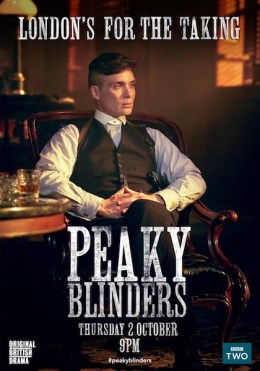 The second series of BBC Two’s period crime drama jumps forward two years to find everyone’s favourite Brummie criminals running such a successful business that they intend to expand their operations to London, by sticking their oar into a turf war between the Jews (led by Tom Hardy) and the Italians (led by Noah Taylor). Meanwhile, Sam Neill’s copper is back with a vengeance, teaming up with the Irish to blackmail Blinders kingpin Cillian Murphy into performing an off-the-books assassination for the crown.
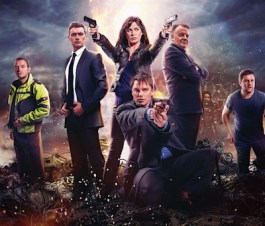 This month, I have mostly been missing Torchwood: Aliens Among Us. Although ‘just’ an audio drama from Big Finish, it’s being marketed as the series’ official fifth season, picking up after the events of 2011’s (disappointing) Miracle Day. A full 12-episode run, it’s coming out in three box sets — although part two isn’t out until October and part three until February, part one came out last week. Obviously, I’ve not listened to it yet. Hopefully next time…
 As much as I love Game of Thrones, and think
 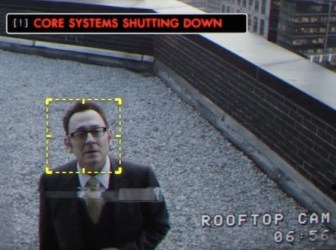 Watching this, it’s difficult to imagine anyone involved really believed they would get a sixth season — which is good, because (a) they stood very little chance, and (b) that means it wraps everything up to a nice, proper ending. My feelings on Jonah “brother of Christopher” Nolan’s cyber-thriller have oscillated over the years, and I’m a long way from agreeing with those who assert it’s actually one of the best sci-fi series ever; but for a show that started out as a fairly standard CBS procedural thriller, it did ultimately manage to play with and work around the network’s expectations to produce something superior. It’s a shame they clearly had to rush the final arc (marred further by having to hit a quota of ‘case of the week’ episodes, for some reason), but it still got to a good place. If you’ve not watched it but are interested, consider finding one of those “episodes you should definitely watch” guides (like
 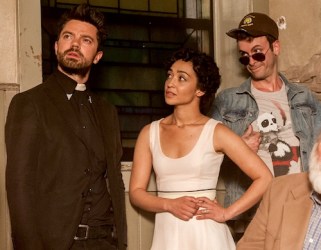 In the end, this turned out to be less of a TV prequel to the comic book series than an expanded and rejigged adaptation of the comic’s opening four-issue story arc (with some stuff from later thrown in for added fuel). As Seth Rogen explained on the post-finale chat show Talking Preacher, the books throw an awful lot of quite comic-book-y ideas at you very quickly, and TV viewers maybe needed a little longer to digest all of that. Plus extra space to develop and examine the characters, of course. It’ll be interesting to see how future seasons handle the issue of adaptation. By the end of season one, the characters are in a place to launch into something closer to the rest of the comic; but, at the same time, budget issues have already forced some reimagining, so what else will it be forced to compromise or reinvent? I think the bold, fearless barminess of the TV series has earned it the right to our attention, whether it goes further off piste or hews closer still to its roots.
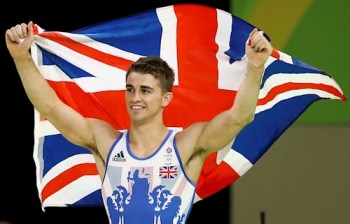 This month, I have mostly been missing… not that much, really. With the Olympics dominating the good TV channels and much of US drama on its summer hols, there doesn’t seem to have been much on. I haven’t gone crazy for Rio 2016 like I did for London 2012 (much to my surprise at the time, that was), though we’ve caught bits and pieces, not least Max Whitlock’s double gold (along with
  Finally done with most of these (still need to find time for the last two Legends of Tomorrows). One shouldn’t have that attitude to something one is choosing to watch, should one? I have a certain loyalty to Arrow, because they did a good job for seasons one and two, even if it’s waxed and waned since; but I’ve never really got on board with the adulation The Flash has received, and Legends of Tomorrow is mediocre to poor with regularity… though now and then they all exhibit flashes of worthwhileness. I rarely make the conscious choice to give up on a series (do it all the time by accident, though), but I’d consider abandoning a couple of these before the start of their next seasons… were it not for the ‘promise’ that they’re all about to be completely interconnected, at least for one almighty four-way crossover (with moving-to-the-same-network Supergirl).
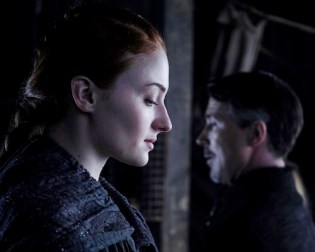 First up: The Door, surely one of Thrones’ best-ever episodes. That ending rather overshadows everything else (because wow, in so many ways), but before that there was Sansa being badass, proper development of Arya’s storyline, the hilarious play-within-a-play, a marvellous scene between Dany and Jorah, and a great moment for Varys, too. The week after’s Blood of My Blood was more about setting things up the second half of the season, which is an important role to fulfil but less dramatic in itself. A couple of surprise returns, though, including a big reveal for book readers (maybe).
 Sometimes it’s hard to separate what one might count as story development versus mere place-setting in Thrones, but at its best they can be one and the same, and episode seven managed that. Finally for now, No One did actually bring some storylines to a head, including some very long-awaited developments, particularly in Braavos. Throw in an equally-long-awaited reunion and a couple more unexpected returns, and you have a pretty satisfying episode.
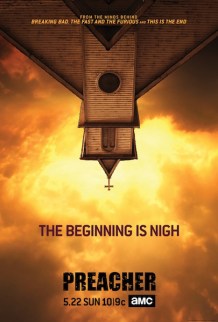 Sam Catlin of Breaking Bad and Seth Rogen & Evan Goldberg of… all those films Seth Rogen & Evan Goldberg have made (you know
  This month, I have mostly been missing anything I watch with my other half. It’s prime tennis season — eight weeks that starts with Geneva and flows through the French Open, Stuttgart, Nottingham, Birmingham, Queen’s, Eastbourne, and ends with the crowning jewel of all tennisdom, Wimbledon; all with near wall-to-wall coverage thanks to Eurosport, ITV4, and the BBC. It largely takes over the time we normally spend watching stuff together, so no room yet for the final seasons of Wallander or The Musketeers (not that we’ve watched season two yet, actually — oops), nor the just-finished fourth season of The Most Underrated Show On Television™, The Americans. Apparently it ended with “the Best Episode of TV So Far This Year”, according to one review’s headline (which obviously I can’t read because spoilers). Maybe in July.
 100Films.co.uk