The Return of Archive 5

Hey, look what else is back! Almost a whole year on from the last instalment in the series, I’ve finally managed to rustle up a new Archive 5. Although, that previous post was also a comeback after a long time off, so I probably shouldn’t celebrate until I mange two in a row.

Being another year on, the pool of possible reviews has increased — quite significantly, as I’ve so far covered hardly anything from my 2023 viewing. But today’s five were chosen (but not written up, otherwise I’d’ve posted it) back when Vol.6 was published, so they were selected (at random) from the backlog of then-443 unreviewed feature films from my 2018 to 2022 viewing.

This week’s hideously delayed Archive 5 are…

  • The Mummy (1932)
  • So Dark the Night (1946)
  • The Adventures of Ichabod and Mr. Toad (1949)
  • A Brief History of Time Travel (2018)
  • Misery (1990)


    The Mummy

    (1932)

    Karl Freund | 73 mins | Blu-ray | 1.33:1 | United States / English | PG

    The Mummy

    The third classic Universal Monster film, following Dracula and Frankenstein, The Mummy ditches literary adaptation for a horror based in then-contemporary fears. Nowadays, the notion of digging up of mummies is an Old Thing, but in 1932 they were just a decade on from the discovery of Tutankhamen’s tomb, and it was only in that year that it was finally fully excavated, so that kind of thing — and, of course, the attached curses — were still fresh in the public imagination.

    In the wake of Frankenstein, The Old Dark House, and The Mask of Fu Manchu, Boris Karloff was now the horror star in Hollywood, and so The Mummy was conceived as a starring role for him. Perhaps that explains why, plot wise, it’s a remix of Universal’s take on Dracula: the villain is after the girl, using supernatural tricks to lure her; the dashing young man is in love with her; there’s even a Van Helsing-esque figure with the knowledge to stop the monster. But originality is not the be-all-and-end-all — overall, I much preferred this to Dracula. Karloff is superb as the antagonist; Zita Johann (and her array of skimpy outfits) makes for an appealing (and, perhaps in spite of said clothing, competent) female lead; and there’s some intensely atmospheric direction from Karl Freund. His name may not seem as familiar as Dracula’s Tod Browning or Frankenstein’s James Whale, but he was already an acclaimed cinematographer, who’d shot the likes of Metropolis and, er, Dracula.

    The Mummy presented considerably less bandaged-wrapped foot-dragging living-corpse action than I expected. I guess those clichés come from the sequels (reportedly, their stories are entirely unconnected to this one) or another studio’s efforts (Hammer, perhaps). Instead, it’s quite simply one of my absolute favourites from the initial wave of Universal’s classic monster movies.

    4 out of 5

    The Mummy was #122 in my 100 Films in a Year Challenge 2021.


    So Dark the Night

    (1946)

    Joseph H. Lewis | 70 mins | Blu-ray | 1.37:1 | USA / English | PG
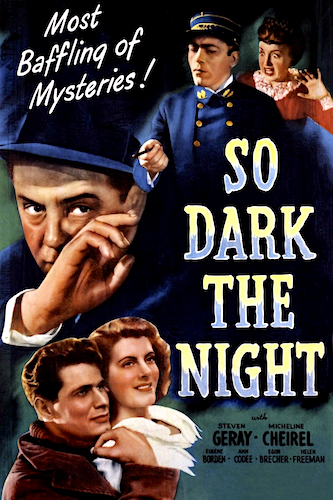
    So Dark the Night

    How many serial killer mysteries have you seen that spend their first half being bucolic romances? I can’t think of any others than So Dark the Night. The title and setup don’t prepare you for it, but the first half-hour is more of a genteel country romcom, with only the slightest hint there might be darker turns to come. Half-an-hour isn’t long generally, but it’s almost halfway through a film this short — and that’s when things take an abrupt turn for the murderous.

    The short running time probably works against the film, on the whole. For example, it makes it easy to miss that there are several interesting supporting characters or facets to main characters. Love interest Nanette is sort of depicted as an innocent ingénue, but we first meet her ogling the expensiveness of Henri’s car, and then she and her mother conspire for her to meet Henri and try to elicit a romantic connection, even though she’s already got a long-standing engagement. That’s not exactly upstanding and sweet behaviour, is it? Then there’s the widowed maid, who’s so lonely and desperate to escape that even after she suspects the killer, she pleads to be taken with him.

    Along with a few other factors that are rather spoilersome, this is a film that takes the usual shape of the whodunnit and subverts it to disquieting effect. It’s a film that, on the surface, looks nothing like a noir — it’s set in a pretty French village (created with surprising authenticity on Columbia’s backlot) — but exposes that the darkness and violence of the human condition can exist anywhere. I say “on the surface” because the film’s photography is great, with many interesting shot and lightning choices peppered about, without overwhelming proceedings with unnecessary flourishes.

    4 out of 5

    So Dark the Night was #57 in my 100 Films in a Year Challenge 2020.


    The Adventures of
    Ichabod and Mr. Toad

    (1949)

    James Algar, Clyde Geronimi & Jack Kinney | 69 mins | digital (HD) | 4:3 | USA / English | U / G

    The Adventures of Ichabod and Mr. Toad

    Disney’s canon of animated films goes through a weird blip between Bambi in 1942 and Cinderella in 1950. That’s when the six so-called “package films” were released, bundling together short films into themed features. They’re almost a footnote in the Disney animated canon — I mean, before them you’ve got Snow White, Pinocchio, Fantasia, Dumbo, and Bambi, and after you’ve got Cinderella, Alice in Wonderland, Peter Pan, Lady and the Tramp, Sleeping Beauty, and so on… and on… But it’s not a period of hidden gems: these are films mostly only worth bothering with if you’re a completist. This final one is, perhaps, the exception. At any rate, it’s easily the best of the package films.

    Whereas the others contained multiple short features, here there are just two: adaptations of The Wind in the Willows and The Legend of Sleepy Hollow. There’s barely any faffing about with linking segments, either: a quick intro from Basil Rathbone (who narrates Willows), and an equally speedy transition from Bing Crosby (who narrates Sleepy Hollow), and that’s it. And that’s all it needs, instead spending time and resources on the stories themselves.

    I’ve never been a huge fan of The Wind in the Willows, but this is a fast-paced and fun version, with a particularly entertaining ‘action sequence’ in Toad Hall as the good guys and weasels run around trying to keep hold of the property deed. Then, The Legend of Sleepy Hollow recasts the famous horror story as… a small-town romantic farce. No, seriously. It’s fine if a little dull, but picks up considerably when it reaches Halloween and we get a song about the headless horseman, a highly atmospheric sequence in spooky woods, and an exciting/comical chase between Ichabod and the horseman. It takes a while to get there, but it’s worth it.

    3 out of 5

    The Adventures of Ichabod and Mr. Toad was #176 in my 100 Films in a Year Challenge 2020.


    A Brief History of Time Travel

    (2018)

    Gisella Bustillos | 69 mins | digital (HD) | 16:9 | USA / English
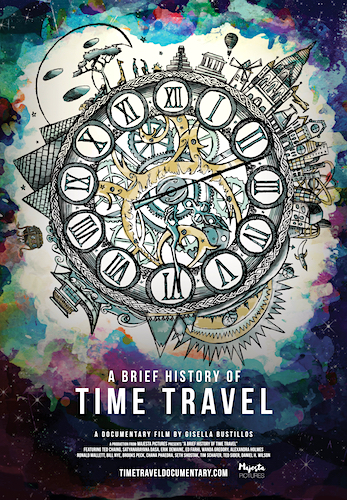
    A Brief History of Time Travel

    It’s a decade this year since I backed this documentary on Kickstarter — how’s that for time travel for you? I mean, technically, “normal and linear”, but also: time flies. It doesn’t feel like Kickstarter’s even been around that long. What the hell is going on with our perception of time (for example, the increasingly widespread observation on social media that everyone’s perception of how long ago things were is stuck somewhere in the early- to mid-2000s) would be an interesting topic for a documentary.

    But anyway, that’s not what this is. This is a wide-ranging overview of the concept of time travel, taking in fiction, science (both real and theoretical), and religion, as well as how those things interrelate and influence each other. It’s probably most interested in the science side, using other angles to illustrate rather than be examined in their own right. For example, it details the significance of H.G. Wells’s The Time Machine (the first story to involve time travel into the future, and one of the first where the travel was achieved via a man-made machine rather than some form of magic), but that’s about the last fictional story it describes. There are clips from Doctor Who and Back to the Future, but no discussion of their influence, nor of the kinds of time travel they present.

    At its best, the film draws interesting links and parallels between the different spheres it’s encompassing. This is at its most poignant when we meet a physicist who got into the field because his father died when he was young and time travel stories offered the idea that he might be able to revisit his dad, which developed into him learning the real science and becoming a physicist. Now, he believes he has a workable theory for how information could be sent into the past. I have no idea if that stands up to scrutiny, mind — the film doesn’t vet it with other interviewees’ opinions.

    Considering it only runs a little over an hour, it’s unsurprising that there’s not room to cover everything in depth. Nonetheless, it’s so blatantly leaving significant amounts of material untouched that you can’t help but feel disappointed. To be kind, it’s a reasonable primer for the uninitiated, with interesting bits of info dropped here and there, but almost every topic covered would merit a deeper, dedicated examination.

    3 out of 5

    A Brief History of Time Travel was #123 in my 100 Films in a Year Challenge 2021.


    Misery

    (1990)

    Rob Reiner | 107 mins | digital (HD) | 1.85:1 | USA / English | 15 / R
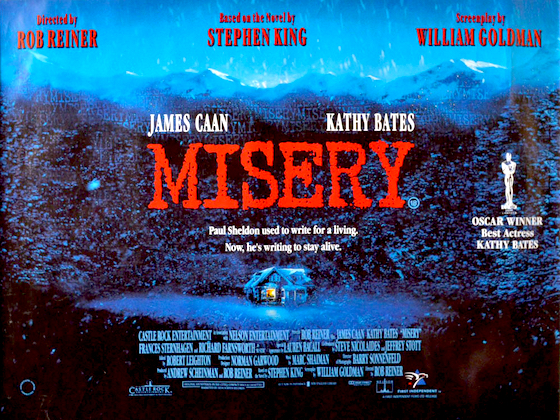
    Misery

    I feel like Misery is one of those movies that was once very well known in general pop culture, but has since slipped back, if not into obscurity then certainly into a lesser-known status, remembered only when mentioned by people who were there or as one in a list of Stephen King adaptations, that sort of thing. And that also feels fair enough, because it’s very much a movie that’s pretty good but not exceptional. The author whose work it’s taken from, the filmmaker who’s adapted it, and the main players on screen have all been responsible for or involved in even better and more enduring works of cinema, so of course this has become an “and also” note in their careers.

    Perhaps transcending that — and, certainly, by far the most famous thing about Misery — is the ankle-bashing scene, which unfortunately means you spend most of the film waiting for it to turn up, and when it does it’s rather unaffecting. That’s time and infamy for you. The former: it’s not as gruesome as it would be if shot today. The latter: I’d already seen the clip a dozen times. I can see how it was striking on the film’s original release, but familiarity has really blunted it.

    Fortunately, there’s more to the film than one shocking act of violence. Kathy Bates is excellent as Annie Wilkes, making her wild mood swings terrifyingly plausible. Her Oscar was well earned. Then there’s the subplot with the local sheriff and his unceasing investigation, which also introduces a welcome note of comedy via his interactions with his deputy (who’s his wife) and some of the other townsfolk. He’s brought to life with immense likability by Richard Farnsworth, and I’d’ve happily watched a whole movie based around him. On the whole, the film has a somewhat underwhelming “TV movie” feel to its visual (lack of) style, but there are some nicely done bits: the scene where Annie’s coming home while Paul tries to cover up that he’s been out and about; the final fight, which is just the right mix of tense, scrappy, and believably comical.

    4 out of 5

    Misery was #230 in my 100 Films in a Year Challenge 2020.


  • It Chapter Two (2019)

    2020 #71
    Andy Muschietti | 169 mins | streaming (HD) | 2.39:1 | USA & Canada / English | 15 / R

    It Chapter Two

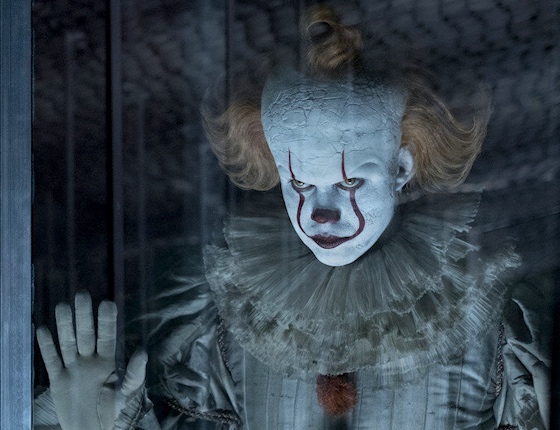
    As you may remember from the first half of It, ancient evil Pennywise the clown had been popping up to terrorise the town of Derry every 27 years, until he was defeated by a gang of kids known as the Losers Club in 1989. Fast-forward to 2016, and the bugger’s back. Maybe “defeated” wasn’t the right word. Despite their vow at the end of the first movie — to return to fight if It came back — the grownup Losers have all moved away and forgotten the events of their childhood. All except one, that is, who stayed in Derry and consequently can’t forget. Now it’s up to him to call on the gang to honour their vows, and hope that together they can defeat Pennywise once and for all.

    It’s kind of ironic that the plot of Chapter Two sounds like something cooked up by a movie producer who had a surprise hit and was desperate for a sequel. “Ironic” because that’s how many sequel ideas have been cooked up down the years, but in this case both ‘chapters’ are adapted from Stephen King’s original novel, which interweaves the two time periods of the Losers as kids and adults. And it’s not as if they decided to only adapt the kid part and then went “ah, may as well do the adults too”, because the first film ends with a double-barrelled tease for the sequel: Bev has a vision of them as adults fighting Pennywise so they make the aforementioned vow, and the closing title card reveals the film’s full title to be It Chapter One.

    Now, I’ve never read It, but it seems to be a fairly widely-held view that the novel’s adult portions are less interesting than the childhood ones. That’s probably why many people seemed to take the first film at face value as an adaptation that had chosen to only tackle half the novel — if they’re the best bits, maybe you don’t need the adult storyline at all. And Chapter Two has probably proven that’s still the case. It doesn’t feel like a missing half; a necessary section of the story mandated by the first being incomplete. What it actually feels like is what I described in the last paragraph: someone realising “our standalone film has been a surprise hit, let’s come up with a story for a sequel”. I don’t know if that’s more a criticism of King’s novel or the way the filmmakers have gone about adapting it. Either way, if you look at both films’ critical and audience reception (both online scores and box office numbers), the drop between chapters One and Two suggests I’m not the only one to have felt this way.

    Pennywise wasn't impressed by the film's box office takings

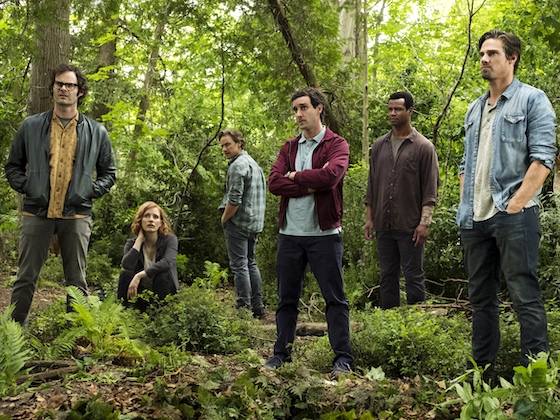
    Despite the sense of unnecessariness, I by no means hated Chapter Two. You’ll see this review ends with a three-star rating, but that’s primarily to make clear that it’s a lesser film than Chapter One, which I gave four stars. That said, most of my notes are about the things it got wrong. Like, there are too many lead characters — in fairness, a problem that also blighted parts of the first movie. There are six surviving members of the Losers Club, and when they each have to go off on individual quests, that results in six separate storylines that have to be got through. That’s a lot of screen time — no wonder the film is almost three hours long. I wasn’t actually that bothered by the length — I didn’t think it was slow, just overfull.

    There’s been talk of “director’s cut” versions of both films, but some of the stuff left in the theatrical cut already feels like it’s from an extended version. You know, scenes that aren’t strictly necessary but are good or interesting in their own right; the kind of thing you drop from the mass-audience cut but reinsert because they’ll play well in a longer version aimed at fans. That includes some of the flashbacks to the kids, which seem like they’ve been shoehorned in after the younger cast proved popular. (The fact the sequel was filmed a couple of years late also necessitates a spot of CGI de-ageing, which edges perilously close to the uncanny valley.) Maybe releasing a shorter, more focused cut into cinemas and saving that stuff for a later longer release would’ve benefited the online scores and box office receipts.

    Not cutting the flab also means it can be a mite repetitive. There are oh so many jump scares and gross things. It gets a bit tiring. But it’s also considerably less scary than the first film. There are some chilling bits (the odd old lady in Bev’s former flat, as seen in the trailer, is a key one), but they feel few and spread out — another side effect of the bloated running time. I’d also argue the film’s true focus is elsewhere: rather than being scary, it’s more interested in a mix of flashbacks to the popular cast of the first film and attempting to dig into the psychology of their adult counterparts.

    Grown Losers

    I don’t think it’s actually seeking to be a horror movie; or, at least, not a straight-up one. It does want to be scary (some of the potential cuts I mentioned include scary sequences that I guess they left in so it would still primarily be a horror movie), but narratively and tonally it’s less concerned with that than it is with being some kind of middlebrow drama about repressed childhood memories and, simultaneously, a good-vs-ancient-evil fantasy epic (the whole saga is over five hours long, remember). But it doesn’t always land the dramatic beats, either. Take the finale (spoilers follow). Victory comes via the bullied bullying their bullier into submission, as the Losers taunt Pennywise to death. It does feel apt, but it’s also not exactly healthy. Maybe they should’ve killed It with compassion…

    Ultimately, I think I liked the film it wanted to be (using the horror genre as an analogy/examination of growing up and moving on, or not, and how the past differs from our memories even as it defines us) more than the film it actually is (kind of that, but not in enough depth, and with a bunch of unnecessary business thrown in).

    3 out of 5

    It Chapter Two is available on Sky Cinema and Now TV from today.

    It (2017)

    aka It: Chapter One

    2018 #118
    Andy Muschietti | 135 mins | streaming (HD) | 2.39:1 | USA & Canada / English | 15 / R

    It

    The highest-grossing horror movie of all time, It is the story of a bunch of teenagers in small-town America coming face to face with an ancient evil… who looks like a clown. Well, it can look like other things too, but mostly it’s a clown. Why did it stick with that form? I dunno. Maybe coulrophobia is even more common than we think.

    Adapted from a novel by Stephen King (which was previously filmed as a miniseries), It actually only tackles half the book, meaning they get to crank out a sequel too (currently due next September). This actually works in the film’s favour, however: the novel takes place across two timelines, and, rather than just adapt the first half of the book, the film only adapts the earlier timeline. That means it makes for a complete experience in itself, rather than feeling like you’ve only got half the story.

    It also focuses our view of the characters. Rather than seeing them at two very different times in their lives, it becomes a coming-of-age tale… albeit one where they come of age thanks to having to battle a supernatural horror. “It”, aka Pennywise the clown, is effectively and unpredictably scary, because he’s able to turn up at any time in any form. It seems almost like a cheat — a free-for-all excuse for the film to be scary whenever and however it fancies, without the need to follow any monster rules. At the same time, that makes the film less predictable, and therefore more effective, at the headline goal of a horror movie, i.e. scaring you. Also, if we’re parsing this as a coming-of-age tale more than a monster movie, it allows It’s various forms to further develop the characters: each identity it assumes is custom-made to terrify the individual being targeted, and the only rule is you defeat It by overcoming your fear, an act which is (in this movie at least) explicitly tied to growing up.

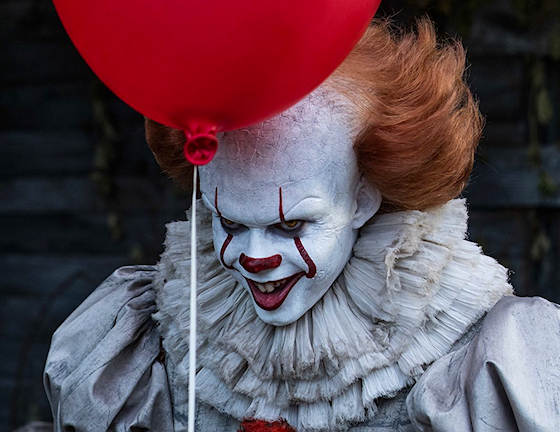
    I've got 99 red balloons and this is one

    Plenty of people will line up to tell you It isn’t actually all that scary, a level of assessment that is to watching horror movies what boasting who can eat the hottest curry is to dining. Obviously, everyone’s mileage will vary. I found some of it to be suitably unsettling and disturbing, and the “any time, any place” aspect keeps you alert and on edge. The downside is that, for the first chunk of the movie, the film just seems to be a series of unsettling scenes without much of a plot. It gets over that when the gang really comes together, but I can see why the movie ended up being so long: there are too many characters, and because It assaults each with their own personalised horror, we have to wait while the film gives them all individual sequences. Not that any of it is bad, but it threw the pacing off for me. Maybe it would’ve been better if they reduced the size of the gang by deleting a character or two.

    One thing that did get ditched between page and screen is one of the most infamous scenes in King’s novel: a ten-page pre-teen orgy. Though, as it occurs during a section of the plot that we don’t actually see depicted on screen, I guess you could imagine it still happened, if you want. Ironically, while the film may have removed that overt sexuality, it still very much male-gazes the gang’s only female member, Beverly: there’s a scene where all the boys ogle her as she sunbathes in her underwear, and she begins the film’s climax as a “damsel in distress” who has to be rescued by a “true love’s first kiss” kinda deal. She’s not completely useless or without agency, but there’s room for improvement.

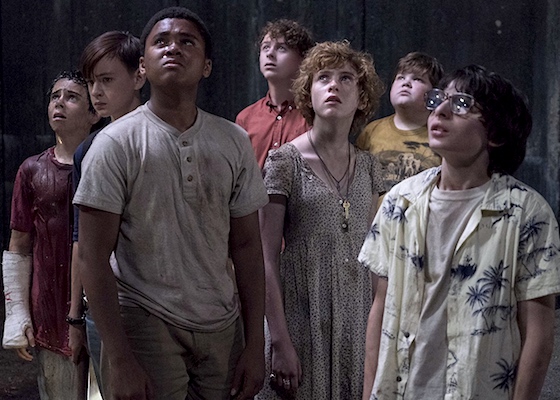
    The Losers Club

    What’s perhaps most baffling is that, by the sound of things, the early drafts for this movie (which were rejected and rewritten after original writer-director Cary Fukunaga left the project) did a lot to modernise that stuff. For example, there’s a scene where Beverly flirts with an (adult) pharmacist as a distraction, but, in the original draft, one of the other kids just faked a medical emergency for the same result. No, that’s not the most egregiously sexual thing they could’ve put in (child orgy!), but it’s still putting her in the position of being an object of lust. I guess, much like the scariness of the horror, your mileage will vary on how distasteful this stuff is. Ultimately, it’s a fairly small part of the movie.

    Even if the film runs a little long, I mostly enjoyed It. Its scary scenes are unnerving enough that it works as a horror-show ride, while its coming-of-age aspect is bolstered by really good performances from the young cast, and clear thematic stuff about overcoming fear and the value of friendship. Which almost makes it sound like a kids’ film, but, yeah, don’t go putting this on for younguns — coulrophobia would be the least of their problems.

    4 out of 5

    It is available on Sky Cinema from today.

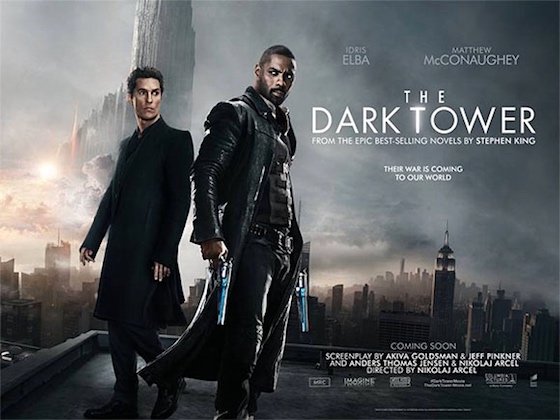
    The Dark Tower (2017)

    2018 #25
    Nikolaj Arcel | 95 mins | streaming (HD) | 2.39:1 | USA / English | 12 / PG-13

    The Dark Tower

    The Dark Tower started life as a literary work that is, according to its author, Stephen King’s magnum opus: a series of eight novels, written over 30 years and spanning some 4,250 pages, that not only tell their own genre-mash-up story, but also reference or connect up many of King’s more widely-known works. Since 2007 there have been various efforts to try to wrangle such an epic work onto the screen, with perhaps the most high-profile being Ron Howard’s ambitious plan to spread it across both film and TV, alternating a trilogy of big-budget movies with seasons of TV on HBO in order to adapt the whole saga. This clearly proved to be too formidable a goal, but eventually paved the way for what was released: a single 90-minute film. From one extreme to the other, eh…

    It’s easy to imagine why fans of the books have found this film disappointing, then — I mean, there’s no way they’ve managed to accurately condense seven novels (and some of them very long novels at that) into an hour and a half. But, despite the series-encompassing title, it’s my understanding that it’s primarily an adaptation of the first novel, so surely fans would know they could expect the rest of the narrative if sequels were produced? The perceived problems must go deeper, therefore, and be more general: leaving aside fan reaction, the film has a Rotten Tomatoes score of just 16%.

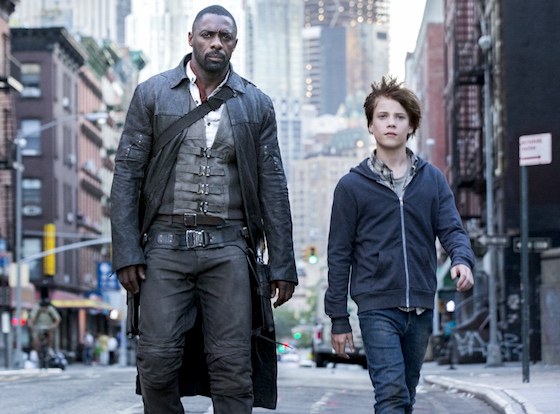
    Strut

    Well, I don’t know what people were hating, because I thought it really wasn’t that bad. I can’t comment on its faithfulness or thoroughness as an adaptation, but as an action-fantasy movie in its own right I thought it held together pretty well. It only cost $60 million (a bargain for a blockbuster nowadays), but they got good value for money: it doesn’t look cheap, and it has a respectable lead cast as well. Idris Elba’s presence may’ve pissed off some people (his character has consistently been depicted as white in illustrations accompanying the books), but he seemed to fit the role. Matthew McConaughey makes for a decently unsetting bad guy. Our identification figure is a kid played by Doctor Foster’s Tom Taylor, who’s fine here but got to show more chops in that series.

    The relatively stringent budget probably explains why it’s a little light on things like epic action sequences, with those that are included feeling like the makers were probably doing their best on a limited expenditure — the action isn’t bad, but those scenes aren’t as awesome as the film thinks they are. Less readily excused is the plot, which is a bit slim — the story is very straightforward, despite the intricate fantasy gubbins dressing it up, moving directly from A to B to C with minimal complication. Similarly, familiar character arcs are efficiently executed. But if a film’s biggest crime is unoriginality, it’s no worse than the majority of Hollywood’s output for the past 20 or 30 (or more) years, is it?

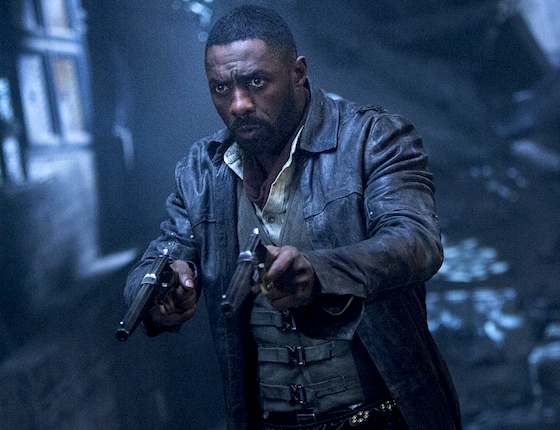
    Slinging guns

    Well, according to script editor (and fan of the books) Andrew Ellard in his discussion of the movie, that’s precisely the problem. He argues the film represents “the exact same competent mediocrity we’ve seen before from — say — I, Robot or I Am Legend. Not a bad film especially. Just kinda nothing. Or like Inkheart or Assassin’s Creed, fantasy you won’t remember tomorrow. But the books are fascinating. Full of ideas & imagery that haunt you. To pick the blandest, most generic stuff? Dumb.” This, I do suppose, is what fans were primarily upset about. If you don’t know the books then the film we’ve been given is fine as just a reasonable time-passer, but if you feel that it could — should — have been something truly special, how frustrating that must be.

    The Dark Tower grossed $113 million, which, at less than double its budget, probably isn’t enough to secure the mooted sequel (especially when it’s put in comparison to 2017’s other Stephen King adaptation, It, which surpassed $700 million). I guess someday it’ll get re-adapted, probably as a TV series, maybe by Netflix, or Amazon, especially if they still haven’t found the Game of Thrones-beater they’re currently looking for. Until then, this version stands as a reasonably enjoyable quickie — not as bad as you may’ve heard, but apparently not all it could’ve been either.

    3 out of 5

    The Dark Tower is available on Sky Cinema from today.

    Christine (1983)

    2016 #85
    John Carpenter | 106 mins | streaming (HD) | 2.35:1 | USA / English | 18 / R

    ChristineOne of a couple of films John Carpenter directed “for hire” in an attempt to restore his Hollywood reputation after the box office failure of The Thing, Christine is an adaptation of a Stephen King novel about a car possessed by evil. Yes, a car. I guess if you wait long enough, anything and everything will be possessed by evil eventually (in fiction, at any rate).

    Despite that pedigree, Christine is about as scary as… well, I was trying to think of something soft and fluffy that hasn’t ever been used in a horror movie, but that list is increasingly short. But you get my point: it’s not scary. Its 18 certificate is earned by an abundance of very strong language — which, according to screenwriter Bill Phillips, was added for that exact purpose: the film wasn’t violent enough to get an R, and they didn’t think people would see it if it was a PG (this being before the PG-13), so they just inserted a lot of swearing. It’s still a pretty entertaining film, though, thanks to some humour and the almost-there thematic subtext of America’s obsession with the automobile.

    The central (human) character is Arnie, a nerdy teen who becomes obsessed and then empowered by the eponymous vehicle. Keith Gordon is pretty good as this “worm that turned” type, albeit in a somewhat melodramatic way: he’s a heightened version of a nerd at the start, and a heightened version of a car-obsessed teenage dick later on. One review I read reckoned the film “sacrifices character logic” — what, there’s a flaw in the logical behaviour of a guy who’s semi-possessed by his demonic car, you mean?

    Girl on girl action, of a sortEven if Carpenter was doing it only for kudos with the studios, he still turned in solid work. Christine may not be scary, but she is menacing, and her attacks work as individual sequences. Unsurprisingly it’s not his strongest film, and it’s not the greatest adaptation in the Stephen King movie canon either, but if all movies by jobbing filmmakers were this good then we’d be luckier moviegoers.

    4 out of 5

    Christine is one of the first releases from new UK Blu-ray label Indicator, out today.

    The Shawshank Redemption (1994)

    100 Films’ 100 Favourites #83

    Fear can hold you prisoner.
    Hope can set you free.

    Country: USA
    Language: English
    Runtime: 142 minutes
    BBFC: 15
    MPAA: R

    Original Release: 23rd September 1994 (USA)
    UK Release: 17th February 1995
    First Seen: TV, c.1999

    Stars
    Tim Robbins (Jacob’s Ladder, Mystic River)
    Morgan Freeman (Driving Miss Daisy, Invictus)
    Bob Gunton (Demolition Man, Ace Ventura: When Nature Calls)

    Director
    Frank Darabont (The Green Mile, The Mist)

    Screenwriter
    Frank Darabont (A Nightmare on Elm Street 3: Dream Warriors, The Green Mile)

    Based on
    Rita Hayworth and Shawshank Redemption, a short story by Stephen King.

    The Story
    When Andy Dufrense is incarcerated in Shawshank State Penitentiary, he soon finds himself helping the corrupt warden money-launder his bribes. With a measure of protection from the guards, Andy’s common decency leads him to try to improve life for his fellow inmates, all the while thriving on the hope he’ll one day get out.

    Our Heroes
    Andy Dufrense is an intelligent fella, who earns himself protection and privileges by helping with the guards’ finances, and befriends fellow inmates by overhauling the prison library. He’s serving two consecutive life sentences for murdering his wife and her lover, despite claiming he’s innocent — like everyone else in Shawshank. Conversely, his new best friend, Red — the film’s narrator — is the only guilty man in Shawshank. He’s the guy you go to if you want anything smuggled in, like, say, a rock hammer…

    Our Villains
    Warden Samuel Norton is outwardly a good Christian and forward-thinking prison governor, but is actually a corrupt and vicious sonuvabitch, only too happy to use Andy’s skills to fiddle the books — and punish him harshly for any signs of dissent. His right-hand-man is the captain of the guards, Hadley, who’s not above giving a wayward prisoner a life-altering beating, or worse…

    Best Supporting Character
    The prison’s librarian, Brooks, who’s been locked up for almost 50 years. The old chap gets paroled, but the outside world has become a very different place by 1954, and he has a heartbreaking fate.

    Memorable Quote
    “The funny thing is, on the outside I was an honest man, straight as an arrow. I had to come to prison to be a crook.” — Andy Dufresne

    Quote Most Likely To Be Used in Everyday Conversation
    “Get busy living or get busy dying.”

    Memorable Scene
    Left alone in the warden’s office, Andy comes across a record. He puts it on the turntable, locks the door, and switches on the PA system, broadcasting opera to the entire prison. Guards and prisoners alike stop where they stand to listen. Meanwhile, the warden bangs on the door and demands Andy turn the music off. He leans toward the record player… and turns it up. The insubordination will cost him, but, for a few minutes, the beautiful music makes the prisoners feel free.

    Making of
    The American Humane Association monitored filming that involved Brooks’ pet crow. During a scene where it’s fed a maggot, the AHA objected — because it was cruel to the maggot. They demanded the filmmakers use one that had died from natural causes, which was duly found.

    Awards
    7 Oscar nominations (Picture, Actor (Morgan Freeman), Adapted Screenplay, Cinematography, Editing, Score, Sound)
    2 Saturn nominations (Action/Adventure/Thriller Film, Writing)

    What the Critics Said
    “The mood swings rigorously through every emotion as the cranky, wiseguy and downright crazed array of criminals bare the brunt of the turbulent life within the doomy Shawshank catacomb. […] If you’re miserable enough to look for gripes then, yes, it does drift on too long and who needs prison buggery again? Yet the ending has such poetic completeness you’re too busy contentedly chuckling to worry about sore behinds. This may have confounded American audiences — it flopped big-time on planet Yank — but a more divine movie experience you will not find this side of Oscardom. […] If you don’t love Shawshank, chances are you’re beyond redemption.” — Ian Nathan, Empire

    Score: 91%

    What the Public Say
    “it has these amazing feel good moments yet it doesn’t feel contrived. Most of us film lovers can see right through that. If Shawshank was guilty of that, it wouldn’t have stayed in the number one spot for all these years. […] I think there are a lot of things that make The Shawshank Redemption such a widely loved film and the movie just gets so many things “right” that they all combine to give us something spectacular: Feel good moments like the beer & opera scenes (which never fail to move me no matter how many times I watch this movie). Andy & Red’s friendship. The lesser characters such as Brooks & Heywood (and the heartbreakingly beautiful “Brooks Was Here” theme from Thomas Newman). Seeing the posters on the wall change, showing the passage of time. Alexandre Dumbass. The pet bird. Rita Hayworth. And, of course, the overall message of hope. More than anything, though, I think it’s Stephen King’s story and Darabont’s ability to give us scenes of pure beauty in a movie based someplace as awful as a prison” — table9mutant, Cinema Parrot Disco

    Verdict

    The Godfather sat seemingly unassailable atop IMDb’s Top 250 for nine years, until The Dark Knight kicked it off, not everyone agreed, and when the dust settled Shawshank was the new #1, a position it’s now held for eight years. Naturally that means there’s been a backlash in some circles. It’s a particularly snooty kind of reaction in general, I find, probably because Shawshank is exactly the kind of movie primed to emerge as a consensus favourite: it has drama and darkness, but also humour and optimism, and elicits emotions across the spectrum — it’s neither too grim to depress people into not enjoying it, nor too sentimental to make them do that mock “throwing up” noise some people do when things get really schmaltzy.

    I wager some people confuse the notion of “consensus favourite” with “produced by committee”, which sound similar — a large group of people coming to agree on something — but are actually very different. The latter typically produces bland work that no one loves; something that wouldn’t curry favour with the former. Is The Shawshank Redemption the greatest movie ever made? Not in my opinion. I’d wager not in the opinion of most of the people who’ve given it a score on IMDb that’s contributed to it being #1. But it is a very good film indeed — and, clearly, most of us can agree on that.

    #84 will be… not a fucking Merlot.

    Room 237 (2012)

    2015 #56
    Rodney Ascher | 99 mins | TV | 16:9 | USA / English | 15

    Room 237Possibly-crazy people offer definitely-crazy theories on the subtextual meaning of Stanley Kubrick’s The Shining in this controversial film analysis documentary.
    Some believe it’s presenting the theories for genuine consideration, and get angry because they’re patently insane. Others believe it’s an implicit criticism of such outlandish readings, exposing how ‘dedicated’ individuals can see things that aren’t there. I don’t think it’s the former, but the lack of objective commentary means it falls short of achieving the latter.

    It’s fascinating what deluded people can concoct, though. As a bonus, they do expose passingly-interesting minor facets of Kubrick’s work that you probably missed.

    3 out of 5

    The Shining (1980)

    2014 #80
    Stanley Kubrick | 120 mins* | Blu-ray | 1.85:1 | UK & USA / English | 15 / R

    The ShiningFêted director Stanley Kubrick turned his hand to horror for this Stephen King adaptation. Poorly received on release (it was nominated for two Razzies: Worst Actress and Worst Director) and reviled by King (he attempted his own version as a miniseries in 1997. It didn’t go down well), it has since been reassessed as a classic. I’ve never read the novel, so have no opinion on the film’s level of faithfulness or (assuming it isn’t true to the book) whether that’s a good thing or not. As a movie in its own right, however, The Shining is bloody scary.
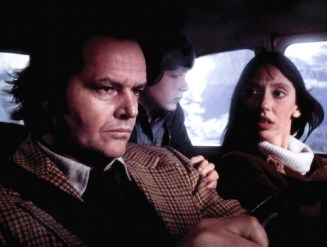
    The plot sees Jack Nicholson, his wife and young son travelling to a remote hotel to be its caretakers while it’s closed over the winter. As the weeks pass by, strange things begin to happen. Nicholson begins to go a little stir crazy… or is it something worse? As the hotel becomes cut off by a snowstorm, everything goes to pot…

    It’s somewhat hard to summarise The Shining because, in a way, nothing much happens. There are some mysteries, but few (if any) answers. That prompts plenty of wild theories — there’s now a whole film about them, even — but whether any of those are right or not… well, you know what wild theories are normally like, right? Really, story is not the order of the day. Kubrick seems to have set out to make a horror movie in the truest sense: a movie to instill fear. And that it does. And then some.

    But you're not called JohnnyGradually, inexorably, the film builds a sense of dread; a fear so deep-seated that it feels almost primal. There are few jumps or gory moments, the easy stomping ground of lesser films. There’s just… unease. It’s a feeling that’s tricky to put into words, because it’s not exactly “scary”; even “terrifying” feels too lightweight. There are undoubtedly sequences of suspense, where we fear what’s coming or what will happen to the characters (everyone knows the “Here’s Johnny!” bit, for instance), but that’s not where the film’s impact really lies.

    I guess some find it slow and aimless. There are certainly fans of King and his original that are just as unimpressed as the author by the way it supposedly shortchanges Nicholson’s character. There may be some validity to both of those arguments. Nonetheless, I found Kubrick’s realisation to be probably the most excruciatingly and exquisitely unsettling film I’ve ever seen.

    5 out of 5

    The Shining placed 3rd on my list of The Ten Best Films I Saw For the First Time in 2014, which can be read in full here.

    It was viewed as part of my What Do You Mean You Haven’t Seen…? 2014 project, which you can read more about here.


    * The Shining was initially released at 146 minutes. After a week, Kubrick cut two minutes off the end. Following a poor reception, he cut even more for the European release (some say 31 minutes, but that doesn’t add up). He maintained the shortest version was his preferred cut, though it’s not the one released in most territories… except the UK. ^

    The Running Man (1987)

    2014 #116
    Paul Michael Glaser | 97 mins | TV | 1.85:1 | USA / English | 18 / R

    The Running Man25 years before Jennifer Lawrence had to fight for her life on TV, Arnie had to do the same.

    In an ever-so-’80s vision of the future (my God, those costumes!), Arnie’s wrongfully-convicted fugitive ends up on TV’s most popular show, where criminals fight for their freedom against a variety of imposing opponents. Secretly, he’s there to try to overthrow the corrupt regime.

    The implications of the central concept have been explored better several times since, but, despite dated design, the solid direction from Starsky (yes, as in and Hutch) ensures this is an entertaining SF action movie for genre fans.

    3 out of 5

    In the interests of completing my ever-growing backlog, I decided to post ‘drabble reviews’ of some films. For those unfamiliar with the concept, a drabble is a complete piece of writing exactly 100 words long. You’ve just read one.

    Stand By Me (1986)

    2009 #29
    Rob Reiner | 89 mins | download | 15 / R

    Stand By MeStand By Me is a film an awful lot of people love an awful lot, which it always seemed to me was down to first seeing it at the right age (more or less the age of the main characters, I think) and possibly to being part of a certain generation — would it have the same effect for kids today, when the relative innocence and freedom of the ’50s is arguably lost? As I say, “seemed”, because now I’m not sure either of these factors really matter.

    Irrespective of age, generation, or being able to remember the kinds of experiences suggested by the film, Stand By Me is still an effective and affecting little film. The level of enjoyment for some may depend on how much they can stomach child actors, though as kids go they’re mostly very good. River Phoenix in particular is brilliant, highly natural while bringing a lot of depth to perhaps the most important role. Wil Wheaton also makes a good account of himself, just one year before attracting derision as Wesley Crusher in Star Trek: The Next Generation. (Phoenix, of course, went on to have a tragically short-lived career.) Kiefer Sutherland is as effective a villain as he ever would be, though that aspect of the plot is almost an aside.

    An aside, because the film isn’t about the fights between the young heroes and a group of older bullies. Rather, it’s a paean for childhood, with the adult perspective and the ‘lost age’ setting of the ’50s succinctly highlighting the nostalgic spirit. To be precise, it’s not so much reflecting on “childhood” as on “growing up” — the choices that are open when young that either disappear with time or, for whatever reason, become closed off. The whole film is arguably about choice: choice of friends, choice of social class, Ace’s constant listing of choices (the subtext breaking into the text, as many a film teacher would point out), even the obvious choice whether to follow the tracks or take shortcuts (surely symbolic). Thematically, it’s the choice to be put down or stand up for yourself; the choice to stick around and wind up a nobody or work hard and get out, also underlined in the present-day bookends.

    Perhaps being the right age is helpful to a love for Stand By Me, but at any stage in life it’s easy to relate to its depiction of the experiences and choices of childhood, be they now lost, taken, or never even had.

    4 out of 5

    Stand By Me is on Channel 5 today, Sunday 12th October 2014, at 2pm.