

Everyone has a secret.
Country: UK & France
Language: English
Runtime: 98 minutes
BBFC: 18
MPAA: NC-17 (uncut) | R (cut)

Original Release: 4th September 2003 (Netherlands)
UK Release: 26th September 2003
First Seen: DVD, c.2005
Stars
Ewan McGregor (Shallow Grave, Big Fish)
Tilda Swinton (Orlando, We Need to Talk About Kevin)
Peter Mullan (Trainspotting, Tyrannosaur)
Emily Mortimer (Lovely & Amazing, Match Point)
Director
David Mackenzie (Starred Up, Hell or High Water)
Screenwriter
David Mackenzie (The Last Great Wilderness, Hallam Foe)
Based on
Young Adam, a novel by Alexander Trocchi.
The Story
Joe is earning his keep helping transport coal on a barge between Glasgow and Edinburgh, spending his free time lusting after his employer’s wife, when he spots a woman’s dead body floating in the canal — something Joe knows more about than he lets on…
Our Hero
Joe is a young drifter, who’s wound up working on a barge with Les and Ella Gault and their son. He’s a horny bugger, sex obsessed to the point of distraction, which will have an effect on everyone’s lives.
Our Villain
It wouldn’t be quite accurate to say the film is a murder mystery — especially as it’s not clear if the woman was indeed murdered. But how did she die? How was Joe involved? He’s the main character, which makes him the hero, but is he actually a bad’un?
Best Supporting Character
Harried barge wife Ella is not anyone’s typical image of desirability, but nonetheless becomes the object of Joe’s own brand of affections, which brings her some happiness… for a while. Mainly, it’s a brilliant, layered performance by Tilda Swinton.
Memorable Quote
Joe: “Are you sorry?”
Ella: “Fat lot of good that would do me.”
Memorable Scene
Cathie, another of Joe’s lovers, comes home soaking wet. As she undresses, she berates him for doing nothing useful with his time. He informs he has made custard, which he throws over her, followed by various other condiments. Then there is, shall we say, an act with (at best) debatable consent. I believe this is a version of something called “sploshing” (thanks, internet).
Memorable Music
David Byrne’s ambient score haunts the soundtrack, as essential to the film’s grey mood as the drizzly Scottish locations and overcast photography. My favourite part is the plaintive closing song, The Great Western Road.
Awards
4 BAFTA Scotland Awards (Film, Actor in a Scottish Film (Ewan McGregor), Actress in a Scottish Film (Tilda Swinton), Director)
4 British Independent Film Award nominations (British Independent Film, Actor (Ewan McGregor), Actress (Tilda Swinton), Director)
3 Empire Awards nominations (British Film, British Actor (Ewan McGregor), British Actress (Emily Mortimer))
What the Critics Said
“Joe is a hard case. Opaque. Not tender, not good with the small talk. Around women, he has a certain intensity that informs them he plans to have sex with them, and it is up to them to agree or go away. He is not a rapist, but he has only one purpose in his mind, and some women find that intensity of focus to be exciting. It’s as if, at the same time, he cares nothing for them and can think only of them. […] He is not a murderer but a man unwilling to intervene, a man so detached, so cold, so willing to sacrifice others to his own convenience, that perhaps in his mind it occurs that he would feel better about the young woman’s death if he had actually, actively, killed her. Then at least he would know what he had done and would not find such emptiness when he looks inside himself. This is an almost Dostoyevskian study of a man brooding upon evil until it paralyzes him. […] The death of the girl and the plot surrounding it are handled not as a crime or a mystery but as an event that jars characters out of their fixed orbits. When you have a policy of behavior, a pose toward the world, that has hardened like concrete into who you are, it takes more than guilt to break you loose.” — Roger Ebert, Chicago Sun-Times
 Score:
 62%
62%What the Public Say
“McGregor, putting his meat and two veg on show once again, is really good as the conflicted and sex addict, Swinton does almost steal the show as the sex-craving barge woman, who also gets naked, and Mortimer in the flashbacks is very good, with her clothes off too. The film is just stuffed with sexual scenes, and with the dead body premise it combines film noir and melodrama, all adding up to a well crafted and most watchable period drama.” — Jackson Booth-Millard @ IMDb

Part murder mystery, part beat character study, part erotic drama, Young Adam is an enigmatic, moody, conflicted film — in a good way. It presents a grimily realistic view of life and sex, around which writhes a murder mystery that, as it turns out, doesn’t contain a murder and, relatively quickly, isn’t much of a mystery. Instead it’s something of an ethical dilemma, presented to a character who’s not exactly unethical but isn’t necessarily concerned about doing what’s right either, especially if it’s against his own interests. Not a cheery one, then, but a film of grey morals, grey imagery, and grey mood — in a good way.

Next time… looking back over my 100 favourites.
 This is not a well-reviewed film —
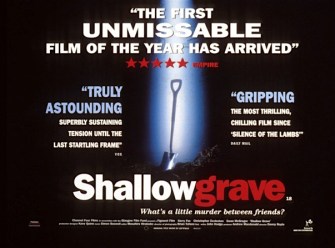 The debut feature of director Danny Boyle was hailed on release for being a British film that wasn’t another period-piece literary adaptation. Instead, it concerns three ultra-chummy flatmates in contemporary Edinburgh (Ewan McGregor, Christopher Eccleston, Kerry Fox) who take in a fourth lodger, who promptly dies, leaving behind an insane amount of cash. Rather than report it, they dispose of the corpse and keep the cash. You don’t get much further from Merchant-Ivory than that.
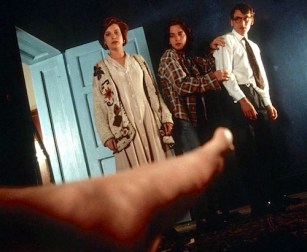 Consequently, it has that great discussion-generating feature of many a zeitgeist-y ‘watercooler’ film: what would you do?
 Channing Tatum is a brave Roman general whose father lost his company’s standard, the titular eagle, north of Hadrian’s Wall (a real historic event, coincidentally depicted in
 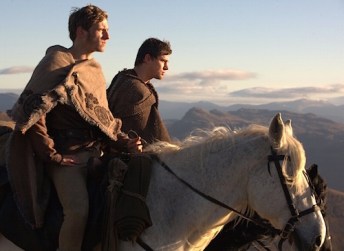 quality to the setting, characters, and imagery that’s quite striking.
 Gentle comedy in which Peter Riegert’s middle-management American oil exec has to persuade the residents of a Scottish village to sell up, unaware that they’re only too keen — for the right price. One of Quentin Tarantino’s Coolest Movies of All Time (
 #89 The Spirit (2008)
















 I figured I ran the risk of affecting the outcome of the Scottish independence referendum if I posted this review yesterday (because of course I have that kind of reach and influence), but after Mel Gibson’s historical(ly-dubious) epic wound up on
  Judged as that, Gibson’s three-hour (near as damn it) movie is a pleasingly traditional epic. Many big films these days are just long, but the story here has scope too — it’s about a war, essentially. And war means battles, which are a particular highlight. The standout is surely the famed Battle of Stirling Bridge — you know, the one where the Scots moon the English. Funny and all, but just a small part of a larger sequence. Gibson has the confidence to show the build-up to the fighting, outline the tactics that will be used, and only then launch into the fray. It’s this measured approach that makes it so effective, rather than the crash-bang-wallop straight-to-the-slaughter style of more recent movies. Due to its notoriety I’d assumed the aforementioned clash was the film’s climax, but it’s actually the centrepiece, pretty precisely in the middle of the film. Fortunately there’s enough else going on (because this isn’t actually An Action Movie) that it doesn’t make things feel lopsided.
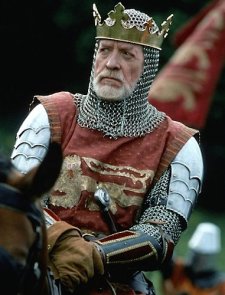 It also doesn’t suffer from that film’s accent issues. Mel Gibson isn’t an American-Scot (or an Australian one), instead delivering an accent that sounds passable to this Englishman. He believed he was too old for the part, which may well be true, but when the rest of it is so inaccurate what does that matter? He’s a solid leading man and a commanding-enough presence. The supporting cast are an array of recognisable Celtish faces — including at least one Irishman playing a Scot and a Scot playing an Irishman — and, because they’re from our fair isles, of course they’re all brilliant. Best of all, however, is Patrick McGoohan. He makes for a fantastic Evil King, given some juicy lines that are even juicier thanks to his delivery. He may not be moustache-twirling-ly memorable like an Alan Rickman creation, but any scene is enlivened by his presence.
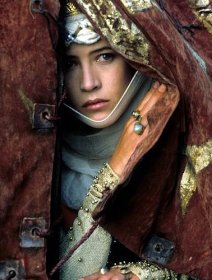 Then there’s that issue of historical accuracy. I know I said we should ignore it, but even if you accept fiction films shouldn’t be slavish history lessons (and not everyone does), how far can they ignore the facts? Often with such films the viewer assumes they’re true until someone says, “actually, I think you’ll find in reality…” Not so with Braveheart: you don’t have to know anything of Scottish history to guess that the face-to-face chats (and more, wink-wink-nudge-nudge) between Wallace and the future-Queen must be almost entirely poppycock (and, in fact, you can drop that “almost”).
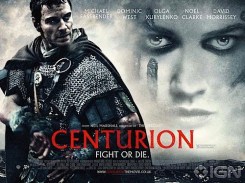 The fourth feature from writer/director Neil Marshall (despite owning his first three on DVD, this BD rental is the first I’ve actually watched — story of my life) is a bit of a departure: where the first three were horror (or at least horror-leaning) flicks, Centurion is an action-adventure crossed with something a little more artsy. Only a little, mind. Think
  Regular readers may know that I have an ever-growing dislike for films that begin at or near the end for no good reason (and most of those that do have no good reason to do so). Centurion’s opening line notes that “this is neither the beginning nor the end” of the lead character’s story. Oh dear, thought I; though perhaps “nor the end” signifies we might reach this point suitably distant from the credits, maybe. Not meaning to spoil it, but we’re there just 10 minutes later. Nice work Mr Marshall.
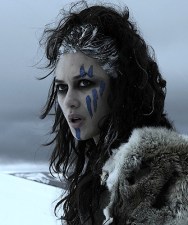 The cast is packed with people who, even if you don’t know their names, there’s a fair chance you’ll know the faces (assuming you watch your share of British drama): in addition to Fassbender and Morrissey there’s Dominic West, JJ Field, Lee Ross, Paul Freeman, Liam Cunningham, Noel Clarke, Riz Ahmed, Imogen Poots, Rachael Stirling, Peter Guinness… not to mention Film Star Olga Kurylenko. Recognisability doesn’t guarantee quality, of course, but that’s a pretty good list.
 I really enjoyed Centurion, appreciating its mix between brutally real action and stunning scenery, with a slightly more thoughtful side emerging in the final act. It’s also always pleasant to see a film that runs the length it wants to at a reasonable speed, rather than padding itself to reach two or even two-and-a-half hours. Splendid.
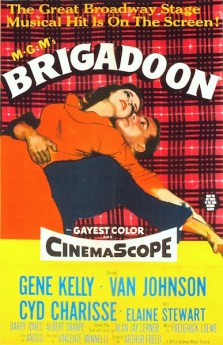 “Oh dear,” is surely the initial reaction to Brigadoon. The Scottish accents are appalling, the costumes and setting gratingly twee, the Highlands recreated entirely on a soundstage. I wonder if many Americans visited Scotland in the wake of this film expecting to find such things? If they did, I imagine they were sorely disappointed.
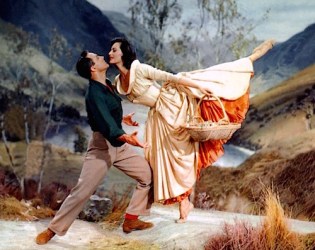 I think it’s fair to say this isn’t the greatest of musicals (though I know some might disagree). The poor realisation of Scotland takes some getting used to — and remains either irritating or amusing, depending on your mileage for such things — and generally there’s a dearth of particularly memorable songs or dances. But it’s not bad either, once things get underway.
 Culloden tells the story of the 1746 battle — famously, the last fought on British soil — and the events that followed it, as if it were covered by a modern TV news report (albeit a feature-length one).
 100Films.co.uk