100 Favourites II — The Next 30

Last week, my ranking of 100 favourite movies I’ve seen in the last decade began with 40 films that ranged from screwball comedies to spectacle-fuelled blockbusters, from gritty crime thrillers to artistic animations, from gory horrors to melodramatic epics…

This week, my typically eclectic selection continues with the next 30 picks.

#60
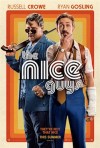
The Nice Guys

8th from 2016 (previously 11th)
Convoluted criminality is rendered hilarious in Shane Black’s spiritual sequel to Kiss Kiss Bang Bang. More…
#59
Arrival

7th from 2016 (previously 6th)
An intelligent, adult drama about humanity, which also happens to be a science-fiction mystery. More…
#58
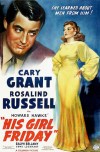
His Girl Friday

6th from 2010 (previously 7th)
Sharp, fast, intelligent, hilariously funny — they don’t make films like this anymore. More…
#57
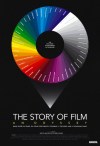
The Story of Film: An Odyssey

8th from 2015 (previously 21st)
Mark Cousins’ history of the movies wasn’t to all tastes, but I found all 15 hours to be fascinating and enlightening. More…
#56
The Night of the Hunter

7th from 2013 (previously 7th)
Charles Laughton’s only film as director is a masterpiece of dread, fear, cruelty, and near-peerless beauty. More…
#55
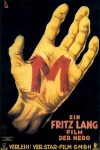
M

5th from 2010 (previously unranked)
Fritz Lang’s proto-noir serial killer procedural still has the power to thrill and chill. More…
#54
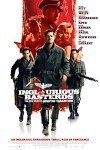
Inglourious Basterds

3rd from 2009 (previously 1st)
Killin’ Natzis, Tarantino style. History re-rendered in terms of pure cinema. More…
#53
In Bruges

2nd from 2009 (previously 2nd)
“There’s never been a classic movie made in Bruges, until now.” More…
#52
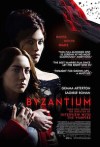
Byzantium

7th from 2015 (previously 5th)
These vampires aren’t glamorous or sparkly, but damaged and discarded in a seedy seaside town of tarnished charms. More…
#51
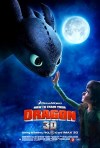
How to Train Your Dragon

8th from 2011 (previously unranked)
Glorious animation, with soaring flight sequences and an emotive connection to its characters, both human and dragon. More…
#50
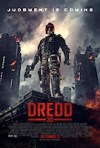
Dredd

6th from 2013 (previously 6th)
Sharp, efficient sci-fi action with impressive gun battles, dry humour, and Karl Urban nailing the title character. More…
#49
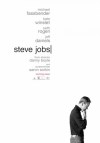
Steve Jobs

6th from 2016 (previously 3rd)
A gripping character drama with a surprising corporate thriller vibe, magnificently written by Aaron Sorkin. More…
#48
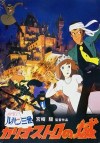
Lupin the Third: The Castle of Cagliostro

7th from 2011 (previously 4th)
Described by no less than Steven Spielberg as “one of the greatest adventure movies of all time”. More…
#47
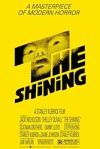
The Shining

8th from 2014 (previously 3rd)
Eliciting dread and almost-primal fear, it’s the most excruciatingly and exquisitely unsettling film I’ve ever seen. More…
#46
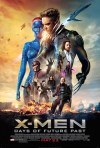
X-Men: Days of Future Past

7th from 2014 (previously 9th)
Surprisingly deep characterisation rubs shoulders with witty and inventive action in this all-eras X-Men team-up. More…
#45
Predestination

5th from 2016 (previously 5th)
Thought-provoking science-fiction in this time travel mystery that tackles issues of gender and identity — how timely. More…
#44
The Revenant

4th from 2016 (previously 4th)
Starring Emmanuel Lubezki’s cinematography, this gruelling survival Western is primarily told with visuals and so becomes a work of pure cinema. More…
#43
Oldboy

6th from 2014 (previously 7th)
Mixing a straightforward revenge thriller with weird, almost surrealistic touches, Oldboy is kinda crazy, kinda disturbed, but kinda brilliant because of it. More…
#42
Hanna

5th from 2013 (previously 5th)
A teen coming-of-age movie… with hard-hitting action sequences, surreal imagery, long single takes, beautiful cinematography, and a pulsating Chemical Brothers soundtrack. More…
#41
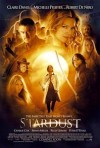
Stardust

5th from 2008 (previously 4th)
A truly magical film, packed with wit, action, delicious villains, a star-studded cast, a stirring score, and genuinely special effects. More…
#40
North by Northwest

4th from 2013 (previously 4th)
Almost everything you could want from a movie: pure tension, action, humour; a mystery, a thriller; a dash of romance. Unadulterated entertainment. More…
#39
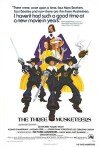
The Three Musketeers

6th from 2011 (previously unranked)
Sword fights galore in this riot of swashbuckling fun, with a lightness of touch that makes for pure entertainment. More…
#38
The Grand Budapest Hotel

6th from 2015 (previously 10th)
A film full of delights, from the hilarious performances, to the clever dialogue, to the inventive design, to the controlled camerawork. More…
#37
Mad Max 2

5th from 2015 (previously 2nd)
Post-apocalyptic Australian Western that climaxes with a balls-to-the-wall multi-vehicle chase, one of the greatest action sequences ever filmed. More…
#36
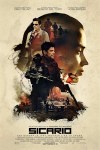
Sicario

3rd from 2016 (previously 1st)
A dark and morally questionable thriller, incredibly shot by Roger Deakins, artfully helmed by perhaps the best director currently working, Denis Villeneuve. More…
#35
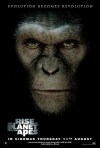
Rise of the Planet of the Apes

3rd from 2012 (previously 7th)
An intelligent science-inspired drama that just happens to link up to a big studio sci-fi/action series. More…
#34
Dawn of the Planet of the Apes

5th from 2014 (previously 4th)
The sequel to the prequel to the Planet of the Apes presents a fully-realised ape society and a story of interspecies relations that reflects our own times. More…
#33
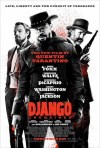
Django Unchained

3rd from 2013 (previously 2nd)
Tarantino’s Spaghetti Western homage is an entertaining, occasionally thought-provoking, rewarding, and thoroughly cinematic experience. More…
#32
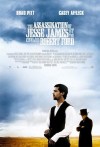
The Assassination of Jesse James by the Coward Robert Ford
2nd from 2013 (previously 3rd)
One of the most underrated films of the ’00s, Andrew Dominik’s historically accurate movie is a considered, immersive, complex, intimate, epic Western. More…
#31
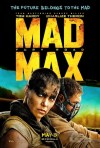
Mad Max: Fury Road

4th from 2015 (previously 6th)
Action filmmaking elevated to a genuine art form, but alongside the mind-boggling stunts there’s a surprising richness of theme and character. More…

Next Sunday: the penultimate 20.

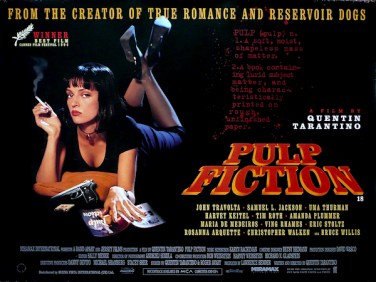
Pulp Fiction (1994)

100 Films’ 100 Favourites #71

You won’t know the facts
until you see the fiction.

Country: USA
Language: English
Runtime: 154 minutes
BBFC: 18 (uncut, 1994) | 18 (cut on video, 1995) | 18 (uncut on video, 2011)
MPAA: R

Original Release: 10th September 1994 (South Korea)
US Release: 14th October 1994
UK Release: 21st October 1994
First Seen: TV, 18th December 1999 (probably)
(I would’ve guessed several years later than that, but I definitely watched it on BBC Two and I definitely wasn’t 18, so (with reference to the BBC Genome Project) this is the only plausible option. That’s thrown all of my “first seen” guesses into doubt now…)

Stars
John Travolta (Grease, Face/Off)
Samuel L. Jackson (Loaded Weapon 1, Unbreakable)
Uma Thurman (Dangerous Liaisons, Gattaca)
Ving Rhames (Dave, Mission: Impossible)
Bruce Willis (Die Hard, The Fifth Element)

Director
Quentin Tarantino (Reservoir Dogs, Kill Bill)

Screenwriter
Quentin Tarantino (From Dusk Till Dawn, Jackie Brown)

Story by
Quentin Tarantino (Natural Born Killers, The Hateful Eight)
Roger Avary (Killing Zoe, The Rules of Attraction)

The Story
A chronologically-shuffled collection of interconnected short crime stories, including a hitman who has to take his boss’ wife for a nice night out, a boxer who refuses to throw a fight, the clean-up after a misfire, and a diner hold-up gone sideways.

Our Heroes & Villains
Most films can be divvied up into heroes and villains one way or another — I’ve certainly managed it for the previous 70 films in this list. Pulp Fiction muddies its waters considerably, with criminals for heroes at the best of times, and the “short story collection” style meaning there’s an abundance of characters anyway, some of whom arguably change sides from one tale to the next. Nonetheless, you’d have to point to hitmen Vincent Vega and Jules Winnfield, and their ever-so-Tarantino rambling conversations about nothing and everything, as the film’s primary duo.

Best Supporting Character
Christopher Walken’s cameo turn as an army vet passing down a watch with an… unusual history. (You might argue for Harvey Keitel’s character, but his Direct Line adverts have rather soured that.)

Memorable Quote
Vincent: “You know what they call a Quarter Pounder with Cheese in Paris?”
Jules: “They don’t call it a Quarter Pounder with Cheese?”
Vincent: “No man, they got the metric system. They wouldn’t know what the fuck a Quarter Pounder is.”
Jules: “Then what do they call it?”
Vincent: “They call it a Royale with Cheese.”
Jules: “Royale with Cheese. What do they call a Big Mac?”
Vincent: “Big Mac’s a Big Mac, but they call it Le Big Mac.”
Jules: “Le Big Mac. What do they call a Whopper?”
Vincent: “I don’t know, I didn’t go into Burger King.”

Quote Most Likely To Be Used in Everyday Conversation
“You mind if I have some of your tasty beverage to wash this down?” — Jules

Memorable Scene
Uma Thurman and John Travolta dancing — about as memorable a movie moment as there is.

Memorable Music
Famously, Tarantino never used to use original music (that’s now changed with his Ennio Morricone collaborations, of course), instead selecting tracks from his record collection — but his choices were so eclectic, obscure, and personal that many of them are now most associated with the films he put them in. Stand outs in Pulp Fiction include the title credits track, Dick Dale’s version of Misirlou; the song Mia and Vincent dance to, You Never Can Tell by Chuck Berry; and Urge Overkill’s cover of Girl, You’ll Be a Woman Soon.

Making of
The famous Bible passage memorised by Jules is mostly fictional. While one line is similar to text from the book, apparently the speech is almost word-for-word identical to the opening scene of the Sonny Chiba movie Karate Kiba.

Next time…
Travolta’s character, Vincent Vega, is supposedly the brother of Michael Madsen’s character from Reservoir Dogs, and at one time Tarantino was planning a movie starring the pair. It never materialised, obviously. There’s also the theory that all of Tarantino’s films take place in the same universe, which the director himself has confirmed.

Awards
Won the Palme d’Or
1 Oscar (Original Screenplay)
6 Oscar nominations (Picture, Actor (John Travolta), Supporting Actor (Samuel L. Jackson), Supporting Actress (Uma Thurman), Director, Editing)
2 BAFTAs (Supporting Actor (Samuel L. Jackson), Original Screenplay)
7 BAFTA nominations (Film, Actor (John Travolta), Actress (Uma Thurman), Director, Cinematography, Editing, Sound)
1 Saturn Award (Action/Adventure/Thriller Film)
2 MTV Movie Awards (Movie, Dance Sequence)
4 MTV Movie Awards nominations (including On-Screen Duo (Samuel L. Jackson & John Travolta) and Movie Song (Girl, You’ll Be a Woman Soon))
1 American Comedy Awards nomination (Funniest Supporting Actress (Amanda Plummer))

What the Critics Said
“this dizzily convoluted noir epic — one of the year’s best and most wildly inventive American movies — plunges us into a kind of retro-nightmare fantasy land. In Pulp Fiction, time keeps looping back on itself and we’re trapped in a cul-de-sac of double-crosses, absurdity, arousal and danger, never completely sure of where anyone’s going or why. [It] is shockingly violent, provocatively obscene and profane. It won’t just offend some audiences; it will offend the living hell out of them. Tarantino intends to rile people up. But it doesn’t feel like the usual high-tech, nasty blood-and-guts movie thriller […] This movie gets its charge not from action pyrotechnics but from its electric barrage of language, wisecracks and dialogue, from the mordant ’70s classicism of its long-take camera style and its smart, offbeat, strangely sexy cast.” — Michael Wilmington, Chicago Tribune

Score: 94%

What the Public Say
Pulp Fiction begins at its end. It is cyclical but we don’t realise this until we come to its final moments. Like many of Tarantino’s films, it is episodic and split into sections that overlap in both time and plot. It is far from linear; several threads occurring simultaneously, woven together by chance meetings, coincidence and common acquaintances. Travolta’s Vincent Vega is both alive and dead at the end of the film, such is the genius of the script. [It] is a film that demands a viewer’s attention, engagement and use of their brain to put the pieces of the puzzle together.” — Behind the Seens

Verdict

A defining movie for the American indie/auteur boom of the late ’80s and early ’90s, and consequently one of the most influential films of the ’90s… but it is itself heavily influenced by and recreated from styles and genres of the past… and yet, despite those two reflective sides, it’s not quite like anything else — Pulp Fiction is a rule unto itself. In only his second feature, Tarantino’s direction is remarkably self-assured; rarely flashy or showy, but not simplistic or uninteresting either. It’s a film where the famed dialogue is as vital as the characters’ actions, but it’s not one that’s solely driven by people talking to each other. Events interrupt them shooting the breeze, but it’s also them shooting the breeze that drives the action. It’s a film of many opposing facets, then, which is quite possibly what keeps it fascinating — almost as an incidental addition to the humour and style that keep it entertaining.

#72 will have snakes… why did it have to have snakes?

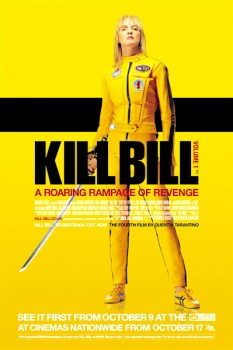
Kill Bill: Vol. 1 (2003)

100 Films’ 100 Favourites #48

A Roaring Rampage of Revenge

Also Known As: Kill Bill: Volume 1

Country: USA
Language: English, Japanese & French
Runtime: 111 minutes
BBFC: 18
MPAA: R

Original Release: 10th October 2003 (USA)
UK Release: 17th October 2003
First Seen: cinema, October 2003

Stars
Uma Thurman (Pulp Fiction, My Super Ex-Girlfriend)
Lucy Liu (Charlie’s Angels, The Man with the Iron Fists)
Vivica A. Fox (Independence Day, Sharknado 2: The Second One)
Daryl Hannah (Splash, Wall Street)
David Carradine (Death Race 2000, Q: The Winged Serpent)

Director
Quentin Tarantino (Pulp Fiction, Inglourious Basterds)

Screenwriter
Quentin Tarantino (True Romance, Django Unchained)

The Story
Left for dead by her former teammates, highly-skilled martial artist the Bride awakes from her coma with one thing on her mind: to hunt down her would-be assassins in a roaring rampage of revenge.

Our Hero
The Bride, aka Black Mamba, aka [bleep], is a deadly assassin out for revenge against the gang of former associates who tried to murder her, in particular their leader, Dave. No, wait, that’s not right. What was his name? Anyway…

Our Villains
The five former members of the Deadly Viper Assassination Squad who were involved in the Bride’s ‘murder’. In this film, that amounts to Veronica Green (aka Copperhead), who has settled down as a suburban mom, and O-Ren Ishii (aka Cottonmouth) who is now the leader of the yakuza, commanding a veritable army of ninjas. You’ll have to wait ’til the next film for the other three members to turn up properly, including their leader, Bob. No, wait, that’s not right. What was his name?

Best Supporting Character
O-Ren Ishii’s ultra-violent head bodyguard, teenage schoolgirl Gogo Yubari. Proficient with a weapon that I’ve just learnt is called a meteor hammer. How awesome is that?

Memorable Quote
“That woman deserves her revenge and we deserve to die.” — Budd

Memorable Scene
The House of Blue Leaves: after calling out O-Ren Ishii, defeating her six bodyguards, and meteor hammer-wielding Gogo, the Bride turns to face O-Ren herself… when the sound of dozens of motorbikes roars outside. “You didn’t think it would be that easy, did you?” In flood O-Ren’s yakuza army, the Crazy 88, surrounding the Bride. The fighting begins, and when our hero bloodily plucks out one of their eyes, the film smash-cuts to black & white to obscure the ensuing bloody bloodbath of bloodletting.

Memorable Music
Tarantino once again raids his record collection to create the film’s eclectic soundscape. The stand-out track is surely Tomoyasu Hotei’s Battle Without Honor or Humanity, the theme from New Battles Without Honor and Humanity (aka Another Battle), which has been co-opted into endless TV montages since it appeared in Bill. Of course, there’s also the cover of Woo Hoo by the 5.6.7.8’s, which contains the immortal lyrics, “woo-hoo woo-hoo-hoo, woo-hoo woo-hoo-hoo / woo-hoo, woo-hoo, woo-hoo woo-hoo-hoo.”

Truly Special Effect
In his quest for authenticity to the ’70s martial arts movies he was homaging, Tarantino forbid the use of either CG blood or modern physical methods. Blood spurts were achieved in the same way the Shaw Brothers movies did decades earlier: condoms full of fake blood that splattered on impact.

Making of
The big battle with the Crazy 88 (see: memorable scene) is in black-and-white everywhere apart from Japan (and in The Whole Bloody Affair single-film cut (see: next time)). This is partly an homage to US TV screenings of kung fu movies in the ’70s and ’80s, when censors insisted scenes of extreme bloodshed be obscured by the removal of colour. However, the scene was meant to be in colour (hence why it still is in Japan), but the MPAA demanded the scene be somehow toned down — hence why Tarantino threw in the old TV technique. So it is an homage, but one brought about for the same reason as the originals.

Next time…
Originally shot as one film, Kill Bill wound up way too long and so was split in half for its initial release, with Vol.2 coming out six months later. Tarantino has long promised a single cut version, known as The Whole Bloody Affair, and since 2011 a version of that has screened a couple of times at the L.A. cinema he co-owns. No luck for the rest of us, though. Rumours persist of a Vol.3, which Tarantino always said he wanted to wait ten to fifteen years to make, so we’re in prime “maybe now?” territory.

Awards
5 BAFTA nominations (Actress (Uma Thurman), Music, Editing, Sound, Visual Effects)
2 Saturn Awards (Action/Adventure/Thriller Film, Actress (Uma Thurman))
5 Saturn nominations (Supporting Actor (Sonny Chiba), Supporting Actress (Lucy Liu), Director, Writing, Cinescape Genre Face of the Future Award – Female (Chiaki Kuriyama))

What the Critics Said
“Quentin Tarantino’s giddy homage to the movies he grew up with at the grind houses — the Hong Kong chop-sockies and spaghetti Westerns and samurai and blaxploitation flicks. […] There is no ironic overlay in Tarantino’s movies, no ‘commenting” on the pop schlock he’s replicating. He simply wants to remake in his own way the kinds of movies he’s always loved, and he’s about as uncynical as a movie geek can be.” — Peter Rainer, New York

Score: 85%

What the Public Say
“post-modernism retains an awareness of the past, and examines how the past can be reshuffled into something new and exciting. The idea is to take pieces, tropes and archetypes from past-movements and to reshape them, deconstruct them and reference them, ultimately, with the goal of transcending them. And Quentin Tarantino, as a director, understands this process. […] Kill Bill is something of a post-modern masterpiece, and whilst it never really goes beyond the surface of its tropes, it remains one of the most impressive and entertaining movies of the 2000s.” — Carl, some films and stuff

Verdict

If Tarantino had pulled his finger out and bothered to release The Whole Bloody Affair in a way most of us could see, I might’ve bent my own rules and allowed that on. As it is, faced with Kill Bill possibly taking up two whole spots on my hotly-contested top 100, I opted to include just the first half. Back when the two parts came out, I might’ve made a case that Vol.2 was better. Perhaps it still is — but Vol.1 is certainly the more iconic.

Last year’s Hateful Eight seemed to provoke a lot of “my personal ranking of Tarantino films” posts, which just proved that everyone has a very different take on the ordering of his movies — Kill Bill came last in its fair share. It’s an interesting step in QT’s career, marking a shift from talky American crime dramas to wild genre homages. Reservoir Dogs and Pulp Fiction may be more innovative, but the style and shape of Bill is a herald for what was to come in Inglourious Basterds and Django Unchained. I like those two even more, but its appropriation of ’70s kung fu styles keeps Bill distinctive and largely enjoyable.

#49 will be… a Black comedy-mystery.

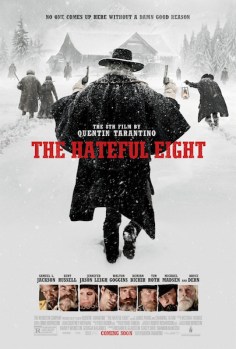
The Hateful Eight (2015)

2016 #89
Quentin Tarantino | 168 mins | Blu-ray | 2.76:1 | USA / English & Spanish | 18 / R

Quentin Tarantino hadn’t made a film in the same genre as his preceding movie for almost 20 years when The Hateful Eight came out — his second go-round with the Western genre, after the Spaghetti-ish thrills of Django Unchained three years earlier. Aside from the setting and its accoutrements, however, The Hateful Eight has more in common with Tarantino’s debut feature, Reservoir Dogs.
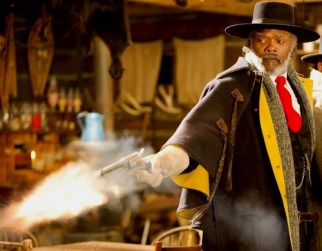
Wyoming, sometime after the Civil War: bounty hunter Major Marquis Warren (Samuel L. Jackson) flags down a stagecoach driven by O.B. (James Parks), looking for transport to Red Rock. Inside is fellow bounty hunter John Ruth (Kurt Russell) with his latest catch, Daisy Domergue (Jennifer Jason Leigh), who’s worth $10,000 — naturally, Ruth is suspicious of Warren’s motives. Later, they pick up Chris Mannix (Walter Goggins), who claims he’s to be sworn in as the new sheriff of Red Rock — also of great suspicion to Ruth. As a blizzard chases them, the quintet seek shelter at Minnie’s Haberdashery, a rest spot Major Warren has clearly visited many times before. However, Minnie isn’t home, and care of her establishment has been left in the hands of Bob (Demián Bichir). Inside, they find fellow travellers Oswaldo Mobray (Tim Roth), Joe Gage (Michael Madsen), and General Sandy Smithers (Bruce Dern). Ruth doesn’t trust a’one of them — and as they settle down to ride out the blizzard, it turns out he’s right about someone…

I’m not the first to observe that The Hateful Eight actually functions like a murder mystery, Agatha Christie style. It might be easy to miss because the film doesn’t begin with a murder or feature a detective, but then neither do all of Christie’s stories. Instead, there’s a long period setting up all the players and suggesting their motivations, and then eventually the proverbial does hit the metaphorical fan, after which deductions must be made. And it’s all in a remote, isolated location which has been cut off by weather, and every character is hiding some nefarious past — so far, so And Then There Were None. All of this comes dressed in QT’s famed dialogue, unfurled at the somewhat languorous pace he’s gradually been cultivating for a few movies now, and topped off with a few doses of the old ultra-violence.

One reason the “whodunnit” label doesn’t really stick is that Tarantino doesn’t sit it out until the end. Without spoilers: there’s certainly mystery about who is and isn’t involved, but you can’t invest in that too much because the answer is a little bit Murder on the Orient Express. Not completely Orient Express (I said no spoilers!), but a bit. One factor he does handle well is that (again like And Then There Were None) you can never be quite sure whose side you should be on; who might turn out to be a villain. Even at the end, when all has been revealed, the heroes are hardly heroic.

More talked about than the film’s content has been the way it was made. Despite the confined setting, Tarantino chose to shoot it on 65mm film, using the Ultra Panavision 70 process (only the 11th film to do so) and lenses that hadn’t seen light in nearly five decades, all of which have produced incredible images. QT’s regular DP since Kill Bill (excepting Death Proof), Robert Richardson, has once again done sterling work, with beautiful shots of scenery near the start and a fantastic definition of space once we’re locked up in Minnie’s.

Ultra Panavision 70 produces an ultra-wide 2.76:1 frame (for those not in the know, your widescreen TV is only 1.78:1), which for such an intimate story has struck people as odd ever since it was announced. In fact, it pays off in (at least) two ways: firstly, all the scene-setting scenery looks magnificent; secondly, for a lot of the film there’s stuff going on in the background or at the edge of frame — it’s not just a series of close-ups or two-shots where the ancillary detail is either non-existent or doesn’t matter, but one where that ‘background’ detail is sometimes very instructive to what is going on. Tarantino also uses the full width a lot of the time, placing two figures at either edge of the image — this really isn’t a film you could crop (thank goodness it doesn’t exist in the pan & scan era!)

Richardson’s work was Oscar nominated but lost to The Revenant (which I’m now a little biased against, after it beat this, Fury Road, and handed Roger Deakins his 13th loss, but I’ll see what I think when it finally hits British home ent formats next month), but the film did triumph for Ennio Morricone’s score — and quite rightly so, too, because it’s incredibly atmospheric and effective. Tarantino has commented that it isn’t really a Western score (which you’d expect from Morricone, what with his famous ones), but more of a horror movie score, and that that’s appropriate for the film. And, y’know, that’s not pretentious director-speak — he’s right. Well, that the movie is a horror movie is debatable, but he is right that Morricone’s work sounds more like a horror score, and that that score is appropriate to this movie. It even recycles some of Morricone’s material from The Thing, as if to bring the point home (and that’s far from the only thing about The Hateful Eight that’s indebted to The Thing, but I’ll leave that for someone else to dig into another time). Even though this is the first time he’s had a full score composed for one of his films, Tarantino still sources a couple of well-selected songs from elsewhere, including a very apt credits track by Roy Orbison.
The Hateful Eight may have a deceptively simple story, with straightforward characters and — once they’re finally all revealed — straightforward motivations; and despite that running time, it’s not as grand or as epic as either Inglourious Basterds or Django Unchained; but I say “deceptively simple” because I feel that it’s the kind of film that might reward repeat viewings, to reveal depths of character as well as hints toward the ultimate reveals. Or maybe I’m being generous — maybe it is just a long-winded, verbose way of telling a slight tale. But if it is, it’s still a mighty entertaining one.

4 out of 5

The Hateful Eight is released on DVD and Blu-ray in the UK today.

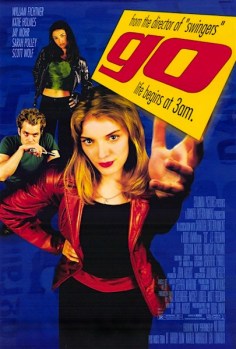
Go (1999)

2015 #119
Doug Liman | 98 mins | streaming (HD) | 2.35:1 | USA / English | 18 / R

When people call 1999’s Fight Club “the first film of the 21st Century”, it sounds a bit clever-clever. When you watch 1999’s Go, you see what they mean. Fincher forged forward; Liman encapsulated “just been” — indeed, it’s been called the most ’90s movie ever made.

A darkly comic portmanteau of young adults embroiled in drugs and violence, Leonard Maltin accurately dubbed it “junior Pulp Fiction”. In ’99 it probably seemed one in a long line of Tarantino rip-offs; those still happen now, rendering Go an early-comer.

Nonetheless, it has qualities that merit viewing, especially for 90 minutes of ’90s nostalgia.

4 out of 5

This drabble review is part of the 100 Films Advent Calendar 2015. Read more here.

Violet & Daisy (2011)

2015 #34
Geoffrey Fletcher | 84 mins | streaming (HD) | 2.35:1 | USA / English | 15 / R

Violet and DaisyAfter winning the Best Adapted Screenplay Oscar for Precious, Geoffrey Fletcher wrote and directed this zany hit-women movie. Or possibly he wrote it “in 1996, when everybody and their brother and their sister and their cousin twice-removed was trying to be Quentin Tarantino,” as Matt Zoller Seitz put it in his review for RogerEbert.com.
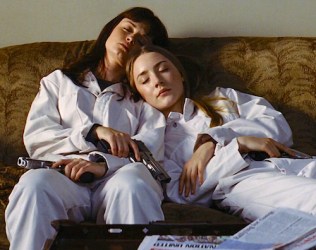
Indeed, the end result — which concerns two girl-ish assassins, played by Alexis Bledel and Saoirse Ronan, in a chaptered narrative that’s mainly about their confrontation with a mark, played by James Gandolfini, who actually wants them to kill him — plays like Tarantino with a metric tonne of Quirk slathered over it. On the bright side, it’s sort of entertaining, albeit fundamentally derivative with a sheen of left-field try-hard wacky-uniqueness.

There are good performances from Gandolfini (in particular) and Ronan, who manage to pull some genuine empathy out of the oddness. Unfortunately, this aspect of character drama comes too late — the early part of the film trains us to expect a stylised genre movie, then suddenly shifts into a meditation on loneliness and death. It doesn’t work because it doesn’t gel. I’m all for tonal dissonance, but it needs to be handled correctly. Sleepy cellHere, Fletcher either needs to settle on one or the other, or clearly signal his intentions earlier.
Violet & Daisy is a bit of a mess, but one that at least offers a worthwhile performance or two and some entertaining, inventive, if derivative, moments. The sheer scale of its self-conscious kookiness will just grate for some viewers, though.

3 out of 5

Seven Psychopaths (2012)

2015 #72
Martin McDonagh | 110 mins | Blu-ray | 2.40:1 | UK / English & Vietnamese | 15 / R

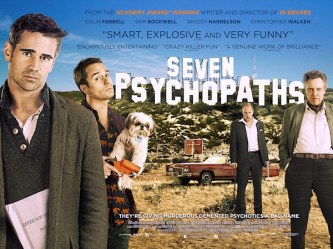
Seven PsychopathsThe writer-director and star of In Bruges re-team for the former’s sophomore feature; and if that doesn’t sound oddball enough for you, the lead cast is rounded out by Sam Rockwell, Woody Harrelson and Christopher Walken. Zaniness is sure to ensue.

Colin Farrell is Marty, a screenwriter struggling with his new work (all he has is a title). Rockwell is his best friend, Billy, who kidnaps dogs and then returns them for the reward money. Walken is Hans, his associate in this enterprise, whose wife is dying of cancer. Harrelson is Charlie, a violence-inclined mob boss who loves his Shih Tzu, Bonny… which brings trouble to everyone’s door when Billy dognaps her (of course).

So, the inciting incident is Billy taking the Shih Tzu. The film’s US tagline was, “They Won’t Take Any Shih Tzu”. I get the pun, but c’mon, there must be a version of it that makes sense!

The film itself is similarly laden with decent ideas that somehow just miss the mark. It feels sloppily told — not badly made, but awkwardly put together. There are some hilarious bits scattered about, which do at least make it feel worthwhile, but in between there’s so much darn filler. It needs a good trim. Heck, it needs a good structure. Writer-director Martin McDonagh seems to think he can get away with this, and plentiful other storytelling oddities, Re-writingmainly via references to Farrell’s endeavours to pen a movie called, you guessed it, Seven Psychopaths. One wonders if there’s a hefty dose of autobiography in the writer’s struggle…
Perhaps this explains why McDonagh has produced a screenplay that feels kinda dated — with its talkative characters, violent crime story, and irreverent humour, it’s all very post-Tarantino. 20 years on from Reservoir Dogs, isn’t it time for something else? As Hans puts it when they’re all striving to improve Marty’s screenplay, “You’re the one who thought psychopaths were so interesting. They get kinda tiresome after a while, don’t you think?”

Seven Psychopaths has its merits — some bits are very funny indeed, even if they’re fleeting — but your tolerance for shaggy dog stories will determine how much enjoyment you get out of it. As a follow-up to the genius of In Bruges, it’s nought but a disappointment.

3 out of 5

The UK TV premiere of Seven Psychopaths is on Channel 4 tonight at 10pm.

Sin City: Recut & Extended (2005)

aka Sin City: Recut ∙ Extended ∙ Unrated

2014 #126
Robert Rodriguez & Frank Miller
with Quentin Tarantino | 142 mins | Blu-ray | 1.85:1 | USA / English | 18

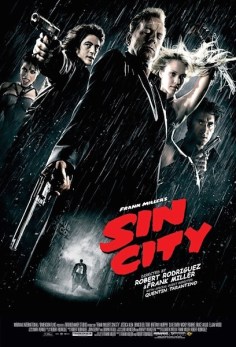
Sin CityAdapted from a series of graphic novels by Frank Miller, Sin City is a noir homage, replete with high-contrast black-and-white cinematography, dialogue so hard boiled you couldn’t crack it with a sledgehammer, and all the requisite downtrodden heroes, corrupt authority figures, dangerous dames, etc. There’s also the very modern inclusion of shocking ultra-violence and nudity, but I guess a fair degree of that would’ve crept into classic noir if the mores of the time allowed — pretty much the point of the genre is the dark grubbiness of the world, after all.
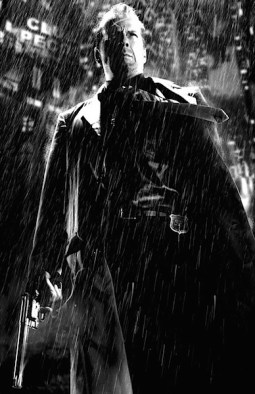
Anyway, Sin City: The Film is probably best known for its slavish faithfulness to Miller’s original comics; or rather the way that manifested itself: the film was shot digitally (when that was still remarkable rather than the norm, as it has become since) and almost entirely on green screen, with cast members who share scenes sometimes not even meeting, and whole roles being recorded in a day or two rather than the usual couple of weeks. It helps that the movie is a collection of short stories, meaning no one person is in it for more than about 40 minutes. The point of this was to then emulate the comic’s visuals: black-and-white with minimal grey in between, but occasional splashes of colour and other striking effects — blood is sometimes stark white, sometimes red; one character has blue eyes, another golden hair; plasters or necklaces are sometimes rendered as flat white blocks; and so on.

Hartigan got a gunThe DVD-premiering extended version, dubbed Recut & Extended (or, in the US, “Recut, Extended, Unrated”) is even more faithful to the comics than the theatrical version. Some of the books’ scenes that were excised are now included, and the structure has been rejigged to present each of the four stories one by one in their entirety (whereas the original version had a small amount of intercutting). The total running time is 17 minutes and 40 seconds longer, an increase of some 14.2%… which is a thoroughly misleading figure. As a presentational choice, each of the four stories is offered for individual viewing, plus option to “play all”. However, rather than that showing them as a single film, they play as four shorts back to back, with a full set of section-specific end credits rolling each time. The actual amount of new material in the film itself is reported to be 6 minutes and 55 seconds, or only a 5.6% increase from the theatrical cut. I’m sure the extensions are great for die-hard fans, but for most the additions are all but unnoticeable — look at that Movie-Censorship.com list and you’ll see there are only three or four new bits that could reasonably be described as “scenes” (ranging from under 30 seconds to about two minutes), and then just a bunch of extended ‘moments’.

The lack of notable new material isn’t the issue, though. The real problem is the re-structure. Let’s not beat around the bush: it scuttles the film. Individually, each of the three longer narratives is fine, but when watched back-to-back as if it were still one film, the structure is unbalanced. Then there’s the shorter story, The Customer is Always Right, starring Josh Hartnett as The Man. In the original cut, his character features in a standalone pre-titles style-establisher (both for the visuals and the kind of tough tales we’re about to be told), and then a neat coda bookend before the end credits. These two scenes have been placed together in this version, and it sucks.

They've got a bigger gunFor one, the second scene belongs more truly to The Big Fat Kill (the final story, starring Clive Owen’s Dwight and the whores of Old Town led by Rosaria Dawson). For another, because this recut purports to be in chronological order, The Customer is Always Right plays second. So we get 47 minutes of Bruce Willis protecting Jessica Alba from a paedophile in That Yellow Bastard, then we get a one-scene story that rightly belongs at the beginning (complete with title card, now 50 minutes into the ‘film’), then we get a scene that, actually, belongs in a completely different place. The next full story is The Hard Goodbye (the one with Mickey Rourke under a slab of prosthetics as Marv), followed by The Big Fat Kill — and it’s after this that the second scene with The Man belongs. Divorced of that context, the scene is robbed of almost all its meaning.
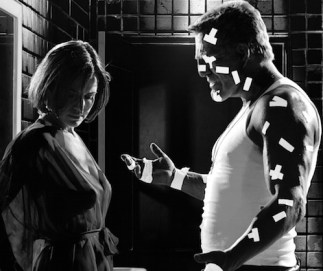
I guess Sin City: Recut & Extended isn’t really meant to be viewed as a single film — hence why there are four sets of end credits, and why the cool opening titles featuring Miller’s original art is nowhere to be seen. Even allowing for that, though, I think the second scene with The Man has been badly placed. A chronological cut of a non-chronological film is an interesting idea, but this doesn’t even get that right. And even if it weren’t for the regular interruption by lengthy credits sequences, the re-order makes for a very stop-start viewing experience, something the theatrical version avoided by divvying up one story and having characters make brief cameos in each other’s tales.

Tits 'n' effectsIn the end, I enjoyed Sin City considerably less than I did nine years ago in the cinema. This is partly down to the restructure, but I’m not sure wholly so. I don’t think it’s aged particularly well, as things produced at the forefront of emerging technology are wont to do: some of the CGI looks dirt cheap, the shot compositions are often unimaginatively flat, and there’s an occasional internet-video style to the picture quality. It’s not just the visuals, sadly, with amateurish performances from reliable actors, possibly a result of the hurried filming schedule. Just because you can capture an entire part in a single day doesn’t mean you should. Then there’s Jessica Alba, who’s just awful here.

For all that, there are shots that are striking, when the elements come together to make something that still looks fresh and creative even after nearly a decade of the film’s visual tricks being emulated by lesser movies or integrated into general cinematic language. One thing that struck me was that the most memorable moments were all from the trailer — Sin City did have one helluva trailer. The stories and characters aren’t bad, thanks to the hyper-noir style being a deliberate choice, though perhaps it sometimes goes too far with the voiceover narration. Maybe, again, this is the fault of watching the longer cut; maybe there’s just a little too much of it in any version.

Quite often an extended cut will become the definitive version of a film — these days, it’s often a way to get the originally-intended cut past a studio who insist on a shorter running time or PG-13 certificate; or it’s a chance to revisit and improve a project that hadn’t quite worked. Not so with Sin City. This is a version for fans of the books who want to see every last drop included… but even then it falls short, because apparently a few moments are still nowhere to be found. That yellow so-and-soNone of the present additions are game-changing, and though some are good in their own way, there’s nothing noteworthy enough to compensate for the destruction of the original cut’s well-balanced structure. For the average punter — and certainly for the first-time viewer — the theatrical cut is unquestionably the way to go.
4 out of 5

This year’s sequel, Sin City: A Dame to Kill For, will be reviewed tomorrow.

Both reviews are part of the 100 Films Advent Calendar 2014. Read more here.

Sin City: Recut & Extended received a “dishonourable mention” on my list of The Five Worst Films I Saw in 2014, which can be read in full here.

Local Hero (1983)

2014 #75
Bill Forsyth | 111 mins | download | 1.85:1 | UK / English | PG / PG

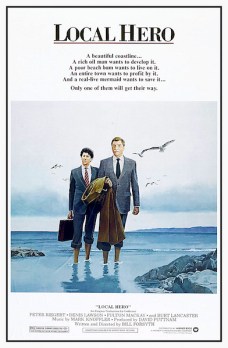
Local HeroGentle comedy in which Peter Riegert’s middle-management American oil exec has to persuade the residents of a Scottish village to sell up, unaware that they’re only too keen — for the right price. One of Quentin Tarantino’s Coolest Movies of All Time (seriously).
It’s a funny one, lacking some structural focus and, being independently produced, able to eschew expected endings and pat resolutions. The cast make it, particularly Denis Lawson as the town’s publican/hotelier/solicitor/leader and Burt Lancaster as a beleaguered CEO.

A more acquired taste than you might expect, Local Hero is lightly, loosely likeable. But cool? Hm.

4 out of 5

In the interests of completing my ever-growing backlog, I decided to post ‘drabble reviews’ of some films. For those unfamiliar with the concept, a drabble is a complete piece of writing exactly 100 words long. You’ve just read one.

Grindhouse (2007)

2010 #105
Robert Rodriguez & Quentin Tarantino | 191 mins | Blu-ray | 18 / R

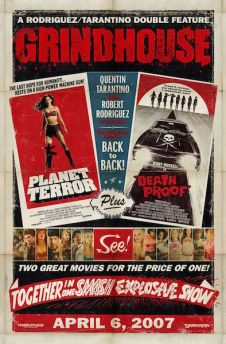
Infamously, on its release in America the much-hyped Rodriguez/Tarantino double bill was an almighty flop, so much so that it wasn’t properly released in its full form outside the US. Which is a bit ironic, if you think about it, because the US is the market least likely to respond to something a little bit experimental.
A grindhouse, for those still unacquainted with the concept, was a second-run cinema in the pre-home video days that generally showed trashy films from poor-quality much-screened prints. It should come as little surprise that this is the kind of film and viewing experience Tarantino enjoys, and so he and best chum Rodriguez set about recreating the style for a wider audience. Which was probably why it flopped — it was, almost by definition, not a mass audience-aimed style of cinema.

What this means for Grindhouse is a double-bill of exploitation movies, more-or-less with a horror bent, with grainy, dirty, decrepit prints that are missing shots, scenes, and even whole reels, and complete with trailers for similar films and ads for local restaurants. Clearly, it sets itself up to be as much about the experience of viewing the work of RR and QT in this context as it is the films themselves. So, to take the viewing programme in order…

It opens with one of the several fake trailers — except in this case the trailer is no longer fake, as Rodriguez has since gone on to turn Machete into a genuine feature (out next month over here). It sets the tone well: cheesy dialogue, stagey acting, an emphasis on gory violence over any other element, and plenty of utterly ludicrous moments. Plus breasts, naturally. Entirely random explosionChances are, if you don’t find this opening salvo entertaining in some way the rest of the film is going to prove a struggle.
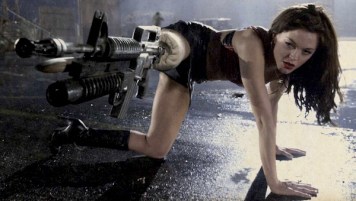
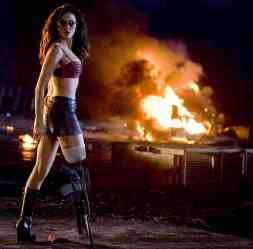
And then the film launches into its first feature: Robert Rodriguez’s zombie horror Planet Terror. In short, this is a completely entertaining pitch-perfect 90-minute proof-of-concept. Rodriguez packs every scene with at least one element you should expect from this style of cinema: graphic blood-spurting violence, horrific mutations, vicious zombies, over-the-top logic-light gunfights, entirely random explosions, clichéd dialogue, stock characters, extended shots of the female form… Have I missed anything? If I have, it’s probably there too.

Rodriguez’s skill lies in making this both homage and hilarious. You don’t need to have much experience of this kind of cheap horror/exploitation movie to see how well he’s hit on the stereotypical plot, characters and sequences. His direction hits the nail on the head too, discarding his usual style for angles and cuts that feel thoroughly genuine. But he also recreates it in a way that’s amusing; not so much in a “look how stupid they are” way, but by levying elements in a way that is consistently entertaining. In particular, he uses the self-imposed print damage to excellent effect — the sex scene literally burns out from over-play, for instance, while the “Missing Reel” card elicits a laugh by jumping the plot forward so ridiculously, as well as skipping a whole chunk of exposition.

A gun. For a leg.It probably works better in context than described on the page, but Rodriguez has marshalled every disparate element to create a cohesive whole that’s exciting and funny. At this point, Grindhouse is firmly headed for a full five-star conceptual success.
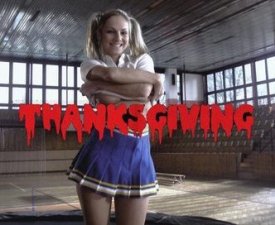
Following “The End” card, there’s a handful of trailers before the second part of the double-bill. From directors Rob Zombie (The Devil’s Rejects, Halloween remake), Edgar Wright (Shaun of the Dead, Hot Fuzz) and Eli Roth (Cabin Fever, Hostel), they showcase different archetypes within the overall grindhouse style. Zombie’s Werewolf Women of the S.S. is all Nazis, cheap werewolf costumes and (naturally) boobs — very video nasty. Wright’s Don’t takes on British ’70s horror with a nightmare-filled country mansion and a deliberately repetitive trailer (“don’t go in there”, “don’t see it alone”, etc). Also, for a British viewer, its sub-two-minute running time is packed to bursting with recognisable faces, some you’d expect (Mark Gatiss, Nick Frost) and others you wouldn’t (Katie Melua!) Finally, Roth’s Thanksgiving is a teeny slasher in the Halloween mode, A cheerleader giving thanksthough Roth can’t resist adding his own especially twisted brand of humour (I shan’t describe the final shot here).

While the trailers won’t necessarily convince you to see the films featured (good thing they don’t exist then), they perfectly capture the feel of various horror styles from the intended era, and — with the various “coming attractions” slides — sell the grindhouse experience.

And then we have the second film, Quentin Tarantino’s Death Proof. And here the concept falls apart.

It seems Tarantino can’t let go of his own style. With a handful of exceptions, Death Proof feels less like a well-considered grindhouse homage (which Planet Terror certainly was) and more like a typical Quentin Tarantino Film launched from a grindhouse-ish concept. He can’t even sustain the literal veneer of grindhouseness: after some early print damage, obviously missing scenes, the clearly-labelled “Missing Reel” (which, in one of the film’s few authentic-feeling touches, is a sexy sequence), and — in the best grindhouse-style touch — a shoddily-replaced title card, the picture quality gradually loses its flaws until a climax that seems visually faultless. Perhaps QT’s imagined behind-the-scenes story was that every projectionist got bored of the film by this point so the latter reels survived in pristine condition…

Foot fetishBut it’s not just the increasing lack of dilapidated print quality that prevents Death Proof from selling its concept. The screenplay is clearly a QT work, much more so than most of Kill Bill or even Inglourious Basterds, especially when the girls indulge in long dialogue scenes of the real-world-natter variety. It’s like the opening of Reservoir Dogs, only with girls instead of guys and repeated two or three times throughout the film. One such scene is even shot in a very long single take, the camera constantly roving around the four girls sat round a table. It’s a technically impressive bit of work for any film; as a supposed product of a low-budget horror-thriller flick destined for the grindhouse circuit, it’s beyond improbable. In short, it’s all too well written and directed to convince as grindhouse. Though he does get to indulge in a couple of lingering shots of the female form, in particular his regular foot fetish.
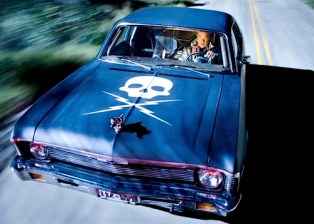
QT almost makes up for all this with the final twenty minutes, featuring some impressive car stunt action. As noted, by this point any pretense of being a grindhouse-style film has been done away with: the image is devoid of all but minor damage, the stunt work — all done for real, I believe — pretty impressive. Whether it conforms to the style statement of the film or not (that’d be a “not”), it does manage to entertain. Tarantino’s decades of studying action-filled trash clearly pay off here as well as they did in Kill Bill, Proof of deathand if he chooses to create some more action-centric pictures in the future it would be no bad thing.

One thing that left me uncertain was the decision to slaughter his main cast halfway through. Firstly, the death-inducing crash is another sequence that’s too well done for such a pretend-cheap film, repeating the impact four times to show the imaginative fate of each victim. Brutal, yes, but one of the few moments that matches Planet Terror for effectiveness. The actual act of removing the three lead characters is audacious, maybe, but mainly so because QT’s spent so long apparently trying to invest us in these characters and their lives. It makes all the dialogue scenes we’ve sat through feel even more pointless, especially those setting up slightly dull romantic-ish subplots.

It also leads to a cameo appearance for a handful of Planet Terror characters, which could be fun but ultimately feels ill-conceived to me. In no other way do these films appear to be set in the same world, or have any other connection — indeed, cast members such as Rose McGowan and Tarantino himself appear in completely different roles in each film. The crossover didn’t feel in the grindhouse spirit to me; it felt in the “Rob and I are buddies and did this for no good reason” spirit. And it certainly took me out of the film. Wouldn't it be cool if I had a gun for a legIn fact, it might’ve played better if the films were the other way round, as it means Death Proof must be set before Planet Terror. I’d approve of this switch not only for chronological reasons, but because seeing one-scene bit-parters turn up in the-same-but-larger roles in the second film seems like it would be more satisfying as a viewer, rather than re-encountering these (in any case, minor) characters the way we do.

A length-based aside: as I mentioned, both films were released separately outside the US, and in both cases were extended. By my calculations, the Grindhouse cut of Planet Terror is just under 15 minutes shorter, while Death Proof is around 20 minutes shorter. More on that when I get round to watching the individual versions.

Grindhouse ends up being every bit a film of two halves, as you might expect a double-bill to be. Up until the end of the trailers, I was loving its commitment to the concept and the fun it was having with it — all credit to Rodriguez for that, as well as the trailer directors of course. But Tarantino’s entry lets the side down by seeming to fail in its execution of the film’s conceit. I’m not convinced it would be any better viewed as a standalone Quentin Tarantino Film, but in context it certainly disappoints.

If QT could’ve produced an effort as successful as his mate’s, Grindhouse would’ve been on course for full marks; not because it’s a Good Film, but because it would have fully realised its potential-filled concept in a thoroughly entertaining way. The finished product is still entertaining, but not thoroughly. It loses a star, but does retain a moderate chance of appearing on my Best Of Year list.

4 out of 5

Grindhouse is out on Blu-ray, exclusive to hmv, from today.
Grindhouse’s constituent parts, Death Proof and Planet Terror, are on TCM tonight from 9pm until 1:30am.