
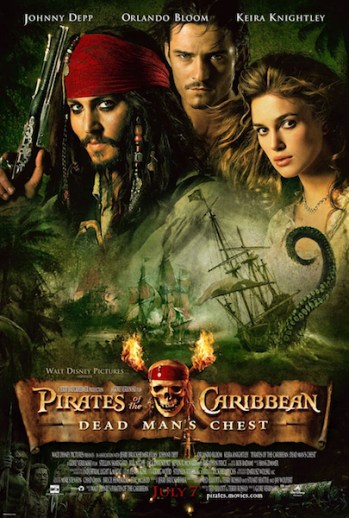
Here’s the first in a sporadic new series of posts, inspired by my 100 Favourites entries, which I’ll be using to plug some of the gaps in my review archive. As a good starting example, this is the only Pirates of the Caribbean film I haven’t covered before.

Country: USA
Language: English
Runtime: 151 minutes
BBFC: 12A
MPAA: PG-13
Original Release: 6th July 2006 (UK & others)
US Release: 7th July 2006
Budget: $225 million
Worldwide Gross: $1.066 billion
Stars
Johnny Depp (Edward Scissorhands, Alice in Wonderland)
Orlando Bloom (The Lord of the Rings, Kingdom of Heaven)
Keira Knightley (Pride & Prejudice, The Imitation Game)
Bill Nighy (Love Actually, The Best Exotic Marigold Hotel)
Director
Gore Verbinski (The Ring, Rango)
Screenwriters
Ted Elliott (The Mask of Zorro, The Lone Ranger)
Terry Rossio (Shrek, Godzilla vs. Kong)
Based on
Pirates of the Caribbean, a theme park ride at Disneyland.
The Story
On their wedding day, Will Turner and Elizabeth Swann are arrested for piracy. To secure a pardon, all they have to do is bring in Captain Jack Sparrow. Meanwhile, the aforementioned pirate captain is hunting for a key that he can use to unlock a chest that contains leverage he may be able to use to escape a debt to the horrifying Davy Jones…
Our Heroes
Jack Sparrow (or, as half the characters pronounce it, Jack Sparrah), the pirate captain who looks like a drunken fool but is actually in possession of a sharp mind. Also Will Turner, the swashbuckling ex-blacksmith determined to prevent the execution of himself and his beloved. That would be Elizabeth Swann, the governor’s daughter who is altogether more capable than would be expected of a woman from this era.
Our Villains
The pirate-hating East India Company is represented by the scheming Cutler Beckett, who seeks to rid the seas of pirates. To do so, he intends to control Davy Jones, captain of the Flying Dutchman. A tentacled terror, Jones seeks primarily to add more damned souls to his crew — including one Jack Sparrow…
Best Supporting Character
Will Turner’s father, Bootstrap Bill, was condemned to the ocean’s depths, where he ended up committing himself to servitude on Davy Jones’ ship. Well, unless Will can find a way to set him free…
Memorable Quote
Elizabeth Swann: “There will come a time when you have a chance to do the right thing.”
Jack Sparrow: “I love those moments. I like to wave at them as they pass by.”
Memorable Scene
A large chunk of the climax is a set of interconnected sword fights that most famously include three men duelling each other inside a runaway waterwheel. And while that’s good, my favourite bit has always been Elizabeth, Pintel and Ragetti fighting off Davy Jones’ crew while sharing two swords (and a chest) between the three of them.
Truly Special Effect
Davy Jones is an incredible creation, the writing mass of CGI tentacles that make up his face conveying a slimy physicality that remains impressive even as some of the film’s other computer-generated effects begin to show their age.
Previously on…
Inspired by a Disney theme park ride, nobody expected much of Pirates of the Caribbean — or, as it was hastily subtitled once someone at Disney realised this could be the start of a franchise, The Curse of the Black Pearl. As that someone knew, it turned out to be something very special. Dead Man’s Chest retrofits it into being the first part of a trilogy.
Next time…
The aforementioned trilogy concludes with At World’s End, which was shot back-to-back with Dead Man’s Chest and so wraps up its many dangling plot threads. The series continued with standalone instalment On Stranger Tides, while this year’s Dead Men Tell No Tales, aka Salazar’s Revenge, looks as if it seeks to tie the whole shebang together.
Awards
1 Oscar (Visual Effects)
3 Oscar nominations (Art Direction, Sound Mixing, Sound Editing)
1 BAFTA (Special Visual Effects)
4 BAFTA nominations (Production Design, Costume Design, Sound, Make Up & Hair)
1 Saturn award (Special Effects)
4 Saturn nominations (Fantasy Film, Supporting Actor (Bill Nighy), Costume, Make-Up)
1 World Stunt Award (Best Fight — see “Memorable Scene”)
The Pirates sequels have all come in for a lot of criticism ever since their first release. It was inevitable, really: the first is basically a perfect blockbuster action-adventure movie, something any follow-up would struggle to live up to. However, I think Dead Man’s Chest has improved with age. It lacks the freshness and elegant simplicity of its forebear, true, but it still has inventive sequences, memorable characters, impressive effects, and a generally fun tone, even as it’s setting up masses of mythology that will only be fully paid off in the next instalment. That also means it doesn’t quite function as a standalone adventure. But if you readjust your focus slightly, so that the film isn’t about beating Davy Jones, but instead about finding the chest and settling Jack’s debt to Jones, it’s more self-contained than it appears.

The fifth Pirates of the Caribbean movie, under whichever subtitle they’ve chosen for your country, is in cinemas from today.

 Score:



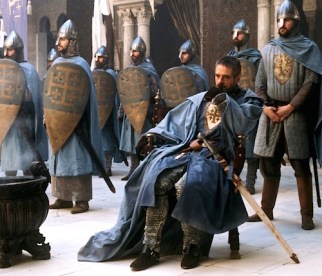
 Ridley Scott’s Crusades epic is probably best known as one of the foremost examples of the power of director’s cuts: after Scott was forced to make massive edits by a studio wanting a shorter runtime, the film’s summer theatrical release was so critically panned that an extended Director’s Cut appeared in LA cinemas before the end of the year, reaching the wider world with its DVD release the following May. The extended version adds 45 minutes to the film (and a further 4½ in music in the Roadshow Version), enough to completely rehabilitate its critical standing.
 A strong cast bolsters the human drama that sometimes gets lost in such grand stories. Bloom is a perfectly adequate if unexceptional lead, but around him we have the likes of Michael Sheen, David Thewlis, Alexander Siddig, Brendan Gleeson, and Edward Norton (well done if you can spot him…) There are even more names if you look to supporting roles. Most notable, however, are the co-leads: both Liam Neeson, as the knight who recruits Balian, and Jeremy Irons, as the wise advisor when he gets to Jerusalem, bring class to proceedings, while Eva Green provides mystery and heart as the love interest. Of everyone, she’s best served by the Director’s Cut, gaining a whole, vital subplot about her child that was entirely excised theatrically. It’s the kind of thing you can’t imagine not being there, and Scott agreed: it seems the chance to restore it was one of his main motivators for putting together a release of the longer version.
 (I’d wager
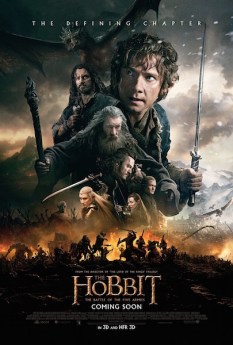 Peter Jackson’s epic Tolkien adaptation blunders its way to a conclusion with an instalment some have declared the trilogy’s best, presumably because they really enjoy watching someone else play video games. That’s what about half of this sextet-completing movie feels like, as it concludes the three-part Hobbit narrative with a CGI-riddled rendering of the titular battle. It’s the shortest film in Jackson’s Middle-earth magnum opus, though it comes to something when a film the best part of two-and-a-half hours long is described as “short”.
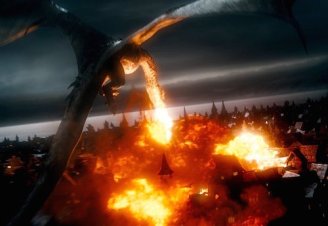 or he could have ended the second film with Smaug defeated and added more material to this third film to reach his desired running time. Or not even bothered adding stuff: if you lost the Smaug opener, The Battle of the Five Armies would still be over two hours long, which anywhere but Middle-earth is considered a decent length for a movie.
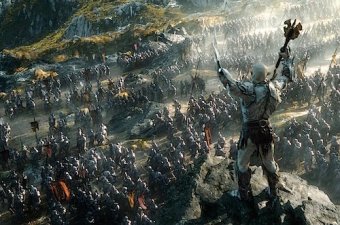 On the ground, the meat of the conflict only occurs when individual heroes are parcelled off into one-on-one duels. None of these particularly stand out, however, other than Legolas athletically jumping around a collapsing bridge that’s all so much CGI. This is where my earlier video game comparison really comes into play.
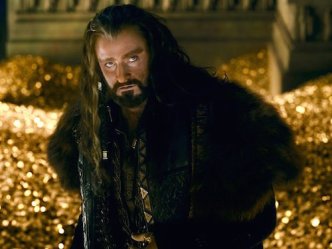 all of whom I’d thought would have more to do in the second and third parts of the trilogy. Turner, in particular, should have expected a bigger boost from Jackson’s decision to enrol him in an interracial romantic triangle, but it feels like they pulled back from that story thread a little after it proved unpopular in the previous film. It’s still obviously there, I just expected more of it.
 I was something of a defender of Jackson’s version of The Hobbit at first. I enjoyed An Unexpected Journey and stand by
  At the start of their audio commentary on The Desolation of Smaug, co-screenwriters Peter Jackson and Philippa Boyens note that, when the decision was made to extend the already-shot Hobbit duology to a trilogy, it wasn’t a third movie that need to be created but a second. That is to say, it was the middle instalment that required the most extra material, including a new prologue and climax. The
 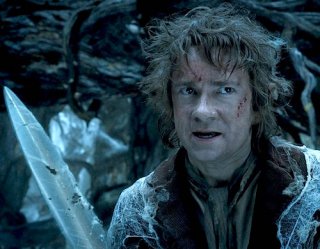 The extended cut amps him up even more, with an extra part in Mirkwood and a moment where he stands up for Thorin in Laketown. In fairness, he doesn’t have as much character development in this film as the first, while Thorin is on a definite arc and Gandalf is off on his own side-plot, but he’s undoubtedly a key character. I really don’t understand that complaint.
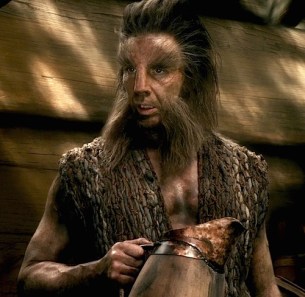 Even if some of the additions are worthless, on balance this is a better version of the film: more Beorn, more of the atmospheric Mirkwood, an additional character whose appearance will hopefully pay off in the extended
  100Films.co.uk