February’s Failures

Once upon a time, I never thought I’d be mentioning a Jackass film on this blog, but the release of revival movie Jackass Forever caused me to seek out the first two in the series, and I do intend to watch the rest eventually. Not going to the cinema for it, though. Or, indeed, anything else this month. Fare like Moonfall and Uncharted is very much in the “wait for streaming” camp for me — I’ll surely watch them both eventually, and it may even turn out I enjoy them, but they’ll wait. I did enjoy Branagh’s Murder on the Orient Express, so I was tempted by Death on the Nile, but, honestly, I’m still not sold on the whole “living with Covid” thing, so it’s going to take more than that to persuade me out to the cinema. Other things — like animations Belle and Flee — had more limited releases and I don’t even know if they came near me.

The return of the big screen doesn’t mean the streamers have let up on originals, although their quality continues to be variable. I’ve heard good things about Steven Soderbergh’s latest, Kimi, which went straight to Sky Cinema here in the UK, emulating it’s “direct to HBO Max” release Stateside. But their other originals — school shooting thriller The Desperate Hours and language-barrier romcom Book of Love — have received lesser notices. Netflix, on the other hand, could boast Jean-Pierre Jeunet’s first film in almost a decade, Bigbug, and yet I’ve seen precisely one tweet mentioning it. Their latest reincarnation of Texas Chainsaw Massacre, on the other hand, did seem to generate chatter, but little of it positive. And the less said about Madea and Mrs Brown teaming up for A Madea Homecoming, the better.

In that middle ground of “cinema releases coming quickly to streaming”, MUBI continue to rule with the likes of Céline Sciamma’s Petite Maman and Icelandic folk horror Lamb, although Disney+ come close with Kingsman prequel The King’s Man and Wes Anderson’s The French Dispatch. On a slightly slower track, Sky Cinema also had a pretty strong showing of stuff this month, mainly in the horror realm. We’re talking Freaky, The Forever Purge (I’ve got a couple of others left before I get to that, personally), Ben Wheatley’s In the Earth, and Escape Room: Tournament of Champions (I quite enjoyed the first, so I’ll give it a chance). Also, not a horror but it looks horrific: Space Jam: A New Legacy. And quirky British true story comedy Dream Horse, which looks worth it just for the international cast’s attempts at the Welsh accent.

As usual, Amazon Prime, BBC iPlayer, and All 4 produced plenty of stuff from deeper in the archive that I’m happy to fill out my watchlist with while clearly being in no rush to get round to. Normally I’d include Netflix in that list, but I’ve not jotted down much on my shortlist this month; though MUBI had an uncommonly good showing, the standout being Jiro Dreams of Sushi right at the end of the month. Others of particular interest included The Passion of the Christ (I feel I really should’ve seen that by now), the 1950s version of Around the World in 80 Days, Ripley adaptation The American Friend, and Memento, which I haven’t revisited in many a year. I own it on DVD, but, naturally, it’s in HD on iPlayer.

Finally, the inexorable growth of my Blu-ray collection continued unabated, with a mix of new releases and sale pickups. Although I watched Ghostbusters: Afterlife in February, I picked it up in the series’ Ultimate Collection box set, meaning I now have 4K copies of Ghostbusters and Ghostbusters II on my watchlist. And that’s not all from the rewatch back catalogue, because HMV’s rolling offer of half-price UHD discs also allowed me to nab La La Land, Branagh’s Murder on the Orient Express, the original Scream, and The Shawshank Redemption — a rare film that I love (or like a lot, at least) but never upgraded to Blu-ray, so jumping from DVD straight to 4K feels like some kind of victory.

There were new releases in 4K too, of course, most prominently Dune: Part One (how I wish it said that on the spine — it inevitably won’t match the sequel), which I imported from France so I also have it in 3D, and The King’s Man. Could’ve just watched that on Disney+, or at least given it a go there first, but as I own the first two it was inevitable I’d buy it, so I just got on with it. And, as we all know, discs are better than streaming anyway. I also took a punt on adult fantasy animation The Spine of Night in 4K, imported from the US alongside a new edition of Candyman III: Day of the Dead — it’s meant to be a rubbish film, but it completes my Candyman collection. Unfortunately, it’s also a somewhat rubbish disc, with noticeably weaker picture quality compared to a German release from a while back. Still, lots of special features. If I actually like it when I watch it, maybe I’ll treat myself to the German disc too. Based on everyone else’s opinion, that seems unlikely.

UK labels continue to rollout martial arts classics — I feel like something must have changed in the licensing of these, because we got hardly any a few years ago, while now there’s at least a couple every month from 8 Films or Eureka, and now Arrow getting in on the game too. Anyway, this month’s releases included The Flag of Iron and Legendary Weapons of China from 88 Films, and Skinny Tiger and Fatty Dragon from Eureka, who also released silent epic The Indian Tomb on their Masters of Cinema line. They’d previously released Fritz Lang’s 1950s remake on DVD, which went OOP just before their release of the silent one came out. I presume that’s just a funny coincidence. And last but very much not least on the new release pile, Mark Cousins’ The Story of Film: A New Generation. Long-time readers will surely remember how much I loved his series The Story of Film: An Odyssey, so I’ve been eagerly awaiting this sequel. Now I’ve just got to make room for its near-three-hour running time.

I’ve ummed and ahhed for years about upgrading my Charlie Chaplin box set to the Blu-ray version, especially as there have been a couple now, and the extra features vary, and the picture quality isn’t always the best. But Amazon cut it to such a low price this month, I decided just to give in — so that’s 11 features, a mix of ones I’ve seen and ones I haven’t. They may not be the very best available, but they’re a lot better than my DVD copies (which I can hang onto for the missing extras, because I’ll never make much reselling them anyway), and a lot cheaper than buying the films individually — which I can always do if I particularly love any of them. Criterion have put most of them out in the US, and are about to start bringing them to the UK, so we’ll see as they go along. Talking of box sets I’d overlooked but was tempted into by sales (it might not sound like a common problem, but it is for me), Indicator tempted me to grab their four-film John Ford at Columbia set this month; and because that wasn’t expensive enough to qualify for free postage, I also delved into their 5-for-whatever offer, picking up Eyes of Laura Mars, Modern Romance, Night Tide, See No Evil, and Time Without Pity. Their releases are so well-done, and their picks often so obscure but intriguing, that it’s easy to just keep buying them. Now, I just need to make the effort to actually watch more of them, too.

Looking at that (not-so-)little lot, it’s easy to see why my bank account felt severely depleted by the end of the month. Maybe in March I’ll finally resist the lure of sales… but there’s always all those exciting new releases… Oh, I’m damned.

The Comparatively Calm Monthly Review of February 2022

For a moment, set aside your fears of World War III and/or anticipation for The Batman (whichever is taking up more of your mental capacity right now; possibly both) and journey with me back, back, back to a time when military invasion was just a threat and Batman reactions were still embargoed — i.e. last month.


This month’s viewing towards my yearly challenge

#13 She’s Gotta Have It (1986) — WDYMYHS #2
#14 The Hobbit (1977) — Decades #8
#15 Jackass Number Two (2006) — Series Progression #1
#16 Shot in the Dark (1933) — Decades #9
#17 A Room with a View (1985) — Rewatches #2
#18 The Misfits (2021) — New Films #2
#19 Tintin and the Temple of the Sun (1969) — DVDs #2
#20 Los Olvidados (1950) — Blindspot #2


  • I watched 13 feature films I’d never seen before in February.
  • Seven of them counted towards my 100 Films in a Year Challenge, along with one rewatch.
  • As with last month’s ‘new film’, The Misfits is originally a 2021 release; but, best I can tell, its UK debut only came this month (as a direct-to-Prime Amazon Exclusive), so it counts as a 2022 release for the purposes of the Challenge.
  • Another oddity of my new rules kicked in this month. When I watched the first Jackass movie, it didn’t count for anything (the only place it could’ve qualified was Decades for the 2000s, but that had been taken); but then I watched the first sequel, and now that does count, as Series Progression. My scrupulous planning ahead for rare eventualities does pay off, see.
  • All the great films from the 1930s that I haven’t seen and could’ve watched to count towards my Decades tally, and instead I’ve filled the slot with a 52-minute “quota quickie” murder mystery. And, frankly, I don’t regret it in the slightest.
  • This month’s Blindspot film was Luis Buñuel’s ‘true story’ of children in poverty in mid-century Mexico, Los Olvidados, aka The Young and the Damned. That English-language title does kinda sum it up.
  • This month’s WDYMYHS film was Spike Lee’s pro debut, She’s Gotta Have It, which (as discussed last month) completes the films for which I was reliant on streaming. That’s one less thing to worry about.
  • Away from the Challenge, 13 beats January’s 11 to be 2022’s de facto best month in those stakes.
  • But it’s not a huge number, so falls short of most stats I keep an eye on: February’s all-time performance (the best is 27); the February average (previously 14.2, now 14.1); and the average of the last 12 months (previously 16.0, now 14.8).
  • My “failures” section may have been spun off onto its own dedicated post this year, but that hasn’t affected how many I actually watch: this month, I didn’t catch up with any of last month’s failures.


The 81st Monthly Arbitrary Awards

Favourite Film of the Month
Its nostalgia-driven style may have enraged some critics and cineastes, but (anecdotally, at least) it seems to have worked gangbusters for regular folk — and, for once, I’m counting myself among the latter. There were certainly ‘worthier’ films among this month’s viewing, but nothing so all-around entertaining as Ghostbusters: Afterlife.

Least Favourite Film of the Month
A few to choose from this month — it’s felt like an underwhelming start to the year, I must say, with the poor and (mostly) mediocre films outweighing the good stuff. Anyway, the nadir has to be The Brits Are Coming, known in the US (and therefore most places online) as The Con Is On. It promises a stylish crime caper with an all-star cast. It delivers an amateurish-feeling wannabe-comedy that makes you wonder how come this cast were that desperate for work.

Most Compromised Viewing Experience of the Month
Nowadays, we’re used to ultra-faithful HD presentations that do their utmost to present films in their original cuts and original aspect ratio with original colour grading and original audio, to faithfully replicate the filmmakers’ intended vision. But not everything has been granted such treatment, like my DVD copy of Tintin and the Temple of the Sun — or, as the revised title card would have it, courtesy of some Windows MovieMaker-level text animation, The Seven Crystal Balls & Prisoners of the Sun. At least the rest of the opening titles are intact, which apparently wasn’t the case on VHS. The tape also cut two musical numbers, though the DVD only restores one. Despite most of the film being dubbed into English — with no original French audio option offered — the song wasn’t dubbed; but nor is it subtitled, so goodness knows what it was about. It’s bookended by some weird digital edits, suggesting more footage was cut, or possibly lost. And talking of audio, serves me right for choosing the remixed 5.1 track, which occasionally misses random sound effects and music cues. All of that without mentioning the strange digital artefacts that pop up now and then. Far from ideal… but also, as far as I’m aware, the only English-friendly version available (I doubt they fixed any of these problems for the iTunes release).

Moment That’s a Great Visual But Impossible to Adequately Describe in Writing of the Month
There’s a bungee jump stunt in Jackass Number Two that isn’t one of their most elaborate or dangerous, and certainly is a long way from being their grossest, but nonetheless ends in a moment of hilarity that, literally, has to be seen. I could try to describe exactly what occurs in the split-second, but it would take many words to convey accurately and still wouldn’t do justice to seeing it happen in a fraction of a second. It’s not even their funniest or most audacious thing, it’s just… gravity. Nature always wins.

The Audience Award for Most-Viewed New Post of the Month
Despite my return to (relatively) regular posting this year, February is my lowest month for traffic since… well, since as far back as the WordPress stats page shows (October 2019). Oh well. And despite many of my posts containing multiple different films to pique readers’ interest(s), it was actually a single-film review that came out on top for new posts: Ghostbusters: Afterlife.


Every review posted this month, including new titles and the Archive 5


Assuming we don’t all get nuked by a frustrated Russian, next month begins with The Batman, which got rave reviews when its embargo lifted yesterday, and ends with the Oscars, which can’t seem to do anything right this year. Hopefully, I’ll see them both.

January’s Failures

Oo-ooh, wouldja look at this? After three years as just part of my monthly review, Failures has gone and got its own dedicated post! Well, it was getting ridiculously long to be just a part of something else. There’s just so much stuff to see every month, and so much of it I don’t see…

We begin, as ever, with the big screen, where there’s something of a sense of things being back to normal, at least in terms of what’s being released. I think the closest to what could conceivably be called a blockbuster this month was the new Scream, while the rest of the UK release schedule was filled with belated bows for things like Licorice Pizza, Belfast, and Nightmare Alley. Let’s be honest, they’re not things that would tempt me out to the cinema in the best of days (I’ll wait for an at-home option), never mind in Covid times.

I’m not alone in such thoughts, of course, and so the streamers continue to trot stuff out to capture our fleeting interest, though there weren’t any particularly big guns this month, unless I missed something. I think Netflix’s biggest offering was Robert Harris adaptation Munich: The Edge of War, as well as a UK debut for Chloë Grace Moretz sci-fi Mother/Android. Moretz used to be on track to be a genuine movie star, but nowadays I feel like I only see her turn up in direct-to-streaming stuff no one seems to know is coming — like, out of nowhere, there’ll be a new film starring her on Netflix or Amazon now and then. I don’t know if that’s a deliberate career choice or a case of reduced options…

Meanwhile, over at Prime Video, there was George Clooney’s latest directorial effort, The Tender Bar, starring Ben Affleck, and acquired fourquel Hotel Transylvania: Transformania. I watched the first of those last year and thought it was moderately likeable, so maybe I’ll get to the fourth one day. There’s also Copshop, which I think they’re billing as a Premiere rather than an Original, or something? I can’t remember, and I can’t be bothered to load it up right now just to check. I guess it’s the difference between “stuff we own and will always be here” and “stuff we’ve bought exclusive rights to for a bit”. Sky’s ‘originals’ always feel like they’re in a similar limbo. This month those included Save the Cinema, which looks like a pleasant ‘little Britain’ kind of film, and Naked Singularity, which is apparently a heist movie starring John Boyega, Olivia Cooke, Bill Skarsgard. Again, having heard no one mention it doesn’t exactly suggest it’s worth one’s time.

As usual with Sky, more interesting were their other premieres — the likes of Pig, A Quiet Place Part II, The Paper Tigers, and No Sudden Move. That last one’s actually been on there since October, but somehow I’d missed that it was a new Steven Soderbergh film. I need to catch up on his stuff. They also had Nobody, which I’ve seen and really should’ve reviewed, and Supernova, which I bought on disc and really should’ve seen and reviewed. Over on Prime, there was Demonic — which catches my attention purely because it’s the latest from Neill Blomkamp, a director who’s star has faded to the point where this got very little attention during its cinema window — and, eh, a bunch of older stuff. If I listed everything I deemed worthy of bunging on my watchlist, we’d be here forever.

Netflix’s catalogue offerings all felt like hand-me-downs: The Gentlemen, after it was on Prime for yonks last year; and Dolittle, after it had been on iPlayer all over Christmas. Talking of iPlayer, they offered The Souvenir (which used to be on MUBI) and Mary Queen of Scots (which used to be on, er, Netflix). But, hey, at least you expect a free TV-schedule-derived streamer to be a relatively-late-to-the-game kinda place for these things. Still, iPlayer does a decent job nowadays, what with also offering the likes of The Sisters Brothers, sci-fi Little Joe, Lady Macbeth, and Personal Shopper. Plus, you’re more likely to find older classics there than pretty much anywhere else, which this month included In the Heat of the Night and a bunch of war films. You can find some similarly interesting stuff on Channel 4’s catchup — the main thing I want to try to catch from last month is Topsy-Turvy, which hasn’t been on UK TV for a ridiculously long time. It’s quite long though, and C4 does force adverts on you, so I can see myself failing at that again in February.

I’m still subscribed to MUBI, though considering they add a film a day and this month I’ve only long-listed three to mention, and the only one I’m going to bother to mention is Céline Sciamma’s debut, Water Lilies, I do wonder if I should be. (There’s a bunch of stuff on there I keep meaning to catch up on, though.) As for Disney+, they seem to mainly be focusing on series right now, but did offer Marvel’s Eternals weeks before its disc release. Seems to be the way things are going.

And talking of discs releases, yeah, I still bought dozens of the things. No such thing as a post-Christmas slump for me. Brand-spanking-new releases included the 4K discs of Edgar Wright’s Last Night in Soho and Ridley Scott’s The Last Duellast month I mooted that I should watch the latter on Disney+ before committing to buying it. Obviously, that didn’t happen. Hope I like it! Of course, most of my purchases are blind-buys anyway — I did exactly the same with Donnie Yen action-thriller Raging Fire. Exactly the same, because it was also a Zavvi-exclusive Steelbook that’s the UK’s only 4K release. Other new releases included more Asian action in Eureka’s double-bill of Warriors Two and The Prodigal Son; the mystery of a missing hammer in a nudist camp in Patrick; and importing the 4K of Blood for Dracula, aka Andy Warhol’s Dracula, to go with last month’s import of the 4K of Flesh for Frankenstein, aka Andy Warhol’s Frankenstein.

You’d think January sales might account for much disc purchasing this month, but not really. I nabbed Blade in 4K when it was randomly cheap on Amazon the other week; and I think silent drama Piccadilly was slightly reduced when I picked it up — but that’s about it. Although I did get the limited edition of anime In This Corner of the World for a steal. Places like HMV are still selling it for £20, but there’s a guy on eBay who has it for a fiver. Seemed worth a punt, and it paid off. Otherwise, there were a couple of things that came out late last year and I didn’t get for Christmas (the BFI’s release of the original Invasion of the Body Snatchers, and StudioCanal’s 4K disc of Tinker Tailor Soldier Spy), and a semi-random US order. I almost order in ‘bulk’ from the US these days, to average out the cost of shipping. There’s always stuff I want to pad out an order, anyhow. This one was provoked by a Criterion sale (from which I only got High Sierra and Hitchcock’s The Lodger in the end), plus the new release of Gambit (the Michael Caine / Shirley MacLaine one) and some more new releases that are still in the post. I used it as a chance to also get Kiss Me Kate (in 3D) and Vincent Price I Am Legend adaptation The Last Man on Earth.

Finally, I also bought the animated Transformers movie — fully known as The Transformers: The Movie, of course — on 4K. But does that really count as a failure when I consciously bought it to watch “sometime this year” as part of WDYMYHS? Something to mull over ’til next month…

The All-New Monthly Review of January 2022

I’ve already lied to you, dear reader. I say that because much of this monthly review is going to seem familiar — “All-New” it is not. “Partially new”, that would be the truth: there are new graphics, and a revised focus in some sections, both to fit in with the blog’s new identity.

Despite that, I’ve stuck with the “all-new” moniker to reflect The All-New 100 Films in a Year Challenge, my progress with which is now the primary focus of these monthly updates… although you can still find links to all my reviews; and the Arbies survive, now in their 80th month, still drawing from everything I watched.

Well, we’ll see how it goes. On which note, on it goes…


This month’s viewing towards my yearly challenge

#1 Carry On Spying (1964) — Decades #1
#2 Gosford Park (2001) — Rewatches #1
#3 Penny Serenade (1941) — Decades #2
#4 The Navigator (1924) — Decades #3
#5 Flight of the Navigator (1986) — WDYMYHS #1
#6 In the Line of Fire (1993) — Decades #4
#7 Barbie as The Princess and the Pauper (2004) — Decades #5
#8 Free Guy (2021) — Decades #6
#9 Mass (2021) — New Films #1
#10 Meat Loaf: In Search of Paradise (2007) — DVDs #1
#11 Voyage of Time: An IMAX Documentary (2016) — Decades #7
#12 L’avventura (1960) — Blindspot #1


  • I watched 11 feature films I’d never seen before in January.
  • All of them counted towards my 100 Films in a Year Challenge, along with one rewatch.
  • As you may or may have inferred from that, this means I effectively have two counts running now: my 100 Films Challenge, and how many new films I’ve seen. The former may be the official thing going on nowadays, but a decade-and-a-half habit is hard to break, so on my ‘new film’ count goes. As I said up top, it’s the Challenge that’s the focus of these posts now, but I’ll still be including titbits about my overall new film viewing. And come the end of the year, it’s the overall new viewing that will continue to fuel things like my Top 10 and the statistics post.
  • So, to the Challenge. As the year gets underway, most — in fact, everything — I watch counts. I don’t expect that to be the case as we go forward.
  • For example: I’m not surprised to see the Decades category filling up fastest, because it’s so easy to complete. Slots are filled by any film that (a) isn’t better off counted towards another category, and (b) isn’t from a decade already ticked off — and, as the year begins, none are ticked off (obv). With 7 out of 12, Decades is already 58% complete. As for the remainder, the 1910s might require a special effort (I don’t watch many films that old without explicitly setting out to), but I imagine the others will take care of themselves in short order.
  • Just in case it needs stating for anyone: yes, Mass is “a 2021 movie” thanks to its festival screenings (the US and Canadian releases were also last year), but it didn’t come out in the UK until 20th January, which makes it a 2022 (i.e. new) movie for me.
  • This month’s Blindspot film was L’avventura, which I’ve been putting off including on the list (or watching in any other way) for years. I haven’t particularly enjoyed other classics of mid-20th-century Italian cinema, like Bicycle Thieves or , so I feared this would be the same. And that’s part of the motivation for watching it first: ripping off the plaster. Well, it was a somewhat pleasant surprise. More when I review it soon.
  • This month’s WDYMYHS film was Flight of the Navigator, which I watched on Prime Video. The danger of putting titles from streamers on a “movies I must watch this year” list is that at some point, possibly without warning, they could disappear from that streamer. But that also makes them an easy choice for where to start. This year there are only two across all 24 films from Blindspot and WDYMYHS, and they’re both on the latter list — I imagine the other will be next month’s pick.
  • I didn’t watch anything from last month’s “failures”. And as for this month’s failures: I’ve finally decided to spin the feature off into its own post. Look for that in the next day or two.


The 80th Monthly Arbitrary Awards

Favourite Film of the Month
Although my viewing numbers this month were more than solid (getting to 100 films in a year at a steady pace — something the new challenge is partially intended to enforce — requires an average of 8.3 films a month), the level of quality was more middling. One film did stand out, though: Mass, a chamber piece that puts you through the emotional wringer, powered by a quartet of awards-worthy performances.

Least Favourite Film of the Month
Conversely, the month’s middling quality means it’s also hard to pick a worst film. By a nose, I’m going to say Voyage of Time, because I didn’t get as much out of it as I might’ve hoped. Plus, MUBI’s pathetic attempt at streaming in 4K (a feature they’d specifically pushed in the film’s advertising) got on my wick.

Best Navigator of the Month
The navigator in The Navigator is actually the name of the boat; and even if it weren’t, Buster Keaton is pretty poor at navigating it. The navigator in Flight of the Navigator is the kid who bonds with the spaceship, and while he’s ostensibly in charge, I think the spacecraft actually does most of the work. But in Barbie as The Princess and the Pauper, Barbie manages to ride into the forest and go straight to the exact hidden cabin where her doppelgänger is being held captive. Impressive navigation, Barbie.

Biggest Mystery of the Month
Whodunnit in Gosford Park? What happened to Anna in L’avventura? How did David lose eight years in Flight of the Navigator? Can they catch the assassin in In the Line of Fire? What are the villains up to in Carry On Spying? Can Meat Loaf put on a gig that makes him happy in In Search of Paradise? No, the biggest mystery of the month is: what the feck is Brad Pitt on about in the Voyage of Time narration?!

The Audience Award for Most-Viewed New Post of the Month
No break-out successes this month — the victor is down in 30th place overall, behind a slew of archive TV columns — but it was a close-run thing nonetheless, with two posts tied for second place, just two hits behind the winner. Said winner was, somewhat appropriately, The Best of 2021. And now it’s the best of (January) 2022, too. Hurrah.


Every review posted this month, including new titles and the Archive 5


It’s 100 Films’ 15th birthday (just two months after launching! Is this what being a time traveller feels like?)

I had been thinking I’d mark the occasion with a revised version of 100 Favourites, as that’s five years old, but those things take literally years to put together (well, the first one did), and while I had been considering it for years, it’s been overtaken by the relaunch. Maybe in 2023.

Other than that, erm, things continue much the same…

What Do You Mean You Haven’t Seen These Films from 1986?

After a couple of years ‘off’ (or, if you prefer, combined with Blindspot, because they’re essentially the same thing), “What Do You Mean You Haven’t Seen…?” is back!

Now, it’s part of my All-New 100 Films in a Year Challenge (you may have heard about that — I feel like I bring it up enough) and has a slightly refined focus. Whereas before it featured great or significant movies I should’ve seen from across film history, now I’m giving it a specific theme each year. For the inaugural year of its new version, I’ve picked my birth year: the 12 films from 1986 that I’m most surprised I haven’t seen.

First, the films I’ve chosen. After, I’ll natter a little about how and why.


A Better Tomorrow

A Better Tomorrow

Cobra

Cobra

Flight of the Navigator

Flight of the Navigator

Hannah and Her Sisters

Hannah and Her Sisters

The Hitcher

The Hitcher

Howard the Duck

Howard the Duck

Manhunter

Manhunter

Mona Lisa

Mona Lisa

The Name of the Rose

The Name of the Rose

Pretty in Pink

Pretty in Pink

She’s Gotta Have It

She's Gotta Have It

The Transformers:
The Movie

The Transformers: The Movie


First, for the sake of context, here are all the feature films from 1986 that I have seen (taken from what I’ve logged on Letterboxd, which should be thorough at this point), in alphabetical order…

Iron Eagle
The Karate Kid Part II
Labyrinth
Laputa: Castle in the Sky
Little Shop of Horrors
The Money Pit
Never Too Young to Die
Platoon
Stand By Me
Top Gun
When the Wind Blows
.

Yes, Biggles. I loved the books as a kid, so I guess I had to see the film, even though it’s some weird-ass post-Back to the Future time-travel-based reimagining.

To select the list of films I needed to watch, I had a root around 1986’s highest-rated and most popular films (two different things) on both IMDb and Letterboxd, compiling a long-list of possibilities. That came to around about 30 titles, from which I selected the final 12 based purely on my own level of awareness — for example, Manhunter went straight into the final selection because, given the kinds of films I particularly like, it seems ludicrous I haven’t seen it yet. (It’s partly because I only own it on DVD. I never got round to importing the Shout BD, and now it looks to be out of print, with copies on sale for hundreds of dollars. Mad! And annoying.) I expect, if other people were presented with the same long-list, they might make slightly different selections. Such is life.

One in particular that I nearly included was Star Trek IV. It must be good, right, because it’s an even-numbered one. Also, everyone seems to know about “the one with the whales”, and it’s that one. But as I’m currently working my way through the Trek films anyway (albeit slowly: TMP was last February and Wrath of Khan last July), it seemed unnecessary, even futile, to include one here.

In conclusion, it wasn’t a particularly involved or technical selection process this time. At least that means this explanation is a lot shorter than my normal verbosity. In the unlikely event you’re missing that, there’s always my Blindspot post.

Blindspot 2022

There may be numerous changes around here for 2022 & onwards, but one thing that remains the same is the Blindspot challenge, which I’m undertaking for the tenth year running (though I called it “What Do You Mean You Haven’t Seen…?” back at the start. Now, WDYMYHS is a whole additional thing — details of the 2022 version are here).

For those still unfamiliar with it, Blindspot’s premise is simple: choose 12 films you should have seen but haven’t, then watch one a month throughout the year. (Those 12 also contribute to my All-New 100 Films in a Year Challenge.) Below, I’ve listed my selection for this year, and afterwards I’ll talk a bit about how I chose them.

The films are listed alphabetically, using the titles they’ve most recently been released under in the UK. Some of those are different to those used by, say, the Criterion Collection (we don’t automatically translate titles into English over here, what with us being more sophisticated ‘n’ all), but if you have to Google them, hey, at least you’ll have learnt something new.


L’avventura

L'avventura

Come and See

Come and See

Les enfants du paradis

Les enfants du paradis

La grande illusion

La grande illusion

High and Low

High and Low

A Man Escaped

A Man Escaped

Mirror

Mirror

Los olvidados

Los olvidados

Paris, Texas

Paris, Texas

To Be or Not to Be

To Be or Not to Be

A Woman Under
the Influence

A Woman Under the Influence

Yi Yi

Yi Yi


Some people just pull their 12 films out of who-knows-where. Personally, I’ve largely taken a more ‘scientific’ approach, using lists of great and/or popular films to try to shape some or all of my choices each year. This year is no different. But although I’ve made the process fairly complex some years — with lots of different contributing lists, sometimes weighted in different ways, or with additional rules — this year, I’ve kept it pared back.

Just three lists were used: the IMDb Top 250 Movies (they’ve finally put “250” back in its official name, hurrah!); the Letterboxd equivalent, the Official Top 250 Narrative Feature Films; and the mother of all great movie lists, TSPDT’s The 1,000 Greatest Films. I limited the last one to its top 250, for equality. All lists were weighted equally, with a film gaining points inverse to its position on a list — i.e. #1 would get 250 points, #250 would get 1 point, etc. I also factored in how many different lists the films appeared on at iCheckMovies (10 points per list), and gave a little nudge (of 11 points) to anything I already owned. That last one didn’t actually have much impact, merely serving to change the final film that made the cut. Still, it means I already have copies of seven of the films, rather than only half of them.

In fact, ensuring I could reasonably get hold of the films was something I checked before finalising the list, especially as Los olvidados doesn’t have an English-language Blu-ray release (in fact, according to Blu-ray.com, it’s only been released on BD in Japan). The only other factor I implemented was my longstanding “no repeat directors” rule. That took out Edward Yang’s A Brighter Summer Day (in favour of Yi Yi), as you can see in the list below. One previous rule I didn’t enforce this year was that, if I fail to watch a film one year, it’s locked out the next. I failed with Come and See in 2021, but it also topped the chart this year, so I’ve let it back in immediately. I won’t make the mistake of leaving it ’til December this time, though.

So, as promised a moment ago, here are the final 13 films with their points tallies…

  • Come and See — 777 points
  • High and Low — 573 points
  • Yi Yi — 571 points
  • A Brighter Summer Day — 566 points
  • To Be or Not to Be — 533 points
  • Mirror — 524 points
  • Les enfants du paradis — 509 points
  • La grande illusion — 509 points
  • A Man Escaped — 491 points
  • A Woman Under the Influence — 488 points
  • Los olvidados — 450 points
  • L’avventura — 444 points
  • Paris, Texas — 423 points

    Finally, a couple more stats about the films. Last year, many of the films were exceptionally long — the average running time came out at 2 hours 36 minutes, with only three of the films running under 2 hours; but with the shortest being just 1 hour 10 minutes and the longest 7 hours 19 minutes, there was quite a range. Compared to that, 2022’s extremes don’t seem so, well, extreme: the shortest film is Los olvidados at 1 hour 21 minutes, while the longest is Les enfants du paradis at 3 hours 9 minutes, and five films (almost half) are under 2 hours… although there is a half-hour jump between the longest film under 2 hours (La grande illusion, 1 hour 53 minutes) and the shortest over 2 hours (a three-way tie between L’avventura, Come and See, and High and Low, each running 2 hours 23 minutes). Nonetheless, the average is down from last year, to a slightly more reasonable 2 hours 13 minutes.

    Although it wasn’t a conscious decision, the films are quite well spread around this year, both temporally and geographically. For the former, there’s one from the 1930s, two each from the 1940s, 1950s, 1960s, 1970s, and 1980s, and then one from the 2000s. For the latter, France comes out on top with three titles, followed by two each for Russia and the USA, and one apiece from Germany, Italy, Japan, Mexico, and Taiwan. In the latter case, I’m taking (what I believe to be) the primary country of production — several of the films can lay claim to multiples.

    Finally, half of the films are by directors whose work I’ve never seen before. They are Michelangelo Antonioni, Luis Buñuel, Marcel Carné, Elem Klimov, Wim Wenders, and Edward Yang. And with the other films’ directors including the likes of Robert Bresson, John Cassavetes, Akira Kurosawa, Ernst Lubitsch, Jean Renoir, and Andrei Tarkovsky — a real mix of artists whose work that I’ve seen has either struck me as fantastic or… well… — it should be an interesting year.

  • The Best of 2021

    Finally, for the last time (not really the last time): what I consider to be the best (or, more accurately, my favourite) films I saw for the first time in 2021 (that bit’s correct).

    This year, I tried to make a start on my list early (I began pondering it and pruning my long-list back in November, whereas normally I don’t even start that until January 1st), all so I could post it fairly promptly once we reached the new year. Well, it’s now the 9th, which is one of the latest dates I’ve ever posted my ‘best of’ list, so that didn’t really work, did it?

    Anyway…



    The 21 Best Films I Saw For the First Time in 2021

    No, it’s not 21 for ’21 — it’s 10% of whatever my final total is (as it has been since 2016). This year that total was 207, of which the appropriate percentage is 20.7, but I can’t very well include seven-tenths of a film, can I, so it rounds up to 21. (If you think that’s too many for a list like this, feel free to scroll down and start wherever you like.)

    As always, all the movies I watched for the first time in 2021 are eligible, not just brand-new releases. However, I did watch 31 films that had their general UK release in 2021, and five of them made it into this list, so I’ve noted their ‘2021 rank’ too.

    21=
    Holiday Affair
    Happiest Season
    Anna and the Apocalypse

    Reader, I have cheated! After 15 years of sticking to (my own self-imposed set of) The Rules, I have caved and broken the proscribed number of films allowed on this list, and also allowed a tie (I don’t think I’ve allowed a tie before, although one year I did comment that the top 4 were all effectively in first place — but I still sorted them). Why has this happened? As I’ll talk more about in the Honourable Mentions, I got stuck at 32 films for the longest time. I managed to whittle it down to 23, but after days of being stuck there I just gave in. If I could have decided which of these were #22 and #23, they could’ve been taken off the list; but as I can’t, here are all three, tied. At least they’re connected, by being overtly Christmassy films, which is kinda why they’ve all got stuck together — “which of the many Christmassy films I watched this year did I like the most?” Turns out, that’s a three-way tie (unless you also include the one that’s at #9…)

    20 Carol

    Okay, this one’s quite Christmassy too. Indeed, it’s practically “Holiday Affair but with lesbians”, a comparison I’m sure would’ve come up more if Holiday Affair was better known.

    19 Spontaneous

    High schoolers begin mysteriously exploding in this sort-of-horror cum comedy cum teen romance, which I found both hilarious and surprisingly emotional.

    18 Daughters of Darkness

    An erotic horror movie — sounds like schlocky trash, but mixed through a European arthouse sensibility it comes out the other side as a dreamy, surreal experience.

    17 Who?
    This is a pretty obscure sci-fi spy flick: it has under 700 ratings on IMDb; I hadn’t heard of it before Indicator’s Blu-ray release — but it deserves more. It’s almost like a Le Carré thriller in its slow-burn intellectual depiction of Cold War plotting, but with a dose of just-beyond-the-possible SF mixed in.

    16 Futureworld
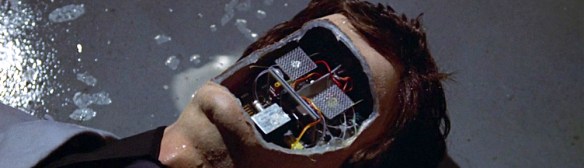
    Another ’70s sci-fi thriller that I think deserves better. This widely disparaged sequel to Westworld is very in keeping with other films of its era: it’s a paranoid thriller about a pair of journalists investigating a corporate conspiracy — in this case, Delos’s attempt to rehabilitate their robot theme park after the disaster in the last film.

    15 Love Affair

    A prototypically romantic melodrama (it’s been explicitly remade twice, not to mention the other films that have borrowed from it), I was expecting a bit of fluff but ended up finding it surprisingly affecting. It dodges the clichés I thought it was bound for, in addition to being beautifully shot.

    14 Strictly Ballroom

    Another one that confounded my expectations. As Baz Luhrmann’s debut feature, I expected a dry run for where he’d go stylistically in Romeo + Juliet and Moulin Rouge! But to regard Strictly Ballroom as anything less than a fully-fledged member of the Red Curtain Trilogy is to do it a disservice. Its ludicrous, over-the-top treatment of a ludicrous, over-the-top world is both absurdly hilarious and totally captivating.

    13 Godzilla vs. Kong
    2021 #5 Big monkey punch giant lizard! No one’s going to call this movie high art, but goddamn if it isn’t entertaining pulp-SF gubbins with giant-size fights thrown in for good measure. Honestly, I don’t know what some people expect from movies like this when they go about criticising them. If giant animals having a brawl isn’t to your taste, fair enough, but if you were expecting a meditative character-driven insight into the human condition or something, more fool you.

    12 The Invisible Man

    The fourth feature from Universal’s genre- and studio-defining run of horror films in the early 1930s. Dracula and Frankenstein may have become more iconic, but, for my money, this is the best movie from the bunch (and I’d rank The Mummy second). The special effects are more extensive than you might expect for the era, and even hold up pretty well today, while Claude Rains is superb as the cackling villain, James Whale’s direction is highly effective, and there’s a nice vein of humour to balance the darkness.

    11 Captain Phillips
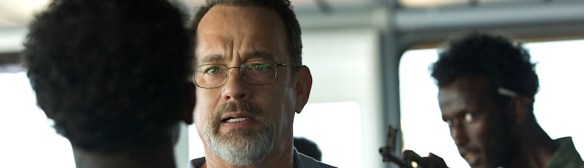
    That Tom Hanks wasn’t even nominated for most major awards for his performance here is a crime against cinema. He’s extraordinary as the eponymous captain of a cargo ship hijacked by Somali pirates. Paul Greengrass brings his usual edgy tension to proceedings, but it’s Hanks’s humanity that ultimately elevates the piece. The final scene is one of the greatest single pieces of acting we will ever see.

    10
    The Hound of the Baskervilles

    Hammer does Holmes. Peter Cushing is a note-perfect incarnation of Sir Arthur Conan Doyle’s Great Detective in what was, sadly, the famed horror studio’s only attempt at filming Sherlock. Personally, I’ve never thought The Hound of the Baskervilles was a particularly good detective mystery novel — but it is quite a good gothic adventure, which makes Hammer the perfect studio to have brought it to the screen. As that, this version doesn’t disappoint, with Terence Fisher’s direction leaning hard into the appropriate atmosphere, plus a superb cast — alongside Cushing, André Morell is a peerless Watson. I wish they’d done a whole series with the pair.

    9
    The Green Knight

    2021 #4 Some people seemed surprised when this film delivered exactly what its trailers had promised: an arty-yet-fantastical interpretation of the Arthurian myth. It’s a moody, earthy take on the material, but one that also has room for magical realism, fairytale-esque fantasy, and flights of inexplicable oddness. The measured pace and off-kilter tone (plus the pitch-dark cinematography) was never going to be to everyone’s taste, but for those on its level, it’s intoxicating. And if you think Die Hard counts as a ‘different’ Christmas movie…

    2021 #3 I was worried that I’d find Nomadland a bit boring and “not my kind of thing”. It seemed like the kind of film where you hang out with the characters and their landscapes, rather than a piece of clear narrative storytelling. And it is that — but, for once, it worked for me. It’s almost like a TV travelogue, visiting places worth seeing and unusual people worth meeting. You watch to appreciate the scenery, to understand the people, to experience a different way of life. It’s a film to escape with — to get away from ordinary life and spend time in these captivating places. Within and alongside that, it creates a beautiful, deeply humane, quite powerful experience. [Full review.]

    7
    Star Trek: The Motion Picture
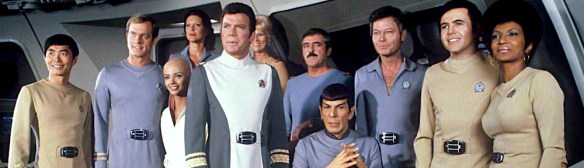
    Having grown up reading sci-fi magazines, I’m very aware that, when it comes to Star Trek movies, “even ones good, odd ones bad”. And this first one has a particularly poor rep — “slow” and “boring” seem to be commonly-attached adjectives (which I can’t help but feel stems back to expectations on its original release, which came in the wake of the success of Star Wars, so presumably people expected a fast-paced action-adventure). But as I settled down to begin watching all the Trek movies from the beginning, I found myself in for a very pleasant surprise. It’s not even trying to be a Star Wars-style adventure, but something different entirely; almost more akin to 2001 in its sense of wonder and exploration, digging into an imagining of a genuinely alien lifeform rather than running about blasting rubber suits with laser guns. Engaged with on the right terms, I enjoyed every minute of it.

    6
    WolfWalkers
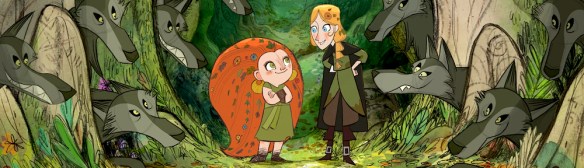
    The third film in Irish animation outfit Cartoon Saloon’s Folklore Trilogy — and Wolfwalkers really does feel like an authentically-told folktale, not a Disneyfied modern reimagining. A big part of that is the animation style. Even if you think you’re becoming inured to it from the studio’s previous work, it has surprises in store; moments of additional innovation or beauty. It’s constantly impressive and regularly breathtaking. Combined with the magical story, the result is a simply gorgeous film.

    2021 #2 Frank Herbert’s Dune is probably one of my favourite novels, and previous attempts to film it have either been interesting but fundamentally flawed (the 1984 film) or faithful but limited by format (the 2000 miniseries), so when it was announced a new version would be masterminded by Denis Villeneuve — one of only two directors to top my year-end best-of list twice, once with another tricky-to-pull-off re-envisioning of a sci-fi masterpiece — well, my hopes were high. Suffice to say, he delivered, albeit in a film that is ‘very Villeneuve’. That is to say, it’s a rather brutalist take on the material, lacking the fanciful, weird interpretations of Lynch, Jodorowsky, or even (to a lesser extent) the TV version. In some ways that’s a shame, but it’s also true to the filmmaker. That the film has to abandon the story halfway through, forced into a rather low-key cliffhanger, is merely a factor of the length of the material rather than a fault of the filmmaker — some have taken serious issue with it, but, personally, the film ended where I always expected it to. And, as a fan, I’d rather this two-part adaptation, giving the story the necessary screentime, even if that means a limp end to Part One, rather than have the whole book in a rushed three-hour single shot. That said, this might be why it’s at #5 on my list rather than becoming Villeneuve’s third #1. I’m optimistic that, once we get Part Two (and, possibly, a Part Three adapting Herbert’s first sequel), the whole will be even greater. [Full review.]

    This is one of those high concepts you wonder why someone hasn’t thought of sooner: what would a ‘kid detective’ (you know, like the Hardy Boys or the Famous Five or whatever) be like grown up? One answer to that would likely fuel a CW-esque YA series, but here we get a more real-world treatment: the detective who was exalted as a kid, a quirky story for the local paper and whatnot, is now a washed-up has-been as he tries to follow the same career as an adult. Like several other films on this year’s list, here was a film that looked like it would tickle a particular itch of mine, and delivered — it was everything I expected it to be and more. It’s both an amusing extrapolation of its central premise and a solid mystery in its own right, with a surprisingly moving conclusion. One part in particular gave me goosebumps, and you’ve got to love anything that can elicit such a physical reaction. [Full review.]

    3
    Joint Security Area

    Before Oldboy or The Handmaiden, director Park Chan-wook gained international attention for this 2000 military thriller about a shooting in the DMZ between North and South Korea. After a South Korean border guard apparently kills two North Korean soldiers and wounds a third on their side of the border before fleeing back to the South, heightened tensions between the nations rest on an investigation by a neutral investigator. As the Swiss Army major tries to find the truth of what happened amidst conflicting accounts, the obvious point of comparison is A Few Good Men, but JSA also made me think of Paths of Glory in its ultimately-tragic message about the wasteful futility of war. But although these point towards its tone and effect on the viewer, it outshines simple comparisons to be its own magnificent thing.

    2
    David Byrne’s American Utopia
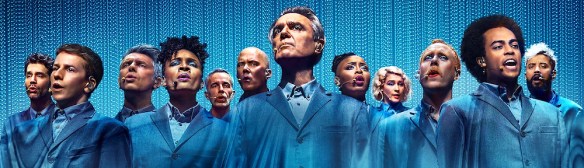
    I’m not a music critic — heck, I don’t even listen to all that much music on a regular basis, if I’m honest — and yet what is essentially a concert film has made it almost to the top of my favourite movies this year. What gives? I wish I could explain it properly, but, I confess, I don’t quite understand why I loved American Utopia, all I can say is that I did. It had an almost profound impact on me that I can’t quite account for. Of course that’s mostly down to the music and staging by Byrne and his fellow performers, but Spike Lee’s direction and editing transform the theatrical show into a near-perfect cinema version. My only unfulfilled wish is that this had been made during the world’s 3D phase, because movement in a three-dimensional space is a key part of the show’s staging, and I’d love to be able to watch that in 3D.

    1
    The Matrix Resurrections

    2021 #1 This belated return to and continuation of the Matrix trilogy has divided critics and audiences alike. You’ll find plenty of people online prepared to slag it off at the slightest prompt. But for others of us, it’s a borderline masterpiece. Personally, it’s not just a film I enjoyed, but something I’ve almost been waiting for — and by “almost” I mean that I never expected to actually get it. This isn’t a by-the-numbers attempt to recreate the adrenaline highs of an enduringly popular action movie. Instead, it’s the kind of wild-swing hyper-meta self-deconstructing take on a popular franchise that I’ve always longed for a legacy sequel to attempt, but no one has been bold enough to try (or, possibly, no one’s ever been able to convince the suits to allow it). Sure, if all you want from a Matrix movie is people looking cool in sunglasses while they engage in precisely-designed epic action sequences, then Resurrections will leave you disappointed. If you appreciate a film that has something pertinent and meaningful to say about our current entertainment culture, there’s a lot to like.


    As usual, I’d just like to highlight a few other films.

    Normally I’m loathe to mention any films that just missed out on the top list — it is what it is, and if I wanted it to be longer I should just find an excuse to make it longer. That said, this year my “top 21” was stuck at 32 films for the longest time — as I mentioned back at #21, you may remember. So, it feels like those 11 almost-rans deserve a mention; except it’s nine almost-rans, because I couldn’t even get it all the way down to 21. I’m not sure these are truly #24–32 (for that distinction, I’d have to properly reconsider some others from my 89-film long list that I’d eliminated earlier), but, nonetheless, there were (in alphabetical order) The Father, Festen, The Mummy (1932), My Fair Lady, My Man Godfrey, Official Secrets, The Pinchcliffe Grand Prix, Psycho Goreman, and The Quatermass Xperiment. In other years, maybe they would’ve been luckier.

    That said, they’re not the only films that might feel aggrieved to have missed out (if films had feelings), because, while there are 4-star films in my top 21 (even in my top ten), there are 5-star films that didn’t make the cut. I awarded 25 films full marks in 2021, and 13 of them made it into my top list — namely Captain Phillips, Carol, David Byrne’s American Utopia, Dune: Part One, The Green Knight, Joint Security Area, The Kid Detective, Love Affair, The Matrix Resurrections, Nomadland, Star Trek: The Motion Picture, Strictly Ballroom, and WolfWalkers. The less fortunate (but still great) ones were The Adventures of Prince Achmed, Cinema Paradiso, The Father, Festen, Kind Hearts and Coronets, My Fair Lady, My Man Godfrey, Official Secrets, Sansho Dayu, A Single Man, When the Wind Blows, and Who’s Afraid of Virginia Woolf? There were also full marks for the original King Kong when I gave it the Guide To treatment.

    Additionally, let’s recap the 12 films that won Favourite Film of the Month at the Arbies, some of which have already been mentioned in this post and some of which haven’t. In chronological order (with links to the relevant awards): WolfWalkers, Star Trek: The Motion Picture, David Byrne’s American Utopia, Captain Phillips, Official Secrets, The Invisible Man (1933), Strictly Ballroom, The Kid Detective, The Green Knight, Dune: Part One, Nobody, and The Matrix Resurrections.


    This year I watched 31 movies that had their general UK release in 2021, but that means there were a considerable number I missed. So, here’s my annual alphabetical list of 50 films from last year that I’ve not yet seen. In the past I’ve used IMDb’s dating to settle what was eligible for inclusion as “a 2021 film”, but nowadays I’ll allow in something that’s listed as 2020 if it’s only due to festival screenings or (as was the case with one film this year) its own premiere.

    The main downside to watching so few big new movies is that there’s not much room here for the stuff that’s smaller but still significant, which is a shame. And where I did make space for those films, some of the year’s big-but-not-huge movies lost out. That said, in some ways it made selection easier: normally I begin with a long-list of something like 120 titles, in which I typically find 20 to 30 ‘must includes’, then I weed through the rest to choose the remainder. This year, the ‘must includes’ numbered 46. I could easily have doubled this list and still been featuring films everyone’s heard about, not least because I did leave out some multiplex fillers in favour of artier-but-acclaimed films. Maybe next year I’ll finally go all-out and make this a list of 100. That would fit the site’s name, after all.

    For now, it’s 50 once again. As ever, the included films were chosen for a variety of reasons, from box office success to critical acclaim via simple notoriety, and designed to include a spread of styles and genres, successes and failures.

    Army of the Dead
    Free Guy
    The Last Duel
    Luca
    Shiva Baby
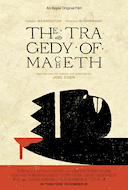
    The Tragedy of Macbeth
    Candyman
    Ghostbusters: Afterlife
    Last Night in Soho
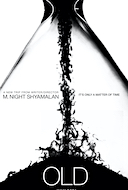
    Old
    Spencer
    Venom: Let There Be Carnage
    Army of the Dead
    Belfast
    Candyman
    Censor
    CODA
    Cruella
    Dear Evan Hansen
    Don’t Look Up
    Drive My Car
    Encanto
    Eternals
    Fast & Furious 9
    Finch
    Free Guy
    The French Dispatch
    Ghostbusters: Afterlife
    House of Gucci
    In the Heights
    Judas and the Black Messiah
    King Richard
    The King’s Man
    The Last Duel
    Last Night in Soho
    Licorice Pizza
    The Lost Daughter
    Luca
    Malignant
    The Many Saints of Newark
    The Mitchells vs the Machines
    Mortal Kombat
    Nightmare Alley
    Old
    Petite Maman
    Pig
    The Power of the Dog
    A Quiet Place Part II
    Raya and the Last Dragon
    Shang-Chi and the Legend of the Ten Rings
    Shiva Baby
    The Sparks Brothers
    Spencer
    Spider-Man: No Way Home
    The Suicide Squad
    tick, tick…BOOM!
    Titane
    The Tragedy of Macbeth
    Venom: Let There Be Carnage
    West Side Story
    The Worst Person in the World
    Wrath of Man


    And that, ladies and gents, is officially the end of 100 Films in a Year — not just for 2021, but for ever.

    Well, you already know that’s not exactly true. But it’s the end of the challenge as I’ve been attempting it for 15 years, replaced by a new take. In 12 months’ time, when a new “best of year” list is due, it won’t be drawing from ‘the challenge’ in the same way… though, that technicality aside, I rather suspect it won’t be too different from this post. And if, once again, I’m so spoilt for choice that I struggle to get it down to whatever number I decide the list should include, well, is that actually such a bad thing?

    The Worst of 2021

    ‘Worst of’ lists have become widely unpopular in the film-viewing community in recent years. “Celebrate what you liked, don’t bash what you didn’t,” is the prevailing argument. Well, yes… but also, film watching inevitably involves taking the rough with the smooth. (Hopefully unintentionally: if you’re watching something you’re certain you’ll dislike, why? (Says the guy who intentionally watched all five Twilight movies, so, yeah, sometimes there might be a reason.)) Also, I’ve done this list for 14 of 100 Films in a Year’s 15 years, so now would be an odd time to stop (next year, after the first year of the new-style site, I’ll think again).

    Before we begin, a reminder that my best and worst lists are selected from all 207 films I saw for the first time in the past year, not just 2021’s new releases.


    The 5 Worst Films I Saw For the First Time in 2021

    In alphabetical order…

    The Birth of a Nation
    D.W. Griffith gets a lot of credit for being a great innovator of the silent era — mainly because he was fond of blowing his own trumpet, and I guess a lot of people unquestioningly bought it (plus ça change). Whether innovative or derivative, his work as director is sometimes striking, and Birth of a Nation would be a pretty entertaining… were it not horrendously racist and brazenly pro-KKK. There’s no half measures here; no “well, I suppose you could interpret it that way”: the film is explicitly and undeniably in favour of the KKK and what they did in the wake of the American Civil War, to the extent the Klan used it (and I guess probably still do) as a propaganda tool. Any other merits it has a film are not strong enough to outweigh that side of it.

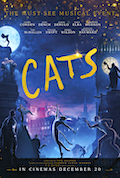
    Cats
    This is every bit as bad as you’ve heard. It’s littered with bizarre production decisions — things that would be a bad idea even if they hadn’t then been poorly realised in a rushed post-production. But it’s not just the freaky cat/human hybrid characters or inconsistent sense of scale that let this down: the underlying musical is mediocre, with mostly forgettable songs and an incredibly thin narrative. Why this was such a long-running hit on stage, I’ll never understand.

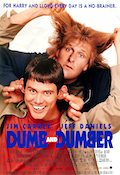
    Dumb and Dumber
    A film that lives up to its title. At no point since its release in 1994 has Dumb and Dumber ever appealed to me, but it has its fans (it even generated a prequel and belated sequel, remember?) and, crucially, was on iCheckMovies’ Most Checked list, which I’ve almost completed (just four to go, thanks to this). Were it not for that, I wouldn’t have watched it. I don’t think I would’ve been any worse off if I never had.

    Mortal Kombat
    Not the new one, but the one from the mid-’90s, an era when various attempts to transfer popular video game franchises to the big screen gave such unwaveringly poor results they tarnished the genre for decades (in fairness, it’s not like there have been many/any that deserved to dodge the bad rep). Plus, it’s by Paul W.S. Anderson — a double whammy of reasons to expect something awful. And it is indeed a cheap-looking, semi-incoherent, unexciting load of tosh.

    Plan 9 from Outer Space
    Sometimes you watch a “bad movie” cult classic and, even though it is technically a terrible movie, you have a great time — I’m thinking of The Room or Love on a Leash here. Theoretically, Ed Wood’s famed Z-movie should fall into that camp. If anything, I think it’s the originator of “so bad it’s good”. For some people, that is how it plays. Unfortunately, it wasn’t for me — I just thought it was poorly-made rubbish.


    The 21 best films I saw for the first time in 2021.

    2021 Statistics

    Enough about my shiny new look (although, if you missed all that, you can read about it here) — let’s go back to digging through the remains of 2021. And we begin (or, rather, resume) with one of my personal highlights of the entire year: the statistics. Regular readers will know what this is all about, but if you’re new to these parts and enjoy things like percentages and graphs… oh boy, you’re in for a treat!

    Before we begin, a quick word that, because I’m a Letterboxd Pro member, I also get a yearly stats page over there. My 2021 stats can be found here. I don’t only log new watches on Letterboxd, so any overlapping statistics will be slightly different, but they mainly have different categories (like repeat cast & crew members — so you can, for example, find out which actor appeared in the most films I watched last year).

    And now…


    I watched 207 new feature films in 2021. That means it ranks 3rd all-time, passing 2015’s 200 by a solid seven films, but coming far shy of the top two: 2018’s 261 and last year’s 264.

    I also ran my Rewatchathon for the fifth year in 2021. I’ve spent all of that time thinking I ought to include it in the statistics properly, and all of that time not getting round to deciding how exactly to incorporate it, and now it’s over — I’m doing something slightly different next year. Well, maybe that will finally compel me to square the circle. Anyway, I rewatched 33 films — short of my target of 50, but not that bad else wise. That makes a combined total of 240 films, which is another distant 3rd place finish, behind last year’s 310 and 2018’s 311.


    NB: I have no rewatch data for 2007 and only incomplete numbers for 2008.

    I also watched four short films last year, which is my lowest total for those since 2016. A shame after the past two years saw me set new records each year, but then I’ve never made a concerted effort to watch shorts. Maybe I should. As always, the only stat they count towards is the total running time, and they barely make a dent there. To wit: the total running time of new features was 357 hours and 12 minutes, while adding the shorts bumps it to 357 hours and 58 minutes — just a 46-minute increase. That’s my smallest “others” total ever, barely even visible on the graph below (it’s 1 pixel high).

    Here’s how that viewing played out across the year, month by month. The dark blue line is new feature films and the pale blue line is my Rewatchathon. Last year I included a pale green line for shorts, but that seemed a bit pointless this year. Last year I noted that, while the precise values of the graph changed each year I’d been running it (since 2018), the rough shape stayed the same: quickly climbing to a peak in April or May, then lower and bumpier to the end of the year. 2021 bucks that trend entirely, with the high point coming in February, before it almost tapers off, but spikes up dramatically in August and December, traditionally two of my weaker months. What does this tell us? Maybe not to rely too much on precedent.

    Next up, the formats on which I watched those films. Despite my continued advocacy (and purchasing of) physical media, it’s digital that once again romps away with the crown here, accounting for 150 films, or 72.46% of my viewing. That’s down slightly from last year’s 73.9%, but is still above the 2015–2021 average, which is 58.5%. I’d definitely like to get it down closer to 50%; or, even better, to see Blu-ray beating it, considering I buy so many of the darn things.

    Of course, a lot of individual formats and services contribute to that digital total. The top spot therein is a tie between Amazon, topping the list for the fourth time in five years, and downloads, each with 35 films (23.3% of digital). Downloading was second last year, so that isn’t actually a huge change. The same could be said of the next few places on the chart: last year Netflix and Now tied for third, while this year Netflix is there by itself, with 26 films (17.3%), and Now is just behind, on 22 (14.7%); and iPlayer comes fifth, with 16 (10.7%). Last year there were three other services to mention: AMPLIFY!, which didn’t occur this year; YouTube, which I didn’t watch anything on this year; and Disney+, which retains that position kinda by default, with seven films (4.7%). Rounding out the digital services were MUBI on five (3.3%), All 4 on three (2%), and Apple TV+ managing a solitary one (0.7%). Most of their original content seems to be TV, although they did have a couple of other films that interested me, so that really should’ve been higher — but then I could say that about all the streamers (I mean, just look at my failures list each month).

    A very distant second place in the format war goes to Blu-ray with 51 films (24.6%) — just a third of digital’s tally, I’m ashamed to point out. It’s the format’s 14th year on this list and its 4th highest total, which doesn’t sound too bad, but as a percentage it pales besides the 40% I was hitting a decade ago.

    Between them, digital and Blu-ray accounted for a staggering 97.1% of my viewing in 2021, up on the 95.5% they represented last year. To be precise, that’s 201 out of 207 films. The remaining six were split equally between three other formats — again, to be precise, that means DVD, TV, and cinema each clocked just two films (0.97% each). Here’s a graph showing how much DVD has fallen — something that should improve next year, at least a bit. (If you want an idea of how much it might grow, 2018 had exactly 12 DVD watches.)

    A similar “once mighty, now not” slump has befallen TV across the decades, its place in my viewing schedule now definitively overtaken by streaming.

    And finally, the cinema, brought low by Covid for the second year in a row. More films that I was interested in were screening, but is it worth the risk? And we’re all hoping 2022 will be better, but how much is still a question mark. We’ll see in a year’s time…

    In amongst all that, I watched 24 films in 4K — a drop from last year’s 40, but still above any year before that (2019’s total was 15, for example). On the other hand, I watched just three in 3D, my lowest total there since I got my 3D TV back in 2017. New releases on the format are dwindling (even Disney, who were previously reliable with Marvel and Pixar titles, now only release the former on 3D BD in Japan, with no sign of the latter), but I’ve still got a not-insignificant pile of 3D discs I’ve bought and not watched yet. It’s somewhat ironic, then, that all of my 2021 3D watches were films I don’t own or can’t get on disc, so were downloaded by other means (wink wink, nudge nudge).

    Topping both of those this year was the number of films I watched in SD. Yep, really. Between some downloads, some streams, and those couple of DVDs, I watched 25 films in SD in 2021. At 12.1% of my total viewing, that’s actually the second highest percentage since 2016. What’s more interesting is that, although it means the percentage fluctuates somewhat, the actual number of SD titles I’ve watched has been pretty consistent for years: the average for the past six years is 23.6, most falling in the 23–25 range. While it’s nice to watch as much in HD (or even UHD) as possible, there are some titles that are just so hard-to-come-by that one has to settle for lower quality. While “SD” might make many of us think of DVD-level quality, several of this year’s SD titles were more “recorded off TV to VHS then ripped to digital”-level. Yeah, they looked and sounded awful, but when that’s the only way to see the film at all…

    Of course, it tends to be older films that only exist in such low quality, and my viewing on the whole skews newer (though don’t get me started on the fact some brand-new productions still receive DVD-only releases). But as the new decade continues to get underway, the question is: how new? It took the 2010s until 2012 to usurp the 2000s at the top of my decade chart. Could the 2020s manage it a year earlier? In short, no — but it’s close! The 2010s are still in first place, but with only 46 films — that’s their lowest since 2012, coincidentally. It represents 22.2% of my viewing this year, the lowest-ever percentage for a top decade (at the same point, i.e. in 2011, the 2000s still had 35.2%). And the 2020s are snapping at their heels, just three films behind on 43 (20.8%). The margin between these two decades was 33% last year, but this year it’s just 1.45%.

    In third place comes the ’90s with 22 films (10.6% — exactly double their percentage in the last two years). That’s their best total ever, their highest placing since 2017, and their best percentage since 2010. Why did they do so well? Oh, don’t ask silly questions (i.e. I have no idea. Chance, I guess). There’s an even bigger surprise in fourth place, though: the 1930s with 18 films (8.7%). Their previous best showing was last year, with just six films (2.3%), and their previous best percentage was way back in 2008, at 3.8%. And with the 1940s coming in fifth with 16 films (7.7%), also their best-ever result, could this be a preview of years to come? Well, I have set myself the task of watching at least 12 films noir next year…

    Things continue to ping back and forth in time as we move down the chart. Next is the ’80s on 15 (7.2%), followed closely by the 2000s on 13 (6.3%), followed even more closely by the ’70s on 12 (5.8%), and right behind them are the the ’50s on 11 (5.3%) — far down the chart though it may be, it’s still their highest ever total. Indeed, never before have so many decades reached double-figure tallies in a single year.

    Rounding out the list, the ’60s have an uncommonly low five (2.4%), while bringing up the rear are the 1920s on four (1.9%) and the 1910s on two (0.97%) — not their best result (2007 and 2010 were both higher), but only the sixth time they’ve featured at all in 15 years. Finally, no features for the 1900s & earlier, but they were represented by a single short film, for only the third time ever (the previous occasions being 2013 and 2020).

    There’s somewhat less variety in where films came from, with the USA once again dominating countries of production, having a hand in producing 140 films. However, at just 67.6% of my total viewing, it’s their lowest percentage ever (down from last year’s 68.6%, the first time it had been below 70%). There’s nothing wrong with US movies, but there’s a whole world out there and it’s nice to spread one’s viewing around a bit. To wit: there were a total of 35 production countries represented in my viewing this year, the second best ever (behind last year’s 40, when there were almost 28% more films, so, y’know, fair enough). Some of the more unusual ones (in terms of my own viewing) included Latvia, Estonia, Ethiopia, Lebanon, Peru, and Romania.

    Back at the top end of the chart, the UK took its usual second place, with 54 films (26.1%). France returned to third place, a position it’s held for six of the ten years I’ve been monitoring this stat, with 18 films (8.7%). Hot on their tail was Japan on 17 (8.2%). Also in double figures were Canada (15, 7.2%) and Germany (12, 5.8%), and coming seventh with seven was Australia (3.4%). China, Denmark, and India were tied on four (1.9%) each, while four countries each had three, eight countries had two apiece, and the remaining 13 had one film each.

    All those US and UK films mean that English was the most dominant language, as always. It was spoken to at least some degree in 183 films, or 88.4% of my viewing, a percentage that’s up from the last three years. As I say, this count includes all films where it was spoken enough to merit listing, even if it wasn’t the primary language. Perhaps I should start making a note of just the main spoken tongue for the sake of the statistic… Also as usual, the language in second was a long way off. This year it was Japanese in just 11 films (5.3%). No others made double figures. But overall there were 27 spoken languages (plus five silent films), which isn’t bad. Some more rarely-heard languages this year included Amharic, Estonian, Kiowa, Somali, Tupi… and Klingon.

    A total of 178 directors and eight directing partnerships were responsible for the films on 2021’s main list. 16 of them helmed multiple films, led by Leo McCarey with five. Second place is shared, with three apiece from David Hare (the Worricker trilogy) and Reginald Le Borg (all among the Inner Sanctum Mysteries series), while Ishirô Honda helmed two plus one film in a ‘partnership’ (that would be the US cut of King Kong vs. Godzilla, where Honda’s original work was supplemented with US material by Thomas Montgomery). The remaining 12 had two films each, and they were: Jack Bernhard, Bob Clark, Cameron Crowe, George Cukor, Joe Dante, Paul Greengrass, Tom Hooper, Ben Lewin, Anthony Minghella, Mike Nichols, George Stevens, and James Whale.

    For a few years now I’ve specifically charted the number of female directors whose work I’ve watched. 2020 saw a new high reached, but sadly 2021 sees it slip back again — although it’s still above 2019, just, so there’s that. My viewing this year included 13 films with a female director (12 solo; one as part of a trio with two men), which comes out as a measly 5.94% of my viewing. As I put it last year, it’s debatable whether the onus should be on me to seek out more films directed by women or on the industry to give more directing gigs to women, but ultimately it’s a bit of both — though I’d argue with more weight on the latter, because I just watch the films I watch; I neither avoid nor seek out female directors especially. Anyway, I do hope this graph will continue to improve in the future, though I’m not sure it will ever approach 50/50 (considering all the older films I watch, which are predominantly directed by men to a farcical degree).

    We’re approaching the end now — broadly speaking, because before I dig into 2021’s star ratings, it’s time for an update on a couple of viewing projects I vaguely have on the go. First, the IMDb Top 250: at the time of writing, seven films from my 2021 viewing appear on that famed list. However, because that list is ever-changing, the number I have left to see has only gone down by two, to 28. That’s my poorest showing since 2012. I feel so close to the end now (just 11.2% to go) that I really would like to get it finished off. Of course, new releases ping on all the time (there are currently four 2021 releases on there), but that’s life — if I finish the rest of the list, I can bop them on the head as and when they pop up. Anyway, the current positions of the seven I saw this year range from 52nd (Cinema Paradiso) to 222nd (La Haine).

    My next viewing project is the one I call my “50 Unseen”. As regular readers will know, at the end of my annual “top ten” post I always include a list of 50 notable films I missed from that year’s releases. I’ve continued to track my progress at watching those ‘misses’ down the years — which is how I know that 2021 was a particularly poor year for this particular mission. Where previously I would watch at least one film from every list, this year I only managed to hit eight of the 14; and from most I only watched one film, leaving my with a total of 21 films across all 14 lists. That’s the lowest since 2010 (when I only had three lists to work from!) In fact, the last time I watched that few films from even just the newest list was in 2014. And speaking of the newest list, in the first year of watching 2020’s 50, I watched 12 of them — the lowest ‘first year’ since 2010 (again), when I only watched eight films from 2009’s list. You might think this is because 2020 was a poor year for new films, thanks to the pandemic, but there are plenty in that 50 I very much want to see, I just… haven’t. Maybe I’ll finally catch up on them in 2022.

    For what it’s worth, the other nine I watched came from 2007, 2009, 2011, 2012, 2013, 2019 (all one film each), and 2015 (three films — why so many more, I don’t know).

    All of which means that, in total, I’ve now seen 497 out of 700 of those ‘missed’ movies. That’s exactly 71%, the first time this percentage has dropped year-on-year since 2009 (it was 73.2% last year). On the bright side, that’s still above where it was the year before last (70.3%), so it’s not a total disaster. (As usual, my new list of 50 misses from 2021 will be in my “top ten” post, sometime soon.)

    And so, to conclude the statistics for 2021, it’s the climax of every review: the scores.

    Now, I need to provide a similar caveat to last year: this stat factors in every new film I watched in 2021, even those for which I’ve yet to publish a review — which, this year, is 98% of them. That means there are some where I’m still flexible on my precise score — those films I’d award, say, 3.5 or 4.5 on Letterboxd, but which I insist on rounding to a whole star on here. For the sake of completing these stats, I’ve assigned a whole-star rating to every film, but it’s possible I’ll change my mind when I eventually post a review (it’s happened before). Still, this section should remain broadly accurate.

    Starting at the top end, then, in 2021 I awarded 25 five-star ratings, which means 12.1% of the films I watched got full marks. That’s at the lower end of my range, which historically spans from 11.9% to 21.2%. I’d put that down to harsher marking rather than poor quality: there were quite a few 4.5-type films where I eventually erred towards the lower score.

    As usual, the most prolific rating was four stars, which I gave to 88 films. At 42.5%, that’s a sliver up on last year’s percentage (which was 42.1%), which rather suggests the lower number of five-star films wasn’t all that much due to those 4.5s after all… unless a lot of 3.5s got the rounded-down treatment too, of course.

    Well, there were 63 three-star films, which is the third highest tally ever, behind 2018 and 2020 — both years in which I watched more films. So, really, that’s only appropriate. The historic range of my three-star ratings spans all the way from 19.6% up to 38.0%, so 2021 coming in at 30.4% actually puts it somewhere in the middle.

    Indeed, the real gains are to be found among the two-star films, which number 29 — the highest-ever for one year, and the first time there I’ve given out more two-stars than five-stars (although they did draw back in 2012). It comes to 14.01%, which isn’t actually the highest ever… but it is close, because 2008 reached 14.4%. Again, this brings up the usual debate: was this a weak year, or is my scoring getting harsher? I think, at this point in my life, the latter is definitely a factor.

    Last, and most definitely least, I handed out just two one-star ratings, which is only 0.97% of my viewing. That’s very typical: I’ve awarded two or fewer single-star scores in 10 out of 15 years, and only three years have pushed its percentage above 1.5%

    Finally, the average score for the year — a single figure with which to judge 2021 against other years, for good or ill. The short version is 3.5 out of 5 — that’s the first time it’s dropped below 3.6 since 2012, when it was an anomalous 3.4. Indeed, that’s the first 3.5 score in 15 years (there are five 3.6s, six 3.7s, and two 3.8s). To go to a few more decimal places, it’s 3.507 — still my second-lowest scoring year ever, but it doesn’t stick out quite as egregiously as 2012’s 3.352. Still, it’s only the third time the score’s been below 3.600 (2019 was the other, on 3.589), so it is a low one, whichever way you cut it. Again we ask: was it a weak year, or is my scoring getting harsher? As I said before, I am beginning to feel it’s the latter.

    All of which said, let’s not forget: it’s still a pretty good average overall. I mean, it’s well above 3.0, and 3 is a positive score. A ‘true average’ might be 2.5, but then I’d have to watch a lot more bad movies, and who wants to do that? Maybe I could try to watch even more very good / great films, and then maybe the average would rise again… or maybe I’d just worry I was being too lenient. No, at this point I feel I’ve demonstrated a degree of consistency in my marking — so long as the average is in the 3.5–3.7 range, I feel like I’m getting things about right.

    And so, I’m sorry to say, the stats are over for another year. I know I’m changing things up from 2022, so will this post look significantly different next year? Y’know, probably not: I love this stuff too much to stop working it all out.


    My picks for the best and worst films I saw in 2021. And then my review of 2021 will be over, and you’ll have seen these blue-ish stripey mid-post graphics for the last time!

    The All-New 100 Films in a Year Challenge

    As I said in my introduction to the blog’s new era, reports of 100 Films in a Year’s death may have been grossly exaggerated — because while 100 Films in a Year as it was is no more, in its place I have…

    The All-New 100 Films in a Year Challenge!

    Just like its title, this new version is similar but different. My original challenge was wholly straightforward: watch 100 films I’d never seen before every year. The only thing approaching complexity or contention was whether alternate cuts (e.g. director’s cuts) counted as a “film I’d never seen before” or not. But this brand-new version of the challenge… well, it’s going to require some explaining.

    Before I do, let’s recap why this came about. As regular readers are likely aware by now, I’ve been thinking about modifying my eponymous goal for a few years, primarily because simply “watching 100 new films in a year” stopped being an actual challenge and became my de facto state. It’s almost a decade since I failed in that goal, and over the last few years my average has been closer to 200 films in a year. So, why not just double the target? Or pick another number? Maybe I would’ve just done that, were it not for a few slip-ups (i.e. months where I fell short of my minimum target) and lifestyle changes in recent years. Obviously a challenge should be challenging, not a guaranteed walk in the park, but “just watch more films” didn’t seem the right way to push myself.

    That’s what ultimately led to this new challenge — or, you might argue, array of challenges. You see, rather than just watching any old 100 films, now there are a selection of categories, and films will need to fulfil criteria to qualify. Whereas the old challenge merely motivated me to watch more films, this new version is designed to encourage me to watch certain kinds of films. Plus, with some additional rules for each category, it will spread that viewing throughout the year, rather than seeing me engage in a headlong rush to #100 as quickly as I can (which has happened the past few years).

    So, you could argue this is eight separate challenges that together add up to 100 films, rather than a ‘true’ 100 films challenge — whatever that might mean. And you can argue that, if you want — I don’t care. This is a personal project, not some athletic endeavour subject to outside scrutiny, and this is how I’m choosing to do it. Of course, if for some reason you wanted to join in, you’re more than welcome. Feel free to use my rules. Feel free to tweak them to suit your own goals. Feel free to ignore them entirely and come up with your own criteria. Feel free to think “you know what, I really need to play more video games” and set yourself 100 Games in a Year as a challenge. Heck, that’s how this all began: I ‘ripped off’ the Read 50 Books in a Year challenge.


    As I said, there are now eight groups making up my 100-film challenge. I’ll outline them in a moment, but first there’s one general rule: a film can only count once. Sounds kinda obvious, I guess, but my categories are not so niche as to be mutually exclusive — I could watch a Blindspot pick from the 1970s on DVD and technically it could count across three categories. But if I did that, well, the final tally wouldn’t actually get to 100, which would be self defeating. When a film fulfils the criteria for multiple groups (as some surely will, especially early on), it’s up to me to allocate which category it counts towards — although there are some sub-rules that will help dictate that. (My challenge is watching films, but yours may be trying to understand why I make these things so unnecessarily complicated…)

    Without further ado, the categories are…

    New Films

    Well, that immediately requires clarification, doesn’t it? Because in the old challenge all 100 films were “new”, as in “new to me”. Now, however, I mean “new” as in “new (to the UK)”. And the UK clarification is needed because we so often get foreign films ‘late’, especially awards-y films that play US dates the year before but aren’t released here until January, February, March… even as late as June or July sometimes. So, this category is 12 films that were released in the UK for the first time during 2022. To some people that might seem like no challenge whatsoever — and it’s not that much of a challenge to me, to be honest, because I normally far exceed it. But, on the whole, my viewing skews older (when there’s the whole of film history to explore, why just watch brand-new stuff?), so I feel it’s a worthwhile category to include. Plus, part of the point of this is to spread the challenge throughout the year. To ensure that, this category is limited to one qualifying film per month — so even if I watched two (or more) new films in a single month, only the first would count towards the challenge. However, it can rollover if necessary — for example, if I watched no new films in January, I could count two in February. That might seem to undermine the concept of spreading these throughout the year, but, without it, it would be possible for me to fail the entire year on January 31st, which would suck.

    Rewatches

    In arguably the biggest change of all, rewatches now count… but only 12 of them. Mirroring the “new films” requirement, this is also limited to one per month. I’m not intending to run my Rewatchathon anymore, primarily because of this, but I’d like to think I’ll still rewatch more than 12 films a year. We’ll see — maybe I’ll end up bringing it back.

    Blindspot

    This continues as-is: 12 specific films, chosen ‘scientifically’ from best-of lists and the like, designed to be paced one per month. Because they’re specific films, if I did decide to get ahead of myself then they could count ‘early’, but I don’t think I’ve ever done that and I don’t intend to start now. As usual, there’ll be a dedicated post sometime soon with my 12 picks.

    What Do You Mean You Haven’t Seen…?

    After a couple of years ‘off’ (or, if you prefer, combined with Blindspot, because they’re essentially the same thing), WDYMYHS is back. The change is, whereas Blindspot is made up of “great movies” (according to other people), WDYMYHS will revolve around a theme of some kind. This year that link will be my birth year: 12 specific films from 1986 that I’m surprised I haven’t seen. Again, my 12 picks will be named in a dedicated post soon.

    Decades

    At least one film from every decade that feature films have existed, i.e. since the 1910s. That makes it another group of 12 — what are the odds?! It’s almost like I’m doing this deliberately… I can watch as many of these as I like within any given month, so we’ll see how long it takes me to tick them all off — recent decades will come quickly and easily, but some of the older ones might require a specific effort.

    DVDs

    I’ve spent years lamenting the fact that I don’t watch enough of my DVDs. Thanks to a couple of decades spent collecting, I own over 1,000 of the things, many never played, and they don’t often make it into my viewing nowadays, largely because they’re not HD. (I suspect that, statistically, I’m more likely to spend money upgrading a DVD to Blu-ray than I am to actually watch a DVD.) So, to force me to dig into that particular back catalogue, I’m making it a goal to watch at least one per month, as per the “new films” rules. And no ‘cheating’: if I don’t want to watch something from my DVD copy (because I want to get it in HD, or even UHD), that’s absolutely fine… but I can’t get it in HD and then still count that towards the DVD goal. I have to actually watch the DVD for it to count.

    Genre

    Like WDYMYHS, here I’m going to pick a specific genre or movement (preferably one that’s either highly specific or that I’m less au fait with, not something broad or well-worn like, say, “action”) and aim for at least one per month, i.e. 12 more films. However, this is a free-for-all: whereas WDYMYHS is 12 pre-chosen titles, this can be anything that falls within the genre; and I won’t limit myself to counting just one per month. Maybe I’ll have a marathon and complete it in one go! Maybe I’ll still spread it thin! At least having the choice provides an opportunity for some variety, right? This year’s genre will be that old favourite, film noir. I’ve had noir ‘viewing projects’ before, but there are plenty of key texts that still elude me, so maybe 2022 will right that. Or maybe I’ll just end up getting all 12 from Indicator’s 24-film Columbia Noir series. Frankly, either is good by me.

    Series Progression

    That’s perhaps the vaguest title of all, but let me explain (that’s the whole point of this post, after all). I have multiple different film series on the go at any one time — so many that, a couple of years ago, I started keeping a list, the Letterboxd version of which is here. Some of those series I continue to merrily work my way through; some I half-forget I have underway. So, the point of this category is to compel me to continue, across another 12 films. I could watch 12 from one series; I could watch one each from 12 different series. I could marathon them all across a weekend; I could watch them one a month throughout the year. Whatever — just so long as I keep going with series I’ve already started. (If I start a new series, either by accident or choice, the first film can’t count, but any future films can.)

    I know I said there were eight categories, but if you’ve been doing the maths so far you’ll have realised we’re only at 96 films. So there must be a ninth category, right? Well, yes and no. Let me introduce you to…

    Wildcards

    The final four films are ‘wildcards’ that I can attach to any of the eight categories. They still have a couple of rules, though. Firstly, wildcards can only be used once the category’s own requirements are met. What that means is, I could use a wildcard to (for example) count a second new film in January, but I couldn’t use one for a film noir until I’ve watched 12 film noirs. Lastly, only one wildcard per category — so I couldn’t (for example) watch five new films in January and count them all. Make sense? If not, let me remind you that you don’t really need to worry about any of this — it’s only me who has to work it out.


    I’ll be tracking my progress with the Challenge in my monthly review posts, and on a dedicated page too.

    Also, while it’s no longer the ‘official’ goal of the blog, I suspect I’ll end up still counting my overall viewing, and likely post year-end stats and whatnot about it next January. I’ve been doing that count for almost my entire adult life, so it’s a well-established habit at this point. Not to mention that, actually, I enjoy it — but now primarily for my own interest, rather than as the raison d’être of this blog.