

This was my first experience of a Wim Wenders film, so I wasn’t quite sure what to expect, other than knowing it’s an acclaimed classic that features on many “great movies” lists (albeit usually a bit further down than many of the most famous “great movies” on such lists).
It starts out almost Lynchian, with a man, Travis (Harry Dean Stanton), wandering out of the desert. Where’s he been? How long’s he been there? No one knows. He ends up in the care of a quirky doctor in the back of beyond — it’s not even your typical American “small town”, but a trailer and a shack in the middle of nowhere. Then his brother (Dean Stockwell) comes to get him, and it becomes a bit Rain Man (a film released four years later, so certainly not an influence) as two estranged and mismatched adult brothers embark on a cross-America road trip because one of them objects to flying. Then they get home, and it becomes a domestic comedy-drama about an absent father trying to reengage with his preteen son, Hunter (Hunter Carson). And then they go off in search of the boy’s mother, Jane (Nastassja Kinski), and it becomes something else again… It almost circles back round to Lynchian, in fact, with a couple of extended sequences in a surreal, almost otherworldly place of work.
But to keep calling it “Lynchian” is to do Wenders’ work a disservice, because it’s not a copy — indeed, in 1984 Lynch was releasing his Dune, and had yet to embark on most of the films that define “Lynchian” for us. An alternate comparison might be the Coen brothers, at least for the opening section: it’s of a piece with their heightened worlds (the weirdo doctor living in the middle of nowhere) and semi-outlandish stories (Travis reappearing from nowhere). But this was released the same year as the Coens’ debut, Blood Simple, so, again, it’s not exactly a fair comparison. Or if it is fair, it’s backwards: if anyone influenced anyone, it would be Lynch and the Coens drawing on Wenders.
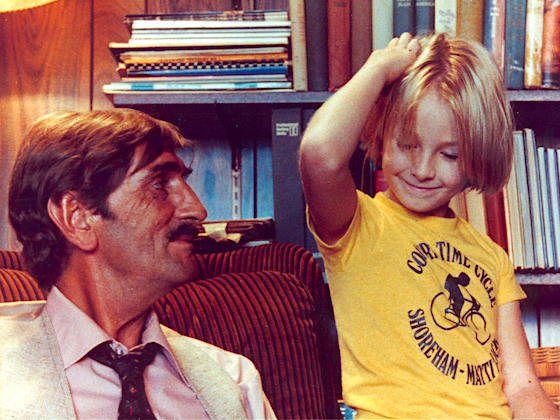
Setting simple (and kinda inaccurate) comparisons aside, in parts this is a magnificent film. The scene where Travis and Hunter walk home after school ‘together’ borders on magical; a truly superb sequence of father-son bonding. The bit where we first enter Jane’s place of work feels like descending into some previously-unknown alternate world that exists adjacent to our own (as I say: Lynchian). Then the ‘conversations’ with Jane through the oneway glass, especially the first one, are subtly powerful in how they’re shot and performed. When it works, this is a striking, memory-searing movie.
But then, overall, I found it kinda… not slow, exactly — and I couldn’t necessarily point at which bits I’d cut — but I did wonder if it might benefit from being tighter. Especially the first hour or so, which is mainly about Travis and his brother in a way that doesn’t ultimately feel too relevant to what the film really wants to dig into, which is Travis’s relationships with his son and ex-wife. Of course, his relationship to his brother is adjacent to that, but it’s not as vital. That portion of the film does serve to build up mystery and delay certain revelations, but I wonder if the film wouldn’t be just as effective if that section were pared back somewhat. Apparently filming started without a completed screenplay, the intention being to film in story order and write the ending when screenwriter Sam Shepard had an understanding of how the actors were portraying the characters. That methodology might explain why the narrative shifts and changes so much, I think.
Through all of this, the film really rests on the shoulders of Harry Dean Stanton. Even when he’s initially taciturn, it’s clear he’s the man to watch; the enigma we must solve. And when we finally learn his history — which is completely at odds to the calm, composed, quiet man we’ve followed throughout the film — it’s… well, I’m not sure what it is. Not necessarily what I was expecting; and yet, what was I expecting? Part of the point of the whole thing, surely, is how much he’s changed, and how that facilitates his final choices. But then, his choices seem based in the man he was, not the man he’s become, so is he right? Maybe; maybe not. I suppose there’s stuff to debate and talk about here, which is often a signifier of a Great Movie.

As to that, I won’t be adding it to my personal favourites pile right now. But it’s a fascinating, at times incredible, film. I can understand its appeals to a certain kind of cinephile.

Paris, Texas was re-released in UK cinemas at the end of July by Curzon, with the UK debut of a 4K restoration (which is the version I watched. It looks good). There are still some screenings going on, and it’s available to stream on Curzon Home Cinema for £3.99. If you prefer your films free, it’s also on All 4 until the middle of September, but I don’t know if that’s the new restoration or not.
I do know it was the 40th film in my 100 Films in a Year Challenge 2022, and was viewed as part of Blindspot 2022.





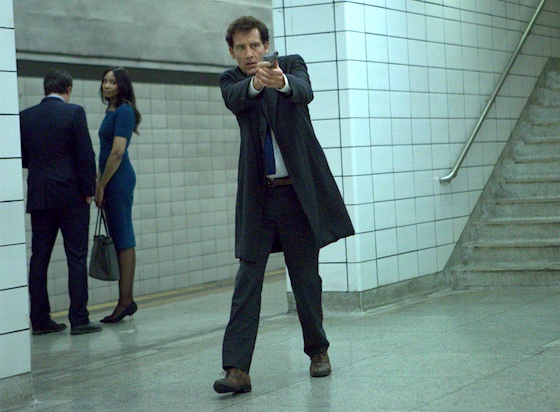
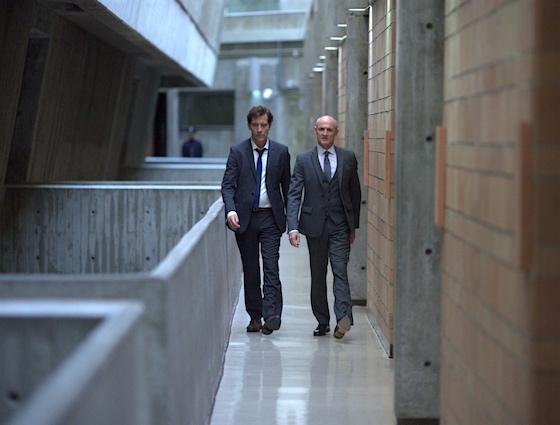
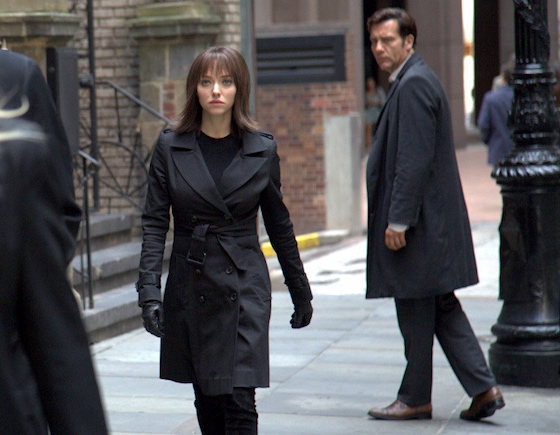


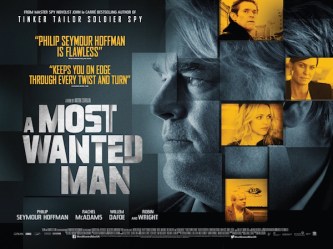 John le Carré adaptation starring Philip Seymour Hoffman as a German secret intelligence operative who must battle internal politicking while tracking a political refugee who may actually be a terrorist.
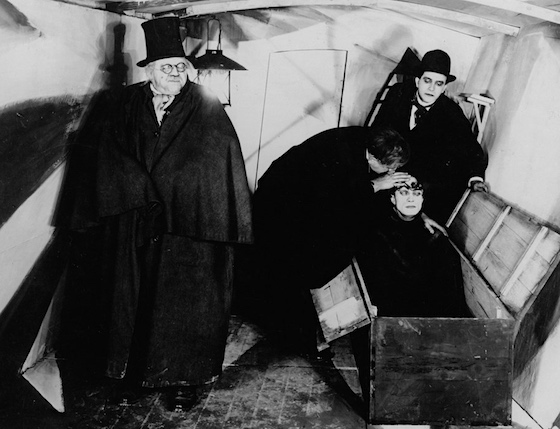
 The word “prequel” was first coined in the ’50s, arguably entered the mainstream in the ’70s, and was firmly established as a term everyone knew and used in the ’90s by the Star Wars prequel trilogy. Works that can be defined as prequels predate their naming, however, and surely one of the earliest examples in the movies must be this silent German horror.
 Regarded as one of the first horror films, The Golem is more of a moderately-dark fantasy, or a fairytale-type myth. There are clear similarities to Frankenstein, though I don’t know if either influenced the other. However, it does feature what I presume is one of first instances of that most daft of horror tropes: running upstairs to escape the monster. It goes as well here as it ever does, i.e. not very. Said monster looks a bit comical by today’s standards. Built by the rabbi to defend the Jewish people, he immediately uses the hulking chap to chop wood and run errands — he doesn’t want a defender, he wants a servant! A terrifying beast nonetheless, it’s ultimately defeated because it picks up a little girl for a cuddle and she casually removes its magic life-giving amulet.
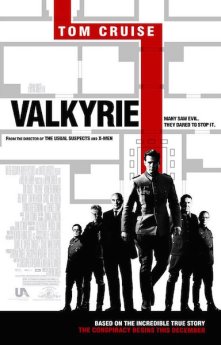 After abandoning the X-Men franchise for a
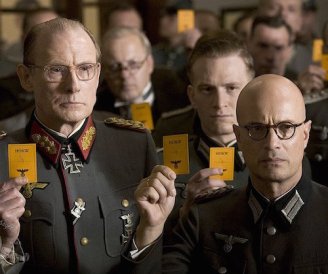
 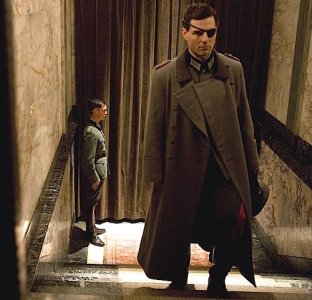 One of the stated aims of the conspiracy is to show the rest of the world that not everyone in Germany believed in what Hitler and his inner circle were doing. It may have taken us a long time to realise that, for fairly understandable reasons, but quality films like this help get the message out. Singer has crafted a proper thriller here, replete with scenes of edge-of-your-seat tension. Many a filmmaker can’t manage that with a fictional storyline, never mind one where we know exactly how it turns out.
 but nor is he in simplistic action hero mode.
 German silent movie depicting a day in the ‘life’ of Berlin, part of the ‘city symphony’ genre that was popular around the 1920s. This makes it one of those films that is in some way Important, but sadly it’s still a bit, well, boring.
 Recent adaptation of Patrick Süskind’s popular novel, often considered unfilmable because of its focus on the sense of smell. Tykwer covers for that with strong cinematography, with sumptuously rich visuals and a judicious use of close-ups to evoke beauty or disgust as appropriate (the early birth scene in a fish market is particularly rancid — do not watch this right after eating!)
 100Films.co.uk