Although I only post my TV overviews once a month, I’m always looking ahead to what’s going to be included in them. That’s what made me realise edition #19, scheduled for July 20th, was going to be insanely busy: new episodes of Doctor Who, Game of Thrones, Preacher, Twin Peaks, and the entire latest season of The Americans — all things I typically review ‘in full’. Whew! So I’ve brought #19 forward a bit, and #20 will be in a fortnight anyway.
So, here’s what I’ve been watching in the past month three weeks (aka trisennight, a word that Google finds two other uses of ever. Cool.)

Doctor Who Series 10 Episodes 10-12
 History was made left, right and centre in the last three episodes of Doctor Who’s 36th-ever season. For starters, The Eaters of Light marked the first time someone who wrote for the classic series has written for the revived one. Rona Munro penned the last story of old Who, Survival, a personal favourite of mine and one that, stylistically and tonally, connects remarkably well with the first episode of nuWho, Rose, which is quite the coincidence. Anyway, The Eaters of Light was a solid episode with some very likeable parts, but it didn’t seem to quite gel entirely in the final mix. That’s been a recurring theme for the middle of this season, I feel, with every episode since Knock Knock featuring quality ideas and/or characters and/or scenes that aren’t fully developed into a final whole. Nonetheless, I’d certainly welcome Munro returning again in the future, but who knows what Chris Chibnall has planned.
And then we come to the two-part finale, written (of course) by departing showrunner Steven Moffat. The duology, which sadly is called neither Genesis of the Cybermen nor The Two Masters, continues his previously-stated aim of creating two-parters where each half is a distinctly different episode. The first part, World Enough and Time, is an immediate contender for an all-time great episode of the show. There’s a superb real-science setup with the time-dilated spaceship, plus a suitably eerie hospital in which we ‘unknowingly’ witness the birth of the Cybermen — my favourite Who monster, so perhaps I am a little biased.
 I put “unknowingly” in inverted commas there because that’s the episode’s biggest problem: thanks to the show’s own promotion, we knew the Cybermen were coming back, and we knew John Simm was returning as the Master. In truth, the former isn’t a problem. Sure, the existence of the Cybermen is played as something of a reveal at the end, but it also works as ‘just’ the reveal that Bill has been converted, and there’s dramatic irony in the viewer knowing what those cloth-headed patients are destined to become. The Master spoiler is more of a problem. The prosthetics turning Simm into Razor are impressive, and even fooled some people who knew he was back… for a bit. I’m sure most people must’ve guessed before the episode ended. It therefore becomes a distraction: what’s his plan? When will he reveal himself? And when the big reveal does come, it’s played as a twist, which it isn’t because we were told about Simm three months ago. Moffat has said before that it was entirely his decision to put Simm in the trailer, and it’s clear it was a misstep. Not a fatal one — World Enough and Time is strong enough to withstand it — but a shame. Can you imagine the reaction if we hadn’t known?
So with the Master finally revealed at episode’s end, he teams up with Missy for the first multi-Master story ever in the extended finale, The Doctor Falls. With a lot of business to attend to, this isn’t quite as striking as its first part. Nonetheless, there’s strong material here. Missy and the Master are a hoot, the pairing of Simm and Michelle Gomez working exactly as well as you’d hope. Their storyline comes to a very fitting conclusion, too. The way Moffat handles Bill being a Cyberman, how she feels inside and how people react to her, was an original use of a well-worn villain. Her possible-departure was fitting too, tying appropriately back to her debut episode. Moffat buried a way for her to return in the dialogue, which hopefully Chibnall will pick up because Bill has been absolutely fab. It would be a real shame if this is the last we see of her. 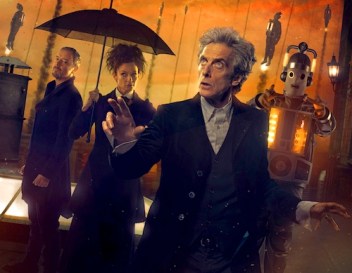 As for the other current Capaldi companion, there was an almost touching exit for Nardole, a character Matt Lucas has managed to imbue with much more likability than was promised in his initial appearance a couple of Christmases back. Finally, Peter Capaldi was in as fine fettle as ever, getting to deliver a few more of his iconic speeches, before going out with a heroic last stand.
Well, not quite going out, because we have that exciting cliffhanger to lead us into the Christmas special. With such a promising setup, let’s hope Moffat can stick the landing. We’ll find out on December 25th…
The Americans Season 5
 “The best show on television” returns for its penultimate run. It’s currently mid-way through here in the UK (where it’s really, really buried on ITV Encore, more’s the pity — it deserves a bigger audience) so I’ll be extra careful to avoid big spoilers. It’s an interesting run of episodes, though: low-key, in their way; slow-paced, even by the standards of current high-quality TV. That’s not to say it’s without merit, but it’s rewarding of long-term investment more than ever. In truth, it may be the show’s weakest run, but that’s very much a relative assertion. There’s a lot of groundwork being laid here, probably the downside of them getting a two-season to-the-finish recommission — these are episodes 1 to 13 of 23, not 1 to 13 of 13.
Still, as I said, it’s most decidedly not without merit, it’s just that the drama is very much internalised into the characters. A lot of it is about Philip and Elizabeth becoming increasingly tired of their life — the toll that all the killing and lying takes. That’s not exactly something new for Philip, but is he reaching breaking point? And to see Elizabeth beginning to struggle too really rams home how tough it is. Indeed, the detrimental effects of this lifestyle are felt across all the storylines and returning characters, as people on both sides come to doubt the justification of their respective causes. Is someone going to snap and betray their country?
Although the season starts (and, in some cases, resolves) plot lines of its own, ultimately the big underlying thread is (picking up from last season) the debate about how, when, and if they can go home to Russia. The kids are a big factor: Paige is still being initiated into the realities of their cause, but Henry is off building a life of his own, now more than ever. At the same time, we’re shown how difficult it is for other people to adjust in similar circumstances, including Russians who’ve defected to America with their kid. These kind of storylines could be heavy-handed parallels on other shows, but The Americans unfurls them gradually and carefully and subtly enough that you come to see it for yourself rather than the show screaming at you to notice the mirroring.
Not the most dramatic run, then, but this deep in I think it’s earnt our trust that they’re going somewhere with it all. It’s also earnt our investment in the characters to the extent that it can base storylines about their internal struggles rather than just exciting espionage stuff. It’s clearly been a not-for-everyone season (reviews are largely positive still, but there are more dissenting voices) but there’s still quality in spades. And it’s still completely unpredictable how it’s all going to wind up next season.
Twin Peaks Season 3 Episodes 7-8
In its 7th episode, the new Twin Peaks suddenly delivered a surfeit of story, forging ahead with actual plot developments in several of its disparate storylines. It was almost bizarre. It was good. Heck, some of the scenes were incredible. Laura Dern is perfect here. So did this mark a turning point? Was the series finally getting stuck into the meat of the story? Well, as it turned out, no. Not at all. Indeed, perhaps David Lynch was just pre-trolling us, in his own way, because Part 8…
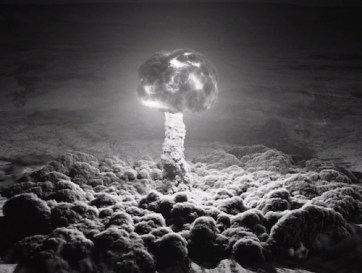 I don’t know if it was the reaction across the board, but on Twitter the reception the 8th episode received was adulatory to the nth degree. Having given us massive developments and beloved characters just one episode before, suddenly we were in a different era, in black and white, with mostly unknown characters, and a narrative conveyed through Lynchian visions rather than traditional storytelling. It made some kind of sense… some of it… in the end… but you certainly had to stick with it. Some of it was incredible — the tracking shot into the mushroom cloud is, somehow, almost inexplicably, one of the greatest shots of all time; an instant classic. But other bits… they did go on rather. I’m not one of those people who wishes the new Twin Peaks was a pure nostalgia fest, all repetition of famous lines and quirky goings on in the Double R over cherry pie and coffee, but I also think Lynch’s indulgence has run a little too rampant. Much of his surrealist imagery works if you’re prepared to engage with it, but I also think much of it doesn’t need to go on for as long as it does. There’s a difference between a slow pace and no pace.
So, I don’t really think Part 8 is a total revolution in television and one of the greatest episodes of all time, as some people do. For one thing, the opening stuff with Evil Cooper and the Nine Inch Nails performance felt like it belonged at the end of the previous episode but had to be moved for time. It was certainly an experience, though, I’ll give it that. I just hope it’s one that all makes sense in the end…
Preacher Season 2 Episodes 1-2
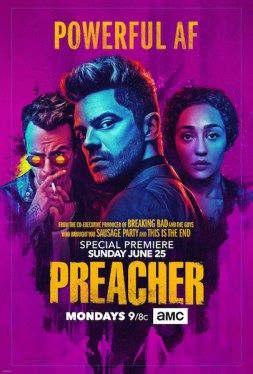 After a sometimes uncertain but ultimately promising first season that was, really, all prologue to the main story, Preacher returns with a confident bang, filled with unstoppable cowboys, exploding SUVs, Maced testicles, intestinal fuel syphons, baby foreskins, and Come On Eileen — and that was just the opening ten minutes. Shows like Legion, American Gods, and, especially, Twin Peaks may have been duking it out for the title of craziest series on television these past few months, but there’s nothing quite like Preacher.
With our trio of heroes — a Texan preacher with the power to make anyone do what he says, his badass girlfriend with a criminal past, and a rough but charming Irish vampire — now on the road, the series itself also feels free of the shackles of the first season’s small-town setting. We’re let loose into a world that can equal the barminess of the leads. A world where we meet a friend who keeps a girl locked in a cage in his garage (for good reason); where you can see a man cheat death nightly at the Mumbai Sky Tower Resort and Casino; where a drug-fuelled binge of pillow-fighting and reading Archie comics can solve your woes; where God goes to a strip joint for the jazz…
Sadly, you can’t really jump in here — too much was established in season one — but the ongoing unpredictable zaniness makes it worth the investment to reach this point, in my view. And with some fan-favourite characters just around the corner, hopefully it’s gonna be a helluva season.
Next fortnight… winter is here.
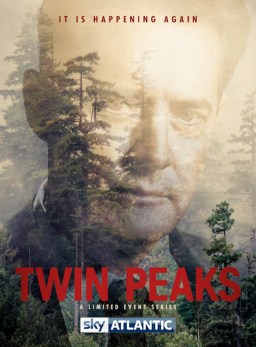 When the return of Twin Peaks was announced with the tagline “it is happening again”, I think everyone assumed it was, at worst, just an echo of one of the series’ famous lines which happened to work well for a revival; or, at best, an indicator to the plot — that the strange, sometimes otherworldly events of the original series were about to reoccur. As it’s turned out, perhaps what the tagline is most applicable to is the series’ effect: 27 years ago, Twin Peaks pushed new boundaries for what could be done on television, and the medium as a whole spent a couple of decades catching up. Now, rather than merely return to what he did all those years ago, as most revivals do, co-writer/director David Lynch is once again pushing at the boundaries of what’s possible or acceptable on mainstream(-ish) television. If “it” is “David Lynch being way beyond everybody else”, then it is indeed happening again. If you were after a comforting pile of references, callbacks, reflections, and imitations of the original series, you’re going to be disappointed — as one or two critics have been. If you were after something new in the weird world of Twin Peaks, well, step on up.
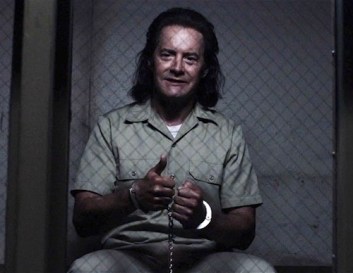 It’s also been widely reported that Lynch and co-creator Mark Frost wrote a single 400- or 500-page screenplay, shot it all, then chopped it up into 18 episodes in the edit. This I can very much believe. Individual episodes are almost shapeless as hours of television, and plot threads disappear for several episodes at a time, only to crop back up as if we’d never been away. While many series these days boast they are “actually an X-hour movie”, they still often function as individual episodes — they may not be completely standalone, but the shape of each hour, the way they’re paced and build to a cliffhanger, and so on, is episodic. Twin Peaks, however, feels like it means it — no doubt the legacy of Lynch’s production methodology.
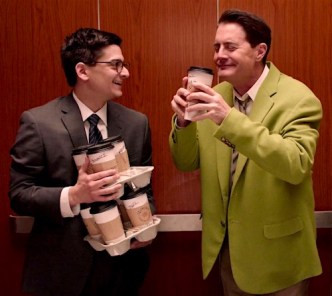 Some five-and-a-half hours into this 18-hour movie, Dougie hands his boss a stack of files. The boss slowly looks through them one by one, baffled by the seemingly senseless doodles Dougie has scrawled all over the pages. But after a while he begins to see a pattern, and comes to understand something. In the end he thanks Dougie. Dougie, as ever, looks blank, before doing a failed imitation of being a normal human being. Is Lynch deliberately setting out to say that he is Dougie and we are Dougie’s boss? That all of us are taking a long, slow look at Lynch’s indecipherable doodlings until we eventually discern some meaning. Or is it just a scene in Lynch’s world that we can coincidentally project that interpretation on to? As ever with David Lynch, I’m not quite sure.
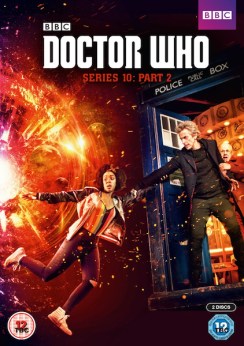 Well, I suppose it was too much to hope it would last. The most consistently great season of Doctor Who in over half a decade threw it all away with a frustratingly variable trilogy of stories (note: not a three-parter — this pedantic old-school Who fan insists we observe the difference). It all began with Extremis, which starts strong with a decent mystery (there’s a book in the Vatican library that causes anyone who reads it to commit suicide) and some good humour (Bill’s interrupted date), but increasingly becomes a lot of running around to delay the reveal. It’s a non-story pretending to be a story, basically. I don’t even care that it basically has an “and it was all a dream” ending. In fact, writer Steven Moffat found a way to make “and it was all a dream” work, which is a rare and miraculous thing. But the episode that leads to that ending doesn’t do enough heavy lifting to support it. A waste.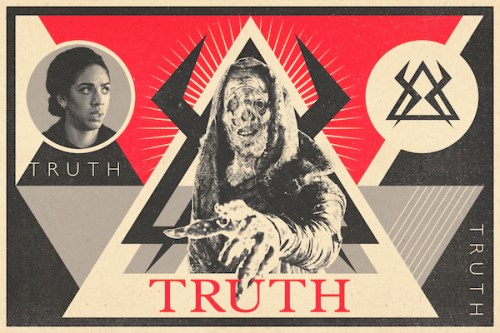
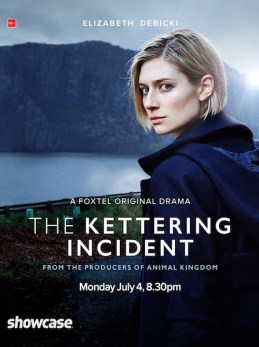 In a remote small logging town where everybody knows everybody else, a teenage girl, who’s secretly into drugs and partying and is the daughter of a prominent local man, goes missing under mysterious circumstances in the creepy woods, which have a history of possibly-supernatural strangeness… Yes, this is the Australian answer to Twin Peaks — a comparison I have perhaps unfairly amped up with that description. It’s more about Anna Macy (
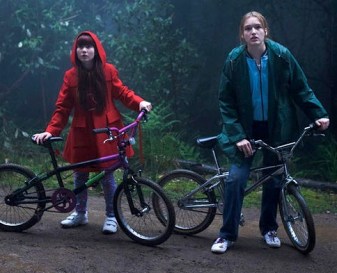 Personally, I want to know what the hell is meant to be going on, but the finale felt a lot like weak sci-fi to me and I’m not sure the answers will be worth it. I have that same hot/cold feel about the series as a whole: whenever it’s actually in front of my eyes I become engrossed, invested, and enamoured; but within hours of it finishing I feel a kind of indifference creep in. I can’t really explain why. It’s probably not a fair reaction.
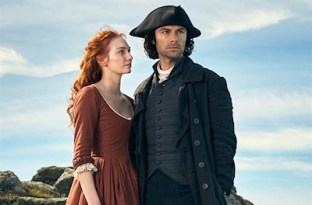 This month, I have mostly been missing the start of the third series of Poldark. Well, I’ve not even watched series two yet. I also
 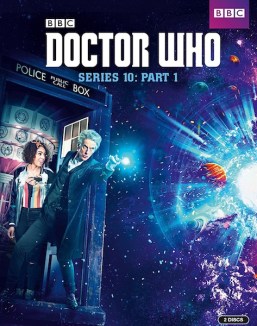 This is shaping up to be a top-quality run of Who. You have to go back a good few years to find a similar-length run of consecutive episodes with the consistency this season is boasting. Obviously there are some divided opinions out there (as I’ve noted before, there is literally no pleasing all of Doctor Who fandom), but the consensus seems to be pretty positive.
 The fourth episode, Knock Knock, by
 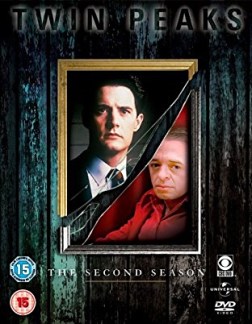 In the wake of the network-enforced resolution of the Laura Palmer storyline, Twin Peaks flounders. The writers clearly took a while to find a new footing, not helped by behind-the-scenes kerfuffles that led them to have to scrap entire prominent storylines (primarily, Kyle MacLachlan vetoed a Cooper-Audrey romance, reportedly because his then-girlfriend Lara Flynn Boyle was jealous of co-star Sherilyn Fenn). Utter phrases like “Super Nadine”, “Ben Horne wins the Civil War”, or (especially) “James Hurley on the road” to a Twin Peaks fan and you’re liable to give them a chill up the spine — and not the good kind.
 A dancing gorilla! A man singing a duet with himself! A rap/yodelling mash-up! A Moldovan trio who could apparently only dance with their right legs! A guy up a stepladder wearing a horse’s head in a slate-walled room covered with chalk-scrawled words that looked like it was straight out of a horror movie asylum! Måns Zelmerlöw again! All accompanied by Graham Norton on fine form with his biting, sassy commentary (“All her family play the fiddle. In fact, her brother will be fiddling with her on stage later.”) Oh Eurovision, never change.
 The 36th run of Doctor Who kicked off with an episode titled The Pilot — no coincidence, that. This is the most newcomer-friendly episode of Who for 12 years, an episode finely calibrated to establish everything for a first-timer but also function for regular viewers too. A lot of that effectiveness can be attributed to Pearl Mackie as Bill, the new companion to Peter Capaldi’s Doctor. After a run of oh-so-special companions running back years, Bill is just an ordinary young woman; but of course she’s extraordinary in her own way: ready to learn, eager to help, full of both inquisitiveness and caring. This is surely the birth of both a fan-favourite companion in Bill and a star in Mackie.
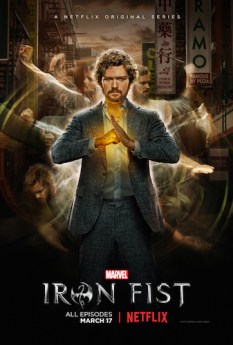 The last of the Marvel/Netflix series before the Defenders team-up, Iron Fist has certainly divided critics and viewers. It doesn’t begin well: the opening episode is possibly the worst thing yet released as part of the MCU, and I only say “possibly” because I never bothered with Agents of SHIELD after the poor reaction to season one. It’s needlessly slow, repetitive, the characters behave implausibly, and the fights are terrible, looking like a first rehearsal filmed with one take. Things do improve — there are more engaging characters, some interestingly developed arcs, and better realised fights — but it still doesn’t come together as well as it could. For one thing, it makes the running of Rand Enterprises a major element, but has a very vague-seeming understanding of how business actually works. It’s just too simplistic.
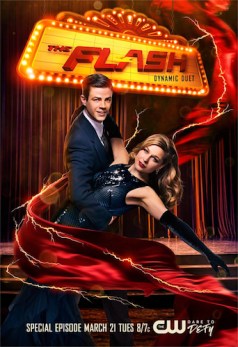 Amongst the eight Arrowverse episodes I watched this month was this: the much-anticipated musical crossover between The Flash and Supergirl, which star Glee alumni Grant Gustin and Melissa Benoist respectively — hence why (some) people called for a musical episode, which caused the producers to decide to do one. Somewhat ironic, then, that it seemed to go down well with critics (at least per
 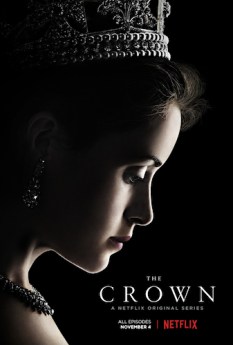 The most expensive TV programme ever made (or not, whatever) certainly has its budget plastered all over the screen, which hopefully didn’t distract most viewers in the way it did me. It shouldn’t, really, because this is a good drama about the humanity behind the public faces. Its adherence to fact is apparently variable, which I imagine is very irritating to historians of the period, but it works for the fiction. There are great performances all round, with John Lithgow in particular disappearing into Churchill to the point that I forgot I was watching an actor more than once. There’s an interesting plot thread early on about the position of Philip (Matt Smith) relative to Elizabeth — how his role as a husband is challenged by her position as Queen, etc — which goes a bit awry as the series goes on and has other plots to focus on. It’s left quite open-ended, so hopefully it’ll be completed in the second season.
 I devoted just 32 words to Line of Duty series one when I finally got round to watching it
 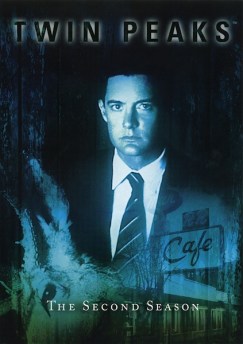 I first saw the debut season of Twin Peaks many years ago during a repeat run (it was a ‘classic series’ even then, though with hindsight it can’t’ve been a decade old at the time), then watched it again when the DVD came out, but this is my first time watching season two (legal complications delayed its DVD release for what felt like forever, and by the time it finally came out I just never got round to it). The second season is infamous for representing a steep decline in quality, though that isn’t yet evident from this batch of episodes, which covers up to the revelation of who killed Laura Palmer and their capture. I’d say it lacks the pure concentrated genius of the first season, having ramped up the quirkiness quotient and, at the behest of the network, rushing the resolution of the Laura Palmer mystery, but it ain’t bad by any means. There’s certainly much to like in the off-kilter characters, the folksy mysticism, and some fantastic performances — Kyle MacLachlan is a constant delight as Agent Cooper, but Ray Wise is frequently incredible as the grieving Leland Palmer. But I guess it’s mostly downhill from here…
 This month, I have mostly been missing series two of Peter Kay’s Car Share, which is a couple of episodes in on the telly or

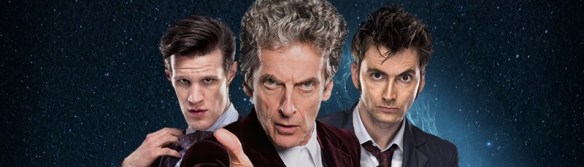


 The controversial Steven Moffat era of nuWho is headed towards its end, but before his final full series next year there’s this penultimate Christmas special. There have been 12 of them now and they’re always divisive: some people think they’re too Christmassy, some that they’re not Christmassy enough; some like that they’re standalone adventures suited to a broader audience, but other times they’re not standalone enough… Each year presents a different mix of these elements, pleasing some and alienating others.
 “Proper Bake Off” came to an end with what felt a little like a joyous celebration of the series’ unique charms, as well as its highs and lows. Considering the two festive episodes were shot before the controversial move to Channel 4 took place, that’s almost impressive. It’s hard to imagine GBBO without the alchemical mix of Mel, Sue, Paul and Mary, and these episodes showed the format on fine form. And then the BBC went and snuck in that
  The problem with Christmas specials of on-going shows is you’re sometimes left with on-going plots that must be acknowledged, and Grantchester has a particularly major one with its hero’s life-long love leaving her husband while pregnant. If you don’t watch, it’s set in the ’50s, so this kind of behaviour is the greatest scandal known to man. The special leaps into this without even the by-your-leave of a “previously on”, so I pity any non-regular viewers made to sit down in front of it on Christmas Eve. But it’s an immensely popular show with big ratings, apparently, so who can blame ITV for wanting it in their always-underpowered Christmas schedule? I imagine it fared better than Maigret did the next night…
 The team behind previous Christmas specials
  I thought And Then There Were None was one of the highlights of last year’s Christmas schedule, turning Agatha Christie’s most popular novel into a dark, slasher-movie-esque thriller, the first English-language adaptation to remain faithful to the original’s glum ending. I don’t know if this year’s Christie is faithful to her original short story, but it isn’t to the play adaptation (at least as I know it from
 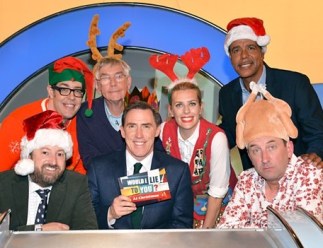 There’s always a lot of special episodes of comedy shows on over Christmas, with varying degrees of success. I thought this year’s Live at the Apollo was woeful, with Romesh Ranganathan the only truly bright spot in 45 minutes of flat observations and unfunny daftness. Conversely, Would I Lie To You? proved to be as good value as it always is, thanks to the quick wit of the regulars plus Tom Courtenay’s affected (I presume) dodderiness. Mock the Week’s clip show format was perhaps improved by the fact I didn’t watch the most recent series, while the imperfect Insert Name Here makes a nonetheless welcome return. In the comedy gameshow sub-genre, Alan Carr’s 12 Stars of Christmas was the kind of trash I’d never watch at any other time of year yet stuck with for all five hours and kind of enjoyed (helped by watching on catch-up and fast-forwarding the really repetitious bits), while the David Walliams-fronted Blankety Blank revival provided as much charm as the format ever has. And normally it wouldn’t count as comedy, but this year’s run of Celebrity Mastermind began with CBBC puppet Hacker T. Dog as a contestant. At least he didn’t win.
 My list of Christmas TV to get round to remains pretty extensive. There are all those regular series that insert a seasonal episode — The Grand Tour (that’d be the episode with Richard Hammond’s ice cream comments that you might’ve heard about), Paul O’Grady: For the Love of Dogs, Yonderland (not that I’ve watched any of the latest series), QI, Inside No.9 (which I’ve never watched before, but the special sounds good)… And there are series coming back for one-offs too, like Outnumbered and Jonathan Creek (which I loved during its original run but have been surprisingly lax about watching in the last few years). I’ve also not yet caught a couple of this year’s animated adaptations, Michael Rosen’s We’re Going on a Bear Hunt and Raymond Briggs’ Ethel & Ernest (which I figure will count as a film). Documentaries like Lego’s Big Christmas and West Side Stories also sit on my list, likely to get forgotten. There’s Sky1’s big Christmas Day drama, The Last Dragonslayer (which I wager I’ll also count as a film); Eric Idle’s comedy musical science thing, The Entire Universe; and Charlie Brooker’s 2016 Wipe, which apparently manages to make 2016 funny (I’ll believe it when I see it). Finally, I always save Channel 4’s The Big Fat Quiz of the Year for either New Year’s Eve or New Year’s Day, because that just seems more appropriate.
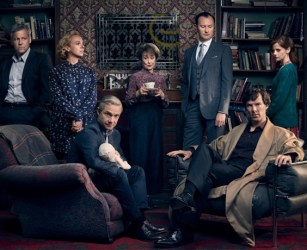 Things are beginning to wind down now… but as far as TV schedulers are concerned “Christmas” lasts until at least January 1st, so there are a couple of big hitters left. The biggest of all is a new, potentially final, run of Sherlock. No idea what the quality will be like, but expect lots of handwringing on social media and huge ratings either way. On New Year’s Eve there’s stage adaptation Peter Pan Goes Wrong, which I’ve heard such good stuff about it’s probably going to be a disappointment, and a Winnie-the-Pooh documentary that I’m going to watch even though it’s presented by Alan Titchmarsh. Next week (which you could argue is still part of Christmas if you have very forgiving holiday leave) sees lots of police shows kicking off, if that’s your thing: Death in Paradise, Endeavour, Midsomer Murders, No Offence, Silent Witness, Unforgotten… even Brooklyn Nine-Nine. And in the sphere of movies on TV, tonight you can choose between the network premiere of
 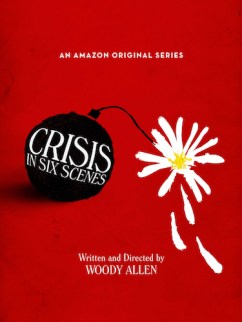 When Amazon started making a serious effort to challenge Netflix in the field of streaming original series, one of their early moves was the headline-grabbing signing of Woody Allen to create his first TV series. As has since become clear, Allen didn’t know what he was letting himself in for. To summarise his comments from various interviews (and read between the lines a little), it seems he had a view of TV that’s about 20 years out of date, and thought he’d be able to dash off something suitable between two of his annual movies. At some point he obviously realised how much more sophisticated TV has become, and coopted a movie idea he’d had on the back-burner to expand into a short TV season. Allen’s been vocal about how miserable he found this process, but I’m not sure if he’s aware that he made a rod for his own back: he essentially made three movies in two years instead of his usual two. It probably would’ve been wise to swap out one of the films for the TV series, but you get the sense that, despite having been shown TV’s burgeoned respectability, Allen’s still something of a film snob. Rather than the potential of TV coming as a revelation to him, he’s declared he won’t be making any more.
 But enough of the form — what of the content? This is not prime Allen, that’s for sure. At times it makes for uncomfortable viewing, when it’s hard to tell if it’s half improvised or if half the cast are just a bit doddery (and I suspect it’s the latter). Other bits do work, though, and while it isn’t massively rewarding it is amusing at times. Even less assured are some broadly political points that it seems like Allen is trying to tap into, or maybe it’s just incidental. He appears to be using the series’ 1960s setting as a mirror of the present: the plot concerns a twenty-something anti-government protestor, and there’s lots of talk about unnecessary wars, campus demonstrations, young people staging protests, rights for women and black people, etc, etc. At first blush these parallels are all well and good, but I’m not sure they develop into much more than wry observations. The best I can take from it is a result of the particularly farcical last episode, where it may be that he’s trying to say people in general should be more aware and active, like the young are — to walk the walk of political change rather than just talking the talk.
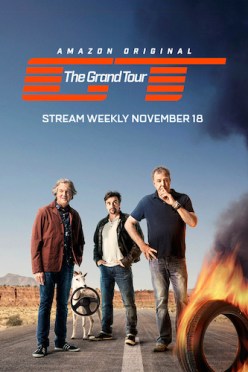 Another big gun in Amazon’s streaming mission, their £160 million “Not Top Gear, Honest” original series kicked off last month to widespread positive reviews and, apparently, big ratings (relatively speaking). I’m not really a ‘car person’, but like millions of others I wound up watching Top Gear during the height of the Clarkson / Hammond / May era for all the other hijinks. I thought it was going off the boil a bit even before their semi-enforced departure — I didn’t even get round to watching their last series. They come to Amazon after a short break (a long break for us, but it takes time to film these things, so, short break), and I think reinvigorated — possibly by the rest, possibly by the change of management, possibly by the huge budget.
 The Doctor Who spin-off that
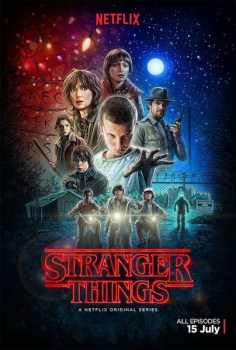 Hype — it’s a funny old business. It’s hard to have avoided hearing something about Stranger Things, Netflix’s summer hit that went down like gangbusters, its ’80s nostalgia perfectly calibrated to target the kind of people who run entertainment news websites these days — just to be cynical about it. Or truthful. Then there came the backlash, which attested there was nothing more to the show than those callbacks and tributes; a hollow experience of copying and “hey, remember this? That was good, wasn’t it?”
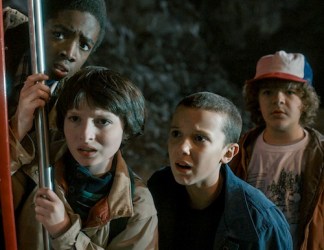 Without wanting to get into spoiler territory (despite what the media would have you believe, not everyone has Netflix all the time and not everyone watches every new zeitgeisty series immediately. Apologies if you write for an entertainment site and I’ve just given you palpitations), everything comes together nicely for a barnstorming pair of climactic episodes. For my money, the penultimate chapter is the best one: with a bunch of revelations out of the way (some of them easily guessed but finally confirmed), the series kicks off a run of long-awaited fan-pleasing events (as in many a drama, it takes this long for everyone to finally start talking to each other; also, the bit with the van!) The finale is less accomplished, with some characters wandering around for a bit in a way that feels designed to pad the running time. Still, it’s a satisfying conclusion… to season one, anyway.
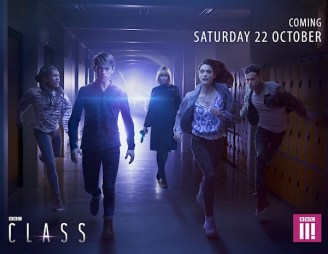 Ten years to the very day since the launch of the original dark, sexy BBC Three Doctor Who spin-off,
  The CW’s raft of superhero shows restarted on UK TV this month. I’ve given up on Legends of Tomorrow and am still not joining Supergirl (though I got hold of the opening episodes, co-starring Superman, to maybe make time for at some point); but, five seasons in, Arrow has me suckered for the long-haul, and The Flash tempted me back with the intrigue of adapting Flashpoint. I’ve never got on the bandwagon with Flash, which attracted a lot of praise during its first season that I simply didn’t agree with, leading it to outshine Arrow in ratings and people’s affections. Arrow has long been off the boil, and season five certainly hasn’t got it back up to temperature so far, but The Flash had plenty of issues of its own. It’s not problem free now, but I actually really liked the first couple of episodes of the new season. It’s still a long way from the top tier of TV superheroes (Netflix have that sewn up), but it’s likeable.
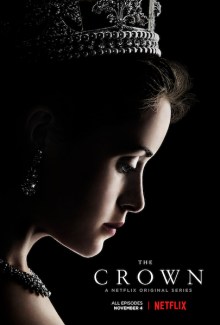 This month, I have mostly been missing the most expensive TV show ever made*, Netflix’s much-discussed The Crown. I don’t know if they’ve been pushing it as much in the rest of the world as they did in the UK, but it certainly felt like it was everywhere… for about a week, as is usually the way with Netflix series. Also missed: the equally-discussed Netflix-exclusive new run of Black Mirror. Both of these are because I don’t keep up a permanent Netflix subscription, but between them, the forthcoming Gilmore Girls revival, and the Series of Unfortunate Events remake in January, I will be signing up again late in December (using the free month voucher they had in the Radio Times, hurrah!)
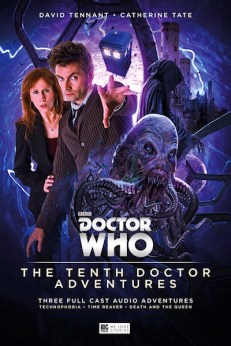 One of Doctor Who’s most popular eras is revived this week, as David Tennant returns to the headline role for the first time since
  The first is Technophobia by Matt Fitton, which is set in our recent past (and therefore Donna’s near-future) when the new M-Pad tablet computer seems to be causing the populace to forget how to use technology. Tennant and Tate hit the ground running — it’s a cliché, but it really does sound like they’ve never been away. Their sprightly performances contain little of the stilted “I’m reading this script aloud for the first time” acting that sometimes plagues audio drama. Fitton captures the style and tone of their single TV season to a tee — if they’d done a second year together, you can well believe this as its first episode. Even Howard Carter’s incidental music is a mostly-fitting substitute for Murray Gold’s iconic work.
 The middle tale is sci-fi adventure Time Reaver by Jenny T. Colgan, a best-selling romantic novelist who’s turned her hand to multiple Who projects (including a 10th Doctor and Donna novel published last week to tie-in with these dramas). For me, this was the weak link of the trilogy, though it’s by no means bad. There are some fantastic ideas, but at times their inspirations show through too clearly, and the execution is sometimes lacking. This was Colgan’s first audio drama, and dare I say it shows. Sequences like an action-packed barroom brawl are a little too ambitious to convey in an audio-only medium, and the dialogue is regularly forced to describe what’s going on. On the bright side, Mr Carter offers more magnificent sound design — the noises made by cephalopod villain Gully are immensely evocative.
 The final episode is the group’s historical outing, Death and the Queen by James Goss, and it may be the best of the lot. Our intrepid duo find themselves in the kingdom of Goritania in 1780, when it comes under siege from a destructive cloud that contains Death himself. Goss mixes comedy with peril in just the right quantities to create a story that is an entertaining romp but also manages to expose different facets of the Doctor and Donna’s relationship. If Fitton has bottled the essence of RTD, here Goss evokes Steven Moffat, with a time-jumping opening ten minutes that you can well imagine on TV, but which also work perfectly in audio. Things slow a bit later on, with the dialogue sometimes going in circles — a fault of all three of these plays, actually. They could’ve benefited from a trim to fit within the TV series’ 45-minute slot, rather than allowing the freedom of not having to conform to a schedule let them to slide to 55-ish.
 Ah, love a bit of Eurovision, even if the songs weren’t as good this year. Ok, you might say they never are, but there’s often one or two half-decent ones (I still listen to Conchita Wurst’s Rise Like a Phoenix sometimes, mainly because it’s the best Bond theme released in the last decade). Even then, the winner wasn’t the best of that middling bunch, though it probably had the best message. In fact, the best song of the night was the Swedish hosts’ half-time number, Eurovision-spoofing Love Love Peace Peace (watch it
 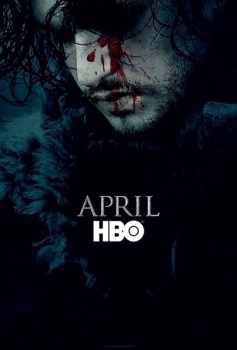 Good luck to you if you’re not watching Game of Thrones but still trying to avoid spoilers this year, with the huge and widely-covered news that [REDACTED] was [REDACTED], or that [REDACTED] killed [REDACTED], or when [REDACTED] and [REDACTED] were [REDACTED] for the first time since [REDACTED], or when [REDACTED] was [REDACTED] but [REDACTED] the [REDACTED] and [REDACTED] of [REDACTED] in the process — even if more people seemed interested in discussing her [REDACTED]s.
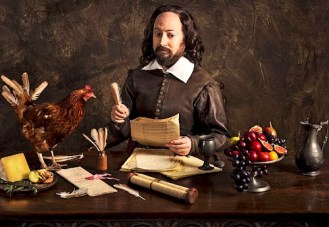 I can’t remember the last time I saw a new multi-camera sitcom that wasn’t either, a) a bit meta (like Miranda or Mrs Brown’s Boys), or b) a revival (like Red Dwarf X). I don’t know if that says more about the current TV landscape or the kind of things I watch, but either way it surprised me when that was the form Upstart Crow took. It’s just one element that gives it the feel of Blackadder, which I don’t mean as a criticism. Even if it feels a little dated in its execution, there are plenty of laughs — some easy, some clever — and, really, what more do you want from a comedy than to laugh? It may not be up to Blackadder’s highest highs (yet — there’s still time; you never know), but I’d wager it stands fair comparison to the classic’s comparatively-lesser instalments… which I mean to be a less critical assessment than it sounds.
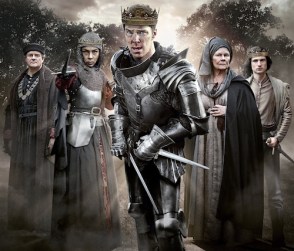 This month, I have mostly been missing the second run of The Hollow Crown, the BBC’s all-star adaptation of Shakespeare’s War of the Roses plays… though as I still haven’t got round to watching the first run from 2012, that’s no real surprise. In fact, Upstart Crow aside, I’ve not yet watched any of their still-running
 so I wouldn’t hold much hope of that being any better), but the film that most intrigued me when looking into this was from the ’70s: #10 on
 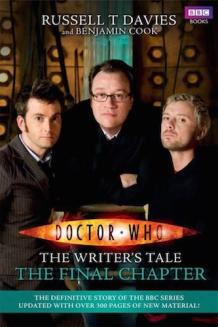 It’s not an autobiography per se, but




 100Films.co.uk