This TV column is over a week later than I intended it to be, meaning there’s loads to talk about — half a season of Doctor Who; two new ITV dramas; more Picard and Twilight Zone; I finally watched Good Omens, and got back to The Good Place; there’s even the Oscars; plus a bunch of other stuff. It’s an epic — over 5,500 words if you read the whole thing — so let’s crack on…

Doctor Who Series 12 Episodes 6-10
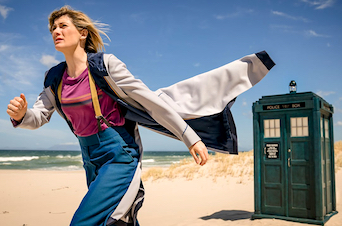 Most of the Doctor Who chatter of late revolves around what happened in the finale — no surprise there, given major revelations were teased in previous episodes this series. But before I natter about that, there’s a handful of other episodes to cover.
After a rocky opening to this 38th run of Doctor Who, with episodes varying wildly in quality, I think it settled down pretty well in the middle. That doesn’t mean it was a classic series by any means, though. Praxeus is a perfect case in point: it’s a solid episode, with a decent storyline, a few nice scenes, a handful of broadly well-drawn characters, and a reasonable amount of important-message delivery. As the second environmentally-themed plot in as many months, it suffers somewhat from the repetition, but how this handles its messaging about plastic pollution vs how Orphan 55 battered us around the head about climate change is a good example of how to do such things fairly well instead of very, very poorly. But there are also a handful of plot holes and character inconsistencies to niggle away at you. It’s as if they didn’t bother to employ script editors or continuity checkers this series — though the oversights are so glaring, anyone should’ve spotted them. So if all of this sounds like damning with faint praise… well, it is. In any other recent era of Who, this would be a middling-to-poor midseason filler; in the current era, it’s one of the better episodes.
There were more Issues on hand the next week in Can You Hear Me?, to the extent the BBC even put up their Action Line phone number at the end. It’s clear showrunner Chris Chibnall wants to Say Something with at least a couple of episodes every season, but he’s once again clashing with the past: Vincent and the Doctor already did mental health better. In itself, how Can You Hear Me handled the issues it raised was a mixed bag. Yaz’s backstory came out of the blue — it’s not even been vaguely alluded to before, and how it’s depicted in the episode left a lot up in the air. The consensus on social media is we were meant to think she was intending to commit suicide, but the episode soft-balls this in order to avoid triggering terms or visuals — a commendable aim, especially in a family drama, but it left the point entirely unclear. And the end of the episode, where the Doctor seems dismissive of Graham trying to open up about his cancer, drew actual complaints and the BBC having to issue a statement. If you have to explain the intent of your drama in a statement released afterwards… well. But ‘Issues’ aside, as a sci-fi adventure it was another solid attempt.
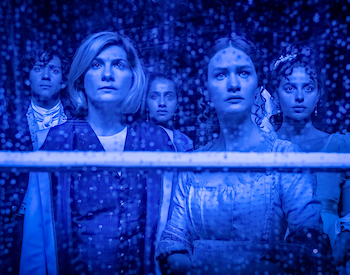 All of which means that the series’ penultimate story, The Haunting of Villa Diodati, was on a whole ‘nother level. For me, this might be the first genuine classic of this era. (If you’ve not seen it, spoilers ahead.) The first half is like a proper horror movie, complete with jump scares and other creepy effects (the dead-eyed little girl behind the door, but only when the lightning flashes… brr!) Naturally there’s a sci-fi explanation for it all, but even that was thrilling and chilling in its own way. It was the best use of the Cybermen since… er, their last story, because that was really good too. But the Cybermen are sometimes underserved by Who, wheeled out and disregarded as second-tier baddies after the Daleks, so I delight in seeing them used so well more often. Throw in a well-researched and depicted historical atmosphere, some good comedic asides (I thought the butler was superb), and a genuine sense of jeopardy (the Doctor stuck between a rock and a hard place with the decisions she has to make, and the lone Cyberman a towering presence), and you’ve got an all-round great episode.
Which leads us to the two-part finale. The first half, Ascension of the Cybermen, went down well with many, but I thought it was no great shakes. Like most episodes this season, it was solid mid-range Who, which ticks certain boxes whilst never in any way excelling. As epic finales go, seven humans vs three Cybermen is hardly a grand setup. And why do three Cybermen require two (quite large) spaceships, anyway? Was one full of those Cyberdrones — which looked thoroughly daft, so maybe they should’ve left that ship at home. The rest of the plot is a lot of faffing about to get us to the real point: the cliffhanger. Only, it’s not much of a cliffhanger, because it’s just the Master popping back up (which was inevitable) to say “now I’m going to tell you that thing I wouldn’t tell you earlier!” Wow. J.J. Abrams, you have a lot to answer for.
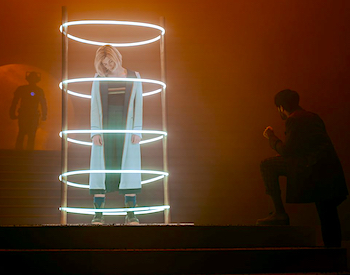 So the real point of it all comes in The Timeless Children, where the Master finds some new sources to rewrite the Doctor’s Wikipedia entry, then reads that revised version to her. I’m only half joking. Chibnall has managed to rewrite Doctor Who mythology in a way that both angers fans with its radical changes, and fundamentally makes no difference whatsoever. The Doctor used to be a mysterious alien from another planet who travelled the universe helping people. Now, she’s a mystery alien from another dimension who travels the universe helping people. Instead of being “just another Time Lord” who rejected the rules of their society and ran away to interfere, the Doctor is now a Special / Chosen One — the originator of the Time Lords’ ability to regenerate; her DNA copied and pasted into every other Time Lord… and then her memory wiped, so she grew up as just another Time Lord who rejected the rules of their society and ran away to interfere… but, y’know, was secretly special. I feel I should hate it, but, honestly, it was so guessable and so fundamentally immaterial that I just can’t muster the energy to care enough to hate it. It may yet go the way of “half-human” anyway, i.e. we’ll all just ignore and/or rewrite it as soon as someone other than Chibnall gets in charge.
As for the story of the episode itself — because it did kind of have one, away from the Doctor getting that massive info dump — it was, predictably, an adequate middle-of-the-road knockabout, with an underwhelming finale. When someone on Twitter can knock up an infinitely better resolution in comic strip form within hours of the episode ending (which is exactly what this is), you’re once again left questioning the actual ability of the current showrunner. They can’t even do a very good copy of a Russell T Davies-style cliffhanger/Xmas special tease. The Judoon imprison the Doctor… as a tease for a special starring the Daleks? “What?!” indeed.
Star Trek: Picard Season 1 Episodes 2-3
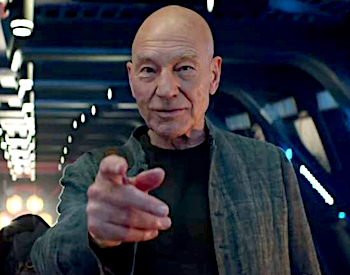 I’m a good few episodes behind on Picard now (episode 7 arrived this week), which is not because I’ve given up on it, but because it hasn’t engaged me quite enough to especially make time for it. It seems to have garnered quite the mixed reaction: the critics’ scores on Rotten Tomatoes are very strong; the user ratings on IMDb aren’t bad at all; but every time I see someone write about the show, on Twitter or another blog or what have you, it seems to be in criticism. I fall in between all these stools. There are things the show is doing well, or at least passably, but other bits that are awful; that feel like the worst of cheap made-for-syndication ’90s sci-fi, rather than the peak TV ‘prestige series’ it clearly wants to be.
I read one of the execs or writers or someone say that they consider the first three episodes to be their pilot, and that’s indicative of one of the show’s major problems. It’s not unique in that regard — it’s an attitude that’s become ubiquitous in this “we’ve really made an X-hour movie” era of TV making. Netflix series get away with it a bit because of their all-at-once model — if the makers say “the first three episodes are the pilot”, you can find two or three hours to sit down and watch all three as your first chunk. But Picard is coming out the old fashioned way, i.e. weekly, and so it takes three weeks to get through what should be the first hour or so. Even within the episodes, it’s paced like treacle. I don’t necessarily expect them to get through all the necessary setup in just 45 minutes — because it does establish a fair bit across these three episodes — but the same material in a double-length opener, instead of spread thin across three weeks? I think that would’ve been fine. Plenty of shows before now have had double-length pilot episodes — including, pertinently, TNG.
I’m currently wondering if Patrick Stewart regrets signing up to this. It took a lot to lure him back, and presumably it was the general shape of what they were aiming to do (rather than the specific qualities of the individual scripts) that got him there. And he’s committed to multiple seasons too, with a second already commissioned and strong rumours of at least a third. Perhaps the grand plan will become clearer as things go on. Or perhaps it is just another paced-for-streaming modern TV show, which obviously works for some people.
Flesh and Blood Series 1
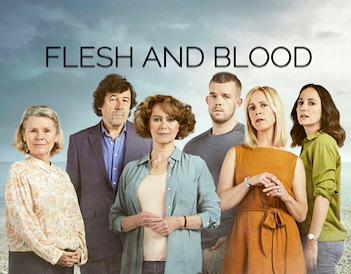 Between its short length (four parts), quality cast (Imelda Staunton, Stephen Rea, Russell Tovey), and condensed broadcast schedule (it was on four consecutive nights), this looked like a miniseries… until a last-second cliffhanger (plus some dangling plot threads) suggested there’ll be more to come. I watched it on that back of that cast and some strong reviews, which it only somewhat merited. It’s a decent family drama, about a 60-something widow getting into a relationship with a man her three grown-up children think might be conning her, with the added spice of a friendly/nosey next-door neighbour who might be a proper weirdo herself; but decent is about the extent of it — the cast elevate the material, which is fine but didn’t excite me otherwise. I expect I’ll keep watching if it comes back.
McDonald & Dodds Series 1 Episode 1
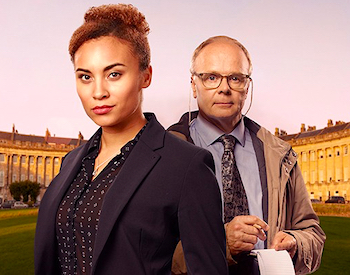 Normally I’d give a new ITV crime drama a miss, but this one is set and filmed in Bath (they got in my way one day by filming in the park I wanted to sit in for lunch, the bastards), so I had to see. It was… adequate. It’s about a hot-shot London detective who relocates to Bath, and lines like “that may be how things are done in London, but you’re in Bath now” were repeated to the point of absurdity. And don’t get me started on the accents (one local review derided the programme for thinking we all speak like Hobbits). Yet, inexplicably, it seems to have gone down quite well with viewers, which just goes to show you can’t trust the general public to judge anything. It’s only two episodes, so I’ll watch the second (if only to see what other recognisable locations they trot out — it makes a real point of showing off where it was filmed), but that might be my limit.
Good Omens
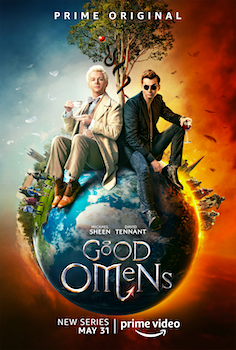 This six-part adaptation of the beloved fantasy novel by Terry Pratchett and Neil Gaiman debuted on Amazon last May, and by rights I should’ve been all over it from day one — I read the book as a kid, and loved it enough that I used to cite it as my favourite novel (the only thing that changed that was the fact it’s been decades since I last read it). But, as regular readers will know, life has got in the way of my viewing choices over the past year or so, and it was in fact that level of attachment that stopped me watching it — it needed my full attention. Obviously, that time has come.
The downside of all the waiting is that I perhaps built up expectations the series couldn’t hope to match. To say it was a disappointment would be going too far, but it didn’t blow me away in the manner the book did when I was ten-ish. It couldn’t, shouldn’t have been expected to, really. But there’s an awful lot to like here. In the lead roles of an angel and demon, respectively, Michael Sheen and David Tennant are fantastic, both individually and as a double act. There is much quirkiness and craziness to revel in, and while it’s not often laugh-out-loud funny, it regularly tickles your amusement centres with its absurdity. There are some bravura touches as well, like the 30-minute pre-titles to episode three. On the downside, at six hours it seems a little long, and there’s way too much voiceover narration — Gaiman’s true calling as a novelist rather than screenwriter showing through, I feel.
Maybe it’s a case of “the book is better” (as I say, I haven’t read it for yonks), but there’s still an awful lot to like about the adaptation. Those without a preexisting attachment to the novel may get more out of it than I did thanks to not bringing baggage. Personally speaking, someday I’ll watch it again, and hopefully having watched it once will mean it’s less weighed down by my expectations and I’ll enjoy it even more.
The Good Place Season 3
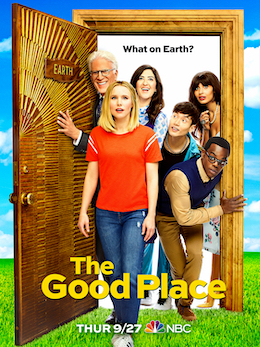 “Holy fork,” I said to myself when I saw that the series finale of this had aired at the end of January — I’d forgotten how much time had passed since I last watched it. If you’ve still not seen any of the show yourself, look away now — it’s the kind of series you want to experience knowing as little as possible, and if you read about later seasons before you’ve seen earlier ones it’s just gonna ruin stuff. (I know that sounds self-evident, but it applies to some shows more than others, and this is very much one it applies to.)
So, the third season picks up where the second left off (duh), with the gang back in their lives on Earth trying to prove they’re good people at heart. As I found with season two (which also started with a new status quo), these early episodes are okay — during this phase I like the show, but I don’t necessarily love it; I feel “it’s not as good as it used to be”, but it still entertains me, even while it seems to tread water a bit. But then, halfway-or-so through, the plot kicks into gear, and the season’s second half is a run to the finish line through an array of surprising and hilarious situations. The “back on Earth” premise robs something special from the show, I think — it’s only once they’re on course back into the afterlife that things pick up. Not that the early part of the seasons is a washout — like most of the best sitcoms, the joy is more in the characters than the exact situation they’re in, and the characters are still around — but something didn’t quite work for me (as I said, it’s not bad, just less good), and it’s only once they’re getting stuck back into the fantastical side of things that it really comes to life. It all builds to a finale that hits a surprisingly emotional note. And, knowing the next season is the final one, I’m looking forward to seeing where this crazy journey is going to end up.
Lucifer Season 3 Episodes 16-24
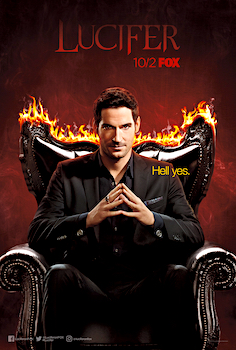 So, I’ve finally caught up on the Fox years of Lucifer — it was here that its original network cancelled the show (Netflix picked it up for a fourth season, recommissioned it for a fifth and supposedly final season, added more episodes to that fifth season, and now are reportedly lining up a sixth season too). I can see why fans were particularly enraged — the season ends on a massive change of circumstance that would’ve been a terrible place to leave it forever. Indeed, the most intriguing thing here is where it will go next, especially given the network change: Lucifer is an old-fashioned network procedural, as much concerned with case-of-the-week crime stories as it is with arc plots and the supernatural goings-on of its angels-and-demons universe; and that was to be expected when it was on an old-fashioned network, but now that it’s on Netflix, the home of bingeing, will it shift its emphasis?
That’s a question for next season, anyway. As for season three, it suffered a different fault familiar from network series of old: struggling to pace an arc plot across a mammoth 24 episodes. It actually went rather well at first (even if certain revelations were glaringly obvious), but by this final stretch it’s spinning its wheels a bit, trying to delay the finale-sized events for, well, the finale. I mean, one minute Chloe and Pierce are on course to get married, then he’s calling it off, then it’s back on, then she’s calling it off… pinging back and forth, one episode to the next; swinging from one major-life-choice extreme to the other from week to week. That’s something else the more concentrated Netflix runs (season four is ten episodes, season five will be two halves of eight each) will hopefully improve upon.
The Twilight Zone ‘Best Of’
 Jordan Peele’s new version of The Twilight Zone belatedly made it to UK screens a week or two back, almost 11 months after its US airing. I still haven’t watched any of it, but I am still going with cherrypicking the best of the original series.
I started my exploration of The Twilight Zone by watching the top ten episodes according to a couple of different websites. After that, I found more lists to create an average ranking (see last month), but I didn’t complete those new lists’ top tens — so that’s what I’ve done for this month’s selection. There were four new lists and, interestingly, all but one of their top tens contain episodes I hadn’t seen — you’d think that, between completing three top tens and a consensus ranking up to #16, I’d’ve seen every top-ten-worthy episode. That’s where personal preferences come in, of course, but it also shows how many great episodes of The Twilight Zone there are. Across the seven top tens there are 29 different episodes, and the only two that are included in every one are The Monsters Are Due on Maple Street and Time Enough at Last. 15 episodes appear on just one list, including all six I’m reviewing today.
Anyway, enough of my statistics preoccupation — some episodes! The highest ranked among these is The Dummy, which is #2 on Buzzfeed’s list. It’s about a ventriloquist who thinks his dummy is talking to him — is it, or is it his inner demons? A sentient ventriloquist’s dummy is a none-more-creepy idea, and the episode does an interesting line in “is it real or is it in his head?”, but it didn’t quite come together in a satisfying enough way for me. Sure, there’s a somewhat chilling final beat, but I didn’t feel like the rest of the story quite got there, more jumped to it. The second best episode of the entire show? Not even close. Though it does have one of host Rod Serling’s coolest on-screen intros.
Next up is also from Buzzfeed: their 6th place choice, Long Distance Call. Five-year-old Billy loves his grandma, and she loves him, somewhat to the chagrin of his mother. But then grandma dies, her parting wish that Billy could come with her. He starts to spend a lot of time playing with a toy telephone she gave him… and who’s he talking to? Grandma, of course. It seems like it’s just a child’s way of dealing with grief… until Billy runs in front of a car, saying someone told him to do it. It’s a strong idea for an episode, with some neat developments along the way, but it feels in need of a closing act — a final plot beat to resolve Billy and his telephone. We can extrapolate one from what happens (spoiler: by the end, grandma isn’t on the line any more), but it would be nice to see Billy realise this. And it would be effectively Twilight Zone-y as well, helping to underscore the magical realism with a final question: has Billy finished grieving and is ready to move on, or were the father’s pleas answered and grandma stopped calling? Add that final scene and this would probably be one of my most favourite episodes. As it is, it’s a very strong almost-but-not-quite.
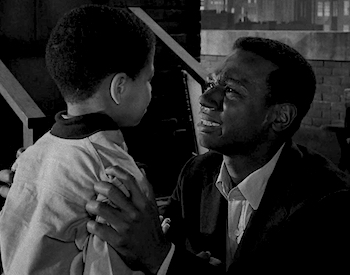 Moving on to TV Guide’s 50 Essential Episodes now for three picks. First, their #4, The Big Tall Wish. It’s a significant episode in the history of television because it features a nearly all-black cast in a story that isn’t predicated on their race; consequently, it was awarded the Unity Award for Outstanding Contributions to Better Race Relations. Critics rank this one fairly well — it’s also 18th on Screen Crush, 32nd on Paste, and 33rd on Buzzfeed — but on audience-ranked lists it’s much lower: 127th on IMDb; 119th on Ranker. The racism of audience rankings, so regularly visible on new releases, truly knows no bounds. Anyway, it’s about a beat-up ageing boxer hoping for one last shot at glory, and the young kid who believes in him — and who also believes his wishes come true, so he uses one to help the boxer win his fight. I really liked the setup, which plays as thoughtful and groundedly dramatic, with the suggestion of magical realism as opposed to outright fantasy. It’s well directed by Ronald Winston (one of three contributions he made to the series, including The Monsters Are Due on Maple Street), from an interesting use of a mirror in the opening, which helps to enliven what would otherwise just be a scene of two people chatting, to a striking way of visualising the fight sequence. At first I was unimpressed about where the episode eventually goes story-wise, but after a bit of thought I’ve come round to it more. It is, of course, metaphorical, rather than merely following some made-up rules of magic, and therefore has something to say about belief.
Right after that in 5th is Deaths-Head Revisited, the story of a former Nazi captain going for a nice little holiday to Dachau, where a nostalgic wander around the old concentration camp turns into something he didn’t anticipate. It’s easy to forget nowadays, but this was made just 17 years after the end of the war. That sounds like quite a long time, but it isn’t really — it’s like something now relating to events from 2003. In fact, just look to a recent cinema release: that exact period of time gets you from Bad Boys II to Bad Boys for Life. I know that’s an insanely trivial comparison, but hopefully it makes my point: 17 years can be no time at all. Indeed, on the audio commentary by author and TZ expert Marc Scott Zicree and his mate Neil Gaiman (yes, that Neil Gaiman), they note how contemporary this issue was at the time: Judgment at Nuremberg had just been in cinemas; Eichmann had been tried but not yet sentenced. And this bit of trivia from IMDb: “due to religiously-inspired antisemitism that existed in the US at the time, none of the prisoners are shown wearing the yellow Star of David, which the Nazis made Jewish prisoners wear at Dachau.” Just 17 years after the Holocaust, and antisemitism was that present again. Chilling, isn’t it? And, today, we have our own problems with the resurgence of the Far Right, rendering these kinds of stories timely once again. This is as strong an example as any. As Gaiman says on the commentary, “it has real content. It’s something that leaves you with an emotion. It leaves you feeling something. It leaves you thinking.” Gaiman rationalises the events of the episode as being that “on some deep level he [the Nazi] had enough of a soul that he went back to the place of his crimes, realised what he’d done, and went mad.” Perhaps, but I think it’s more about the Nazis’ unending hubris: he thinks he can revisit the camp with impunity, to revel in the glorious memory of his deeds; but instead he is punished, and he’s not been hunted down for this punishment — it only happens because he has the gall to return.
 On a lighter note, in 9th place at TV Guide is Twenty Two. I say “lighter” — the subject matter isn’t as heavy, but this is a creepy episode. It’s about a woman in hospital who has a recurring nightmare about visiting the morgue, but she’s convinced it’s not a nightmare, it’s happening. It’s the enactment of her nightmare that is genuinely creepy (just imagining having to ‘live’ it gives me chills), and the idea of not being sure what’s dreams and what’s reality is a very Twilight Zone concept. Unfortunately, some of the specifics are weak. Whether it’s a nightmare or not would be easy to disprove, considering it includes details like her breaking a glass every night, or that the morgue is room number 22 — if it is, how does she know that? (Her doctor does eventually realise this… after days of hearing about it.) And as there’s nothing else wrong with her, why not discharge her — the nightmare is so location-specific that it couldn’t happen at home. Eventually there’s a twist, and it’s a good’un, pushing the concept somewhere logical (within the bounds of paranormal ‘logic’, anyhow) and retaining the creepiness. (There’s also a question about whether it inspired a much later film series, with which it shares many notable similarities, but to say more would be a whopping spoiler.)
Another point about Twenty Two is that it’s one of a handful of episodes they shot on video to save money. Well, it may’ve saved some dough, but it looks like crap, even by the standards of video productions — it looks like it was transferred from a VHS copy. Maybe tape was really crummy back then (I swear other ’60s taped productions, like Doctor Who for example, don’t look this bad), or maybe it’s been poorly preserved, or maybe it’s just a shoddy transfer on the Blu-ray. In the end, only half-a-dozen episodes were made this way because they weren’t happy with the results — understandably! Sometimes money isn’t everything. But it’s interesting how much it’s shot like a video production. The shot choices aren’t like a normal film episode but on videotape; instead, it’s got all the kinds of camera moves and slight adjustments and whatnot you almost subconsciously recognise from live / minimally-edited TV. (Incidentally, Long Distance Call is another videotaped episode, but I watched that after this one so had fewer thoughts on the technical presentation.) And yet, the underlying episode is so good that it overcomes the technical limitations. No, the problem is the logic gaps. They may seem minor quibbles, but if they were ironed out it would improve the whole episode. For me, fixing them would make this a 10-out-of-10, but as-is it’s more of an 8.
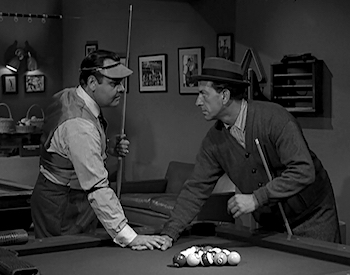 Finally for now, the one outstanding top-ten-er from Thrillist’s ranking — their 8th pick, A Game of Pool. It’s about a pool shark who thinks he’s better than the player everyone else considers to be the greatest, but that guy’s dead so he can’t prove it… except, of course, he’s in the Twilight Zone. Some episodes save their Twilight Zone-ness for midway or final-minute reveals, but others put it front and centre, and this is one of them: a game of pool with a dead man! But it still has one of the show’s trademark ironic twists at the end, to teach us a lesson. That said, I didn’t think it landed as well as some other episodes, because it’s a bit of a fantastical warning rather than a pure morality play. There’s an alternate ending (included on the Blu-ray as both a narrated screenplay and a clip from the ’80s remake, which used that ending instead), which was screenwriter George Clayton Johnson’s original and preferred conclusion, and it’s that alternative conclusion that’s stuck with me more. Of course, the advantage of things like special features is we kind of get to have both versions; we can pick our favourite, or even consider both, like alternate timelines — how very The Twilight Zone.
The 92nd Academy Awards and
The British Academy Film Awards 2020
 On Twitter in the run-up to the ceremony itself, there was a general acceptance that (a) Parasite was the best picture of the year, and (b) Parasite was not going to win Best Picture. As far as I could see, there was a sort of genial acceptance of these facts, which made a nice change from Film Twitter’s usual condemnation of everything. But then, blow us all down, Parasite did actually win! It’s noteworthy for all sorts of reasons — primarily because it’s the first ever non-English-language film to win Best Picture at the Oscars. It was also only the third time that the Palme d’Or and Oscar have gone to the same film. And director Bong Joon Ho became only the second individual to win four awards at one ceremony (after Walt Disney, and he did it across four different films). As for the rest of the ceremony, most of the other gongs went where expected, leaving 1917 the major victim of Parasite’s surprise success. But it still took home three well-deserved technical trophies, whereas Netflix’s The Irishman (which had the same number of nominations, ten) was shut out entirely.
There were even fewer surprises at this year’s BAFTAs. Maybe Klaus winning Best Animated Film, but then the British Academy are always more resistant to the dominance of Disney/Pixar in this category than our American cousins (I think of Kubo deservedly winning a couple of years ago, for example). Of course 1917 won Best Picture — it was the favourite anyway, but it was also British, and that does sometimes sway the local vote. Not so in the acting categories, which went to the expected sources. I thought Graham Norton was a good host, too. He’s a natural fit for this kind of thing, and so while not every line quite landed, his hit rate was much higher than other recent hosts. I hope he returns next year.
Also watched…
Death in Paradise Series 9 Episode 3-8 — The back half of this run introduced a new lead detective (the show’s fourth), played by Ralf Little. His quirk is that the island’s heat / animals / etc cause him all sorts of irritations and rashes. I can relate. Other than that, it’s business as usual for the sunny, silly murder mystery.
The Goes Wrong Show Series 1 Episode 6 — A final recommendation for this most excellent comedy, which went out on a high with one of its best episodes: 90 Degrees, which refers to the heatwave occurring during the story, but was “misinterpreted by the set builders” so one of the main sets is on its side. Hilarity ensues. The whole magnificent series is still available on iPlayer, it’s also out on DVD, and a second series has been confirmed. Hurrah!
My Dad Wrote a Porno — A one-off HBO comedy special spun off from the popular podcast. I’d vaguely heard of said podcast (I don’t really do podcasts), and apparently it’s very funny, so this seemed worth a punt. And I did enjoy it, overall. I’ve read that it’s not as good as the real thing, though, so maybe I should get onto that.
The Rookie Season 1 Episodes 1-6 — I remember being interested in this when it was first announced, because it starred Nathan Fillion (so enjoyable in both Firefly and Castle) and had an interesting-enough premise (middle-aged man joins LAPD as their oldest ever rookie), but then I kind of forgot to keep an eye out for it — it’s on season two now and I’m just getting started. It’s an above average police drama, I’d say, and it’s a nice change that it’s not about detectives solving a murder of the week.
Things to Catch Up On
 This month, I have mostly been missing Noughts + Crosses, the BBC’s high-profile adaptation of Malorie Blackman’s beloved alternate-world young adult novels. It seemed to go down very well on Twitter when the first episode aired, and the whole series is already available on iPlayer, so I’ve no excuse not to make time for it next month (other than all those Picards I have to catch up…)
Next month… Disney+ finally comes to the UK on March 24th, and with it The Baby Yoda Show The Mandalorian. Plus, a different tack in my viewing of both The Twilight Zone and Doctor Who.


 Favourite Film of the Month






 This year’s Doctor Who special felt like a bid by showrunner Chris Chibnall to keep fans happy. Popular character Captain Jack Harkness is back, properly this time — after
  With theatres mostly shut this November and December due to Covid restrictions, the UK’s traditional pantomime season was a write-off. But where there’s a will there’s a way, and so an all-star bunch of actors and entertainers (including the likes of Olivia Colman, Helena Bonham Carter, Tom Hollander, and Anya Taylor-Joy, plus multiple surprise cameos) came together over Zoom to record this hour-long panto in aid of Comic Relief. (FYI, there are two versions available: a 60-minute one that aired on BBC Two, and
 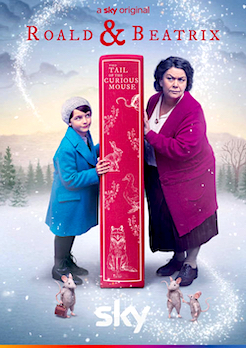 Sky’s big special this year was this based-on-a-true-story tale of when a young, bereaved Roald Dahl went on a trip to meet an ageing Beatrix Potter. Two of the great British children’s authors meeting up at very different points in their lives? It’s a wonder no one’s thought to film this before. Although, based on the evidence here, the meeting was fairly short and inconsequential — that they met is an interesting bit of trivia, not a defining moment in either’s life. To get this anecdote up to barely-feature-length (it’s just over an hour without ads), there’s a lot of expanded backstory on both sides. The Roald side feels like it must be broadly true — it’s all about him (and his mother) struggling to cope with the deaths of both his sister and father — but the Beatrix side feels dreamt up to balance it out — it’s just about her arguing with an agent about the contents of her latest book. Eventually, these threads converge on the eponymous pair’s brief meeting… and that’s the end. It’s a slight and gentle film, but it made for moderately charming Christmas Eve fare.
 As usual, the schedules were full of sitcoms and panel shows offering half-hour doses of festivals merriment. Highlights included a fourth Christmassy edition of The Goes Wrong Show, in which the accident-prone Cornley Polytechnic Drama Society turned their attention to The Nativity, with predictably disastrous — and hilarious — results. I get that Goes Wrong is too silly for some, but it hits just the right note for me. A more heartwarming tone was struck by the Ghosts special, in which Mike’s overbearing family coming to stay (clearly not set this Christmas, then). In keeping with the style of the recent second series, their presence prompted flashbacks to the life of horny MP Julian, which, via a series of kinky sex parties, delivered a message about appreciating your family while you can.
 This Christmas, I have mostly been missing Black Narcissus, the BBC’s three-part re-adaptation of a novel most famous for being adapted into a film by Powell & Pressburger. It’s on iPlayer in UHD now, which is usually an incentive for me to catch it. Talking of three-part re-adaptations, I also didn’t watch Steven Knight’s version of A Christmas Carol — that was on
 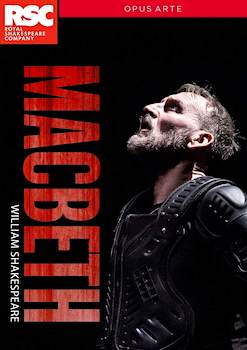 This Royal Shakespeare Company production from 2018, starring Christopher Eccleston and Niamh Cusack, has apparently been
  Having really enjoyed Sloss’s two Netflix specials
  After three seasons on network TV (or Amazon Prime Video here in the UK), Lucifer fell prey to
  I used to love Jonathan Creek back in the day. It was a huge hit, too, gaining high viewing figures and a BAFTA award. On the surface it doesn’t look so special: two mismatched individuals solve murders. But it’s the execution that’s different: these are all “locked room” mysteries, and rather than interview a small array of suspects to guess who did it, they must work out how the murder was even physically possible. Creek is a magician’s trick designer, and the stories kind of work like magic tricks: something seemingly impossible that has a hidden rational explanation. Personally, that’s right up my street, and while some elements of the show are obviously dated (the hairstyles; the cars; the pace is leisurely by modern standards), I think it holds up pretty well.
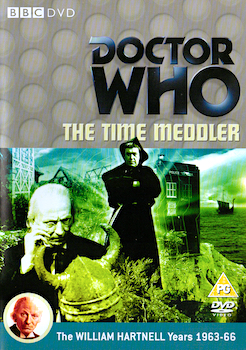 Last month, Doctor Who Magazine ran a Twitter ‘world cup’ to find the most popular stories starring the First Doctor. Many of the usual suspects did well, but I was surprised to see The Time Meddler wind up
 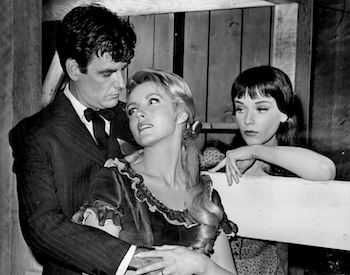 This third selection of episodes deemed the series’ worst (according to
 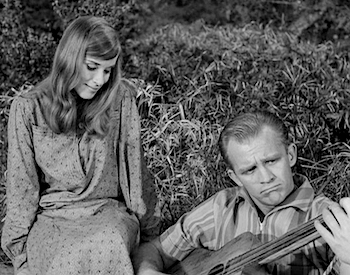 The next episode in our rundown is also based around a song: Come Wander with Me, in which a wandering singer attempts to buy a folksong from a young woman, only to find he might be living the lyrics… maybe. It’s a bit unclear what’s really happening, or why. It’s got some nice ideas, with mysterious characters, the haunting song, and some atmospheric direction by Richard Donner, but it comes to no kind of conclusion. How has this happened before? Has it happened before? Why is it happening again now? The episode barely even begins to ask those questions, never mind answer them; and not in a Lynchian “it’s up to your interpretation” way, which would be fine, but it doesn’t even seem to be aware those questions exist. Frustrating.
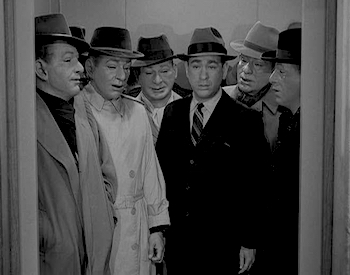 The ‘hero’ of The Mind and the Matter hates people. They bump into him on the subway; they squish against him in the elevator; they accidentally pour coffee over him at work. If he had his way, all the people would just disappear. After he reads a book about the power of the mind, he instantly gains the power to make his thoughts real (no practice required, apparently), and so immediately does away with everyone else. Hurrah! But after a morning’s work in peace and quiet, he’s bored, with no idea what to do. So the first thing he imagines to enliven his world is… an earthquake. Um, what? Unsatisfied with imagining different weather phenomena, and apparently unable to conceive of anything else whatsoever to occupy his interest, he decides to fill the world with people just like him. That results in a world full of grumblers and moaners, which he finds even more distasteful than how it was before — so he just puts it all back. It’s almost a lesson in what happens if you give unlimited power to unimaginative people… except that’s not the point the episode actually wants to make, so it doesn’t really make it. Instead it’s going for “this world isn’t perfect, but it’s better than the alternative and there’s a lot to like”. But it doesn’t make us feel that, it just tells us it. Heck, even the character doesn’t feel it — he’s just as miserable at the end as he was at the start. The whole affair is sort of an infinitely stupider rehash of the classic
  Adapted by James Graham from his own West End play and directed by Stephen Frears almost as if it were a movie (note how only the first episode has a proper title sequence), Quiz is the story of Major Charles Ingram, who in 2001 went on Who Wants to Be a Millionaire? and — allegedly — cheated his way to winning the million-pound jackpot with the help of his wife and someone in the audience coughing to indicate correct answers. But Quiz takes its remit wider than this, showing how Millionaire was born and spawned a nationwide community of quiz enthusiasts determined to game the system and make it onto the programme — and once on there, cheat in their own ways.
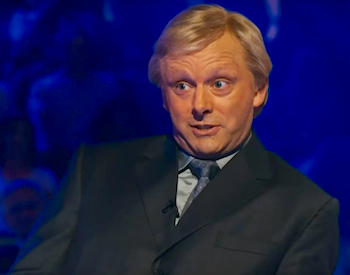 Indeed, even as there are serious events (watch out for the undeserved fate of the Ingrams’ pet dog), Quiz is consistently very funny. There’s a gag in the closing seconds of episode two (punctuated by a smash cut to black) that is golden. Michael Sheen’s uncannily spot-on impersonation of Chris Tarrant will also tickle anyone familiar with the man — i.e. UK viewers, but I guess it won’t translate internationally. Matthew Macfadyen is more understated but also excellent as Charles Ingram, while Helen McCrory burns up the screen as their barrister later on. Those are the obvious standout performances, but the whole cast are on form, in particular Mark Bonnar as one of Millionaire’s exec producers. He’s consistently superb in everything I’ve seen him in (if you haven’t, you should definitely watch
 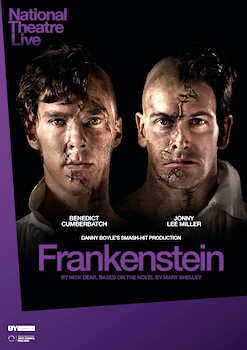 As theatre goes, this is a blockbuster: directed by Danny Boyle and starring Benedict Cumberbatch and Jonny Lee Miller, with the actors alternating who played Victor Frankenstein and his Creature for each performance. One of each was filmed for the National Theatre Live cinema screenings, and for the lockdown National Theatre at Home release they also made both available.
 The most recent missing story to be animated (see
 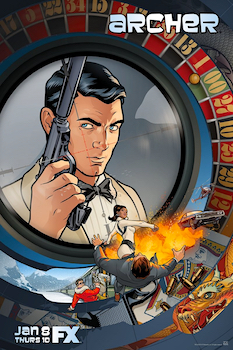 When I watched Archer’s fifth season (aka Archer Vice), I was picking it back up after years away and was set to continue it. That was
  In
In  In 153rd is The Whole Truth, which is about a car that’s been haunted since it came off the production line — although this one’s considerably less threatening than
  The lead actor is Pat Hingle, of Commissioner Gordon in
  This month, I have mostly been missing Killing Eve, the third season of which is currently airing between iPlayer and BBC One. For the first two seasons we had to wait until after it had finished in the US so they could put the whole lot up on iPlayer at once, which no one noticed during season one but drew a lot of criticism during season two (you can work out why, I’m sure). Consequently, I binged those first two seasons (indeed, I came to it late, so
 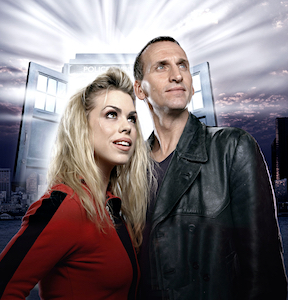 If you’re active (or looking in the right places) on social media, you may have noticed that there have been a bunch of Doctor Who watchalongs happening recently — you know, where people from around the world all watch the same thing at the same time and tweet about it. Organised by Doctor Who Magazine’s Emily Cook to provide something nice for Whovians in these trying times, they’ve been rather a big success — they’re always all over the trending topics on Twitter, and big names from the show have been persuaded to sign up and join in. The most recent one, to mark the 10th anniversary of Matt Smith’s debut episode, saw all three of its stars (Smith, Karen Gillan, and Arthur Darvill), plus writer/showrunner Steven Moffat and director Adam Smith, sharing thoughts and memories during the episode. Plus some of them have been accompanied by new fiction or stuff dug out from the archive.
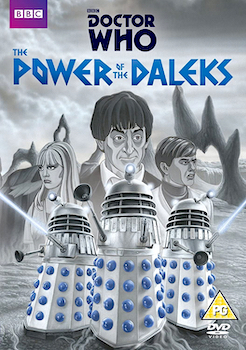 The first of the current wave of animations was The Power of the Daleks — a good place to start anyhow because it’s Patrick Troughton’s debut serial in the lead role. As he was just the second (canonical) Doctor, that makes the serial significant for the ground it was breaking — it’s the first time we’re introduced to a new actor taking over the series, something that’s become a staple of the programme (to the extent that the major plot lines and revelations of the most recent series were about the Doctor’s ability to regenerate). Sensibly, the production team paired their new leading man with the thing that had ensured the series’ popularity: the Daleks. And while the Doctor is dealing with a change of face and attitude, so are his enemies: these Daleks are keen to act as subservient aids to a human colony who have discovered their long-buried space capsule. Surely the evil fiends can’t’ve turned good?! (Spoiler alert: of course they haven’t.)
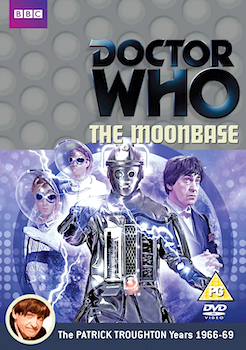 Next up by the series’ original chronology is The Moonbase — in terms of animation, Power was released in 2016 while The Moonbase was done in 2013; and half the serial survives, so it’s only half animated. It’s actually this older effort that looks better, the animation feeling much smoother and more realistic than Power, and making that look even more stilted and Flash-y by comparison. Apparently production on Power was incredibly rushed, and obviously they had to complete six episodes vs just two for The Moonbase, but the visual style is also slightly different; less obviously cartoonish.
 Much more successful in that department is The Macra Terror. No full episodes survive of this serial, so it’s back to 100% animation, and once again we have a change in style. It’s in widescreen, and it’s in colour, and the locations are bigger and more varied than they would’ve been on ‘60s TV, and the audio is so clean and clear it could’ve been recorded yesterday. It makes for a surreal viewing experience at first — are we sure this is a genuine Second Doctor story from over 50 years ago, not some recreation with perfect impressionists? After the previous animations tried to emulate the style of the original episodes, it’s a definite change of pace, but why not? It certainly brings some added dynamism to a few of the scenes — like Power, there are some all-but-silent sections; unlike Power, many of them now have some interesting visuals, which is most welcome. They had to make some trims here and there, I think for budget reasons (stuff that is inessential to the main narrative and would’ve been time consuming to animate), which is a shame (it would’ve been particularly fun to see the whole TARDIS crew dance a jig to escape at the end), but it is what it is.
 Well, it certainly has been an eventful first half to this series of Doctor Who! Never mind bringing back the Master and destroying Gallifrey (again) in
 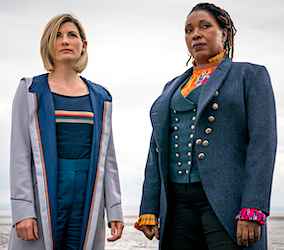 Social media and fan forums and whatnot have debated and analysed that revelation to death, so I won’t bother digging too much into all the possibilities of what it means — only time can tell. I will stake out this opinion, though: I am not a fan of the theory that she’s a pre-Hartnell version of the Doctor. The idea there were incarnations before the one we know as the first has always seemed disrespectful to me, somehow. Yeah, the Daleks ‘made’ Doctor Who, but Hartnell gave it his all too — without him week to week, and the effort he put into public appearances and the like, would the series have survived those early years? He’s not the only thing responsible for its success, and certainly not for its longevity, but he was The First — leave that be, thanks.
 The Star Trek series boldly goes where it’s never gone before: into the Prestige TV market. (Despite initial appearances, based on things like the reviews I’ve read and variably-sized season orders, I’m not sure Discovery was really “prestige TV” in the end.) Is it up to competing with the big boys of this peak TV era?
 I reviewed the first three episodes of His Dark Materials in
  It’s been
 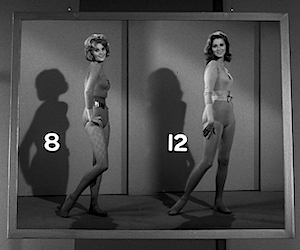 Moving beyond the top ten to complete the top 10% (i.e. the 16 best episodes), next is Number 12 Looks Just Like You (which, by-the-by, comes 10th on Thrillist). This is what some people might call “proper sci-fi” — an idea of the future spun out of what’s possible in the present, using it to present an analogy for the times we live in. And what is the analogy? In this case, there’s a few things you can read into it: mental health; conformism; the transition from childhood to adulthood; maybe all of the above; maybe something else. The only real downside is the episode hints at a wider world that isn’t explored. It’s mentioned in passing that the writing of Shakespeare, Keats, and others has been banned. Why? By whom? And while a bunch of middle-class white people are choosing which generic model they want to look like, what about other races? Class is less of an immediate issue because it seems this is a government-backed thing that everyone must undergo — but then, why do the lower classes get to look just the same as their ‘betters’? Surely there’d be different models depending on your social station? Never mind a 25-minute episode, someone could spin an entire series out of this… Still, having so much to ponder is one mark of a very good episode.
 Finally for now, the last episode in the top 16 (and the only one of today’s episodes not in anyone’s top ten), Nothing in the Dark. Probably best known for staring a young Robert Redford, it’s about an old woman who’s paranoid and agoraphobic due to her fear of meeting Death; but when Redford’s cop is shot right outside her door, she has to let him in to save his life. It’s a nice idea for a story, but (to loop back to what I was saying about The Masks) it feels a little slight in the execution. Half of the second act is taken up in a diversion with a demolition guy which is just that, a diversion. Still, there are very good performances from the two leads, and it comes with a well-meant little message by the end.
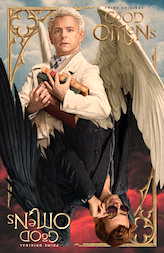 This month, I have mostly been missing Good Omens… again! I
  100Films.co.uk