
Whether they be director’s, extended, ultimate, or any number of strung-together adjectives someone in marketing thought sounded exciting, direct-to-home-media alternate cuts of movies are all the rage nowadays. They have been for quite a while, actually — thanks no doubt to the booming sales of the DVD era — so for today’s top ten I thought I’d run down some of the most effective. I don’t necessarily mean the best (these aren’t “the ten best films that happen to have extended editions”), but rather the ones that have the biggest positive impact on the end result — which is sometimes the same thing, of course.
I know the initially stated point of these top tens was to look back over the last ten years, but this time I’ve widened the remit to include all extended cuts, mainly because that only added one title. Losing out because of that is X-Men: Days of Future Past – The Rogue Cut, which does contain significant changes, especially to the climax, but didn’t really belong because I actually think the theatrical cut is smoother.

Léon
Version Intégrale
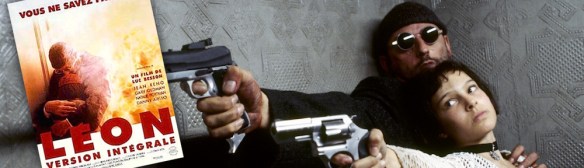
To undermine my introduction right away, the extended version of Léon doesn’t actually make massive changes to the movie. Some of the additions bolster character development, but the film wasn’t shortchanged on that in the first place. It is great though, but it’s also just more greatness. Does that mean it shouldn’t be here? Well, if you’re watching the US Blu-ray, it’s the longer version that has the proper title card, which is reason enough to prefer it in itself.
Watchmen
Director’s Cut

There are three cuts of Watchmen, but it’s the middle one that is director Zack Snyder’s preferred version of the film (aptly, given its subtitle). I’ve still not got round to the semi-experimental Ultimate Cut so can’t truthfully comment on whether Snyder’s right, but when I reviewed the Director’s Cut I asserted that, thanks to “a little extra room to breathe and a few worthwhile extensions, and in spite of the odd tweak that doesn’t work, this is the superior cut of the film.”
I Am Legend
Alternate Theatrical Version
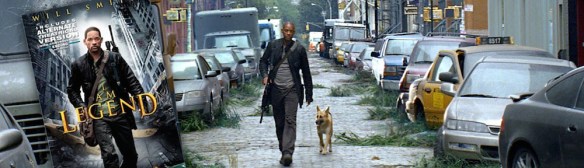
The extended cut of I Am Legend has one of the most meaningless subtitles of all — it wasn’t released theatrically, so how is it an “alternate theatrical version”? That said, “alternate” is definitely a more apt descriptor than “extended”: although this version is longer, the biggest change is a completely different ending. That makes a difference to the film’s tone, as well as paying off some subplots. But it only changes the movie so much — those misguided CGI creatures are still there, after all.
Salt
Director’s Cut
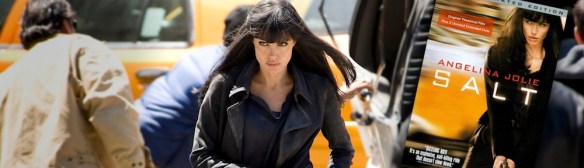
This middling action-thriller starring Angelina Jolie is not the first film that’s going to come to mind to most people (for any reason, ever), but it exists in three different cuts that make some striking differences. I discussed them in depth in my review, but on balance the one they labelled the Director’s Cut is best.
Alien³
Assembly Cut
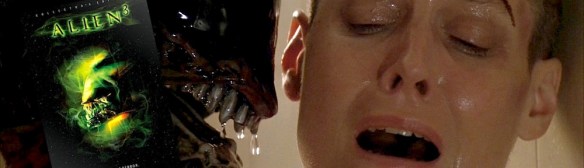
The second Alien sequel was a fraught production for a number of reasons, which wound up in an obviously-compromised theatrical version. A little over a decade later (doesn’t sound so long with hindsight, does it?) the original “assembly cut” was released — not a director’s cut because, understandably, David Fincher wants nothing to do with the movie. The different version doesn’t save the film entirely, but it does clarify some of it, thereby improving it.
The Lord of the Rings
Extended Edition
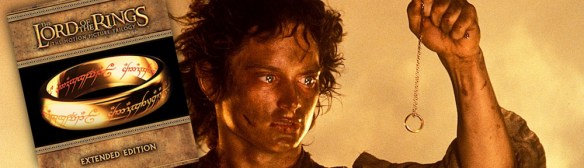
From Fellowship onwards, the extended versions of Peter Jackson’s adaptation of J.R.R. Tolkien’s epic are the preferred versions, deepening characters and expanding the rich world of the story. But by the time of the third and final movie, they’re essential: in a rare misstep, Jackson chose to completely excise one of the trilogy’s primary villains, Christopher Lee’s Saruman, from the theatrical version of Return of the King, so only in the extended version is the storyline of a major character actually resolved. That film won Best Picture nonetheless, which is why these aren’t ranked higher: the extended cuts are better, yes, but the theatrical versions are an incredible cinematic achievement regardless.
Sucker Punch
Extended Cut
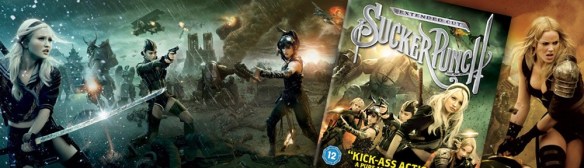
Zack Snyder again, with another director’s preferred cut only debuting on the home release. This time he had to cut the film for censorship, revising it multiple times until the MPAA gave it the necessary PG-13. In the process, he removed several lines and scenes that helped to clarify what the hell was going on, which is rather helpful in such a crazy-ass movie. I’ve never bothered with the theatrical cut, but — in its extended form if no other — I think it’s something of an underrated movie.
Blade Runner
The Final Cut
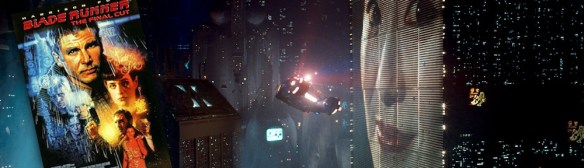
Arguably the daddy of all alternate cuts, Blade Runner’s so-called Director’s Cut wasn’t really anything of the sort — Ridley Scott was busy and couldn’t be properly involved, merely providing notes for a studio after a fast buck. Years later, he was able to do it properly, resulting in the aptly named Final Cut… which is kinda just a polished version of the earlier Director’s Cut, but there you go. (Incidentally, there are some people who prefer the theatrical version. I’ve still not got round to it myself, but… well, there are also some people who prefer the theatrical cuts of Lord of the Rings. What I’m saying is, there’s no accounting for taste.)
Batman v Superman: Dawn of Justice
Ultimate Edition

Guess who’s back? Zack Snyder’s third entry on this list is his most effective revised cut he’s yet done. There are aspects of Batman v Superman that mean some people will never like it, but it’s hard to argue that the Ultimate Edition isn’t an improvement, clarifying plot details and character motivations left, right, and centre. Seriously, though, what is it with Zack Snyder and cutting scenes that explain the plot?! At least when he does a director’s cut (which is most of the time) he really makes use of it.
Kingdom of Heaven
Director’s Cut
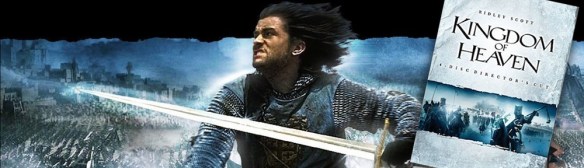
Guess who’s also back? The other great proponent of the director’s cut, Ridley Scott — though he’s more prone to using and abusing the term than Mr Snyder (the director’s cut of Alien is, famously, nothing of the sort). I’ve never seen the theatrical version of Kingdom of Heaven so can’t actually vouch for this myself, but, by adding a massive 45 minutes of material, Scott’s lengthier cut turned a theatrical dog into a film some regard as a masterpiece. I can’t think of another director’s cut that has ever instigated such a thorough reappraisal of a film’s critical standing.
Tomorrow: ten good scenes and no bad ones.
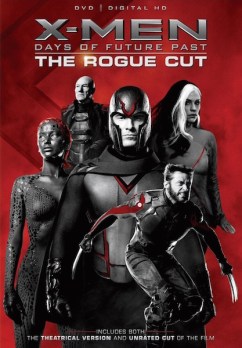 One of the big stories in the run-up to this fifth X-Men film’s release last year (my previous review is
 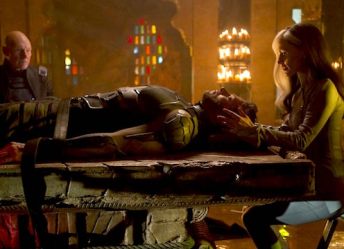 (though the theatrical cut only has 40 chapters, so I’m not entirely sure how that pans out). Most must be teeny extensions, however, and I look forward to
 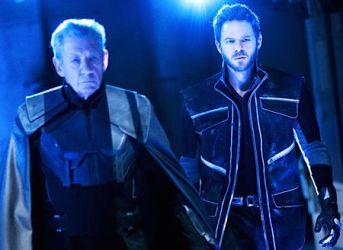 The Rogue Cut is worth seeing for anyone who enjoyed the theatrical version — and, in terms of a copy to own, the Blu-ray comes with both cuts and more special features (though it loses all the extras from the first release, including a few more deleted scenes) — but, unless you’re a huge fan of Rogue or Iceman, it’s not essential.
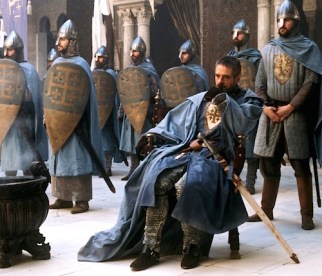
 Ridley Scott’s Crusades epic is probably best known as one of the foremost examples of the power of director’s cuts: after Scott was forced to make massive edits by a studio wanting a shorter runtime, the film’s summer theatrical release was so critically panned that an extended Director’s Cut appeared in LA cinemas before the end of the year, reaching the wider world with its DVD release the following May. The extended version adds 45 minutes to the film (and a further 4½ in music in the Roadshow Version), enough to completely rehabilitate its critical standing.
 A strong cast bolsters the human drama that sometimes gets lost in such grand stories. Bloom is a perfectly adequate if unexceptional lead, but around him we have the likes of Michael Sheen, David Thewlis, Alexander Siddig, Brendan Gleeson, and Edward Norton (well done if you can spot him…) There are even more names if you look to supporting roles. Most notable, however, are the co-leads: both Liam Neeson, as the knight who recruits Balian, and Jeremy Irons, as the wise advisor when he gets to Jerusalem, bring class to proceedings, while Eva Green provides mystery and heart as the love interest. Of everyone, she’s best served by the Director’s Cut, gaining a whole, vital subplot about her child that was entirely excised theatrically. It’s the kind of thing you can’t imagine not being there, and Scott agreed: it seems the chance to restore it was one of his main motivators for putting together a release of the longer version.
 (I’d wager
 A bunch of obstreperous actors are too much to handle for the director of a Vietnam war movie, so he dumps them in the jungle to shoot it with hidden cameras. Things go awry; hilarity ensues.
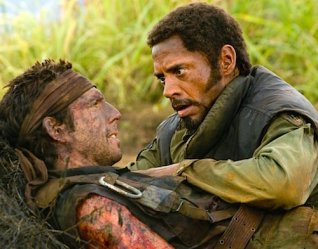 The film may run a little long in the middle, though I don’t think that’s the fault of this extended cut. It adds just over 17 minutes across many little changes and extensions
 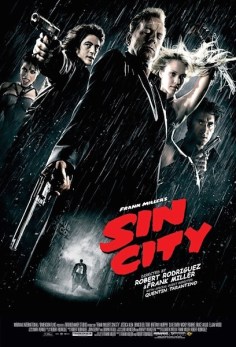 Adapted from a series of graphic novels by Frank Miller, Sin City is a noir homage, replete with high-contrast black-and-white cinematography, dialogue so hard boiled you couldn’t crack it with a sledgehammer, and all the requisite downtrodden heroes, corrupt authority figures, dangerous dames, etc. There’s also the very modern inclusion of shocking ultra-violence and nudity, but I guess a fair degree of that would’ve crept into classic noir if the mores of the time allowed — pretty much the point of the genre is the dark grubbiness of the world, after all.
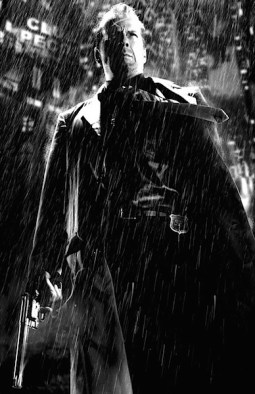 The DVD-premiering extended version, dubbed Recut & Extended (or, in the US, “Recut, Extended, Unrated”) is even more faithful to the comics than the theatrical version. Some of the books’ scenes that were excised are now included, and the structure has been rejigged to present each of the four stories one by one in their entirety (whereas the original version had a small amount of intercutting). The total running time is 17 minutes and 40 seconds longer, an increase of some 14.2%… which is a thoroughly misleading figure. As a presentational choice, each of the four stories is offered for individual viewing, plus option to “play all”. However, rather than that showing them as a single film, they play as four shorts back to back, with a full set of section-specific end credits rolling each time. The actual amount of new material in the film itself is
  For one, the second scene belongs more truly to The Big Fat Kill (the final story, starring Clive Owen’s Dwight and the whores of Old Town led by Rosaria Dawson). For another, because this recut purports to be in chronological order, The Customer is Always Right plays second. So we get 47 minutes of Bruce Willis protecting Jessica Alba from a paedophile in That Yellow Bastard, then we get a one-scene story that rightly belongs at the beginning (complete with title card, now 50 minutes into the ‘film’), then we get a scene that, actually, belongs in a completely different place. The next full story is The Hard Goodbye (the one with Mickey Rourke under a slab of prosthetics as Marv), followed by The Big Fat Kill — and it’s after this that the second scene with The Man belongs. Divorced of that context, the scene is robbed of almost all its meaning.
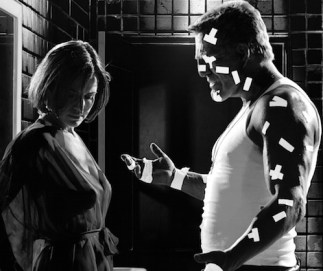 In the end, I enjoyed Sin City considerably less than I did nine years ago in the cinema. This is partly down to the restructure, but I’m not sure wholly so. I don’t think it’s aged particularly well, as things produced at the forefront of emerging technology are wont to do: some of the CGI looks dirt cheap, the shot compositions are often unimaginatively flat, and there’s an occasional internet-video style to the picture quality. It’s not just the visuals, sadly, with amateurish performances from reliable actors, possibly a result of the hurried filming schedule. Just because you can capture an entire part in a single day doesn’t mean you should. Then there’s Jessica Alba, who’s just awful here.
 None of the present additions are game-changing, and though some are good in their own way, there’s nothing noteworthy enough to compensate for the destruction of the original cut’s well-balanced structure. For the average punter — and certainly for the first-time viewer — the theatrical cut is unquestionably the way to go.
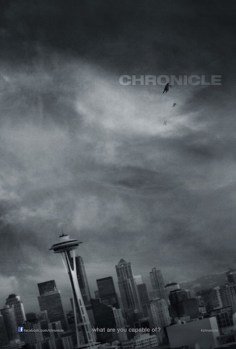 The birth of the “found footage” sub-genre and the resurgence of the superhero movie began around the same time, the former with
 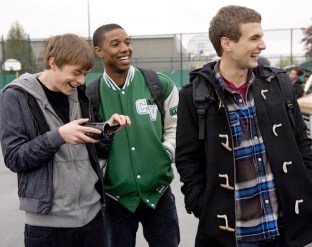 The story sees high school senior Andrew (Dane DeHaan) decide to start filming everything in his life, thanks to his borderline-abusive alcoholic father (Michael Kelly) and terminally ill mother (Bo Petersen). The same day (what a coincidence!), his cousin and only friend, Matt (Alex Russell), takes him to a party where, along with most-popular-kid-in-school Steve (Michael B. Jordan), they discover a hole in the woods with mysteries inside… Days later, all three begin to develop telekinetic powers, which they learn they can levy in various incredible ways — those ways being super, but largely without the heroic…
 This is even more pronounced in the extended version (“extended director’s cut” in the US), which includes over five minutes of extra bits that, in my opinion, make it a superior edit. Some are minor in impact, true, but there are a couple of short sequences with Andrew and Steve that deepen their relationship further, which enriches events at the end of act two. There’s also a moment that subtly prefigures the climax, and an extra bit in said finale that seems nigh-on essential to me. Considering the film still runs (just under) 90 minutes even with these additions, it’s difficult to see why they were cut in the first place. “Pace” is usually the rational for that, but if this is indeed a Director’s Cut then clearly Trank didn’t think they were an issue; equally, I can’t see why Fox would have objected. Still, they’re here to enjoy on Blu-ray…. though not on DVD… and I guess they’re not in TV screenings… Tsk.
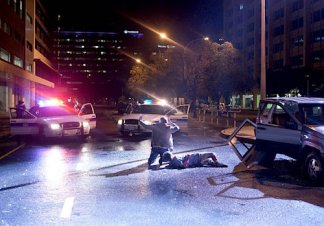 That said, spectacle it has. You wouldn’t expect that from a $12 million found-footage movie, but an epic duel through the streets of Seattle is one of the strongest climaxes to any superhero movie I can remember. It’s kind of like
  In the hands of many a desperate-to-get-noticed filmmaker, a found-footage superhero movie would likely have been a straight-to-DVD affair that could at best be described as “mediocre”. In Chronicle, however, Trank and co have crafted one of the best movies produced in either sub-genre. Most of the people involved — as well as the film they’ve all come from — can be classed as “one to watch”.
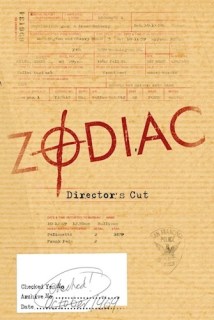 How time flies — I’ve been meaning to re-watch Zodiac ever since I
 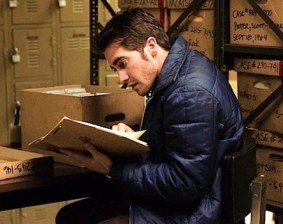 As the changes have little impact on the film’s fundamental quality, the points in
 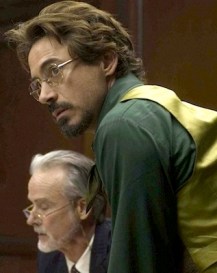 but the sheer weight of evidence the other way seems to leave little room for doubt. More so, then, is that the murders are done with before the halfway mark. That’s because it’s still following the story of the investigation, true, but a lesser filmmaker could have weighted it differently, rushing through Graysmith’s later enquiries in a speedy third act. Instead, Fincher’s focus throughout is on the people looking into the crime, and it’s as much the tale of their obsession — and what it takes to break their obsession, be it weariness or pushing through ’til the final answer — as it is the tale of a serial killer.
 and place-and-time subtitles too, but hey, sometimes you need specificity.
 So many consumers hold off for the DVD these days, especially with the added quality offered by Blu-ray, that the old answer of “what was released in the cinema” doesn’t necessarily hold true any more. Filmmakers know some will be waiting for the DVD, so are less concerned with releasing a studio-mandated, shorter, mass audience friendly cut into cinemas when their fuller vision can be found on DVD. Equally, the PR people know that “longer cut!” and “not seen in cinemas!” and other such slogans can help sell DVDs, and so may be forcing needless and unwelcome extensions onto filmmakers. Then there’s all those older directors who think they’re doing a good thing finally getting to tamper with their film 30 years on, who may well be misguided.
 There remains one argument for clarity, I think. How does one guarantee that, in the future, the ‘correct’ version remains accessible? With new formats always coming along, there’s no assurance that every cut of a film will be released; with TV showings, there’s no assurance the preferred version will always be the one shown (though there’s another argument for how much the latter matters considering they already mess around with aspect ratios and edits for violence/swearing/sex/etc.) But then, even if a filmmaker makes it clear that their preferred version is the one that only came out on DVD/Blu-ray, what chance is there that unscrupulous disc / download / unknown-future-format producers or TV schedulers won’t just revert to the theatrical version by default?
 I only watched
 100Films.co.uk