2011 #16a
David Fincher | 139 mins | Blu-ray | 18 / R
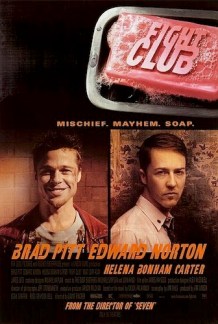 I used to have a friend who loved all kinds of action movies and rap movies and other kinds of violence-obsessed forms of entertainment. He once tried to watch Fight Club, in the wake of the praise poured upon it and no doubt interested in the visceral thrill of the fighting element, but got bored about halfway through and turned it off. He was not impressed. Please note that halfway through is certainly after the titular club, and all its associated antics, begins.
I start with this story because I’m now going to pick on Roger Ebert’s 1999 review of Fight Club. I don’t know if his opinion has changed in the intervening decade — a decade which has seen Fincher’s adaptation of Chuck Palahnuik’s novel quickly canonised as a generation-defining modern classic — but we’ll take his review as an example of all the critical ones (the reasonably critical ones, anyway — unreasonable critics are impossible to argue against after all), because he’s respected and because I can’t be bothered to trawl through too much more of the big pile of reviews Rotten Tomatoes offers up. But more so, actually, because I’d be here forever batting away criticism after criticism if I did.
Incidentally, the film has there an 81% approval rating. This is perhaps negated by the fact it includes more recent reviews — some are of the Blu-ray, for instance — but a debate about whether it should be an archive of original-release critical opinions or of all-time critical opinions is for somewhere else. My point is, critics who dislike Fight Club are in the minority (29 ‘rotten’ reviews vs 122 ‘fresh’ ones), so it might just be a little cruel to go picking on them all. Though rubbish like “Fight Club undermines any seriousness it might have harboured with an avalanche of smirky cynicism designed to flatter the hipper-than-thou fantasies of adolescent moviegoers,” doesn’t so much need rebuttal as offering of some literature to the reviewer. Plus it comes from a Christian magazine/website so it’d be a bit like picking on a kid with learning disabilities.
So, Ebert.
Of course, Fight Club itself does not advocate Durden’s philosophy. It is a warning against it, I guess
At least he starts here. To miss that would be… well, I’ll return to that point later. On the other hand, he’s surely using it to preemptively cut-off criticism of his criticism — Ebert is adept at predicting ways people might defend a movie and telling them they were wrong in advance, as we have seen.
Although sophisticates will be able to rationalize the movie as an argument against the behavior it shows, my guess is that audience will like the behavior but not the argument. Certainly they’ll buy tickets because they can see Pitt and Norton pounding on each other; a lot more people will leave this movie and get in fights than will leave it discussing Tyler Durden’s moral philosophy.
…whatever Fincher thinks the message is, that’s not what most audience members will get.
This is the primary reason I’ve chosen Ebert’s review to pick on, and it was this paragraph that led to my opening one. My guess is, the kind of person liable to buy in to Tyler’s moral philosophy and engage in similar fights will get bored by the movie and go watch something that’s more straight-up action (or just go get in a fight, of course). To say that only “sophisticates” will be able to comprehend the points the film is actually making does a disservice to most viewers. Now, I’m not going to be one of the first to jump to the defence of the great unwashed — when programmes like The X Factor rule our TV schedules it’s quite clear their cultural taste is highly questionable — but I don’t think you have to be exceptionally gifted to get what Fight Club’s driving at. 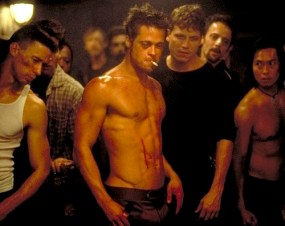 Perhaps I’m coming at it from too privileged a background? I don’t know. But I still don’t believe people would be so easily led as Ebert implies; and those that might be probably got bored and switched off.
Maybe at the time it was a genuine fear that Fight Club would inspire violence (a different review compares the potential effect to A Clockwork Orange’s over here), but history has proven it near groundless. In over a decade since its release, there have been no more than a handful of incidents one might directly and solely attribute to Fight Club’s influence.
And just maybe, it was already covering the thoughts of a generation — rather than being the spark that set them off, it was reflecting back a mentality that already existed and saying, “look, don’t go this far with that thought”. It’s not groundless to think that: Palahniuk interviewed young white-collar workers while writing the novel and widely found opinions which he worked into the novel, about the influence of a lack of father figures and the resentment of the lifestyles advertising promoted. All of this is carried over into the film.
In many ways, it’s like Fincher’s movie The Game… That film was also about a testing process in which a man drowning in capitalism (Michael Douglas) has the rug of his life pulled out from under him and has to learn to fight for survival. I admired The Game much more than Fight Club because it was really about its theme
Hm.
For better or worse, I think Fight Club is far more tied into its themes than The Game is. Fincher’s earlier film, as I discussed yesterday, is a well-made and entertaining thriller, and it does have a similar thematic basis to Fight Club — Douglas’ character is effectively stripped of his lifestyle to show how hollow it is and what he’s lacking as a human being. That just underscores the action, however; it adds something to the film, certainly, but there’s nothing there to lead viewers to “leave the movie… discussing [its] moral philosophy”. Fight Club, on the other hand, is more forward about its thematic points. Both the Narrator and Tyler spout philosophical tidbits at various points, and their differing reactions to the path they take considers this too. It still works as a story — it isn’t just facilitating an essay on the subjects of free will and consumerism — but it’s more present, and presents more to consider, and perhaps discuss, than The Game does.
Later, the movie takes still another turn. A lot of recent films seem unsatisfied unless they can add final scenes that redefine the reality of everything that has gone before; call it the Keyser Soze syndrome.
…the third [act] is trickery
Ah, the twist.
Despite what Ebert implies, Fight Club’s twist works. It makes sense. “Sense” in the sense that the characters are mentally ill and we’ve been let into their experience — quite literally, an unreliable Narrator — but that fits. Clues are littered throughout. You can argue they’re not fundamental to the story — most are lines or asides that hint at it — but I don’t think it’s a nonsensical turn of events. In fact, one could argue that it contains perhaps the film’s biggest point: beneath the veneer of consumer-focused office-working modern life, every man has a Tyler Durden who wants to put society to rights. The question becomes, should he be let out; 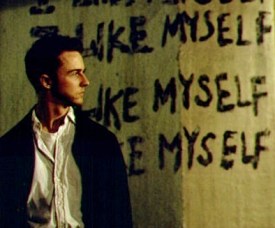 Fight Club explores what might happen if he were, but leaves it up to the viewer to decide if it turned out for the best (while strongly erring, despite what Ebert suggests, to the side of “no”).
The twist also calls to mind The Game again. Whereas knowing the end result of that film’s twist (or twists, really) can scupper it after only another viewing or two, Fight Club doesn’t suffer in the slightest from the revelation that… well, y’know (and if you don’t, that’s why I’ve not said it). You can watch it again and pick up the clues and see how it works — and, as I said, it does — but you can also still enjoy the film, its story and its ideas without the need for the twist to remain a surprise. A bit like Se7en, I suppose.
Another point that interests me here is the audience’s reaction to a filmmaker who uses twists. As we’ve seen, Fincher produced three films in a row that had considerable twist endings; two of them often number in lists of the best movie twists ever. So how is it that he didn’t gain a particular reputation for twist endings, whereas M. Night Shyamalan gained one after… well, one film. I’m not complaining about this — the constant need to provide a shocking last-minute rug-pull has gone on to scupper Shyamalan’s career — but the difference of reaction/public perception is intriguing. I’m sure there are reasons — the sheer size of The Sixth Sense’s twist relative to those in Fincher’s films (it’s only Fight Club’s, his third such film, that changes everything we’ve seen in the same way); the way Shyamalan appeared to court the reputation; and so on.
As a means of dealing with his pain, [the Narrator] seeks out 12-step meetings, where he can hug those less fortunate than himself and find catharsis in their suffering. It is not without irony that the first meeting he attends is for post-surgical victims of testicular cancer, since the whole movie is about guys afraid of losing their cojones.
That, however, is some reasonable analysis. I liked this.
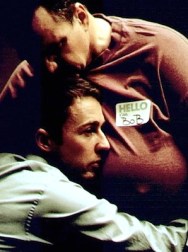 To round off this defence of Fight Club, let’s call up the BBFC (this is the point I said I’d return to). You may remember they cut four seconds of violence from the film (reinstated in 2007. Incidentally, the MPAA had no problem whatsoever with the violence but questioned some of the sex, such as Tyler being seen wearing a rubber glove. American values regarding sex/violence on film and TV are seriously questionable.) In 1999, when asked to ban the film for glamourising and encouraging the kind of behaviour it contains, the BBFC refused, and in no uncertain terms:
The film as a whole is — quite clearly — critical and sharply parodic of the amateur fascism which in part it portrays. Its central theme of male machismo (and the anti-social behaviour that flows from it) is emphatically rejected by the central character in the concluding reels.
Maybe it’s just me, but such a definitive statement — underlined by the relatively informal addition of “quite clearly” — from an authoritative body, one that is (theoretically) objective about a film’s quality in lieu of deciding which age groups its content is suitable for, feels unusual to me; and, by extension, worth taking into consideration. Not as the be-all-and-end-all of the debate, of course, but if the BBFC are prepared to dismiss such criticism of the film with a “quite clearly” — a “if you missed it, you’re dim” kind of phrase — then you have to think it’s pretty obvious.
A couple of stray points before I go:
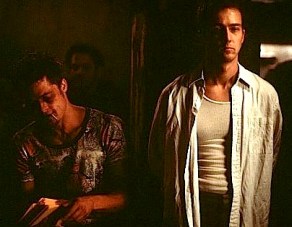 If you’ve not read it, know that the film keeps a lot of Palahnuik’s novel. The narration often takes it verbatim. With the exception of the ending — changed, for the better — it’s a remarkably faithful adaptation.
Fincher’s films often look great, but Fight Club is surely the most visually inventive. A list of exciting spectacles could be endless, but for some: the title sequence, pulling back from the fear centre of the brain, through the brain, and down the barrel of a gun in extreme close-up; the IKEA catalogue condo shot; big sweeping flybys of tiny things — the contents of a trash can, kitchen appliances, bomb wiring; the meditation cave bits; flash frames of Tyler; the “let me tell you a bit about Tyler Durden” sequence, with the fourth-wall-obliterating to-camera narration and the interaction between ‘flashback’ & narrator; the crazy mutating sex scene… To top it off, the ‘regular’ cinematography is grounded in Fincher’s trademark darkness, as if every shot was conceived as just black and he added only what light was necessary.
And a pet peeve: Look at the end credits. See how Ed Norton’s character is credited as Jack? Oh, that’s right — he isn’t. He doesn’t have a name. The film makes a point of drawing our attention to this point: early on, Marla asks him his name; there is no answer. And that’s because his name is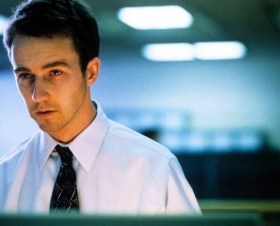 (shh, whisper it) (…oh yes, I’m keeping this spoiler-free). There are counter arguments to that being his real name (his colleagues never call him it, only those who met him… after), but that’s beside the point. Stop calling him Jack. (I believe I read somewhere that, on the relevant DVD commentary, Ed Norton says he calls the character Jack. Not good enough reasoning for me.)
That’ll do, then.
At one point consensus seemed to have it that Fight Club was easily Fincher’s best movie, a generation-defining statement, “the first great film of the 21st Century” despite being released in 1999 (I can never remember who originated that quote). I don’t know if times have changed that as a widespread opinion, particularly with the acclaim The Social Network has received. That’s been called a generation-defining movie too, actually — two in as many decades; nice work. But I digress; such talk is for a few days’ time.
I’ve always preferred Se7en myself. I still do. But Fight Club is nonetheless an exceptional film.
I watched Fight Club as part of a David Fincher Week. Read my thoughts on all his films to date here.

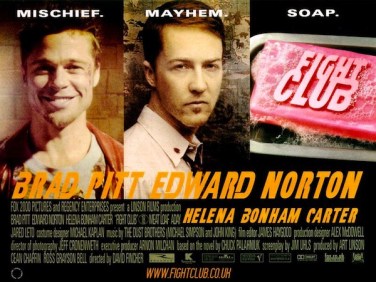

 Score:
 79%
79%

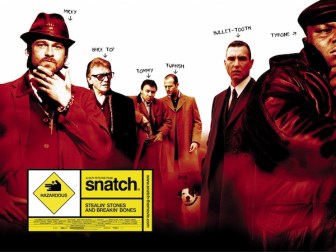 Guy Ritchie’s second feature met with relative indifference 16 years ago, consensus deeming it
 Mumble and his penguin pals return for another adventure, in a series the Australian film industry are reportedly inordinately proud of.
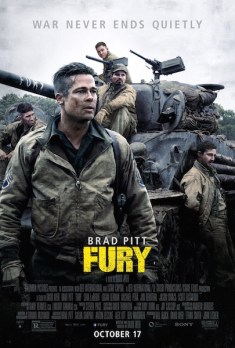 I don’t believe there are very many movies about tanks — there’s
 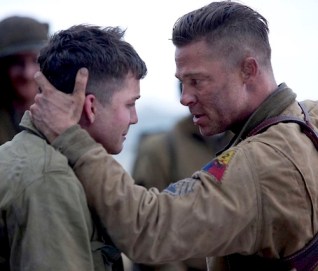 Most of the characters exist in a moral grey area, something which some reviewers seem to struggle with. From the off, our ostensible heroes are not shown in a particularly pleasant light, committing or encouraging acts we would view as unconscionable. As the film goes on, it seems like we’re being invited to bond with them, to respect or admire them. I’m not sure that’s a wholly accurate reading of it, though. I think we’re being shown different sides to them — much as Norman is, in fact. At first you see the depths they have reached; then, as you get to know them, you see a little more of their true (or at least their pre-corrupted-by-war) characters. Does this redeem them or excuse their actions? Well, that’s your decision. I don’t think the film is predicated on you coming round to their way of thinking. Without meaning to spoil anything, it’s not as if the meta/karmic world of plot construction lets them off scot-free by the end. Of course, whether we need our focus characters to be clean-cut heroes or whether complex morally-grey/black characters are preferable is another debate.
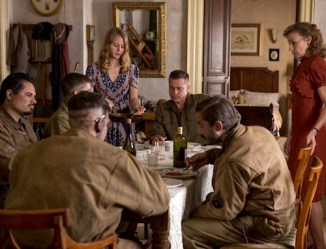 This is a scene most reviews seem to single out, I’ve since realised, but that’s for good reason: even watching it cold, the powerful writing, direction and performances mark it out as a sequence that transcends the movie it’s in. Again, it’s the unpredictability of what these men might do; the grey area of the guys we’re meant to think are the heroes not always being heroic.
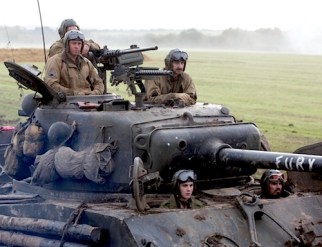 I think Fury is a rather rewarding movie for those that can, though. The fact it provokes debate is no bad thing — I think it’s a misinterpretation to read the film, as some online commenters clearly have, as “these guys do horrible things, but they’re the main characters and the not-Nazis, so I must be meant to like them, so the film is bad”. Well, I suppose it’s not news that some people struggle with cognitive dissonance. On the flipside, I don’t think you’re meant to outright hate them — there’s an element of “the Allies did bad things too, y’know” about the film, but that’s not its sole aim. I think it’s more complicated than that, and, naturally, all the better for it. Even on a more surface level, though, there’s adrenaline-pumping excitement to be had from the well-realised action scenes. It’s a combination that worked very well indeed for me, and if my score errs on the side of generosity then, well, consider it redressing the balance.
 As presidential nominee Barack Obama talks about the American Dream, in a run-down corner of the nation a trio of small-timers plot a robbery, landing them in hot water with some nasty people.
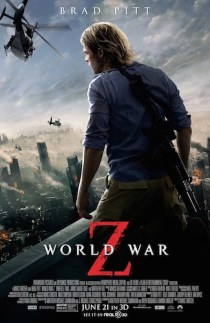 In the weeks leading up to its theatrical release, it was already known that World War Z was going to be an almighty flop. An unscrupulous movie studio had taken a cult novel and thrown away everything but the title, alienating its existing fanbase. They’d spent a fortune making a movie in a traditionally R-rated genre that, if released at R, could never make its money back, and if released at PG-13 would never attract an audience. Then they reshot the entire third act, pushing the budget through the roof and ensuring the resultant film would get critically mauled. A fanbase snubbed, an impossibly huge budget, a genre/rating disconnect, and unavoidably poor reviews to come — World War Z was going to flop, and it was going to flop hard.
 That, at least, is something different. The first half-hour races through stuff we’ve seen time and again: zombie attacks, humans turning on humans as they loot supermarkets, etc. Here the zombies are of the
  It’s a Wales populated by a Londoner, a Scotsman and a Spaniard, but still. I say “more tense” because this is far from the most nail-biting zombie film you could see. The finale is a nice change of pace, and does work as a climax in spite of the bombast that precedes it, but these are zombies as teen-friendly action movie menace, not adult scare-inducers, so don’t except to feel much fear or surprise.
 but I don’t think it was the filmmakers’ aim to make us feel the characters’ plight, but instead to show the scope of a worldwide disaster. It does that pretty well, even if the occasionally-CGI zombies prove to be an
  September 1881: after admiring their leader for years through cheap magazine stories, 19-year-old Robert Ford manages to hook up with the James Gang. Little does he suspect that, just seven months later, he will be responsible for the murder of his idol, Jesse James. (That’s not a spoiler, it’s in the title.)
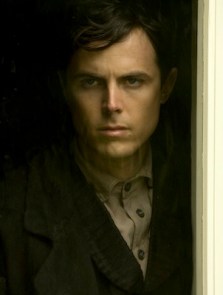 Let’s be clear, though: this is not a film for everyone. This is not an action movie set in the Wild West, which might be what’s expected from a Hollywood studio movie starring Brad Pitt. Apparently director Andrew Dominik intended to make a film with a Terence Malick vibe, so I read after viewing, which chimed with me because “Malick-esque” was one of my foremost thoughts during viewing. This is a slowly-paced two-hours-and-forty-minutes, with more shots of crops blowing gently in the breeze or riders approaching gradually over distant hills as there are flashes of violence. Despite what the studio wanted, this is not a fast-paced action Western, it’s a considered, sometimes meditative, exploration of character and theme.
 Jesse’s mood swings are more obvious than Ford’s, but Pitt makes them no less unlikely. At times charming and a clear leader, at others he is a genuinely tense, frightening presence, without ever needing to resort to the grandstanding horror-movie grotesques offered by (Oscar winners) Daniel Day-Lewis and Javier Bardem in There Will Be Blood and No Country respectively.
 This must also be thanks in part to director Andrew Dominik. Every last shot feels precisely chosen and paced. Of course, every shot in every film has been chosen and placed where it is, but the amount of thought that’s gone into that might vary. Jesse James somehow carries extra weight in this department, with no frame in its not-inconsiderable running time wasted on an unnecessary angle or take that’s allowed to run even a second too long. Somewhat famously, there was a lot of wrangling over the film’s final cut (delaying its release by a year or more), with the aforementioned debate between something faster and something even slower: a four-hour version screened at the Venice Film Festival, to a strong reception. Sadly, the intervening years haven’t seen that cut, or any of its parts, resurface (to my knowledge). That’s an hour and twenty minutes of material and I’d love to know what’s in them.
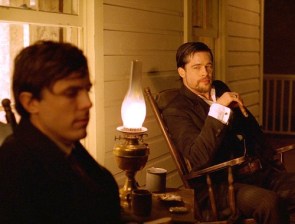 because he’s obsessed with the notoriety of Jesse. Later, once the titular deed is done, he becomes an actor (not without talent, as the narration informs us) and re-performs the act that made him famous hundreds of times. It’s his legacy, however, to not be as well-remembered as his victim; to not be as well-liked, even; not even close. There’s something there about the pursuit of fame for its own sake, if nothing else.
 I usually say that Se7en is my favourite film.
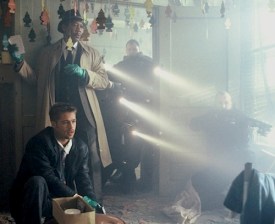 Black seems to be its default position — everything else is cut out of the darkness with as little light as possible. Often backgrounds and locations are better lit than foregrounds or actors, making the viewer focus on silhouettes with minimal light offering splashes of detail. Even the scenes that occur at daytime (most, anyway) do so in the middle of ferocious, ceaseless rain that ensures it never gets too bright.
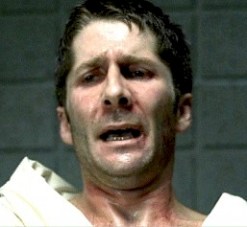 all but one of
 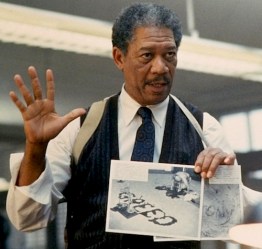 Mills delivers his riposte with greater hyperbole — of course, because that’s the character — perhaps bedded in a form of naivety and idealism, ending with a repetitious “I do not agree. I do not.” Then we see Freeman’s face, completely static, but you can read in it everything you need to — his anger at Mills for making him realise that it’s all a lie he’s been telling himself, and anger at himself for believing the lie. That’s one scene; Freeman is incredible throughout.
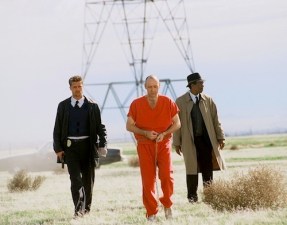 This is where liking the characters pays too, because we are on Somerset’s side and we’re on Mills’ side and we agree with both and disagree with both and don’t necessarily know who’s right or what to do or what we would do. I can spend the whole film anticipating this scene, knowing exactly what will happen in it, how great a piece of filmmaking it will be, yet it still makes my hair stand on end.
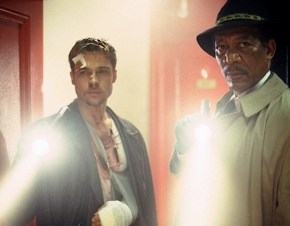 The quality of a crime thriller is often so tied to its mystery that the film can only sustain so many viewings — sometimes, only one — before you know it too well. I have seen Se7en at least seven times now, which for me is a lot — a helluva lot, even — and yet I still get something from it every time. That’s a rarity, that’s a reason to love it, and that is why it may well be my favourite film.
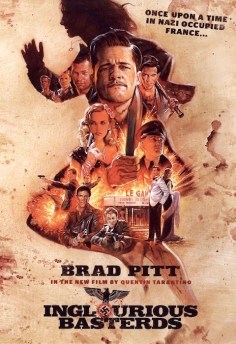 Watching almost any film a second time can affect your opinion of it. It could reveal deeper levels of character or theme; it could allow you to see how the writer(s) subtly foreshadowed events, or built up to the big twist; it could be you spot jokes you were too busy laughing during last time; it could let you look at the imagery now you don’t have to concentrate so hard on the subtitles. Or it could reveal shallowness, that there’s nothing to be gleaned that you didn’t get the first time; or highlight the holes in a plot that seemed so well constructed before; or jokes that were hilarious fall flat when heard more than once; or the action sequences aren’t exciting when robbed of their freshness. A second viewing can reveal that you were too young to get it the first time, or that you’re now too grown up to enjoy it; it can reveal a bad movie isn’t so bad, or that without the hype it’s actually quite good; it can raise a favourite even higher in your estimations, or it can tear it down. And even if a second viewing just reaffirms exactly what you felt the first time, well, when there’s such a chance for change and it doesn’t occur, that’s an effect in itself.
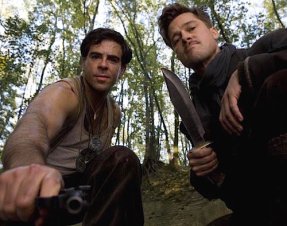 — and, today, a year since its UK release —, having watched it a second time to refresh my memory. But has it changed my opinion?
 only instead of being one thing once he does it again and again, with any trick he fancies, throughout the film.
 The ending (and skip this paragraph if you haven’t seen the film) is the key to that, as I’m sure you either noticed or have read in other coverage. The power of cinema literally destroys the Nazis, changing the course of the war. Killing Hitler — and the rest — is one of those barmy notions that at first seems wrong, and then seems completely right. “If my characters had existed, this is what would have happened” is one of those genius notions that seems so inescapably obvious you wonder why no one’s done it sooner. Why do you necessarily need to obey history if the rest of your story is fiction anyway?
 (I believe more of the film is subtitled than in English), did little to endear it to the complaining masses who thought they were getting “
 And for all those constantly-introduced characters, the acting is top notch. Christoph Waltz easily deserved the huge pile of awards he garnered, his quirky persona following in a long tradition of calm psychopaths in movies. You always know his pleasantries hide something far nastier; every scene he appears in is instantly tense. Mélanie Laurent is an instant one-to-watch as the film’s real central character, Shosanna, though she seems to have been sadly sidelined by all the praise heaped on Waltz. It doesn’t hurt that she’s the kind of woman you’d happily decorate a whole review with pictures of (though you’ll note I resisted). Michael Fassbender is the very definition of Englishness, without quite slipping into an irritating stereotype. It’s difficult to imagine the originally-cast Simon Pegg in the role, though I’m sure he would’ve brought something… shall we say, different… to it. Brad Pitt’s much-criticised heavily-accented performance is fine. While not as memorable as the others mentioned, I don’t see why some have had such a problem with it.
 Til Schweiger’s vicious German basterd; Diane Kruger’s glamorous, calm actress-spy; Daniel Brühl’s apparently sweet accidental hero and movie star-to-be; Martin Wuttke’s raving loony Hitler; and others too. Perhaps the only duff note for me was Mike Myers as an English General. I liked the
  every once in a while, but it also proves they work, that he was right to employ them.
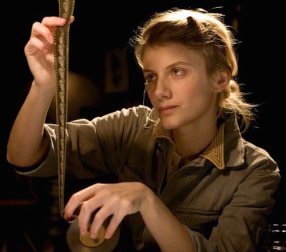 care-free deployment of an abundance of film-specific techniques, and, both through this and also directly in its narrative, its love of film as a medium — Inglourious Basterds isn’t just “a Quentin Tarantino film”, it is Quentin Tarantino. His choice of final line — “You know something, Ultivich? I think this just might be my masterpiece” — is clearly about more than Aldo Raine’s swastika-carving abilities.
 100Films.co.uk