Blindspot 2018

In an emulation of last year, in 2018 I’m setting myself the goal of watching not only a dozen Blindspot films, but also a decad WDYMYHS movies. Last year there was a reason for this (marking my tenth blogiversary); this year, I’m doing it just because it worked before.

In another similarity to last year, my Blindspot list is a ‘free choice’ selected from films I either already own or have ready access to (i.e. they’re available on Netflix / Amazon Prime / etc), while my WDYMYHS list is chosen by mixing together lists of must-see movies to find those that consensus says I should’ve seen.

Although this is a ‘free choice’ list, I did get a helping hand: I determined I wanted to include films directed by Alfred Hitchcock and Ingmar Bergman, but how to choose which from their lengthy and acclaimed filmographies? So I turned to iCheckMovies to see which were on the most lists, had the most favourites, that kind of thing. That produced clear frontrunners for each director, and they’re the ones I went with.

Below are all 12 of my selections, in alphabetical order.


The 400 Blows


Attack the Block


Big Fish


Black Narcissus


The Hunt


Nausicaä of the
Valley of the Wind


Snowpiercer


Strangers on a Train


Suspiria


True Romance


The Wild Bunch


Wild Strawberries

Exciting observation: eight of them (aka two-thirds) are non-US productions. How cultured of me.

Another Blindspot Review Roundup

Following on from the roundup of four of my Blindspot and “What Do You Mean You Haven’t Seen…?” reviews the other day, here’s another quartet.

In today’s roundup:

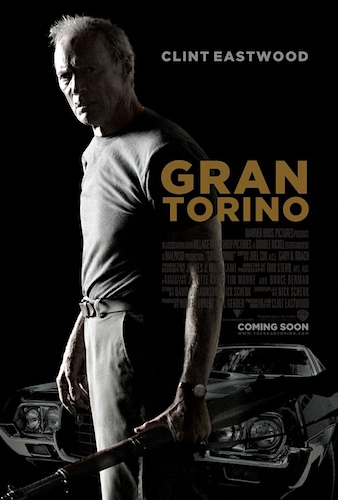
  • Gran Torino (2008)
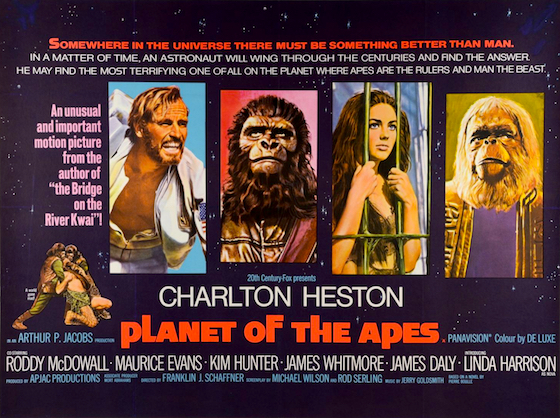
  • Planet of the Apes (1968)
  • Nashville (1975)
  • A Matter of Life and Death (1946)


    Gran Torino
    (2008)

    2017 #78
    Clint Eastwood | 116 mins | download (HD) | 2.40:1 | USA & Germany / English & Hmong | 15 / R

    Gran Torino

    Clint Eastwood’s modern Western (thematically speaking), about a grumpy old loner who overcomes his inherent racism to bond with the immigrants who now dominate his neighbourhood and eventually come to their defence, is a well-liked film, generally regarded as a late career highlight for the director-star. I imagine it would play very nicely as a companion piece and/or counterpoint to his earlier Oscar-winner, Unforgiven — both are stories about old men in one final fight, essentially. Here, that comes with a subtext about the price that’s paid for standing up for yourself. It may be the right thing to do, and maybe it ends up with the right result, but the good guys really suffer to get to that point.

    While that aspect of the film is ultimately powerful, I was less won over by the actual filmmaking. It feels like it’s been jiggered around in the edit, with some odd bits where it just jumps into a new scene. Even before that, Nick Schenk’s screenplay occasionally features very heavy-handed dialogue, of the “explain what the character is feeling right now” variety. It’s especially bad when Eastwood just talks to himself in order to vocalise these points for the sake of the audience.

    Still, if you’re immune to such niggles then it remains a potent — and timely — tale of doing what’s right for the defenceless. Such themes never die, I suppose.

    4 out of 5

    Planet of the Apes
    (1968)

    2017 #96
    Franklin J. Schaffner | 112 mins | Blu-ray | 2.35:1 | USA / English | PG / G

    Planet of the Apes

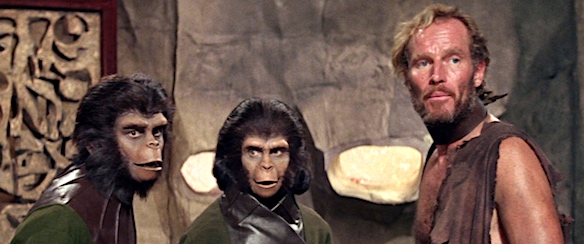
    The original instalment in the long-running franchise (it’s up to nine films across three go-rounds now, plus a couple of TV series) sees astronaut Charlton Heston land on a mysterious planet where apes have evolved to have human-like intelligence, while men are mute wild creatures dominated by their simian betters. And eventually there’s a twist that everyone knows, which is a shame because I bet it was pretty darn surprising before that.

    Coming to Planet of the Apes for the first time almost 50 years after its release, there’s an unavoidable quaintness to some of it, mainly the monkey makeup. It was for a long time iconic, but it’s been abandoned in favour of hyper-realistic CGI in the new movies and therefore shows its age. That said, while the apes may not be as plausible as those produced by modern technology, the performances underlying them are still strong. It contributes to what is really a parable about dominance and oppression; colonialism inverted onto a white man, that kind of thing. All wrapped up in a sci-fi adventure narrative, of course.

    Honestly, it’s not just the effects that have improved — as a piece of speculative fiction, I think it’s now been outclassed by the recent trilogy. It’s still a cracking adventure, but a bit “of its time”.

    4 out of 5

    Nashville
    (1975)

    2017 #111
    Robert Altman | 160 mins | Blu-ray | 2.35:1 | USA / English | 15 / R

    Nashville

    Robert Altman’s low-key epic about 24 characters and how their stories interact, overlap, and collide across five days in the city of Nashville, Tennessee.

    The sheer scope of that makes it a tricky film to interpret. There’s a lot going on, much of it in snatched conversations and moments that leave it up to the audience to piece together what matters and why. Collision must be a theme: within the first hour there are three car crashes or near misses, and the climax is certainly a collision in its own way. I’ll be honest, this isn’t a fully-developed thought, so I’m not sure what the point of it might be. It’s a small element of the film, really — something like all the music being performed is much more obvious and therefore maybe more relevant.

    I guess I’m searching for meaning because the film in general is just casually observational of a bunch of characters meandering through a few days. Maybe there doesn’t need to be meaning — maybe that is the meaning. It’s certainly one way to interpret the finale. So, I kind of liked it — or, rather, admired it, perhaps — even if I didn’t necessarily ‘get it’.

    4 out of 5

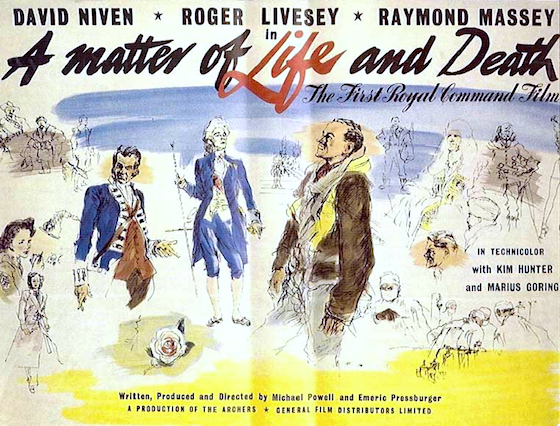
    A Matter of Life and Death
    (1946)

    2017 #74
    Michael Powell & Emeric Pressburger | 100 mins | DVD | 4:3 | UK / English | U / PG

    A Matter of Life and Death

    I finally get round to watching this on a ropey old DVD, and then they announce a new 4K restoration (which was released in UK cinemas earlier this month). Hopefully a Blu-ray will follow. It will be very welcome, because I imagine this film will look magnificent in properly restored HD.

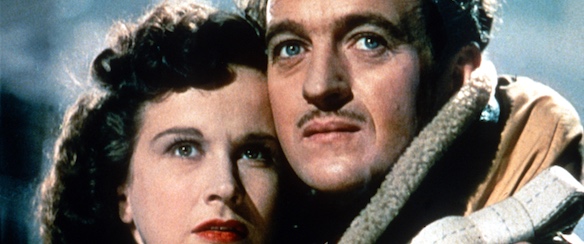
    It begins with an incredible opening scene, in which an entire relationship is founded and ended over the radio in about five minutes. From there it’s the story of a World War Two pilot (David Niven) who avoids death by a fluke, then properly falls in love with the voice from the other end of that radio call (Kim Hunter) before the afterlife comes a-callin’ to take him where he was meant to be. Or maybe that’s all just a vision induced by the injury he sustained. Either way, he must argue his case to remain on Earth.

    It’s a grandly romantic film — it is all about the triumph of love over everything else, after all — but with a particular fantastical bent that I think remains unique. It has the wit to present a mildly irreverent stance on the afterlife, not taking the whole “life and death” thing too seriously. While the final result of the airman’s trial is never in doubt, the delight is in the journey there.

    5 out of 5

    Planet of the Apes, Nashville, and A Matter of Life and Death were viewed as part of my Blindspot 2017 project, which you can read more about here.

    Gran Torino was viewed as part of my What Do You Mean You Haven’t Seen…? 2017 project, which you can read more about here.

  • Blindspot Review Roundup

    Spoilers for my next monthly update: I’ve completed watching all 22 films on my 2017 Blindspot and “What Do You Mean You Haven’t Seen…?” lists. Hurrah!

    What I haven’t done is reviewed them all. Indeed, 17 still languish in my review backlog — that’s 77%. (In fact, I’ve only actually reviewed one Blindspot film — The Exorcist — with the other four being from WDYMYHS.)

    So, with the end of the year fast approaching — and, with the new year, a new batch of films to watch — I thought it high time I cracked on with those reviews. Here’s a quick roundup of a few, linked by all being adapted from novels, which may be the first of several such omnibus editions.

    In today’s roundup:

  • Dances with Wolves: Special Edition (1990/1991)
  • Jackie Brown (1997)
  • Silver Linings Playbook (2012)
  • The 39 Steps (1935)


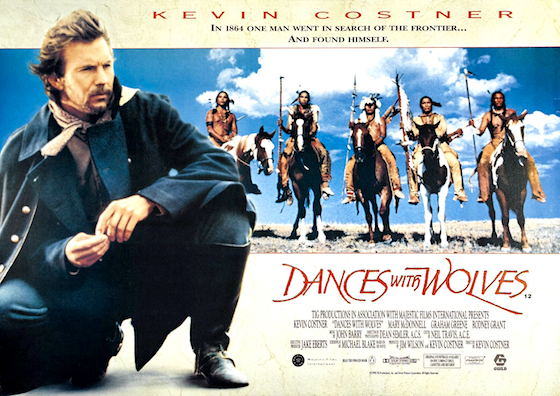
    Dances with Wolves
    Special Edition

    (1990/1991)

    2017 #26
    Kevin Costner | 227 mins | DVD | 2.35:1 | USA & UK / English, Lakota & Pawnee | 15 / PG-13

    Dances with Wolves

    Oscar statue1991 Academy Awards
    12 nominations — 7 wins

    Winner: Best Picture, Best Director, Best Adapted Screenplay, Best Cinematography, Best Sound, Best Film Editing, Best Original Score.
    Nominated: Best Actor (Kevin Costner), Best Supporting Actor (Graham Greene), Best Supporting Actress (Mary McDonnell), Best Art Direction-Set Decoration, Best Costume Design.


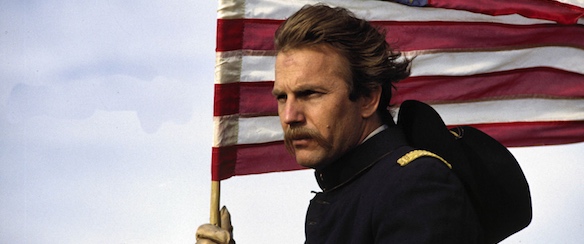
    The behind-the-scenes story of Dances with Wolves is almost as grand as the movie itself. An actor turned director whose inexperience led to production delays and budget overruns, leading to rumours the film was a pending disaster like Heaven’s Gate a decade before it (some nicknamed it “Kevin’s Gate”), and the studio who wanted a 140-minute cut having to settle for the 180-minute one that director delivered. The resulting film never even reached #1 at the box office… but still went on to be the highest grossing Western of all time, and became the first Western to win the Best Picture Oscar in almost 60 years. It was so popular that a 53-minute-longer extended cut was released a year later, which Costner later denied being involved with.

    Having not seen the theatrical cut I can’t offer an opinion on which is better, but the near-four-hour extended one certainly feels its length. That’s not necessarily a bad thing — this is an epic in the truest sense of the word, with a large story to tell on a grand canvass; although it’s concurrently a drama about just a couple of people from different cultures coming to interact. It’s almost too big to digest in a single go — I’m even not quite sure what I made of it. You can see why I’ve spent 10 months not writing about it.

    Anyway, I admired its scope and ambition. I wouldn’t say I loved it, but it merits revisiting someday.

    4 out of 5

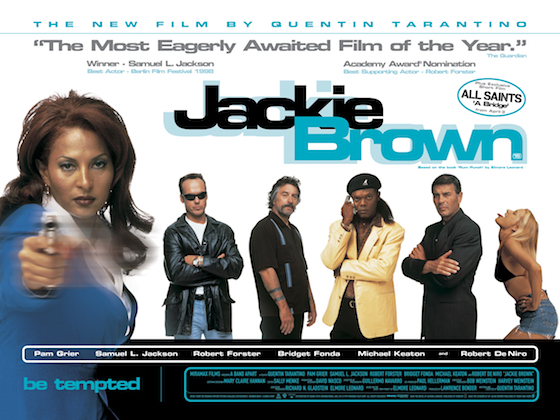
    Jackie Brown
    (1997)

    2017 #49
    Quentin Tarantino | 154 mins | Blu-ray | 1.85:1 | USA / English | 15 / R

    Jackie Brown

    Oscar statue1998 Academy Awards
    1 nomination

    Nominated: Best Supporting Actor (Robert Forster).


    Jackie Brown has long been my Tarantino blindspot. I caught up with Reservoir Dogs and Pulp Fiction after he was already established and they were regarded as modern classics, then was old enough to see the Kill Bills at the cinema and have followed his career from there. But, for some reason, his third feature has always eluded my attention. My tenth anniversary “heinous oversights” list seemed a good time to rectify that.

    Some people argue that Jackie Brown is secretly Tarantino’s best movie. I add “secretly” there because it gets a lot less attention than the aforementioned movies that came either side of it. That’s not a bandwagon I’m prepared to jump on. To me, it feels a little like QT was trying to emulate what worked about Pulp Fiction without just making a rip-off of his own movie, and therefore it’s a bit of an inferior copy. That’s not to say it’s a bad movie by any means. The eponymous character is particularly interesting, as you’re never quite sure what Jackie’s up to; what her plan is. She seems to be telling everybody everything, but she has to be screwing some — or all — of them, right?

    Possibly I was just approaching the film in the wrong way. Tarantino has called it “a hangout movie”, which he explained thus: “Jackie Brown is better the second time. And I think it’s even better the third. And the fourth time… Maybe even the first time we see it we go, ‘Why are we doing all this hanging out? Why can’t we get to more of the plot?’ But, now the second time you see it, and the third time you see it, you’re not thinking about the plot anymore. You’re waiting for the hangout scenes… It’s about hanging out with the characters.” Personally, I’m not in any desperate rush to hang out with these characters again. But who knows, maybe I’ll get it the second time. Or the third. Or the fourth…

    4 out of 5

    Silver Linings Playbook
    (2012)

    2017 #61
    David O. Russell | 115 mins | TV | 2.35:1 | USA / English | 15 / R

    Silver Linings Playbook

    Oscar statue2013 Academy Awards
    8 nominations — 1 win

    Winner: Best Actress (Jennifer Lawrence).
    Nominated: Best Picture, Best Director, Best Actor (Bradley Cooper), Best Supporting Actor (Robert De Niro), Best Supporting Actress (Jacki Weaver), Best Adapted Screenplay, Best Film Editing.


    Bradley Cooper’s performance — 3.5/5
    JLaw’s performance — 4/5
    JLaw’s dancing — 6/5
    Direction — 2/5
    Screenplay (first two acts) — 3/5
    Screenplay (bit where it suddenly gets plot-heavy and all exposition-y to set up the third act) — 1/5
    Screenplay (third act that seems to be from a completely different, much more conventional movie) — 2/5

    Average =

    3 out of 5

    The 39 Steps
    (1935)

    2017 #60
    Alfred Hitchcock | 83 mins | download (HD) | 4:3 | UK / English | U

    The 39 Steps

    This adaptation of John Buchan’s adventure novel is one of the best-known among director Alfred Hitchcock’s early works, and for good reason.

    Galloping briskly along with a running time under 90 minutes, it’s a film where mood, tone, and the wonderful execution of individual sequences are all allowed to trump plot, which is somewhere on the spectrum from unexplained to nonsensical. We follow the likeable wrong-man hero Richard Hannay (Robert Donat) as he runs away from a gang of villains who barely feature. That they have a nefarious plan is outlined early on to kickstart the action; what they were up to is explained in the final scene to give the story some resolution; and in between they’re pretty much just a force chasing our hero. It’s almost like the villains are the film’s MacGuffin: it doesn’t matter what or who they are, just that they want to catch Hannay and so he must escape them. It’s how he escapes and what happens during his escapades that matters to us; that provides our entertainment.

    It almost plays like a spoof in that regard — the plot is such stock spy-thriller fare that it doesn’t need to make sense in and of itself, we just get what it’s driving at. Of course, considering the age of the film, it’s more proto-spy-thriller than neo-spy-thriller. Whatever you class it as, over 80 years since its release it remains rollicking entertainment.

    5 out of 5

    Dances with Wolves, Jackie Brown, and The 39 Steps were viewed as part of my Blindspot 2017 project, which you can read more about here.

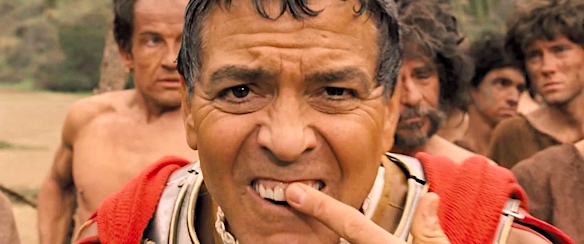
    Silver Linings Playbook was viewed as part of my What Do You Mean You Haven’t Seen…? 2017 project, which you can read more about here. Other WDYMYHS reviews already published include Hail, Caesar!, Into the Wild, Nightcrawler, and Room.
  • What Do You Mean You Haven’t Seen…? 2017

    As you’ll know from reading my Blindspot post, this year I’ve separated these very similar film-watching goals into two separate projects.

    So what differentiates my WDYMYHS selection? Well, to mark my 10th blogiversary (did I do that “did I mention this already” joke already?)* I’ve attempted to identify the films from the last ten years that I really should have seen. Rather than my usual loopy array of repurposed lists, however, I just popped on Letterboxd and dug out the “most popular” film I’d not seen from each of the last ten years. I was interested to discover I already own half of them on Blu-ray, have another downloaded and another recorded, and can find the rest on Netflix, Amazon Prime, and Now TV — one on each, in fact. I mean, I couldn’t’ve planned that more neatly.

    Anyway, these ten films — in chronological order — are:


    2007

    Into the Wild


    2008

    Gran Torino


    2009

    Moon


    2010

    Black Swan


    2011

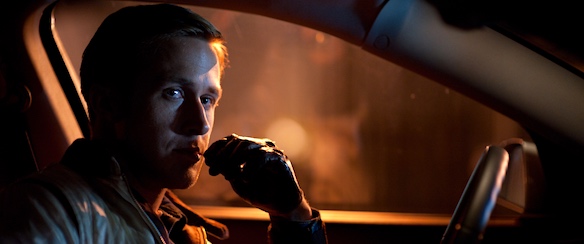
    Drive


    2012

    Silver Linings Playbook


    2013

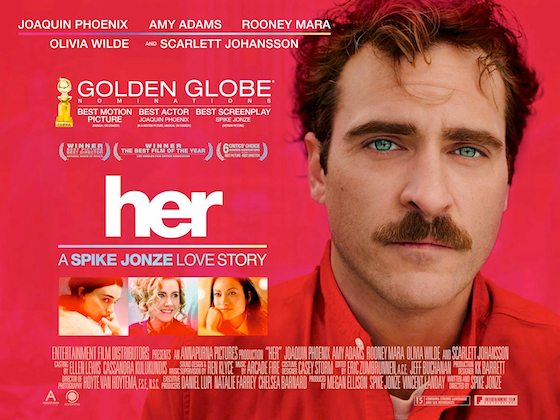
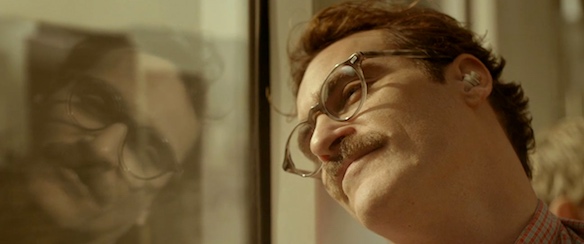
    Her


    2014

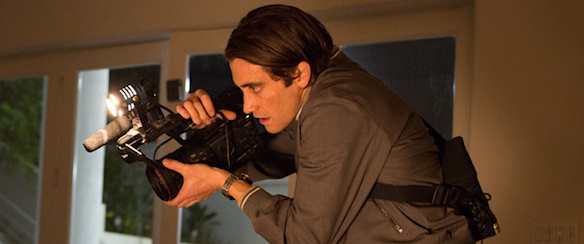
    Nightcrawler


    2015

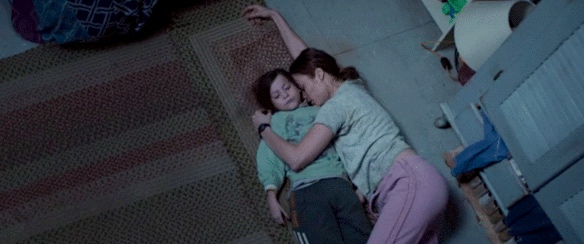
    Room


    2016

    Hail, Caesar!

    So that’s 22 films I must watch among this year’s 100. Okay.

    Oh, but, one more thing…

    * Yes — twice. So far. ^

    Blindspot 2017

    In case you’re unfamiliar with the concept of Blindspot, it’s where you pick 12 films you’ve never seen but feel you should have and resolve to watch one per month over the course of the year. Some people review them every month too, but I’m far too disorganised in my posting schedule for such things (I still have pieces on four of my 2016 picks in draft stage).

    It’s also what I used to call “What Do You Mean You Haven’t Seen…?” (aka WDYMYHS), but in a foolhardy move to mark my 10th blogiversary (did I mention that yet?) I’ve decided to make these two goals. I mean, when you’re already trying to watch 100+ films in a year, why not specify what almost a quarter of them will be? Okay, I don’t have a 100% track record with even trying to watch 12 a year, but I have hit 91.7%, so…

    In the past I’ve developed a complicated system using multiple “greatest films” lists to dictate what my picks should be, but I’ve used a variation on that for WDYMYHS this year, so instead I’ve just chosen these 12 myself. The criteria? I went through every unwatched DVD and Blu-ray I own and tried to pluck out films that it shocked me I haven’t seen — and I am me, so I dread to think what you all think (probably “why does he think we care about what films he has or hasn’t seen?”) I’ve tried to keep some variety in era, genre, country, etc, though there’s a slight bent towards sci-fi because, as an avowed SF fan, those gaps glowered at me the most.

    Anyway, that’s enough ado. Here are the 12, in alphabetical order:


    The 39 Steps


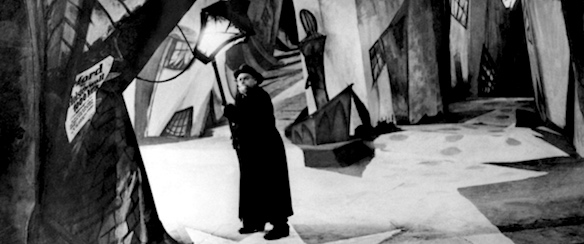
    The Cabinet
    of Dr. Caligari


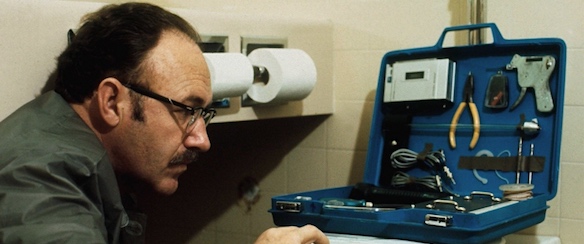
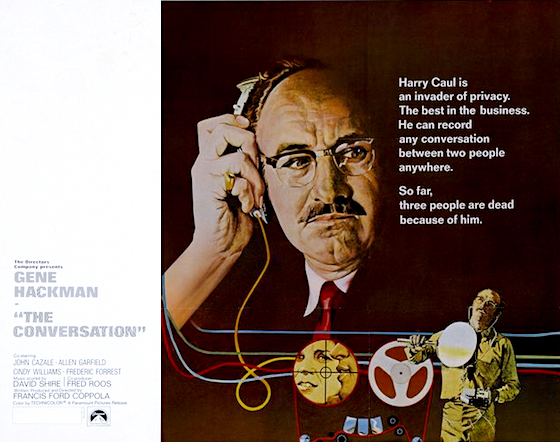
    The Conversation


    Dances with Wolves


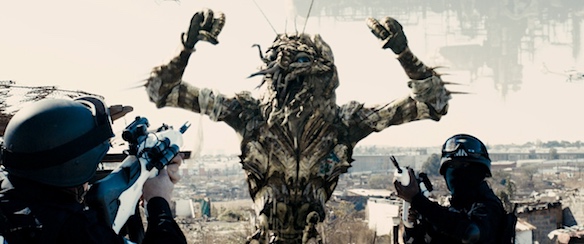
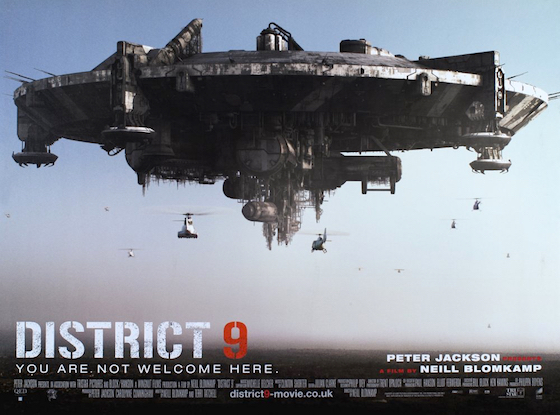
    District 9


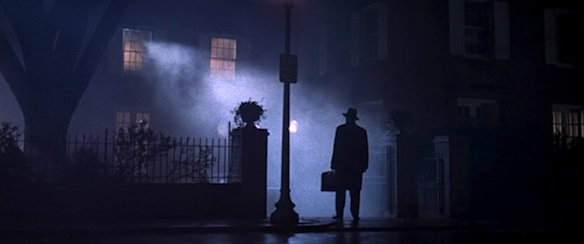
    The Exorcist


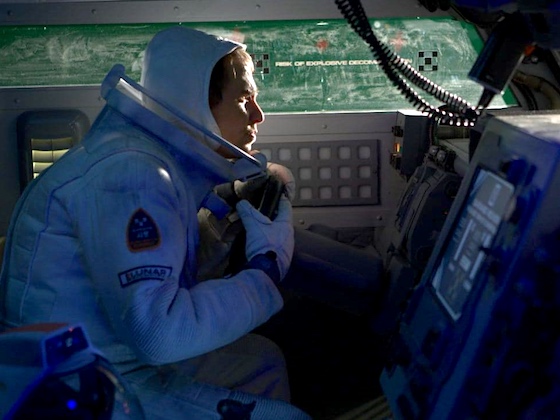
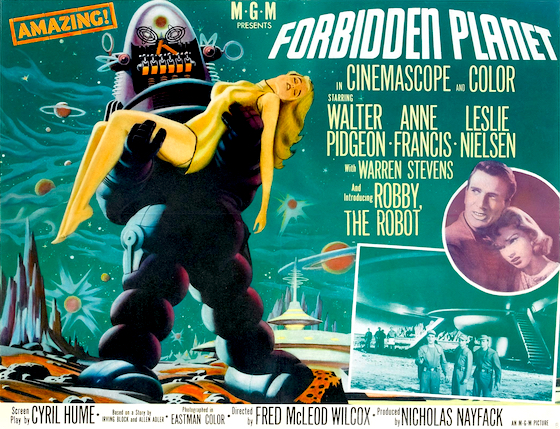
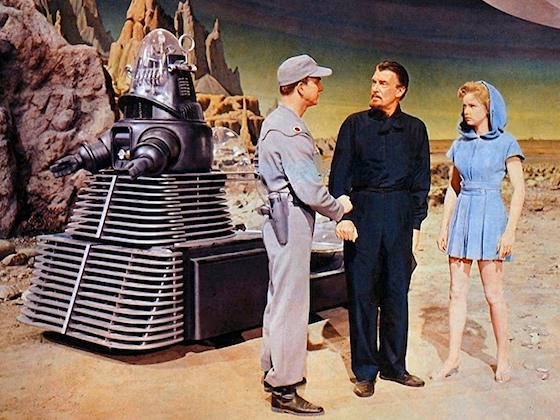
    Forbidden Planet


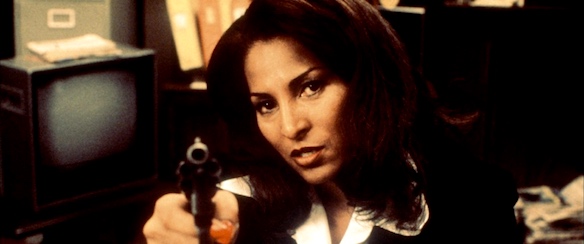
    Jackie Brown


    A Matter of
    Life and Death


    Nashville


    Planet of the Apes


    Yojimbo

    Now, on to my WDYMYHS picks…

    The Sting (1973)

    2016 #127
    George Roy Hill | 129 mins | Blu-ray | 1.85:1 | USA / English | PG / PG

    The StingSet in Chicago during the Great Depression, The Sting follows a young street-level con artist (Robert Redford) as he seeks revenge for his murdered partner by teaming up with a seasoned big-con pro (Paul Newman) to scam the mob boss responsible (Robert Shaw).

    If that sounds like a somewhat violent crime movie… well, it kinda is. Although The Sting is often billed as a caper, sometimes even as a comedy (look at those grinning mugs on the poster!), it actually has more of an edge. I mean, it’s not The Godfather, but it’s not Ocean’s Eleven either. The star power and chemistry of Redford and Newman are what give the movie a buoyancy to overcome the storyline’s inherent darkness, though I wouldn’t say that reaches far enough to regard the film as a romp, which is the impression I’d obtained over the years.

    Indeed, I wonder if it suffers from its age more broadly. Not because the filmmaking quality has dated (they may not make ’em like this anymore, but great filmmaking is timeless), but because it was so influential that it’s been copied to death. It still has a lot of points to commend it, but the heist — the driving force of the plot — lacks freshness to modern eyes. Newness is not the be-all-and-end-all, of course, but the con only really comes to life in a flurry of last-minute twists… most of which have also been copied ad nauseam, of course.

    The Sting is certainly not a bad movie — and, for all my talk of it being mercilessly copied, it did manage to con me in a couple of places — but it wasn’t exactly what I’d anticipated. Perhaps I’ll like it more on some future re-watch.

    4 out of 5

    The Sting was viewed as part of my What Do You Mean You Haven’t Seen…? 2016 project, which you can read more about here.

    One Flew Over the Cuckoo’s Nest (1975)

    2016 #100
    Miloš Forman | 134 mins | download (HD) | 16:9 | USA / English | 18 / R

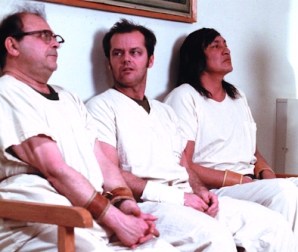
    One Flew Over the Cuckoo's NestBy many accounts this is the greatest film I’d never seen (hence it being this year’s pick for #100). How are you meant to go about approaching something like that? Probably by not thinking about it too much. I mean, something will always be “the greatest you’ve never seen”, even if you dedicate yourself to watching great movies and the “greatest you’ve never seen” is something pretty low on the list… at which point I guess it stops mattering.

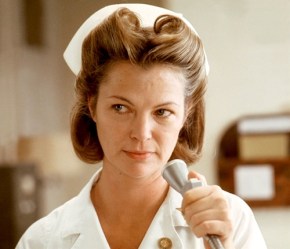
    Anyway, this acclaimed drama — one of only three films to win the “Big Five” Oscars — follows Randle McMurphy (Jack Nicholson), a prisoner who’s claiming to be mentally ill in order to avoid hard labour, as he’s sent to a psychiatric hospital for evaluation. His ward is run by the firm hand of Nurse Ratched (Louise Fletcher), who subtly controls and oppresses the other inmates (who include early appearances by Danny DeVito, Christopher Lloyd, and Brad Dourif). With his antiauthoritarian nature, McMurphy sets out to usurp her control… with ultimately disastrous consequences.

    Cuckoo’s Nest is very ’70s in its bleakness; also in being about someone sticking it to The Man, and The Man winning. We often conflate such qualities with realism — “it’s not all happy, it must be more like real life” — but I wonder if Cuckoo’s Nest is actually too on the nose as an indictment of the system. McMurphy is a highly disruptive influence, which in reality would surely be a problem, but he’s seen to bring the other inmates a joy they previously hadn’t known. His actions give one, Billy Bibbit, confidence and cure him of his stutter — until Ratched reasserts control, his stutter returns, and… worse happens.

    Wretched RatchedHollywood is notorious for adapting novels by grafting on happier endings, but here they did the opposite, removing even the glimmers of justice that the novel offers. In the book (according to Wikipedia), when McMurphy strangles Ratched he also exposes her breasts, humiliating her in front of the inmates; when she returns to work, her voice — her main instrument of control — is gone, and many of the inmates have either chosen to leave or have been transferred away. Conversely, in the film there is no humiliation, and we explicitly see that she still has her voice and that all the men are still there. Of course, McMurphy’s ultimate end isn’t cheery in either version. It’s almost like the anti-Shawshank in its hope-less ending. While the cynical part of me thinks this is more realistic, I do like a bit of optimism, a bit of victory, a bit of justice for the real perpetrators.

    Even aside from the ending, I don’t think the film is as focused as it could or should be. I’m not asking to be handheld through it all, but at times it meanders. The best qualities lie in the acting. Nicholson and Fletcher won the Oscars, and both are very good — Nicholson with his familiar crooked charm, Fletcher despicable as the everyday megalomaniac — but for me the best performance is Brad Dourif, making his screen debut as the stuttering, sweet, ultimately tragic Billy Bibbit. He was nominated for an Oscar, but lost to George Burns in Only sane one hereThe Sunshine Boys (anyone remember that? No, didn’t think so); though he did win the BAFTA, once again proving that we have all the taste.

    I’m not quite on board with all the praise Cuckoo’s Nest has received — I think it might be improved by a streamlining of purpose. Either way, it is not an enjoyable movie, though it is perhaps a significant one.

    4 out of 5

    One Flew Over the Cuckoo’s Nest was viewed as part of my What Do You Mean You Haven’t Seen…? 2016 project, which you can read more about here.
    Grave of the Fireflies (1988)

    aka Hotaru no haka

    2016 #67
    Isao Takahata | 90 mins | DVD | 16:9 | Japan / Japanese | 12

    Grave of the FirefliesOne of the most praised animated films of all time, this Studio Ghibli feature tackles grim subject matter: it’s the story of Seita and his little sister Setsuko, a pair of Japanese children who are orphaned and eventually left to fend for themselves in the closing months of World War 2. It begins with Seita dying of starvation and joining the spirit of his dead sister, so you know it’s not going to end well. A Disney movie this is not.

    It’s kind of hard to avoid the praise Grave of the Fireflies has attracted, which is why it ended up on my Blindspot list this year. It’s the third highest-rated animation on IMDb (behind Spirited Away and The Lion King), which also places it in the top 25% of the Top 250, not to mention various other “best animated” and “great movie” lists. I mention all this because I fear the weight of expectation somewhat hampered the film for me. It’s by no means a bad film, but, despite the subject matter, it didn’t touch me to the same degree as, say, My Neighbour Totoro (which, coincidentally, it was initially released with).

    So where did it go wrong for me? Perhaps my biggest issue was with Seita and the choices he made. I guess part of the point is that he is still a child and so unable to adequately care for himself and Setsuko, but I don’t get why he resorts to stealing, looting, and allowing them to starve when, as it eventually turns out, they still have 3,000 yen in the bank — enough to buy plenty of hearty food when it comes down to it. Why didn’t he turn to that money much sooner? Why did it take a doctor telling him his sister was malnourished and refusing to help before he thought, “you know what, I could always use that money we have saved up in the bank to feed us so I don’t have to steal and nonetheless be short of food”? When he does eventually withdraw that cash and buy some decent supplies, it’s a very literal case of doing too little too late.

    Another thing is that the film is often cited as a powerful anti-war movie, because it depicts the ravaging effects on innocents. However, director Isao Takahata insists it isn’t, saying it’s about “the brother and sister living a failed life due to isolation from society”. I’m inclined to believe him, because, from what we actually see on screen, these two kids are the only ones to be so badly affected! Okay, we do see people have died, and we’re told that food is running out… but there’s a gaggle of kids who seem to be having a fun day out when they stumble across the siblings’ makeshift shelter; or, right at the end, people who merrily arrive home and pop their music on. The film doesn’t try to claim that only these two kids suffered, but — aside from a few other destitutes at the start, and the bodies we see after the first bombing (later bombings don’t make any casualties explicit) — we don’t really see anyone else suffering. I’m not arguing that Takahata is saying no one else suffered, nor that these observations make it pro-war (I mean, any children dying, even if others are surviving, is not a good thing), but I didn’t get an anti-war message that was as powerful or as overwhelming as other viewers seem to have.

    I’m an advocate of animation as a form (which must sound like a ridiculous position to have to take in some countries, but in the West “quality animation” begins and ends with Disney musicals and Pixar’s kid-friendly comedy adventures), but I think the fact this particular story is being told with moving drawings is detrimental. I’ve seen online reviews that say it makes the film more bearable because it creates a kind of disconnect from the real world — and, really, this story shouldn’t be “bearable”. That’s not to say you can’t feel an emotional connection to animated characters, but, as a medium, animation regularly deals in fantastical subjects, so with material this gruelling it does make it seem less real.

    Despite these issues, Grave of the Fireflies does still pack a punch, but I wasn’t as bowled over as I’d expected to be.

    4 out of 5

    Grave of the Fireflies was viewed as part of my What Do You Mean You Haven’t Seen…? 2016 project, which you can read more about here.

    Barry Lyndon (1975)

    2016 #111
    Stanley Kubrick | 185 mins | Blu-ray | 1.78:1 | UK, USA & Ireland / English, German & French | PG / PG

    Barry LyndonStanley Kubrick made a good many exceptionally well-regarded films — indeed, with possibly the exception of his first semi-amateur feature, Fear and Desire, every one of his works can lay claim to being someone’s favourite. Nonetheless, although you wouldn’t guess it from its barebones also-ran type treatment on DVD and Blu-ray, three-hour period drama Barry Lyndon places among his top works in terms of consensus audience favourites, in that it’s on the IMDb Top 250. That said, it’s at #230, while the other six films on there are in the top 100, and he only made 13 features anyway — so it sits at the precise halfway point of his oeuvre, at least on IMDb.

    Adapted from a novel by William Makepeace Thackeray, commonly called The Luck of Barry Lyndon but whose full original title is going in a footnote because it’s so long,* Kubrick’s film narrates the life of the eponymous Irish rogue (Ryan O’Neal) as he falls in love, runs away from home, joins the army, becomes a spy, becomes a con artist, marries a wealthy heiress (Marisa Berenson), runs an estate, and is a man of dubious virtue and questionable likeability throughout the whole affair.

    Apparently the novel is considered to be the first English-language ‘novel without a hero’, aka antihero, and Lyndon certainly fits that bill. He serves his own interests throughout the tale, which is rarely seen as a desirable characteristic but can certainly be an understandable one, though at times you may despair at how his stubborn dedication to certain causes actually works against his interests. On the other hand, he has a great propensity for blagging his way through a war, and the ensuing complications, so I guess he learns from his mistakes… some of them, at any rate. It would be tough to say that Barry is a character you empathise with, but that doesn’t stop him from being a fascinating one to follow for a couple of hours. Some of this dislike may stem from the film’s voiceover narrator, who often tells us less-than-favourable things about the lead character. Apparently this is an example of an unreliable narrator, and I suppose some of the things we’re told aren’t directly evidenced on screen, but I’m afraid I’m going to have to leave that seam to be mined by other writers, because (on a first viewing at least) I didn’t see where or to what effect the narrator was lying to the viewer.

    As played by O’Neal, Barry’s accent places him as coming from the same part of Westeros as Littlefinger. Although I wouldn’t say he did a bad job, there seems little doubt he was miscast. The story of how he came to be in the film is more interesting than his performance, really: Warner Bros would only finance the film if Kubrick cast a top-ten box office star, based on the annual Quigley Poll of Top Money-Making Stars. O’Neal was second on the 1974 poll, just behind Clint Eastwood and ahead of people like Steve McQueen, Robert Redford, Paul Newman, John Wayne, and Marlon Brando. Barbra Streisand was the only woman on the list, so you’d think Kubrick had nine options, but apparently they were all considered “too old or inappropriate for the role” with the exception of O’Neal and Redford. O’Neal was the bigger star thanks to also securing a Best Actor Oscar nomination in the past, but Kubrick was smart enough to offer it to Redford first, but he turned it down so O’Neal it was. Ironically, 1973 was the only year O’Neal appeared in that top ten, while Redford placed first in 1974, 1975, and 1976.

    Whether it was the intention or not, O’Neal often gets by thanks to the style of the narrative, in which a series of variously-plausible events keep happening to Barry as much as he is proactive in making them occur. This is not a simple, narrow-focused, cause-and-effect kind of story, but a fictional biopic, that ranges across Europe and across time to… what effect? It’s a Kubrick film, so the ultimate goal of the tale, the message(s) it may be trying to impart, are debatable. You could see a story of the pitfalls of hubris. You could see an exploration of how a certain class lived in this time period. You could just see a man who led an adventurous life.

    Whatever the merits of the tale, its telling is a frequent wonder. Its length and pace are surely barriers to entry for some — this is not a thrill-a-minute rollercoaster ride; it’s more analogous to a BBC miniseries, perhaps, albeit one where you’re watching all three episodes at once. Well, binge viewing is the TV watching style du jour, so that shouldn’t be a problem for anyone nowadays. Much has been made of the film’s candle-lit photography, using special lenses adapted from NASA, and rightly so; though perhaps it’s beginning to look less remarkable as we move into an era where digital cameras can produce exceptional range and quality. That’s not to say the potential commonality of such lighting decisions dulls the excellence of John Alcott’s photography, but, without knowledge of the production challenges, a modern viewer might not be so readily wowed.

    Maybe I’m one of them, because for me the best shots are to be found elsewhere. The film is littered with recreations of art from the era — not obvious “ooh, I know that painting” recreations, but photographic imitations of the painters’ style, subjects, and composition. The opening shot, for instance, really looks like a painting. It’s incredible. I’d even go so far as to say it’s the best shot in the film; which is not to say the ensuing three hours are a visual disappointment, just that it remains the best among greats. (That said, having looked up images online for this review, it seems slightly less striking to me now. That may be the quality of the screengrabs; it may be that the painterly quality is so remarkable at first appearance (before becoming more familiar when the whole movie has that quality) that its memorableness is heightened.)

    With its measured pace, obfuscated meaning, and sporadically likeable characters, Barry Lyndon is not the most readily accessible movie ever made. Well, it’s Kubrick, isn’t it? There’s so much to commend it though, especially if you consider visual style a reason to watch a movie (not everyone is satiated by that, but, for a visually-driven medium, I think it’s a perfectly acceptable element to be particularly engaged by). It’s an imperfect film (for Ryan O’Neal if nothing else), but perhaps a brilliant one. Certainly I’d put it in the high-middle of my Kubrick viewing so far — and as his only films that I’ve seen are all on the IMDb Top 250, that’s an upgrade from me, at least.

    5 out of 5

    The restored 40th anniversary re-release of Barry Lyndon is in UK cinemas from today.

    Barry Lyndon was viewed as part of my What Do You Mean You Haven’t Seen…? 2016 project, which you can read more about here.

    * The Memoirs of Barry Lyndon, Esq. Of The Kingdom Of Ireland Containing An Account of His Extraordinary Adventures; Misfortunes; His Sufferings In The Service Of His Late Prussian Majesty; His Visits To Many Courts of Europe; His Marriage and Splendid Establishments in England And Ireland; And The Many Cruel Persecutions, Conspiracies And Slanders Of Which He Has Been A Victim. ^

    The Iron Giant (1999)

    2016 #86
    Brad Bird | 83 mins | DVD | 2.35:1 | USA / English | U / PG

    Adapted (loosely) from Ted Hughes’ children’s novel The Iron Man, the feature debut of director Brad Bird (The Incredibles, Ratatouille, now live-action stuff) relocates the book’s story to ’50s America and mixes in some Cold War elements. The film was somewhat verboten in our household when it came out, because the book was beloved and the film looked so different, but its reputation has only grown in the ensuing decade-and-a-half — and Hughes approved of it anyway.

    This version sees the titular robot (voiced by Vin Diesel) crash to Earth near Maine in late 1957, the home of nine-year-old Hogarth Hughes (Eli Marienthal) and his mom Annie (Jennifer Aniston). After the giant eats the Hughes’ TV aerial, Hogarth tracks it to take a photo, and ends up saving it from electrocution when it tries to eat a power station. As the giant sneaks around the countryside eating cars and causing train crashes, it attracts the attention of government agent Fox Mulder from the FBI’s X Files Kent Mansley from the Bureau of Unexplained Phenomena (Christopher McDonald), who’s intent on uncovering and destroying the giant. Hogarth tries to hide the friendly creature with the help of artist Dean (Harry Connick Jr.), but could it be Mansley isn’t so wrong about the threat it poses?

    The story, as reconstructed by Bird and screenwriter Tim McCanlies, integrates influences from ’50s B-movies (very apt for a giant robot ‘monster’) and Cold War/Space Race paranoia for a potent storyline that has a different emphasis from the novel’s “world peace” finale, but nonetheless is promoting understanding of alien/foreign powers and, y’know, deep stuff like that. Alternatively — or, rather, concurrently — it’s an E.T.-esque tale of a boy and his quirky alien friend. Bird was keen to emphasise character over action and mindless spectacle, and that’s really where the film’s strengths lie.

    Well, that and the technical aspects. The animation is stunningly well done, exhibiting exceptional fluidity and detail in its character animation, in particular. That’s in spite of the film having a reduced budget and time schedule thanks to the box office failure of previous animations by the studio — in Bird’s words, they had “one-third of the money of a Disney or DreamWorks film, and half of the production schedule”, but that meant greater production freedom (so long as they managed that budget). I guess that’s why the film’s ended up only growing in stature since its first release — because it’s able to be committed to its creators’ vision, rather than being battered into homogeneity by a studio desperate for a return on considerable investment.

    Beautifully animated and affectingly told, with a style that nicely homages classic sci-fi movies, The Iron Giant is a film that deserves the reputation it has gradually amassed — and which only continues to grow, I think. Last year saw the release of an extended Signature Edition, with a couple of short scenes added, which comes to US Blu-ray (alongside the original version) later this year. Just from reading about those new scenes, I’m not convinced they’ll improve the experience, but it’ll certainly be worth finding out.

    5 out of 5

    The Iron Giant was viewed as part of my What Do You Mean You Haven’t Seen…? 2016 project, which you can read more about here.
    This review is also part of 1999 Week.