
This year, I watched over 300 films… just not if you count by my usual rules. I wrote about that earlier this month, so I won’t rehash it all here; but to update the numbers: my final tally of new films is 261, plus 50 in my Rewatchathon, and 8 short films to boot. Add all that up and you’ve got 319.

#249 Torment (1944), aka Hets
#250 Sorry to Bother You (2018)
#251 Snowpiercer (2013)
#252 Mowgli: Legend of the Jungle (2018)
#253 Light the Fuse… Sartana is Coming (1970), aka Una nuvola di polvere… un grido di morte… arriva Sartana
#254 Spider-Man: Into the Spider-Verse (2018)
#255 Music in Darkness (1948), aka Musik i mörker
#256 The Shape of Water (2017)
#257 Zatoichi the Outlaw (1967), aka Zatôichi rôyaburi
#258 The Man Who Invented Christmas (2017)
#259 Hachi: A Dog’s Tale (2009)
#260 A Christmas Carol (2018)
#261 Black Mirror: Bandersnatch (2018)


- I watched 14 new films this month — a perfectly respectable number, really, but it’s tied with August for the lowest month of 2018. That’s the first time August has been the year’s lowest month, though December previously took the (dis)honour in 2016.
- It also means December remains my only month to have never achieved a tally of 20+. It’s now a whole year before I can try that again (obviously).
- And I didn’t watch a film on December 22nd, one of the three outstanding dates on which I’ve ‘never’ watched a film, so that’ll have to wait a whole ‘nother year too.
- However, this month did beat the December average (previously 11.5, now 11.7), but wasn’t close to the monthly average for 2018, which is now finalised at 21.75.
- Two Ingmar Bergman-related films this month: one he wrote, Torment, and one he directed, Music in Darkness. I got Criterion’s gorgeous box set for Christmas, which duplicates numerous titles from an old Tartan DVD box set I’ve owned for years, so before I get stuck into the Criterion set I’m watching the films that are unique to the Tartan set, with an eye to selling it. There are only three, though, so I’m 66.7% complete already.
- This month’s Blindspot film: a 2013 film that only got a UK release a couple of months ago, when it was snuck out on digital-only with no fanfare. Not that that’s what held me back: I imported the US Blu-ray over four years ago. No, this is just my own inexplicable tardiness (again). Anyway, the film in question is Snowpiercer. Thankfully, it lived up to the wait and the hype.
- And, with that, all 22 of this year’s Blindspot and WDYMYHS films are complete!

The 43rd Monthly Arbitrary Awards
 Favourite Film of the Month
Ooh, this is a toughie — not, as is sometimes the case, because I didn’t really love anything this month, but because there were at least three films I adored and are strong contenders for my forthcoming 2018 top ten. But on balance I’m going to plump for the dystopian sci-fi allegory of Snowpiercer.
Least Favourite Film of the Month
Nothing I outright hated this month, so it’s a question of which was the most disappointing among things I at least liked. On that score, I think I have to go for Light the Fuse… Sartana is Coming, because it’s emblematic of how underwhelming I found that series on the whole.
Best “Christmas Carol” of the Month
I watched altogether too many different adaptation of A Christmas Carol this month, including a meta-ish one in The Man Who Invented Christmas, a Muppet-y one in The Muppet Christmas Carol, and a Shakespearean-studio-sitcom one in the Upstart Crow Christmas special. But I think my favourite was actually the most straightforward: a filmed version of Simon Callow’s one-man show, in which he just reads the story, basically. That’s to undersell it, though: he performs the story, and there’s some neat but not overdone direction to match. It was released in cinemas earlier in the month and screened on BBC Four over Christmas. if you missed it, it’s still on iPlayer here.
Best Spider-Man of the Month
Spider-Verse featured a surfeit of Spider-People to choose from, and while it may’ve been newbie Miles Morales’ film, with a key role for a worn-out Peter Parker, there’s definitely something to be said for Nicolas Cage as Spider-Man Noir. Part of me wants to see a whole spin-off film starring him; part of me thinks that would be a bit much. A decent-length short film would be welcome, though.
The Audience Award for Most-Viewed New Post of the Month
Netflix’s Mowgli was building a comfortable lead for itself in this category, far ahead of second-placed Spider-Verse… and then Bandersnatch happened. The first “Netflix interactive film” generated a tonne of buzz on social media (it was the top trend on Twitter almost all day on its release), and I watched and reviewed it promptly. Those factors combined led to a surge of page views that saw it surpass Mowgli’s 21-day tally in under 24 hours. Of course, they’re both Netflix films, which almost always do well in these stats. And with a couple more days under its belt since then, Bandersnatch may have found itself among my most-viewed posts of the entire year, despite only being around for three days.













My evenly-spaced-throughout-the-year Rewatchathon schedule allows for four films most months, but for some reason it decided there needed to be five in December. There have to be two “five” months to get me to 50, but why did one have to be the very last month of the year?! (I mean, when you stop and think about it it’s kinda logical this would happen, but it did seem to put a burden on the final month of the task).
Anyway, I made it, so that’s jolly.
#46 The Princess Bride (1987)
#47 Scooby-Doo (2002)
#48 Death Becomes Her (1992)
#49 Home Alone 2: Lost in New York (1992)
#50 The Muppet Christmas Carol (1992)
I don’t really feel like doing a Guide To The Princess Bride anytime soon (my backlog’s too huge as it is), but I should someday — it’s a magnificent film that, with hindsight, deserved a place in my 100 Favourites.
It wasn’t a conscious choice to end with three 1992 films back-to-back, it’s just a bizarre coincidence. Indeed, I watched Home Alone 1 last Christmas and intended to get round to the sequel back then. Instead, it took me 371 days. Though, another coincidence: they were both Rewatchathon #49.
I wrote a little about Death Becomes Her and Scooby-Doo on Letterboxd, though to the latter I’d add my highly amusing observation about the lead cast being a bunch of “before they weren’t famous” faces.

Other sites and blogs may get their year-end stuff out in December (or, if you’re Empire magazine, Oc-frickin’-tober), but if you write a blog that covers everything you see in a whole year, you ain’t done ’til 11:59:59pm on 31st December.
So, as usual, January will begin by looking back over 2018, in a series of lists and whatnot that I’ll post over the rest of this week. And then I’ll start this shebang all over again, for my 13th year. Lucky for some…





 Another year, another divisive Doctor Who Christmas special. It’s the third time that the Christmas Day spectacular has to serve double duty by writing out the programme’s lead actor, and it follows the format set out by David Tennant’s swan-song The End of Time and Matt Smith’s finale The Time of the Doctor by being a very inward-looking fan-focused edition. I’m not sure that’s the right tack to take on Christmas, quite frankly, when the show’s playing to a wider audience of more casual viewers than normal. Former showrunner Russell T Davies and immensely popular leading man Tennant had earnt that kind of indulgence by the time they exited, and the series was pretty much the biggest thing on British TV at the time, so most of those so-called “casual viewers” were actually regular watchers of the show anyway. I’m not convinced exiting showrunner Steven Moffat and departing Doctor Peter Capaldi are quite in the same position.
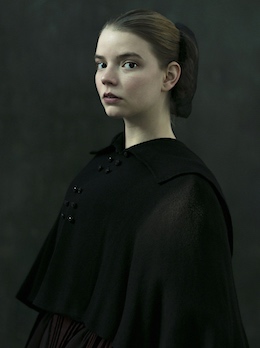 The BBC’s two-part adaptation of Jessie Burton’s 2014 bestseller promised to be a supernatural treat, though in that respect the trailers were somewhat misleading. Set in 17th century Amsterdam, it’s about a girl who marries a wealthy merchant, but finds his strict and secretive household is not all she’d hoped. He buys her a dolls house as a wedding gift and she commissions a miniaturist to produce items for it, but she soon starts to receive things she didn’t order — things which suggest the miniaturist somehow knows people’s secrets, and can possibly see the future… In actuality, The Miniaturist is more of a period drama, albeit one with lashings of Gothic that were right up my street. It was beautifully made, with a fantastic eye on the costumes and locations, and cinematography that evoked painting of the era. There were strong performances too, particularly from Anya Taylor-Joy (yes, her out of
 “Oh God, I’d forgotten,” says one character early in the first instalment for almost 15 years of BBC Two’s pitch-black comedy series. He’s been confronted with some other returning characters, but I have to say that the sentiment kind of sums up my reaction to a lot of this revival, in two ways: firstly because I had to keep rummaging in my memory to make connections back to a series I haven’t watched for a decade and a half, and secondly because the hilarious grotesquery of the League came crashing back. Revivals of once-great comedies can be a mistake — they’re often little more than an exercise in nostalgia; and this one is certainly aimed at fans, as the vast majority of it continues or riffs off stuff from before — but, in spite of that, it still felt fresh and edgy, not like a gang of middle-aged men reliving past glories (the other thing that goes wrong with revivals). So it was all really rather good, and it’s gone down very well too. Officially it’s a 20th anniversary special rather than a fourth series, but might we see more? I think it would be welcomed.
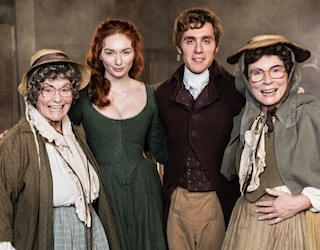 So much comedy, so much of it a passable time-killer that I have little else to say about. The highlight was probably 300 Years of French and Saunders, an excellent celebration of the comedy double act, reminding us of many of their greatest hits alongside a few nice additions. It made me want a whole highlights series repeating all their many hilarious film spoofs. Shakespearean satire Upstart Crow offered a neat riff on one of the better-remembered storylines from modern Christmas classic Love Actually, which it executed with surprising subtly (or, at least, I had to point out the references to my fellow viewers, which was followed by half-an-hour of scouring through Richard Curtis’ film for the relevant scenes). I enjoyed the pilot for Tim Vine Travels Through Time back in
  Black Mirror series four was released last Friday, but I haven’t even watched series three yet. Well, I did only watch
 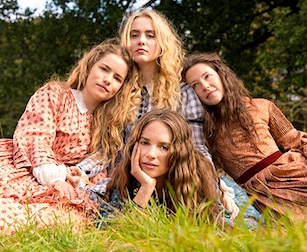 I may’ve watched 26 different programmes, but there’s still an awful lot I’ve missed. Like the BBC’s new three-part adaptation of Little Women — I’ve never read it or watched another version, so here’s my chance to get cultured. Less worthy but no less lovely, there’ve been a couple of Great British Bake Off specials featuring contestants from the BBC years even though it’s now on Channel 4. Gasp, indeed. And despite that long list up above, there’s still a handful of comedy specials I’ve got to catch up on, like Not Going Out, Would I Lie to You?, and even some not featuring Lee Mack. There’s bound to be something else I’ve forgotten — I’ll have to go through the Radio Times, again…
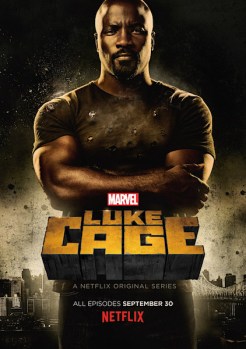 The third series in the Marvel/Netflix stable wins points for boldness, much as Jessica Jones did this time last year. Where Daredevil is a well-done but ‘standard’ superhero show, leading to it being somewhat demeaned by the Cool Kids of the critical world (but much higher-rated by us plebs on the likes of IMDb), Jessica pushed into dark psychological territory, and now Luke Cage brings black culture and life into the fold.
 It feels like only yesterday I was writing here about season four (it was, in fact,
  Well, it’s only taken me 3½ years to get round to this (seriously, where does time go?!) This bunch really represents the series’ highs and lows. On the one hand, Be Right Back — in which Hayley Atwell signs up for a company who create a virtual version of her deceased partner using his contributions to social media — is an exploration of broadly-plausible near-future-tech with a focus on its potential emotional effect. That’s what Black Mirror does best, I’d argue: look at stuff that may, perhaps, be in the pipeline, and how that would actually play out for us. On the other, there’s The Waldo Moment, which is also sickeningly plausible — as Charlie Brooker himself has said, it’s more or less come true, though with the likes of Boris Johnson and Donald Trump instead of a blue cartoon bear — but as an episode it doesn’t quite seem to know where to go with its concept or what it might ultimately signify. The episode just stops rather than ends, until a flash-forward coda that’s a bit silly in its extremity. Even Brooker, while doing press for the third season (released tomorrow), has said he’d go back and re-do that episode if he could. Still, full marks for effort.
 This latest series of Red Dwarf (which airs its fifth episode tonight, with the sixth available on demand from tomorrow) seems to have gone down rather well, with some reviews even hailing it as a “return to form” — that form being “the good old days” of Red Dwarf VI (or thereabouts), over 20 years ago. Personally, I didn’t dislike Red Dwarf VII or Back to Earth, and I even have a soft spot for Red Dwarf VIII, so what do I know? Nonetheless, I would concur that this Dwarf represents a fine vintage, hitting the series’ unique mix of accessible mainstream-ish comedy and proper science-fiction concepts. Red Dwarf XII is already in the can for 2017, and I wouldn’t be surprised to see Dave commission more episodes beyond that.
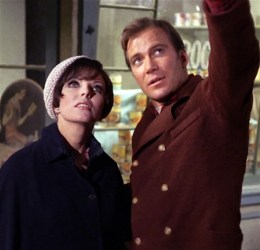 The entirety of TV Star Trek is available on Netflix, so I took the chance to watch the most acclaimed episodes of both The Original Series and The Animated Series — which happen to be connected, something I didn’t realise until afterwards. Er, I mean, which I totally planned. Both are pretty fine uses of science-fiction to explore relatable issues. Well, not many of us have to deal with disruptions to reality caused by time travel, or knowledge of the future creating dilemmas about what we do next, but they work the relatable stuff in around the surface plots. And they both still seem pretty bold for network TV episodes even today, almost half a century later, as (spoilers!) Kirk lets a good woman die to retain the correct timeline, and a kids’ cartoon deals with the subject of euthanasia.
 This month, I have mostly been missing loads of stuff. Probably the most talked about is HBO’s adaptation of Westworld, which has apparently pulled in even bigger ratings than Game of Thrones. Over here there’s the second series of The Missing, which if it’s half as good as the first will be a real must-see. Then there’s Woody Allen’s first (and last) TV series for Amazon, Crisis in Six Scenes. Reviews have been mixed to poor but I still intend to get round to it. And finally Hooten & the Lady, which may be the worst title for anything in the history of ever, but a globetrotting adventure series inspired by the likes of Indiana Jones and Romancing the Stone sounds right up my alley.
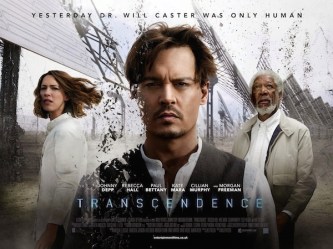 Christopher Nolan’s regular director of photography (he’s lensed seven Nolan films, from
 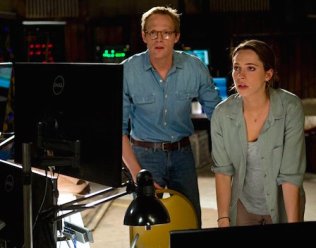 Another element that’s probably too challenging for some is where our allegiances are meant to lie. (Some spoilers follow in this paragraph.) At the start, it’s clear Depp & friends are the heroes and the murderous anti-tech terrorists are the villains. As events unfurl, however, artificial-Will perhaps goes too far, Bettany teams up with the terrorists, and eventually so do the government and Will’s other friends. There is no comeuppance for some characters who are initially begging for it; a good one self-sacrifices somewhat heroically. This doesn’t fit the usual Hollywood mould at all (well, the last bit does, sometimes), no doubt to some’s annoyance. The number of people who clamour for any sliver of originality or texture to their blockbusters, but then are unhappy when they actually get it…
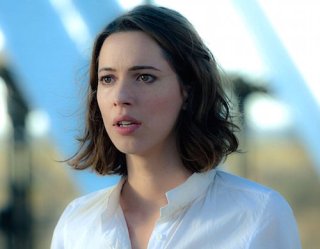 robbing the entire film of tension and nullifying any sense of surprise, and the movie doesn’t compensate with, say, a feeling of crushing inevitability. The climax in particular becomes a drawn-out exercise in connect the dots: we’ve been shown how this all ends up, now we’re just seeing the minutiae of how it got there. There’s no twist or reveal to speak of, just a wait for it to marry up with what we already know.
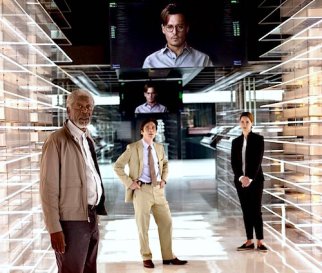 I guess that’s probably the explanation for Transcendence’s poor reception, in the end: it’s too blockbuster-y for viewers who’d like a dramatic exploration of its central moral and scientific issues, but too lacking in action sequences for those who misguidedly expected an SF-action-thriller. I maintain it’s not slow-paced, especially if you think it’s going to be, but nor does it generate doses of adrenaline on a committee-approved schedule. It’s not all it could have been, but if all you’ve heard is the mainstream drubbing, it’s probably better than you expect.
 100Films.co.uk