What Do You Mean You Haven’t Seen These Films You’ve Bought Multiple Times?

Reader, I want to make a confession: sometimes I buy new copies of films I already own but have never seen. Never mind blind buying, I blind upgrade. It’s stupid, I know — why not at least watch the copy I already have to see if I like the thing before purchasing it a second time? But when Blu-ray came along, the leap in quality from DVD was so great (especially with a new transfer and/or restoration) that sometimes it feels like “why would I watch this crappy version just because I already have it when that better one exists?” And now with 4K… well, I do it less often, because the jump between HD and UHD isn’t always as pronounced (and if they fuck it up, sometimes the new version is worse).

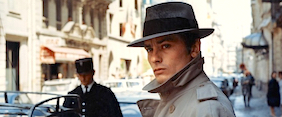
Nonetheless, the theme of this year’s WDYMYHS was provoked by my relatively recent (i.e. in October) purchase of Le Samouraï in 4K. I first owned that film on DVD, didn’t get round to watching it, then a Blu-ray came along, and it seemed like it would be worth an upgrade. I didn’t get round to watching that either before the 4K came along — well, I wasn’t going to upgrade again! But then the reviews were so good… I did at least manage to resist until it was discounted. Although, all three of those were Criterion editions, so it was never truly cheap. Eesh. I really hope I like it as much as I’m expecting to…

That might be my most egregious example of ridiculous triple-dipping (I feel like I’ve more than triple-dipped on some titles, but at least those were ones I already knew I liked), and it’s what led me to this theme: I wanted a selection methodology that would force me to finally watch Le Samouraï, so what better than the very reason I wanted to be forced to watch it? I was certain I’d find another 11 films (at least) that had a similar purchase history. And, reader, I did. Of course I did. I won’t give you the full story of how many times I’ve re-bought them or why, but I’ve owned them all at least twice without ever actually watching them — until now!

In alphabetical order, they are…


The City of Lost Children

The City of Lost Children

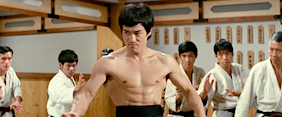
Fist of Fury

Fist of Fury
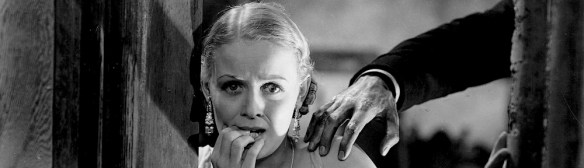
The Lodger

The Lodger

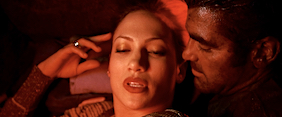
Out of Sight

Out of Sight
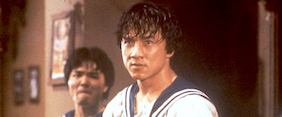
Project A

Project A

Saboteur

Saboteur
Le Samouraï

Le Samouraï

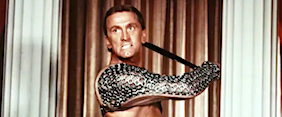
Spartacus

Spartacus
Steamboat Bill, Jr.

Steamboat Bill, Jr.

Tenebrae

Tenebrae
The Untouchables

The Untouchables

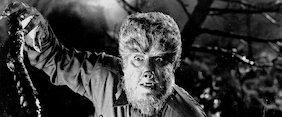
The Wolf Man

The Wolf Man

As I intimated in the introduction, these aren’t the only 12 films I’ve upgraded without watching, so how did I settle on this particular batch? For once, it was mostly personal preference rather than other people’s rankings. I started by making a list of eligible titles, along with how many times I’d owned them — given the theme of the list, I wanted to err towards the ones I’d repurchased the most. Then I simply picked the ones I wanted to include.

Except it wasn’t quite that simple. In compiling the list, I noticed a couple of themes. Thanks primarily to some films being released repeatedly in sets, there were multiple films on the list directed by Alfred Hitchcock, or Dario Argento; or starring Bruce Lee, or Jackie Chan, or Buster Keaton; or from the classic period of Universal’s horror output… I decided that, as those were clear groups, representative examples of each should definitely be included. And that’s when I did fall back on old tricks: I ranked each group by their popularity and average ratings on Letterboxd. That wasn’t the be-all-and-end-all (neither of the two Hitchcocks I chose were in his top two), but it was a useful guide. I chose one from each category, with the exception of Hitchcock, who gets two because I’ve upgraded his films in different ways for different reasons. Saboteur represents the 14 titles that Universal have repeatedly reissued in box sets of varying kinds. The Lodger represents the rest, though in particular his British pre-Hollywood career.

With the five other films featuring work by visionaries like Stanley Kubrick, Steven Soderbergh, Brian De Palma, and Jean-Pierres both Jeunet and Melville, it looks like another exciting year ahead for this category. Let’s hope they live up to my expectations — I’ve certainly spent enough money on them.


December’s Failures

Welcome to my monthly “Failures” column, where I look back at some of the films I could, would, maybe even should have watched last month… but failed to.

On the big screen, Sony’s latest attempt at making a Spider-Man spin-off, Kraven the Hunter finally arrived almost two years after its first announced release date, and seemed to be received about as well as you’d expect for a Sony Spider-Man spin-off that had a two-year delay (i.e. poorly). In similar desperate franchise moves, animation The Lord of the Rings: The War of the Rohirrim seemed to generate more column inches because they admitted it was rushed out to secure the ongoing Rings film rights, rather than anyone saying anything about the film itself. I feel like Disney’s Mufasa: The Lion King, a “live-action” prequel that no one asked for, must fall into a similar bracket.

Conversely, I’ve read Sonic the Hedgehog 3 is good; the crazy idea of making a Robbie Williams biopic starring a CG monkey seems to have actually paid off in Better Man; and I keep hearing how good Daniel Craig is in Queer. Various other films managed theatrical releases of various other sizes, of course, but the one that most intrigues me is Shakespeare / video game mashup documentary Grand Theft Hamlet, which I believe is coming to MUBI sometime early in 2025, so I’ll look out for it then.

Over on streaming, various attempts at creating a Christmas classic seem to have been overshadowed by Carry-On — not a modern revamp of the old British comedy series, but an airport-based thriller starring Taron Egerton. I’d probably have watched it if I had a Netflix subscription (there’s a few things on there I need to catch up on now, so maybe it’s time I signed up again). As for the aforementioned seasonal fare, Netflix had the Richard Curtis written and produced animation That Christmas, plus 15-rated “birth of Jesus” movie Mary starring Anthony Hopkins as Herod (that’s literally all I know about it. I’ve not seen anyone discuss or review it. Is it actually real?); Sky Cinema and their fateful Original brand tried public-domain-IP mashup The Night Before Christmas in Wonderland; and Amazon had the streaming debut of (briefly theatrically released) wannabe-blockbuster Red One — which apparently was a huge hit for them, even after it flopped on the big screen, thus proving once again that the best way to ensure a streaming success is to have a wide theatrical release first.

Meanwhile, Disney+ had… fuck all. You’d’ve expected them to trot out something seasonal, right? But I don’t think they even had a premiere that was, er, non-seasonal. Even Apple TV+ spat out Fly Me to the Moon, the Channing Tatum/Scarlett Johansson Nasa-during-the-space-race romcom with posters that made it look like a fake movie-in-a-movie. But Disney+ never have anything much new anymore in the way of original movies, it seems to me (just their high-profile theatrical releases making relatively-speedy debuts). Has the Mouse already got wise to the false promises of streaming originals? Let’s hope others follow suit.

In the second tier of films making their streaming debuts, basketball anime The First Slam Dunk came to Netflix. Sports movies aren’t normally my bag, but I’ve seen this on various “great films” lists (especially animated ones) for what feels like years, so here’s a chance to… be reminded to watch the other copy I, ahem, got hold of fairly recently. Indeed, Netflix seemed to specialise in things I already own but haven’t watched, which is always irritating. Other titles included Marcel the Shell with Shoes On, Puss in Boots: The Last Wish, Scream VI, and Knock at the Cabin, which has already been on NOW so I’m doubly miffed at myself. NOW themselves pulled the same trick with Godzilla x Kong: The New Empire, plus Abigail, Kung Fu Panda 4, and A Quiet Place: Day One. And at the more… esoteric end of the spectrum, MUBI had a new version of an old film in Caligula: The Ultimate Cut, and a film they self-described as Andrea Arnold’s “long-awaited return to fiction filmmaking”, Bird.

The ever-changing streaming back catalogue is a beast of greater size than even Santa’s bulging sack, but a selection of titles of particular interest included Killer Joe, Mississippi Grind, The Reader, Warm Bodies, and the return of streaming perennial The Notebook (all on Amazon); Bodies Bodies Bodies, I, Tonya, King Richard, and Stan & Ollie, and the original Point Break, which I’ve been meaning to rewatch (all on iPlayer); and Brian and Charles, I’m Your Man, Petite Maman, A Quiet Place Part II, Spencer, and The Worst Person in the World (all on Channel 4). There were also various other Christmas-related movies, like The Holiday (which has somehow transformed into a modern classic in recent years) and various versions of The Grinch, none of which I’m going to watch in January because it’s not Christmas anymore. Maybe next year.

The above paragraph doesn’t even touch on all the films that arrived on streamers this month but I already own on disc and haven’t watched, acting as a reminder of the slight ludicrousness of my physical media collection. A soupçon of particularly daft ones (read: I’ve owned them for so long, why haven’t I watched them?) includes on Howard’s The Missing, Guy Ritchie’s Revolver, and Alfonso Cuarón’s Y Tu Mamá También on Netflix (I own all of those on DVD. Why would I watch a DVD when they’re streaming in HD? Besides, for all I know they could have disc rot or something by now); Baz Luhrmann’s The Great Gatsby, Billy Wilder’s The Private Life of Sherlock Holmes, and Ben Affleck’s The Town on Prime; Terry Gilliam’s The Brothers Grimm, Sergio Leone’s A Fistful of Dynamite, and Alex Cox’s Repo Man on NOW; Nicolas Roeg’s Don’t Look Now, trilogy-completing How to Train Your Dragon: The Hidden World, and John Frankenheimer’s The Train on iPlayer; and Brian De Palma’s Carlito’s Way, Robert Eggers’s The Northman, and M Night Shyamalan’s Old on Channel 4. And that’s without even starting on stuff to rewatch.

In the face of such overwhelming evidence that I don’t watch enough of what I buy, I naturally went ahead and bought even more. Now, of course I’m going to buy something like Alien: Romulus, because I own all the others and I’m a completist. I’m not sure the same logic really applies to Joker: Folie à Deux (I stopped buying all the DC movies a while ago), but there we go, I bought it anyway. And I couldn’t resist a classic like Galaxy Quest making its 4K debut, especially when it comes with all the correct aspect ratios for the first time on home media. As for most of the rest of my purchases…

You know what, they’re not the sort of thing that usually turns up on streaming, so I feel a lot less bad about those. I’m talking the kind of stuff put out by Radiance: their Luis Buñuel box set, Nothing Is Sacred, containing Viridiana, The Exterminating Angels, and Simon of the Desert; Swedish crime thriller The Man from Majorca; and Japanese neo-noir Yokohama BJ Blues. I’m talking various labels’ commitment to getting loads of classic Hong Kong action on disc, which this month was represented by Eureka’s wittily-titled four-film set of historical epics directed by the prolific Chang Cheh, Horrible History, containing Marco Polo, The Pirate, Boxer Rebellion, and Four Riders. I’m talking stuff you can only get if you import it from Australia, like the third volume in Imprint’s After Dark: Neo-Noir Cinema Collection, containing Homicide, White Sands, The Crossing Guard, Heaven’s Prisoners, Under Suspicion, and Dirty Pretty Things; plus a pre-Bond Roger Moore in Swinging Sixties thriller Crossplot, and sci-fi noir The Man in Half Moon Street.

I’m also talking about stuff like Studiocanal’s epic Hitchcock: The Beginning box set. Streamers infamously have very few movies from The Past (often only a small handful from before 1980, if any), so who’s going to offer ten Hitchcocks from the 1920s and ’30s? Especially when almost half of them are silent. (Studiocanal do have their own channel on Amazon Prime, but that doesn’t really count.) The set includes both silent and talkie versions of Blackmail, newly restored in 4K, supplemented by the brand-new feature-length documentary Becoming Hitchcock: The Legacy of Blackmail. The set also contains UK HD debuts for The Ring, The Farmer’s Wife, Champagne, The Manxman, Juno and the Paycock (which was scarcely even available on DVD, if I remember correctly), Murder!, its German-language variant Mary, The Skin Game, Rich and Strange, and Number Seventeen; plus a wealth of special features — and you definitely don’t get those on streamers.

Okay, maybe the line gets a little blurrier elsewhere. Masters of Cinema recently released animation The Secret of NIMH, which is mainstream enough you might expect to find it streaming (though, currently, it’s not); but then they also released the Kinji Fukasaku-directed Japanese answer to Star Wars, Message from Space, and where else are you likely to find that but on disc? (Whether it’s worthy of being a Masters of Cinema release is another matter.) Of course, sometimes streamers will surprise you. Which one out of time-bending actioner Run Lola Run, East-meets-West Western Red Sun, and Ealing Comedy Kind Hearts and Coronets do you think is currently on a streamer? (It’s the Western.) You can rent the other two, but that’s not quite what I’m talking about. And I’ll add this: I got all of those on 4K UHD, and only one of them is streaming in that format. I may spend a disproportionate amount on physical media, but it’s still the best.

Archive 5, Vol.10

I have a backlog of 520 unreviewed feature films from my 2018 to 2023 viewing. This is where I give those films their day, five at a time, selected by a random number generator.

Today, we’ve got quite the variety, from Oscar nominees to straightforward action entertainment; from super-timely recent documentaries to pioneering animation from almost a century ago. But they’re all connected by… the fact I wrote some notes after I watched them. Thank goodness, otherwise reviewing some of them years later would be bloomin’ impossible. (That’s not much of a connection, I know, but it was on my mind after In the Mood for Love last time.)

This week’s Archive 5 are…

  • A Star Is Born (2018)
  • Boss Level (2021)
  • Coded Bias (2020)
  • Shadow of a Doubt (1943)
  • The Adventures of Prince Achmed (1926)


    A Star Is Born

    (2018)

    Bradley Cooper | 130 mins | digital HD | 2.39:1 | USA / English | 15 / R

    A Star Is Born

    This is the fourth version of A Star is Born, for whatever reason, but I’ve not seen any of the others so I won’t be making comparisons. I’m sure the story has been modernised (the last version was made in the ’70s, with the previous two in the ’50s and ’30s) without losing its fundamental essence: successful musician (here, Bradley Cooper) uncovers a new talent (Lady Gaga) who comes to outshine him. I guess it’s a timeless tale in the age of celebrity.

    Singers-turned-actors have a mixed history, though casting one in a story such as this is fitting, given how you need to believe they’re a top-drawer musical artist. Fortunately, Gaga actually can act as well as sing, so she’s an unqualified success here. The headline song, Shallow — a duet between the two leads, which attracted even more attention for how they performed it at the Oscars — is… perfectly fine. People went a little too crazy for it at the time, I feel. But it’s given weight by how well it’s used in the film, so I guess that could sway you.

    Also pulling double duty (well, triple if you count the singing) is Cooper, directing for the first time. (With all the talk this past awards season about how desperate Cooper is for an Oscar, it’s easy to forget that Maestro was only his second time behind the camera.) I seem to remember there being some complaints when he wasn’t nominated for direction for this one, but I think that was a fair omission. It’s not bad, but his directorial choices are a little too wavering. Like, in the early scenes, when the camerawork is all a bit documentary-ish, is effective — it undercuts the “glamorous story”, the almost-inherent fakeness of Musical as a genre, by making it feel Real. But later he gives in to glossy stylings too often; and too many of the song performances are captured with a lazily floating camera, lacking focus or decisiveness. It’s how they often shoot musical performances on TV: just kind of nothingy, moving the camera back and forth and side to side for the sake of making it ‘dynamic’. But, when you remember this is his first film, that’s fine — there’s a lot more good than bad about his work behind the camera.

    4 out of 5

    A Star Is Born was #18 in my 100 Films in a Year Challenge 2020.


    Boss Level

    (2021)

    Joe Carnahan | 101 mins | digital HD | 2.39:1 | USA / English | 15

    Boss Level

    For a long time, there was Groundhog Day. And then someone had the bright idea, “what if Groundhog Day but mixed with another genre?” So now we’ve had the sci-fi version (Edge of Tomorrow), and the horror version (Happy Death Day), and the YA version (The Map of Tiny Perfect Things), and the “what if there were two people” version (Palm Springs), and the TV series version (Russian Doll)… Here, we get the action movie version. And it’s pretty much exactly what you’d expect and hope “Groundhog Day as an action movie” would be. That’s praise, not criticism.

    Interestingly, considering the context I’ve chosen to place this in, the film itself acknowledges — you might even say relies on — the fact we’ve all seen time loop movies before. Rather than begin at the obvious beginning (i.e. the hero’s first loop), the story starts dozens of loops in, then fills in the backstory with flashbacks later on. It’s somewhere between a sensible choice (who hasn’t seen Groundhog Day?) and a bold move (what about people who haven’t seen Groundhog Day?) That said, I imagine people in the latter group can still follow it, it just might be what’s going on is mysterious for longer (most of us will instantly get “he’s in a day-long time loop”, they’ll just have to wait for that information to become clear).

    In fact, it’s a pretty economical movie across the board, hitting the ground running and rarely letting up. There’s very little repetition of “the same stuff every day”, instead taking our hero off in different directions. It does lean on voiceover quite a lot to get through some of the exposition, which won’t be to everyone’s taste, but it means it can hurry through the technicalities and get to what we came for — action and gags — so I can let it slide. On the basis of the kind of entertainment it’s designed to deliver, Boss Level succeeds admirably.

    4 out of 5

    Boss Level was #160 in my 100 Films in a Year Challenge 2021.


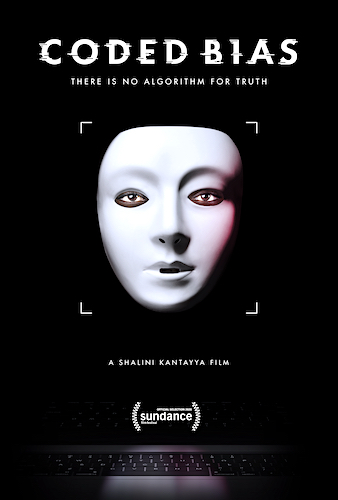
    Coded Bias

    (2020)

    Shalini Kantayya | 86 mins | digital HD | 16:9 | USA, China & UK / English & Chinese | 12

    Coded Bias

    Given the precipitous rise of AI in the past couple of years, I don’t know how relevant this documentary from 2020 still is. Back then, it was ultra-timely, but tech evolves so fast, I have to wonder if it’s already dated. Well, if you want to find out for yourself, it’s on Netflix.

    Not that it’s just about AI. It touches on a lot of interesting tech-related topics, like how facial recognition struggles with non-white people, or how algorithms were increasingly being allowed to control… pretty much everything. It makes a lot of broadly scary declarations about these things, but often lacks the detail to back them up. Not that it’s necessarily wrong, but it doesn’t prove its point; doesn’t clarify what’s scary beyond the gut reaction that this all sounds scary. This is partly because there’s so much to cover — it keeps jumping around between topics in short vignettes — which at least makes clear what a big field this is. There are also signs of hope, with the film offering some solutions (primarily: regulation in law) and highlighting fantastic people (almost all women, incidentally) doing great work to combat these things.

    Ultimately, the areas the film explores are interesting and it’s sometimes informative about them, but it’s also unfocused and disorganised in its structure, which is a shame.

    3 out of 5

    Coded Bias was #243 in my 100 Films in a Year Challenge 2020.


    Shadow of a Doubt

    (1943)

    Alfred Hitchcock | 108 mins | UHD Blu-ray | 1.33:1 | USA / English | PG

    Shadow of a Doubt

    I feel like Shadow of a Doubt sits in a certain tier of Hitchcock film; one where it’s not one of his very best known (Psycho, Vertigo, The Birds, etc), but regarded well enough that it definitely has its fans, for some of whom it probably is Hitchcock’s best film. Hitch himself repeatedly said it was his favourite of his own work, chiefly because he enjoyed how it brought menace into the surface-level perfection of small-town America. One critic has even described it as Hitchcock’s “first indisputable masterpiece”, which I would certainly dispute considering its predated by the likes of The 39 Steps, The Lady Vanishes, and Rebecca. Well, taste is relative.

    Personally, while Shadow of a Doubt definitely has a neat premise and strong moments, overall I felt it lacked any of the truly exceptional elements that mark out Hitch’s real classics. Sure, if most other filmmakers had made it, it’d probably be one of their best; but you’re competing with an incredibly strong body of work if you’re a Hitchcock film and, for me, this one is definitely second-tier. Of course, as I just intimated, being a second-tier Hitchcock film is still some achievement. It’s a shame the relative hype for this one is leading me to focus on the negative. Heck, maybe I’ll like it even more when I rewatch it someday. Until then, I feel it missed the mark of my expectations in places. I even thought it was the kind of movie someone could remake and possibly get something really great out of. (Blasphemy!)

    4 out of 5

    Shadow of a Doubt was #90 in my 100 Films in a Year Challenge 2023. It was viewed as part of “What Do You Mean You Haven’t Seen…?” 2023.


    The Adventures of Prince Achmed

    (1926)

    aka Die Abenteuer des Prinzen Achmed

    Lotte Reiniger | 66 mins | Blu-ray | 1.33:1 | Germany / silent | PG

    The Adventures of Prince Achmed

    The earliest (surviving) animated feature film is an ‘Arabian Nights’ fairytale about… well, the short version is in the title.

    But story schmory, because the real star here is the medium itself: Lotte Reiniger’s animation. There are so many wonderful little bits of work, it’s impossible to list. Consistent throughout, it’s remarkable how much character and personality Reiniger manages to convey through her ‘simple’ cutout silhouette puppets. Then there’s little naturalistic details, like boats bobbing on the water. Some of it even feels surprisingly modern. Not massively so, perhaps, but it doesn’t have that staid, stilted formality you might expect from a hundred-year-old rendition of a fairytale. And that’s not to mention the homosexual subplot. Plus, there’s so much more to the style than just silhouettes on plain backgrounds. There are shades and effects, to add depth or style: the wavy lines of a river; a mountain range fading into the distance; and subtler and clever things, too. It’s a visual feast.

    The restoration could be better, mind. There are a lot of dirt and scratches, which I can live with (there are so many of these, it would have to be manually patched up frame by frame, which would cost a fortune), but more egregious are stability and alignment issues. For example, during one scene, the top part of the next frame keeps appearing at the bottom. Surely that could’ve been fixed?

    Better is the soundtrack. The BFI Blu-ray offers a choice: the original 1926 score by Wolfgang Zeller (recorded in 1999) or an English narration (with effects), based on Reiniger’s own translation of her German text (recorded in 2013). Having watched the film with both, I’d say the narration adds nothing of value to the experience, especially as it sounds like narration from a preschool storybook. Just stick to the original music.

    But however you watch it, minor technical issues can’t distract from the artistry on display. This is truly the work of a master of her craft. Magnificent.

    5 out of 5

    The Adventures of Prince Achmed was #35 in my 100 Films in a Year Challenge 2021.


  • Rope (1948)

    2019 #24
    Alfred Hitchcock | 81 mins | Blu-ray | 1.33:1 | USA / English | PG / PG

    Rope

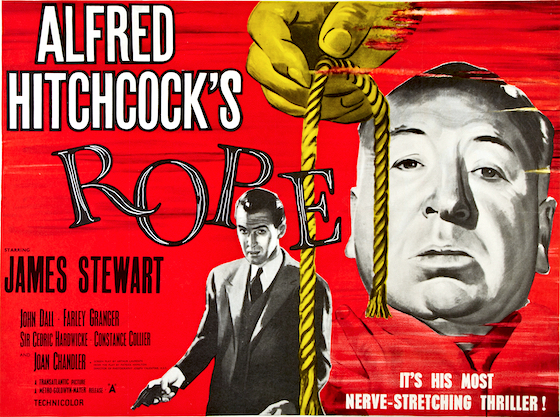
    Nowadays fake single takes are all over the place — some of them even last whole movies. But, as with so much cinematic trickery, it’s not actually a new idea. I don’t know if Alfred Hitchcock was the first director to attempt to trick the viewer into thinking they were watching one long take, when in fact it’s several shots stitched together via hidden cuts, but his effort is certainly one of the most famous. As an exercise in style, it’s a mixed success. Hitch is presumably inventing techniques that other filmmakers would polish and perfect in later attempts at the same stunt, but these first attempts don’t always come off perfectly. For example, every ‘hidden’ cut comes via an unmotivated camera move into the back of someone’s jacket — it may hide the cut in a literal sense, but there’s no doubting what’s going on. The entire movie is staged in actual long takes — just ten in total, most of them running seven to ten minutes. That means there are just nine cuts in the entire film, but several times (four, to be precise) Hitch just gives in and resorts to a regular cut. Sometimes you have to put the needs of the story before your showing off, I guess.

    But, in other ways, the film is a great technical success. The camera moves elegantly around the apartment, employing moveable walls and stagehands shifting props while out of shot to get the moves Hitch was after. A large window at the back of the set shows a cityscape, which in other films would’ve just been a photo blowup, but here is made more convincing and alive with smoke and lights. Similarly, the passing of time is subtly emphasised because, through that window, we can see the sunlight gradually transition from daytime to evening. All of this helps sell the fact that the film takes place in real-time… sort of. Although it only runs 80 minutes, scientific analysis (yes, some scientists analyse this kind of thing) has shown the events cover about 100 minutes. Certain action is sped-up to close that gap — for example, the sun sets too quickly. Apparently this is so effective that the analysis concluded audience members feel like they’ve watched a 100-minute movie, even though it’s only 80… which, er, I don’t think was meant to sound like a criticism…

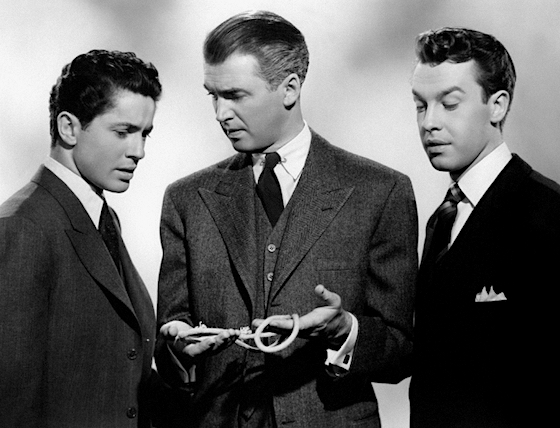
    Look, a rope!

    Ostensibly based on Patrick Hamilton’s play of the same name, which in turn was inspired by the Leopold and Loeb case (also the inspiration for Compulsion, amongst various other works of fiction), this adaptation changes the setting, almost all of the character names, and some of their personality traits too. Wherever they come from, the film offers an interesting array of characters. The most obvious are the two murderers — smug, cocky Brandon and worrisome Phillip — along with James Stewart, who portrays a gradual realisation that something is amis, culminating in devastation at what was really a silly thought exercise being writ into reality. Apparently Stewart thought he was miscast, but I think he’s very good, conveying much with just looks and expressions, and making you believe his moral about-turn at the end.

    Other parts have, perhaps, dated: the film attracted some controversy for its homosexual overtones, but to modern eyes there’s very little to emphasise such an interpretation. Perhaps some social cues that once indicated homosexuality have fallen by the wayside in the past seven decades; or perhaps, because there’s no need to bury such things anymore, what was once ‘weird’ is now just normal behaviour. Nonetheless, much of the screenplay remains quite fun, including various nods and winks to the situation, and one slightly meta scene where two female characters talk about male movie stars they adore in front of Jimmy Stewart. But there are also sequences of familiarly Hitchcockian suspense, one great bit coming when all the characters are distracted chatting but we’re watching the maid who, while she slowly clears stuff away, is on course to discover the hidden body…

    As the end credits roll, the actor who plays David — the victim, who dies in the first shot of the movie; really, no more than a prop — Is listed first, and then every other character is defined in relation to him. It’s almost like they film’s very credits are underlining the message of the film: that no one’s inferior, including David; like they’re giving him some kind of dignity in death by making him the focus of the final element of the film. It’s another neat little trick in a film that’s full of them.

    5 out of 5

    Rope was viewed as part of Blindspot 2019.

    The Best of 2020

    And so, we reach the end of 2020.

    I don’t know about you, but this feels like a, “what, already?!” moment to me. Putting my year-in-review posts together used to seem to take ages, but this year it feels like I’ve barely begun and now it’s over. But that’s enough about my subjective perception of time — let’s talk about movies in 2020, like Tenet, which is partly about… um, never mind.

    This final year-in-review post does what it says on the tin: it’s a list of my favourite films that I saw in 2020 (normally my least-favourites would be here too, but I did those already). A note for newcomers and/or reminder to the forgetful: rather than just 2020 releases, I select my list from all 264 movies I saw for the first time during 2020. That’s partly because there are tonnes of new releases that I never see in time — which is also why this post contains a list of 50 significant films I missed.

    Compiling this year’s lists has taken a lot of thinking, rearranging, cutting, reflecting, re-adding, re-rearranging, and a certain amount of “oh, that’ll do, what does it matter anyway” to actually get them out the door. Here’s what I ended up with…



    The 26 Best Films I Saw For the First Time in 2020

    Since 2016, I’ve replaced the usual “top ten” with a “top 10%”. As I watched 264 films in 2020, that means this year’s list has 26 films. (If you think that’s too many, feel free to scroll down and start from wherever you like.)

    Although all the movies I watched for the first time in 2020 are eligible, I did watch 57 films that had their UK release in 2020, so I’ve noted the ‘2020 rank’ of the eight that made it in. (I also saw a couple of 2020-UK-release films at FilmBath Festival in 2019. As they were already ranked as 2019, I’ve not factored them in here.)

    26 Klaus
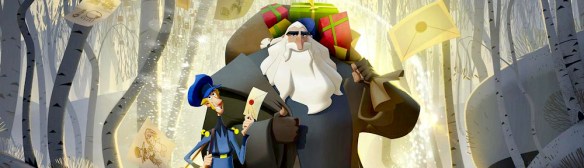
    The animation is absolutely gorgeous in this Oscar-nominated BAFTA-winning Netflix original about a disaffected postman who helps originate the legend of Santa.

    25 The Looking Glass War
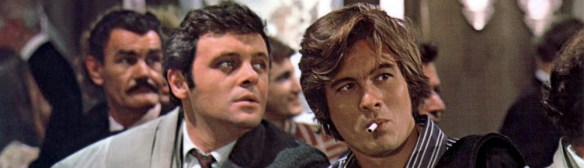
    The mundanity of real-life espionage; conflicted morals; the futility of the whole thing — this John le Carré adaptation is full of all the things that made his work so great.

    24 Dial M for Murder
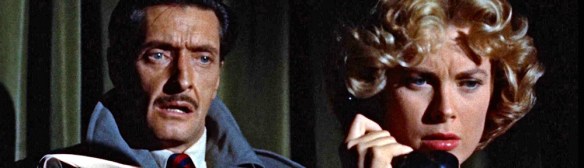
    As intelligent and tense a thriller as you’d expect from Hitchcock; so good it even manages to make you overlook its obvious stage-bound roots. Superb in 3D, too.

    23 The Invisible Man
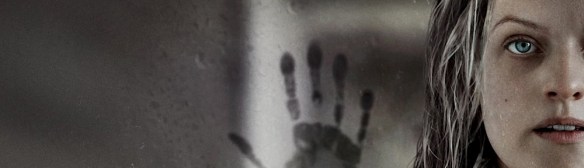
    2020 #8 This #MeToo-era reimagining of the HG Wells / Universal Horror classic could hardly be more timely. But even leaving that aside, it’s a chilling exercise in ratcheting tension.

    From its astounding opening to its hard-hitting final act, Last Black Man is an astonishing cinematic experience about the stories we tell ourselves about ourselves. [Full review.]

    A space ship full of colonists is sent irretrievably off course in this Scandi sci-fi that’s driven by big ideas about human behaviour in extremis. [Full review.]

    William Holden and Audrey Hepburn are clearly having a whale of a time in this marvellously cine-literate ’60s romp about a struggling screenwriter. [Full review.]

    19 Philomena
    Judi Dench is extraordinary and Steve Coogan is a revelation in this intensely affecting drama about a wronged woman searching for her son who was taken decades earlier.

    18 Fanny and Alexander

    Ingmar Bergman described this as “the sum total of [his] life as a filmmaker”. Blending familial drama with a dash of magical realism and the supernatural, it’s a masterful work.

    17 Belladonna of Sadness
    Delicate watercolour artwork and medieval folklore smash against a storyline fuelled by rape and a penis-shaped devil in this astonishing animation full of psychedelic imagery and experimental music. I’ve never seen anything quite like it.

    2020 #7 It’s “Agatha Christie meets the Coen brothers in a nudist camp” as the eponymous handyman searches for his missing hammer in a world full of wobbly bits, where anyone might’ve taken it. [Full review.]

    15 Tenet
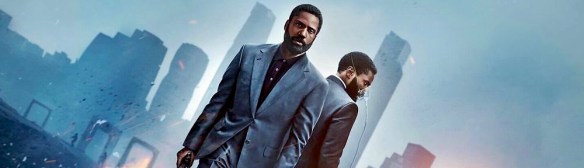
    2020 #6 If you let go of the need to fully understand the mechanics of the film’s time-reversal conceit, Christopher Nolan’s latest is an audacious and exciting spy thriller. It’s a shame real-world arguments have come to overshadow what is actually a suitably thrilling spectacle.

    14 Soul
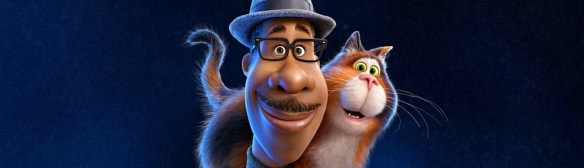
    2020 #5 Pixar have often been praised for making films for grown-ups. That’s not something I’d wholly agree with, until now. Not as cutesy as the rest of their output (largely), Soul asks big questions about what makes us who we are. All wrapped up in a buddy-quest storyline, of course.

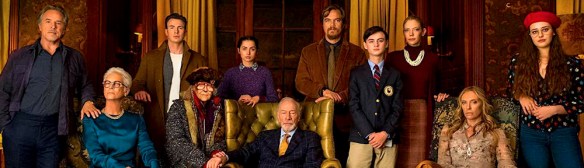
    Rian Johnson’s tribute to whodunnits a la Agatha Christie pulls off something that genre can’t always manage: rewatchability. It barely matters who actually dunnit when it’s this much fun spending time with the outrageous suspects and Daniel Craig’s implausibly-accented detective. [Full review.]

    12 The Old Dark House

    As amusing as a droll comedy and as atmospheric as a creepy old-school horror, James “director of Frankenstein” Whale’s genre classic is just a lot of fun.

    If this anime were live-action, it would be an action-adventure blockbuster. It’s got it all: thrills, humour, emotion, wonder… That makes it so accessible, it would be a perfect starting point for any Westerner new to anime. [Full review.]

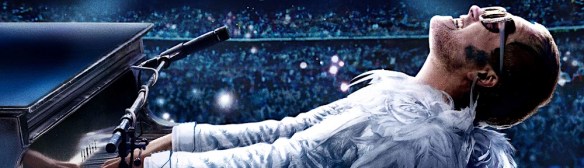
    Taron Egerton stars as Elton John for this unusual biopic of the singer. Part traditional musician biopic, part jukebox musical, director Dexter Fletcher remixes John’s music into some imaginatively staged sequences, while Egerton and his supporting cast (in particular Jamie Bell) give thoughtful, nuanced performances. The cumulative effect is a movie that is highly enjoyable but not without depth. [Full review.]

    9
    The Lady Vanishes
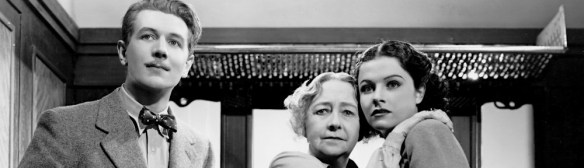
    Alfred Hitchcock is probably most renowned for his Hollywood movies (Pyscho, Vertigo, Rear Window, etc), but we shouldn’t forget his British output — these are the films that got him Hollywood’s attention, after all. The director’s second appearance on this year’s list is one of the last films he made before that jump across the pond. It’s a mystery thriller about an old lady who somehow disappears from a moving train, and a couple of youngsters who try to find out how and why. It’s witty, it’s clever, and it’s exciting — all the things for which Hitch is best known.

    8
    Judgment at Nuremberg
    This fictionalised account of the military tribunals that took place following the Second World War sets its sights not on the trials of major Nazi leaders, but on the subsequent trials that assessed the guilt of people further down the chain — here, four judges and prosecutors who helped facilitate the Nazi’s crimes. For such weighty material, this is an appropriately weighty film — a long, complex, methodical, harrowing account. Boldly directed by Stanley Kramer, and with an incredible cast all giving first-rate performances, this remains a powerful, brilliant film.

    7
    Tim’s Vermeer

    Computer graphics pioneer and inventor Tim Jenison is an art enthusiast, fascinated by the work of Dutch master Johannes Vermeer, in whose work his engineer’s brain sees a near-impossible photographic accuracy. So, he sets out to prove and expound upon existing theories that Vermeer painted with the aid of some kind of optical device. What unfolds is an astonishing story of obsession, dedication, and art historiography, which challenges your idea of where the line lies between art and technology.

    2020 #4 Sam Mendes’s single-take(-kinda) World War One adventure ended up losing many of the big prizes to Parasite last awards season (FYI, they both count as 2020 films here due to UK release dates in January and February, respectively). But that doesn’t mean it’s any less of an extraordinary experience. I love a long single take (fake or not), and I love stories that unfold in real-time, and I feel World War One has been under-represented on screen — so when Mendes takes all of those things and executes them brilliantly (having Roger Deakins on cinematography helps), you get a film that’s right up my street. [Full review.]

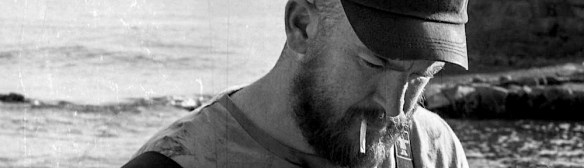
    If 1917 uses all the skills of modern tech to craft an almost old-fashioned epic, Bait is practically the polar opposite: old-school techniques (a wind-up camera; hand-developed 16mm film; post-sync sound) to tell a very modern story (broadly, about the economic plight of Cornish fishermen). It could be pretentiously arthouse or an insufferable polemic, but it’s neither. Instead, the story is told with genuine heart, drama, and humour, and the handmade aesthetic adds an appreciable, beautiful texture. [Full review.]

    4
    Parasite

    2020 #3 If you use Letterboxd, the latest film from acclaimed South Korean director Bong Joon Ho comes with a heavy millstone round its neck: according to that site’s users, it’s the greatest film ever made. Like Citizen Kane before it, such a label can be a distraction, and makes some people want to push back against it (is that why I’ve only ranked it at #4? You decide). “Best film ever” or not, the first non-English-language film to win the Best Picture Oscar is a timely deconstruction of class systems — just who are the eponymous parasites, actually? Even aside from big societal questions, it’s a thrilling piece of filmmaking; tense, exciting, and surprising.

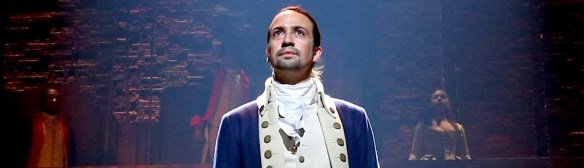
    2020 #2 Can a filmed stage production be the year’s best film? Um… Well, that’s a major reason why Hamilton is in 3rd place for my 2020 viewing and 2nd place for 2020 releases: it’s not really a film, right? Well, it’s definitely some kind of historical record — not of the life of Alexander Hamilton, but of a theatre production that took the world by storm. Here we get to witness the original Broadway cast in the show’s original staging, allowing us all the chance to witness a genuine cultural phenomenon first-hand. But this is not merely a couple of cameras plonked into the audience for the sake of posterity: director Thomas Kail users multiple cinematic techniques to make a film that truly feels like a film. Yes, it’s still theatrical, but it feels like this is how this story is meant to be (cf. something like Dogville: also very theatrical; also definitely a film). Theatres will reopen and we’ll be able to see Hamilton in the flesh again; and someday they’ll inevitably make a ‘real’ movie adaptation; and even still, this film will stand as a legitimate, magnificent experience in its own right. [Full review.]

    2020 #1 Writer-director Eliza Hittman’s story of a Pennsylvanian teenager forced to travel to New York for an abortion is told with documentary-like subtlety and understatement, but the result is incredibly moving and powerful. Without ever explicitly stating it, the film is an eloquent condemnation of US systems that force poor and struggling individuals to jump through hoops to access care that those of us in the rest of the developed world might consider basic rights. It’s a potent reminder that, for all its claims of being a highly-developed world-leader, for many of its citizens the US is as regressive, prejudiced, and unequal as the ‘Third World’ countries it so often seeks to demonise. [Full review.]

    1
    Do the Right Thing

    If there’s one feature that links many films on this year’s list, it’s timeliness: films that connect with some of the big sociopolitical issues of our day. Do the Right Thing was made over 30 years ago, but in its subject matter — a stiflingly hot day in a Brooklyn neighbourhood causes tensions to boil over into white-on-black violence — it could scarcely be more 2020. But this is not about “which film best encapsulates the year”, and so Spike Lee’s film tops my list because of all its other qualities, too. It’s a portrait of a place; a day-in-the-life hangout movie, where we follow myriad characters as they go about their business; 90-or-so minutes in which we get to understand the neighbourhood, to know its inhabitants… before the powder keg explodes and everything changes. Except, as we now know, nothing’s really changed at all.


    As usual, I’d just like to highlight a few other films.

    First, the cinematic masterpiece that is Love on a Leash. If you’re unfamiliar with this feat of cinematic excellence, may I recommend my review. It’s not exactly #27, because at various points while curating my list I had it in the top ten, the top twenty, in 26th place… but, eventually, not in the list at all. As I discussed in my review, it’s a film that’s hard to categorise: it’s simultaneously a one-star disaster and a five-star artistic experience. It’s an object lesson in why criticism of art can never be objective, because it’s unquestionable that it’s terribly made in every respect, and yet it’s nonstop entertaining, even thought-provoking, and certainly unique. (Of course, some people would say it’s objectively bad. Those people are wrong.)

    I’m someone who believes “best” and “favourite” can be different things: in 2020, I saw some movies I would acknowledge as great but that didn’t make the Top 26 because they didn’t really entertain me; equally, some films got in that are indeed great but I may never rewatch, whereas I left out simpler fare that I’m sure I’ll revisit. In a ranking of the “best” films I saw this year, no way does Love on a Leash get close; but in terms of my “favourite” films, it might’ve been pretty damn high. My final Top 26 falls somewhere between those two stools, but does carry the “best of” name, and so it felt insulting to any other film in the list (or, indeed, to those that tried but failed to squeeze in) to rank Love on a Leash above them. So here it is instead: first among my “honourable mentions”, with two solid paragraphs dedicated to it — more than any film in the actual list. So who’s the real winner, eh?

    Next, let’s recap the 12 films that won Favourite Film of the Month at the Arbies, some of which have already been mentioned and some of which haven’t. In chronological order, with links to the relevant awards, they were Laputa: Castle in the Sky, All Quiet on the Western Front, The Lady Vanishes, Aniara, Belladonna of Sadness, Paris When It Sizzles, Hamilton, Bad Boys for Life, Fanny and Alexander, Tim’s Vermeer, An American Werewolf in London, and Klaus.

    Finally, I always list every film that earned a 5-star rating this year. It’s especially pertinent this year, given how few reviews I’ve actually posted; although, as I noted in my stats post, it’s possible some of these ratings will be revised when I come to write a full review. But, for now, the 39 films with full marks are 1917, All About Eve, All Quiet on the Western Front, An American Werewolf in London, Anand, Aniara, Bait, Belladonna of Sadness, Dial M for Murder, Do the Right Thing, E.T. the Extra-Terrestrial, Fanny and Alexander, The French Connection, Hamilton, Harakiri, I Am a Fugitive from a Chain Gang, In the Mood for Love, The Invisible Guest, Judgment at Nuremberg, Knives Out, Lady Bird, The Lady Vanishes, Laputa: Castle in the Sky, The Last Black Man in San Francisco, Little Women, The Looking Glass War, Love on a Leash, The Lunchbox, A Man for All Seasons, Man on Wire, Marriage Story, Never Rarely Sometimes Always, Parasite, Paris When It Sizzles, Philomena, Rocketman, Safety Last!, Soul, and Tim’s Vermeer. Plus, this year I also gave five stars to Mission: Impossible – Fallout in 3D, and (earmarked for the ‘Guide To’ treatment at some point) Tim Burton’s Batman and Monty Python’s Life of Brian. There were also several short films that merited the accolade, namely Flush Lou, The Last Video Store, The Monkeys on Our Backs, and The Starey Bampire.


    It may have felt like 2020 was a year bereft of movies, as blockbuster after blockbuster got kicked into 2021, but plenty of stuff still came out — both major releases that took the streaming plunge, and smaller titles that probably wouldn’t’ve seen huge theatrical box office anyway; not to mention stuff that’s going to count as 2020 due to festival screenings but won’t really be released anywhere until 2021; and, of course, all the streamers’ own original movies.

    Even though I did watch 57 movies that had a UK release in 2020, there were a considerable number I missed. So, as always, here’s an alphabetical list of 50 films from 2020 that I’ve not yet seen. (I normally use IMDb’s dating to decide what’s eligible for inclusion, but I’ve allowed a handful that are listed as 2019 only because of festival screenings.) These have been chosen for a variety of reasons, from box office success to critical acclaim via simple notoriety. There are many more I want to see that I could have included, but I always attempt to feature a spread of styles and genres, successes and failures.

    Another Round
    Da 5 Bloods
    The Hunt
    The New Mutants
    Promising Young Woman
    WolfWalkers
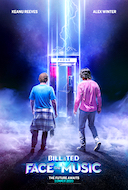
    Bill & Ted Face the Music
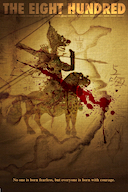
    The Eight Hundred
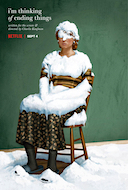
    I'm Thinking of Ending Things
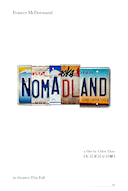
    Nomadland
    Rebecca
    Wonder Woman 1984
    An American Pickle
    Ammonite
    Another Round
    Artemis Fowl
    Bill & Ted Face the Music
    The Call of the Wild
    Da 5 Bloods
    David Byrne’s American Utopia
    The Devil All the Time
    Dolittle
    The Eight Hundred
    The Father
    The Gentlemen
    The Half of It
    Happiest Season
    Hillbilly Elegy
    Host
    The Hunt
    I’m Thinking of Ending Things
    Kajillionaire
    The King of Staten Island
    Ma Rainey’s Black Bottom
    Mank
    The Midnight Sky
    Military Wives
    Minari
    Miss Juneteenth
    Mulan
    My Spy
    The New Mutants
    News of the World
    Nomadland
    One Night in Miami…
    Onward
    Peninsula
    Possessor
    Promising Young Woman
    Rebecca
    Saint Maud
    Scoob!
    The Secret Garden
    Shirley
    The Social Dilemma
    Sonic the Hedgehog
    Supernova
    The Trial of the Chicago 7
    True History of the Kelly Gang
    The Witches
    WolfWalkers
    Wonder Woman 1984


    And that is 2020 over and done with — hurrah!

    Ignoring for a moment all the news that’s currently telling us how 2021 will be just as bad, if not worse, one thing to look forward to is that it’s my 15th year writing this blog. 15 years! I feel old… The actual date of the blog’s 15th birthday is at the end of February 2022, so I’ve got a little time yet to prepare some kind of celebration.

    In the meantime, let’s watch some more films…

    Blindspot Review Roundup

    Of the 22 Blindspot/WDYMYHS films I watched in 2018, I still haven’t posted reviews for 18 of them. (Jesus, really?! Ugh.) So, here are three to get that ball rolling.

  • The 400 Blows (1959)
  • Big Fish (2003)
  • Strangers on a Train (1951)


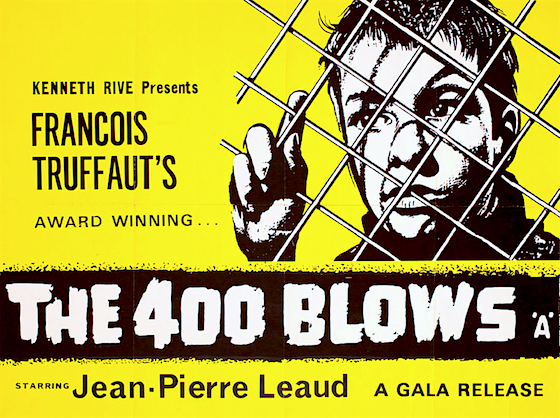
    The 400 Blows
    (1959)

    aka Les Quatre Cents Coups

    2018 #4
    François Truffaut | 100 mins | streaming (HD) | 2.35:1 | France / French | PG

    The 400 Blows

    One of the first films to bring global attention to La Nouvelle Vague, François Truffaut’s semi-autobiographical drama introduces us to Antoine Doinel (Jean-Pierre Léaud), a schoolboy in ’50s Paris who plays havoc both at home and at school, which naturally winds up getting him in trouble. The film is both a portrait of misunderstood youth (Antoine isn’t so much bad as bored) and indictment of its treatment (neither his school nor parents make much effort to understand him, eventually throwing him away to a centre for juvenile delinquents).

    The film barely contains one blow, never mind 400, which is because the English title isn’t really accurate: it’s a literal translation of the original, which is derived from the French idiom “faire les quatre cents coups“, the equivalent meaning of which would be something like “to raise hell”. Imagine the film was called Raising Hell and it suddenly makes a lot more sense.

    Anyway, that’s beside the point. As befits a film at the forefront of a new movement, The 400 Blows feels edgy and fresh, that aspect only somewhat blunted by its 60-year age. I was thinking how it was thematically ahead of its time, but I suppose Rebel Without a Cause was also about disaffected youth and that came out a few years earlier, so I guess it’s more in the how than the what that 400 Blows innovated.

    Either way, it’s an engaging depiction of rebellious youth, that remains more accessible than you might expect from a film with its art house reputation.

    5 out of 5

    Big Fish
    (2003)

    2018 #32
    Tim Burton | 125 mins | streaming (HD) | 1.85:1 | USA / English & Cantonese | PG / PG-13

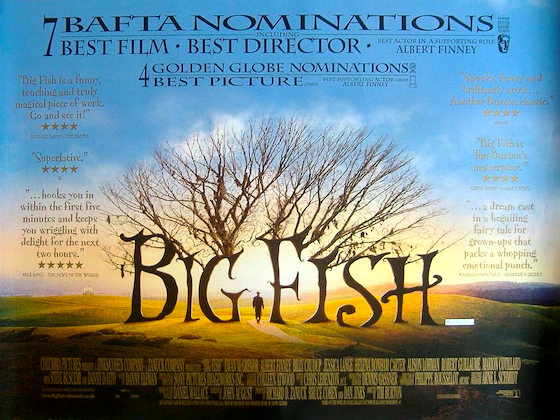
    Big Fish

    After getting distracted into the mess that was his version of Planet of the Apes, Tim Burton returned to the whimsical just-outside-reality kind of fantasy that had made his name. Based on a novel by Daniel Wallace, it’s about the tall tales of a dying man (played by Albert Finney on his deathbed and Ewan McGregor in his adventurous prime), and his adult son (Billy Crudup) who wants to learn the truth behind those fantastical stories.

    Most of Big Fish is fun. It exists at the perfect juncture between Burton’s sense of whimsy and a more realistic approach to storytelling — he’s reined in compared to some of the almost self-parodic works he’d go onto shortly afterwards made since, but it doesn’t seem like he’s constrained, just restrained. With a mix of many funny moments, some clever ones, and occasional somewhat emotional ones, it ticks along being being all very good.

    But then the ending comes along, and it hits like a freight train of feeling, clarifying and condensing everything that the whole movie has been about into a powerful gut-punch of emotion. It’s that which elevates the film to full marks, for me.

    5 out of 5

    Strangers on a Train
    (1951)

    2018 #176
    Alfred Hitchcock | 101 mins | Blu-ray | 1.37:1 | USA / English | PG / PG

    Strangers on a Train

    Alfred Hitchcock’s adaptation of Patricia Highsmith’s thriller novel, in which two men get chatting on a train and agree to commit a murder for each other — as you do. In fact, one of the men — tennis star Guy Haines (Farley Granger) — was just making polite conversation and doesn’t want to be involved; but the other — good-for-nothing rich-kid (and, as it turns out, psychopath) Bruno Antony (Robert Walker) — really meant it, and sets about executing the plan.

    Strangers on a Train is, I think, most famous for that premise about two strangers agreeing to commit each other’s murder; so it’s almost weird seeing the rest of the movie play out beyond that point — I had no idea where the story was actually going to go with it. It’s a truly great starting point — the kind of “what if” conversation you can imagine really having — and fortunately it isn’t squandered by what follows — the “what if” scenario spun out into “what if you actually followed through?” Naturally, I won’t spoil where it goes, especially as you can rely on Hitch to wring every ounce of suspense and tension out of the premise.

    Aside from Hitch’s skill, the standout turn comes from Walker, who makes Bruno a delicious mix of charming and scheming, confident and pathetic, and brings out the homosexual subtext without rubbing it in your face (well, it was the ’50s).

    5 out of 5

    The 400 Blows, Big Fish, and Strangers on a Train were all viewed as part of Blindspot 2018, which you can read more about here.

  • Hitchcock (2012)

    2018 #20
    Sacha Gervasi | 92 mins | TV (HD) | 2.35:1 | USA & UK / English | 12 / PG-13

    Hitchcock

    Arguably the most famous film director of all time, it was inevitable that one day there’d be an Alfred Hitchcock biopic. Indeed, as is so often the case in Hollywood with an obvious idea waiting to happen, two turned up at once (the other being BBC/HBO TV movie The Girl). Rather than taking an overview of the man’s life, however, both focus in on the making of a single film — in this case, arguably the one he’s most famous for today, Psycho.

    That’s half of what the film’s about, anyway. It’s a mixed success. I’ve no idea how true it is, but the setup — the acclaimed Master of Suspense who’s so established that people are judging him over the hill, determined to do a striking new project no one else believes in to prove he’s still got it — is a good’un. It’s especially effective precisely because it’s about Hitchcock and Psycho: it’s the film that defines him for many people now; so, yes, we know the ending, but that lends dramatic irony — how do we get from that starting point to the acclaimed classic we all know? However, it all feels slightly hamstrung by the filmmakers failing to get the rights to directly recreate any shots from Psycho itself, making it feel like the film is having to constantly pull punches there.

    Shooting Psycho

    The other half of the film is about a blip in Hitch’s marriage — a storyline which is mostly fictional, unsurprisingly. That Hitch was a pervy old letch shouldn’t really come as a surprise to anyone anymore, but the way the film decides to draw links between the director and twisted murderer Ed Gein (the inspiration for Psycho) is a bit weird. It feels like the scenes of murder, etc, have been included for mere titillation rather than actually revealing anything about the titular moviemaker.

    The latter storyline leads to a reconciliatory ending that is cheese personified. By the scene just before that wraps up the Psycho storyline in a much more effective manner, with Hitchcock listening to the film’s premiere screening from the lobby, ‘conducting’ the audience’s screams during the shower scene. It’s probably the highlight of the movie; the main insight into why Hitch ever did what he did, perhaps. (Well, that and all the lust.)

    In the title role, Anthony Hopkins is completely submerged as the big man, helped by a pile of prosthetics. Sometimes I think Hopkins is a distinctly overrated actor, but he’s put the effort in here. As his under-appreciated wife, screenwriter Alma Reville, Helen Mirren is superb as ever. The cast is rounded out by a bunch of decently-served small roles, performed by the likes of Jessica Biel, James D’Arcy, Danny Huston, and, in particular, Scarlett Johansson as Janet Leigh. She seems to fit the era perfectly. Inexplicably drawing the short straw is Toni Collette, in a totally nothingy role as Hitch’s assistant.

    Hitchcock blondes

    With a running time that barely crossing 90 minutes before the credits roll, Hitchcock feels very slight. This is a small incident in the long and storied life of the great director; and while it may touch on various themes that concerned his whole career, thereby acting as an exemplification for all of them, it still feels more like a vignette than a full-blown biopic.

    3 out of 5

    Blindspot Review Roundup

    Spoilers for my next monthly update: I’ve completed watching all 22 films on my 2017 Blindspot and “What Do You Mean You Haven’t Seen…?” lists. Hurrah!

    What I haven’t done is reviewed them all. Indeed, 17 still languish in my review backlog — that’s 77%. (In fact, I’ve only actually reviewed one Blindspot film — The Exorcist — with the other four being from WDYMYHS.)

    So, with the end of the year fast approaching — and, with the new year, a new batch of films to watch — I thought it high time I cracked on with those reviews. Here’s a quick roundup of a few, linked by all being adapted from novels, which may be the first of several such omnibus editions.

    In today’s roundup:

  • Dances with Wolves: Special Edition (1990/1991)
  • Jackie Brown (1997)
  • Silver Linings Playbook (2012)
  • The 39 Steps (1935)


    Dances with Wolves
    Special Edition

    (1990/1991)

    2017 #26
    Kevin Costner | 227 mins | DVD | 2.35:1 | USA & UK / English, Lakota & Pawnee | 15 / PG-13

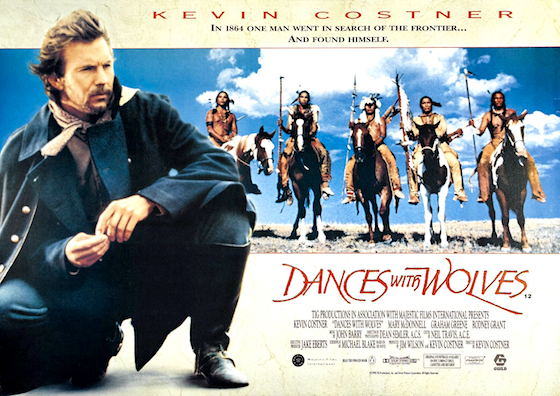
    Dances with Wolves

    Oscar statue1991 Academy Awards
    12 nominations — 7 wins

    Winner: Best Picture, Best Director, Best Adapted Screenplay, Best Cinematography, Best Sound, Best Film Editing, Best Original Score.
    Nominated: Best Actor (Kevin Costner), Best Supporting Actor (Graham Greene), Best Supporting Actress (Mary McDonnell), Best Art Direction-Set Decoration, Best Costume Design.


    The behind-the-scenes story of Dances with Wolves is almost as grand as the movie itself. An actor turned director whose inexperience led to production delays and budget overruns, leading to rumours the film was a pending disaster like Heaven’s Gate a decade before it (some nicknamed it “Kevin’s Gate”), and the studio who wanted a 140-minute cut having to settle for the 180-minute one that director delivered. The resulting film never even reached #1 at the box office… but still went on to be the highest grossing Western of all time, and became the first Western to win the Best Picture Oscar in almost 60 years. It was so popular that a 53-minute-longer extended cut was released a year later, which Costner later denied being involved with.

    Having not seen the theatrical cut I can’t offer an opinion on which is better, but the near-four-hour extended one certainly feels its length. That’s not necessarily a bad thing — this is an epic in the truest sense of the word, with a large story to tell on a grand canvass; although it’s concurrently a drama about just a couple of people from different cultures coming to interact. It’s almost too big to digest in a single go — I’m even not quite sure what I made of it. You can see why I’ve spent 10 months not writing about it.

    Anyway, I admired its scope and ambition. I wouldn’t say I loved it, but it merits revisiting someday.

    4 out of 5

    Jackie Brown
    (1997)

    2017 #49
    Quentin Tarantino | 154 mins | Blu-ray | 1.85:1 | USA / English | 15 / R

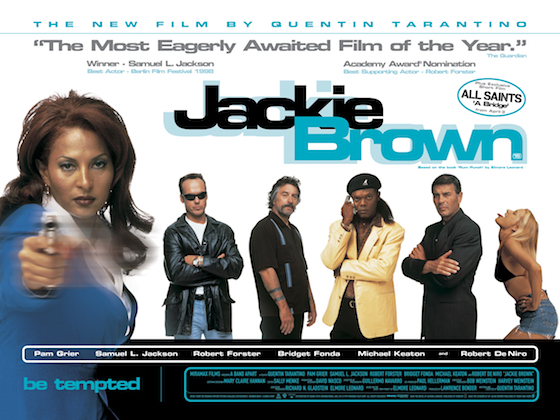
    Jackie Brown

    Oscar statue1998 Academy Awards
    1 nomination

    Nominated: Best Supporting Actor (Robert Forster).


    Jackie Brown has long been my Tarantino blindspot. I caught up with Reservoir Dogs and Pulp Fiction after he was already established and they were regarded as modern classics, then was old enough to see the Kill Bills at the cinema and have followed his career from there. But, for some reason, his third feature has always eluded my attention. My tenth anniversary “heinous oversights” list seemed a good time to rectify that.

    Some people argue that Jackie Brown is secretly Tarantino’s best movie. I add “secretly” there because it gets a lot less attention than the aforementioned movies that came either side of it. That’s not a bandwagon I’m prepared to jump on. To me, it feels a little like QT was trying to emulate what worked about Pulp Fiction without just making a rip-off of his own movie, and therefore it’s a bit of an inferior copy. That’s not to say it’s a bad movie by any means. The eponymous character is particularly interesting, as you’re never quite sure what Jackie’s up to; what her plan is. She seems to be telling everybody everything, but she has to be screwing some — or all — of them, right?

    Possibly I was just approaching the film in the wrong way. Tarantino has called it “a hangout movie”, which he explained thus: “Jackie Brown is better the second time. And I think it’s even better the third. And the fourth time… Maybe even the first time we see it we go, ‘Why are we doing all this hanging out? Why can’t we get to more of the plot?’ But, now the second time you see it, and the third time you see it, you’re not thinking about the plot anymore. You’re waiting for the hangout scenes… It’s about hanging out with the characters.” Personally, I’m not in any desperate rush to hang out with these characters again. But who knows, maybe I’ll get it the second time. Or the third. Or the fourth…

    4 out of 5

    Silver Linings Playbook
    (2012)

    2017 #61
    David O. Russell | 115 mins | TV | 2.35:1 | USA / English | 15 / R

    Silver Linings Playbook

    Oscar statue2013 Academy Awards
    8 nominations — 1 win

    Winner: Best Actress (Jennifer Lawrence).
    Nominated: Best Picture, Best Director, Best Actor (Bradley Cooper), Best Supporting Actor (Robert De Niro), Best Supporting Actress (Jacki Weaver), Best Adapted Screenplay, Best Film Editing.


    Bradley Cooper’s performance — 3.5/5
    JLaw’s performance — 4/5
    JLaw’s dancing — 6/5
    Direction — 2/5
    Screenplay (first two acts) — 3/5
    Screenplay (bit where it suddenly gets plot-heavy and all exposition-y to set up the third act) — 1/5
    Screenplay (third act that seems to be from a completely different, much more conventional movie) — 2/5

    Average =

    3 out of 5

    The 39 Steps
    (1935)

    2017 #60
    Alfred Hitchcock | 83 mins | download (HD) | 4:3 | UK / English | U

    The 39 Steps

    This adaptation of John Buchan’s adventure novel is one of the best-known among director Alfred Hitchcock’s early works, and for good reason.

    Galloping briskly along with a running time under 90 minutes, it’s a film where mood, tone, and the wonderful execution of individual sequences are all allowed to trump plot, which is somewhere on the spectrum from unexplained to nonsensical. We follow the likeable wrong-man hero Richard Hannay (Robert Donat) as he runs away from a gang of villains who barely feature. That they have a nefarious plan is outlined early on to kickstart the action; what they were up to is explained in the final scene to give the story some resolution; and in between they’re pretty much just a force chasing our hero. It’s almost like the villains are the film’s MacGuffin: it doesn’t matter what or who they are, just that they want to catch Hannay and so he must escape them. It’s how he escapes and what happens during his escapades that matters to us; that provides our entertainment.

    It almost plays like a spoof in that regard — the plot is such stock spy-thriller fare that it doesn’t need to make sense in and of itself, we just get what it’s driving at. Of course, considering the age of the film, it’s more proto-spy-thriller than neo-spy-thriller. Whatever you class it as, over 80 years since its release it remains rollicking entertainment.

    5 out of 5

    Dances with Wolves, Jackie Brown, and The 39 Steps were viewed as part of my Blindspot 2017 project, which you can read more about here.

    Silver Linings Playbook was viewed as part of my What Do You Mean You Haven’t Seen…? 2017 project, which you can read more about here. Other WDYMYHS reviews already published include Hail, Caesar!, Into the Wild, Nightcrawler, and Room.

  • Rear Window (1954)

    2014 #119
    Alfred Hitchcock | 112 mins | Blu-ray | 1.66:1 | USA / English | PG / PG

    Rear WindowAdrenaline-addicted photographer L.B. “Jeff” Jefferies (James Stewart) finds himself house- and wheelchair-bound during a New York heat wave. Whiling away time spying on his neighbours around their shared courtyard, he begins to suspect the man opposite, travelling salesman Lars Thorwald (Raymond Burr), has committed a murder and is trying to cover it up. Jeff persuades his high-society girlfriend Lisa (Grace Kelly), visiting nurse Stella (Thelma Ritter) and police detective friend Doyle (Wendell Corey) to help investigate, but no hard evidence is forthcoming. Is Jefferies just bored and paranoid?

    The end result of this, as a film, is a heady mix of suspicion, tension, voyeurism, and a light romantic subplot — Hitchcock through and through. It’s one of his best-regarded films, too: Vertigo may gain the Sight & Sound plaudits, but Rear Window is second only to Psycho on the IMDb Top 250; and, as I write, they sit precisely side by side, which on a list that long is tantamount to equality. (Not that S&S ignored Rear Window: it’s at #54 on their last list.)

    At its most basic level, Rear Window is an incredibly effective thriller. The setup is intriguing, followed by a drip feed of facts and clues that invite us to play detective too, joining in with the characters’ speculation. Jeff believes Thorwald’s guilt almost unequivocally, but not all his friends and associates agree, which gives us permission to doubt the movie’s ostensible hero. Maybe this isn’t the story of a well-executed murder uncovered by a right-place-right-time layman, but instead the narrative of an adrenaline junkie driven half-mad by being cooped up at home? The final reveal might turn out to not be the truth of the crime, but the truth of Jeff’s paranoia. The romantic subplot, which pivots around the vastly differing lifestyle desires of the pair (Lisa loves being a fashionable New Yorker, Jeff desires to explore the dangerous parts of the world), only emphasises the notion that Jeff may just be unhappy being ‘settled’.

    The titular portalHitchcock certainly didn’t consider Jeff to be an out-and-out hero, even aside from the very real possibility that he may be wrong — as he put it in one interview, “he’s really kind of a bastard.” After all, what right does he have to be poking his nose so thoroughly into other people’s business? Not only to spend his time spying on all and sundry, which in many respects is bad enough, but to then investigate their lives, their personal business, even break in to their homes. If he’s right, they’ve caught a murderer, and the methodology would be somewhat overlooked; if he’s wrong… well, who’s the criminal then?

    So Jeff is a voyeur, a position that one can interpret the film as implicitly both condoning and condemning; perhaps not in equal measure, but there are pros and cons. Through his directorial choices, Hitchcock makes us into one as well. In a genius move, we’re limited to Jeff’s perspective: we only see inside his apartment and the view from his window, pretty much as he sees it. If he falls asleep, we most often fade to black. We don’t have the advantage of knowing much that he doesn’t (as is sometimes the case in this kind of movie), but we do know exactly what he does, no less. The only difference is we can consider the possibility that he’s fooling himself — we have slightly more objectivity. Nonetheless, placing us in his shoes so thoroughly makes us consider the feeling of being a voyeur too. For some it’s uncomfortable; for others, probably a thrill; for many, I suspect, it’s a bit of both.

    All of this is made possible, in part, by the movie’s incredible set, which has to be one of the greatest ever constructed. To quote from IMDb’s trivia section:

    The entire picture was shot on one set, which required months of planning and construction. The apartment-courtyard set… consisted of 31 apartments, eight of which were completely furnished… some of the buildings were the equivalent of five or six stories high. All the apartments in Thorwald’s building had electricity and running water, and could be lived in.

    Rear Window courtyardClick to enlarge.

    It’s an incredible toy box for Hitchcock to play in, and every technical element rallies to use it to its full effect. Virtually the entire movie is shot from within Jeff’s apartment, the camera panning from apartment window to apartment window as we follow Jeff’s voyeuristic gaze. (This choice has, decades later, led to at least one striking re-working.) In every film the camera’s lens is our window on the world, of course, but you rarely feel it so much as you do here. We share in Jeff’s frustration about not being able to get a closer, better look; at only being able to watch as his friends imperil themselves, so close — only the other side of the courtyard! — yet so far away. Nonetheless, he’s afforded something of the same perspective we get as film viewers: late in the film, as Lisa searches the suspect’s apartment, Jeff can see Thorwald returning home, but he has no way to warn his girlfriend — just like us in so many moments of movie suspense. (These days he’d just send her a text, of course. Though I suppose you could still milk that: He can’t handle predictive texting! Autocorrect’s got it all wrong! He’s dropped the phone! How did he load a Chinese keyboard?!)

    There’s the sound design, too. The heat wave means windows are open, letting the sounds of parties and whatnot drift to all ears. It’s not as meaningful a commentary on the viewer’s experience, I don’t suppose, but it lends a veracity and sense of immersiveness to the situation, Suspense!further enhanced by the almost total lack of a score (only present in the opening few shots).
    In crafting both a suspenseful thriller and a commentary on the audience’s perspective, Hitchcock created the kind of movie that can be appreciated by both the casual movie fan and the analytical cineaste alike. Whatever one’s reasons for appreciating Rear Window, it’s certainly a masterpiece.

    5 out of 5

    Rear Window was viewed as part of my What Do You Mean You Haven’t Seen…? 2014 project, which you can read more about here.

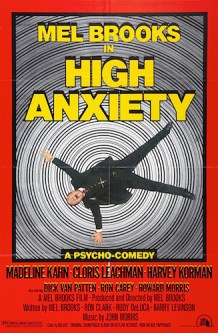
    High Anxiety (1977)

    2009 #65
    Mel Brooks | 94 mins | TV | 15 / PG

    High AnxietyMel Brooks pays comedic tribute to Alfred Hitchcock — in case you can’t tell, the second credit is a prominent dedication — but those unfamiliar with the Master of Suspense’s output need not apply.

    Brooks presents a largely Hitchcockian plot, though the clearest references come in a couple of sketches and one-liners. To be fair, there are several significant Hitchcock films I’ve still not seen, leaving the nagging sensation that some allusions and gags simply passed me by. On the other hand, maybe they just weren’t funny — I can’t remember many laughs that didn’t spring from a Hitchcock reference of some kind.

    Indeed, whole chunks pass by without a laugh. At other times, bits that are clearly meant to be funny just don’t hit home (though I’m aware that, inevitably, they will for some people), while some gags are almost reassuringly familiar: a dramatic piece of music kicks in, causing characters to look around until they see a band in full swing has appeared nearby, for just one example.

    Things pick up considerably in the second half, which is also more obviously Hitchcockian to my mind. Some scenes offer very good, though specific, riffs on famous Hitchcock moments — a version of Psycho’s shower scene is particularly memorable, though a scatological take on The Birds will please some — but these are almost exclusively asides to the story, little sketches inserted wherever Brooks can find space to squeeze them in. They provide welcome amusement, but are far from integrated into the plot.

    At this point I’m beginning to suspect Brooks’ humour just doesn’t gel with me. I enjoyed Spaceballs when I was younger, but watching it a couple of years ago I found it more embarrassing than entertaining. Even the widely praised Blazing Saddles raised little more than the occasional smile. High Anxiety, unfortunately, now joins this line-up.

    2 out of 5