2009 #94
Sidney Lumet | 122 mins | TV | PG / PG
 Murder on the Orient Express is arguably Agatha Christie’s most famous novel, perhaps because of its widely-known twist ending, or perhaps because it’s inspired in part by a high-profile true story, or perhaps because of this multi-Oscar-nominated all-star adaptation.
The plot is the stereotypical Christie set up: a group of fairly well-off people find themselves in a confined setting, one is killed, a sleuth works out who. This time it’s a train rather than a luxurious mansion, but the basics are there. This isn’t a criticism — I enjoy a good Christie adaptation as much as everyone else who’s kept the current TV incarnation on air for 21 years (and counting) — and here at least Christie has a number of twists to her usual style. As mentioned its launching point is a true story, the Armstrong kidnapping and murder being based on the Lindbergh kidnap of 1932 (just a couple of years before the book was written); the snow-bound train’s location (very apt after our recent weather) is certainly different to a stereotypical country estate setting; and then there’s the infamous ending.
I won’t spoil it here, just in case anyone doesn’t know it. Some are very critical of this particular denouement, labeling it an unsatisfactory cop-out that doesn’t make sense. Neither of these things are true. It is not reliant on an extraordinary coincidence — it might look that way at first, but the full explanation reveals it to be anything but — and there are numerous clues along the way as to what it might be, even if some are more thematic than the actual red herrings that almost lead Poirot astray. It’s a shame that knowledge of the ending is quite widespread these days, though that’s perhaps inevitable for a 76-year-old story. Still, I’ve done my bit.
In the lead role, Albert Finney’s Poirot may have received an Oscar nomination and, more importantly, been approved by Christie herself (according to some; according to others, she wasn’t impressed), but he now pales in the inevitable comparison with David Suchet’s definitive portrayal of the Belgian detective. Suchet has defined Poirot in a way few other major franchisable characters have been (Connery may be widely accepted as the best Bond, but there are plenty who’d choose Moore, Craig, Dalton and Brosnan, and you may even find someone who likes Lazenby; equally, Sherlockians may divide themselves between Rathbone and Brett, not to mention Cushing and hundreds of others). He has the advantage of being able to perfect the role across hundreds of hours of television, but nonetheless stands proud as the high-watermark that others can only try to reach (even those who played the role 15 years earlier).
Finney’s version is more obviously comical than Suchet’s. Where humour in the latter is derived from his serious fastidiousness, Finney plays it more for laughs; where Suchet seems almost solemn in his investigations Finney frequently bursts into laughter. It’s a broader interpretation of the character, one that ultimately lacks subtlety. At least Finney is thoroughly subsumed in the role, which means that after a while one does become accustomed to it.
The rest of the cast are well suited to their roles. Ingrid Bergman won the Best Supporting Actress Oscar for her role, though one wonders if it was a weak year for the category as her part is miniscule and not particularly memorable. Elsewhere, famous names such as Lauren Bacall, Sean Connery, John Gielgud, Michael York, and many more, round out a truly star-studded ensemble where each has but a small part to play. It must be relatively easy to attract big names to Christie adaptations — as the TV series still do — when the author is so beloved and the amount of time required to shoot is (for a guest star) so small. Best here, perhaps, is Martin Balsam as Poirot’s friend Bianchi, who’s treated to several good scenes, not least the series of interviews where after each he confidently declares “it was them!”
As a standalone film, Murder on the Orient Express is a skilled effort (I can’t comment on its quality as an adaptation because I’ve never read the book). For a viewer so familiar with Suchet’s interpretation of the character, however, even an all-star cast can’t quite remove the feeling that it’s not quite right. The Suchet-starring adaptation of this particular case has been filming recently, hopefully for broadcast later in 2010 (though knowing ITV we could have to wait as long as 2012), but even though it’ll have the definitive Poirot leading its cast, this film leaves a lot to live up to.
(Originally posted on 15th January 2010.)

 Adapted from one of Agatha Christie’s best-regarded novels (now commonly known by its US title, And Then There Were None), Ten Little Indians sees a group of ten people invited to a remote location (in the book, an island; here, an alpine hotel) by a mysterious host, who doesn’t appear but does accuse them all of murder via a recorded message. Then, stranded, they begin to die one by one.
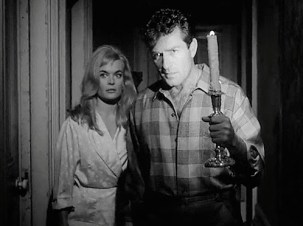 voiceover informs us this is our chance to have a guess. Ah, the ’60s.
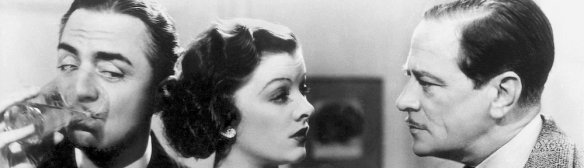
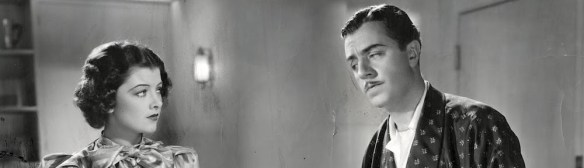
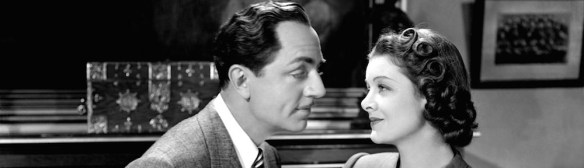

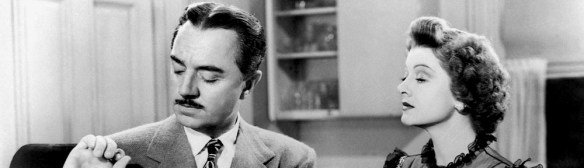
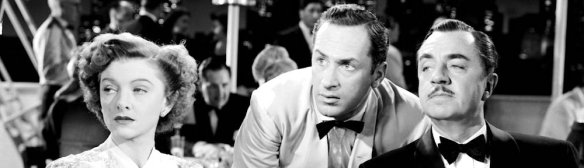
 Produced as a B-movie, but eventually nominated for four of the biggest Oscars (Picture, Actor, Director, Screenplay
 like a Christmas party which is regularly interrupted by victims and suspects. Even the final scene, a rambling and none-more-Christie-like “gather all the suspects and reveal the answers” dinner party, seems natural because of the characterisation throughout the rest of the film. Loy’s part may not be quite as showy — as demonstrated by its failure to gain an Oscar nomination — but she’s an invaluable half of the double act.
 It would seem there’s a market in Sweden for series of feature-length crime dramas that begin with a first episode released in cinemas before continuing in regular direct-to-DVD/TV instalments. It’s what happened with the Krister Henriksson
  The specifics of the plot see young university lecturer Puck (Tuva Novotny) invited to spend midsummer on the island home of her supervisor, who’s really asking on behalf of attractive history lecturer Eje (Linus Wahlgren), who Puck has been to a café with three times. A whole gaggle of old chums of Rutger and Eje are also there, including a couple of uninvited guests who arrive out of the blue — and before you know it, Puck finds one of them dead. Eje calls in his chum, detective Christer Wijk (Ola Rapace), and, after the island is cut off from the mainland in a more permanent fashion, the three set about getting to the bottom of things. Cue suspicious actions spied through trees, suspicious conversations partially overheard, suspicious evasion of perfectly reasonable questions, and all the usual suspiciousness you’d expect from a Christie narrative — only subtitled.
 Novotny makes for a likeable lead, though the attempted love triangle between her, Wahlgren and Rapace feels like a non-starter. The biggest surprise is Rapace: previously seen as troubled young copper Stefan Lindman in Wallander and, most famously, as shaven-headed silent assassin Patrice in
 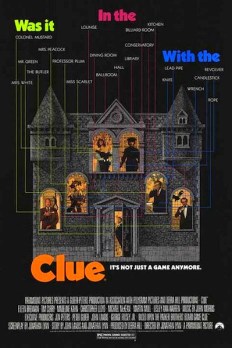 Although Disney have recently treated (I use the word loosely) us to a glut of films based on theme park attractions, movies adapted from good old board games seem a lot rarer. This is probably for good reason — even more so than Disney rides, the majority have no kind of useable narrative. Cluedo (aka Clue in the US) is one of the few that does, and consequently is one of the few (only?) board games that has reached the silver screen. So far, anyway.
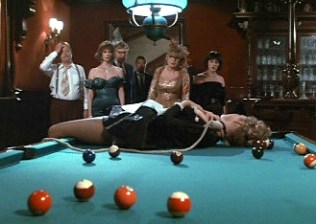 Other than the board game connection, Clue is best known for its three different endings, all of which were released, with each screening having just one attached. On TV the film shows with all three consecutively, and they perhaps work best this way — there’s a rising scale of ridiculousness, and the varied repetition of a couple of gags underlines rather than steals their amusement value. My personal favourite variant was the first, incidentally.
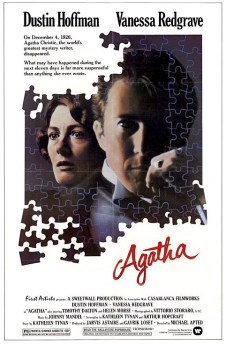 There are no
 A star-studded cast and the director of
 100Films.co.uk