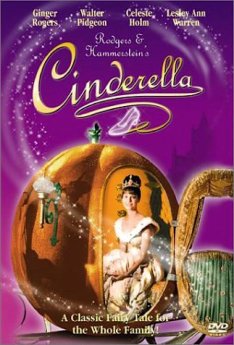
Cinderella (1965)

aka Rodgers and Hammerstein’s Cinderella

2009 #91
Charles S. Dubin | 78 mins | TV | G

CinderellaThis clearly made-for-TV adaptation of Rodgers and Hammerstein’s Cinderella (the second of three, to date) is a rather weak affair, easily demonstrating why no one seems to remember it.

The story is almost a scene-for-scene recreation of Disney’s version at times, although considering the limited variation in adapting the story — unless one decides to get quite radical or flesh it out, that is — that’s forgivable. The cast are largely unmemorable, the exceptions (not for good reasons) being Stuart Damon, whose acting is poor but singing is fine, and Ginger Rogers, who is barely noticeable as the Queen, particularly as she doesn’t do what she was most famous for. Fair enough, she was in her 50s, but the only other reason for her presence is to provide a star name at the top of the cast list. And Celeste Holm I recognised from High Society, which is neither here nor there.

Dubin does the best he can with TV studio limitations, using colourful painterly backdrops and trying to find some variation in camera angles, but it’s largely as flat as the sets. The musical numbers are quite entertaining, if mostly insipid, not that any approach R&H’s best anyway. I couldn’t tell you much about any of them within a few hours, never mind longer.

Anyone combating the might of a Disney classic is going to struggle, but that doesn’t prevent a decent effort from being produced. Between a below par set of songs from Rodgers and Hammerstein and weak staging, this Cinderella doesn’t even come close to that.

2 out of 5

The World of Tomorrow (1998)

2009 #69a
Kerry Conran | 6 mins | Blu-ray | U

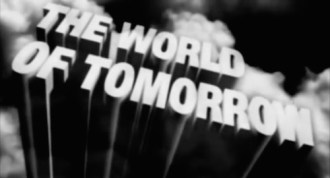
The World of TomorrowBefore Sky Captain, there was this: a six-minute reel, shot, edited and, er, special-effects-ed, by Conran on an amateur basis over four years, demonstrating the production techniques and storyline he had in mind for a feature-length homage / reimagining of ’40s cinema serials.

We’re used to incredibly impressive home-crafted effects-laden films these days, but keeping in mind this was finished 11 years ago, it’s quite impressive. Judged now, it’s clearly the very early days of such composited digital filmmaking, lacking some of the complexity and flair we now see. What it does still suggest is that, given a full budget, such an idea has potential, both in terms of the method and the retro-sci-fi ’40s-serial-style story. Certainly, in my opinion, it did produce a very entertaining film in exactly that vein.

In comparison to its big brother, nearly every shot is exactly duplicated in the final film. In fact, most don’t look much more primitive here. The resolution’s lower, it’s perhaps a bit jagged round the edges, and it’s in deliberately dirtied black and white rather than the glowing sepia-hued colour of the feature, but it shows the concept worked from the off.

The World of Tomorrow isn’t a great film in its own right — indeed, as the closing captions suggest, it’s really an extended trailer / proof of concept for something bigger. In the latter regard it shows all the requisite promise, and thankfully someone in the industry noticed too.

3 out of 5

Son of Rambow (2007)

2009 #35
Garth Jennings | 92 mins | DVD | 12 / PG-13

Of late I’ve posted several reviews resorting to taking my notes and turning them into sentences — this is why I probably should’ve stuck to my old post-them-all-in-order method. It’s now about nine months since I watched Son of Rambow, and the chances of being able to construct a worthwhile assessment from a combination of notes and memory has long since passed. So, for hopefully the last time, I offer up a paragraphified version of my brief initial notes.

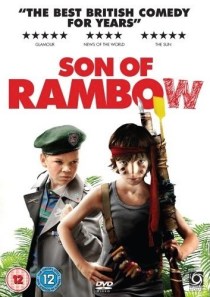
Son of Rambow is beautifully written and directed, both roles fulfilled by Garth Jennings, who was previously responsible for directing the surprisingly-good (to my eyes) Hitchhiker’s Guide to the Galaxy movie. In contrast to that effects-ridden intergalactic comedy, Son of Rambow initially seems like a relatively straightforward, perfectly pleasant little movie about two boys and their video camera. It’s partly this, but it also brings in subplots of what it means to be a family — on various levels — and the evils of over-zealous religious orders (always a favourite topic for me).

Every significant character is given at least one twist that adds an extra level to them, even those who seem to just serve a specific plot function, and most of the minor ones — right down to Will’s silent grandmother — are given their small moment to shine. Nice little touches in Jenning’s work abound, from the comic asides with Didier to Will’s fertile imagination realised through animation, or the post-credits snippet of dialogue.

The two pre-pubescent boys have to carry the film, but thankfully are up to the task (even if their names being Bill nd Will and one of the characters being called Will (the one that’s played by Bill) make remembering them outside of the film a bit of a minefield). They are never less than utterly believable in both writing and performance. Will Poulter (as Lee Carter, the more rebellious of the two) is exceptional, talented in a way that’s reminiscent of River Phoenix in Stand By Me. It’s no surprise that both have gone on to greater things. And by “greater” I really mean “other”. There are wonderful performances all round in fact — aside from the lads, Jessica Hynes is especially worthy of note, creating a powerful character in just a handful of scenes.

The shape of the story may be familiar (unlikely pair start off wary of each other but become best friends, eventually fall out when one exceeds himself, but realise the error of their ways to come back together in the nick of time) and the lessons learnt are hardly new (true friendship can conquer all), but it’s all put together with immense joy and skill, built around a charming concept, that it becomes far more than the sum of its parts.

Hilarious and touching in equal measure, you’d need a heart of stone to remain unmoved. A triumph.

5 out of 5

Son of Rambow placed 4th on my list of The Ten Best Films I Saw For the First Time in 2009, which can be read in full here.

Originally posted on 14th March 2010.

No Country for Old Men (2007)

2009 #5
Joel & Ethan Coen | 117 mins | DVD | 15 / R

This review contains major spoilers.

When I saw No Country for Old Men, a new round of films were vying for the Best Picture Oscar. Now, as I finally post my review, a whole new load have been nominated, voted on, and await the final result. Sometimes I feel decidedly behind the times.

The first time I watched No Country for Old Men was in a screenwriting seminar. On R2 DVD (the format for said seminar) it runs one hour 57 minutes, but in the two-hour seminar we got through the whole film with plenty of pauses for discussion (of its narrative structure, with particular emphasis on the application of fate/chance/coincidence, if you’re interested). Obviously this entailed skipping chunks of the film to get to the end within the time. I was rather annoyed that our tutor hadn’t bothered to forewarn us this would be the subject of the seminar in such a way, because it meant I had no chance to see the film properly beforehand. Now, watching the film in full, I can clearly see the odd bit we skipped over, yet I don’t feel I missed anything terribly significant.

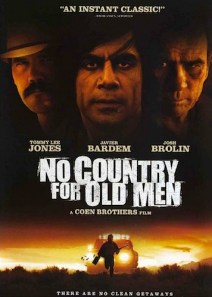
Cut short or no, it has an excellent use of no music — the Coens still create massive amounts of tension, numerous shocks, etc. It’s highly skilled direction and editing. There are a number of very good scenes along the way (even if the best remains somewhat dulled from constant repetition in the run up to the 2008 Oscars). And it all looks mighty pretty too, especially on Blu-ray (my re-watch format of choice here). The cinematography was probably my favourite part of the film.

As noted, it’s really about Fate, randomness, chance. Some clearly think this brilliant; I remain unconvinced. It lacks satisfaction. Maybe that’s real life — no, that is real life: random and lacking closure and satisfaction. But this isn’t real life, it’s a movie; and a movie with a near-fantasy (or, more accurately, horror) aspect too, in its unstoppable villain; so I think I want my proper tied-together plot, thank you very much, not a de facto hero who’s shot almost at random by a gang who have little to do with the story and a frequently irritating villain who exits the film fundamentally unscathed.

I’ve read one critic assert No Country for Old Men is the only worthy Best Picture winner of the past decade. I’ve seen another argue There Will Be Blood is the only genuine classic produced in the noughties. Any number of them have no doubt espoused similar such views. Critics, eh — always contradictory.

Anyway, No Country for Old Men: thoroughly unsatisfying,

4 out of 5

Originally posted on 5th March 2010.

There Will Be Blood (2007)

2009 #7
Paul Thomas Anderson | 152 mins | DVD | 15 / R

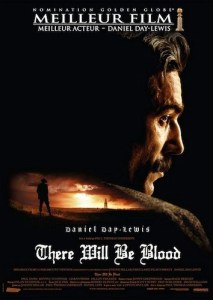
There Will Be BloodI used to consider myself a fan of Paul Thomas Anderson; however, I’ve come to the conclusion that I’m merely a fan of the film Magnolia. As I explained when I covered Boogie Nights, I love Magnolia, thoroughly dislike Punch-Drunk Love, and was ultimately uncertain about Boogie Nights. There Will Be Blood’s significant Oscar nominations and wins seem to have cemented it as Anderson’s most acclaimed work, but I wouldn’t consider myself a fan of this either.

That’s not to say it’s a bad film, but it is at times a baffling one. It makes minimal concessions to its audience from the very start, beginning with an extended montage that covers relatively vast tracts of time with virtually no dialogue, before segueing into a story that introduces and discards characters and events with little hint of their relevance, and eventually makes a huge leap forward for an equally impenetrable ending, all the while under- (or perhaps over-) scored with Jonny Greenwood’s disquieting music, sounding like the THX logo writ large. I can’t help but wonder if I missed something crucial along the way because, even after two and a half hours, I had no real idea what the film was about.

Leaving that aside, the film is technically excellent in just about every field. Daniel Day-Lewis easily deserved his Best Actor wins for his role as oil magnate Daniel Plainview, a performance so subtle that there initially seems little to it but which slowly peels away the layers to uncover much more. Anderson’s screenplay helps him along with an array of scenes written to textbook levels of perfection (almost literally: in a screenwriting class we studied in depth the scene where Plainview negotiates a land purchase from the Sunday family). Little Miss Sunshine’s Paul Dano delivers a superb supporting turn too, even if his casting as brothers Paul and Eli Sunday adds a level of confusion where there isn’t meant to be one (considering there was originally a different actor cast as Eli). Dillon Freasier also offers good, understated work as H.W., Plainview’s 11-year-old son.

Individual scenes are certainly well handled. The opening may offer little in the way of explanation, but with minimal dialogue, well-chosen images and events it expertly conveys Plainview’s rise to prominence and establishes his position without ever doing more than is necessary. The sequence with the burning oil derrick is visually stunning and, for me, the first point at which the discomforting score really worked (though it must be worth noting that Greenwood actually composed that cue for a different film). As already mentioned, many of the dialogue scenes are also exemplary, among them the much-quoted bowling alley finale. Anderson is capable of crafting moments of immense power, even if their cumulative effect is perhaps unclear.

It’s difficult to judge a film I have such conflicted feelings about, especially when its high critical consensus leaves me with a nagging feeling that, somewhere along the way, I missed something of vital importance. I’m not really a fan, and I’ll no longer call myself a fan of Paul Thomas Anderson, but his work is certainly interesting and definitely merits revisiting.

4 out of 5

Originally posted on 5th March 2010.

Michael Clayton (2007)

2009 #87
Tony Gilroy | 115 mins | DVD | 15 / R

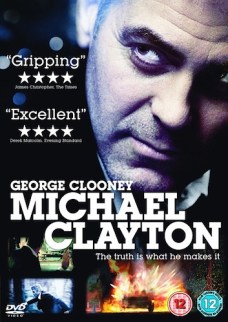
Michael ClaytonWhen Michael Clayton turned up among the contenders for 2008’s Best Picture Oscar I was a little surprised, because as far as I could recall I’d never heard of it. Then as I read about it a memory came floating back… a memory of a half-page (at best) review in Empire, of a George Clooney film that sounded like it should be good but was, they asserted, only worthy of three stars. As you’ve surely guessed, when I dug out this review it was indeed of Michael Clayton.

It is, I suppose, technically speaking, a thriller. That it’s not particularly thrilling doesn’t have to be a problem — this is the world of class action lawsuits, after all, which take years (decades sometimes, I imagine) of meetings and paperwork and ‘polite’ lawyer-arguing, and often writer-director Tony Gilroy seems to want to depict a moderately realistic version of this world. Clooney’s titular lead, for example, is effectively a middle-management dogsbody, albeit a highly talented one (so we’re told, anyway — the scenes of him doing his job don’t particularly convey this); but he’s certainly not some crusading young hotshot who is just gonna do what’s right, goddammit.

He does have the requisite seriously flawed personal life however, though Gilroy manages to make this feel fairly fresh. The latter is a big part of the film but feels unconnected to the main story… until the end, of course, when it all dovetails. Thankfully not in a cheesy “the bad guys kidnapped the kid” or “I have to do what’s right to get the girl” way, but rather as a means of motivating Clayton into doing… well, what’s right, more or less.

If this sounds more legal drama than legal thriller, it is. Where this comes unstuck is that Gilroy does seem to want it to be a legal thriller, and so uncomfortably squidged into the mix are a pair of surveillance experts/assassins and one of the least-tense car chases in movie history — 15 minutes in we see Clayton’s car blown up, with him safely on a hillside; the rest of the film takes place over the preceding days, eventually reaching that first night, where we see the bomb planted in Clayton’s car, and the assassins following him around trying to get signal to detonate it… and we might care, if we didn’t already know they don’t succeed until he’s wandered off up a hillside to cry over some horses.

The obvious point of comparison is Damages, the excellent TV series that also concerns such high-profile big-business lawsuits, but which pulls off every one of Michael Clayton’s facets with a higher degree of skill, interest and excitement. Company-sponsored murder sits believably in that world, but so does the characters’ personal life dilemmas and the court room (or, rather, pre-court room) battles between attorneys. And Damages sustains it for over 9 hours to boot, replete with cliffhangers and plot twists so far beyond what Clayton’s surprisingly straightforward (once you get down to it) story has to offer that Gilroy isn’t even dreaming of being that good.

Michael Clayton does have good bits, like the supporting parts played by Tilda Swinton and Tom Wilkinson, or any number of scenes or plot elements scattered around. What it falls short of doing is connecting it all up into a coherent whole: part realist legal/personal drama, part heightened Grisham-esque legal thriller, if it had settled on just one it might’ve been better.

3 out of 5

Michael Clayton is on BBC Two tonight, Friday 4th April 2014, at 11:05pm.

(Originally posted on 5th March 2010.)

Batman (1966)

2009 #47
Leslie H. Martinson | 100 mins | TV (HD) | U / PG

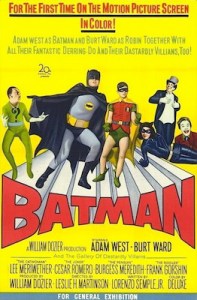
Batman (1966)Having only recently subjected myself to the full horror of Batman & Robin (though, based on the lack of review, it was before this blog began — that “recently” to me means “within the past four years” probably indicates why seeing ‘just’ 100 films in a year is a challenge), this spin-off from the ’60s Batman TV series remains the only significant cinematic outing for the Dark Knight to have escaped my scrutiny (well, unless you count Mask of the Phantasm, which we probably should). Except that’s (still) not entirely true: I once tried to watch it and gave up because it was dreadful. But the desire to be a completist — and an HD showing from Channel 4 — have led me to try again. Thank God I did, because it’s actually brilliant.

Some Bat-fans are immediately wondering what I’m on now, but I can assure you I watched it entirely sober. Batman has more than his fair share of over-serious fans and this film is anathema to them — it’s mad, camp, illogical, hilarious, vibrant, comic, comical… but all deliberately so. It perhaps goes on too long, perhaps pushes it too far at times… but then, if you’re on board with the concept and style, it’s pretty hard to criticise — it’s so ridiculous, and so aware that it’s ridiculous, that it goes beyond criticism.

In every respect, it has a real feel for what comics were like at the time — the vibrant colours, silliness, larger-than-life characters, nonsensical plots, plus there’s a nice line in risque humour, keeping the adults happy in what’s really a kid-focused film. The effect is akin to what Joel Schumacher wanted to do, only done with more rule-breaking conviction and, therefore, more success. It saves the series’ most famous element — the visual sound effects — for the climax, a submarine-set free-for-all to rival any other climactic mess/fight as Batman, Robin, the major villains and a bunch of sailors all end up floundering in the sea.

Talking of the series, was it this barmy? I don’t remember it being so ridiculous, but then I was young when I last watched it. There’s every chance kids young enough would take this completely seriously, and unquestionably enjoy it in that frame of mind, whereas those of us old enough to realise what’s going on — and, more importantly, old enough to get past the fact that it’s taken the moodiest, broodiest, angsty-teenager-friendly of superheroes and turned him into perhaps the campest ever — can enjoy it on all the levels the makers had in mind.

Batman is so many different things. These days it’s generally accepted that he’s The Dark Knight, a moody crimefighter lurking in the night to battle gangsters and unhinged supercriminals. But in the past he’s been so many other things, and this is just one facet. Those who dismiss it as missing the point of Batman, or any other such criticism of it not being Dark and Serious, are too caught up in our present perception of the character to see that it’s just another of his many sides. Is it a better film than The Dark Knight? No, of course it isn’t; and nor is it better than either of Burton’s Batman outings, nor Batman Begins… but then again, that’s personal preference.

Perhaps this demonstrates better than anything why Batman is one of the most enduringly popular superheroes, has one of the widest fanbases, has more graphic novels available than any other character ever: because, across all his forms, he has been treated in so many different ways by so many different people and for so many different people. You can’t really reconcile this as the same Batman and Joker who fought their way to the top end of the all-time box office pile 18 months ago, but nor were those the same characters who battled it out in 1989, or in thousands of pages of comics. In an age where we’re more obsessed with ‘canon’ and ‘continuity’ than ever (indeed, such concepts probably didn’t exist back when this Batman was being conceived), it’s oddly beautiful and so very freeing to imagine a character so unrestrained. It’s a glorious thing.

If you disagree — if you think Batman must always be dark, moody and deadly serious — well, fine; and you’ll be well catered for, because I doubt the film franchise is giving up that way any time soon (if ever). But as far as I’m concerned, to ignore the mad, frivolous and zany sides of the character — not to mention all the various other ones that could be described with equally unusual adjectives — is your loss.

4 out of 5

(Originally posted on 26th February 2010.)

Paths of Glory (1957)

2009 #85
Stanley Kubrick | 87 mins | TV (HD) | PG

Paths of Glory“The paths of glory lead but to the grave,” wrote Thomas Gray, and Stanley Kubrick — adapting from the novel by Humphrey Cobb — sets about proving him right.

Kubrick’s depiction of war is excellent, from long tracking shots through the trenches, to the nighttime wilderness of No Man’s Land, lit only by flares that reveal it’s strewn with bodies, to an epic and perfectly-staged battle that is a visual and aural assault. Indeed, Winston Churchill claimed that the film was a highly accurate depiction of trench warfare and the sometimes misguided workings of the military mind, and it’s so effective that it was banned in France for its negative depiction of the military. I’m sure the story could have been equally well applied to any military in the habit of killing its own men, but hey, it’s always fun to pick on the cheese-eating surrender monkeys.

Even beyond the battle scenes the film remains bleakly realistic: the depressing Old Boys’ Club-style hierarchy of the military (still all too much in effect, as series like Generation Kill reveal); the unjust unrecorded trial (an excellent courtroom sequence that can stand up to any other); through to the inescapable finale. George Macready’s villain is as chillingly evil as they come, because he’s so believable. Lying, manipulating, selfish and dishonourable, yet he produces all this from an opening scene where he appears to be a perfectly honourable General (though one has one’s suspicions). Even at the very end, when some small measure of genuine justice has been wrung from the whole sorry mess, one of the few remaining almost-likeable characters is fully unmasked as just as bad as the rest. Kubrick tries to instil some hope with his final scene, but by then he’s done too fine a job of wiping it out.

There’s a debate, it seems, about whether this can accurately be described as an anti-war film. It’s patently not pro-war, with its ineffective officers, self-serving high command, corrupt legal system and senseless slaughter for absolutely no military gain; but the argument that it is less a commentary on war and more on human nature — how people, not just soldiers, respond to the opportunity for glory, and how they attempt to cover their own tracks when it goes wrong — certainly holds some weight. The final scene, which is in almost every other respect entirely unrelated to the main narrative, supports such a theory, as does the source of the title. But just because that’s true doesn’t mean it’s not anti-war as well; or, at the very least, anti-military (if that’s not the same thing).

Perhaps reaction to the film depends on your ideological stance. I’m all too prepared to believe the military is corrupt and unjust because, well, that’s how they always seem. As such, Paths of Glory does an outstanding job of fulfilling and reinforcing these preconceptions, particularly in its refusal to end justly. If you have some measure of faith in the forces, however, you may think it’s an unjustified attack on your beloved institution. Each to their own.

5 out of 5

Paths of Glory is on ITV4 tomorrow, Sunday 31st August 2014, at 11:20am.

(Originally posted on 24th February 2010.)

Wallander: Mastermind (2005)

aka Mankell’s Wallander: Mastermind

2009 #88
Peter Flinth | 96 mins* | TV | 15

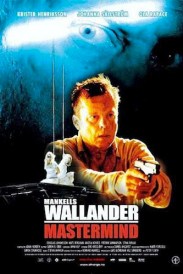
Sixth in the series of Wallander films starring Krister Henriksson as the titular Swedish detective, though only the second to be released theatrically.

Mastermind works to earn its status as a theatrical release, everyone upping their game to provide something more filmic than the other direct-to-DVD entries in the series. That’s not to say the other films in the series are bad — they’re certainly as well-produced as any other detective series on TV — but this episode seems to have been constructed from the outset with an eye on a standalone cinema release, rather than just randomly plucking an episode from the thirteen produced to receive such an honour.

From the start (literally) there are slicker opening titles, and longer end credits to bookend that. The direction is flashier too — still grounded in reality, unlike the heavily-stylised British Wallander, but with more filmic shot choices and editing. Take, for example, the Rear Window-inspired scene where Wallander looks out over the adjacent block of flats while listening to classical music that completely fills the soundtrack — not the kind of sequence you tend to find in TV drama. On-going subplots from the series go unreferenced — there’s no need to have seen a single other episode to follow the story without a hitch.

The main plot’s on a bigger scale — a serial murderer who has eyes and ears inside the police department — and This Time It’s Personal for good measure, with the villain targeting friends and family and (spoiler) a past connection to several characters. It’s not a realistic-scale case-of-the-week, but a once-in-a-career unusual case, the kind of plot that graces serial killer films (Se7en comes to mind, obviously) in a way those case-of-the-week plots rarely do. It stretches credibility a little, as these types of tale often do, which does at times leave it feeling a tad out of place in Wallander’s grounded world, which is usually about more realistic murders rather than megalomaniac super-powerful serial killers. Still, it ups the ante appropriately, making the events more action-packed and conforming to the theory that films should never have a “just another day at the office”-style plot.

With the extra effort afforded to make this series instalment appropriately cinematic, the Wallander team achieve their aim and produce one of the stand-out of all thirteen films. That said, some viewers of the whole series may find it a bit OTT when compared to the series’ regular style.

4 out of 5

* The running time is listed as 102 minutes on IMDb, but 96 is taken directly from the BBC’s iPlayer.

(Originally posted on 14th February 2010.)

Rage (2009)

2009 #81
Sally Potter | 98 mins | streaming | 15
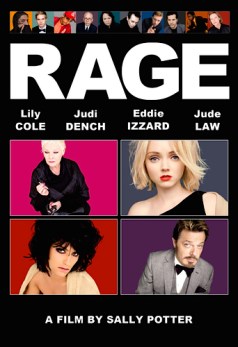
RageI really didn’t expect to like this: a series of straight-to-camera monologues, performed in front of just plain-coloured backgrounds, about the fashion industry, written and directed by the writer/director of Orlando, which I thoroughly disliked. But I watched because it was going free and, despite the concept’s innate pretentiousness, it’s an intriguing one. Once Rage settled into its stride (or, perhaps, I settled into its stride), however, I loved it.

The group of fourteen people who appear before the camera are almost entirely self-centred and/or not very nice, which you may guess from the outset considering their industry, though almost all still have something to reveal as the film progresses. It’s surprisingly funny too. The off-screen action is conveyed by a very effective sound mix — we see nothing but talking heads (until an incongruous final shot, at least), but there’s always background noise, however subtle, and the key action in the wider world is revealed to the viewer through this, plus comments from some of the talking heads. But time isn’t wasted spelling out what we can’t see; instead, a bit of the viewer’s own imagination is required in addition to the sound and dialogue clues to create a version of events.

A starry cast (Steve Buscemi, Lily Cole, Judi Dench, Eddie Izzard, Jude Law, John Leguizamo, David Oyelowo, Dianne Wiest… plus recognisable (depending on what you’ve seen, of course) faces like Simon Abkarian, Bob Balaban and Babel’s Adriana Barraza.) provide exemplary acting across the board, even if some of the accents (mainly Brits playing at yanks) are frequently dubious. It seems unfair to pick anyone out, but Lily Cole is perhaps the most surprising, her fragile character aided by her Pipling-esque eyes and pale skin, but it’s her actual performance that ultimately delivers more than her autobiographical-seeming first appearance would suggest. And one can’t ignore Jude Law playing a Russian/American female(?) fashion model — for once I actually thought he was quite good. Maybe this is his niche. The majority of the performances err toward the theatrical — something certain film viewers seem to struggle with — though the intercutting and passage of time, reflected in intertitles and costume changes, make the whole experience more suited to film; indeed, with the cameraperson being such a major character (as it turns out), it is technically unstageable. (It could be staged, of course, but it belongs as a film.)

And, talking of how things turns out, the most intriguing character of all is Michelangelo, the cameraman and only main character we never see on screen — indeed, it’s a considerable amount of time before we realise he’s a character at all and not just a filmmaking conceit. His presence and the filming style (supposedly shot on a mobile phone (or, I suppose, ‘cell phone’) camera) is not just a gimmick, but, as it turns out, vital to the story. It’s probably the only film ever made that perhaps works better viewed streaming online. All the characters are in some way unveiled throughout the film, but, almost without the viewer releasing it, so too is our supposedly-inconspicuous cameraman. By the end, what seemed to be a critique of the fashion industry — and a well-worn one at that — has something else to say too.

At least, one hopes this ‘critique’ of the fashion industry isn’t the main point, because it may be the film’s biggest problem. There’s very little, if anything, new to be found in the comments and criticisms made — we well know it’s a business filled with too-thin weight-obsessed diva-ish models, self-obsessed pretentious designers, money-grabbing moral-less Murdoch-alikes and no-hope fame-hungry wannabes, and Rage doesn’t have much more to say about it than this. Sure, no one sits around pontificating on why it’s all so evil, but it doesn’t take much to see the subtext. At least it’s often funny about it; though based on comments I’ve read online, it seems this humour may be too subtle for some. Perhaps they can’t see the inherent ludicrousness of it all, with the performances flying closer to realist than the My Family-level bluntness some require from their comedy.

It’s hard going at times, even if one is enjoying it — after all, it’s still just a succession of people talking to camera. Obviously what they say — and, indeed, don’t say — reveals things about themselves, others, and events off screen, but while I was never bored there were several occasions when my eyes strayed to the clock out of curiosity over how long was left. I’ve still seen much duller films.

I don’t doubt that Rage isn’t for everyone. Indeed, you only have to look at IMDb to see how many people loathe it with near-religious fervour. (Prepare yourself if you do, because some of the criticism is irritatingly brain dead. But hey, that’s IMDb!) Some people just won’t get on with its style, or find it too slow, and with 14 characters in 98 minutes, awarding them an average of under seven minutes each, you’re not going to get Alan Bennett-level character deconstruction. But Rage unapologetically is what it is, and I liked it.

5 out of 5

If you’re interested in an in-depth (and spoiler-filled) review of Rage which features phrases like “extraordinary testament to the mindbrain”, “Mugel and Potter use sound to build an entire lifeworld”, and “it enlivens, emboldens and enriches the film, engaging ear, heart, mind, memory, intelligence, even skin and senses as a brilliant texture”, try this one from Little White Lies.

Rage placed 10th on my list of The Ten Best Films I Saw For the First Time in 2009, which can be read in full here.