2010 #100
Kathryn Bigelow | 131 mins | Blu-ray | 15 / R
With 2011 underway we’re immediately heading deep into Awards Season, the time of year when everyone in the film world goes a bit mental and all the movies likely to win anything reach UK cinemas. The American Academy may nominate from throughout the year more readily now the Oscars have ten Best Picture slots, but it’s still not going to be a summer movie, is it. Not before The Dark Knight Rises anyway.
Unless it’s Inception.
(I’m not predicting The Dark Knight Rises is definitely going to win Best Picture, by-the-by, just that the fuss over The Dark Knight’s lack of a nod was half (or all?) the reason they doubled the nominees. Look, we’re getting distracted.)
What better time, then, to (finally) post a review of the last Best Picture winner — and 2010’s #100 to boot…
 If you’ve ever seen the miniseries Generation Kill — the makers of The Wire do the invasion of Iraq, based on a book by one of the embedded journalists — then it might mean something if I say The Hurt Locker plays like Generation Kill: The Movie. Or perhaps another episode of that fine series, because it’s relatively low-key and everyday… as much as one can be about a bomb disposal unit in a warzone, that is.
I don’t mean this comparison as a bad thing — Generation Kill was an excellent series, and The Hurt Locker matches up to it. I also don’t mean to make a comparison in terms of content — the series follows troops at the front of the initial invasion (Band of Brothers: Iraq, if you can stand another HBO-based comparison), while the film is specifically about explosives experts during the occupation. The similarities are more stylistic — hot, dry locations and washed-out, hand-held cinematography (hardly innovative of either series or film, to be honest) — and thematic — the bonds between men in this particular war. I say “men”, I mean “soldiers”, but they are all men (in both series and film). The “gender in depiction of modern military” debate is for another time (and place) though.
Also like Generation Kill, The Hurt Locker is episodic, moving from one bomb-based set-piece to the next. But this is surely a realistic depiction of the environment and this job: these guys are going to go from one unrelated bomb to the next; they’re not going to end up on the tail of some master bombmaker, or single-handedly end the war in Iraq, or anything else one might construct as a coherent throughline for a film. What it has instead are subplots, largely based around the characters and their relationships to each other, which initially seem to crop up as slice-of-life asides before suddenly coming to the fore, usually to pack some kind of emotional punch — and, in at least one case, an equally affecting kick later on, too.
 Bigelow & co construct each ‘action’ sequence with care and attention. They’re not action sequences in the truest sense — suggestions from some that she’d be a great director for, say, Bond 23 on the strength of this film are unwarranted (not that she wouldn’t be good, but this film’s action does nothing in particular to demonstrate appropriate skills). Instead of the fast-paced bullets-flying adrenaline-pumping sequences you get from An Action Movie, The Hurt Locker offers up more realistic (at least, realistic-feeling) sequences of tension as characters approach bombs, watch increasingly suspicious crowds, try to defuse the situation before the timer runs out… It could be clichéd — we’ve all seen plenty of bomb defusing scenes in movies before now — but, again, there’s a sense of “this is how it is”, rather than “this is how movies portray it for dramatic effect”. Is it how it is? I don’t know. But it certainly still packs dramatic effect.
Films sometimes struggle to create tension in sequences like these, but Bigelow achieves it by killing off any star that turns up. “OK,” you might say, “if they’re famous they die, if I don’t recognise them they’ll be fine.” Well, it’s not that simple. I was exactly that cynical going in, but still found myself agonising over who would or wouldn’t make it through, especially as we’re offered frequent reminders of how many days are left of their rotation — and, as we know from horrendous news stories, having “just one day left” is no guarantee you’re going home safely.
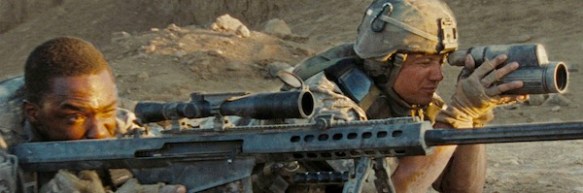
Repetition is avoided by mixing up the specifics of a sequence. Yes, many are variations on a theme, but so are most action movie shoot-outs or car chases — or rom-com love stories, or slasher horror movies, or any other genre you care to mention. What this film shows us, aside from the tension, is how different characters behave and react: James’ recklessness, for instance, which is contrasted with the more considered approach of Guy Pearce’s ill-fated character. Completely different is the sniper battle, not only because of the complete change of circumstance, but also because it’s drawn-out — Bigelow makes us feel some of the surrounded soldiers’ pain, lying still for hours in the baking sun, running out of fluids, just staring through a sniper scope at a heat-hazy vision of a far-off potential enemy.
 The opening quote and closing scenes make explicit the main theme — war is a drug, one James (Oscar nominee Jeremy Renner) is addicted to — but I’m not sure how present this is in the body of the story. Rather, the majority feels like an attempt to convey the experience of living as an explosives expert in a warzone, with James’ ‘addiction’ just a side effect of that. Perhaps, then, it’s making its point more subtly than by battering you round the head with cinematic cries of, “He’s addicted to war! It’s just a drug!”
It doesn’t matter if it has a point to make about addiction or not. The Hurt Locker is still a tense, insightful evocation of what it feels like to be a bomb disposal expert in an active conflict; a dangerous job where each day really could be your last. The action sequences may not be Action Sequences in the way we’ve become accustomed too, and the narrative may be more episodic than a well-unified whole, and it may be readily reminiscent of other war films or series, and there are surely various other little factors people might pick on to criticise… but regardless of these, I thought The Hurt Locker was, from first to last, exceptional.

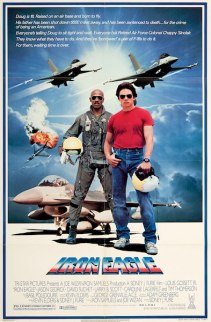 You know how sometimes you see a bit of a movie on TV and you end up watching just long enough to get caught up so much you’re in for the long haul, no matter what the quality? No? Maybe it’s just me (usually around this time of year, it seems). Iron Eagle is, naturally, my latest example of this phenomena.
 Like I said, daft and implausible. And that isn’t necessarily a problem, but as you watch Iron Eagle you can’t help but wonder if the filmmakers are trying to convince viewers it could be plausible. And it isn’t. Not in the slightest.
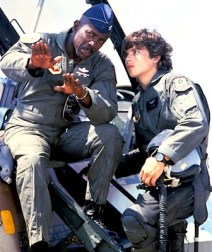 I’ve not seen that either, but I think we all know this is a serious step down. Poor man. His career went on to include Iron Eagle II and the direct-to-video Iron Eagle IV. Yes, there are four of them, and apparently they’re even worse and not in keeping with the spirit of this first. Poor man.
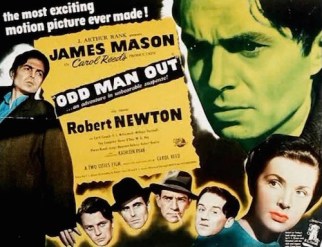 It may be a bit of a cop out to begin a review by pointing you to another, but I must recommend
 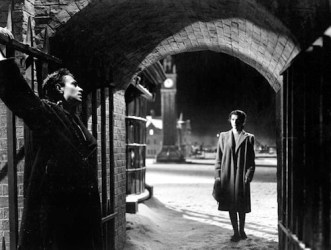 Robert Newton’s Lukey. (You’ll also note Newton’s performance is criticised in Colin’s piece so, in aid of not sounding like I’m too easily influenced, I’d like to point out I didn’t make the connection between his comments and my own notes on Newton until afterwards.) Shell and Lukey have a bit of a point in the end, but I didn’t enjoy getting through them in comparison to the rest of the film.
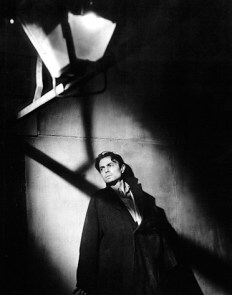 The score, by William Alwyn, is really nice, particularly in certain places — for example when it begins to snow and Johnny wanders the streets, or at its most effective during the haunting climax, as Kathleen hauls a near-dead Johnny through the falling snow towards the safety of the shipyard as the police finally close in.

 Much was written about Toy Story 3 when it was released this summer, so I’m not sure how much I have to add, but here we go. It’s no surprise either — that’s what happens when a preeminent and popular studio releases a sequel to a beloved and acclaimed film franchise 11 years after the last instalment. High expectations abounded. For once, they weren’t necessarily unrealistic: if anyone could pull off such a feat, it’s Pixar.
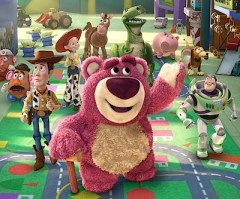 who’ve grown up with these films and these characters and, in a way, are letting them go along with Andy; and for adults, who may have left childish things behind but can hopefully still appreciate the thematic sentiment.
 even more emotional seeing them go through what they do here. Similarly, it pays to be aware of events and jokes in the preceding films. You don’t need to know intricate plot details, but there are plenty of pleasing references to catchphrases and moments.
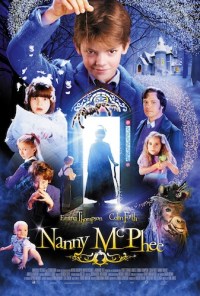 Nanny McPhee is brilliant. But to expand more directly on that sentence would be a conclusion, and so, before that, I present a collection of thoughts on bits I liked. Let’s call it “a review”.
 And even if you can’t engage with the troublesome children, surely Nanny McPhee coming in to sort them out is therefore a blessing? To say the children are a naughty, nasty rabble but McPhee is an oppressive, overbearing force is just trying to have your cake and eat it — pick a side, or pick both, oh awkward viewer. (And by “viewer” here I mean “one IMDb commenter I read”.)
 Not to mention Kelly MacDonald, the film’s sweetness and light — not like Anne Hathaway’s caricatured (deliberately) White Queen in Tim Burton’s
  Around the large cast, there’s plenty more to see. The primary-coloured sets and costumes work marvellously, a delightful mash between reality (the actual buildings, sets, costumes, etc, all look real and period-accurate) and fantasy (the bright colours!) It could’ve been garish; instead, it’s vibrant. The effects are properly magical. They don’t overwhelm, always serving the story rather than themselves, which is probably what makes them all the more effective. The climax is another highlight — though what occurs at the wedding (oh, it’s obvious there’ll be one) I shan’t spoil by describing.
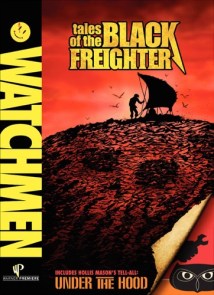 In the world of
  which could well have gone down a more modern-styled route.
 It’ll be interesting to see how it fits into the film when I finally get round to watching The Ultimate Cut — I already have some reservations waiting to be expressed in my review.
 As I mentioned in my review of the
 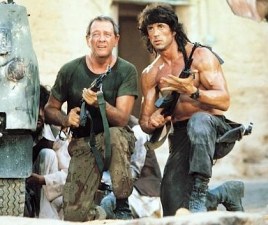 now occupy almost the same position the Russians did back then, for instance — but I’ll leave the specifics of such things to reviewers more versed in the last 25 years of Western intervention in the Middle East.
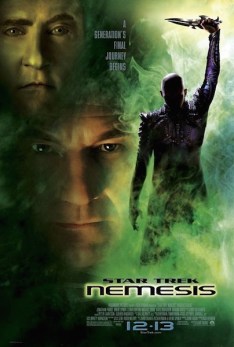 After the widespread disappointment with
  though the knowledge of better things to come means his presence somehow lifts his scenes a notch.
 If you’ve ever seen Akira Kurosawa’s classic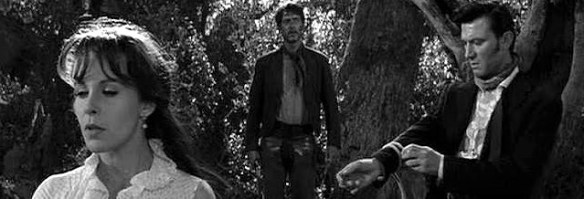
 There’s probably a worthwhile biopic to be made about Verity Lambert. In 1963, she became not only the youngest-ever producer of a BBC television programme, but the first female one too; the programme she was charged with launching was
  Before I set off really critiquing the film, let’s just remember this: it’s a student effort. In that context, I’ve seen far worse — heck, I’ve been involved in the production of worse. Cowell and Guy have set themselves an almost Herculean task by choosing a period tale, which obviously necessitates all sorts of extra effort in terms of costumes, locations, dialogue… And to make it worse, they’ve chosen the ’60s, evoked so faultlessly in almost 40 hours (and counting) of
  which he accepts with merely a muttered “damn” when she leaves. Sorry, what? There’s nothing believable in that scene, never mind accurate.
 Technically, the piece is just as much a mixed bag. Stephen Cheung’s direction picks out some decent angles, avoiding the flat point-and-shoot trap some student filmmakers are apt to fall into, while the sepia-ish wash helps the period tone and adds a small amount of welcome gloss. The editing is a little rough around the edges, particularly at scene changes and toward the end. YouTube claims it’s viewable in 1080p — whether something went wrong in shooting, editing or at YouTube’s end I don’t know, but it isn’t that high quality. (This last point doesn’t impact on my score at all, it’s just an observation.)
 100Films.co.uk