It was 100 Films’ greatest ever year in terms of sheer size, but it was also one of the highest-scoring too, with the most five-star ratings I’ve ever awarded and the second-highest average score to date. Now it’s time to look back over the list and ask: Which were the cream of the crop? Which were the dregs? And which significant new films did I not even see?
To top it off, you can make your voice heard by voting for your favourites (plural) in this year’s top ten poll. Exciting stuff.
So without further ado:
The Five Worst Films I Saw For the First Time in 2014
In alphabetical order…
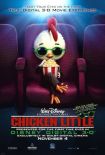 Chicken Little
Disney are back at the height of their powers of late, at least as far as the box office is concerned, with the phenomenon that is Frozen. Things weren’t so rosy in the early ’00s, though, leading them to abandon traditional 2D animation for the burgeoning world of 3D CGI. Their first effort was this dross, instantly proving it wasn’t the style of animation that was the problem.
 G.I. Joe: Retaliation
I only gave this two stars (as opposed to one) for two reasons: 1) the rather cool cliff-swinging fight sequence, which deserves to be in a better movie, and 2) because for some unknown reason I’d given the Team America-esque first one two stars, and this is marginally better. Really, though, it’s awful: messily told, tonally uneven, ridiculous in any number of ways. Even as a daft actioner, it’s no fun.
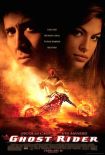 Ghost Rider
Ghost Rider’s maligned sequel, Spirit of Vengeance, wasn’t particularly good, but at least it embraced the trashier, grimier aspects of the character (even if it was only in a PG-13 way). This first attempt to bring the Marvel anti-hero to the big screen tried to force the concept into the shape of a trad blockbuster, ending up with a Constantine rip-off. As hardly anyone liked Constantine, that wasn’t a very good idea.
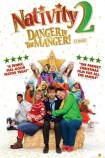 Nativity 2: Danger in the Manger!
I liked the first Nativity — it’s not high art, but it’s a perfectly lovely Christmas movie. This follow-up has to switch out Martin Freeman for David Tennant, which isn’t a problem, but the new story is. Not that it’s much of a story, more a series of loosely-connected misadventures. Throw in a climactic concert made up of truly dreadful new songs and you have a disappointingly charmless sequel.
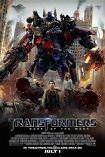 Transformers: Dark of the Moon
Michael Bay can make good movies, but he seems to have forgotten how. There are many things wrong with this third Transformers flick, but what’s most shocking is how ineptly it’s put together. For experienced filmmakers, there’s no excuse. Apparently this year’s fourth instalment is even worse, but it’s tough to imagine how. To quote a character in the movie: “does it suck or what? I mean it’s like a bad sci-fi film.”
Dishonourable Mention
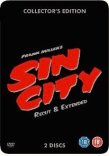 Sin City: Recut & Extended
Not bad enough to actually make the bottom five, this recut took a film I remembered loving and messed about with it so much it made me doubt if I’d ever liked it in the first place. It could be my tastes have changed in the intervening nine years, but I suspect it’s at least as much due to the frustrating and near-pointless rearrangement of the running order. I recommend you stick to the theatrical cut.
The Ten Best Films I Saw For the First Time in 2014
The fascinating story of the outrage provoked in Britain by gory horror movies in the early days of VHS. Excellently constructed from talking-head interviews and archive clips, it not only tells the tale clearly but also presents spot-on juxtapositions. Informative both for those who lived through it and those for who it’s now part of history, the important message is how easily such censorship was allowed — even encouraged — and that we must be on the look out for it again. Unfortunately it is happening again, to the internet this time, and once again is being championed via misinformation from those with a vested interest. I guess more people need to see this film…
The gang’s all here for an all-eras X-Men team-up, the original cast teaming up with the First Class lot, and led by original franchise director Bryan Singer, for a time-travelling adventure inspired by the classic comic book storyline. Some surprisingly deep characterisation, buoyed by strong performances from a first-rate cast (how many of them are Oscar nominees/winners?), rubs shoulders comfortably with witty and inventive action sequences. The series that kicked off the current Hollywood superhero obsession proves it can still hold its own among the big boys that have come since.
Darren Aronofsky’s multi-pronged narrative about the evils of addiction is sometimes cited as one of the bleakest films ever made. Even if you’re prepared for that, the verve of the filmmaking transcends expectations. Finely-tuned editing and attentive sound design gradually position the viewer for the climax, a fast-cut perfectly-scored assault on the senses that almost batters you into submission. It may ultimately be grim and without hope, but it’s so amazingly crafted that you’re left longing to experience it again regardless.
Snatched off the street, locked in a bedsit for 15 years, then inexplicably released and given just days to figure out why it happened — that’s the concept behind this dark South Korean thriller (remade in America to no fanfare and even less acclaim in 2013). Oldboy mixes what could almost be a straightforward revenge thriller with weird, almost surrealistic touches, for a whole that is ready-made to be cultish without the self-conscious Cult-ish-ness that such things are normally saddled with. It ends with twists and revelations so hard-hitting they equal even the famous single-take hammer-featuring corridor scene.
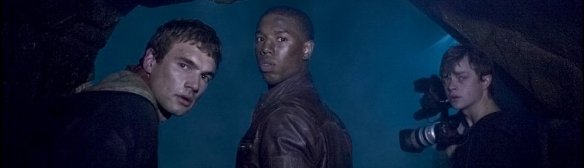
Found-footage and superheroes — two current cinematic obsessions, reviled by some and beloved by others. They had to come together eventually. Director Josh Trank keeps a handle on affairs, so that the film always sticks to concept without becoming samey, while screenwriter Max Landis reveals the true nature of his characters as he leads them from low-key beginnings to a barnstorming citywide climax that’s a bit like the ending of Man of Steel, only really good.
Why aren’t there many thrillers set inside the jury room? I’d wager because 12 Angry Men got there a long time ago and nailed it. A man is on trial for murder; we join the case as the twelve-man jury enter their deliberation room. Eleven of them are absolutely certain; one thinks they ought to discuss it. For the next 90 minutes, twelve men sit in one room and talk to each other… and it’s absolutely gripping, tense and thrilling, with moments that make you virtually punch the air with excitement. It’s a masterclass in constrained filmmaking, from director Sidney Lumet, and acting, from a cast of twelve peerless performers.
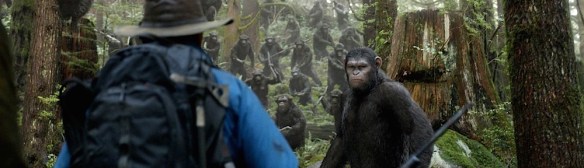
The sequel to the prequel of the Planet of the Apes takes the fad for all-CGI characters and brings it to maturity with a fully-realised ape society, played by mo-capped actors led by Andy Serkis, that is far more interesting than the human portion of the story. This is a story of interspecies relations where everything could be fine if it weren’t for past distrust and people constantly bringing guns along — like the best sci-fi, it reflects our world back at us. They claimed Avatar proved motion-captured performances should be considered alongside ‘the real thing’. Rubbish. Dawn, however, makes that case completely.
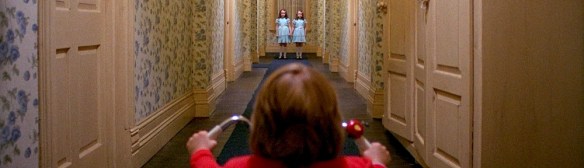
Hated by Stephen King, author of the original novel, and his most die-hard fans, Stanley Kubrick’s adaptation sees Jack Nicholson and family as the caretakers and sole residents of a remote hotel over a snowbound winter, when very creepy things begin to happen… Goodness knows what any of it ultimately means (I know there are plenty of wild theories — I’ve got Room 237 recorded to catch at some point), but as an exercise in eliciting emotions of dread and almost-primal fear, it’s second to none.
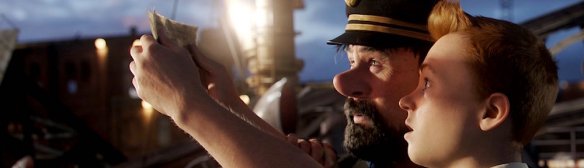
The sixth feature film to star Hergé’s boy reporter (yes, really) sees the master of action-adventure cinema, Steven Spielberg, bring us the best Indiana Jones movie in over 20 years — only it’s computer animated and stars a blonde Belgian chap with a posh British accent. Rendered with incredible realism by Weta, with a screenplay that perfectly balances investigation, action and humour, and direction that knows when to maintain verisimilitude and when to cut loose with all the freedom CGI can offer, Tintin is a quality entertainment. Very nearly my film of the year, but for…
Regular readers will know I love a single-location thriller, and this is one — it just happens that the single-location in question is the entire orbit of planet Earth. There may not be much of a plot (“woman gets stranded in space; tries to get to safety”), but it doesn’t matter: director Alfonso Cuarón reminds us of his mastery of the single-take, using it to better connect us to the characters’ experiences. I’m sure people were right that it’s best in 3D on a huge screen, but even in 2D on a telly it’s spectacular. It’s also the third film in my top five that’s only been made possible thanks to advances in computer graphics — that surely says something about how an intelligent use of CGI still allows filmmakers to innovate.
As ever, I welcome your opinion on my top ten — not just in the comments section, but also in the form of a lovely poll. This year you can pick multiple options, so feel free to vote for all your favourites.
And if you feel I’ve made an unforgivable omission, do feel free to berate me below.
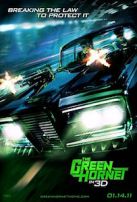 Yet another record: for the first time ever, all of my top ten films are ones I awarded a full five stars to. That’s once again testament to the quality of this year’s viewing, because I felt sure at least one four-stars-er would make the list. To be precise, that was The Green Hornet, which I know isn’t widely liked but I rather loved — I called it “one of the best superhero movies of the current generation”, in fact. On the day, though, I couldn’t in good conscience say it was better than any of the films I have included. I guess that confers 11th place on it.
In total, 27 main-list films earned themselves a five-star ratings this year. As well as those in the top ten (for which, see above, obv.), the others were After the Thin Man, All is Lost, La Belle et la Bete, Dead Poets Society, Good Morning Vietnam, Good Will Hunting, The Hunger Games: Catching Fire, In Your Eyes, The Kings of Summer, Rear Window, Saving Mr. Banks, The Searchers, The Secret of Kells, Sightseers, The Thin Man, The World’s End, and Zero Dark Thirty. Additionally, both of the ‘other’ titles I watched and reviewed — The Hobbit: An Unexpected Journey (Extended Edition) and miniseries The 10th Kingdom — also scored full marks.
There are any number of other films I could highlight here — my long-list for the top ten had over 50 movies on it, and at least 25 of those were genuine contenders — but two categories stand out. Firstly, after finishing the Falcon series earlier in the year, towards the end I made a start on The Thin Man, watching the first three out of six films. They’re excellent fun, the tonal inspiration for the likes of the Saint and the Falcon (which I’ve previously covered in full), but on the whole even better. Expect reviews before too long.
Finally, we all know superhero and comic book movies are everywhere right now, and will continue to be so if the announced plans of Marvel Studios, Warner Bros, Fox, Sony, and the rest, come to fruition. It’s felt particularly true for me this year, with not only a few well-received recent releases (Captain America: The Winter Soldier, Guardians of the Galaxy, X-Men: Days of Future Past), but also getting caught up on an array of recent entries (all but two were from the past decade, and one of those is only 11 years old). All told, there were 22 superhero, comic book, or related movies on this year’s list — that’s 16%. For a single subgenre — and not one where I’ve (say) dedicated myself to watching the entirety of one series — that does seem rather a lot…
As is my tradition, here’s an alphabetical list of 50 films that were released in 2014 but I’ve not yet seen. They’ve been chosen for a variety of reasons, from box office success to critical acclaim via simple notoriety. It’s biased slightly towards ones I might actually see at some point, though there were a couple of highly-successful or much-discussed ones I felt couldn’t/shouldn’t be left out. Feel free to assume which ones those are.


22 Jump Street
300: Rise of an Empire
’71
American Sniper
Big Eyes
Big Hero 6
Birdman
Boyhood
Calvary
Divergent

The Equalizer
Exodus: Gods and Kings
The Expendables 3
Godzilla
Gone Girl
The Grand Budapest Hotel
The Fault in Our Stars
Foxcatcher
Fury
Hercules
The Hobbit: The Battle of the Five Armies
How to Train Your Dragon 2
The Hunger Games: Mockingjay – Part 1
The Imitation Game
The Inbetweeners 2
Inherent Vice
Interstellar
The Interview
Into the Woods
Locke

Lucy
Maleficent
The Maze Runner
A Million Ways to Die in the West
The Monuments Men
Mr. Turner
Mrs. Brown’s Boys D’Movie
Muppets Most Wanted
Nightcrawler
Noah
Paddington
Pride
The Raid 2
RoboCop
Teenage Mutant Ninja Turtles
The Theory of Everything
Transcendence
Transformers: Age of Extinction
Unbroken
Under the Skin
Party like it’s Nineteen Ninety Nine…
It’s 100 Films’ ninth year — crikey, when’d that happen?
Expect more archive reposts (can I finish them before my 10th anniversary?), a third round of “What Do You Mean You Haven’t Seen” (it’s got a killer new acronym…), and — fingers crossed — both my 1,000th review and the official 100 Films’ #1000!
All that and hoverboards. We were promised hoverboards.
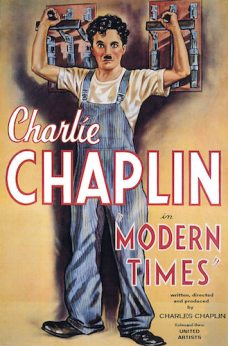 Charlie Chaplin satirises technology and modernisation in arguably the last film of the silent era. It actually has a synchronised soundtrack, primarily for music and effects, but also dialogue — though “we hear spoken voices only when they come from mechanical devices, a symbol of the film’s theme of technology and dehumanization.” The irony is it was that technological progress which rendered Modern Times the last hurrah for the era Chaplin remains most identified with.





 1981: Steven Spielberg reads a French review of his movie
  Apparently some Tintin purists weren’t so keen on the actual adaptation — elements of The Crab with the Golden Claws have been mixed in to a plot primarily taken from The Secret of the Unicorn, the sequel/second half of which, Red Rackham’s Treasure, is reportedly used sparingly. Plus, in the original tale Sakharine is a minor character who wasn’t responsible for much, apparently. As someone who’s only read one of those three volumes, and even then not since I was young, such things didn’t trouble me. What superstar screenwriters Steven “
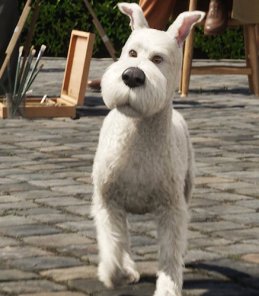 The slapstick is mainly hoisted by Simon Pegg and Nick Frost as the physically-identical Thomson and Thompson — a true advantage of animation, that. I imagine some find their parts tiresome because of their inherently comic role, but they’re likeable versions of the characters. Even more joyous is Snowy, though. Well, I would like him, wouldn’t I? His internal monologue, such a memorable part of Hergé’s books, is omitted (as it is from every film version to date, I believe), but he’s full of character nonetheless. Some of the best sequences involve Snowy running in to save the day. I don’t think they quite got the animation model right (the one glimpsed in test footage included in behind-the-scenes featurettes looks better, for my money), but his characterisation overcomes that.
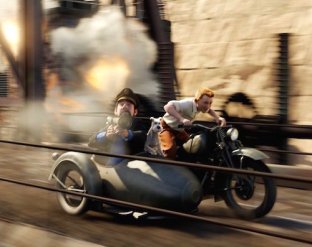 Of course, one very important person is neither British nor Belgian: Spielberg. The screenplay’s balance between peril and comedy is spotlessly enhanced by his peerless direction. In a world stuffed to the gills with lesser blockbusters that palely imitate the groundwork Spielberg and co laid in the ’70s and ’80s, work like this should remind people why he’s still the master of the form. The film is shot with an eye for realism (so much so that some viewers have been convinced it was filmed on real locations with real actors, with some CG augmentation for the cartoonish faces, of course), which helps lend a sense of plausibility and also genuine jeopardy. It’s easy to get carried away when working in CG animation, but often the most impressive works are ones that behave as if they’ve been shot largely within the limitations of real-world filmmaking technology.
 The tone on the whole is resolutely PG — actually, like many an action-adventure blockbuster used to be before everything went slightly darker and PG-13. So, for example, Tintin wields a gun on occasion, but never at another human being. The focus is on the story, which happens to lead to some adrenaline-pumping sequences, rather than a lightweight excuse to link together a bunch of punch-ups and chases. Ironically (though, for anyone who knows what they’re talking about, entirely expectedly) this makes the action all the more exciting. It also mean there’s a lighter touch than many current blockbusters offer; a greater presence for humour, including among the action. I guess that’s not fashionable these days, when everyone’s become so po-faced about their big-budget entertainment. However, with the likes of
  but some viewers would have seen it (even subconsciously) as more of a “real movie”.
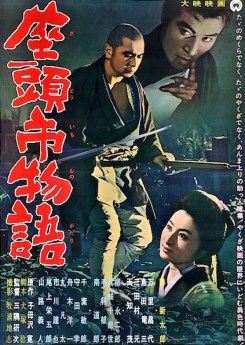 Adapted from a short story by Kan Shimozawa, The Tale of Zatoichi was a low-key release for its studio, Daiei: despite being helmed by “a topflight director”
 But enough hyperbole — what about The Tale itself? The story sees blind masseuse Zatoichi accepting an old invitation to visit an acquaintance, Sukegorô (Eijirô Yanagi). But Sukegorô is a yakuza boss, and he presses Zatoichi to join his side in a brewing war with rival Shigezô (Ryûzô Shimada) — because although he’s blind, the masseuse has legendary sword skills. On Shigezô’s side is a hired samurai, Hirate (Amachi), who Zatoichi encounters by chance. Despite the mutual respect between these two coerced warriors, the eventual gang battle comes down to a duel between them…
 Those prepared for a calmer, more considered film may find much to like, however. Katsu’s understated style holds your attention and makes you want to learn more about the character; not his past, necessarily, but his qualities as a man. The same is true of Amachi, in some ways even more appealing as the doomed ronin. You get a genuine sense that Zatoichi and Hirate would have had a great, long-lasting friendship if they’d met under better circumstances, which makes the manner of their encounter all the more tragic. For all the bluster about a big gang war on the horizon, it’s the relationship between these two men that forms the heart of the film.
 Reportedly this opener is “not the best of [the] series”, but remains “a grand introduction to the character and a touchstone for many of the themes and gags presented in the later films”.
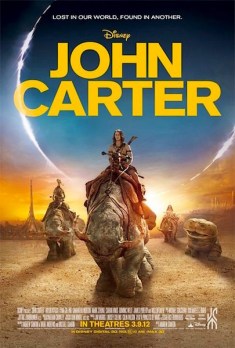 A box office flop (it made a once-astonishing $284 million worldwide, but that was off a $250 million production budget and a ginormous bungled marketing campaign), John Carter has gained something of a following among those who did enjoy it or caught it later — see
  not because it’s so famous (among Normal People, I don’t think it is), but because its influence means its imagery and concepts have already been plundered (
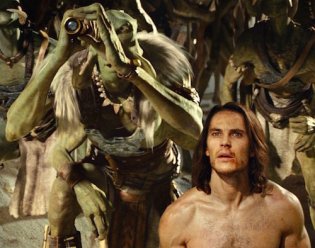 It doesn’t help that the film is structurally muddled at the offset. It begins on Mars, a voiceover detailing the conflict — an instant bombardment of names and concepts. I don’t mind things that challenge you to keep up, but it still feels a bit much. Then we jump to New York in the 1880s, where Carter is running away from someone in the streets. Then to his house, where his nephew has just turned up to be told he’s dead. You what? We just saw him in the telegraph office! And then we jump back to the 1860s, where he’s searching for gold and getting arrested (or something) by Bryan Cranston in a wig as some form of army officer. Then it gets a bit more straightforward. If being transported to Mars and meeting four-armed CG aliens who speak in subtitles is what you call “straightforward”, anyway.
 It feels a bit facile to criticise the quality of CGI these days, but that doesn’t stop John Carter from being over-ambitious in this regard. In fact, it’s not really the sometimes-half-assed green screen or occasional plastic-ness that’s the problem, but the design: those four-armed aliens are just a little too cartoony. Perhaps it’s a hangover from Stanton’s Pixar days, perhaps something just went a little awry during the process, but their design doesn’t look quite ‘real’ enough; a little like someone’s taken a real-life creature and then lightly caricatured it. I think it’s the eyes, which are perhaps a little too big and round and ‘cute’, but there’s something else indefinable there, or not there. These aliens aren’t just set dressing but proper motion-captured characters, played by the likes of Samantha Morton, Willem Dafoe, Thomas Haden Church and Polly Walker, so the lack of connection is regrettable.
 I was expecting, or perhaps hoping, to like it; to find a misunderstood old-style adventure full of entertainment value. It may be an old-style adventure, but that’s beside the point, because whatever it is, I just felt it wasn’t particularly well made: poorly constructed, weakly performed, lazily (and wrongly) assumptive of the audience’s familiarity with the material. Disappointing.
 Seven Samurai used to be a striking anomaly amongst the top ten of
  It’s also unhurried. As Kenneth Turan explains in his essay “The Hours and Times: Kurosawa and the Art of Epic Storytelling” (in the booklet for Criterion’s DVD and Blu-ray releases of the film, and available online
 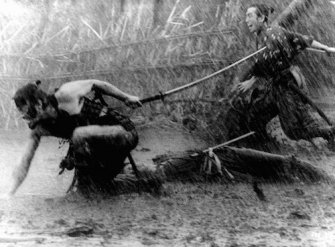 The length ensures our investment in the village, too, just as it does for the samurai. They’re not being paid a fortune — in fact, they’re just being paid food and lodging — so why do they care? Well, food and lodging are better than no food and lodging, for starters; and then, having been in the village so long in preparation, they care for it too. It is, at least for the time being, their home. You can tell an audience this, of course, but one of the few ways to make them feel it is to put them there too — and that’s what the length does. To quote from Turan again,
 the final scene, the way it’s edited and framed, ties the remaining samurai to their deceased comrades, the living and thriving farmers a distant and separate group. Fighting is the way of the past, perhaps, and peaceful farming the future. Or is the samurai’s only purpose to be found in death, because other than that they are redundant?
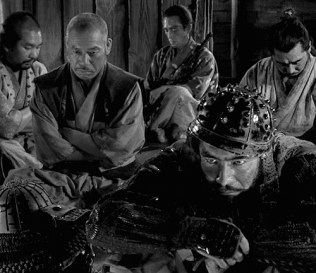 And it wasn’t as if it was overseas viewers who hit on the magic: as Turan reveals, “Toho Studios cut fifty minutes before so much as showing the film to American distributors, fearful that no Westerner would have the stamina for its original length.” The more things change the more they stay the same, I suppose — how many Great Films from Hollywood are ignored by awards bodies and audiences, only to endure in other ways?
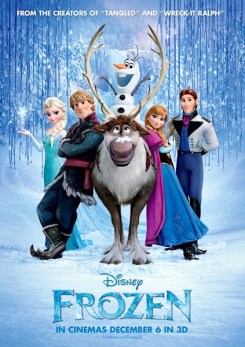 Frozen is a grim single-location thriller about three college kids trapped on a ski-lift overnight, battling hypothermia and worse over a hundred-foot drop. Or at least it was until last year, when Disney went and released its all-consuming mega-musical.
  Unlike the best Disneys, however, I think its appeal resides firmly with little girls — you don’t actually have to go very far on the internet to find people baffled by its success. Plenty of people think the music is bland, the characters underdeveloped, the moral and emotional arcs not fully thought-through, the visual style a rip-off from
 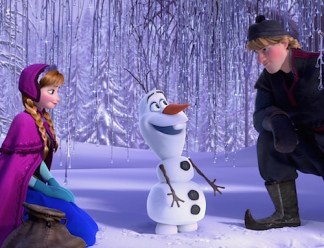 The lack of villain’s song is attributable to the fact that, for nearly the entire film, there are no nasty characters. A villain emerges right at the end to give us a climax, but for once that works — a genuine twist! It’s almost a shame it has to resort to that, but how else do you end a Hollywood movie other than a big dramatic confrontation? Plus, aforementioned snowman Olaf confounded my expectations, pulling off the quite remarkable feat of not being the most irritating CGI character since Jar Jar Binks. (I don’t know who is the most irritating CGI character since Jar Jar Binks, but Olaf is alright.)
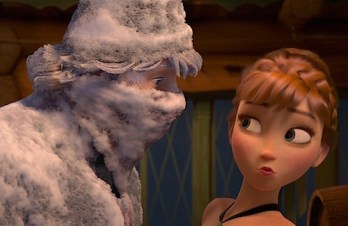 It’s not bad — it’s adequately cartoony — and actually the ice and snow effects are very, very good. It’s the character animation that I felt let it down, especially some of the more minor roles — there were points where their style and movement looked little better than you’d find in a video game cut scene.
 Frozen is by no means a bad Disney movie, and it does have a lot of favourable aspects. Whether the internet’s right and it’s not as good as Tangled, I wouldn’t care to say (I enjoyed Tangled, but at this point have largely forgotten it); conversely, the sometimes-rabid fan base are perhaps being a little over-enthusiastic. There’s nothing wrong with a kids’ movie being beloved by kids, though; and with all the dreadful things the media churns out for little girls to obsess over and centre their life values around, this is undoubtedly one of the most positive.
 Marvel Studios takes its boldest step yet, moving away from the present-day superhero milieu of its previous movies to a galaxy far, far away for a space opera epic. Its success, both critically and commercially, has cemented the Marvel Cinematic Universe as an infallible force in the current movie world. But, really, how good is it?
 The worst offender is the pod chase through Knowhere, a several-minutes-long sequence that registers as little more than a blur. There’s a shocking lack of clarity to its images, even by today’s standards. Maybe it’s better in 3D, when I guess the backgrounds would sink into the distance and important elements would be foregrounded; but in 2D, you can’t see what’s meant to be going on for all the fast-moving colour and split-second cuts. Almost as bad, though for different reasons, is the climax. It takes up an overlong chunk of the movie and at times feels repetitive of too many other Marvel climaxes — oh look, a giant spaceship crashing into a city! If anything, the film gets ‘worse’ as it goes on. Perhaps not in a very literal sense, but as the blustering action climax takes over, it moves further away from the stuff that makes it unique and interesting.
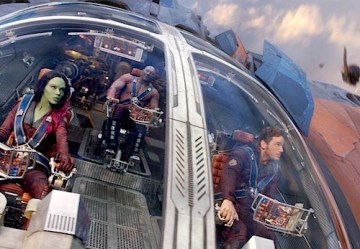 It isn’t even called Nova City, but I don’t have the foggiest what it is called because the film didn’t make me feel I should be learning it. Some more effort making sure we knew why that place mattered, even if it was just a clearer depiction of all the planning for its defence, might have sold the entire climax better.
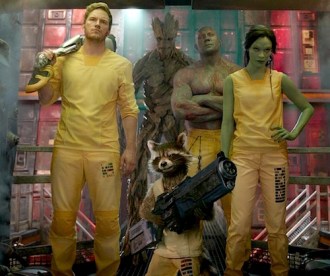 especially the overlong climax. Joss Whedon commented of his own Avengers film (as I quoted in
  After the
 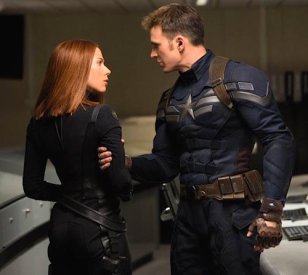 everybody moved on to being more excited about Marvel’s end-of-summer new-franchise-launcher,
 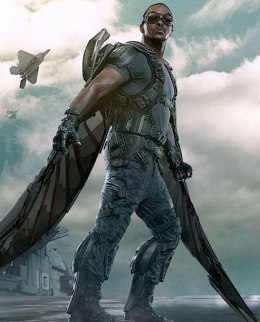 Also introduced is sidekick hero the Falcon (Anthony Mackie), who I have little to say about directly. He’s a sidekick who’s introduced fully-formed — he’s been using his ‘superpower’ for years as just part of the military; it’s not new or exciting to him, which lessens some of its power for the viewer too. “Origin story” may be the most over-used of all the superhero stock stories, but there’s a reason for that. If you skip it then you cut to the chase, that’s true, but does it also lessen the impact of characters to not see how they started? Maybe storytellers just need to come up with fresh ways of giving origins, rather than skipping them altogether.
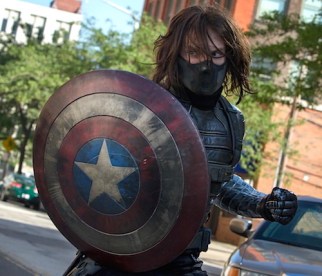 and then it refuses to wrap everything up, putting certain things in place ready for
 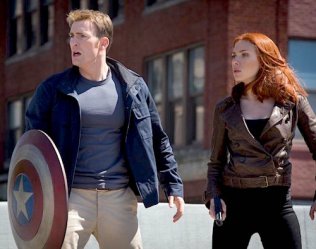 what’s left? There is strong action, albeit undermined by muddled character investment; and there is an interesting thriller/conspiracy story, albeit undermined by a feeling of “once you know it, you know it” — it’s not all that complicated or all that surprising, including the revelation that the one character significant enough to be behind it all is behind it all (gasp!)
 Belated sequels can be a
 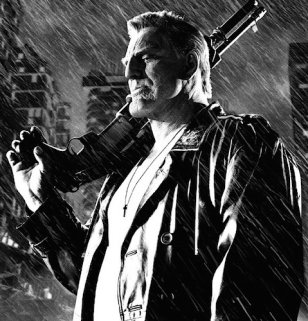 But the comic-book-ness of the first film — moments of almost metaphorical visual representation rather than literal reality, including physically-impossible action beats — has been ramped up. The value of the first film was never in its action, so the sequel’s lengthy punch-ups, crossbow-based guard-slaying, and all the rest, get boring fast. When it slips into this needless excess, A Dame to Kill For loses its way. When it sticks to what it does best — hard-boiled fatalistic crime tales with striking comic book-inspired cinematography — it does as well as the concept ever did.
 The intervening decade has lessened the impact of the first film’s sick ultra-violence, but there’s nothing even that extreme here, aside perhaps from one eyeball-related moment. On the other hand, nearly a decade of tech development means it looks better than the last one, both in terms of the CGI’s quality and the camerawork more generally — it’s less flatly shot; more filmic than the first one’s sometimes-webseries-y composition.
 its predecessor, and that’s exactly what it delivers. I suspect the first benefits from nostalgia because, watching them virtually back to back, I found I liked Sin City less than I remembered, but enjoyed A Dame to Kill For just as much. It’s flawed in several aspects, but for honest-to-themselves fans of the first movie, I think it’s a “more of what you liked”-style success.
 100Films.co.uk