
Carol Morley | 91 mins | streaming (HD) | 16:9 | UK & Ireland / English | 12A
 In 2006, the body of 38-year-old Joyce Vincent was found in her London bedsit, surrounded by Christmas presents and with the TV still on. Sad, but largely unremarkable, were it not for the fact that she’d been dead for three years.
Carol Morley’s documentary attempts to uncover the story of Joyce’s life, and how it reached a point where no one noticed she’d been gone for so long. It’s told mainly by her friends and colleagues (her remaining family, perhaps unsurprisingly, declined to take part), who paint a picture of an attractive, outgoing, personable woman; but also one who was a social chameleon, adapting to her current group of friends, and sometimes disappearing for months at a time. Later, her life seemed to follow a more tragic path, though details are scant for various reasons.
As it goes about encapsulating a life that ended so tragically, Dreams of a Life is surely one of the most heartbreaking films you’ll ever see. Consequently, I don’t quite understand the negative reaction you’ll find in some comments sections online, because I thought it was unmistakably powerful and affecting. I know this is a review of the film rather than other people’s reactions to it, but, well, as much as I found the film insightful and upsetting, some of those reactions angered me, so let’s have a go at them anyway.
 Some people seem to view this as little more than a detective mystery, and are frustrated that Morley ‘chose’ to leave out details. I guess such critics have no understanding of things like confidentiality (when it comes to why Joyce was in a women’s refuge and what she disclosed there), rights to privacy (if the family don’t want to be interviewed, you can’t force them), the realities of investigating a real-life case (maybe some people who knew her in those final years just don’t want to be found), or human decency (Joyce led a fragmented life that came to a terribly sad end, and all you can think about is why she didn’t leave a few more clues around for you to deduce what happened and why?!)
Some people outright refuse to believe the story. “It’s implausible no one noticed her bills hadn’t been paid for so long.” Well, that’s what happened, kiddo. Whether it seems plausible to you or not, it obviously occurred. I don’t wish to tar an entire nation with the same brush, but the people who find these parts incredulous often seem to be American, generally because certain things work differently in the UK to the US. There’s a certain type of person who seems to believe the entire world operates in the same way as the US (not just Americans — thanks to the overabundance of US films and TV, it’s been observed around the world that there are people who think their own country has the same laws/rights/etc as the US), but obviously that isn’t true, and this is a case in point.
 On the more considered side of the internet, there’s a reasonable debate to be found about the filmmakers’ right to tell the story at all. Joyce kept her life story secret even from some of her closest friends, and yet here it is being picked over in a movie for anyone to see. Is it moral to do such a thing? Should she not just be left in peace? Are the extraordinary circumstances of her death a good enough reason for this level of prying? Surely her death and how it came to occur needs to be understood, though, and surely the only way to do that fully is to examine her life. But is that not the business of inquests and the like, not films? But then, the filmmakers seem to have dug up information the inquest didn’t get close to unveiling. Perhaps the question is, when does society’s interest justifiably overtake the rights of the individual? Does it here? I’m not sure. Maybe.
One criticism I will side with is that the film is sometimes frustratingly put together. The accounts of Joyce’s childhood and early 20s are jumbled up, flitting back and forth in time. The viewer has to piece together the chronology; a challenge for no particular reason. Dramatic recreations of her life are largely pointless, though arguably necessary in a visual medium. Actress Zawe Ashton portrays Joyce in her 20s and 30s, but any scene where she’s required to give a performance — to do more than just walk around in a dumbshow recreation of that life — feel too much like a needless dramatisation, not the fact-based reenactment you’d expect or want from a documentary.
 Nonetheless, these flaws can’t detract from the fundamental power of the story being told. If you come away from this thinking not about how sad it was for both Joyce and the people who knew her (especially Martin, especially in the film’s final moments), or what you should or could perhaps be doing better in your life, but instead being angry that it didn’t satiate your ghoulish need for full and frank revelations… well, I don’t know what to say about you, but it wouldn’t be very nice. Through this incident, Morley and her interviewees are really making bigger points about our society and our relationships. It’s no one’s fault, per se, that this happened to Joyce, but that it can happen is horrendous.

Dreams of a Life is on Film4 tonight at 1:30am.
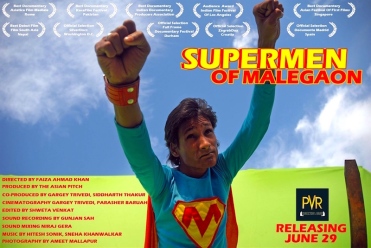 In the impoverished Indian town of Malegaon, everyone either works on the power looms and is paid a pittance, or is unemployed and so has even less; apart from the women, who are squirrelled away out of sight at home. The population is 75% Muslim, the remainder Hindu, and that leads to tension. Outside of work, there is nothing to do for entertainment… except go to the movies. And Malegaon loves the movies.
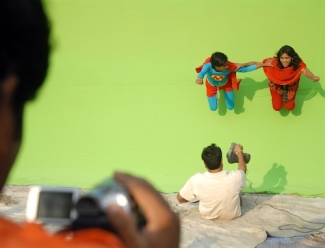 Supermen of Malegaon is the making-of story of Nasir’s most ambitious production to date. Having seen the use of greenscreen in one of those behind-the-scenes outtakes, he realised he could use the process to make a special effects movie — specifically, to make Superman fly to Malegaon. This documentary follows the trials and tribulations of Nasir and his band of hobby filmmakers through their film’s writing, planning, and its sometimes troubled shoot, until it’s completed. In the process, we meet some genuine characters, learn something of the unique lifestyle of Malegaon itself, and maybe even learn something about ourselves too.
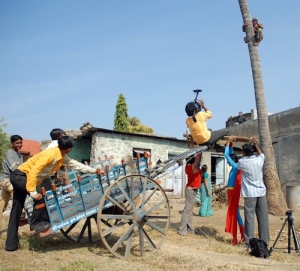 Even if it doesn’t, the situation in ‘Mollywood’ is an interesting one. This is a cottage industry: everyone involved has day jobs, funding the movies out of their own pocket, or by borrowing cash, or with favours, or by selling in-film adverts to local businesses — yes, that’s right, product placement, not that anyone involved would know that term. Women from Malegaon cannot appear in or work on the films due to local attitudes, so actresses are hired from nearby villages; the screenplay is written and shooting schedule arranged so that the actress only needs to be involved for the minimum number of days, to save money. Bicycles and motorbikes are used to create tracking shots; the director gets a piggyback for a high angle, or is raised and lowered on the arm of a cart to create a crane shot. The ingenuity and inventiveness of these literally-self-taught moviemakers is astonishing.
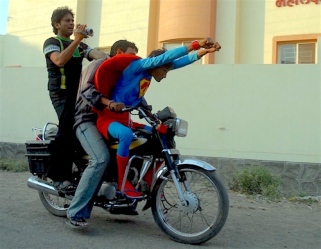 which he turns down because he could make four whole films for that much money. Even that little is scraped together. Mollywood moviemaking isn’t a money spinner, it’s a hobby. Still, one of the writers wants to make it as a proper writer; wants to go to Bombay and do it as his career. This has been his aim for 15 years, he says, and Bombay is no closer.
 It’s an incredible, one-of-a-kind film; more powerful and life-affirming than it perhaps has any right to be. But then the filmmakers of Malegaon don’t really care about such things. They make movies because they want to, whether they ‘should’ or not; they make them better than you might expect; and it enriches their lives. Their story may do the same for you. In my opinion, it’s an essential film; a true must-see.
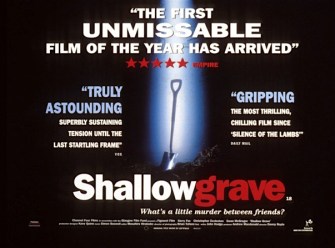 The debut feature of director Danny Boyle was hailed on release for being a British film that wasn’t another period-piece literary adaptation. Instead, it concerns three ultra-chummy flatmates in contemporary Edinburgh (Ewan McGregor, Christopher Eccleston, Kerry Fox) who take in a fourth lodger, who promptly dies, leaving behind an insane amount of cash. Rather than report it, they dispose of the corpse and keep the cash. You don’t get much further from Merchant-Ivory than that.
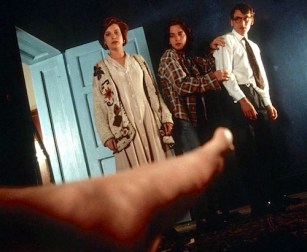 Consequently, it has that great discussion-generating feature of many a zeitgeist-y ‘watercooler’ film: what would you do?
 For generations of people, the work of Gerry Anderson and AP Films / Century 21 are an irrevocable part of their childhood. For my part, I grew up during their big ’90s revival — the era of Anthea Turner’s make of Tracy Island on Blue Peter (though as no one in my family is particularly crafty (as it were) I had a Proper One), etc — so memories of
  And finally (for this summary, at least), Anderson’s ever-present desire for realism led him to invent an aid system to aid his puppeteers. In order to control the puppets, the operators were positioned above the sets, afforded only a bird’s eye view — a hard position from which to make them perform well, considering they couldn’t see what they were actually doing as it appeared on camera. So Anderson devised a way for a video feed to be run from the film camera up to a TV monitor for the puppeteers. The process also meant the director and cinematographer could see exactly what the camera saw, including the ability to rewind and review footage, meaning that, if there was a worry about a mistake, it was no longer necessary to either wait for the film to be developed or shoot another take just in case. This system, if you aren’t familiar with it, is known as video assist and is an industry standard on film shoots (digital filming removes the need for it, of course, but that’s a very recent development).
 For instance: for all his achievements in the field, Anderson never actually wanted to work with puppets — as a burgeoning TV production company desperate for work in the ’50s, AP Films were approached by a writer to produce a puppet series, so they did; that led to her commissioning another; they thought they could do better work by themselves, so they did; and it continued to spiral from there. Anderson constantly pushed for the puppets to be better — for their movements to be more realistic, for their lip-sync to be genuinely synced (again, innovating new technology to achieve this), for their proportions to be like humans rather than caricatures. But these advances eventually went too far, at times angering the puppeteers. They didn’t approve of the realistically-scaled puppet heads featured from Captain Scarlet onwards — they were harder to puppeteer convincingly, divorced of the margin of error that bigger heads allowed (and, arguably, needed); and they removed the puppet-ness of the puppets.
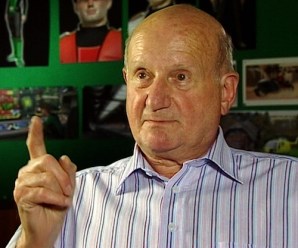 I’ve wound up telling interesting stories of Anderson & co rather than really reviewing Filmed in Supermarionation per se, but that’s because it’s an interesting story and the film tells it so very well (better than me. Oops.) For anyone who grew up with these programmes, this is an insightful, informative tribute to their ingenuity and quality. If you’re not familiar with them — if you don’t feel that ineffable childhood affection — I guess it doesn’t offer quite as much. Nonetheless, it remains the story of an incredible, pioneering endeavour that helped put the quality of British filmmaking on the map. It’s fun to think that, at a time when British culture was conquering the world and breaking new ground, through the likes of the grand extravagance of the James Bond movies and the subversive brilliance of the Beatles, standing toe to toe with them were a bunch of people in a tin shed with some puppets.
 On the day marshal Will Kane (Gary Cooper) marries his young bride Amy (Grace Kelly), hands in his badge and plans to leave town, word reaches Hadleyville that a criminal he arrested, Frank Miller (presumably Will read
 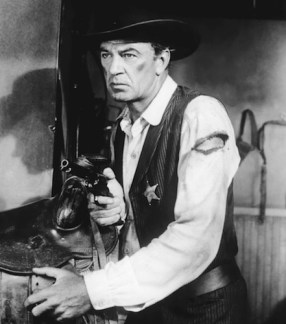 Some would contend it’s impossible to engage with High Noon and ignore that political allegory; others, like Mike at
 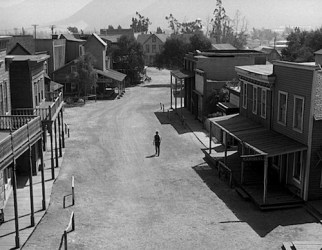 To top it all off, the film takes place in near-as-damn-it real time. Regular readers will know this is a plus for me, for reasons I still can’t quite fathom. In a narrative such as this, however, it only adds to the tension: you know it isn’t going to jump from 11:30 to the titular time, for instance — you’re going to live every one of those minutes with the characters; that’s exactly how much, or little, time Will has left to get ready.
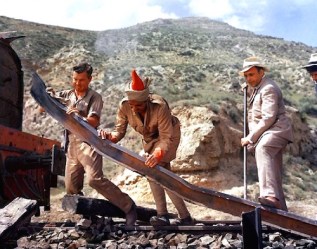
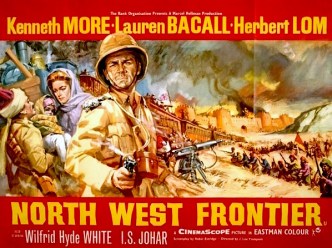 British Army Captain Scott (Kenneth More) is charged with getting an Indian child prince and his American governess (Lauren Bacall) to safety as rebels attempt to murder him. With the palace under siege, their only hope is a barely-ready rust-bucket train engine, a single passenger carriage, and a long journey through enemy territory joined by a motley group of diplomats and hangers-on who’ve bargained their way on to this last train.
 on the train by her governor husband, and Eugene Deckers is an arms dealer, who consequently no one likes but who remains unashamed of his trade. Through this prism there’s some discussion of the merits or otherwise of the British Empire and Indian independence, which some will judge to be extolling old-fashioned values, and others will take as little more than a (probably unnecessary) hat-tip in the direction of real politics.
 North West Frontier, on the other hand, sounds like a Western — which was perhaps the intention: the film’s structure and story style is fundamentally a fit for that genre, albeit British-made and geographically relocated. The storyline immediately brings to mind John Ford’s
 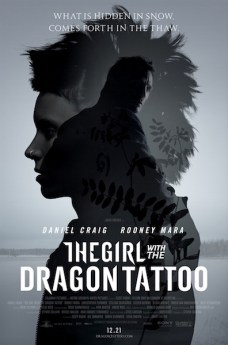 Stieg Larsson’s much-hyped novel comes to the screen for the second time in David Fincher’s much-hyped English-language re-adaptation. Somewhere between the pre-release build-up (do you remember the fuss over the trailer’s release? And all those magazine covers and articles?) and now, something clearly went awry: its UK TV premiere back in March was buried mid-week on ITV2.
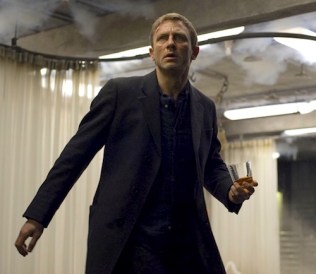 There are certainly changes, but nothing especially major. For example, the ending has been tweaked — not “completely changed”, as some reports had it, but just streamlined slightly. Some will struggle to even remember the difference if their experience of a previous version was long enough ago. Die hard fans, however, seem to regard it as a massive re-visioning of events. It isn’t.
 in particular, it’s beautifully shot, and there’s a vein of interest to be mined in discussing the fact it was consciously made using a five-act (as opposed to the usual three-act) structure (but not here today, sorry) — it feels unable to innovate or hone the genre in quite the way Se7en or
 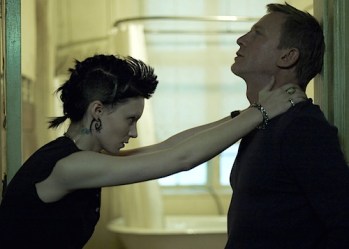 So my rating may come as a bit of a surprise given the focus of this review, which is primarily my fault for finding it so tough to shrug off all those contexts and comparisons. But hey, that’s something the film itself struggles with in many people’s eyes, too. If the viewer can divorce it from those ties, however, I think it’s still an exceptionally good thriller.
 Nine months on from its theatrical debut, I’ve managed to remain remarkably spoiler-free about Interstellar, the ninth feature from director Christopher Nolan. “Matthew McConaughey lives on a farm and somehow ends up in space with Anne Hathaway,” is about all I knew going in. That and the somewhat divisive critical reception it had received, leaving what many had assumed could be an Oscar favourite with a disappointing tally of nominations (and its studio to have backed the wrong horse, resulting in
  More plot happens. Interstellar is the kind of film where you could get an awful long way through the story just trying to explain the setup. That’s a certain style of storytelling, and in its own way a positive one — a plot that is constantly moving and updating, rather than one that presents a basic setup, runs on the spot with it for a while, then wraps it up. The latter is how most narratives unfold, which is why reviews can so often summarise said setup and that’s fine. Nonetheless, Interstellar’s first act goes on too long, and could do with a good trim. (For an alternative view on why the first act is in some respects the best part of the film and needed more development, read
  Based on a skim through online reaction, some viewers would indeed love even more, while others would despise it. One thing I find interesting about this apparently diverse reaction is that you can find an abundance of negative/semi-negative comments and reviews by people who write such things, but nonetheless the average user scores on the likes of
 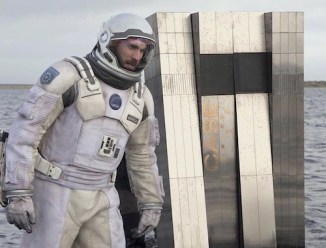 From a filmmaking perspective, there is surely nothing to fault. The visuals are incredible. As you’d expect, the IMAX footage looks absolutely stunning. Every time the Blu-ray reverted back to 2.40:1 I was a little disappointed. A sneaky part of me thinks Warner deliberately make these sequences look less good to ramp up the quality of the IMAX footage (I felt the same about
 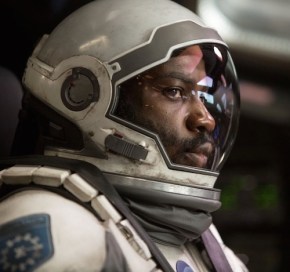 Anne Hathaway is largely understated, but slivers of emotion seep through when appropriate; and Michael Caine actually gets to do a bit of Acting in a Nolan film for a change, rather than just turning up as a wise old dispenser of exposition — though don’t worry, he does that too. One of the stand-outs for me was David Gyasi, getting a role that was subtly stronger and more thought-provoking than several of his more famous colleagues, and executing it with aplomb too. Similarly, the voices of semi-sentient robots TARS and CASE — Bill Irwin and Josh “he’ll always be ‘that guy from

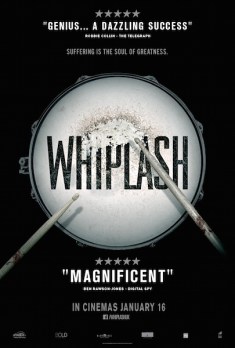 Mr Fantastic dates Supergirl and is taught the drums by J. Jonah Jameson in writer-director Damien Chazelle’s Oscar-winning music drama.
 Simmons’ Oscar is well earnt as the unpredictable Fletcher. If you’ve seen clips and trailers you might imagine it’s a fairly one-note turn, the Angry Teacher who possibly reveals a Heart Of Gold either just in time for the third act or at the very end. But no, there’s more to it than that, and Simmons negotiates every facet and nuance with the expertise of an experienced character actor. Commendations to both Chazelle and Simmons for wrong-footing me on what was actually going on with him more than once.
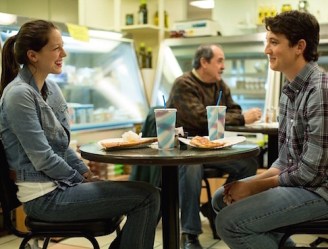 That thread could do with a boost in the middle, to give their relationship a little more weight when we reach the decisions Andrew must make about it later on. (Personally, I’d choose Melissa Benoist over J.K. Simmons any day, but I don’t think that’s the point…) The same could be said of Andrew’s relationship with his father (Paul Reiser), though that’s actually given more screen time and is consequently more impactful.
 “Horrible people do horrible things to each other” is the Post-it Note summary of this dark drama-thriller from director David Fincher, adapted by screenwriter Gillian Flynn from her own novel, which is short on heroes and overloaded with villains. An alternative brief summation is, “modern society is shit.”
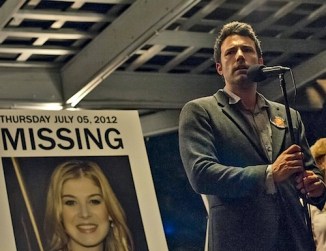 However, that opinion may stem from the same point as my view on the more praise-filled reactions: that Gone Girl is not a film as great as
 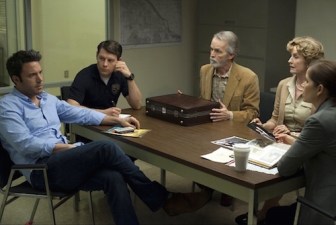 This is an argument for which I have a lot of time. The majority of Fincher’s filmography is made up of policiers and thrillers of one form or another, and even when he breaks out of that mould — in The Social Network, for instance — he often brings a similar perspective and toolset. Many of these films are borderline-rote, heavily-generic schedule-fillers at screenplay level, and would have been just that in the hands of a lesser director; in the hands of a master filmmaker, however, they become genre-transcending classics. I think that same sentence could be said about most (all?) of Hitchcock’s best films.
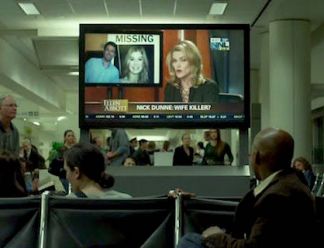 Is it for the masses, too? Maybe. In his
  a lesser actress could’ve given a performance with fewer notes and the film still would’ve functioned; or they would have struggled to contain the numerous sides to Amy’s personality in the form of a plausible human being. Pike does that, and more. She goes on my list of “people who were robbed of an Oscar because it was someone else’s ‘time’” (alongside Paul Greengrass’
  100Films.co.uk