
Guillermo del Toro | 115 mins | DVD | 12 / PG-13
This review contains minor spoilers.
 Despite enjoying the first live action Hellboy movie last year, I didn’t make it to the cinema for this sequel. Unfortunately neither did a lot of others, choosing to see The Dark Knight again and again instead. Of course these days the DVD release is almost as important… except Hellboy’s was on the same day as Dark Knight’s. I don’t have sales figures, but I expect it was thoroughly overshadowed again — which is a shame, because Hellboy II is actually a very different beast.
Despite shared roots in the pages of comic books, Hellboy II sits comfortably apart from last Summer’s other two big comic book adaptations, The Dark Knight and Iron Man. While the former was aiming for a real-world crime-epic feel and the latter a more humour-littered sci-fi, they both still dealt with billionaires investing in identity-hiding suits to fight crime of one kind or another. Hellboy exists in a completely different place. Of course there are still wise-cracking heroes (with requisite Issues) and scheming villains, action sequences and a liberal use of CGI (mixed with “we did it for real!” bits, thankfully the ‘in thing’ right now) — but it’s not Sci-Fi, it’s Fantasy.
Del Toro uses this to his advantage, allowing his incredibly fertile imagination to run riot over every frame. There are more creatures than the first Hellboy and Pan’s Labyrinth combined — in the Troll Market sequence, there’s probably more in each shot — and, in the vicious Tooth Fairies, a wonderfully gruesome twist on a familiar concept. Though couple these with certain other inventions, such as a baby-like talking tumor, and one might begin to wonder how this got passed as a 12 / PG-13; and you’d think a giant red demon getting a human girl pregnant might be enough to raise the classification. (I jest, of course — giant red demons are entitled to all the same rights as the rest of us.)
Imagination isn’t limited to creature design either. An attractively animated prologue manages to both bring back the ever-excellent John Hurt and find a way to convey the huge back story without making it tediously dull (it also has a Christmassy feel that was perfect for when I watched it). The action sequences have all the requisite coolness too, especially the closing duel on giant moving cogs. In fact, del Toro’s creation seems to overflow — the laying of plot threads for a further film is even more overt than it was in the first film — which makes it even more unfortunate that the director’s long term commitment to The Hobbit and its sequel, plus about half a dozen projects after that, makes a proposed trilogy-closer seem increasingly unlikely. This isn’t a major problem with the film, however, just an annoyance that we may never get a third entry.
One of the most amusingly idiotic criticisms I’ve encountered of Hellboy II was that it was “comic-book-ish” — not only does that make one think, “well, duh”, but also, “and why not?” When the other big comic book movies are aiming for real-world seriousness, it’s nice to have a more fantastical alternative. Hellboy II is more than up to the task.

Hellboy II: The Golden Army placed 8th on my list of The Ten Best Films I Saw For the First Time in 2008, which can be read in full here. The brief comment there is probably more eloquent than this review, so please check that out too.
 The work of Michel Gondry and the comedy of Jack Black are both, shall we say, acquired tastes, and not ones you would necessarily expect to overlap. Yet here they do — at least to an extent — but while Black is again doing his usual schtick as the Ker-Azy Best Mate, it’s the writer-director who is perhaps offering some surprises.
 Good guides to how to write always advise that your hero is only as good as the villain. This is one of the reasons
 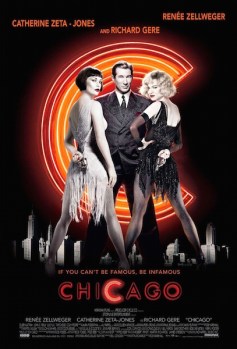 I remember being distinctly unimpressed when Chicago took the Best Picture Oscar in 2003, especially as the alternatives included
  Cult comedy musical, with a more-than-healthy dose of the surreal, about two brothers on a mission from God, here watched in the extended DVD version (full details at
  Swing Time is, I’m told, widely hailed as the greatest of the Fred Astaire/Ginger Rogers pictures. The plot isn’t especially captivating, one of the stock variations on “boy meets girl” that still serve
  It had been my impression that this summer’s sequel,
  You’ve probably heard about Enchanted: it’s the one that starts out as a traditionally animated Disney film, before The Normal Girl Who Will Marry A Prince is thrown into a Magic Portal by The Evil Stepmother and finds herself in present-day New York. It’s one of those concepts so good it just makes you think, “why haven’t they thought of that before?”
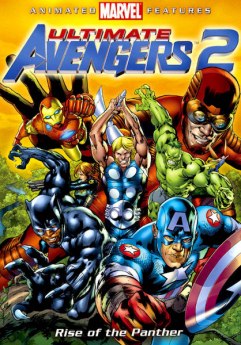 Some things in life baffle me. Form dictates I now list a couple of humorous examples, but we’ll skip that and get to the point: why would you make a direct-to-DVD movie that has a subtitle on the box but not on the film itself? I can understand why titles get tweaked on cinema-release posters and/or subsequent DVD releases — for marketing purposes, say; or clarity — but why, when your title is going direct to the DVD stage, do the titles not match? And why does the box add the subtitle rather than remove it for on-shelf simplicity? I have no answers — it baffles me, remember — but this is the sort of thing I sometimes muse about. The sort of thing that most other people don’t even notice, never mind care about.
