2014 #87
Mel Gibson | 178 mins | Blu-ray | 2.35:1 | USA / English | 15 / R
 I figured I ran the risk of affecting the outcome of the Scottish independence referendum if I posted this review yesterday (because of course I have that kind of reach and influence), but after Mel Gibson’s historical(ly-dubious) epic wound up on my 2014 WDYMYHS list, it seemed too good an occasion to miss. So whether Scotland is about to become independent or not, here are my thoughts on a movie that hopefully didn’t actually influence anyone’s vote…
I say that because Braveheart, for thems that don’t know, is the Oscar-winning story of William Wallace (Mel Gibson), a Scot who led a rebellion against English rule and King Edward ‘Longshanks’ (Patrick McGoohan) at the end of the 13th Century. That much, at least, is true — I think. Y’see, Braveheart has been described as “the least accurate historical epic of all time”, its plot and subplots riddled with changes that go above and beyond the usual tweaks needed to make a coherent narrative out of a true-life tale. You don’t have to dig very hard on the internet to find those errors catalogued, so I’m going to set them aside: this is a movie, not a history lecture; and while I can completely understand the frustration its inaccuracies must provoke in those who’d rather see the truth on screen, it’s not as if rewriting the past is anything new for dramatists (to stick with Scottish examples, Macbeth — resplendent as it is with cold regicide and prophetic witchcraft — is based on history), and we can (should?) view it as an entertainment rather than an education.
 Judged as that, Gibson’s three-hour (near as damn it) movie is a pleasingly traditional epic. Many big films these days are just long, but the story here has scope too — it’s about a war, essentially. And war means battles, which are a particular highlight. The standout is surely the famed Battle of Stirling Bridge — you know, the one where the Scots moon the English. Funny and all, but just a small part of a larger sequence. Gibson has the confidence to show the build-up to the fighting, outline the tactics that will be used, and only then launch into the fray. It’s this measured approach that makes it so effective, rather than the crash-bang-wallop straight-to-the-slaughter style of more recent movies. Due to its notoriety I’d assumed the aforementioned clash was the film’s climax, but it’s actually the centrepiece, pretty precisely in the middle of the film. Fortunately there’s enough else going on (because this isn’t actually An Action Movie) that it doesn’t make things feel lopsided.
A big plus comes courtesy of the era the film was made in. It’s the mid-’90s, still a few years away from “let’s use CGI for everything!”, so it was all done ‘for real’. That means great sets and location builds, stunning scenery that’s beautifully photographed, and swathes of extras in the battles. There’s something much more viscerally exciting about watching a few hundred men run at each for real than watching a few hundred thousand polygons do it. The downside of the aforementioned era is some occasionally dated direction, in particular at least one sequence that goes overboard with the slow-mo, but almost everything becomes dated with time — it’s not as bad as, say, Robin Hood with a mullet from Prince of Thieves.
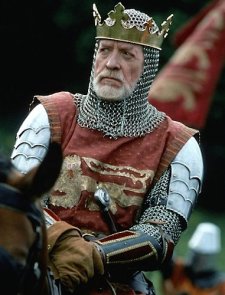 It also doesn’t suffer from that film’s accent issues. Mel Gibson isn’t an American-Scot (or an Australian one), instead delivering an accent that sounds passable to this Englishman. He believed he was too old for the part, which may well be true, but when the rest of it is so inaccurate what does that matter? He’s a solid leading man and a commanding-enough presence. The supporting cast are an array of recognisable Celtish faces — including at least one Irishman playing a Scot and a Scot playing an Irishman — and, because they’re from our fair isles, of course they’re all brilliant. Best of all, however, is Patrick McGoohan. He makes for a fantastic Evil King, given some juicy lines that are even juicier thanks to his delivery. He may not be moustache-twirling-ly memorable like an Alan Rickman creation, but any scene is enlivened by his presence.
Interestingly, Braveheart’s Best Picture Oscar win was the only time it took that gong — no other award or critics group saw fit to deem it 1995’s best movie. So what’s wrong with it? Well, that’s hard to pin down precisely. It’s a little politically simplistic, with the Bad Oppressive English and the Good Honest Scots, including inventing all sorts of stuff to sway the arguments in both those directions. Plenty of old-fashioned epics do exactly the same thing, but I guess by the ’90s we were demanding a little more nuance. The same can be said of the characters — there’s nothing wrong, but aside from Gibson’s grandstanding speeches and McGoohan’s first-class villainy, the only really memorable turn is from the morally-troublesome camply homosexual prince — and that’s a whole can of representational worms.
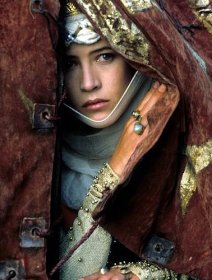 Then there’s that issue of historical accuracy. I know I said we should ignore it, but even if you accept fiction films shouldn’t be slavish history lessons (and not everyone does), how far can they ignore the facts? Often with such films the viewer assumes they’re true until someone says, “actually, I think you’ll find in reality…” Not so with Braveheart: you don’t have to know anything of Scottish history to guess that the face-to-face chats (and more, wink-wink-nudge-nudge) between Wallace and the future-Queen must be almost entirely poppycock (and, in fact, you can drop that “almost”).
How much that matters — indeed, how much any of those issues are a problem — will vary from one viewer to the next. For some, Braveheart goes beyond the pale. It does make for a rollickingly good story, though.
Braveheart was viewed as part of my What Do You Mean You Haven’t Seen…? 2014 project, which you can read more about here.

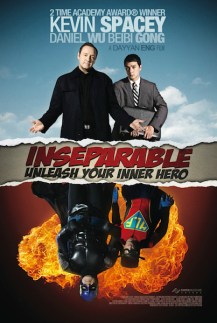 I’m a great advocate of tonally-mismatched films. When others are moaning that there’s too much darkness mixed in with their light fluffy film, I’m the one saying, “um, guys, have you ever lived in, y’know, real life?” Which probably explains why most of the internet reacts with anything between ambivalence and hatred towards Inseparable, whereas I really enjoyed it.
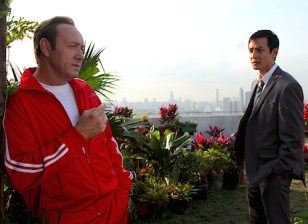 Clearly this will not be to everyone’s taste. Even at just over an hour-and-a-half it’s sometimes a little draggy, and the mishmash of kooky comedy with serious themes — not only suicide, but Li’s faltering marriage and the reasons for that — will turn some off. Anyone who likes their superhero entertainments to be more po-faced won’t be best pleased, either.
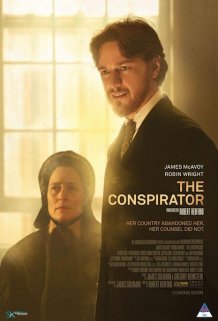 Although John Wilkes Booth is famous as the man who assassinated Abraham Lincoln, he was merely the person who pulled the trigger: eight people were tried for conspiracy to kill America’s 16th President; this is the story of what happened to the only woman among them.
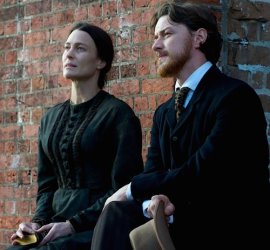 or rather, like an actress versed in playing modern characters struggling gamely with a period one, and coming up short.
 2014 Academy Awards
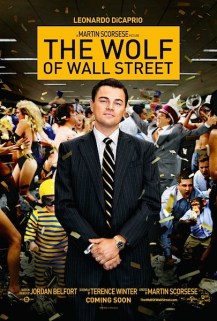 When someone says “100-million-dollar epic”, you probably don’t imagine a film about a swindling stockbroker; but, with a three-hour running time and a nine-figure budget, that’s exactly what Martin Scorsese’s black comedy biopic is.
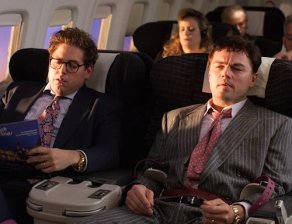 and the closing shot clearly shows how many people have already judged them to represent something desirable, regardless of what position the film might take. Some people want this lifestyle, in spite of all the problems it wrought, and even if the film had clearly condemned it that wouldn’t change. In the end, to say Scorsese approves of it purely because he doesn’t lambast it is too simplistic a reading.
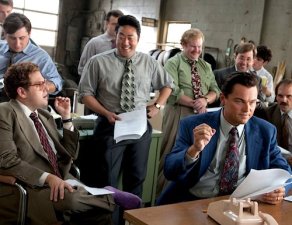 but almost every supporting character gets a memorable line or scene, a moment where they shine brighter than everyone else; and even when the smaller roles aren’t dominating a scene, they’re part of a first-rate ensemble that functions like a well-oiled machine. My personal favourite was P.J. Byrne’s ‘Rugrat’, but yours may well be someone else.
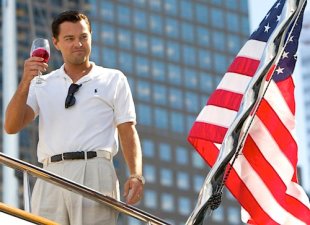 As one of
  Heartwarming crowdfunded documentary about the power of Batman — not to beat supervillains, but his positive influence on real people.
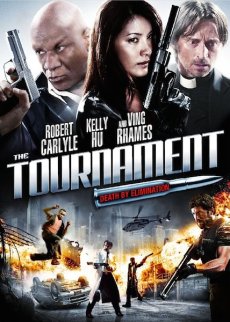 The Tournament is the kind of film where its relative quality is entirely dependent on what you want from a movie. Is it original? Not terribly. Is it clever? Not really. Is it action-packed and kinda fun? Yessir. If you just want to shift your brain into neutral and watch people punch, kick, shoot, stab, chase, and generally fight each other in a slickly-produced fashion, with a solid enough plot that (depending how brain-neutral you’ve gone) might offer an occasional twist… well, you’ve come to the right place.
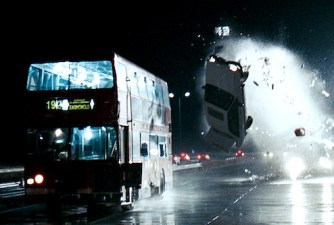 The action is the draw, of course, and fortunately the film delivers in spades. The best stuff involves Sebastien Foucan, who you may remember as Bond’s bomb-maker target in
 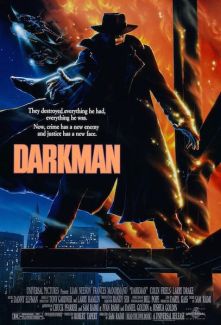 Before he made the insanely successful
  The big winner at the 2002 Oscars (four gongs from eight nominations), A Beautiful Mind adapts the true story of John Nash (Russell Crowe), a Cold War-era mathematics student at Princeton who hit upon a groundbreaking theory and ended up working covertly for the government…
 but the display of range probably merited it; perhaps more so, in retrospect, than his win for Gladiator the year before.
 A Beautiful Mind won Best Picture in spite of being up against the incredibly more innovative, entertaining, and game-changing double-bill of
 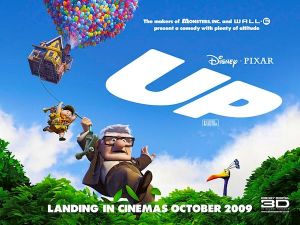 You know Up: it’s the Pixar movie where everyone talks about how amazing the first 10 minutes are, and never seems to have anything to say about the rest of the film.
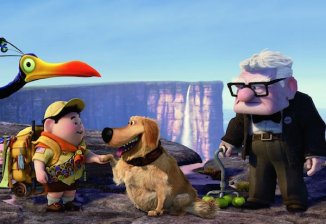 the best bits were shown off in advance. The special features reveal the extent the animators went to when researching real-world locations to influence the film’s strange, alien landscape; sadly, the fact the bizarre rock formations are actually a real thing somewhere in the world is more interesting than how they’re used in the film.
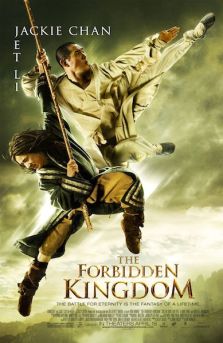 Jackie Chan and Jet Li co-star for the first time (with shared billing, thanks to the J — on screen as it is on the poster) in this US-produced martial arts epic.
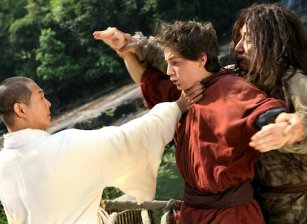 We do get the latter during the climax, which is fine; the former never rears its ugly head. Minkoff knows to hold his camera back, eschewing the fast-cut close-up style of most modern Hollywood action for a more traditional use of long shots and longer takes. It’s a natural fit for the extensive, impressive choreography that’s performed by expert professionals.
 100Films.co.uk