
Brad Bird | 125 mins | streaming (HD) | 2.20:1 | USA & Spain / English | 12 / PG
 After making his live-action directorial debut with the unlikely sidestep of Mission: Impossible – Ghost Protocol, Pixar alumni Brad Bird heads back in a familiar family-friendly direction for this Disney sci-fi action-adventure. One of several movies lambasted by critics this past summer, I actually thought it was a lot of fun.
The story concerns a future city created by scientists and dreamers; a place of wonder and innovation not constrained by the short-term goals of politicians or moneymen. Boy inventor Frank is delighted to be invited along there by recruiter Athena (Raffey Cassidy); years later, teenager Casey (Britt Robertson) receives similar treatment… only it turns out something is wrong, and Casey and Athena must track down a grizzled and disillusioned Frank (George Clooney) so they can head back to Tomorrowland and convince its leader (Hugh Laurie) of the way to make things right.
Something along those lines, anyway, because Tomorrowland’s storytelling can get a little muddled. It doesn’t quite conform to your usual action-adventure narrative shape — we spend quite a long time with boy-Frank, before the story essentially restarts with Casey, and eventually those two threads join up. The thing this makes me wonder is, is the storytelling actually muddled (this is not an uncommon criticism of the film), or does it just take an atypical shape, with the consequent lack of comforting familiarity making us think it’s poorly done? A counterargument might be that it helps foster some of the film’s mysteries, which might be reveals without setup if you restructured. I think if you just go along with it, the only real bump is in that restart; otherwise, it’s a pretty smooth action-adventure.
And that’s why I don’t really understand the negative response to it. Sure, the plot may have the odd hole, but there are worse in better-regarded movies; 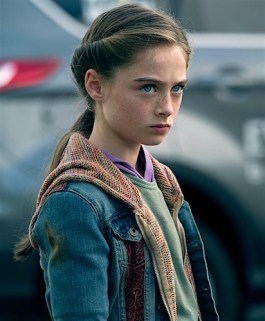 and there’s a moral lesson that’s arguably a little heavy-handed, but as it’s a moral lesson some people aren’t bloody listening to, I can’t say I blame Bird for that. The characters and performances are likeable, with Raffey Cassidy standing out as a marvellous young find, though Laurie is a little undersold. There are some suitably entertaining action scenes, some moments of visual splendour thanks to the future city, and one long take that is exquisite. I know I’m a sucker for a long take, but this is a really exceptional one, that deserves to be mentioned alongside the year’s more-praised unbroken shot, the opening of Spectre.
It’s such a shame when original blockbusters like this get pissed all over by critics and an audience who are sometimes too keen to re-parrot critics’ opinions as if they’re their own (see also the Stateside response to Lone Ranger vs. how the rest of us received it). I’m not arguing movies should get a free pass just because they’re not adapted from something else, but really, when decent adventures like this get slated and consequently flop, what incentive do the studios have to try something new, when they know producing fifth Transformers or Pirates of the Caribbean instalments will make shedloads whatever the reviews say?
For anyone who enjoys a good sci-fi action-adventure movie, I urge you to ignore the critics and give Tomorrowland a go. It’s not exactly a revelation, but it’s a fun time with more than a few points to commend it.

This review is part of the 100 Films Advent Calendar 2015. Read more here.
 Matt Damon turns whistleblower (or does he?) in this amusing romp based on a true story of complicated corporate fraud.
 Le Mépris establishes its two main themes with its two opening shots. First, a static shot of the film’s cinematographer, Raoul Coutard, filming a scene from the film, over which writer-director Jean-Luc Godard reads out the credits, which never appear on screen. This is a movie about moviemaking, and its inherent artifice. Second, a shot of Brigitte Bardot’s naked bottom. This is a movie about a man being in love with Bardot (well, the character she plays), and another man lusting after her, and what happens when the first man pats a different bottom. Maybe.
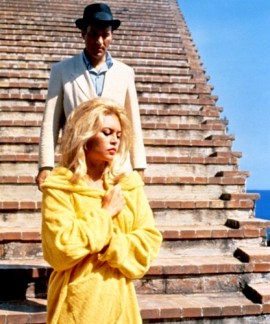 They go round in circles about staying together or being apart. The point? Your guess is as good as mine. Perhaps it’s the unknowableness of the other gender (whichever gender you are). Perhaps it’s just the unknowableness of other people fullstop. Perhaps it’s the unknowableness of our own emotions — eventually Bardot decides she does want to leave the playwright to run off with the producer, but no one seems to know why.
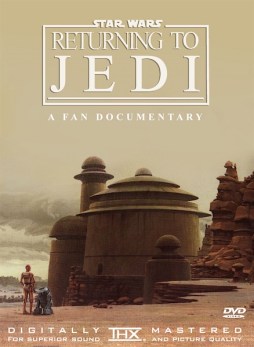 Returning to Jedi completes fan/editor Jamie Benning’s trilogy of documentaries about
  and Mark Hamill expected more darkness for Luke — but I guess they weren’t to be heard by an increasingly autocratic Lucas (reports of him essentially directing Jedi for Richard Marquand, or of his clash with the Directors’ Guild that prevented Steven Spielberg from directing the film, go unmentioned here).
 The first of Jamie Benning’s “filmumentaries” looks at the making of
  My personal highlight of the documentary comes in Cloud City, at the point Lando’s betrayal is revealed. Benning inserts a “deconstruction of an action scene” (Han shooting at Vader; Vader Force-stealing Han’s gun), using uncut footage and B-roll to quickly glimpse how such things are achieved — or were, before “with CGI” was the answer for everything. Here, Benning’s work transcends merely placing rare interviews or behind-the-scenes footage at the appropriate juncture, instead using that material to create something genuinely new and insightful.
 Niggles aside, I felt like I enjoyed Building Empire even more than its later predecessor (how very Lucas). I’m not saying it’s fundamentally better — just as with
 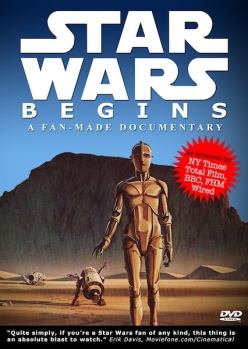 This year, I finally got round to watching the Star Wars Blu-rays I bought back whenever they came out, so I thought what better time to also finally watch Jamie Benning’s trilogy of “filmumentaries”. What’s a filmumentary, you ask? Well, here’s the opening text of the film itself:
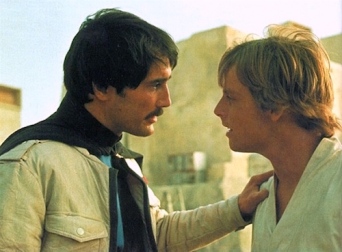 (i.e. before we even meet Luke in the finished film), the sequences were removed en masse due to execs’ fears they made the movie feel like “
 Star Wars Begins may not be the first port of call for anyone looking for an overview of the making of Star Wars, but it’s a goldmine of behind-the-scenes titbits and occasional candid revelations for anyone with a strong enough interest.
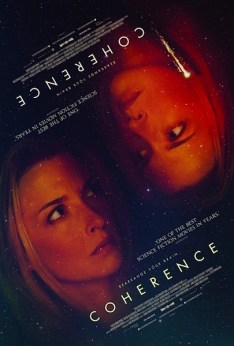 This isn’t something I normally do, but certain factors made me want to review these two films together. They’re both low-budget single-location sci-fi thrillers, but they’re also both more about humanity than ideas — they use sci-fi high concepts as a way to expose, examine, and comment on human behaviour. That I happened to watch them back to back only highlighted the similarities.
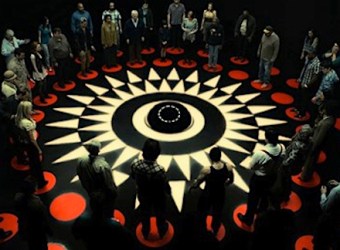
 Circle, on the other hand, must’ve been very tightly constructed. A group of fifty people wake up stood in two circles in a black space, with an array of arrows on the floor in front of them. Every couple of minutes, a klaxon blares out a countdown and one of them is killed. They soon realise they have some control over this, so together they try to work out what’s going on and how to escape, whilst constantly having to select who’s next. Broadly speaking, this is a high-concept thriller in the vein of
  However, it’s clear Byrkit’s focus lay elsewhere. Thematically, it’s about our fear of others, but, as Byrkit explains in
  With fewer to illuminate they’re less quickly-sketched than Circle’s mass of ‘contestants’, and so feel more like rounded humans. By the end, they’re doing things that might initially seem out of character, but actually aren’t at all. (If you can take it, dear reader, there’s a crazy-detailed explanation of the ending (one reading of it, anyway) to be found
 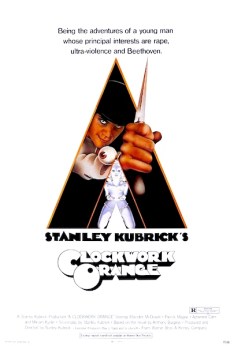 Yet more dystopian sci-fi! Who doesn’t love some dystopian sci-fi? Here we’re in the ’70s, though (makes a change from the ’80s), with writer-director Stanley Kubrick adapting Anthony Burgess’ novel into a film so controversially violent the director himself eventually banned it from release in the UK for decades. Almost 45 years on, it’s testament to the film’s power that it is still in parts shocking.
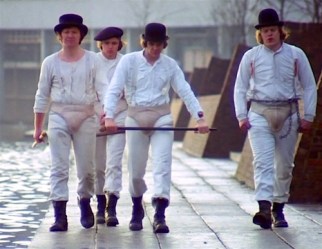 unfortunate byproduct of the film’s age. Other parts just go on a bit too long for my taste — there’s barely a sequence after Alex’s arrest that I didn’t feel would benefit from getting a wriggle on. I don’t think this is me bringing a youth-of-today “everything must be fast cut” perspective to the film, I just found it needlessly languorous at times. Maybe I was missing a point.
 Kubrick ends on a much more ambiguous note… so ambiguous, I’m not really sure what it’s saying… or even what all the ambiguities actually are…
 This neo-noir revenge drama with a twist has received such acclaim from critics and bloggers alike that it’s practically set up to fail.
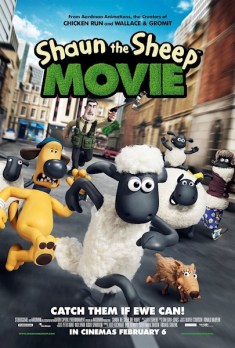 Shaun the Sheep started life in the 1995 Wallace & Gromit short
  (that US PG is thanks to a couple of oh-so-rude fart jokes), but there’s a sophistication to the way that simplicity is handled that adults can enjoy. There are also references and in-jokes for the grown-ups; not hidden dirty jokes that’ll put you in the awkward position of having to explain to the kids why you were laughing, but neat puns (note the towns that the Big City is twinned with) and references to other films (like
  100Films.co.uk