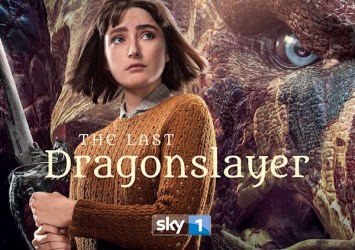
Love & Friendship (2016)

2016 #173
Whit Stillman | 94 mins | streaming (HD) | 1.78:1 | Ireland, France & Netherlands / English | U / PG

Love & Friendship

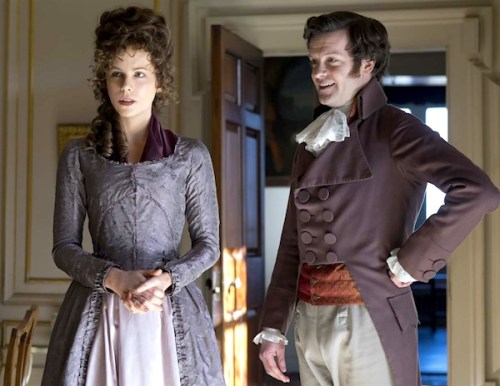
Adapted from Jane Austen’s early novella Lady Susan, writer-director Whit Stillman’s arch comedy concerns one Lady Susan Vernon (Kate Beckinsale), a widow with a certain reputation in polite society, which she endeavours to hide from while engaging in matchmaking machinations for both herself and her daughter.

That’s the vague version, anyway. The details of the plot are occasionally a mite too intricate to follow, especially as explanations tend to come after the fact, if they do at all. However, for those prepared to go along with it, the reward is a film that is at times hilariously funny.

Stillman’s writing and direction are both a little mannered, which will surely turn off some viewers, but the real stars are, indeed, the stars. Kate Beckinsale is phenomenal — funny, dry, biting, witty, but also conveying that Susan is making it all up as she goes, despite pretending to be in control. The other standout is Tom Bennett as the dimwitted Sir James Martin. His knowledge of the commandments and opinion of peas are particularly delightful.

Kate Beckinsale & Tom Bennett

Love & Friendship may be something of an acquired taste thanks to its stylistic affectations, but couple that with its wry sense of humour and it makes a likeable change from the heritage ambitions of most Austen adaptations. Perhaps, too, that makes it the Jane Austen film for people who don’t normally like Jane Austen films.

4 out of 5

The Maltese Falcon (1941)

2016 #142
John Huston | 96 mins | DVD | 1.33:1 | USA / English | PG

The Maltese Falcon

Humphrey Bogart is private dick and consummate bullshitter Sam Spade in this (re-)adaptation of Dashiell Hammett’s novel, considered the first major film noir.

The twisty plot of murder and thievery is enlivened by duplicitous performances from femme fatale Mary Astor, an effeminate Peter Lorre, the always welcome Elisha Cook Jr., and the humungous presence of Sydney Greenstreet, making his film debut at 60 and stealing every scene.

It’s also the directorial debut of John Huston, whose work alongside cinematographer Arthur Edeson is the greatest star: the low-key lighting and dramatic angles are (like the rest of the film) archetypal noir.

4 out of 5

The Maltese Falcon was viewed as part of my What Do You Mean You Haven’t Seen…? 2016 project, which you can read more about here.

Tale of Tales (2015)

aka Il racconto dei racconti

2016 #148
Matteo Garrone | 134 mins | streaming (HD) | 2.35:1 | Italy, France & UK / English | 15 / R

Tale of Tales

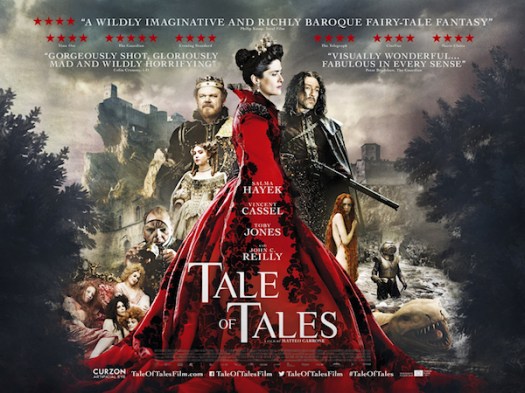
Based on 17th Century Italian fairytales by Giambattista Basile, Tale of Tales relates three interlocking stories of dark fantasy. If there’s one thing that really connects them, it’s thematic: essentially, “be careful what you wish for”; or maybe “be grateful for what you’ve got”. There are primary characters in each tale who go to disgustingly extraordinary lengths to achieve what they desire — eating a sea-monster’s heart raw, breeding a giant flea, self-flaying — and it rarely turns out for the best.

If you can stomach the contents, there’s a quality cast, and the locations, production design, and cinematography are simply gorgeous.

4 out of 5

Me and Earl and the Dying Girl (2015)

2016 #137
Alfonso Gomez-Rejon | 101 mins | streaming (HD) | 2.35:1 | USA / English | 12 / PG-13

Me and Earl and the Dying Girl

This is a film about a high school student who makes movie parodies for fun, who befriends a dying girl. It won the Audience Award at Sundance. I’m not sure there’s any other knowledge you need to judge if you’ll like this movie or not. Except normally that’d have me thinking “oh God, here we go,” but I liked it enough to put it in my Top 20 of last year.

So, I admit, I went into the film feeling pretty cynical about it. I was expecting to find a movie tailor-made to be an indie cinephile’s dream comedy-drama. There are elements of that about it, but I must also admit I ended up being won round and affected by the film, to the point of feeling quite emotional and often a little teary for, ooh, most of the second half. Was I just manipulated into feeling that way? Well, that question is a fallacy. All film is emotionally manipulative, because it has been constructed to achieve a purpose, and the people who complain about feeling manipulated by sappy dialogue or heavy-handed music or whatever have just seen behind the curtain, as it were. For these reasons it kind of annoys me when critics or ‘film fans’ get annoyed about a film being “manipulative”, but maybe that’s a rant for another time.

Me and Earl and the Criterion Collection

Anyway, as I was saying, I kind of didn’t want to like Me and Earl and the Dying Girl because I didn’t want to fall into the obvious trap of “this movie totally gets me because I love Criterion editions too!” But I thought it worked in spite of those pandering affectations. Or maybe I just couldn’t resist them on a subconscious level? In some respects it doesn’t matter how it achieved it: the film wanted to make me feel a certain way, and I did feel that way — success.

Perhaps another reason it worked for me was the positioning of Greg (the titular “Me”) as a high school “Everyman”, not affiliated with any of the school’s multitudinous social groups. I don’t think I’ve seen that in a film before. What movies (and TV) have taught us about American high schools is that they are chocka with rigid cliques, and everyone belongs in one group or another. Is that true? I have no idea — but as far as movies (and TV) are concerned, yes it is. I don’t think it’s the case out in the rest of the world (well, at least not in the UK); not so rigidly and antagonistically as it’s depicted as being in US high schools, anyway. Nonetheless, I could identify with Greg’s status as someone able to drift around groups being generally well-liked but also almost entirely unnoticed, which perhaps helped me buy into him and his emotional journey a little more, thereby explaining the film’s ultra-effective emotional manipulation effect.

The Dying Girl

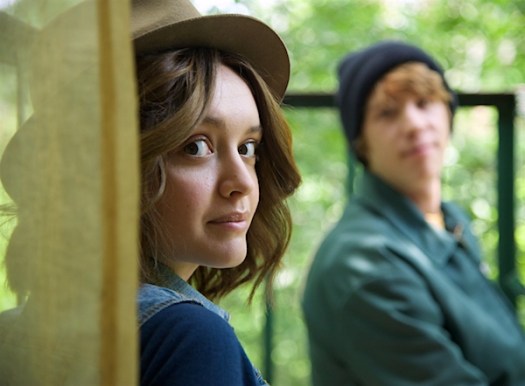
A lot of what works lies in the performances. As “the dying girl”, Rachel, Olivia Cooke is fantastic. She’s got the showy role, but manages to play it with subtlety. Instead of the usual indie movie Manic Pixie Dream Girl, the lead character / narrator is the Quirky one and she’s a cynical girl who undercuts him, which is kinda fun. Nonetheless, as the film’s “Me”, Greg, Thomas Mann has a less obviously showcasing part, but the way he handles it — especially as the film moves away from the “he’s a Quirky film fan who’s uncomfortable in high school just like you” aspect — is essential to how the film’s relationships and emotions function.

Nowhere is this better exemplified than in a two-hander between the pair: achieved in a single static shot that lasts five minutes, they don’t look at each other while they argue and their friendship struggles. It’s a frankly stunning scene from all involved: kudos to Jesse Andrews (who wrote both the original novel and the screenplay) for the plausible and complex dialogue; kudos to Alfonso Gomez-Rejon for the confident blocking of both actors and camera; kudos to both of the actors for their layered, emotive, but not grandiose, performances.

Several supporting cast members are also worthy of note: Jon Bernthal as a cool teacher; Molly Shannon as Rachel’s mom; and Nick Offerman for once again perfectly judging the level of funny his character needed to hit to be comic relief but also stay tonally consistent with the rest of the film.

Fake Criterions

A final stray thought before I wrap up this rather bitty review: I’ve read a few comments that make a point of mentioning this is not like all those other “teen death” movies, or that if you’re sick of all those then this one’s still good, and so on. I’m kind of aware these “teen death” movies exist and that there’ve been a few, but I’ve never bothered to watch one (because, frankly, they’ve all sounded rubbish), so I am immune to any overkill other viewers may experience. But if there’s a lesson here (and I’m not saying there is) it would be that you don’t have to watch every high-profile film that comes out (unless you’re a critic and being paid to do it).

4 out of 5

Me and Earl and the Dying Girl placed 14th on my list of The 20 Best Films I Saw For the First Time in 2016, which can be read in full here.

Howl’s Moving Castle (2004)

aka Hauru no ugoku shiro

2016 #193
Hayao Miyazaki | 114 mins | DVD | 1.85:1 | Japan / English | U / PG

Howl's Moving Castle

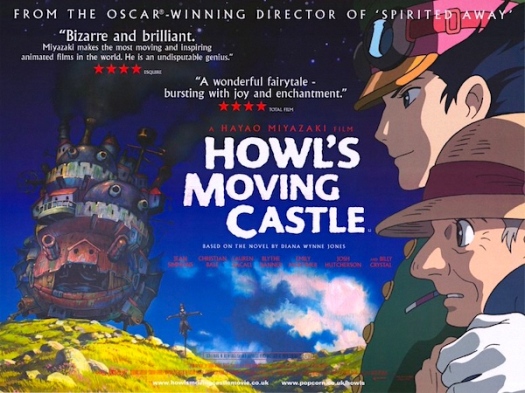
Director Hayao Miyazaki’s first film after he won the Oscar for Spirited Away, Howl’s Moving Castle is another fantasy adventure about a young girl encountering a magical world. Well, I’m bending that similarity a bit — the heroine is considerably older than the one in Spirited Away (a young woman rather than a girl) and she already lives in a world where magic exists (but she doesn’t seem to have encountered much of it).

Adapted from a novel by British author Diana Wynne Jones, Howl’s Moving Castle concerns Sophie Hatter (voiced in the English version by Emily Mortimer), who works in her family’s hat shop in a fictional Mitteleuropean country in a steampunk-y past (anime really gets away with launching you into these subgenre-mash-up worlds in a way no Western work ever dares, doesn’t it?) After a brief chance encounter with famed wizard Howl (Christian Bale), Sophie is attacked by the wicked Witch of the Waste (Lauren Bacall) and transformed into an old woman (now voiced by Jean Simmons). She goes hunting for Howl’s titular abode/transportation, wherein she meets sentient fire Calcifer (Billy Crystal), Howl’s young assistant Markl (Josh Hutcherson), and alongside them gets swept into a brewing war with a neighbouring country.

Frankly, the plot is a bit messy, flitting from one situation to another in a way that feels in need of some streamlining. The climax is particularly hurried, underpowered, and under-explained. For example, there’s a missing prince who suddenly turns up to resolve the whole war storyline — a prince who was only mentioned in passing in some background dialogue nearly two hours earlier.

Running up that hill, no problem

However, much of the film is enjoyable in a moment-to-moment sense. The affable characters are quite delightful to get to know even as they’re getting to know each other, and there are some magical sequences. Plus it’s all beautifully designed and animated, as you’d expect from Studio Ghibli, though we should never take such achievements for granted. The English dub is pretty good too, benefitting from Disney picking it up and getting a starry cast, and no doubt the direction of Pete “Monsters Inc / Up / Inside Out” Docter and Rick Dempsey. No disrespect to the professional voice actors who work in anime day-in day-out, but they often perform with a certain stylisation that isn’t always naturalistic.

Apparently Howl’s Moving Castle is Miyazaki’s favourite from his own work, probably because some of its themes (anti-war sentiment, a positive depiction of old age, the value of compassion) are close to his heart. While those are worthwhile topics, they sit alongside the aspects mentioned above as good parts that aren’t wrapped up into a whole that equals their sum. But even if it’s not Ghibli’s finest work, it’s still a likeable fantasy adventure.

4 out of 5

Howl’s Moving Castle was viewed as part of my What Do You Mean You Haven’t Seen…? 2016 project, which you can read more about here.

Studio Ghibli’s first TV series, Ronja, The Robber’s Daughter, is available on Amazon Prime in the UK and USA (and presumably elsewhere too) from today.

Bridesmaids (2011)

2016 #172
Paul Feig | 125 mins | streaming (HD) | 2.35:1 | USA / English | 15 / R

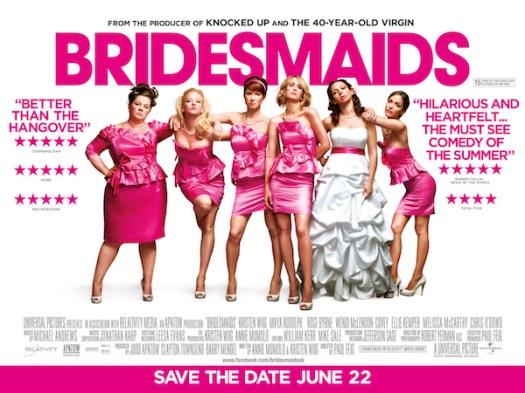
Bridesmaids

Bridesmaids opens on a shot of the outside of a house, but we can hear the people inside. It sounds like they’re having sex. “I’m so glad you could come over,” one says. Cut to a view of the closed bedroom door. Still sounds like sex. “Cup my balls,” says the male voice. Our assumption is still sex. Cut to inside the bedroom, where it looks like he’s on his back and she’s on top of him — you know, having sex. And it’s maybe at this point that you realise that, yes, they are just having sex — there is no clever, funny twist coming.

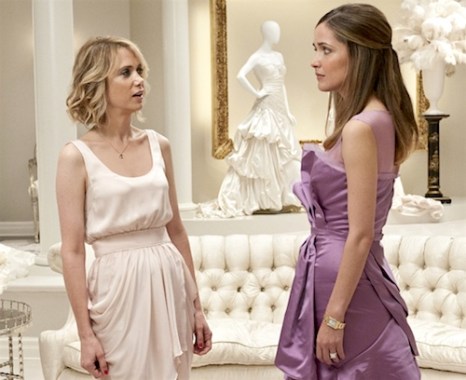
Thankfully this unimaginative sequence is not indicative of Bridesmaids’ overall quality. The female participant in that first scene is Annie (co-writer Kristen Wiig), a down-on-her-luck baker who’s struggling with life since her cake store went bust. When her best friend Lillian (Maya Rudolph) announces her engagement, she asks Annie to be her maid of honour. But Annie soon clashes with fellow bridesmaid Helen (Rose Byrne), the wealthy and glamorous wife of Lillian’s fiancé’s boss, who’s keen to replace Annie in Lillian’s affections. Wedding preparations and hilarity ensue.

Despite the rough start, there are some very, very funny parts later on; but, unexpectedly, it also works pretty well in more character-focused sections. You’re not going to mistake this for an emotional drama, but there’s more investment in the characters than you might anticipate given the cast and crew’s pedigree. I guess this is the on-screen result of a telling behind-the-scenes titbit: reportedly, producer Judd Apatow pushed hard for wild, physical comedy, while writers Wiig and Annie Mumolo preferred to go for subtler material. The film’s most notorious sequence — the diarrhoea scene — was largely at the insistence of Apatow and director Paul Feig. I feel like that probably explains a lot about how the film can be restrained and emotionally intelligent at times, and then ludicrously crude at others.

Bitch fight

Maybe it also explains how it ended up being too long. The ideal length of a comedy movie is about 90 minutes, so crossing the two-hour mark feels needless. At the very least it could do with just a tighten — trimming some scenes, or even individual shots, would make a pleasant difference. And to think, there’s an extended cut!

Even more baffling is the fact that this earnt Melissa McCarthy an Oscar nomination, which is just… daft. I mean, she’s not bad, and it’s a bit of an excursion from the kind of roles I’ve seen her play otherwise — and doing something different to your norm is the kind of thing that attracts awards attention — but an Oscar? For this? No. That’s just silly.

I guess that was due in some part to the mass of praise Bridesmaids received on its release, after which there was (of course) a massive backlash. Until I read online comments before writing, I’d forgotten just how hyped it was, and how much people turned against that. With several years’ distance things have calmed down, which probably works in the film’s favour: freed from that pressure, it entertains as a largely funny, surprisingly emotionally astute female-driven comedy.

4 out of 5

Paul Feig is a guest panellist on tonight’s episode of Insert Name Here, which is… random.

Ninja Scroll (1993)

aka Jūbē Ninpūchō

2017 #3
Yoshiaki Kawajiri | 92 mins | Blu-ray | 1.33:1 | Japan / English | 18

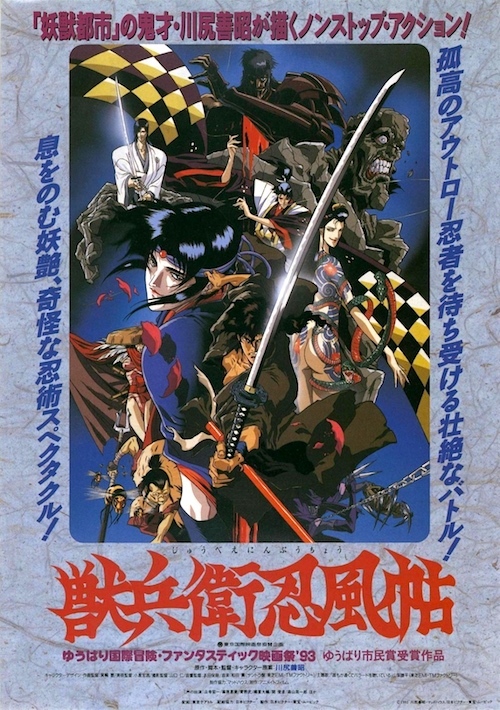
Ninja Scroll

One of the films credited with helping to popularise anime in the West in the wake of Akira (reportedly it has had a greater and more enduring impact in the US than in Japan), Ninja Scroll is a fast-paced fantastical action flick full of gratuitous swordplay, gratuitous gore, and gratuitous nudity.

The story begins with Jubei Kibagami, a roaming ninja-for-hire, who becomes embroiled in stopping the machinations of the Shogun of the Dark after he rescues Kagero (a female ninja whose team were slaughtered by the Shogun of the Dark’s minions, the Eight Devils of Kimon), an event witnessed by Dakuan, a government spy who has been sent to investigate and stop the evil Shogun.

Try not to worry about that too much, though: Ninja Scroll moves like the clappers through a plot that is at once incredibly simple and ludicrously over-complicated. On the one hand it’s an action-driven adventure, as our trio of heroes battle their way through the Eight Devils one by one. On the other, it’s got all sorts of backstory stuff about who the Devils’ leader is and how he’s connected to something Jubei did years earlier and what any of this has to do with Kagero’s clan and… so on.

Samurai snack

Similarly, the pace has its pros and its cons. It certainly keeps things lively, with new monstrous Devils turning up regularly, bringing bursts of exciting action with them; but it makes things bewildering at times, with a flurry of characters and exposition introduced throughout the first half-hour or so. Once it settles down, there’s actually some quite nice character stuff involving Jubei and Kagero, and to an extent Dakuan, who remains a tricksy and unreliable ‘hero’.

That’s not what the film is best known for, though, probably because it’s hidden after a big chunk of the other stuff: ultra-violence and a sex obsession. As to the former, men are literally ripped limb from limb, or cut in half, or quarters, with blood regularly spraying everywhere. Depending on your viewing preferences, it’s either incredibly extreme or we’ve seen the same kinda stuff more regularly since. I wasn’t as shocked as some reviews warned I would be, but it’s not for the faint-hearted.

The same goes for the sex and nudity, which embraces everything from the villains bickering about who’s sleeping with who (if they’re devils then half of them are horny ones) to Kagero being sexually assaulted by a rock monster. In the audio commentary recorded for the 20th anniversary, the writer, director, and animation director debate whether some of that content was unnecessary. One of them (it’s hard to tell which from the subtitles) asserts that there were always gratuitous sex scenes in the B-actioners that partly inspired the film, so it goes toward creating the right atmosphere. I guess individual tastes will vary — I mean, it’s not as if Kagero’s assault is presented as a good thing, but it is still presented. Or it is nowadays: on the film’s first release the BBFC cut that part out. Times certainly have changed.

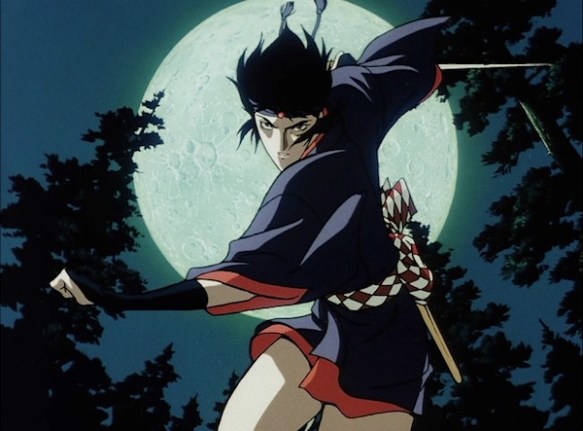
Kick-ass Kagero

For all that Ninja Scroll feels kinda antiquated in this carefree presentation of repellant acts, it has stood the test of time in other ways. For the faults in what happens to her early on, Kagero emerges as a competent and assured female hero (for the most part). The animation is frequently great, with some painterly compositions inspired by traditional Japanese art, as well as dramatic action sequences. I watched the English dub, which is what it is (I’ve heard better; I’ve heard much worse), but on the aforementioned commentary track they regularly sing the praises of the Japanese voice cast, so maybe the subtitled version was the way to go.

Watching Ninja Scroll is a bit of a conflicting experience nowadays. Its story is both numbingly simple (“introduce villain, fight villain, defeat villain, repeat x8”) and insanely complicated; its sometimes balanced gender politics are offset by some gratuitous and distasteful content; its characters are initially archetypal and generally unlikable, but warm up in both regards as the film progresses. A bit like my opinion of it: I wasn’t entirely sure after my first viewing, but as I watched it back with the commentary I re-appreciated an awful lot of it. Maybe it’s a grower, then.

4 out of 5

Ninja Scroll is on Syfy UK tonight at 11:10pm.

The Last Dragonslayer (2016)

2016 #195
Jamie Stone | 101 mins | download (HD) | 2.00:1 | UK / English

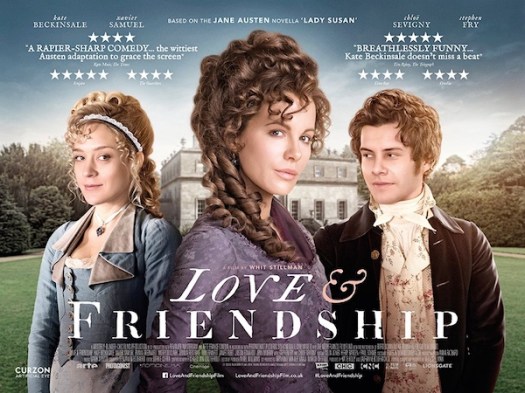
The Last DragonslayerI’m not sure whether to commend or condemn Sky1 for having the balls to schedule a light family-friendly fantasy drama against Doctor Who on Christmas Day — that seems like damning yourself to low ratings. But then Sky never exactly stands at the pinnacle of the charts, and, in the catch-up-driven landscape of modern TV, does it even matter? I mean, as if to show their disregard for schedules, the premiere broadcast was actually at 3am the night before.
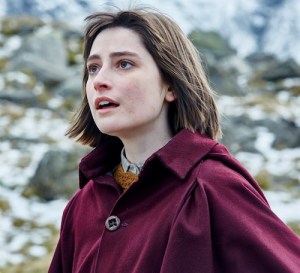
Anyway: adapted from the novel by Jasper Fforde (the first in a series, as will eventually become clear), The Last Dragonslayer is the story of Jennifer Strange (Ellise Chappell), a teenage orphan living in the Ununited Kingdom (a name never uttered on screen, perhaps for fear of looking like political commentary in the current climate). This is an alternate-world Britain where magic exists but is on the wane — it’s powered by dragons, but they’re dying out; besides which, the public have become more enamoured with things like technology and supermarkets. Adopted by the kindly wizard Zambini (Andrew Buchan), Jennifer learns about the importance of magic, and the importance of dragons to magic, which is a bit of a problem when the country’s seers have a mass vision that the last dragon will be slain on Sunday, and shortly thereafter Jennifer discovers her long-prophesied role as the last official dragonslayer.

Jennifer StrangeAbout now you’re probably thinking The Last Dragonslayer is completely derivative of every other major young-adult fantasy franchise of the last… well, forever. It’s hard to deny that the plot is, at least in its broadest thematic strokes, a pretty familiar affair. What makes the enterprise worthwhile is its humorous execution. This isn’t a spoof of the genre, more a satirical mash-up of familiar fantasy building blocks and modern life. So, for example, the king’s chief knight is also a pop star, followed around by a gaggle of adoring female fans; when Jennifer finds herself in need of money, her dragonslaying assistant signs a sponsorship deal with soft drink brand Fizzipop that requires her to film an advert, make at least two promotional appearances, and wear a branded T-shirt until the dragon is slain. It’s this whimsical slant on our world that is arguably Dragonslayer’s most successful aspect.

Another would be its characters. Chappell makes Jennifer a capable hero without having to resort to the kind of self-serious moping that dogs so many current young adult leads (Katniss, I’m looking at you). Buchan also gets to move away from the moping that’s so often called for in series like Broadchurch, making the affectionate, skilful Zambini an easily likeable character within just a few deceptively simple scenes. Without meaning to spoil the plot, he’s not in it enough. The slack is taken up by the likes of Pauline Collins and Ricky Tomlinson as a pair of batty magicians, Matt “Toast” Berry as the immature monarch, and Anna Chancellor as the smarmy corporate head of supermarket giant Stuff Co. The only weak like for me was Richard E. Grant as the voice of Maltcaisson, the last dragon — it just didn’t feel like he had the vocal presence to be playing a huge majestic beast. But not everyone can be John Hurt or Benedict Cumberbatch, I suppose.

Dragon breathI guess The Last Dragonslayer’s irreverent, sometimes silly tone won’t be to all tastes, but I enjoyed it very much. Unsurprisingly (all things considered) the book is the first in a series, and so not everything is fully resolved by the film’s end. Let’s hope that, in spite of their scheduling, it’s done well enough for Sky that sequels are forthcoming.
4 out of 5

Kung Fu Panda 3 (2016)

2016 #176
Jennifer Yuh Nelson & Alessandro Carloni | 95 mins | Blu-ray | 2.35:1 | USA & China / English | PG / PG

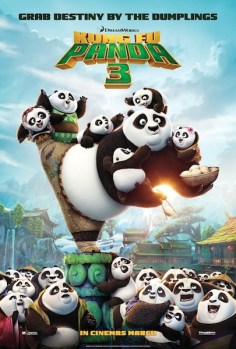
Kung Fu Panda 3Po and co are back in a movie that bucks the sequel trend by being perhaps the best Kung Fu Panda yet.

The two-pronged plot sees Po (Jack Black) finally meet his birth father (Bryan Cranston), while evil warrior Kai (J.K. Simmons) breaks out of the afterlife to hunt down the Dragon Warrior, putting Po’s new-found community in harm’s way.

After the occasionally muddled second film (which I felt improved a little with repeated viewings, at least), KFP3 sets the legendary adventures of awesomeness back on track with an appealing mix of humour, action, and moral lessons for kiddies and adult viewers alike. It keeps things focused and pacey, running just 83 minutes before credits, as well as maintaining the series’ typically stunning animation, which is just as polished whether creating epic scenery or up-close physical combat.

It’s also particularly satisfying when watched alongside its forerunners: it feels like Po’s story has come full circle, with the film linking in and wrapping up plot points from the first movie (as well as resolving things from the second). Reportedly DreamWorks have three more Kung Fu Panda films planned, but at this point it feels like a completed trilogy.

A downside for UK viewers, though: our localised soundtrack replaces the voices of two palace geese with members of the Vamps, who are a popular music combo, apparently. Wow. Aside from the underwhelmingness of the ‘famous’ guest voices, they’re appalling actors. They only have about three lines between them and they’re still terrible. To rub salt in the wound, some ‘clever’ disc coding means that if you have a Region B Blu-ray player this soundtrack is completely unavoidable, even if you import. Poor region-locked people. Family resemblanceI hope for humanity’s sake the version on Sky Cinema retains the original voices.
There are very few threequels that can lay claim to being a series’ best entry. Whether KFP3 actually tops the original or not is debatable, but it at least feels like a course correction after the somewhat disappointing first sequel.

4 out of 5

Kung Fu Panda 3 is available on Sky Cinema from today, screening on Premiere at 1:40pm and 7:15pm.

Come Together (2016)

2016 #185a
Wes Anderson | 4 mins | streaming (HD) | 16:9 | USA / English

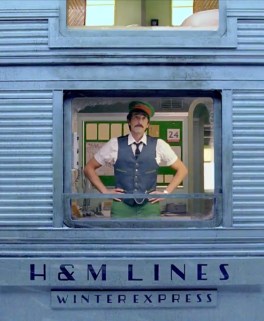
Come TogetherChristmas adverts are all the rage these days, thanks to the likes of John Lewis and their beautifully affecting tributes to the holiday season / twee pieces of emotionally manipulative crap (delete as appropriate). This year clothes retailer H&M got in on the act by hiring everyone’s favourite go-to example of an idiosyncratically quirky director, Wes Anderson, to helm a short film-cum-advertisement — the first part of that equation being why I’m reviewing it here.

For me, Anderson pitches the tone just right. Rather than making a four-minute festival of sappiness that rots your brain with its generic sugary sentiment, or a music video for a slow breathy cover of a once-famous song, or a long build-up to a cheap punchline, Anderson instead brings his own familiar style to a brief narrative that comes to a surprisingly heartwarming conclusion. In the process, he’s made an advert that doesn’t feel like an advert — another reason to factor it in here.

I suppose for that same reason it almost fails — I’m no more or less likely to shop at H&M than I was before (in truth, I had to even double check they were a clothes retailer) — but as brand awareness goes, well, it doesn’t make me want to kick their teeth in until they go away and never bother me with one of their stupid adverts every again. Suck on that, John Lewis.

4 out of 5

Come Together can be watched on YouTube here.