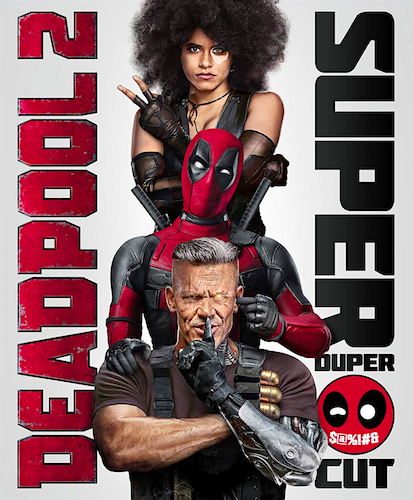
Deadpool 2: Super Duper $@%!#& Cut (2018)

2019 #39a
David Leitch | 134 mins | Blu-ray (UHD) | 2.39:1 | USA / English, Spanish & Cantonese | 15

Deadpool 2: Super Duper $@%!#& Cut

What’s an R-rated comedy without an “unrated” extended home ent version, eh? Well, the first Deadpool didn’t have one, but the sequel certainly does. Branded as the “Super Duper Dollar-At-Percent-Exclamation-Hash-Ampersand Cut”, it runs almost 15 minutes longer than the theatrical cut, with some alternate gags and music cues in the mix as well.

The Blu-ray’s scene selection menu offers an indication of which chapters feature new material, and the answer is “most of them” — those 15 minutes are spread relatively thinly throughout almost the entire film. There are a handful of wholly new scenes (as many as ten, depending how you count it), most of them quite short (one is under nine seconds), a couple of extended fight sequences, and then lots of added lines here and there. Plus, as I said, there’s a smattering of gags that have been changed for alternatives. The only thing that’s really missing is a fourth-wall-breaking gag about extended cuts — it’s uncommon for the Deadpool franchise to drop the ball like that.

As ever, Movie-Censorship.com has a thorough list of additions and changes. Their report reckons all the replacement gags are worse than the originals, but it’s certainly a matter of personal taste: there’s nothing so major lost, nor anything so poor gained, that it’s a crying shame. Personally, I think a fair few of the new and additional lines are at least decent. The added action stuff, on the other hand, is all neat, in particular a major extension to the Japanese bath fight that turns it into a single-shot masterpiece, and a fun bit between Domino and Juggernaut. I also thought the way this cut incorporates Russell’s backstory earlier and more fully worked well, adding weight to his motives and actions later in the movie.

X-Force... kinda

The net effect of the changes and additions is minimal, however. At the very least, I enjoyed it just as much on a second viewing as I did on the first (which is more than I can say about Deadpool 1). With that in mind, I’d probably pick the Super Duper Cut as my preferred version of the film. I liked most of the additions, and didn’t miss enough of the subtractions for it to bother me, so on balance this version wins. Individual opinions will naturally differ (that Movie Censorship guy obviously wasn’t impressed by the new stuff), but for anyone that enjoyed the theatrical version, this is definitely worth a look. That’s more than most people would say about Once Upon a Deadpool, at least.

4 out of 5

The theatrical cut of Deadpool 2 is available on Sky Cinema from today.

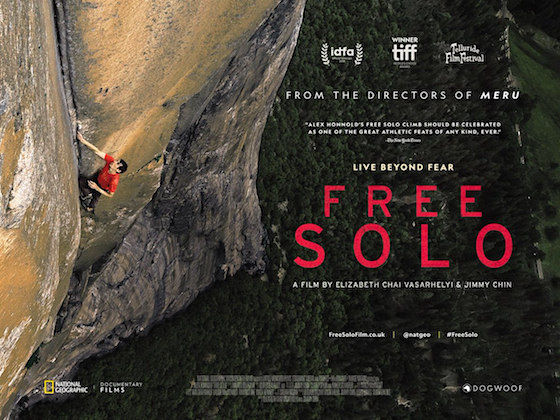
Free Solo (2018)

2019 #36
Jimmy Chin & Elizabeth Chai Vasarhelyi | 100 mins | download (HD) | 1.85:1 | USA / English | 12 / PG-13

Free Solo

Anyone can be happy and cosy. Nothing good happens in the world by being happy and cosy.

So says Alex Honnold, the subject of this documentary, when discussing the different approaches to life of his girlfriend, who he thinks wants to be “happy and cosy”, and himself, who seeks perfection in extreme endeavour. It’s as succinct a summation of his attitude to life as any in this Oscar-winning documentary.

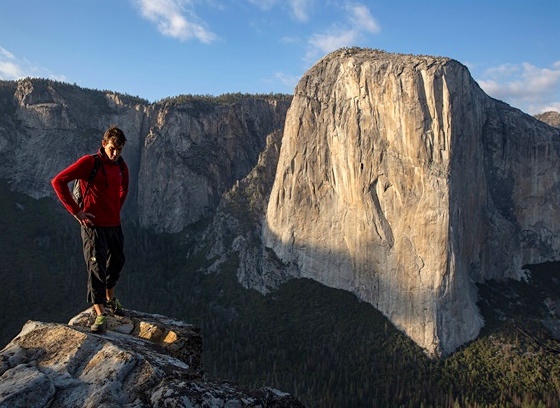
Honnold is a climber with a particular interest in free soloing, which is climbing without ropes or harnesses — think Tom Cruise at the start of M:i-2. His feats have made him famous, as an opening montage demonstrates (though I’d certainly never heard of him before this). The film is ostensibly documenting his attempt to be the first person to free solo up El Capitan in Yosemite National Park, an extraordinary feat due to its height and difficulty.

In fact, the film is as much a profile of Honnold as a person — how he got into this hobby, what motivates and drives him, how his mind works — as it is about the physical task of climbing. I knew there’d be some biographical detail and whatnot, but I thought most of the film would be about the headline climb — it’s what the film is promoted as being about, at least as far as I was aware, and (minor spoilers, if you don’t know that, yes, he managed it (almost two years ago now, so, like I say, not really spoilers)) it took him 3 hours 56 minutes, so it’s not like you’d have to show it in full to make a feature-length film. As it turns out, the climactic climb is afforded just 13 minutes of screen time.

Alex vs El Capitan

That’s not particularly a problem because Honnold is an interesting individual. He’s not just a normal bloke who likes to climb, but has a very particular mindset and focus, which seems to stem from his upbringing and has affected his relationship to society and other people. He’s clearly not incapable of forming friendships, or even romantic relationships, but they don’t affect him in the way they do the rest of us. Whether you find his attitude to life admirable or perverse is down to you. The film arguably celebrates it, which seems to have turned some viewers off, but Honnold’s philosophies (such as they are — he’s not consciously a deep thinker, I don’t think) are contrasted with the views of his friends, who like him but maybe in spite of his monomania.

Aside from what it exposes about Honnold, one of the revelations I gained from the film was how much planning goes into these kind of climbs. Like, spending months or years choosing routes, knowing all the little foot and hand holds, the body positions required, climbing it with ropes to test it out, and so on. It’s not just like, “that looks possible, let’s have a go,” which is I guess what I thought they did. With climbs of this difficulty, it’s rehearsed in the way you might Shakespeare — every little hold (and I do mean little: sometimes surface contact is as small as half a thumb) is pre-decided and memorised, then repeated on the day. The challenge of free soloing (at least at this level) is not “can I manage to find a way up this cliff face?”, it’s “can I scale this near-impossible route without a safety net?” It’s about doing something that’s at the limits of human capability and doing it perfectly, because the difference between 100% and 99% is, literally, death.

Whether you find Honnold’s commitment to it admirable or self-centred and self-aggrandising, it’s a fascinating mentality to have. And, at the very least, the scenery is breathtaking.

4 out of 5

Free Solo is released on DVD and Blu-ray in the UK today.

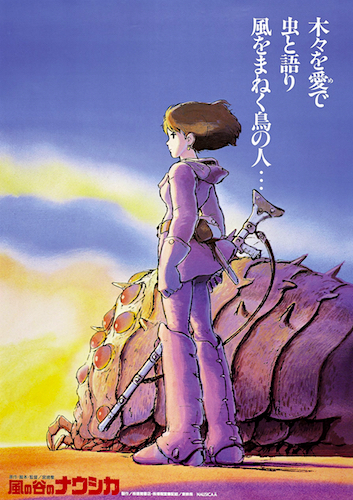
Nausicaä of the Valley of the Wind (1984)

aka Kaze no tani no Naushika

2018 #130
Hayao Miyazaki | 117 mins | Blu-ray | 1.85:1 | Japan / English | PG / PG

Nausicaä of the Valley of the Wind

I watched Princess Mononoke before Nausicaä, and also checked out the Blu-ray’s special features. Those include the film’s original Japanese trailers, which emphasise that it’s “13 years after Nausicaä”, which intrigued me, because director Hayao Miyazaki had made plenty of other films in between. But, having watched the earlier movie, the connection and similarities become clear: Nausicaä features an ecological message, a threat from nature that isn’t, industrial humans (with a female general) being the actual villains, innocent townsfolk that need saving, a princess who’s the only one who understands, and a boy from a different kingdom who helps her. They’re not identical, of course, but there’s a lot of overlap…

The animation is nice without being quite as mindblowingly good as later Ghibli productions — they certainly hit the ground running, but they would improve too. The full-length English dub was created in 2005 (the original US release was drastically cut and rewritten) and boasts a helluva cast: Uma Thurman, Patrick Stewart, Mark Hamill, Edward James Olmos, plus Alison Lohman as the lead and a young Shia LaBeouf. I don’t mean to disparage those actors who primarily ply their trade dubbing anime, but these starry Disney-funded dubs do add a certain extra oomph to the vocals.

Nausicaä was only Miyazaki’s second feature, but already shows a lot of the themes and concerns that would go on to characterise his later movies. I feel like maturity and/or experience make some of those later films better, but this is still a powerful demonstration of his talents.

4 out of 5

Nausicaä of the Valley of the Wind was viewed as part of my Blindspot 2018 project, which you can read more about here.

Attack the Block (2011)

2018 #231
Joe Cornish | 88 mins | Blu-ray | 2.40:1 | UK & France / English | 15 / R

Attack the Block

The directorial debut of comedian Joe Cornish seemed to become an instant cult classic on its release back in 2011 — I distinctly remember US geek websites urging people to see it and even arranging screenings, leaning hard into the kind of word-of-mouth promotion that is often how these small but dedicated fan bases are born. It has the kind of online scores that back up that status: as much as everyone who talks about it seems to love it, it only rates 6.6 on IMDb. I guess you’re either in a cult or you’re not. While I did enjoy it on the whole, I couldn’t quite see what all the fuss was about.

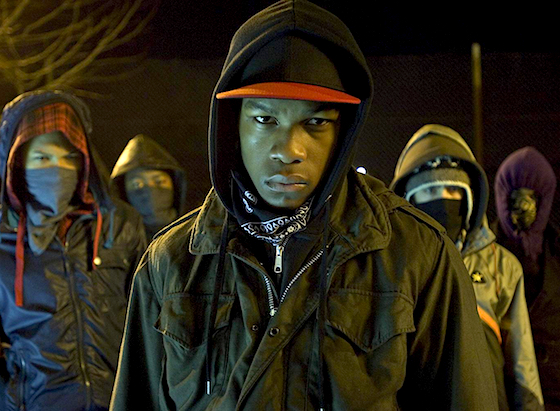
The film centres on a gang of teenage lads, led by John Boyega in what it turns out was a star-making performance. They roam their inner city London tower block and its surrounding streets, and we first meet them mugging a young nurse (Jodie Whittaker); and, when an alien creature falls from the sky, they savagely beat it to death. Hardly E.T., is it? Of course, murdering the little thing turns out to have been a bad idea, because soon more of the bastards are falling from the sky, and they seem to be particularly targeting our “heroes”.

I’ve bunged heroes in quotation marks there because this gaggle of protagonists are a right bunch of little so-and-sos (to be polite about it). The film sets itself a hurdle by making them so initially unlikeable, and then struggles to overcome it — frankly, I was cheering on the aliens to give the little chavs what for. You could certainly make a movie where the protagonists are unlikeable and the thrill comes from waiting for them to be slaughtered by the ostensible villains (I feel like someone has, probably something incredibly high-profile, but I can’t remember what it is right now), but I don’t think that was Cornish’s aim.

Thugs'r'us

On the brighter side, the boys eventually come across Whittaker’s nurse again, because she lives in the same block as them, and so we have her to root for. Her earlier experience makes her as non-disposed to the gang as I was, and it’s her connecting with them somewhat that comes to rehabilitate them. There’s also Luke Treadaway (that’s the one from Clash of the Titans and A Street Cat Named Bob and Ordeal by Innocence and so on, not to be confused with his brother Harry, who’s appeared in The Lone Ranger and Cockneys vs Zombies and Penny Dreadful and so on; although they’re twins, so, y’know, good luck) as a posh kid trying to score some drugs, and Nick Frost as the dealer he’s trying to get them off, to bring some comic relief. Not that the rest of the film is super serious (it’s about teenage chavs battling ferocious alien bears, c’mon), but their more direct humour is welcome too.

Despite my reservations about the characters, the film is a great calling card for writer-director Joe Cornish. Although tonal similarities between the movies invite comparisons to what Shaun of the Dead did for Edgar Wright (especially as he’s friends with Cornish and an executive producer here), I feel like Wright’s breakout film was even more assured. Instead I think of something like Guy Ritchie and Lock Stock: an imperfect film in itself, but which suggests a lot of potential from the man behind the camera. Quite why it’s taken eight years for Cornish’s second feature to come around is a mystery.

4 out of 5

Attack the Block was viewed as part of my Blindspot 2018 project.

Joe Cornish’s second feature, The Kid Who Would Be King, is in UK cinemas from tomorrow.

The Ragtag Review Roundup

My review backlog has got a bit silly: there are currently 128 unposted reviews on it, dating back to stuff I watched in January 2018. I was hoping to really get stuck into that as 2019 began, but I’ve been busier than expected. Anyway, I’ll keep trying — and here’s a start, with a real mixed back of films that have basically nothing in common.

In today’s roundup:

  • American Psycho (2000)
  • Logan Lucky (2017)
  • A Nightmare on Elm Street (1984)
  • The Treasure of the Sierra Madre (1948)


    American Psycho
    (2000)

    2018 #66
    Mary Harron | 102 mins | streaming (HD) | 2.35:1 | USA & Canada / English | 18 / R

    American Psycho

    The film that made Christian Bale’s name sees him play Patrick Bateman, a high-flying New York banker with psychopathic tendencies — well, that just sounds like all those Wall Street types, right? Except hopefully they’re not actually engaging in literal killing sprees, unlike Bateman.

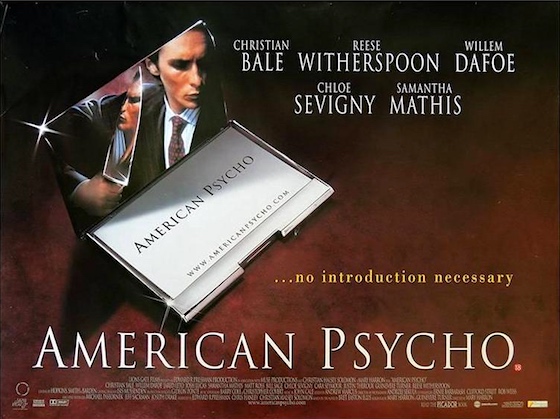
    While the murdering stuff may look like the draw, American Psycho is more interesting as an examination of the corporate mentality. It manages to be remarkably insightful, satirical, and terrifying all at once. Take the scene where they compare business cards, for instance: it’s ridiculous how much interest and importance these guys are placing in little cardboard rectangles with their name and number on, and yet you can believe such business-wankers would care about it. The anger Bateman feels when other people’s cards are considered classier than his is palpable.

    It’s a great performance by Bale across the board — so well judged, despite being barmy. It’s also interesting to observe the links between this and his version of Bruce Wayne, which is a wholly appropriately connection. I mean, who’s more of an American psycho than a guy who spends his days pretending to be a playboy businessman and his nights dressing up as a bat to beat up bad guys? I’m sure someone must’ve already developed a theory / amusing trailer mashup connecting the two films…

    The only thing that really let the film down for me was its final act. No detailed spoilers, but while I thought the rest of the film was engagingly made, the ultimate lack of resolution felt empty. To me, it seemed like it didn’t know how to end.

    4 out of 5

    Logan Lucky
    (2017)

    2018 #65
    Steven Soderbergh | 119 mins | Blu-ray | 2.39:1 | USA / English | 12 / PG-13

    Logan Lucky

    Two brothers, whose family has a historical proclivity for bad luck, decide to rob one of the US’s largest sporting venues, the Charlotte Motor Speedway, during one of its quieter events. But when the situation changes, they end up having to pull the job off during the biggest race of the year.

    Director Steven Soderbergh’s return to the heist genre a decade after Ocean’s Thirteen is something to be noted; and while Logan Lucky is a very different kind of heist movie (there’s none of that trilogy’s Hollywood glamour to be found here), it’s a more successfully entertaining movie than either of the Ocean’s sequels.

    Like them, it’s not terribly serious, instead ticking along as generally quite good fun — though there’s a scene with Take Me Home, Country Roads that’s quite affecting. Between this and Kingsman 2, I’m left to wonder how that wound up becoming just about the most emotional song ever recorded…

    Anyway, the showpiece heist is clever, in its own way, and rolls around sooner than I expected — it’s funny to read some people criticise how long it takes to get to, because I assumed it would be Act Three. Instead, the film constructs a post-heist third act that was the only time it really got too slow for me, though it does eventually reveal a purpose that was kinda worth the wait. That said, the whole thing might benefit from being a little bit tighter and shorter — ten minutes trimmed across the pre- and post-heist acts might make it zing just that bit more.

    4 out of 5

    A Nightmare on Elm Street
    (1984)

    2018 #71
    Wes Craven | 87 mins | TV (HD) | 16:9 | USA / English | 18 / R

    A Nightmare on Elm Street

    It may be regarded as a horror classic, but I have to admit that I found A Nightmare on Elm Street to be a crushing disappointment. To me, it seemed to be a pretty poor movie (all weak: the acting, the dialogue, the music, the timescale events supposedly occur in) with some fantastic imagery. Director Wes Craven was a master, of course, and he manages to construct some truly great shots and moments amid a dirge of mediocrity. There’s a lot of nonsensical stuff too. I guess “dream logic” is meant to excuse it, but… eh.

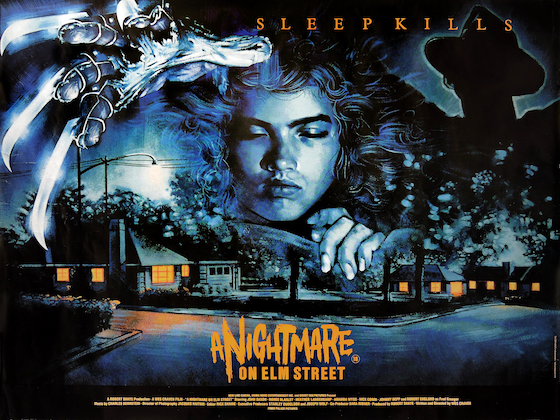
    I do really like that poster, though.

    3 out of 5

    The Treasure of the Sierra Madre
    (1948)

    2018 #6
    John Huston | 121 mins | TV (HD) | 4:3 | USA / English | PG

    The Treasure of the Sierra Madre

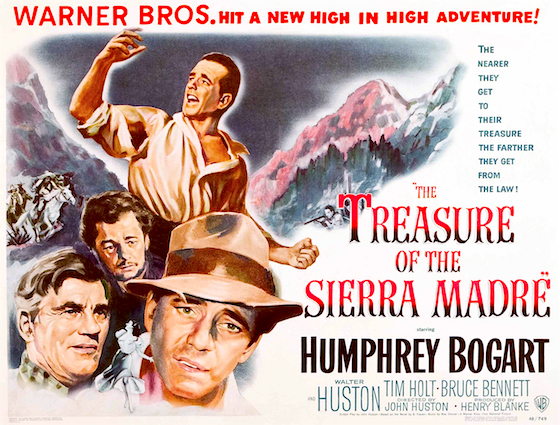
    Set in the mid ’20s, two American drifters in Mexico (Humphrey Bogart and Tim Holt) team up with an old and experienced prospector (Walter Huston, director John Huston’s father) to hunt for gold in them thar hills. Along the way they have to contend with rival prospectors, violent bandits, and — most dangerous of all — their own suspicions and greed.

    The Treasure of the Sierra Madre blends genres like there’s no tomorrow: it’s been described as a plain drama, an adventure movie, a neo-western, it’s included on film noir lists… Of course, depending which angle you look at it, it’s all of the above. It’s both an exciting adventure movie and a character-centric exploration of the effects of greed. In depicting that, Bogart’s performance is excellent, though Huston Sr threatens to steal the show. Poor Tim Holt is overshadowed by them both, even though he gives a likeable turn.

    5 out of 5

  • Velvet Buzzsaw (2019)

    2019 #11
    Dan Gilroy | 112 mins | streaming (UHD) | 1.85:1 | USA / English | 15 / R

    Velvet Buzzsaw

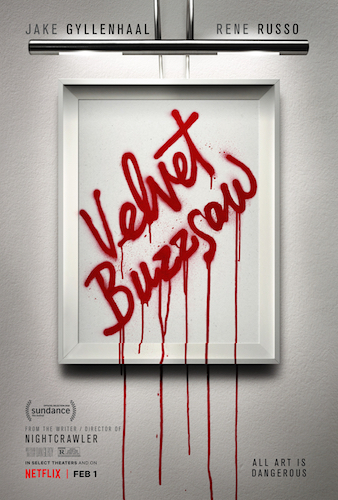
    The team behind neo-noir modern classic Nightcrawler (writer-director Dan Gilroy, stars Jake Gyllenhaal and Rene Russo, cinematographer Robert Elswit, among others) reunite for this direct-to-Netflix genre mash-up — it’s part art-world satire, part mystery-thriller, part horror. The Verge described it as “Robert Altman’s Final Destination”, and that so succinctly articulates what the film reminded me of that I decided to just lift it. Well, just pilfering someone else’s work is in-keeping with the film’s themes, at least.

    Set in the world of high art, it stars Gyllenhaal as all-powerful critic Morf Vandewalt, whose reviews can make or break sales worth millions of dollars, plus the careers that go along with that. One person his tastes always align with is prominent dealer Rhodora Haze (Rene Russo), whose assistant Josephina (Zawe Ashton) is falling out of favour due to relationship woes. But when her reclusive neighbour dies, she finds his apartment full of striking and original artwork, which she promptly steals. Mort is bowled over by their quality, Rhodora muscles in on the sales, and soon the deceased artist is a sensation. But there’s more to his disturbing work than meets the eye, and soon people start dying…

    So far so Final Destination, but not very Robert Altman, I know. The latter comes more in the execution than the subject matter, in particular that this is really an ensemble piece — the marketing pitched Gyllenhaal as the lead, I guess because he’s the biggest and most marketable name, but Ashton’s role is at least as large and central, if not more so, for example. Plus, as well as those two and Russo that I’ve already mentioned, there are significant roles for Toni Collette (as an art buyer for a museum), John Malkovich (as an uninspired elder-statesman artist), Natalia Dyer (as an intern struggling to break in), Billy Magnussen (as a handyman who wants to be an artist), Tom Sturridge (as a rival dealer), and Daveed Diggs (as an up-and-coming artist everyone wants to sign). Before the thriller and horror elements come into play, this spread of characters makes the film seem much more like a portrait of the art world from multiple different perspectives.

    Critique is so limiting and emotionally draining

    Gilroy has specifically cited Altman’s Hollywood satire The Player as an influence on how he approached things. By complete coincidence, I watched The Player just a few days before this, and so that similarity was very clear to me. That said, Gilroy’s lack of experience relative to Altman perhaps shows through. Where The Player was very pointed and effective in its satire, Velvet Buzzsaw takes more of a vague, scattershot view of the contemporary art scene. Gilroy does have a specific theme in mind — the disjunct between art and commerce, and their negative effects on each other — which manifests in various ways (it’s part of the film’s horrors as well as its satire), but that seems slightly disconnected from the Altman-esque “different perspectives” approach. Having so many key characters does lend a slightly different feel from what you might expect, but it doesn’t lead to the same kind of forensic dissection that Altman was capable of.

    It’s just one aspect of the film that seems somewhat muddled. It’s not fatally flawed, but there are things about it here and there that just don’t seem to add up. It’s almost as if scenes had been arbitrarily removed; not ones that particularly affect the plot, but maybe ones that affect the details. For example, at one point Mort exclaims that he’s been seeing strange things recently, but the only evidence we’ve seen of that came with the thing that prompted his exclamation. These kind of vague, not-quite-right bits pop up now and then. You’d almost wonder if it had something to do with the film’s horror side, like it was trying to be disquieting, but it doesn’t correlate or connect up to the actual horror bits.

    About to connect with the film's horror bits

    And yet, despite that, it’s so good in places. In particular, it looks gorgeous, especially in UHD. That’s how Elswit has shot it, of course, but also some of the striking visual ideas Gilroy throws into the mix. His screenplay definitely has its moments also. One of Mort’s first reactions to the startling work Josephina has unearthed is that “critique is so limiting and emotionally draining,” which is just begging to be quoted in reviews. That line was in the trailer, so it’s already threatened to take on a life of its own outside the film, but it’s certainly not the only meme-in-waiting that’s thrown up. “The admiration I had for your work has completely evaporated” is another choice example. Heck, about half the rest of the dialogue is as well, never mind some reaction shots.

    Sometimes, star ratings really aren’t nuanced enough to represent one’s reaction to a film. There are bits of Velvet Buzzsaw I adored — performances, scenes, individual lines, the cinematography — at a level normally found in a five-star film. But there are other things it fumbles, like the way the story sometimes jumps as if scenes have been deleted, or the way it doesn’t seem to have an answer for some of its mysteries, or the way the trailer spoilt pretty much everything (not a fault of the film itself, I know, but still a grievance). Some of those err down towards a three-star experience. It’s quite frustrating in that respect. Overall, there’s enough I liked that I’m going to give it a four, albeit a cautious one.

    4 out of 5

    Velvet Buzzsaw is available on Netflix now.

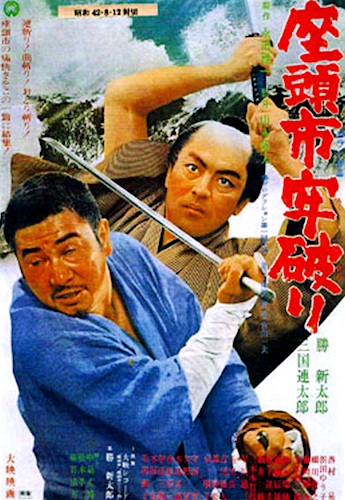
    Zatoichi the Outlaw (1967)

    aka Zatôichi rôyaburi

    2018 #257
    Satsuo Yamamoto | 95 mins | Blu-ray | 2.35:1 | Japan / Japanese | 15

    Zatoichi the Outlaw

    The sixteenth Zatoichi movie begins by boldly declaring it’s “the first feature by Katsu Productions”, the production company of series star Shintaro Katsu. While the change isn’t radical — this is still the Zatoichi we know and love — there does seem to be a different style and tone about this particular instalment.

    It all starts as a pretty regular tale: wandering into a new town, Ichi finds himself accidentally drawn into a feud between two neighbouring gangs, one run by the usual unscrupulous and vicious boss, the other by a kind-hearted and socially conscious chap. But even more moral than him is a ronin, Shusui Ohara (Mizuho Suzuki), who’s renounced violence and is preaching to the local farmers about the evils of the yakuza way of life. He challenges Ichi’s sword-based moral code, which is fertile ground for the series — Ichi is often questioning his own actions, after all. Ohara suggests there might be another way, but Ichi isn’t convinced — sometimes violence is necessary to help, he believes, and that goodly boss proves that the yakuza way can work for the people.

    Anyway, at the risk of spoiling things, that plot comes to a head in the usual fashion… but before the halfway mark. Via a montage (something I’m not sure we’ve seen in a Zatoichi film before, and it’s not the only one in this movie either), it’s a year later, and Ichi’s somewhere else in the world living a different life, only to receive news of trouble back in that earlier town. Naturally, he heads back to sort it out. It’s an effectively wrong-footing structure: the film wraps up more-or-less the usual Zatoichi movie within its first 40 minutes, then jumps ahead to show the long-term fallout of Ichi’s actions. It’s not the first time the series has touched on the fallout of all Ichi’s good intentions, but it’s the first time it’s been done so explicitly and succinctly.

    Hot stuff

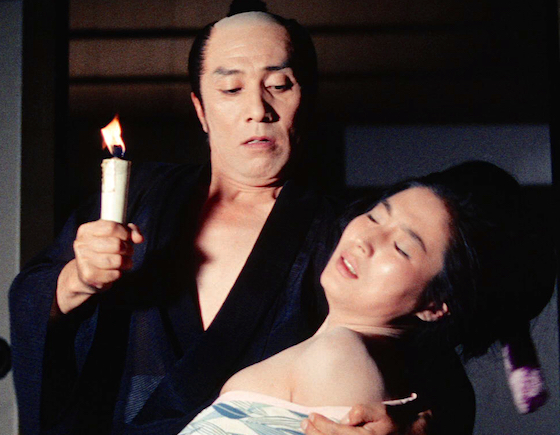
    It’s not just structurally different to the norm, though. This is a particularly brutal film, with dismembered limbs, attempted rape, torturous beatings, punishment by hot wax, women being forced into prostitution, multiple suicides, a graphic beheading…! There’s a crudeness to situations and dialogue too, with Ohara giving a lecture about how the yakuza are “shits and farts”, and an extended (and unwelcome) comedy interlude when Ichi lives with a bunch of bawdy and lascivious fellow masseurs. This is one of the few Zatoichi films rated by the BBFC (due to it being released in a DVD box set in the early ’00s — Criterion don’t seem to have bothered to get them certified for their recent set, which is perhaps why it isn’t available from major retailers anymore), and I don’t know what the other films would be classified as, but this easily earns its 15.

    This is also the most political movie in the series, something you’ll see regularly noted in reviews because it’s rather hard to miss — after all, Ohara is effectively trying to unionise the farmers against the bosses. Director Satsuo Yamamoto was a left-wing political activist, known for his films that engaged with such subjects, and also real-life protests that had seen him fired from Toho in their “red purge” of 1948. Hat-tip to Weird Wild Realm for that detail; that review also includes more analysis of this film’s politics and the way they impact — or don’t — Ichi and the viewer. By which I mean, the film makes a point of contrasting the perspectives of Ichi and Ohara, and the way events unfold suggest the ronin’s ideals of pacifism and reform may well be correct… but that wouldn’t do future Ichi adventures any good, so of course he maintains his violent ways.

    Violent delights have violent ends

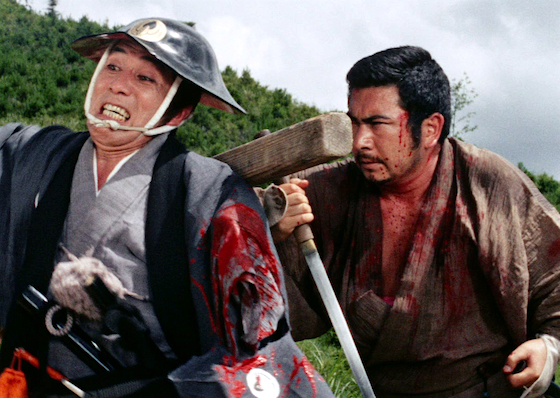
    And of course we still enjoy it. Indeed, the final fight is a stunner — well, they almost always are, but this is certainly another for those burgeoning ranks. Initially taking place in torrential rain, it’s a muddy and bloody scramble, including a great shot of Ichi unrelentingly coming for his foe, even as he’s pelted with rocks, blood dripping down his face (see this post’s header image). And that’s not even the end, because the peasants pick up an injured Ichi and, in a dramatically-scored sequence, carry him down backroads to intercept the caravan transporting the captured Ohara, who Ichi rescues in another flurry of swordplay. Even as the film seems to preach against violence, it revels in it. Parse that how you will.

    There were a lot of bits I didn’t like along the way in Zatoichi the Outlaw (that comedy interlude is a real mood-killer), and I can see why some fans think it gets too dark for a Zatoichi movie (it’s not just the events themselves, but the bleak atmosphere they create), but I admired its commitment to being a bit different. In a long-running series, films that challenge the norm are to be welcomed.

    4 out of 5

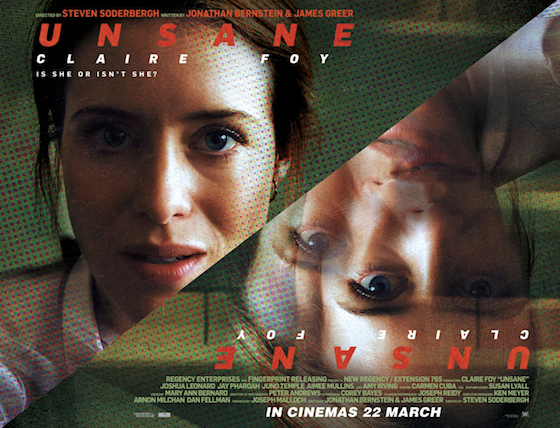
    Unsane (2018)

    2018 #219
    Steven Soderbergh | 98 mins | streaming (HD) | 1.56:1 | USA / English | 15 / R

    Unsane

    Probably the best-known thing about Unsane is that Steven Soderbergh shot it on an iPhone. Well, he’s not the first person to shoot a feature on a phone, nor will he be the last, but I guess he must’ve been the most high-profile. It’s a shame that’s all people seemed to talk about, though, because the content of the film is worth a look too.

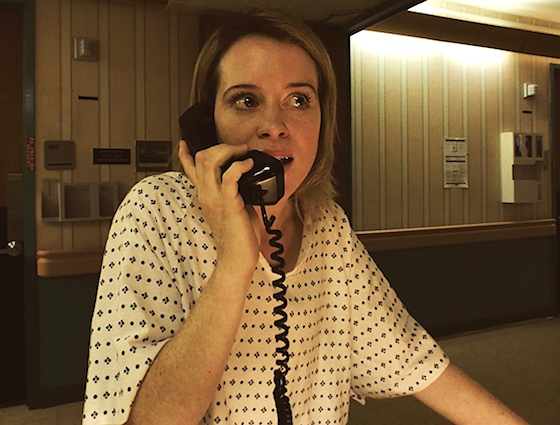
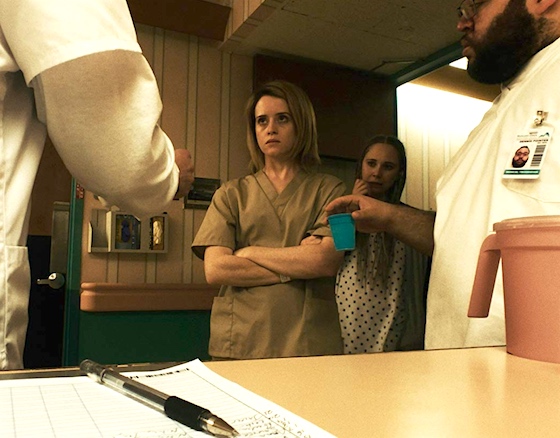
    It’s a psychological horror-thriller starring Claire Foy as Sawyer, a young professional woman struggling with a past trauma, who tries to simply get an appointment with a counsellor but ends up accidentally committing herself to a mental hospital. Although initially only in for a 24-hour assessment, her attempts to get out are only seen as further proof she has problems, and her ‘voluntary’ stay is extended against her will.

    This early part of the film plays more like a drama than a horror movie, in that it’s fairly grounded in plausible reality — it doesn’t seem to be some nefarious scheme that gets Foy incarcerated, but rather bureaucracy and misunderstanding. Later the film takes a swing into outright horror territory, and I’ll discuss that in a moment, but it’s the first act that is most genuinely frightening. Events move inexorably forward in such a way that you can imagine yourself in Sawyer’s shoes, imagine yourself making the same unwitting mistakes that she does, imagine what you might try in that situation to get out of it, and imagine how you’d fail just as badly as she does. The film doesn’t gloss over any “if only she’d done this it would’ve been fine” moments — she tries everything rational, and it still goes wrong.

    Hello, Domino's?

    But, as I said, later things change a bit: Sawyer claims that one of the men working at the hospital is actually her stalker. Obviously this just contributes to the staff thinking she’s deranged, because of course a mental health institution wouldn’t employ a convicted stalker, but it makes us wonder: is it the stress of the situation getting to Sawyer, making her see things? It would certainly be ironic — the place that’s meant to ‘make’ her sane actually driving her insane. Or maybe the staff are right, and Sawyer is an unreliable narrator?

    From there the film only becomes further immersed in genre-ness. It loses that “what would you do?” aspect, but I was engaged enough by then to just go with the story; others have found the tonal shift jarring, however. It definitely keeps you guessing — even after a mid-way reveal, you’re still unsure what further twists it may or may not pull. But it’s a funny old movie, in a way, because the shift from believable real-life horrors to inhabiting a more overt Horror mode means it sits at a hitherto unimagined crossroads between schlocky madhouse B-thriller and arthouse psychological drama. Well, I guess that’s the kind of thing we should expect from Soderbergh by now: a genre movie reimagined with auteurist sensibilities. Even when it takes the shape of a B-movie thrill-ride, there remains some psychological truth to the trauma Sawyer’s suffered and how it affects her. It’s also casually damning of things like the US healthcare/insurance infrastructure, which is, of course, a real-life problem. It’s always nice to sneak a valid real-world point into what is essentially a thrills-and-chills flick.

    Just say no

    The sense of unease is further emphasised by the shooting style, because it looks… odd. Odd how? It’s hard to say, exactly. It’s partly the aspect ratio, which for some reason is 1.56:1. I’m perfectly used to watching films in 4:3 or 1.66:1, so pillarboxing doesn’t bother me, but it being a nonstandard shape is surprisingly disconcerting. It also seems that Soderbergh hasn’t just used the iPhone camera as-is, but has attached at least one different lens. I suppose some might argue that’s cheating, but it’s normal to add lenses to the basic camera in other modes of filmmaking, so why not? I’m no expert on lenses so can’t quantify what he’s done exactly, but there’s a sort of wide-angle, sometimes even fish-eye, effect that is, again, strange. Combine all that with an even-less-definable quality that seems to wash over the whole image, like it’s lacking resolution or definition or something, and I’m not sure if the film’s visual style is down to the limitations of the tech or if it’s a deliberate emphasis of them. Whatever the reason, it kinda makes me hope no one ever chooses to shoot a film on an iPhone again, because while it can be done, the results aren’t great.

    And yet those results really do fit the mood of this film. I kinda hope no one copies that tech choice ever again, but, nonetheless, Soderbergh’s made it work for the story he’s telling. That story — with its ups and downs, its whiplash tonal changes, its very imaginable horrors and its only-in-a-movie ones — means the fact Unsane was shot on an iPhone is probably the least interesting thing about it.

    4 out of 5

    Unsane is available on Sky Cinema as of yesterday.

    Steven Soderbergh’s next film, High Flying Bird, was also shot on an iPhone. It’s released on Netflix on 8th February.

    Glass (2019)

    2019 #7
    M. Night Shyamalan | 129 mins | cinema | 2.39:1 | USA / English | 15 / PG-13

    Glass

    About 18 years ago, I first watched Unbreakable on DVD. It was the new film from M. Night Shyamalan — a name no one knew a year or two earlier, but the huge success of The Sixth Sense had somehow catapulted him to the top of the zeitgeist, where he was talked about as the new Hitchcock or Spielberg. Maybe no one could spell or pronounce it (I remember a lot of “Shamalamadingdong”s), but for some reason this wasn’t just “The New Film from the Guy Who Directed The Sixth Sense“, it was “The New Film from M. Night Shyamalan”. Anyway, it had met a mixed reception, but for some people it worked, and I joined their ranks. From there, it seems to have developed something of a cult following — it has many ardent fans, but others still don’t get it.

    In interviews, Shyamalan mentioned that Unbreakable’s plot had originally been just the first act of the film, until he decided to expand it to the whole movie, and so he had ideas that acts two and three might become two further movies and form a trilogy. There began a long wait for the film’s fans, ever hoping that one day Shyamalan — whose reputation went steadily and increasingly downhill with every film he made from that point — would come back round and continue what he’d started. I can’t speak for everyone, obviously, but I’d begun to give up hope: in December 2016, I added Unbreakable to my 100 Favourites series, and in that post I wrote, “16 years on, I guess hopes of a continuation are long dead.”

    Six-and-a-half weeks later, Split was released. You probably know the rest.

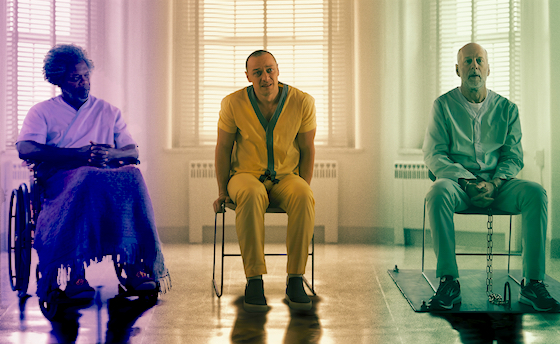
    Mr Glass, the Horde, and the Overseer

    …but in case you don’t: Split was a stealth sequel to Unbreakable, only revealed in its very last scene when Bruce Willis suddenly appeared and name-checked Samuel L. Jackson’s character. I say “only” revealed — I found out on Twitter, the first day after the film went on general release. Damn you, internet! But anyway, the point is: suddenly the hope was back alive. And it was confirmed to be so shortly afterwards, when Shyamalan announced that a sequel to Unbreakable and Split had been officially greenlit.

    Now, I’ve devoted a massive chunk of this review to that history lesson for one reason: to make it clear just how much I was anticipating this movie. I’m certainly not alone in that; but if you’re not someone who saw Unbreakable almost two decades ago and have been hoping for a sequel ever since, I hope the last few paragraphs gave you some perspective of how those of us who did feel about Glass finally being here. This is my most anticipated superhero movie in a year that also includes an Avengers that will tackle the fallout from a humungous cliffhanger, a new X-Men (a series I also love), a new Spider-Man (which I think looks great), and more (the most superhero movies in one year ever, apparently). So, for some of us, this has a lot of expectation to live up to.

    And I think expectations — whether they come from the previous films, the trailers, critics’ reviews, or what have you — are going to have a big effect on people’s reaction to Glass. Expecting a Marvel-style superhero throw-down? It was never going to be that, you fool. Don’t like movies where most confrontations come through dialogue? Okay, but did you actually watch Unbreakable and Split? (Those are both criticisms I feel I’ve seen in other reviews I’ve read.) Want to see Bruce Willis and Samuel L. Jackson face off again in a film that’s fundamentally Unbreakable 2? That’s not an unreasonable hope, but Glass is as much a sequel to Split as it is to Unbreakable, perhaps even more so. Certainly in tone, Glass has more in common with the slightly-pulpy, almost-B-movie style of Split than it does with the quiet, characterful mode Unbreakable operated in. That first film was a Drama, all about believable people coping with their personal issues, whereas the two follow-ups are much more genre movies. That said, they’re still genre movies that have been filtered through the unique mindset of this particular writer-director — don’t expect a great deal of easy satisfaction here.

    Confounded?

    Do expect twists. Of course there are twists — it’s a Shyamalan movie! Indeed, it’s almost the most Shyamalany of Shyamalan movies, because Glass has more than one surprise reveal to pull out during its final stretch. Some are almost obvious, especially if you’re aware of fan theories from the previous films. Some are entertaining, the kind of rug-pulls you’d expect in the last act of a movie whose villain is a genius. Some are… more startling. Some people will appreciate the boldness; others will feel it undermines what came before, or what they wanted to see here. I don’t think anything is an outright “that doesn’t make sense” betrayal of the world Shyamalan has created in this trilogy, but some people will be displeased about the directions he chooses to go.

    Talking of which, one of the big complaints I’ve read (and, fair warning, kinda-spoilers follow for the rest of this paragraph) is that the middle of the film wastes time trying to convince us these characters’ powers aren’t real, when we’ve already seen that they are. I think that’s a somewhat unfair criticism; one that comes from not properly investing in what we’re watching. Dr Staple is trying to convince the characters of reality, that they can’t have powers; and, as I saw it, the point of those scenes is to make us doubt it too. Yes, we’ve seen them do extraordinary things, but as Dr Staple lays out, can those things not just be explained by science and/or personal delusion? They’ve shown special skills, but are they really superhuman abilities? Several characters are swayed by her argument… so was I, to a point… except then I remembered the critics who’d said this was “a waste of time”, and therefore I guessed Shyamalan couldn’t be building to a reveal that these characters didn’t have powers after all, because if he were then it wouldn’t be a waste of time. So thanks for that, whichever Negative Nelly’s review I read that spoiled it.

    Is Dr Staple stable?

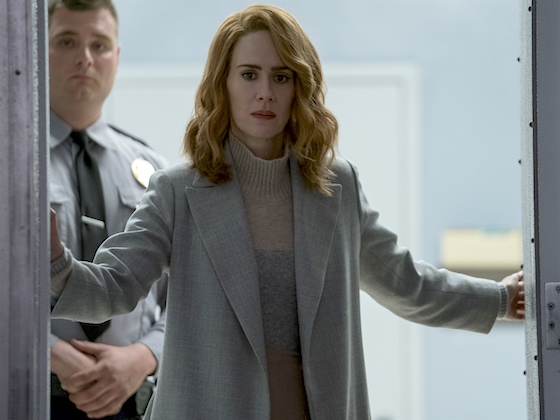
    As Dr Staple, Sarah Paulson is the main new addition to the cast for this finale. Her character’s a bit of a blank slate — we don’t really get to know her, why she’s doing this job, why she believes their powers can’t be real (other than the sheer implausibility of it, anyway). She exists to challenge the leads and their beliefs, not really to be a character herself. Or is that blankness just a facade, and that’s its point? I’ll say no more both out of an awareness of spoilers and because I’m not sure myself. It’ll be interesting to rewatch the film and see what, if anything, else presents itself about her on a closer rewatch.

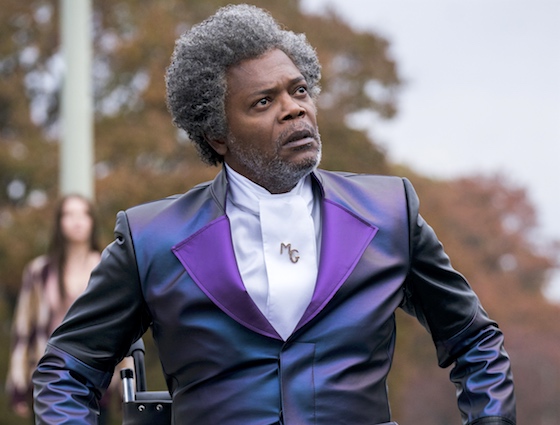
    Despite having the title role, Samuel L. Jackson is mainly reserved for the third act, but when he comes to life he revels in the part so much that I didn’t mind having to wait. James McAvoy gets to show off like he did in Split, only this time with an even greater number of distinct personalities. Some people think he’s overacting; I think it’s impressive. Split was more of a showcase for his skill, because here he has to share screen time with so much else that’s going on, but Shyamalan helps him out by actually giving different alters their own separate character arcs. In places that’s done quite subtly, so I think some might miss just how much McAvoy has to do.

    While McAvoy gets to negotiate multiple arcs, the last of the three headliners, Bruce Willis, barely has one. Some have said he phones in his performance here, but I think that’s unfair. Shyamalan hasn’t actually given him that much to work with, which is a shame — some people will feel like they’ve waited almost two decades to get more of David Dunn and been shortchanged. Well, David was always a quiet, introspective character anyway, so in some respects it’s fitting. In the two or three scenes where he was allowed to really do something, I felt like Willis had recaptured the part.

    (Anya Taylor-)Joy to the world

    It’s not just those four who have a significant role to play, either. For me, Anya Taylor-Joy actually has one of the film’s best parts, and gives one of its best performances. Here, again, is where Glass is at least as much a sequel to Split as to Unbreakable, in the way it devotes time to the development of her character and to her relationship with McAvoy’s. Also returning is Spencer Treat Clark as Joseph, David’s son. I wasn’t sure if this was a case of managing to lure back a child actor who’d drifted off, or if the guy had continued to work since. Well, having IMDb’d him, it turns out he’s been working virtually nonstop since Unbreakable, but it just happens I haven’t seen anything he’s been in (well, except he was in one episode of Mad Men, apparently). His is a somewhat less complex supporting role, but he’s particularly good at conveying Joseph’s thoughts in a few key dialogue-less moments.

    But the biggest returnee of all is behind the camera: writer-director M. Night Shyamalan. (Who is also in front of the camera, actually, with a cameo that exists largely to reconcile his cameos in the two previous films. It’s an amusing bit of fan service.) Shyamalan has, I think, always been a good director. He shows a good eye for strong and rich visuals, be they simple face-on close-ups or more innovative shot choices, but without being needlessly flashy. The film incorporates flashbacks using deleted scenes from Unbreakable, which at least one reviewer took to prove Shyamalan has deteriorated as a director in the past 20 years, but I thought they integrated seamlessly. His weakness has always been more as a writer, and your mileage will vary on how much that’s a problem here — as I discussed earlier, it’s quite a talky film, with the characters confined to a limited set of locations, and that likely won’t please some viewers. There’s also some thuddingly terrible dialogue (you may’ve read about the “showdown” line), but he’s been responsible for worse.

    Mastermind

    Reading other reviews and audience reactions, it’s clear that Glass is going to be divisive to some degree. In some ways it seems to deliberately confound expectations, which will frustrate some viewers even as it delights others. It’s not interested in being a typical comic book movie, or even really in deconstructing the genre, another thing I think some viewers were expecting it to do. Instead, comic books are a launchpad for its own mythology, and Shyamalan’s own ideas about what’s important from them. In that respect it’s very much his movie, and I think that’s a good thing. It’s not a stone-cold classic like Unbreakable — it lacks the subtle feel for real-life human emotion that makes that film so powerful — but I enjoyed it a lot. I’d certainly rather have something that tries to be fresh, to do something different, to push at boundaries, than an attempt at empty repetition for the sake of easy results.

    4 out of 5

    Glass is in cinemas now.
    Zatoichi’s Cane Sword (1967)

    aka Zatôichi tekka-tabi

    2018 #241
    Kimiyoshi Yasuda | 93 mins | Blu-ray | 2.35:1 | Japan / Japanese

    Zatoichi's Cane Sword

    The 15th Zatoichi movie is another that’s regarded as one of the very best: Letterboxd users rank it in the series’ top ten; IMDb voters have tied it for first place (with the first and 17th films); while The Digital Bits reckon it’s the best of them all, the only film in the series they gave an A+ rating. Well, I wouldn’t go that far, but it’s another fine instalment in this series that consistently delivers.

    Ichi’s sword skills attract the attention of an old blacksmith, a former sword maker, who it turns out was the protégé of the man who forged Ichi’s blade. Upon examining it, the blacksmith informs Ichi of a sad fact: the sword has an invisible crack — it’s good for one more strike, but that strike will break it. Giving the weapon to the blacksmith as a memento, Ichi quits his roaming ways and finds work as the live-in masseur at a nearby inn. There he stumbles into familial intrigue involving a dead boss’ children, the schemes of a cheating gang from the next town over, and the machinations of a corrupt official.

    Zatoichi’s Cane Sword comes with a great setup — Ichi giving up his sword and, with it, renouncing his wandering, battling lifestyle; trying to get by without falling back on his old combative skills — but, actually, I’m not sure how much our hero’s new status quo really changes things. I mean, you know Ichi’s going to end up with a sword in hand slashing down his foes eventually; and until we reach that point, the rest of the plot is pretty standard Zatoichi stuff. It’s solid, but not the most interesting the series has offered, despite some promising building blocks. For example, there’s a revelation about a supporting character’s parentage that feels like it could and should go somewhere interesting, but instead it just turns out they already knew. Later, Ichi tells Boss Iwagoro that he’s met many evil men, but Iwagoro is the worst. Well, that’s patently not true — we’ve seen much worse than him over the course of the series.

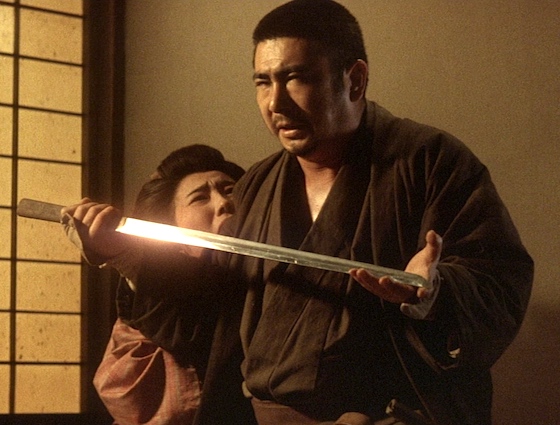
    Zatoichi and his sword

    I don’t want to sound too down on the film, though, because while it’s not in the absolute top tier of the series, it’s surely at the upper end. Even if the way events play out didn’t dig into their promise as much as I’d hoped, it still leads to numerous engaging or entertaining moments — the quietly emotional scene where Ichi decides to completely change his life, for example; or, by complete contrast, a fun and silly scene where Ichi abuses the respect/fear of a snivelling boss by pretending to be drunk and pouring sake all over the chap. There’s also a nightmare sequence, which makes this the second Zatoichi film in a row to feature a dream scene, fact fans. Whereas the last one was a bit… odd, this one is a memorable insight into Ichi’s fears. Finally, the inevitable climactic mass slaughter is set in falling snow, which gives it a nice bit of visual beauty to stand out, seeing as the rest of the film’s fight choreography is pretty standard stuff for the series — which of course means that, considered in isolation, it’s as impressive as ever.

    Anyone who watches and enjoys the Zatoichi series is bound to end up with their own particular favourites, for whatever reason. Clearly Cane Sword particularly clicked for the writers at The Digital Bits; for me, it’s been other films — I’m reminded of Adventures of Zatoichi, which seems to score lowly with most people but was one of my favourites. Either way, Cane Sword is another very good entry in a series which is, fortunately, full of them.

    4 out of 5