
Kevin Greutert | 92 mins | Blu-ray | 18 / R
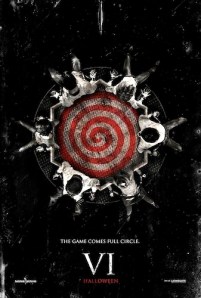 The Saw franchise dragged itself to a seventh (and final? The advertising said so; no one cares enough to spoil it any more so I’ve no idea if it genuinely was) instalment this past Halloween, but here I am playing catch-up with the sixth — you know, the one that got soundly trounced by Paranormal Activity in cinemas.
It doesn’t start well. The opening sequence is awful, sinking to torture porn levels again (something I feel the Saw series mostly manages to rise above, if only slightly) in one of the worst examples I’ve personally seen. It’s unquestionably gratuitous, the only people who could possibly take an interest in it being those who want to see characters quite literally tortured — in this case, by hacking off bits of their own bodies. Some of the traps in Saw are clever or intriguing, even when they’re gruesome, but this is just the second murder from Se7en reenacted in an overlong fashion with prosthetics and too many gory close-ups. It’s uncomfortable to watch — not because it’s scary, but because it’s scary that anyone might find this kind of sequence enjoyable.
And then, almost suddenly, it gets good. It’s probably the best Saw movie since the first.
 OK, it’s far from flawless. It’s still tangled up in the over-complex ongoing story, and peppered with flashbacks, varying from flash frames to large chunks, to try to help you follow it. On the one hand that’s lazy storytelling; on the other, much welcomed — the plot would surely be impossible to navigate without it.
But, as with all later Saw films, this is all a sideshow to the main attraction: the standalone ‘Game of the Film’, the Saw equivalent of ‘Monster of the Week’. Saw VI takes on a political dimension by tackling the thorny issue of American health insurance. It hardly presents a well-considered and in-depth debate, true, but the “evils of the insurance business” angle is a welcome motivation and adds something to both the plot and the denouement. The latter has the best twist a Saw movie has had for a while (following the non-twist of the fifth’s ending, a muddled one in the fourth, and a distinctly mixed effort in the third). It actually caught me unawares, so that’s some successful misdirection they pulled off right there.
 Following it, there’s a nicely edited closing montage. Not particularly relevant — in other entries it’s used to expose the twist, here the twist is pretty self explanatory — but it’s oddly, briefly, rewarding for those of us who’ve sat through all the films so far (and, to be frank, if you haven’t sat through the others, you’d be mad to jump on at this point). Plus there’s an intriguing post-credits scene. No idea what it means or signifies, but it’s clearly laying the groundwork for something in the future.
Aside from that foul opener, the traps and games show a level of innovation and forethought the other films have sometimes lacked. In fairness, the game-of-the-film and its traps are often the best bit of any Saw film, and though some of these could be better sold — the moderately infamous shotgun carousel would be improved if we had a vested interest in the six competitors (though that would mean boosting the running time by having to introduce them all, so maybe it is better this way) — they are all amongst the series’ most engaging.
It wouldn’t do to not mention some of the other flaws — it’s far from perfect, of course. The plot is riddled with holes and improbabilities (even aside obvious ones about the construction of the traps and kidnapping of victims), while the acting is hardly top-drawer — there aren’t even guest stars big enough to rival Saw V’s “Luke from Gilmore Girls”, “Darla from Buffy / Dexter’s girlfriend” or “Chloe’s boyfriend from 24” — but then you don’t expect watertight plotting or RSC acting from a Saw film.
 Note: this is an Extended or Extreme or Whatever Edition again. Minor differences only, I believe, which you can find listed here.
Fortunately this franchise entry doesn’t live or die by its relation to the ongoing plot arc or its final twist. But combine that solid surprise with the plot’s ripped-from-the-headlines basis and it earns a third star. At the risk of damning with faint praise, this is largely the best Saw since the first.

 In the world of
  which could well have gone down a more modern-styled route.
 It’ll be interesting to see how it fits into the film when I finally get round to watching The Ultimate Cut — I already have some reservations waiting to be expressed in my review.
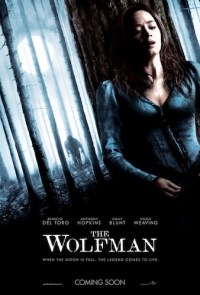 The “extended director’s cut” (as the Blu-ray blurb describes it) of The Wolfman begins with a new CG’d version of Universal’s classic ’30s/’40s logo, the one that I’m sure opened many/most/all of their beloved classic horror movies. As well as being a self consciously cool opening shot, it’s a succinct way for director Joe Johnston to signal his intentions: this is not your modern whizzbang horror movie, but something more classically inspired.
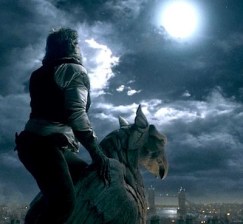 — perhaps even the totality — or plot developments and, particularly, twists are guessable far in advance. Trying to lose 16 minutes for the theatrical cut was probably a good idea, though some of my favourite moments lie amongst what was excised.
 feels like something I saw in some 12A blockbuster in the last half decade.
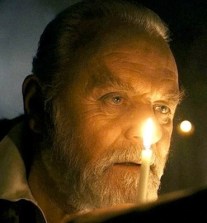 Max Von Sydow’s cameo-sized role (only found in the extended cut) is possibly the film’s best bit. Aside from the fact he’s usually good value, the relevance of the scene itself is unclear. That might sound like a problem, but I choose to see it as making the sequence — and the character — rather intriguing. The rest of the supporting cast are largely British faces recognisable from TV and similarly-sized film roles, playing the parts you’d expect them to and existing primarily as monster ready-meals. Equally, Danny Elfman’s score is disappointingly generic and clichéd, particularly so whenever the film is being the same.
 Robin Williams surprised everyone when he started appearing in films as a serious actor in the early ’00s. Previously — and, if you’ve seen him on chat show in recent years, still — an outrageous funnyman, Williams turned in excellent straight performances in the likes of
  Still, Robin Williams is excellent, once again displaying his recently-found gift for serious acting. His character’s homosexuality is nicely handled too. It seems to have overshadowed the rest of the film for some viewers, but I’m confused as to why. Perhaps precisely because it doesn’t come out screaming “look, look, he’s gay! Isn’t that edgy!”, leaving it as just a fact of his character — and one that’s only important because his personal life is part of the story — means some viewers are so shocked by their own realisation of his sexual orientation that it gets in the way for them.
 this “but it happened!” logic seems to allow the filmmakers to get away with not offering adequate explanation. Then again (not sure how many “other hand”s I’m on now), it’s just like real-life: sometimes things can’t be explained in a rational way. Some people will have a problem with that from their films; sometimes I’m among them, but in this instance I think there are enough explanations and ambiguities. My problem was more that getting to them seemed to provide nothing, particularly as, being twist-free, they only confirmed one of the options that had been supposed an hour earlier.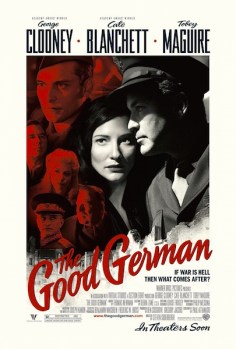
 the visual, audio, acting and plot styles of the era, why not ensure the dialogue and action follow suit? There’s no need for the violence, sex and swearing in this particular tale; at least, no need for it in a way that couldn’t be conveyed as effectively using Production Code-friendly methods. I’m uncertain if I like the film less for failing on this measure, but it does add to its inherent oddness.
 But how much do we get to know them, really? It’s easy to see why critics said “not very well”, because they’re too busy uncovering the conspiracies and revealing their part to actually show us much about themselves. But then why should that be a problem? It’s a noir thriller, not a character drama. Surely it’s about the mysteries and, if you like, the themes, rather than letting us understand the people caught up in them?
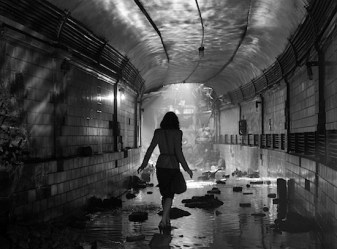 production intentions rather than being invented to slot into them — provides meat on the stylistic bones.
 Living Free is, in many ways, a tale of obsession. I’m certain that wasn’t Joy Adamson’s intention in writing the book, and I don’t think it’s the filmmakers’ intention either, but the facts can still play that way. The Adamsons devote months of their time, give up a promising career, spend all their savings, drive themselves into debt, and are nearly killed several times, all in a frequently-extreme effort to save three delinquent lion cubs who would be put down were it not for their sentimental attachment.
 The rest of the story moves into What Happened Next territory: Elsa dies, the Adamsons’ obsession with finding and saving her cubs begins. The film skips the book Living Free, adapting threequel Forever Free instead, presumably for dramatic reasons — I imagine Elsa and cubs just living isn’t as much of a Story as her death and subsequent events.
 Living Free isn’t as endearing as Born Free. By the very nature of trying to keep the cubs wild, they’re less relatable than Elsa and consequently we become less attached to them. As you may’ve guessed, I found it more interesting to look on the film as a story of obsession, one that threatens to ruin the Adamsons’ lives, though ultimately it has an upbeat ending.
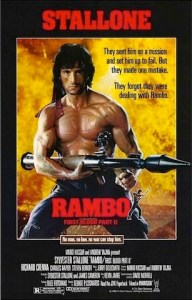 Part II, eh? A continuation of the same story from Part I, theoretically; like
 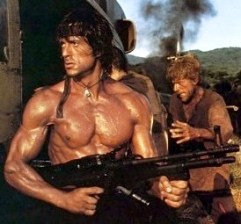 The screenplay is by James Cameron (yes, that one) and Stallone. Cameron says he wrote the action and Stallone added the politics. I don’t know who wrote the dialogue, but on the whole it’s typically straightforward and/or laughably weak. You can see why these days people get hired to do a “dialogue polish”.
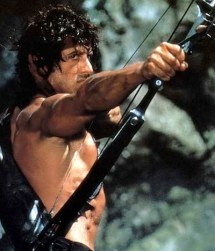 if the film is vilifying those who didn’t care about soldiers who fought in Vietnam (which it is), the characters who abandon Rambo and the other PoWs are an embodiment for this disdain.
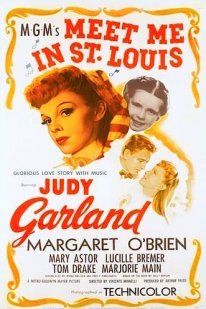 Someone (who exactly is long lost to the depths of my memory) once observed that, though a lot of people claim to not like musicals, they’re quite happy to acknowledge their love for
 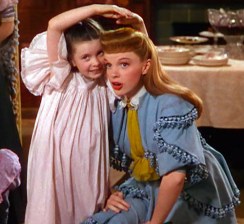 Judy Garland is fine in the lead role — still playing a teen, despite being 21, but suitably distant from Dorothy. Margaret O’Brien receives prominent second billing in the role of ‘Tootie’, despite being just seven years old. She was, I learn, something of a star at the time, in spite of her young age, which perhaps explains the (arguably) undue prominence in both the credits and the film itself. That said, she’s a rather good actress, and picked up an Oscar for her performance here (and other roles she played in 1944).
 Many years ago, back when both the shows I’m about to mention were still on the air, someone drew a comparison that I felt summed up the whole of ’90s/’00s
 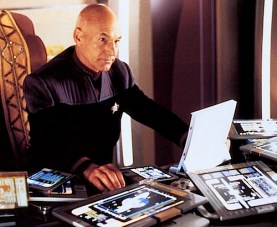 Actually, this is when Insurrection is at its best. Action-adventure undoubtedly has a place in science-fiction, but so do wordier stories — when they’re done right, and when they’re where you expect them to be. You shouldn’t expect them from Star Wars; you should from Star Trek. (That doesn’t make Voyager’s attitude better than Farscape’s, incidentally; not if it was boring or implausibly honourable considering their situation. But that isn’t the matter at hand.) And so the first 45 minutes or so are mostly enjoyable. Critics say even this isn’t as deep as
  There’s a greater array of fan-pleasing nods and winks this time out. As with First Contact, they have to find an excuse to get Worf back on board (at the time, in universe continuity, he was on Deep Space 9 in
 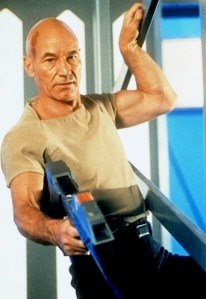 Most negative reviews — so, most reviews — accused the film of being essentially a TV episode (or two, of course), not earning itself a spot on the big screen. They may have a point. The subject matter isn’t at fault — a planet with the ability to make everyone live forever has suitably large potential — but the execution of it is frequently low-key. This isn’t too bad in the first half, which maintains the interest as it unfurls the story, but when it degenerates into action in the second half it falls apart. It’s no longer interesting and, ironically, looks made-for-TV, lacking inspired direction or suitable scope. Perhaps it would’ve been better served as a TV episode; or, as a film, better served by a writer and/or director and/or producer with greater vision.
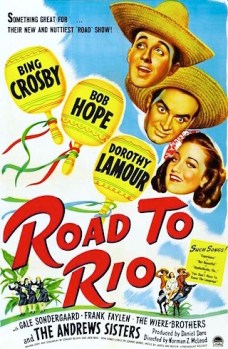 Bing Crosby, Bob Hope and Dorothy Lamour return for the fifth film in the Road to… series.
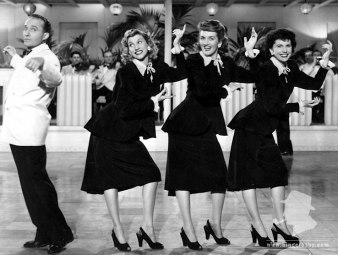 I’ve awarded to each belies how much I enjoyed them, with Morocco in particular worth a fourth. But I think it’s also fair to say these films are a rather dated style of entertainment. That’s not necessarily a bad thing — as noted, I still think they’re fun, and I’m sure many others do and would too — but plenty of modern viewers would find them (to be polite) too quaint.
 100Films.co.uk