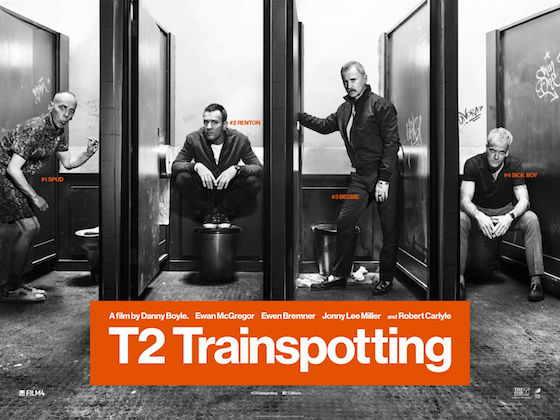
T2 Trainspotting (2017)

2017 #124
Danny Boyle | 117 mins | streaming (HD) | 1.85:1 | UK / English & Bulgarian | 18 / R

T2 Trainspotting

At one point during T2, a younger character accuses some of the returning characters of living in the past; that it’s all they talk about. It’s true of the characters, and it’s kinda true of the film itself too: this belated sequel to the era-defining original feels try-hard, like it wants to recapture the verve and inventiveness of its predecessor, but everyone’s now too grown up to do it properly.

Set 20 years on, it reunites the first film’s main characters… and, really, that’s the plot. Obviously other things happen, and the details are important, but that seems to be why the film exists: to get the gang back together for another couple of hours. Is that reason enough to make a movie? I guess everyone will have their own answer to that question. For me, it wasn’t reason enough to justify T2.

(Trivia aside that, frankly, I find more interesting then the film itself: reportedly director Danny Boyle wanted to call it simply T2, if James Cameron would let him — they thought they needed that permission because of Terminator 2 being commonly marketed as T2. But then it turned out that Terminator 2 was never officially called T2, so they were free to do as they pleased. But then internet searches for “T2” were found to still mainly turn up the Terminator sequel (unsurprisingly, let’s be honest), so they settled on T2 Trainspotting so people would know what it was. You have to wonder why at that point they didn’t just call it Trainspotting 2…)

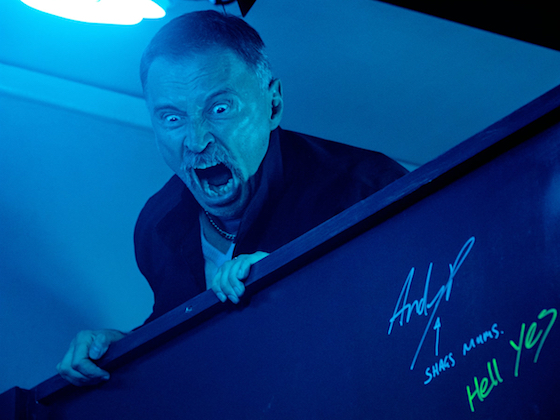
Looking as bored as I felt

Anyway, back to this T2. The meandering plot, such as it is, lacks the grit and realism of the first movie. For example, that ended with a simple betrayal — a guy stealing money while his mates were sleeping — while this ends with a knock-down drag-out fight in a construction site like something out of a low-budget thriller. Visually, too, it’s so clean and pristine. There are some properly beautiful shots, especially of the scenery outside Edinburgh, but I’m not sure that’s in-keeping with the Trainspotting aesthetic. Boyle does at points try to reheat the visual tricks of the first movie, but I didn’t feel it worked. The original’s many stylistic flourishes are now much imitated, but they were fresh back in the day and somehow that freshness still comes across when watched now. By trying to ape ape them, T2 just joins the long line of copycats.

Another key element of Trainspotting was the soundtrack. I don’t know what they were thinking with the music here — it isn’t even close to being as memorable or iconic as the original. Maybe that was the point, to not try the same trick again; but there are still plenty of jukeboxed tracks that attempt to draw attention to themselves, but… don’t.

I felt like this, too

Trainspotting had energy, dynamism, exuberance; it pulsed with life and youth. Its sequel is more sedate, more… middle-aged. Well, so are the characters, so that could work; but they don’t behave like they’re middle-aged — they’re too busy trying to recapture their youth, reliving past glories and past conflicts. The film is doing the same. You could perhaps argue that it’s form mirroring content, but the form lacks the wink at the audience to say “this is deliberate.” Like the characters, it seems unaware of the sad state it’s in. Ultimately, it feels like a slightly unfocused, thematically inconclusive, largely unnecessary postscript.

3 out of 5

Making of the Living Dead

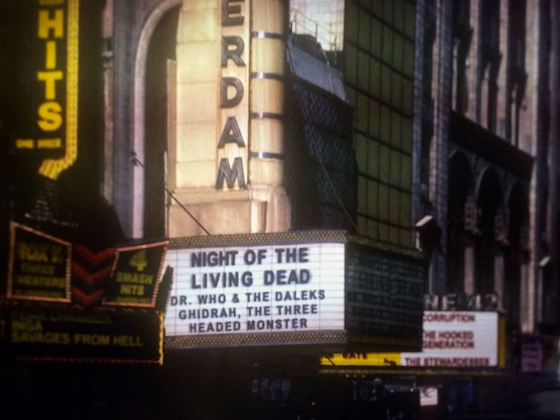
To mark the UK release of Criterion’s remastered, definitive Blu-ray edition of George A. Romero’s seminal subgenre-starting zombie classic Night of the Living Dead, I finally got round to watching two related feature-length documentaries that, er, aren’t included on that release. Never mind, eh?

Anyway, here are my thoughts on One for the Fire and Birth of the Living Dead.


One for the Fire:
The Legacy of “Night of the Living Dead”

(2008)

2018 #29
Robert L. Lucas & Chris Roe | 84 mins | Blu-ray (SD) | 16:9 | USA / English

One for the Fire Italian DVD

Made to mark the film’s 40th anniversary, this documentary interviews many of the surviving creators of Night of the Living Dead to tell the full story of the project’s genesis, making, release, and legacy.

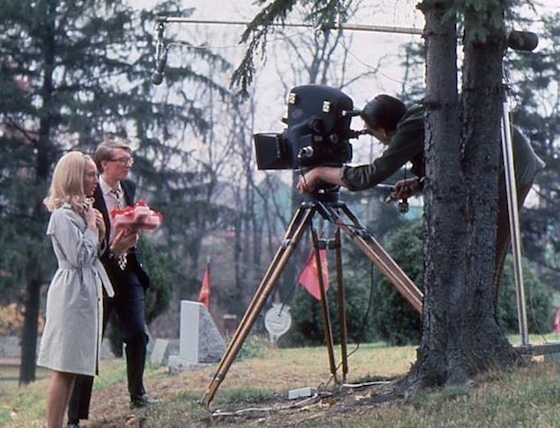
After an opening segment that imitates Night’s own beginning and interviews the graveyard scene’s stars, One for the Fire goes for a chronological telling of events. It starts with Romero’s college days, when he met most of the gang who would eventually create Night. There are some great tales of him as a flamboyant student, swishing around in a cape or dressing up as a Mexican bandit for no particular reason — if you put it in a biopic it’d look like an OTT sitcom-ish affectation. After that they set up a production company, The Latent Image, making local TV ads. The expertise (and equipment) gained there would eventually embolden them to make a feature film, choosing the horror genre because it would be a relatively easy sell.

“We were just a bunch of guys out to make a movie,” says Romero, which kind of sums up the whole shoot — they basically winged it, making up the process of moviemaking as they went along. Any one of them could’ve done each other’s jobs because they all knew about as much as each other did; if someone knew slightly more about something, they were assigned that role. Everyone mucked in, doing what was necessary, be that zombie make-up or running to the shop for lunch. But they were canny, reaching out to local TV personalities, police, and helicopter pilots to lend a sense of scale to some sequences, or popping to Washington D.C. on a quiet Sunday to shoot a scene guerrilla-style, all to make it look like the film had some budget.

Making Night of the Living Dead

Interestingly, Romero says that Night is not only his scariest film, it’s in fact his only scary film. Not what you expect from a renowned horror director. But he says a specific part of the impetus while making Night was to try to scare the viewer, which hasn’t been his goal on any film he’s made since, despite the genre.

The documentary’s general narrative is interspersed with short asides that focus on minor-seeming individuals and the contributions they made to the film, which is a nice way of giving people credit. One who merits a longer discussion is Duane Jones, the actor who played the heroic role of Ben. He died in 1988 and they all pay quite moving tribute to him — he was clearly very well liked; admired, even. His part was written as colourless… well, so they say — I’m sure they assumed he’d be white. But they were young, hip guys, and so they happily cast Jones because he was the best actor they knew. They proudly didn’t change a single thing about the script to accommodate the race change. Romero thought they were being hip, treating him exactly the same as if he were white, but Jones disagreed, arguing they should acknowledge his race at least a bit. Speaking now, Romero thinks Jones was right — they were so busy being cool about it that they didn’t really understand that, in those days, it really was different him being black.

One for the Fire doesn’t get too far into that kind of analysis, mind. It’s really an oral history of how the film was made, by many of the people who were there doing it. How much that interests you will dictate how much this film does. Movie buffs may prefer the next documentary…

3 out of 5

Birth of the Living Dead
(2013)

2018 #30
Rob Kuhns | 76 mins | Blu-ray | 1.78:1 | USA / English | 15

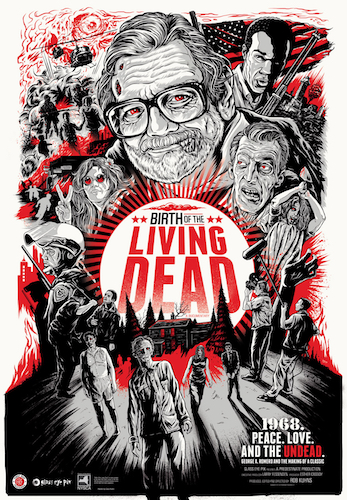
Birth of the Living Dead

As Birth of the Living Dead got underway, I was worried I’d made a mistake watching it so soon after One for the Fire: it seemed to be telling the same making-of story (though starting later: it jumps straight to the Latent Image days), but with only one interviewee who was there (at least that interviewee is Romero himself) and some slick animations to illustrate events. However, it moves very quickly on to commenting on and analysing the film’s construction, effect, and influence, and puts both the finished film itself and its production methods into wider social and historical contexts.

There are some familiar stories and anecdotes here, unsurprisingly, but there’s actually not that much overlap with One for the Fire, and Romero even tells some new behind-the-scenes stories. Much more of the film is about commentary from knowledgeable individuals — other people in the industry, journalists, movie experts, and so on. What the film lacks in not having other voices from the production, it makes up for with this outside analysis. This is all good stuff for those interested in the movie’s effect more than its production. Some of the discussion is obvious or reiterates well-known perspectives, but there’s a good variety of voices. It’s the kind of commentary that can enhance your appreciation of the film itself.

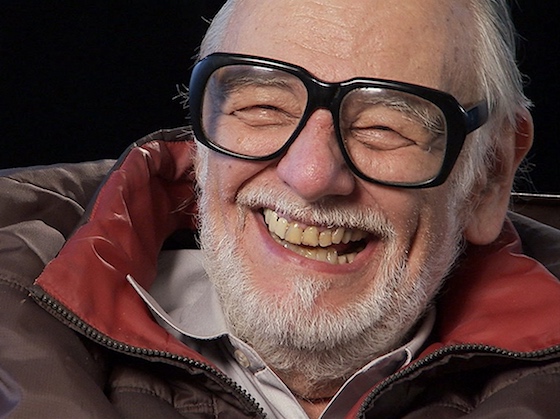
George Romero interviewed in Birth of the Living Dead

The only seemingly pointless thread follows a school teacher as he shows Night to a bunch of elementary school kids. No, that’s not a typo — they’re surely far too young for it! But they seem to delight in it. Nonetheless, it seems like a needless addition to the film, until quite late on. When the documentary gets on to discussing Night’s release, it talks about how horror had become a genre mainly marketed to kids — it was seen as colourful campy fun, with only the occasional hint of slight scariness. But then it was that audience that saw Night of the Living Dead, and they were fucking terrified (see: Roger Ebert’s contemporary article about watching it with an audience of children). I thought the documentary wouldn’t dare to revisit the modern teacher after that, but it does — and they still seem to love it. I don’t know what that says about our society now, if anything.

Aside from traumatising small children, Night of the Living Dead was initially dismissed by American critics as trash; but when it was re-released the next year, it was seen by a writer for Andy Warhol’s magazine, who called it art and said it should be playing in art houses. When it reached Europe in 1970, the French had a similar reaction. That fed back to the US: the Museum of Modern Art played it to a standing-room-only crowd. I guess that’s how we get to where we are today, with it acknowledged as a solid classic.

Now THAT's a triple bill

As I said earlier, when I decided to watch these two documentaries basically back to back I thought it would probably turn out to be a stupid idea. Fortunately, the overlap is minimal, meaning they actually compliment each other pretty well. Fans would surely benefit from seeing both. Alternatively, the fact that they offer distinctly different things means a viewer could pick the topic that particularly interests them. In that regard, I’d err towards recommending Birth of the Living Dead, for its critical appreciation and historical analysis that furnishes viewers with wider perspectives with which to appreciate one of the most significant horror movies — arguably, one of the most significant movies full stop — ever made.

4 out of 5

One for the Fire is available as a special feature on certain releases of Night of the Living Dead: the Australian and US 40th anniversary DVDs, the Japanese 40th anniversary Blu-ray, and Optimum’s UK Blu-ray (not the one released by Network). It seems it’s also available on an Italian DVD and Blu-ray, which provided the cover art above.

Birth of the Living Dead is available by itself on DVD in the US and on Blu-ray in the UK, as well as bundled with Network’s UK Blu-ray of Night. It’s also streaming free to Amazon Prime members in the US, and I’m sure available to rent and/or purchase from other digital providers.

Mute (2018)

2018 #31
Duncan Jones | 126 mins | streaming (UHD) | 2.00:1 | UK & Germany / English & German | 15

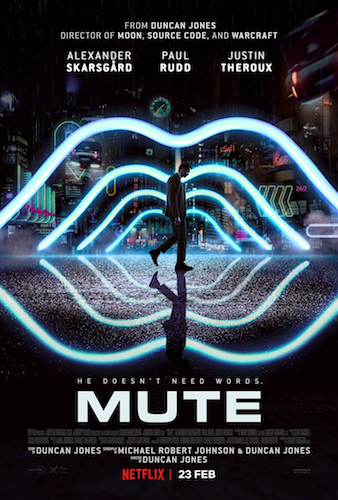
Mute

For those in the know, Mute was probably one of the most anticipated movies of 2018. The new film from writer-director Duncan Jones, who made waves with his excellent debut, the low-key sci-fi mystery/drama Moon, and backed it up with the strong sci-fi thriller Source Code, this was his return to that genre after an ultimately futile aside into studio blockbuster-making with Warcraft. More than that, it’s a passion project that’s been gestating for 16 years, rejected by everyone else and now only made possible by Netflix. Greatness was expected. Unfortunately, instead it’s been met with critical derision (11% on Rotten Tomatoes) and audience apathy (5.4 out of 10 and dropping on IMDb; 2.2 out of 5 on Letterboxd and heading in the same direction). Empire’s review perhaps summed it up best: “a crushing disappointment… sadly, almost tragically, not worth the wait.”

Set in near-future Berlin, the setting is probably the best part of the film. It’s extrapolated from the present to give a very convincing world, where technology has advanced in ways that already feel just around the corner. The production design also owes a huge debt to Blade Runner, though clearly on a lower budget. That doesn’t mean it isn’t effective, just familiar. It’s not quite as nihilistic as Blade Runner, though — again, this is our world a few years hence, and there are still malls and diners and libraries and other such mundanities.

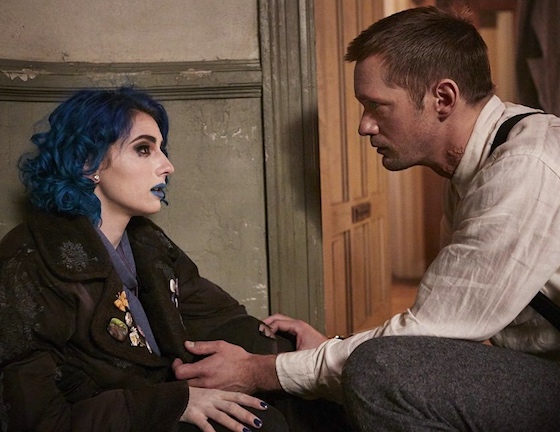
Leo's looking

The protagonist is Leo (Alexander Skarsgård), a bartender getting by in a world not built for him: he’s Amish, meaning he avoids using most technology, and he’s mute, thanks to a childhood accident. As the story unfurls he has to engage with a bunch of tech for the first time, and when he comes up against devices that are only voice-controlled then he’s got a problem. I’m not sure if this is designed as a social commentary on how some people struggle now and it’ll be even worse in the world to come, or if it’s just a convenient way to put more obstacles in Leo’s path. I’m tempted towards the latter, but that’s okay. It seems his muteness is a barrier to some viewers, with critics describing him as a blank canvas, either unknowable or personality-free. I think that’s a bit harsh, but Leo does fall into the familiar bracket of the “strong, silent type”. He can’t express himself vocally, obviously, but rather than that leading to him letting his emotion out in other ways he seems to have repressed it. I got the impression that he was now having to deal with certain feelings, and how they’re expressed, for the very first time.

That’d be because Leo is now in love, with Naadirah (Seyneb Saleh), a blue-haired waitress at the club he works in. Naadirah clearly has secrets, both from Leo and from us, and when she goes missing Leo has to venture into the seedy underworld of future-Berlin as he tries to track her down. If the overt Blade Runner stylings hadn’t already clued you in, this is very much a noir detective movie, full to the brim with dark people and dark deeds. It gets grim indeed at times, more thematically than visually (though there are a couple of scenes of surgery, if that’s your particular bête noire), and this is where one begins to wonder if Jones has full control over his film’s tone.

Gone girl

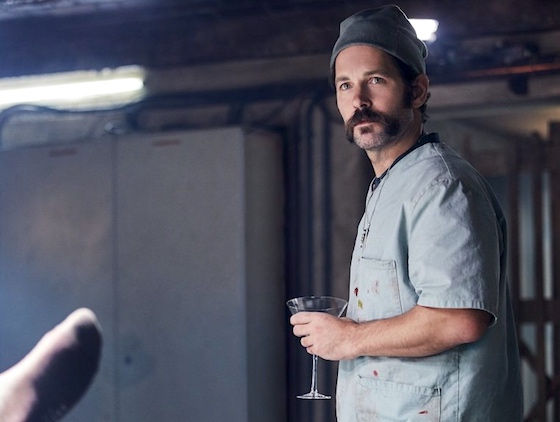
That’s not much of a problem in Leo’s storyline — I’d wager you could recut Mute to focus on him entirely and create a more straightforward future-noir tale — but rather in the concurrently-told B-plot. This side of the film focuses on Cactus Bill (Paul Rudd), an army surgeon who deserted and now plies his trade for gangsters, hoping to afford passage back to the US for himself and his daughter. Bill works alongside his best mate Duck (Justin Theroux), and much of their half of the film plays more like a hang-out movie, just spending time with the characters as they go about their business. As they mooch around sharing comical buddy banter, it’s a definite tonal counterpoint to Leo’s story. That’s not necessarily a problem unless you want a straight-up serious noir, but later Bill and Duck’s thread diverges into some heavy territory; stuff that some viewers would find distasteful no matter what, but which is made more so as their chirpy-funsters act is allowed to roll through it.

For this reason I thought Mute was more effective in its first hour-or-so than in its second. Others disagree, calling it either slow or disjointed, because the links between Leo’s and Cactus Bill’s storylines are not immediately evident. I didn’t think the pace was a problem: it’s gradually drawing you into this world, setting out the mystery and then peeling back more layers as Leo begins his hunt. It’s not as dreamily atmospheric as Blade Runner 2049 in this regard, but it’s closer to that than to an action-thriller, which makes me tempted to say pace issues are a viewer problem rather than a film one. In the first half, at least, because by the second it does seem to go on a bit. As for the disconnect between the storylines, it didn’t bother me at all. Links are actually established early on, and you know these two halves are going to come together eventually — that’s how narrative structure works.

After surgery drinks

The idea some reviews are peddling that “maybe everyone else rejected the Mute screenplay for a reason” is disingenuous. If a decent exec wanted to make this kind of movie (i.e. a mid-budget sci-fi noir) then they definitely could have seen its potential. But few studios are interested in that kind of work anymore, for reasons that barely make sense, and so the film ended up passed to Netflix. One wonders if their hands-off approach is part of the problem. People complain about studio interference, and clearly that can scupper projects, especially ones with unique voices, but execs who are good at their jobs do improve movies. Jones has said that, after Netflix bought the project, they just gave him the money and let him make whatever; and they gave him final cut too, so when the finished film came in and they weren’t sure about it, they just went ahead and released it as-was. Maybe if someone had helped him develop the project better, had helped him even out the tone, or tighten up the pacing, we’d be looking at a great movie right now.

Instead, I don’t think the Mute we’ve got is anything like as unremittingly terrible as some reviews would have you believe, but it is a tonally strange film. I’m not sure it works as a whole, but bits really do. I wouldn’t dismiss the idea of it becoming a cult classic, and maybe in a couple of years we’ll all be reevaluating it. Before its release Jones did say it would be a Marmite film — that some people would love it and others would absolutely hate it. Broad reception is undoubtedly hewing to the latter end of the spectrum; and while I’d love to be the former instead, there are too many inconsistent oddities for me to embrace it. I think it may someday be worth a revisit though, which is not something you can say about a genuinely bad film.

3 out of 5

Mute is available exclusively on Netflix now and forever.

Big Game (2014)

2017 #45
Jalmari Helander | 91 mins | streaming (HD) | 2.35:1 | Finland, Germany & UK / English & Finnish | 15*

Big Game

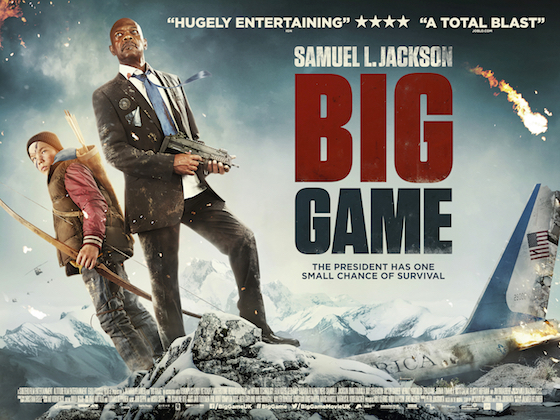
Air Force One Has Fallen meets Hunt for the Wilderpresident in this deliberately daft action movie, which sees terrorists down Air Force One in remote Finnish forests, forcing the President (Samuel L. Jackson) to rely on the help of a local teenager (Onni Tommila) as they’re hunted by the bad guys.

I’ve read some complaints that, given the daft premise, Big Game is not a comedy. I don’t know what movie they were watching, but I thought it was pretty fun. It’s not an out-and-out parody, but surely no one involved thought they were making a serious action flick? Or maybe I’m wrong, I dunno — but whether it was me or them, one of us has misread the intended tone.

That said, as well as the OTT ’80s-throwback action antics, there’s some solid drama to be found. Primarily that’s between the kid and his father — how the state of their relationship is revealed and changes throughout the film is neatly done, which is all the more impressive considering the dad’s only in it for a few minutes. There’s also some almost touching stuff between the kid and the President. Is this material too ‘serious’ for a movie that is otherwise pretty lightweight? Perhaps the action side should take itself more seriously to buoy up the characters’ relationship further? Or maybe the characters’ relationship should be less life-lesson-y to allow for the silly spectacle of the action?

If you go down to the woods today you're in for a big surprise...

Maybe either way would work, but Big Game choosing to straddle the middle ground is what leads to those complaints. Personally, I enjoyed both facets, however at odds they may seem. Indeed, it’s the kind of movie I might once have given 4 stars, because I certainly enjoyed it; but I guess that the more of these lightweight-but-fun action movies you see, the more you feel like they are good fun but 3 stars is fine.

3 out of 5

* In the US there’s a PG-13 theatrical cut (running 87 minutes) and an unrated extended cut (91 minutes), i.e. this one. The BBFC classified it 12A for cinemas and 15 for home, with the former merely having a “partially obscured” use of a rude word to get the lower certificate. ^

Zatoichi on the Road (1963)

aka Zatôichi kenka-tabi / Zatoichi’s Fighting Journey

2018 #11
Kimiyoshi Yasuda | 88 mins | Blu-ray | 2.35:1 | Japan / Japanese

Zatoichi on the Road

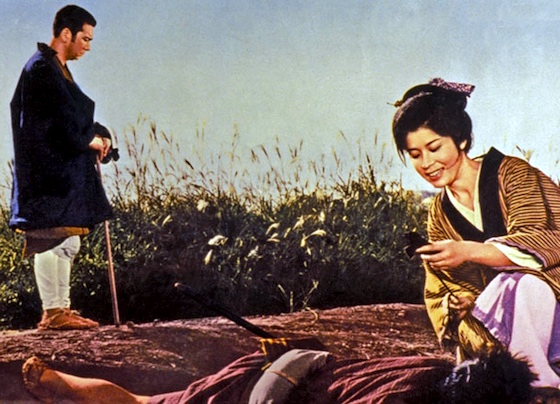
In his notes that accompany Criterion’s Blu-ray release of the Zatoichi series, Chris D. comments that, “despite the specificity of the English title, it should be stressed that Zatoichi is always on the road.” Indeed, titling this fifth movie Zatoichi on the Road is pretty much the equivalent of calling it Just Another Zatoichi Movie. At least the literal translation, Zatoichi’s Fighting Journey, is a little more dramatic.

So is On the Road “just another Zatoichi movie”? Critics disagree with each other. The Digital Bits’ comprehensive overview of the series describes it as “easily the best entry in the series to this point”, and Weird Wild Realm’s review goes even further, calling it “one of the strongest feature film episodes about the hero of a thousand slayings”. Conversely, the Images journal considers that it “doesn’t sustain the previous entry’s brilliant mood or pacing”, and, in direct opposition to The Digital Bits, Letterboxd users rank it clearly the lowest of the first five films. Where DVD Talk reckons it has “a fantastic, layered plot”, even Chris D. says “it has a somewhat overdeveloped, convoluted story line”.

I’m definitely in the latter camp. “Easily one of the best entries in the series”? Nope. The “action starts red hot and keeps getting hotter”? Don’t be silly. That was The Digital Bits again, and they go on to describe the climax as “one of the greatest climactic battle scenes depicted on screen since Kurosawa’s Seven Samurai,” which is just laughable. As Images counters, “when the action does rear its battle-weary head it’s good. It’s just not great. And after the sword-dizzy hysterics of the last film, greatness is what we hunger for.”

Zatoichi fights

As for the plot… Overdeveloped? Yes. Convoluted? Undoubtedly. And needlessly so — previous entry Zatoichi the Fugitive was hard to follow, but it felt worth it in the end. On the Road, I’m not so sure. The plot never really came together for me, leaving oh so many questions. Like, who was the old man who died at the start? Why did he care about Omitsu so much? Who was the lord who was after her? How did she end up with him and so far from her (apparently very rich and important) father? Why do that lord’s minions just disappear from the plot? Why was there that scene where one of them seems to regret their mission, only for Zatoichi to murder him in a split second right afterwards?

The whole thing winds up a lot of back-and-forthing for little reason, too often driven by coincidence (how come villainous Ohisa and Jingoro keep ending up in the same inns / eateries / etc as Zatoichi and Omitsu?) And I think it was meaning to imply that Ichi and Omitsu had a strong connection, almost like she wanted to marry him (as women have done in previous films — Ichi’s understanding of and/or attraction for women is certainly a recurrent theme). And he seems to care for her as much too (as seen in the ending where he caresses her trinket that he’s kept, for instance). But where was such deep a bond supposed to come from? It’s barely developed or explained.

Zatoichi on a road, literally

The film isn’t a total write-off, mind, with some exceptionally good individual scenes — when Ichi confronts transportation boss Tomegoro in order to rescue Omitsu; when Ichi and Omitsu connect while eating rice balls; Ichi’s cunning manipulations of two opposing gangs at the climax. The key link there is Ichi, of course, which is thanks to another strong performance by leading man Shintaro Katsu.

On the whole On the Road is enjoyable enough as a middle-of-the-road Zatoichi adventure, with the less thrilling aspects counterbalanced by the really good bits I just mentioned. I’ve mostly focused on the negative here because I bridled at the idea, espoused by some I’ve quoted, that this is definitively a great instalment in the series. It’s not.

3 out of 5

Comedy Review Roundup

In today’s roundup:

  • This is the End (2013)
  • The Heat (2013)
  • In the Loop (2009)


    This is the End
    (2013)

    2017 #109
    Evan Goldberg & Seth Rogen | 105 mins | TV | 16:9 | USA / English | 15 / R

    This is the End

    Seth Rogen, James Franco, Jonah Hill, Jay Baruchel, Craig Robinson, and Danny McBride star as Seth Rogen, James Franco, Jonah Hill, Jay Baruchel, Craig Robinson, and Danny McBride (respectively) in a movie about the apocalypse written and directed by Seth Rogen and Evan Goldberg.

    And it’s pretty much exactly what you’d expect a movie about the apocalypse starring Seth Rogen, James Franco, Jonah Hill, Jay Baruchel, Craig Robinson, and Danny McBride, and written and directed by Seth Rogen and Evan Goldberg, would be like — for good or ill. Personally, I laughed and enjoyed myself more than I expected to, even if it is resolutely silly and frequently crude just for the sake of it.

    4 out of 5

    The Heat
    (2013)

    2017 #144
    Paul Feig | 112 mins | TV | 2.35:1 | USA / English | 15 / R

    The Heat

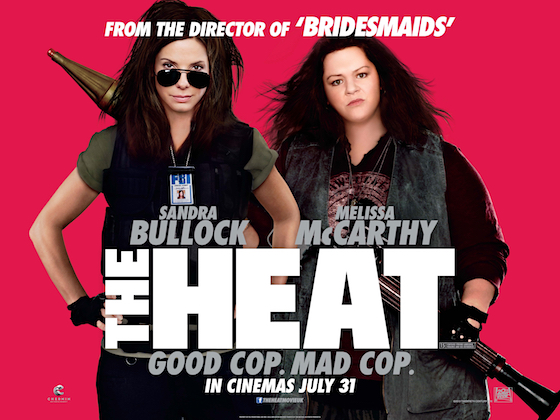
    Having been surprisingly entertained by Bridesmaids, Spy, and the new Ghostbusters, I thought I might as well tick off the last film-directed-by-Paul-Feig-since-anyone-noticed-he-made-films (he also helmed a couple of movies in the ’00s that no one mentions).

    It’s a female-led (obviously) version of the familiar buddy movie template, starring Melissa McCarthy (obviously) as an uncouth cop who must team up with a strait-laced FBI agent (Sandra Bullock) to bring down a drug lord.

    As I suspected, it’s the least likeable of those four Feig/McCarthy collaborations, although it manages to tick along at a level of passable amusement with occasional outbursts of good lines or routines. I wouldn’t recommend it to anyone who hadn’t first seen and enjoyed at least a couple of their other movies, but there are worse ways to spend a couple of hours.

    3 out of 5

    In the Loop
    (2009)

    2017 #147
    Armando Iannucci | 102 mins | streaming (HD) | 1.85:1 | UK / English | 15

    In the Loop

    Acclaimed political sitcom The Thick of It steps onto the global stage in this comedy, which sets its satirical sights on UK-US relations and the countries’ intervention in the Middle East.

    Despite the change in format and (intended) screen size, In the Loop manages to be as hilarious as the show it’s spun off from — not always a given when TV successes make the leap to the big screen. In part that’s the advantage of a 237-page script and 4½-hour first cut being honed to little more than an hour-and-a-half, but it’s also thanks to the skilled cast. The star of the show is, as ever, Peter Capaldi as sweary spin doctor Malcolm Tucker. Most of the rest of the UK cast carry over from The Thick of It (albeit in new roles) so are well versed in writer-director Armando Iannucci’s style of satire, but proving equally up to the task are a compliment of US additions headlined by James Gandolfini.

    It’s not perfect — there were a couple of subplots I could’ve done without (I’m not a big fan of Steve Coogan so wouldn’t’ve missed his near-extraneous storyline) — but they’re minor inconveniences among the barrage of hilarity.

    5 out of 5

  • King Arthur: Legend of the Sword (2017)

    2018 #15
    Guy Ritchie | 126 mins | download (HD+3D) | 2.35:1 | USA / English | 12 / PG-13

    King Arthur: Legend of the Sword

    After years of making fundamentally similar movies, director Guy Ritchie found renewed success reinventing Sherlock Holmes for Warner Bros. I presume that’s directly responsible for the studio tapping him to kickstart this long-gestating project: a series of films inspired by the legends of King Arthur. Unfortunately for them, plans for a six-film series were scuppered when this initial entry went down like a lead balloon with critics and consequently was a box office flop. Nonetheless, some people who I think are worth listening to reckoned it was actually pretty good. Turns out… eh…

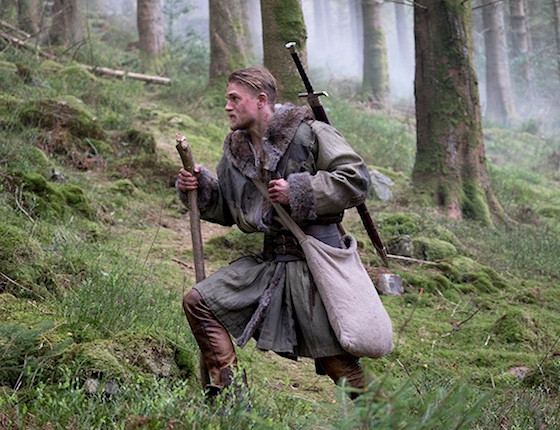
    Set in a vaguely-defined historical Britain (the capital is called Londinium, but the king resides at Camelot, which is… somewhere else…?), Legend of the Sword begins with King Uther (Eric Bana) being deposed by his scheming brother Vortigern (Jude Law), with only his young son Arthur escaping. Arthur grows up in a brothel and on the streets, going from a weedy kid to… some kind of, like, gang boss type figure, I guess? Basically, we’re in familiar Guy Ritchie territory: lads up to criminal hijinks with a London accent, only now in medieval costumes. Anyway, long story short, Excalibur — the eponymous sword — reveals itself stuck in a stone, every young man is forced to try to pull it out, which obviously Arthur succeeds at, marking him out for death by Vortigern but also as the true king to those who remain loyal to Uther, who now have a Robin Hood-esque underground army — and so they begin a Robin Hood-esque campaign against Vortigern. Seriously, it wouldn’t take too many tweaks to make this as passable a Robin Hood film as it is a King Arthur one.

    King Arthur and his merry men

    So, to no one’s great surprise, if you’re looking for a broadly faithful adaptation of Arthurian legend then you’re out of luck here. There are obviously famous bits of the legend thrown in — the aforementioned Excalibur and its stone; the Lady of the Lake pops up too; and… um… other than that it’s pretty much just people’s names, really. I don’t know how much critics were hoping to see a more recognisably Arthurian tale, but I have to wonder if this massive deviance from the well-known stories of the eponymous hero is at least partly responsible for the film’s poor reception.

    Part of why I wonder this is that, if you approach Legend of the Sword less as a King Arthur film and more as a Guy Ritchie-flavoured fantasy movie, there are bits of it I think are really, really good. Some of it’s great, even, like an efficient and exciting montage that shows Arthur growing from child to adult. Or any other time there’s a montage, really — that’s the best one, but others are equally as effective. Second best, for instance, is one where Arthur has to go on a quest in some alternate dark dimension or something, battling giant bats and other such nasties. That’d be the whole of act two in other films, or at least a significant action sequence, but its basic content is all so rote — so Ritchie instead burns through it in a montage, which feels like a nod and a wink to the audience: “you know how this goes”. Editor James Herbert certainly gives his skills a workout making these sequences fast, clear, and cinematically thrilling.

    He's gonna need a montage

    Of course, if you really dislike Ritchie’s trademark style then him slapping it on the fantasy genre isn’t necessarily going to enrapture you. Reportedly the project was pitched to the studio and cast as “Lord of the Rings meets Snatch” and they’ve pretty much delivered on that promise, transposing Ritchie’s modern London laddish schtick onto medieval Londinium plebs. Personally, although I’ve somewhat tired of his recognisable approach in a contemporary setting, the temporal disjunct was a fresh enough variation for me, breathing new life into both Ritchie’s MO and fantasy tropes.

    Unfortunately, for all the verve of his own style that Ritchie injects, there are also bits that typify CGI-blockbuster blandness — the final fight is a nothingy blur. The speedy, montage-driven style also allows for only so much character development. What time there is gets focused on Arthur and Vortigern, which I suppose is appropriate enough, with a large supporting cast fighting over the scraps. It seems obvious to me that a mysterious female character known only as “The Mage” was meant to be revealed as Guinevere (a conceit broadly nicked from the Jerry Bruckheimer King Arthur, I think), and indeed that was apparently nixed in post-production. I guess they thought they could bump it to one of the five sequels… which now aren’t happening.

    Come and 'ave a go if you think yer 'ard enough

    My final three-star rating is maybe a bit harsh, but then maybe I’ve been too generous with my fours lately (or always). If Legend of the Sword had been able to carry through on the impetus of its best bits then it may even have been looking at a full five stars, they’re that good, but it doesn’t come together as a whole. It’s not the failure mass opinion painted it as, but it’s not quite a success either — it’s an interesting “good try”.

    3 out of 5

    King Arthur: Legend of the Sword is available on Sky Cinema from today.

    Godzilla: Planet of the Monsters (2017)

    aka Gojira: Kaijū Wakusei / Godzilla: Monster Planet

    2018 #13
    Hiroyuki Seshita & Kôbun Shizuno | 88 mins | streaming (HD) | 16:9 | Japan / Japanese | PG

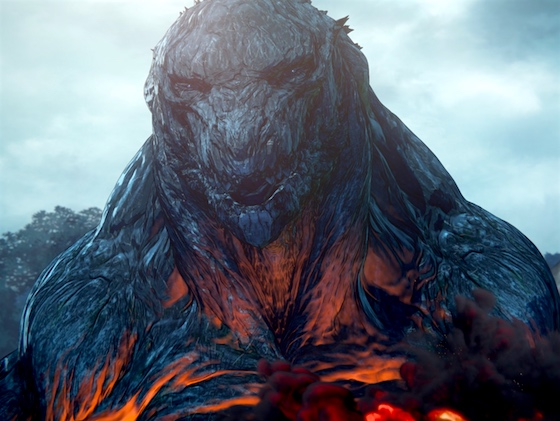
    Godzilla: Planet of the Monsters

    Two of Japan’s most successful cultural exports meet for the first time here as the King of the Monsters, Godzilla, gets the anime treatment. Originally conceived as a TV series, the box office success of Shin Godzilla prompted studio Toho to restructure the project as a trilogy of movies and release them theatrically (in Japan, anyway — the rest of the world gets them via Netflix). Part 2 is due later in 2018 and Part 3 in early 2019.

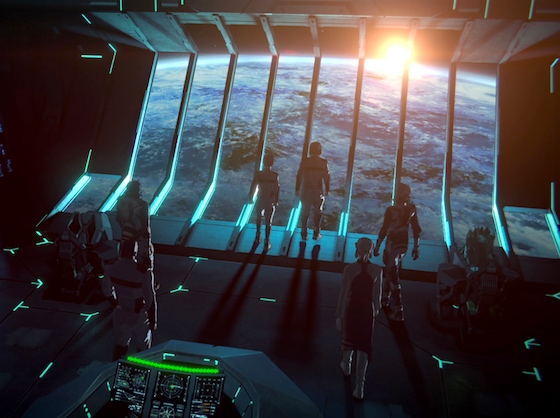
    The standard plot of a Godzilla movie, as I understand it, is a giant monster (aka kaiju) turns up, stomps all over some cities, then we find a way to destroy it; or, if it’s one of the ones where Godzilla is a good guy, he fights it and, presumably, wins. Planet of the Monsters uses its animated form to do something new with the concept. The opening credits montage informs us that, in the final years of the 20th century, kaiju suddenly sprung up all over the planet and mankind were unable to defeat them. Fortunately some aliens rocked up and offered to help by evacuating what was left of humanity. Twenty years later this mission to the stars is proving a failure, with minimal chance of finding a habitable planet and the survivors decimated by diminishing supplies. The best course of action is deemed to be a return to Earth — it’s estimated thousands of years will have passed there (thanks to relativity) and the hope is the monsters will have died; and if not, hotshot young captain Haruo Sakai has come up with a new plan to defeat Godzilla once and for all.

    Good God

    If that reads like a lot of setup, it’s because Planet of the Monsters contains a lot of setup. It takes about half the movie before they’re back on Earth and… well, technically this is a spoiler, but if you’re intending to watch the movie it might help you manage expectations: Godzilla doesn’t properly show up until the final half-hour. This has led some reviewers to accuse the movie of being slow and light on what we came to see, i.e. giant monster action. They have something of a point. However, contrary to most opinions I’ve read, I actually enjoyed the early space-bound stages of the movie better.

    It feels like the makers had a ton of interesting ideas about the politics and social situation aboard the evacuation ship, especially with multiple races and some kind of alien religion involved too, but there’s no time to really explore or develop those facets. Maybe they planned to get into that in the series. Either way, I find it funny that others have criticised that part for being slow and talky while I felt it had to race past a lot of potentially-interesting stuff to keep the plot moving. I guess I just ought to go watch Battlestar Galactica again, because it’s broadly similar territory.

    Back to Earth

    But, as I said before, there’s a rub: this setup provokes interest as a Galactica-style sci-fi, but as a Godzilla movie? There’s far too little of the big guy. And when he does turn up for the big climactic action sequence, that was the bit I found kinda dull. There’s a lot of whizzing around on hoverbike-things and blowing up forests and whatnot — plenty of sound and fury, but signifying what? And then… well, still avoiding spoilers, but there’s a twist in the final few minutes that renders this whole film prologue. Perhaps that should leave us hopeful for the next two? Perhaps this is all effective world-building for where things will go in the sequels? Conversely, it could be revealed as unnecessary background info once all the monster smashing starts. Only time (and the next two films) will tell…

    3 out of 5

    Public Access (1993)

    2017 #130
    Bryan Singer | 86 mins | DVD | 16:9 | USA / English | 18 / R

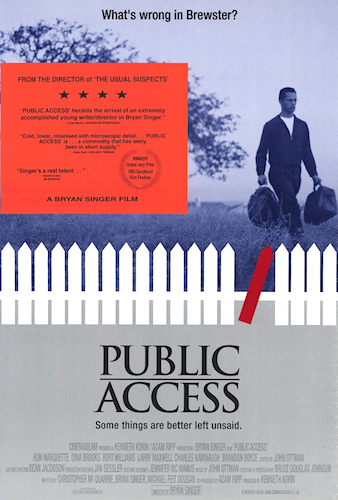
    Public Access

    This is the feature debut of director Bryan Singer, screenwriter Christopher McQuarrie, and Singer’s regular editor/composer John Ottman, who would go on to make their names two years later when they created The Usual Suspects (for which McQuarrie even won an Oscar). Despite that — and their careers since — Public Access seems to be little-seen, with less than 800 votes on IMDb (for comparison, Singer’s next lowest is Apt Pupil with over 30,000 votes, and all his other films are in six figures).

    The story sees a mysterious stranger, Whiley (Ron Marquette), arrive in the small town of Brewster and book a slot on the local public access TV station, during which he invites viewers to call in to anonymously air their grievances about Brewster and its inhabitants. Soon all the townsfolk are talking about is Whiley’s catchphrase: “What’s wrong with Brewster?”

    It’s an intriguing setup for a movie. What secrets lurk beneath the surface of this pretty little town? Who is this stranger and what are his motives? How will the community react to the previously-secret complaints and possible revelations? Unfortunately, Public Access does very little to explore any of those possibilities. It actually toddles along quite nicely for a while — it’s kind of understated; slow in a good way; things appears to be building up to something; there’s some kind of mystery — and then, just over halfway through, Whiley has an incredibly cheesy dream/flashback/premonition, and then the film awkwardly swerves into serial killer thriller territory. I guess that could work, maybe, but it rushes through events, not explaining anything. Then it ends.

    What's wrong with Brewster?

    What shines through the poor storytelling (and the crappy almost-VHS-level transfer on the DVD) is some obvious proficiency at filmmaking from all involved. There are many bits of nice direction from Singer, a few fairly well written and performed scenes, good editing, an effective use of music, and some gorgeous autumnal orange photography… though a lot of the interiors and stuff look rather orangey too, so I’m not entirely sure if this was intentional or just that shitty transfer. Well, whether by accident or design, it looked like it was good.

    Public Access was made for just $250,000, according to IMDb, so perhaps they just ran out of money to shoot everything they needed. Perhaps they were just going for a level of ambiguity that doesn’t come over properly. I was going to say “perhaps I didn’t get it”, but I’m far from alone: Variety said it was “vague about important matters as key story points, motivation and overriding theme”; Newsweek reckoned that “after an intriguing buildup […] the story self-destructs”; and the Hollywood Reporter called it “a virtuosically stylish independent feature that is as full of flourishes as it is devoid of meaning”.

    There’s talent on display here, and fortunately Singer and co were given the opportunity to spin that out into the successful careers they’ve enjoyed since (well, mostly… but let’s not get into the Singer stuff right now). Public Access isn’t an undiscovered early gem on anyone’s CV, but it was interesting to see nonetheless.

    3 out of 5

    The Man from Earth: Holocene (2017)

    2018 #9
    Richard Schenkman | 99 mins | download (HD) | 16:9 | USA / English

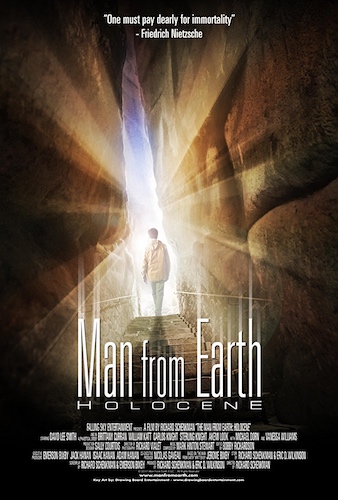
    The Man from Earth: Holocene

    Back in 2007, a low-budget sci-fi movie about a gang of college professors sat around having a chat kinda went viral: a screener copy was uploaded to piracy websites, from where people who would probably never have even heard of it otherwise were able to download and watch it. Interest in the film on IMDb jumped by 11,000%, and high user ratings earnt it a place on their list of the top 50 sci-fi films. The film in question was Jerome Bixby’s The Man from Earth.

    Ten years later, here’s a sequel from the same crew (though not written by Bixby — his original screenplay was produced posthumously), and this time the makers have engaged with file sharing head on: rather than wait for someone to pirate the film, as would inevitably happen, they’ve uploaded it themselves. They’re banking on the honour system, asking people to donate if they liked the movie. If torrenting isn’t your thing, it’s also available to stream on MovieSaints, and on Vimeo next week, with a DVD and Blu-ray release coming soon. Personally, I first encountered the project 3½ years ago, when it was known as The Man from Earth: The Series and they were crowdfunding to produce a pilot episode. I backed it then, though ironically have ended up torrenting it now because the reward copy provided was through MovieSaints and I can’t watch that on my TV. But anyway.

    Ageing hurts

    The story picks up ten years on from the events of the first film, with the 14,000-year-old title character now going by the name John Young (David Lee Smith) and lecturing at a community college in California. When a gang of his adoring students stumble upon a book about the events of that fateful night a decade ago, they begin their own investigation into whether John’s seemingly impossible story is actually true. Meanwhile, for the first time in about 13,965 years, John has begun to show signs of ageing…

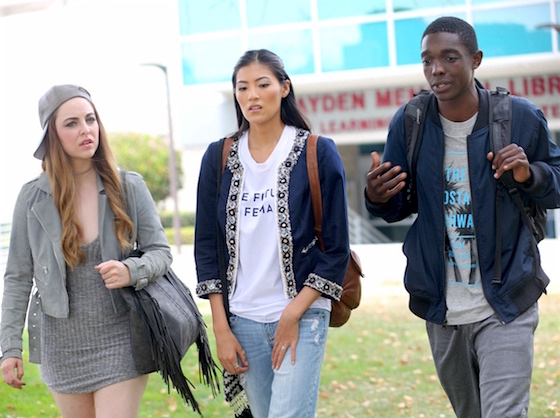
    Holocene has some very good ideas that could’ve made for a worthy continuation of the original film. Chief among them is the mystery of John’s relatively sudden ageing. Is he dying? Is he just entering a new phase of his existence? Either way: why? The film asks these questions, makes nods towards possible explanations, but otherwise doesn’t seek to explore it too much. It’s more concerned with meandering through a story that doesn’t quite rehash the first film but is distinctly reminiscent of it: a group of college-related people, with diverse religious beliefs and levels of scepticism, investigate the incredible notion that a professor may be 14,000 years old and, during that time, once have been the person we know as Jesus Christ. Watching a bunch of students going through the motions of uncovering a story we already know isn’t the most thrilling narrative, quite frankly.

    On the bright side, it eventually leads to a long scene in a basement which is loaded with tension and possibilities. It features an ‘evil Christian’ type, which is a dead giveaway for the authors’ atheist beliefs — fine by me, but it may not work for some people. This scene works particularly well as a sequel to the original film in itself, because although it too is a kind of re-run of the first film, it comes at it from a very different angle. It’s a little bit ironic that, for a film which is trying to open out the world of its story to be more than just a near-real-time fireside chat, the best bit is still an extended scene where two people just talk in a room.

    The wannabe Scooby Gang

    But Holocene’s biggest problem comes right at the end, when it abruptly finishes with various plot threads unresolved. As I mentioned, this project started life as a pilot for a TV series, later evolving into a standalone film (presumably as a way to secure funding — having something you can actually release is a safer bet than a pilot that requires a series pickup). Unfortunately, the makers still have hopes of either a sequel or that series, and so the story stops at a point which feels just a scene or two away from a resolution. To rub salt in the wound, there’s a bizarre mid-credits scene that throws a totally new, very different storyline into the mix. I think there were better ways to leave things set up for possible further instalments, and more interesting directions to suggest they might go in too. Or maybe they have a really good grand plan for this storyline? Perhaps we’ll get to find out.

    One of the most accidentally striking elements of the original Man from Earth was that it was shot on SD digital video. They’ve upgraded to HD this time, meaning it doesn’t look quite as cheap-and-cheerful, but it does still have a lo-fi semi-pro feel. (As one commenter on Letterboxd put it, “still has that softcore porn vibe”. I think that says more about his viewing habits than the film itself, but you get his point.) On the acting front, David Lee Smith is still the clear standout. He imbues John with a quiet authority — you can believe this is a guy who’s lived for centuries; his very presence elevated by a lifetime of learning but weighed down by a lifetime of regrets. The rest of the cast are decent.

    Pour yourself a drink, you might need it

    The writing is a little up and down. Some bits almost sing with an understated focus on character. Other bits clunk, like a terribly forced encounter to kick off the third act. Most often it feels like scenes needed a trim to keep everything a little tighter. It’s not that it’s a slow-paced movie and I’m claiming that’s a problem, it’s that at times it seems to be drifting aimlessly. The first film is ‘slow’ in some people’s eyes, but it’s actually a very tightly constructed movie; it’s just that that tightness is driven by the dialogue and story construction rather than, say, fast cutting. Holocene lacks a similarly taut screenplay. Chopping out ten minutes, both of little bits here and there but also a few scenes that I guess are meant to build up the students’ characters but I kind of feel are ultimately unnecessary, might work wonders. Well, maybe not wonders, but it’d be better.
    Holocene fritters away goodwill on a reheated teen remix of the first film’s story, has the audacity to not conclude that properly, and then does little to promise a bright future with a DOA mid-credits twist. Even still, I don’t think the film is the total disaster some reviews are painting it as, not least because I believe there’s potential left in a continuation of The Man from Earth — there are interesting developments of the series’ central concept here. Unfortunately they remain little more than teases as the film instead wastes time reinvestigating what we already know. It winds up disappointing.

    3 out of 5

    The Man from Earth: Holocene is available to stream and download in various ways now. For more details, visit ManFromEarth.com.