Resident Evil (2002)

The 100 Films Guide to…

Resident Evil

Survive the horror

Also Known As: Biohazard (in Japan — the film uses the original title of the game it’s based on in the country it originated from, appropriately enough.)

Country: Germany, UK, France & USA*
Language: English
Runtime: 100 minutes
BBFC: 15
MPAA: R
* The end credits call it “a German/British co-production”. IMDb adds the other two.

Original Release: 15th March 2002 (USA)
UK Release: 12th July 2002
Budget: $33 million
Worldwide Gross: $102.98 million

Stars
Milla Jovovich (The Fifth Element, Hellboy)
Michelle Rodriguez (The Fast and the Furious, Avatar)
Eric Mabius (Cruel Intentions, The Crow: Salvation)
James Purefoy (Mansfield Park, Solomon Kane)

Director
Paul W.S. Anderson (Event Horizon, AVP: Alien vs. Predator)

Screenwriter
Paul W.S. Anderson (Shopping, Death Race)

Based on
Resident Evil, a video game by Capcom, directed by Shinji Mikami.


The Story
After a virus kills all the employees at the underground research facility of Umbrella Corporation, a team of commandos are sent in to contain the outbreak. But to do that they’ll have to fight the facility’s megalomaniacal supercomputer, plus all the employees, who aren’t exactly dead after all…

Our Hero
Alice wakes up in her mansion with total amnesia… but soon a bunch of military operatives are whisking her along into a life-or-death situation, which it turns out she’s equally trained for herself.

Our Villains
The undead! Hordes of ’em, as always. Plus an evil supercomputer who controls the entire facility and speaks with the voice of a little girl, because why not. Oh, and we know someone deliberately released the virus — could they now be part of the team investigating the facility? Hmm, I wonder…

Best Supporting Character
Rain is just one of the commandos, but, as played by co-billed Michelle Rodriguez, she gets the lion’s share of the best lines. (I mean, the dialogue is hardly sparkling, but what good lines there are, she gets. Maybe it’s all in the delivery.)

Memorable Quote
Rain: “All the people that were working here are dead.”
Spence: “Well, that isn’t stopping them from walking around.”

Memorable Scene
With the team separated, Alice is exploring the facility alone and comes across some empty animal cages… and, shortly thereafter, the dogs that used to live in them… who are now zombie-dogs out to eat her, obviously. It’s mainly memorable for this bit:

Memorable Music
The score, co-credited to habitual genre composer Marco Beltrami and Goth rocker Marilyn Manson, was explicitly influenced by John Carpenter’s early electronic work, albeit given a very ’00s techno/rock spin by Manson.

Letting the Side Down
There’s so much stuff some would put in this category, but the main jarring point is some middling ’00s CGI. It’s not outright bad (like, say, the Rock-scorpion-thing in The Mummy Returns), but it definitely shows its age.

Previously on…
The first Resident Evil video game was released in 1996. The film is more “inspired by” than adapted from it. Multiple sequels to it came out before the movie finally hit the big screen, and even more have followed since, not to mention various spin-off novels, comics, animated films, and other stuff, like a themed restaurant in Tokyo.

Next time…
Five sequels followed over the next 14 years. Before the series-concluding final film had even made it to home media, a reboot was announced. That’s gotta be some kinda record, even for Hollywood.

Awards
2 Saturn Award nominations (Horror Film, Actress (Milla Jovovich))
3 Golden Schmoes nominations (Most Underrated Movie of the Year, Horror Movie of the Year, Best T&A of the Year — you might read that last category and think “only in the ’00s!”, but I checked and they still award it today)

Verdict

Writer-director Paul W.S. Anderson has managed to sustain a lasting career out of making movies no one seems to really like. With a CV full of video game movies (Mortal Kombat, multiple Resident Evils, the forthcoming Monster Hunter), and B-movie do-overs (Death Race) and emulations (AVP), he’s a bit like a bigger-budgeted, less-objectionable version of Uwe Boll (remember him?). Anyway, the first Resident Evil is actually one of his better efforts. I’ve never played any of the games so have no idea of its faithfulness (“not very” is my impression), but Anderson took inspiration from early John Carpenter movies to create a lean action/thriller/horror flick (again, leaning into those B-movies), which drives the viewer from set piece to set piece with quickly-sketched characterisation (or, in many cases, none at all) and a mysterious backstory to be uncovered. It’s no masterpiece, but it’s a solid 90-minutes-and-change genre fix.

The Highwaymen (2019)

2019 #48
John Lee Hancock | 132 mins | streaming (UHD) | 2.35:1 | USA / English | 15 / R

The Highwaymen

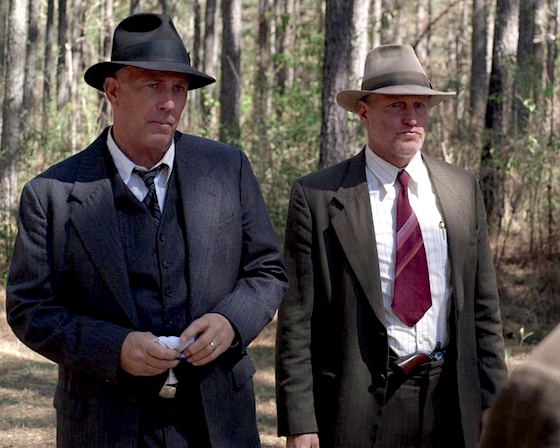
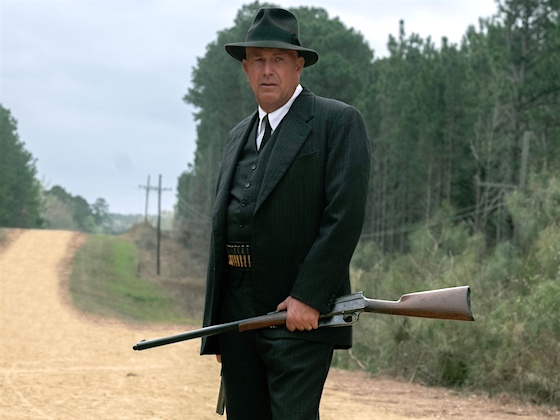
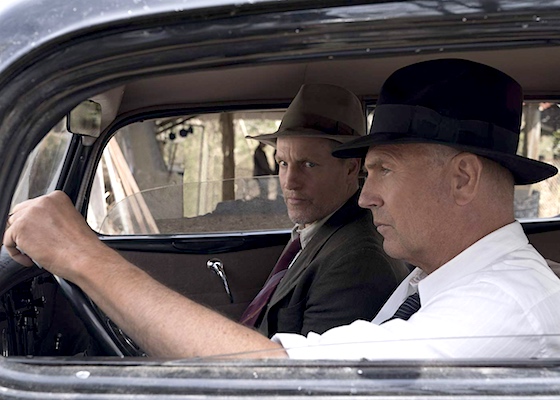
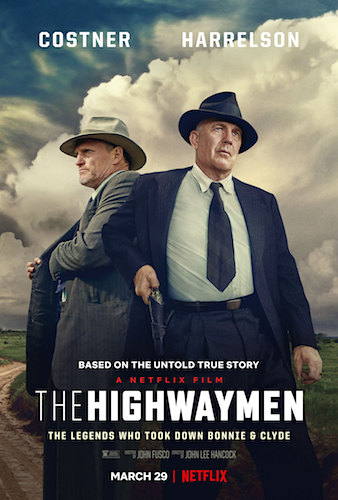
There’s a fair chance you know the story of Bonnie and Clyde thanks to the acclaimed 1967 movie (or the 2013 miniseries, or one of the other fictional depictions, or just their general notoriety), but what about the story of the guys who got ’em? For all the Robin Hood-esque heroism that was conveyed upon them by the media at the time and then cemented in subsequent fictional retellings, they were still murder-happy criminals. The Highwaymen sets out to do its part in rectifying this by introducing us to Frank Hamer (Kevin Costner) and Maney Gault (Woody Harrelson), a pair of retired Texas Rangers who were reinstated in early 1934 to track down Bonnie and Clyde and put an end to their crime spree.

Netflix has self-described the film as “The Untouchables meets Public Enemies” (they’re doing the job of reviewers for us!), and, while I’ve only seen one of those movies, I don’t think they’re far wrong. Netflix are well known for commissioning projects that are similar to other stuff people like (reportedly their first-ever original, House of Cards starring Kevin Spacey and produced/directed by David Fincher, came about because statistics showed viewers liked to watch the original BBC series, movies starring Spacey, and movies directed by Fincher), but this feels like one of the most blatant examples I’ve personally seen. Movies like Live by Night and Road to Perdition also came to my mind whilst watching, but it’s not limited to specific examples — it just feels like other movies set in about the same period about the same kind of thing. Well, we might blame Netflix’s data-centric thinking for that, but it’s actually nothing new in Hollywood.

Men of the highway

As a work in its own right, The Highwaymen is a solid period investigative thriller. It’s distinctly lacking the youthful verve and excitement of the ’67 film, which matched the youthfulness of its killer couple, replacing it instead with a slow-ish, world-weary methodicalness, which again matches its central pairing. That could be deliberate, or it could just be another instance of the recurring problem that Netflix-originated content is slower than it needs to be. When police procedurals are slow because they’re focusing on the exacting, gradual accumulation of evidence and data that leads to the downfall of the bad guys, that can be a good thing, and there’s an element of that here; but at other times it just feels a bit tardy. What it lacks is a sense of urgency, which you’d think the hunt for ceaseless murderers would have. We’re told these villains need to be stopped ASAP, and we see them continue to commit crimes as our heroes are still hunting for them, but we never really feel any sense of desperation to get the job done. Hamer and Gault kinda toddle along, as if they know it’s going to take two hours of movie-time to complete their mission so why rush?

It’s not helped by a seeming indecisiveness about what the movie wants to focus on. It’s torn between being a portrait of aged lawmen who may be past their time and a straight-up recounting of the hunt for Bonnie and Clyde. The former is a theme it only touches on in fits and spurts, often in scenes that feel shoehorned in just to address that subject. I’m not sure it had much to say about it either. It doesn’t come to the conclusion that the old ways are the best, or that they’re not relevant anymore; or that these guys still have their skills, or that they don’t anymore (early on there’s a scene where Costner realises he isn’t as accurate with a pistol as he used to be; that never comes up again) — they’re old, they’re tired, and… that’s it. As for the investigation, I presume it’s been depicted fairly accurately — the film has the feel of a story that’s been structured and paced this way because it’s based on truth. Of course, as we know from many other “true story” films, that’s a foolhardy assumption to make. Still, the final ambush was staged exactly where it really occurred out of a desire for historical accuracy, so it’s not wholly unreasonable to suggest that extends to the rest of the film.

Gunning for Bonnie and Clyde

One fascinating aspect of this particular case is how much the public were on the side of the criminals, and have been since (when The Highwaymen’s trailer debuted, I saw plenty of comments from disgruntled viewers hoping the film would acknowledge how underhanded the cops were in how they finally got Bonnie and Clyde! As if it somehow wasn’t fair to just shoot dead these crooks who had killed multiple other law enforcement officers, and innocent civilians, without similar fair warning). Perhaps unavoidably, the outlaws’ celebrity is another theme the film touches on, but only loosely. The populous should probably have been terrified of this viciously violent gang, but that they instead exalted them had a lot to do with the social situation at the time, i.e. the Great Depression, where the banks were the enemy, and Bonnie and Clyde did rob banks. Unfortunately, it’s again a thread that’s not fully unravelled; another facet the film notes is interesting but doesn’t bother to do a whole lot with.

Visually, there’s nothing to complain about here. It’s handsomely shot by John Schwartzman, with suitably open vistas that in themselves evoke a less urbanised time, where outlaws might still be hiding in the back of beyond. There are also scenes in towns and cities that clearly had enough budget to create a large-scale feel for the period. The film reportedly cost just under $50 million, the kind of budget movie studios don’t assign anymore, but it shows why it can pay off: this doesn’t need to be a $100 million blockbuster, but it does need enough cash to dress streets and extras for the setting. Netflix are one of the few still prepared to put money into such endeavours, and it is welcome.

Elsewhere, the film’s musical score was one of the main things that reminded me of Road to Perdition, so I was amused when I saw it credited to Thomas Newman, who also composed Perdition. I’ve commented before how I sometimes like his music but other times think he sounds a bit to similar to, well, himself (his work on Skyfall distracted me by sounding like what he did for A Series of Unfortunate Events), so maybe this shouldn’t be a surprise.

On the road to somewhere. Probably Perdition.

Despite all those niggles I’ve listed, The Highwaymen is actually a solid viewing experience. It may not do anything original or execute elements as well as it could have, but Costner and Harrelson are engaging performers to follow around, and the story is inherently interesting enough to hold attention — it may’ve been slower than necessary, but I was never bored. The film has been described in some circles as a “dad movie”, a phrase that was also bandied around about another Netflix original earlier this month, Triple Frontier. I guess it’s being used in a reductive and dismissive sense, but, well, so what? I’m not a dad, nor of the age range being intimated by the expression, but I don’t think there’s anything wrong with a decent men-on-a-mission movie either.

3 out of 5

The Highwaymen is available on Netflix now.

Skyscraper (2018)

2019 #35
Rawson Marshall Thurber | 102 mins | download (HD+3D) | 2.40:1 | USA / English, Cantonese & Mandarin | 12 / PG-13

Skyscraper

If you were to describe a movie as “Die Hard in a building, from the director of Dodgeball”, you’d expect some kind of spoof. Not unreasonably: “Die Hard in an X” is (or was) a fairly common movie pitch, but the original is set in a building, so clearly someone’s making a joke (it’s me! And also everyone else who used this line to describe Skyscraper); and Dodgeball is, well, a comedy. Combine the two and you’ve definitely got a parody movie… right? Turns out, no.

That said, Skyscraper certainly owes a debt to its genre predecessors. It stars Dwayne Johnson as a security consultant employed to okay the world’s new tallest building for its imminent opening. When a group of terrorists break in and set the building on fire, endangering not only the rich dude behind the building’s construction but also Johnson’s family, it’s up to our guy — who used to be in the military or SWAT or something, I forget — to save the day. Plenty of running and jumping ensues, as you well know if you’ve seen that poster that went viral as people tried to work out if the angles add up. Unsurprisingly, they didn’t.

Beat THIS, Alex Honnold

That jumping scene does actually occur in the film, though. Does he make it? You guess. Does it make any more sense on screen? Eh, who knows? Frankly, who cares? Skyscraper is not a movie overly concerned with realism. Or originality. It’s not just the obvious stuff nabbed from Die Hard and/or The Towering Inferno (I’ve never seen the latter, but it’s been cited as an influence) — tropes and clichés abound. If you’re in a miserable mood, the endless parade of familiarity will likely frustrate any viewer. Conversely, if you’re in a forgiving frame of mind, it executes them at least as well as any other derivative action-adventure blockbuster.

The film doesn’t acknowledge or spoof these glaring rip-offs — as I said, it’s not actually a parody — but I think everyone involved was aware that it’s all a bit silly. Or maybe I’m being kind. Maybe I think the film is so obviously silly that I can’t believe they meant it to be read seriously. Either way, it’s at least as daft as you’d expect it to be, but that means it’s pretty fun if your expectations are right. It’s an undemanding 90-minutes-or-so of derring-do, where the scenarios are so extreme and OTT they can’t elicit much tension, but occasionally achieve a modicum of suspense nonetheless. And as so much of it is about doing things at great distances above the ground, it’s highly effective in 3D. One near-miss moment even made me gasp, so it was obviously doing something right with its sense of jeopardy.

3 out of 5

Skyscraper is available on Sky Cinema from today.

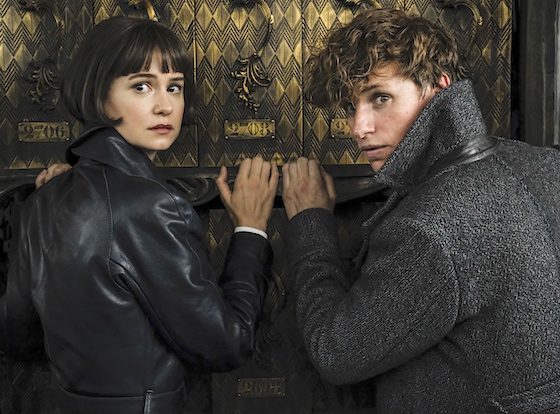
Fantastic Beasts: The Crimes of Grindelwald (2018)

2019 #30
David Yates | 134 mins | download (HD) | 2.39:1 | UK & USA / English & French | 12 / PG-13

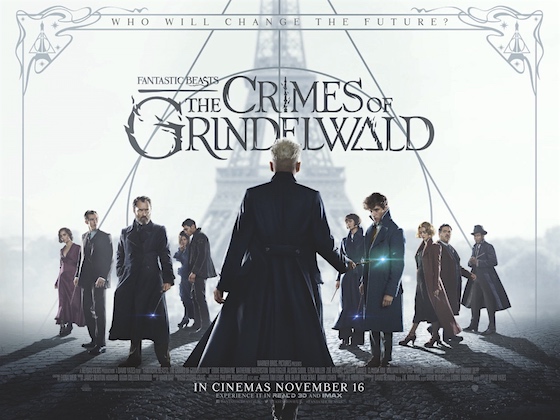
Fantastic Beasts: The Crimes of Grindelwald

The first Fantastic Beasts movie felt like a standalone adventure, even though it was promoted as a five-movie series from the get-go. Not everyone liked it, but I thought it was an enjoyable adventure that also served to expand the world of the Harry Potter universe — or the Wizarding World, as we’re now to call it. Unfortunately, this first sequel can’t keep that up. Here’s where the five-movie arc really kicks in, and the film suffers for it.

Normally I’d explain the plot round about now, but, frankly, I can’t be bothered. It entirely spins out of what transpired in the first movie; having not seen that since it was in cinemas over two years ago, I frequently struggled to keep up, scrounging around in my memory for the ins and outs of a story I didn’t realise I needed to thoroughly revise. That’s to say nothing of all the other stuff it dregs up from the depths of Harry Potter mythology. As a fan of that series, who’s seen the films multiple times and what have you, I have a fair idea what it’s all about, but even I was frequently left feeling confused. I pity casual viewers.

Further plot details and where to find them

Sometimes movies can gloss over this kind of stuff — the mythology and backstory enriches it, but there’s still an adventure to be going on with — but The Crimes of Grindelwald doesn’t seem to work that way. The adventure is tied up in the previous film and the overall backstory, and that generates a lot of tedious exposition to explain how things are connected. But that exposition is sometimes rushed over, apparently to allow time for some empty spectacle — there’s still plenty of CGI-fuelled magic action here, it just doesn’t seem to have any weight in the story, or what weight it should have is unclear.

It doesn’t help that the film feels jumpy, like loads of little bits and pieces have been chopped out. I’m not surprised there’s an extended cut, which hopefully will smooth some of that out. It probably stems from the film having so many characters and stories to juggle. The downside of making the previous film feel standalone is that most of its characters need to be reintroduced and reconnected to each other; at the same time, there are new characters and storylines being introduced and set in motion; all while also trying to deliver an action-adventure movie.

Wizard Hitler

There’s stuff to appreciate here nonetheless, including likeable returning characters, some appreciable additions (Jude Law is good as a young Dumbledore), and some impressive effects (the spectacle may be empty, but sometimes it’s still spectacular). Fans of the world J.K. Rowling has created will appreciate getting to see more of it, too — in this case, it’s wizarding Paris, albeit briefly — although there are also some additions to the mythology that are of questionable value. Well, there are three more films yet to come that may reveal that Rowling has somewhere to go with them.

Indeed, I wonder if Crimes of Grindelwald will ultimately play better once it’s placed in context with the following instalments. Or maybe it really is a bit of a mess, with too much going on and not enough time or space to do it, which sometimes makes it hard to understand the significance or value of what we’re watching. I hope that it’s at least put all the pieces in place now, so the next three films can move forward with fewer problems.

3 out of 5

Fantastic Beasts: The Crimes of Grindelwald is released in the UK today on DVD, Blu-ray, 3D Blu-ray, 4K Ultra HD Blu-ray, and as an extended cut.

Green Book (2018)

2019 #26
Peter Farrelly | 130 mins | download (HD) | 2.00:1 | USA / English, Italian & Russian | 12 / PG-13

Green Book

Oscar statue2019 Academy Awards
5 nominations — 3 wins

Won: Best Picture, Best Supporting Actor (Mahershala Ali), Best Original Screenplay.
Nominated: Best Actor (Viggo Mortensen), Best Editing.

White people tell black people all about racism (again) in this year’s surprise Best Picture victor. Well, a surprise to some people — Roma was considered the frontrunner, but some of those with their finger on the pulse of Hollywood had already predicted Green Book’s success. One such pundit was Deadline’s Pete Hammond, a very pro-Green Book voice, although his post-show analysis seems to suggest it only won because of efforts by some Academy members to rig the vote against Netflix…

The reaction to Green Book has been an odd one. It was initially well received, winning the People’s Choice Award after its premiere at TIFF, and racking up acclaim from both critics (a Certified Fresh 79% on Rotten Tomatoes) and audiences (8.3 on IMDb, which places it 128th on their Top 250 list). But the more widely it’s been seen and discussed, the more the tide has turned, especially as a more diverse audience has come to it. On its surface, the film is about overcoming racism — it’s the true story of a bigoted Italian American (Viggo Mortensen) serving as a driver for talented African American pianist Dr Don Shirley (Mahershala Ali) as he goes on a concert tour of the Deep South during segregation — but it’s told entirely from the white guy’s perspective.

Coming at it from the perspective of a white guy also, I can see why people have liked the movie. It’s decently entertaining, with likeable performances from Mortensen and Ali, who have good chemistry. Their chalk-and-cheese relationship is funny without tipping over into outright comedy; and, naturally, the way they come to get along is Heartwarming. But it’s also a completely unchallenging movie. There’s just enough racism that you get to go “ooh, weren’t things unpleasant back then!” and be joyed when the characters overcome it in various ways, but not so much as to convey the actual outrage and horror of the era — or, indeed, the way it continues today. You’d think racism was more or less solved by this pair getting along back in ’62.

Admire the white guy

And that is a big part of the problem with the film. If you’d made this 20 or 30 years ago, that level of discussion might be alright — beginning to make old white men face up to what happened by softening it a little, by letting them see themselves in the white guy. Now, it all looks kinda naïve and simplistic. The more you dig into it, the more you realise Green Book has some casually racist elements of its own. I mean, the white guy even helps the black guy to become a better black guy! That’d be offensive in a fiction, but when these were real people it seems distasteful. I guess the counterargument might be that the black guy helps make the white guy better too, improving his ability to write love letters, as if that was some kind of mutual beneficial exchange. But it’s not equal, is it? Plus it’s again all from the white guy’s perspective: he’s fundamentally fine but, hey, a bit of a polish wouldn’t hurt, whereas the black guy needs a character overhaul that apparently only this straight-talking white guy can give him.

But hey, don’t just take it from this white guy. For instance, check out this piece by Justin Chang at the L.A. Times about the film and its reception in the wake of its big win. It digs into the film’s negatives and controversies better than I ever could.

A side note regarding the film’s title: it’s taken from The Negro Motorist Green Book, a guidebook to help African Americans travel in the segregated South by listing establishments that would accept them. They do use it in the film… briefly, about three times total. You feel like a movie depicting how and why the volume came into existence might’ve made for a more novel story.

Write this instead...

In the end, I find Green Book a little difficult to rate. Coming to it as a white viewer, it’s an enjoyably safe trip into history, with charming characters on enough of a personal journey to give it a story arc, but not so much of one as to ever make it challenging. Similarly, it has a simplistic but not fundamentally negative theme (“racism is bad, yo”). In that mindset, it’s a pleasant, feel-good two hours. But, considering it’s 2019 not 1989, I can certainly see why some are clamouring for more nuanced engagement with these issues. I wouldn’t call it a bad movie, but it is an old fashioned one, and certainly not the best of what 2018 had to offer.

3 out of 5

Ocean’s Eight (2018)

2019 #23
Gary Ross | 110 mins | download (HD) | 2.39:1 | USA / English, German, French & Hindi | 12 / PG-13

Ocean's Eight

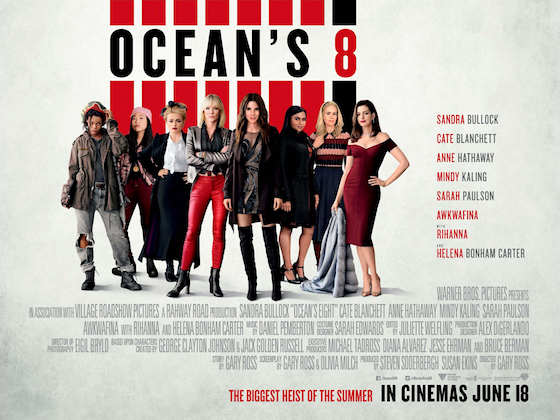
This somewhat belated spin-off from the Ocean’s trilogy of all-star heist movies (it came eleven years after the last one) introduces us to Debbie Ocean (Sandra Bullock), the sister of George Clooney’s eponymous character from the trilogy, and also an experienced con artist. Recently released from prison, she sets about assembling a crew for an audacious heist: to lift a near-priceless necklace during the prestigious Met Gala.

Said crew is all female — well, the crews in the previous trilogy were almost exclusively male, so why not? And just as those casts were full of big-name stars, so too is this. If Bullock’s in the Clooney role then Cate Blanchett takes over the part of Brad Pitt: the cool, in-control ‘sidekick’ who really makes Ocean’s grand plan happen. Fortunately, the film doesn’t slavishly map everyone else onto roles from the previous movies. One of the key parts is a fashion designer, played by Helena Bonham Carter — not a job that’s normally required for a heist, I don’t think. Here, it’s their way to access the mark who’ll be wearing the necklace, played by Anne Hathaway. The rest of the titular crew is rounded out by names of varying degrees of famousness, depending on your exposure to their previous work: Rihanna, Sarah Paulson, Mindy Kaling, and Awkwafina.

As a gang, they’re quite likeable, fun to hang around with, and the cast seem to be having a good time. They’re somewhat hampered by a screenplay that rarely gives them the sparky material the previous bunch had to work with, though, so I’d suggest if there’s a Nine they get someone to punch up the dialogue and give this lot the text they deserve.

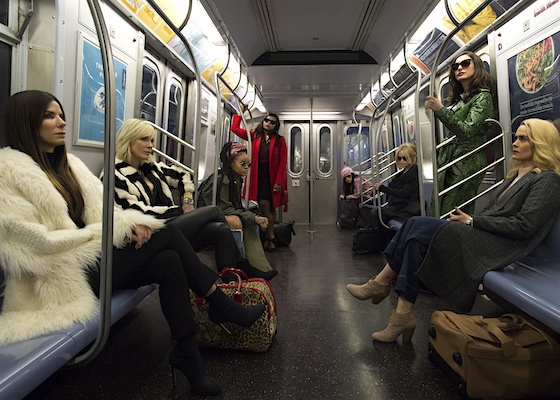
One, two, three, four, five, six, seven... yep, eight. There's eight of them.

Having said it doesn’t wholly map onto the previous movies, Eight massively lifts one plot thread from Eleven, which is that Debbie’s plan is secretly a way to get back at an ex boyfriend (Richard Armitage). Okay, in Eleven Danny Ocean is trying to win back his old lover and/or punish her new boyfriend, whereas here those characters are kinda combined as Debbie Ocean is trying to punish her old lover, but, well, the basic conceit is the same, right? The film does nothing to acknowledge that fact, just leaving it hanging there — awkwardly, if you’re au fait with the first movie. Conversely, whereas Danny was obsessed with his revenge to the point it risked derailing the main heist, for Debbie it seems to be a side benefit.

That isn’t necessarily better, mind: it lowers the stakes of both the subplot (because she doesn’t seem that bothered) and the main plot (because she’s not in danger of getting sidetracked), so why include something so familiar? Indeed, the whole plot is relatively light on stakes, with the team carrying off everything with nary a hitch — barely any need to improvise or change the plan here, they’ve just got it covered. The one potential problem that does arrive is solved instantly, even before the heist begins, with such a straightforward fix that they don’t even need to modify the plan to incorporate it. It’s not even fake jeopardy, it’s just non-jeopardy.

The whole film veers dangerously close to blandness in this fashion. Director Gary Ross may be a friend and colleague of Steven Soderbergh, but he doesn’t seem to have picked up the trilogy director’s inventiveness. There’s some mildly flashy editing scattered about, and maybe one creative shot / bit of sound design (when the camera follows the necklace underwater, the non-diegetic music gets muffled like, you know, we’re underwater), but it lacks the sophistication and verve Soderbergh brings. It feels like it needs a kick up the arse, basically.

“Could you just give it a bit of a kick up the arse?”

I even began to worry it was going to end with no attempt at genuine twists or surprises whatsoever, aside from a few minor but not terribly exciting reveals, which is not good for a heist movie — part of the point, surely, is that they also pull off a kind of narrative heist on the viewer. Fortunately, Eight does have a trick up its sleeve, which is quite fun. But even then, the big plan is still a pretty simple heist, which the film tries to pretend is complicated by showing Heist 101 stuff in excruciating detail (there’s a whole scene devoted to Rihanna slightly changing the position of two security cameras, one… click… at… a… time…)

Yet for these faults, Eight still works as breezy entertainment. It’s not as perfectly slick and polished as Eleven — but then, that would’ve been asking a lot (as pure-entertainment capers go, Eleven is virtually flawless). It’s not as boundary-pushing as Twelve (a seemingly muddled film that gets interesting the more you think/read about it), but nor is it as aimless and derivative as I found Thirteen. It lacks the creative spark behind the scenes (either in the screenplay or directing departments) that could’ve elevated it, but it’s an easy way to spend a diverting couple of hours.

3 out of 5

Ocean’s Eight is available on Sky Cinema from today.

Zatoichi Challenged (1967)

aka Zatôichi chikemurikaidô

2019 #10
Kenji Misumi | 87 mins | Blu-ray | 2.35:1 | Japan / Japanese

Zatoichi Challenged

The seventeenth film in the Zatoichi series is rated the second best according to IMDb users. As with so many opinions, that’s not one shared by Letterboxd users (who’ve placed it 15th), and it’s not shared by me, either. While I wouldn’t call it bad (every Zatoichi film has things to commend it, even the de facto worst), it’s definitely towards the lower end of my ranking.

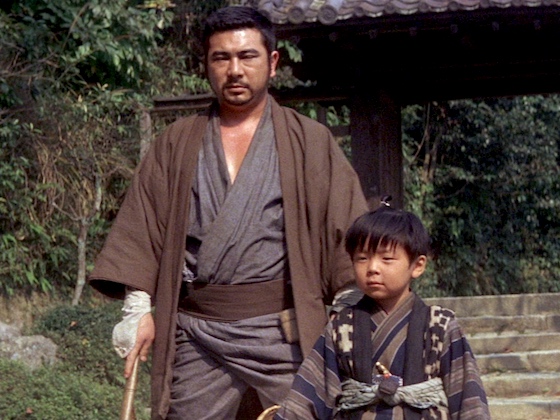
The basic plot is a semi-rehash of one of the series’ crowning glories, Fight, Zatoichi, Fight, with Ichi (Shintaro Katsu) agreeing to reunite a young boy with this father after the child’s mother dies. They first fall in with a group of travelling performers, which seems to be an excuse to squeeze in an incongruous ’60s pop song and a bit of a love interest for Ichi. After wasting half-an-hour on that, Ichi and the kid rock up in the town where the dad, Shokichi (Takao Ito), is being held captive by a gang of… pottery makers. It’s slightly more exciting than it sounds, because their scheme is all about making plates and jugs featuring erotic imagery, which was illegal at the time, and Shokichi is a skilled artist. Now, of course, Ichi must free him to unite him with his son. Along the way, Ichi strikes up a respectful acquaintance with a travelling ronin, Tajuro Akazuka (Jûshirô Konoe), which you know isn’t going to end well because, well, that’s how these films always go.

Zatoichi and son... just not his son

There’s nothing particularly wrong with being a formulaic Zatoichi film — many of them are, and I enjoy them just the same — but here it all feels rather slow and uneventful. The stuff with the travelling performers is a dead end, a total aside from the main story; and that plot, such as it is, just never catches light. The final 25 minutes are fairly action-packed at least, both in terms of fighting and with the plot finally getting somewhere; but it also makes you realise how much time has been wasted going nowhere — the villains are little more than introduced before it’s time for Ichi to cut them down. It doesn’t help anything that the kid’s annoying. He comes to care for Ichi, but Ichi doesn’t really seem to care for him that much, meaning their relationship lacks the emotional resonance found in Fight, Zatoichi, Fight.

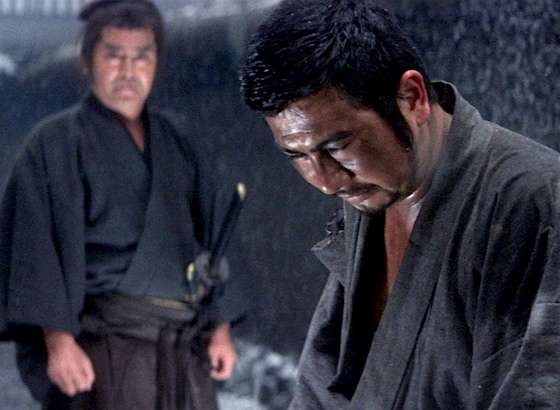
The one part of the film that does work is Akazuka. As I alluded to before, it’s a story arc that’s played out in many Zatoichi films before (and I’m sure it’ll come up again), but Zatoichi Challenged executes it as well as any. At first it just seems like Akazuka is a wanderer who Ichi happens to keep bumping into, including a memorable encounter where Akazuka attempts to overpay for a massage, but honourable Ichi refuses his charity. Eventually, of course, it turns out he has a secret mission which is at odds with Ichi’s own goals and values, and so, inevitably, they must duel. Their climactic confrontation is by far the best bit of the film. It’s a battle of words at first, as Ichi pleads with Akazuka to be reasonable and have mercy. He won’t, of course, and so a sword fight ensues. It doesn’t pan out how you might expect. The whole sequence is beautifully shot through falling snow by cinematographer Chikashi Makiura (quite why it’s suddenly snowing I’ve no idea, but it looks good). It’s an absolutely fantastic sequence; one of the series’ very best duels.

Snow fight

The finale aside, perhaps the most interesting thing about Zatoichi Challenged (certainly the most uncommon) is that it was remade in America, forming the basis for 1989 actioner Blind Fury, starring Rutger Hauer and directed by Phillip Noyce (Patriot Games, The Bone Collector, Salt, et al). I’ve not seen it, but other reviewers describe it as “a total turd that captures none of the charm and humanity of Zatoichi” (Lard Biscuit Enterprises), noting that it “begs the viewer to overlook too much that is idiotic [about a blind swordsman], whereas the original convinces the viewer it isn’t idiotic at all” (Weird Wild Realm). Suffice to say… I’ll still watch it someday.

Quite why this Zatoichi film in particular was tapped for a US remake, goodness only knows. It’s a kinda boring Ichi adventure on the whole, with a thin, recycled plot and a first half-hour that’s almost a total aside from the actual story. It’s saved by the climax, one of the best sequences in any Zatoichi film, which single-handedly makes the movie worth a watch.

3 out of 5

High Flying Bird (2019)

2019 #14
Steven Soderbergh | 90 mins | streaming (UHD) | 2.35:1 | USA / English | 15

High Flying Bird

Steven Soderbergh’s ‘retirement’ continues with another shot-on-iPhone movie (following last year’s psychological thriller Unsane), this time going direct to Netflix. Whereas Unsane made a virtue of its iPhone cinematography to heighten a disquieting, untrustworthy atmosphere, High Flying Bird forges ahead with no such baked-in excuse for its visual quality. However, similarly to Unsane, the fact it was shot on an iPhone is almost incidental, noteworthy mainly just because it’s unusual. But more on that later.

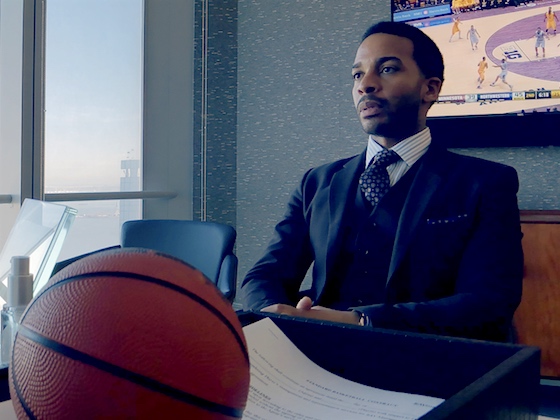
The movie is about Ray (André Holland), a basketball agent struggling to keep his players in check during a lockout… and already you’ve lost me, movie: I had to look up what a lockout is. I’m not much of a sports person, and I’m pretty sure we don’t have lockouts in British sports. Basically, best I can tell, it’s some kind of disagreement between the players (through their union) and the team owners, which results in games not being played when they should be, and people not being paid because nothing’s happening. So, it’s a bad thing, and it’s putting Ray in a bad situation — so he sets about trying to launch an “intriguing and controversial business opportunity”, to quote an IMDb plot summary.

Something like that, anyway. Frankly, it took less than two minutes for High Flying Bird to leave me feeling lost and confused, as it dives into an “inside baseball” (as the saying goes) depiction of basketball right from the off. It felt like watching a French movie without subtitles, except here the language isn’t French, it’s basketball. In fairness, I did eventually get a handle on what the overall plot was, but mostly with hindsight and not ’til quite far in — my analogy still stands for what the viewing experience was like until that point.

Lost and confused

For fans of basketball, or at least those with some kind of knowledge of the workings of the business side of American sport, it might all be more palatable. I think there’s some good stuff in the plot and characters, but I can only say “think” because I made such a lousy fist of following what was meant to be going on half the time. The story culminates in a final twist/reveal about Ray’s actual plan. Fortunately, by that point I’d worked out (more or less) what events had happened, so I followed it — indeed, I got there ahead of it. Well, that’s because before viewing I read a comment which implied this was a heist movie (like Soderbergh’s previous work on the Oceans films or Logan Lucky), so I’d already been on the lookout for what the real con was. Nonetheless, I’m torn between whether the reveal was quite clever, or the film thinks it’s cleverer than it actually is. If I hadn’t had that heads up, maybe I would’ve been as mind-blowingly impressed as Ray’s boss seems to be when Ray reveals the real plan to him. Or maybe I wouldn’t’ve, who can say.

Unsane suggested you couldn’t make a good-looking film on an iPhone. High Flying Bird says, actually, you can. It doesn’t all look great (especially when, for example, the shot literally wobbles from something as simple as someone putting a drinks bottle down on a table), but there are some beautiful shots in here too. Unsane almost had to make a virtue of its odd look, the weirdass visuals chiming with the story of a possibly unstable mind. High Flying Bird has no such excuses, and most of the time it doesn’t need them; though some parts do still look like a first-effort student film, which is very odd coming from a director as experienced as Soderbergh (this is the 56-year-old’s 29th feature, not to mention his 39 episodes of TV).

Looking to the future

While researching the film’s production I came across this interesting article at The Ringer, which uses High Flying Bird as a jumping off point to examine the history, increase, and future of using iPhones for professional projects. It basically contends that phone-shot films are the future for everything, and makes that sound reasonable. It’s reminiscent of the emergence of digital photography for movies: it was a big story back when Soderbergh shot Che with digital cameras (Criterion’s Blu-ray release has a half-hour documentary dedicated to it), but it was only a couple of years later that became standard for all major movies, and a few years after that it’s now noteworthy when something is actually shot on film. It seems inconceivable that one day they’ll be shooting an Avengers movie on a phone, but then it once seemed inconceivable you’d shoot a movie that big on digital video…

It’s quite hard for me to give a concise opinion of High Flying Bird. I struggled through much of it, which made for an unpleasant viewing experience. But I acknowledge some of that lies with me knowing less about basketball than the film does. But then again, is it the film’s responsibility to explain to me the things I don’t know? I did get a handle on events by the end, and if I watched the film again I expect I’d follow it better, but I also don’t feel there’s much luring me back for a second viewing.

3 out of 5

High Flying Bird is available on Netflix now.

The Ragtag Review Roundup

My review backlog has got a bit silly: there are currently 128 unposted reviews on it, dating back to stuff I watched in January 2018. I was hoping to really get stuck into that as 2019 began, but I’ve been busier than expected. Anyway, I’ll keep trying — and here’s a start, with a real mixed back of films that have basically nothing in common.

In today’s roundup:

  • American Psycho (2000)
  • Logan Lucky (2017)
  • A Nightmare on Elm Street (1984)
  • The Treasure of the Sierra Madre (1948)


    American Psycho
    (2000)

    2018 #66
    Mary Harron | 102 mins | streaming (HD) | 2.35:1 | USA & Canada / English | 18 / R

    American Psycho

    The film that made Christian Bale’s name sees him play Patrick Bateman, a high-flying New York banker with psychopathic tendencies — well, that just sounds like all those Wall Street types, right? Except hopefully they’re not actually engaging in literal killing sprees, unlike Bateman.

    While the murdering stuff may look like the draw, American Psycho is more interesting as an examination of the corporate mentality. It manages to be remarkably insightful, satirical, and terrifying all at once. Take the scene where they compare business cards, for instance: it’s ridiculous how much interest and importance these guys are placing in little cardboard rectangles with their name and number on, and yet you can believe such business-wankers would care about it. The anger Bateman feels when other people’s cards are considered classier than his is palpable.

    It’s a great performance by Bale across the board — so well judged, despite being barmy. It’s also interesting to observe the links between this and his version of Bruce Wayne, which is a wholly appropriately connection. I mean, who’s more of an American psycho than a guy who spends his days pretending to be a playboy businessman and his nights dressing up as a bat to beat up bad guys? I’m sure someone must’ve already developed a theory / amusing trailer mashup connecting the two films…

    The only thing that really let the film down for me was its final act. No detailed spoilers, but while I thought the rest of the film was engagingly made, the ultimate lack of resolution felt empty. To me, it seemed like it didn’t know how to end.

    4 out of 5

    Logan Lucky
    (2017)

    2018 #65
    Steven Soderbergh | 119 mins | Blu-ray | 2.39:1 | USA / English | 12 / PG-13

    Logan Lucky

    Two brothers, whose family has a historical proclivity for bad luck, decide to rob one of the US’s largest sporting venues, the Charlotte Motor Speedway, during one of its quieter events. But when the situation changes, they end up having to pull the job off during the biggest race of the year.

    Director Steven Soderbergh’s return to the heist genre a decade after Ocean’s Thirteen is something to be noted; and while Logan Lucky is a very different kind of heist movie (there’s none of that trilogy’s Hollywood glamour to be found here), it’s a more successfully entertaining movie than either of the Ocean’s sequels.

    Like them, it’s not terribly serious, instead ticking along as generally quite good fun — though there’s a scene with Take Me Home, Country Roads that’s quite affecting. Between this and Kingsman 2, I’m left to wonder how that wound up becoming just about the most emotional song ever recorded…

    Anyway, the showpiece heist is clever, in its own way, and rolls around sooner than I expected — it’s funny to read some people criticise how long it takes to get to, because I assumed it would be Act Three. Instead, the film constructs a post-heist third act that was the only time it really got too slow for me, though it does eventually reveal a purpose that was kinda worth the wait. That said, the whole thing might benefit from being a little bit tighter and shorter — ten minutes trimmed across the pre- and post-heist acts might make it zing just that bit more.

    4 out of 5

    A Nightmare on Elm Street
    (1984)

    2018 #71
    Wes Craven | 87 mins | TV (HD) | 16:9 | USA / English | 18 / R

    A Nightmare on Elm Street

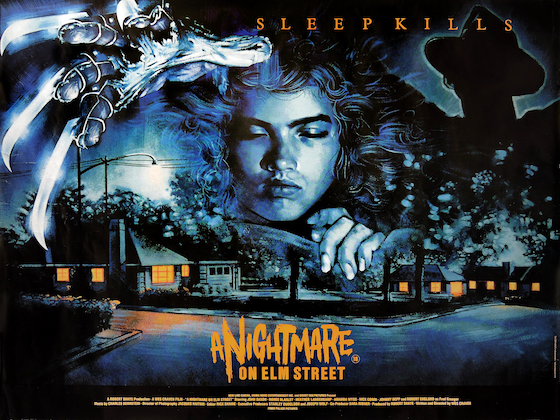
    It may be regarded as a horror classic, but I have to admit that I found A Nightmare on Elm Street to be a crushing disappointment. To me, it seemed to be a pretty poor movie (all weak: the acting, the dialogue, the music, the timescale events supposedly occur in) with some fantastic imagery. Director Wes Craven was a master, of course, and he manages to construct some truly great shots and moments amid a dirge of mediocrity. There’s a lot of nonsensical stuff too. I guess “dream logic” is meant to excuse it, but… eh.

    I do really like that poster, though.

    3 out of 5

    The Treasure of the Sierra Madre
    (1948)

    2018 #6
    John Huston | 121 mins | TV (HD) | 4:3 | USA / English | PG

    The Treasure of the Sierra Madre

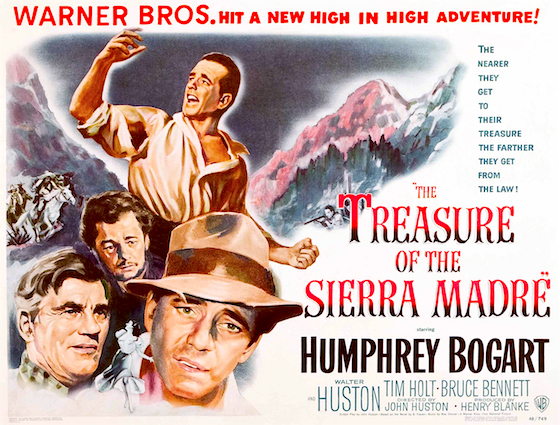
    Set in the mid ’20s, two American drifters in Mexico (Humphrey Bogart and Tim Holt) team up with an old and experienced prospector (Walter Huston, director John Huston’s father) to hunt for gold in them thar hills. Along the way they have to contend with rival prospectors, violent bandits, and — most dangerous of all — their own suspicions and greed.

    The Treasure of the Sierra Madre blends genres like there’s no tomorrow: it’s been described as a plain drama, an adventure movie, a neo-western, it’s included on film noir lists… Of course, depending which angle you look at it, it’s all of the above. It’s both an exciting adventure movie and a character-centric exploration of the effects of greed. In depicting that, Bogart’s performance is excellent, though Huston Sr threatens to steal the show. Poor Tim Holt is overshadowed by them both, even though he gives a likeable turn.

    5 out of 5

  • Absolutely Fabulous: The Movie (2016)

    2018 #96
    Mandie Fletcher | 87 mins | streaming (HD) | 2.35:1 | UK & USA / English | 15 / R

    Absolutely Fabulous: The Movie

    “Most movies are a script in search of some money,” said Jon Plowman, producer of every episode of Ab Fab, “but this was more a case of some money in search of a script. From the minute the word got out that Jennifer was contemplating writing the film of Ab Fab, lots of financiers threw their hats in the ring.” A cruel critic might therefore be tempted to accuse the cast and crew of doing this poorly-received film continuation of the popular TV series “just for the money”, but I think that would be disingenuous — I think there was a real desire to put an appropriate capstone on the beloved sitcom. Whether that merited a 90-minute theatrical release, or would’ve been better served as a 60-minute TV special, is another matter…

    Primarily, I think Ab Fab: The Movie is targeted at fans of the series, and isn’t really designed to stand on its own feet as an independent movie. I’ve only seen some of the TV show, and I think that was essential to understanding who all the characters were, how they were connected, and why they behaved in certain ways. Even then, I felt like there was stuff flying over my head because I haven’t seen all of the original episodes and/or because it’s been some years since I did watch any.

    So, I’m no expert on Ab Fab, but it’s always been my impression that when it started it was satirising the fashion world of the era (i.e. the ’90s). However, as it’s gone on it seems to have become about itself, as it were — its own characters and in-jokes, rather than any commentary on the wider world. That’s what we get here, therefore: basically, a 25th anniversary special amped up to full-blown movie status. One of the selling points for it as a big-screen variant was that it’s Eddie and Patsy on the French Riviera, continuing the age-old tradition of big-screen outings for British sitcoms being just “send the characters abroad”. Despite that, the first half is still set in London, and it’s pretty funny. When they do finally head overseas, it doesn’t exactly drag, but it seems a bit desperate.

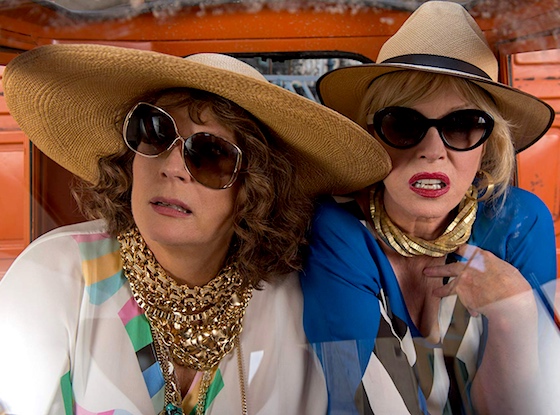
    Wheels on fire, off screen

    In terms of broader relevance, creator/writer/star Jennifer Saunders has spoken about how the film was supposed to be about ageing; about, apparently, the “reality” of these youth-obsessed characters getting old when they don’t know how to. Well, there’s not much reality in it it, given the typically outlandish situations the already-exaggerated characters find themselves in (for example, the emotional climax comes while Eddie and Patsy are trapped in a tiny van sinking in a swimming pool). That doesn’t mean such OTT antics aren’t amusing, but expecting an examination of the human condition from them is a bit… unlikely.

    A more notable feature is the insane number of cameos — “around 60”, according to this list on IMDb. I guess the notoriety of Ab Fab attracts big names… though plenty of them, er, aren’t. Basically, if you’re not a Brit, assume everyone who pops up for only one scene and opens their mouth is some degree of famous here. There are some international (i.e. American) faces too, though, to remind you of the series’ worldwide cult appeal.

    Overall, I enjoyed the film, but it definitely leans into being a fan-friendly exercise, which I’m not sure was appropriate for a belated big-screen debut. It’s not an ideal starting point for the uninitiated, then, but it’s not a terrible send-off for existing fans.

    3 out of 5

    The UK TV premiere of Absolutely Fabulous: The Movie is on BBC One tonight at 9pm, and will be available on iPlayer afterwards.