2016 #35
Tim Johnson | 90 mins | streaming (HD) | 1.85:1 | USA / English | U / PG
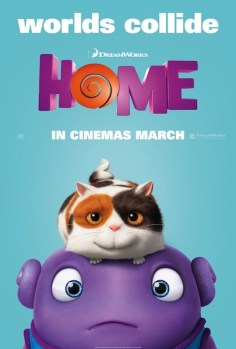
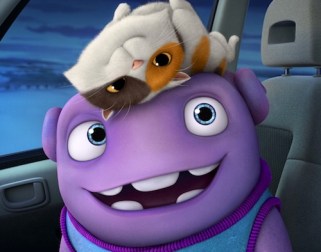
Oh (Jim Parsons) is a Boov, a race of friendly aliens looking for a new home planet to escape their enemies. When they arrive on Earth, Oh tries to invite everyone to a party, but accidentally alerts their enemies to their new home. Outcast, he bumps into Tip (Rihanna), a girl accidentally left behind when the rest of mankind was relocated by the Boov. Desperate for friendship, Oh agrees to help her find her mother.
Initially I ignored Home, because nothing about it looked particularly inspiring. But I’ve been wrong about CG kids animations before (How to Train Your Dragon; Cloudy with a Chance of Meatballs), so when I happened to see the trailer and it amused me, I decided to give it a go. Unfortunately, characters and affectations that are amusing in the form of highlights lasting two minutes quickly grate in the film proper.
Home’s biggest problems are all in its most fundamental aspect: the story. It doesn’t just have plot holes — the whole premise and inciting incident don’t even hang together. I don’t believe this is just a movie for little kids, I reckon it was written by them too. That’s surely the only way to explain its absence of plausible logic.
Why do the Boov speak English? Why do they speak it wrong? Why does Oh speak it so much more wrong than any other Boov? Why do they know the words for things they have no concept of? Why would humanity accept total relocation without any kind of response? How would only one girl on the entire planet be missed? How would she have had time to come to hate the Boov enough to make multiple pieces of anti-Boov art and set up an elaborate Home Alone-style trap in her apartment when the film suggests the Boov arrived just a couple of hours earlier? How does she know how to drive? If she’s old enough to know how to drive (and to be voiced by Rihanna), why does she do art that looks like it’s by a six-year-old? Why do the Boov make recognisable monuments float in the air? Why would a communication device’s two options be “send to one person” and “send to not only the entire species, but the entire universe, including our enemies”? Why is there no option to cancel such a transmission that is going to take 40 hours to reach said enemies? I mean, that last one’s a stupid question, because why is there even a way to message the enemies?
And those questions are just from the first 15 minutes.
Tip’s full name is Gratuity Tucci, which may just be the most implausible name in the history of the world. Our heroes spend a chunk of the middle of the film just driving across the Atlantic (don’t ask) doing things like listening to Rihanna music (you mean, they listen to songs by the lead voice actress? What a coincidence!) Sometimes the film is scored with such Popular Songs, often tweeny crap, but other times it’s blandly generic Movie Music. Either would be an adequate creative choice, albeit resolutely unremarkable, but having both at random is distractingly schizophrenic. And the songs don’t even have accurate relevance to what’s happening.
Story aside, Home is not poorly made, and there are fleeting glimmers of entertainment. Which is damning with faint praise, really. Naturally, I don’t recommend you waste your time on it.
Home featured on my list of The Five Worst Films I Saw in 2016, which can be read in full here.
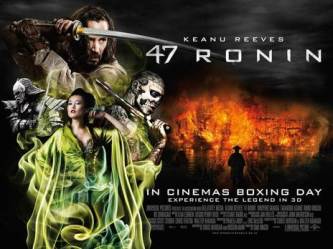
It concerns a gang of samurai who set out to avenge their master, a true story that’s legendary in Japan. This telling is enhanced with fantasy elements — which, despite some critics’ views, is just fine, as the film’s historical advisor explains in this excellent defence.
Sadly, what falters is everything else: clumsy storytelling, poorly edited action, Japanese actors struggling with English dialogue, Keanu Reeves’ acting. Magnificent imagery and design stop it being a total disaster, but only just.
2015 #124
Jim Henson & Frank Oz | 89 mins | TV | 2.35:1 | USA & UK / English | PG / PG
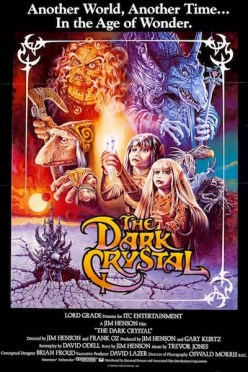
High-fantasy adventure about some elves trying to stop a crystal from destroying their planet.
It’s by Jim Henson, so there’s fantastic puppetry and strong design… but the story and the manner of its telling — the dialogue, structure, and characters — alternate between boring, annoying, and laughable. The hero is irritating, the dull villains are given too much focus, the plot borders on nonsensical, it takes forever for barely anything to happen, and the sequence where our heroes accidentally share their memories has to be the cheesiest thing since fondue.
Some people properly love this, but I thought it was just awful.
This drabble review is part of the 100 Films Advent Calendar 2015. Read more here.
2015 #169
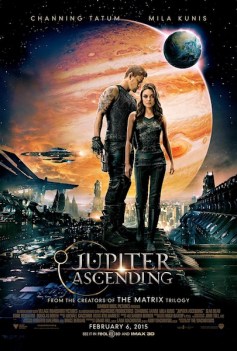
The Wachowskis | 127 mins | streaming (HD) | 2.35:1 | USA, UK & Australia / English & Russian | 12 / PG-13
Ah, the Wachowskis. They made Bound, and no one much cared. Then they made The Matrix, and they were the biggest thing in blockbusterdom since George Lucas took us to a galaxy far, far away. Then they made the Matrixsequels, and no one cared again. Following a period when I don’t think I was alone in wondering if they were ever going to make anything else, they managed to return to the realm of mega-budgeted sci-fi action (I guess the Matrix sequels cleaned up at the box office and that’s all that matters). First there was Speed Racer (which I called “a candy-coloured masterpiece”), then Cloud Atlas (which I haven’t got round to still), and most recently Sense8 (which I certainly haven’t got time for — there’s way too much promising telly to spend time on a show I haven’t heard anyone talk about since its release day).
And earlier this year there was Jupiter Ascending, best known (as far as I’m aware) for provoking speculation it would cost Eddie Redmayne the Oscar for Theory of Everything because it came out during voting season and he was so gosh darn bad in it. And it’s also known for being just generally dreadful and universally disdained.
But, hey, look — Channing Tatum! 2015 is (as mentioned) the year of Channing Tatum for me. And this is a big sci-fi blockbuster, so chances are it would cross my visual cortex eventually regardless (though there are so many sci-fi blockbusters these days that they don’t feel nearly as precious as they did even ten years ago). And the universal disdain wasn’t actually universal — I have actually seen some people praise this film. I know, right?
Sadly, I still thought Jupiter Ascending was awful.
The plot… oh, do I have to explain the plot? It’s some rubbish about a cleaner (Mila Kunis) getting attacked by aliens and some alien crossbreed in magic flying shoes (Channing Tatum) coming to her rescue, and taking her to a half-bee man (Sean Bean — there has to be a “Sean Bee-n” joke here…), and then into space, because she’s… nope, not the Chosen One (makes a change, at least) but a reincarnation of someone important, and her surviving family members (Douglas Booth, Tuppence Middleton, Eddie Redmayne) have a vested interest in her — which may or not be that they want her dead (again).
You might thank me for clarifying that, because it’s mindbogglingly messy in the telling. A sheen of originality, partially aided by world-building so dense it’s conveyed in massive infodumps that blur into incomprehensibility, tries to mask the fact that Jupiter Ascending is immensely derivative, including of the Wachowskis’ own work. One of the best bits, a gently satirical sequence of red tape and bureaucracy, is all but lifted wholesale from Hitchhikers or the films of Terry Gilliam — who turns up in a cameo as if to underline the point. Elsewhere you might recall David Lynch’s Dune or The Fifth Element — the latter in particular, although there the campiness was deliberate.
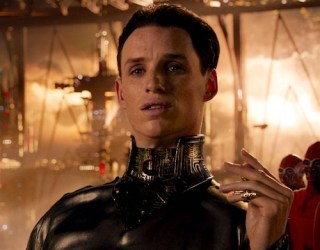
Some praise the visuals, claiming the film at least looks fabulous. Parts of the film carry a level of extravagance and detail thus far found exclusively in a certain genre of sci-fi novel cover art, presumably because CGI has finally reached a point where it can replicate all that on screen in motion. I guess it works for some people, but while it’s not bad, it also didn’t do much for me. And every time something almost works, something else undermines it, like Tatum’s make-up, or his flying boots, or Redmayne’s bizarre, affected performance. Though, to be honest, I think he’s so bad he’s good, a phrase you often hear bandied around but rarely see actually happen.
All things considered, the worst part of Jupiter Ascending is its first half-hour or so. Once it gets past that dreadfully messy first act, it settles down into something that works as passable entertainment. Sure, you might spend the rest of the time (and it does feel like a long time) playing “spot the influence”, or wondering just how exactly Redmayne’s performance came about, or, if you’re versed in British TV, going, “oh, it’s them, from… um… that other thing!” (Eventually there’s a whole spaceship full of “people off British TV”.)
But hey, at least it’s not dull.
Jupiter Ascending debuts on Sky Movies Premiere tonight at 4pm and 8pm.
2015 #167
Caradog James | 90 mins | streaming (HD) | 2.35:1 | UK / English | 15 / R
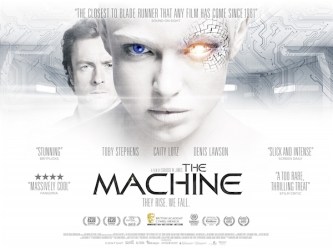
In a near future where Britain is part of a Cold War against China, a scientist (Toby Stephens) has been trying and failing to perfect artificial intelligence at a government research facility. When he hires a new associate (Arrow’s Caity Lotz) they make progress, crafting a machine in her own image (played by Lotz again, obviously). Unsurprisingly, their boss (Denis “turned down The Force Awakens” Lawson) has some less-than-ethical plans in mind for their new toy…
Welsh writer-director Caradog James presents some strong ideas about the morals of creating AI, our responsibilities in doing so, its right to sentience, and so on. Some of these notions are even quite original, in particular an ending that seems to be saying that the machines are going to replace us and maybe that’s OK. Unfortunately the concepts don’t always coalesce in the telling, and when the film resorts to a passably-well-done shoot-em-up climax it feels needless — it hasn’t been that kind of film.
Or maybe James, in only his second feature, is trying to show his full range and use the film as a calling card. After all, it does attempt human drama, an exploration of sci-fi ideas, a touch of conspiracy thriller, and, as mentioned, an all-action climax. Unfortunately he’s delivered quite a clunky screenplay, which lingers on inexplicable scenes one moment before rushing over vital things the next. Perfunctory dialogue fails to build characters or relationships in a way that pays off when it needs them to.
This may explain why the performances are a mixed bag. Toby Stephens can’t seem to find much to work with in his lead role, despite supposedly having a couple of emotional arcs. Lawson sleepwalks through his turn as a shady government higher-up. Lotz is unremarkable as a human, but fantastic as the AI-driven machine. Her performance as the latter is the primary reason to consider watching the film.
Production values are all over the place. Nicolai Brüel’s cinematography is often highly atmospheric, though sometimes nonsensical (why is a scientific lab so dark?) and prone to J.J. Abrams levels of lens flare indulgence. There’s some classy CGI, in particular the interface graphics on tablets and computers, but the set for Lawson’s office looks like it’s from an am dram production. You can’t help but suspect the aforementioned over-darkness is to hide more issues of this nature. In truth, that’s only a problem if you can’t see past a low budget to what a film’s trying to achieve; but it’s to the discredit of what else is going on that I did notice.
The Machine suggests a lot of potential, but the end result is a bit muddled and that promise is only fitfully realised.
2015 #145
Catherine Hardwicke | 122 mins | download (HD) | 2.35:1 | USA / English | 12 / PG-13
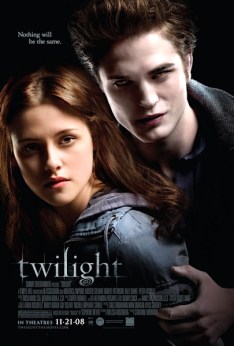
I’m not a big one for Halloween, but I’ve acknowledged the horrific holiday on a couple of occasions now. For 2015, I decided to review one of the most notorious supernatural films of recent times. A movie so horrific, it sent critics cowering behind their sofas. A film so evil, it’s perverted the minds of children — and some adults — the world over. A movie so renowned, it strikes fear into the hearts of even hardened movie lovers.
I speak, of course, of Twilight.
(That was more surprising when it was in a generically-titled post as an introduction to a whole week of reviews for the entire saga, but then it turned out I had better things to watch in October than four more Twilight films, so you’re only getting this one for now.)
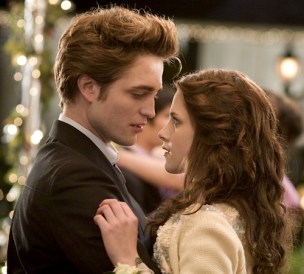
For thems that don’t know, Twilight is the story of Bella Swan (Kristen Stewart), a teenager who moves to live with her father in the small town of Forks, Washington (apparently it’s actually a city, but the film would have you think it’s almost a village). Attending the local high school, she’s intrigued by the introverted Cullen siblings, in particular Edward (Robert Pattinson). To cut a long ramble short, it turns out they’re vampires, but friendly vegetarian vampires. Bella instantly falls in love with Edward in all of three seconds, because he’s kinda dangerous but pretty and sparkles in sunlight (we shall come back to this), though his lust for her brings out his blood-drinking side. Just to make things complicated, there are some other vampires visiting the area who have fewer qualms about drinking human blood…
Twilight is adapted from a young adult novel by Stephenie “one too many Es in her name” Meyer that no one had heard of (bar its legion of bloodthirsty fans) before someone thought it would make a good movie. It would probably have been better if things had stayed that way. There are many reasons for that, but let’s take them in the order they must’ve occurred. First: the story, which is also the worst part. Edward is an odd, creepy stalker — turning up in Bella’s bedroom and staring at her while she sleeps, that kind of thing — who she then finds out is a century-old man (bit of an age gap) and, literally, a predator… but she instantly unconditionally loves him. What the merry fuck? She’s given no reason to even like the guy, and plenty of reasons to run away scared of him, but no, she falls in love. What message is this sending to young girls? That the guy who follows you around everywhere just staring at you and then confesses he’s having trouble controlling his impulse to murder you (yes, he says that) is the perfect soulmate? Not to mention that he’s 100-and-something years old and dating a 17-year-old. He shouldn’t be pre-teen girls’ idol, he should be Hugh Hefner’s!
All of the characters are this poorly drawn. Their motivations, actions, and reactions often make little sense. The number of times one of them does something because Plot are incalculable. That’s without even mentioning Bella’s almost total inability to do anything for herself, except use Google to find some tiny second-hand bookshop in a rarely-visited town to buy a book about something she wants to research, rather than, say, use Google to read up a bit first. Then she gets the book, looks at one illustration and its caption, and it’s back on Google to find out more. Nice work, Bella.
All of this is Meyer’s fault, faithfully translated to the screen by adapter Melissa Rosenberg. This is a woman with quality TV form: she was a lead writer on Dexter back in its first four seasons, when it was really, really good; now she’s showrunner on the forthcoming Marvel/Netflix series Jessica Jones, which has promising trailers and a well-reviewed first episode, in particular its treatment of female characters. Yet she also wrote this. Even if you allow for her being hamstrung by the novel in story terms, the dialogue is appalling, in every respect. Characters bluntly state their own and each other’s emotions at each other. We’re always being told stuff instead of shown it. Scenes heavy with exposition are shot with frenetic camerawork and underscored with driving music as if that somehow makes it filmic and exciting.
Ah, the acting and direction! Nearly every performance is poor. Pattinson and Stewart spend the entire film appearing uncomfortable and puzzled — by themselves, with each other, with everyone else. Her only other emotion is “moody loner”; he at least manages a smile, maybe twice. Some of it is unbelievably cheesy, like an ’80s genre B-movie by a music video director. That kind of thing can work, a) when it’s from the period, or b) when it’s done knowingly. Twilight is neither. The Pacific Northwest location is inherently atmospheric, which is handy because Catherine Hardwicke’s direction does nothing to conjure up any such feeling itself.
And then we have vampires who sparkle. Sparkly vampires. Sparkly. Vampires. Just… why?! The whole traditional mythology of vampires is played fast and loose with, which is fine, that’s what many vampire flicks do; and there are even some borderline-neat subversions… but golly, that sparkliness is silly.
Some of these points are definitely just niggles, but the film is so laden with them that it all becomes ripe to cause either laughter or frustration. Better the former than the latter, which is why the Honest Trailer is so entertaining. See for yourself:
Believe it or not, I didn’t actually hate Twilight as much as I thought I might. Occasionally there are shots or moments that work, maybe even the odd whole scene. Bella’s dad is pretty good, both their relationship and Billy Burke’s performance. I quite liked some of the aggressively-blue cinematography, but then I do like the colour blue. There’s almost a nice element of melancholic “leaving a fun ordinary life behind for this fantastic but dangerous new one”, but I think that might be limited to literally one shot-reverse-shot of Bella seeing her friends leaving a café.
So it’s not a good film, but it’s not a “worst film ever made”-level disaster either. I mean, it’s not so bad that I can’t even bear the thought of watching the sequels. Actually, they kind of intrigue me, because (spoiler warning!) it hasn’t even got to the Jacob/werewolves stuff yet, and that whole Team Edward / Team Jacob aspect seemed to be such a big thing. And I want to see what Michael Sheen has to do with anything. And I kinda wanna see if Breaking Dawn is as batshit crazy as the plot description I once read made it sound. And maybe there’ll be more of Anna Kendrick’s cleavage, because wow, who knew that was there? (Look, it’s a movie about a creepy stalker romance between a 100-year-old man and a 17-year-old girl — a little light ogling of someone around my own age pales in comparison.)
So that’s Twilight for you: poorly plotted, poorly written, poorly acted, poorly directed, teaching poor life lessons to its target age group, and yet still somehow so compelling that I’m prepared to sit through another eight-ish hours of the stuff. Never has the phrase “your mileage may vary” been so apt.*
* Unless someone used it in reference to the Fast & Furious films.
2015 #116
David Cronenberg | 87 mins | TV | 4:3 | Canada / English | 18 / R
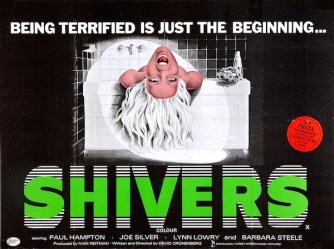
The first commercial (i.e. non-student) feature by horror maestro-to-be David Cronenberg, Shivers depicts the sexually-charged chaos that erupts after the spread of a man-made sexually-transmitted parasite in an isolated hyper-modern tower block.
The film contains all the requisite titillation of cheap schlock (nudity! gore!), but a handful of interesting, potential-laden ideas indicate the filmmaking promise that Cronenberg would later fulfil. Unfortunately, the execution here is hindered by dirt cheap production values and unfocused, undisciplined storytelling.
The most horrific part for fans is the mere mention of a sometimes-mooted remake, but I don’t think that would necessarily be a bad idea.
2015 #101
George Ratliff | 96 mins | streaming (HD) | 1.85:1 | USA / English | 15 / R
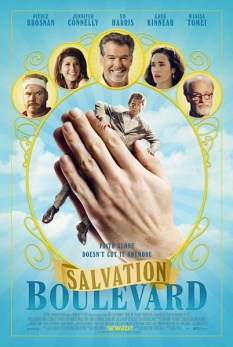
Reuniting Pierce Brosnan and Greg Kinnear, stars of comedy-thriller The Matador (reportedly Brosnan was cast first and asked for Kinnear), comedy-drama Salvation Boulevard stars Brosnan as evangelical preacher Dan Day and Kinnear as a member of his flock, Carl, a recent convert thanks to his even-more-committed wife (Jennifer Connelly). When Dan accidentally shoots an atheist (Ed Harris) with Carl as the only witness, Dan tries to cover it up, but Carl isn’t so sure, soon finding himself on the run from other members of the church who’ll do whatever Dan tells them…
A soft-toothed satire of America’s fundamentalist mega-churches, Salvation Boulevard trailed very well, but they must’ve stuffed all the funny bits in, because in the final film such moments of hilarity are few and far between. The biggest problem is that the film doesn’t have the cojones to skewer organised religion as thoroughly as it could. It’s undoubtedly skeptical of the whole shebang, and I wouldn’t say it paints it in a positive light, but it comes up short of outright deconstructing it. Instead, we get an increasingly-complex run-around, including bringing in a Mexican drug cartel who want the land Dan is intending to build a new town on.
Intriguingly, it’s adapted from a novel that, based on the blurb, sounds nothing like the film. It appears to be a fully-fledged thriller, for one thing. It follows a detective, who is at least a born again Christian, but there’s a suspect in custody who’s a Muslim, and a Jewish defense attorney would seem to play a prominent role, and the plot description is full of language about “his most basic beliefs are tried” and “he can’t stop searching for the truth no matter what the personal cost”. This is not the Salvation Boulevard that has ended up on film. I tried to hunt down an explanation for why co-writer/director George Ratliff had deviated so, but the best I could unearth was this interview. Asked whether the characters are different from the book and how they went about translating the novel to the screen, Ratliff answers:
A lot of the names are the same. The book is very good and Larry Beinhart is a very good writer, but it’s just a different animal, and we went and did something completely different. […] definitely the spirit of Larry’s book is in the movie. A lot of the things that happen in the book happen in the movie. It’s just set up very differently. It is absolutely an adaptation of the book, but I need to be clear that we did change a lot.
Which… doesn’t really answer my question. But hey, it only really matters if you like the book.
Even more baffling is Brosnan’s accent. He seems to have decided to do each scene slightly different, evoking English, Irish, Australian, South African, southern US, and goodness knows what else along the way.
I shouldn’t have expected much given the poor reviews, but I like the cast (which also includes Ciarán Hinds and Marisa Tomei), I really enjoyed The Matador, and the trailer was suitably promising, all of which encouraged me to seek it out. I wouldn’t say Salvation Boulevard was an entire waste of time, but I couldn’t help but feel there was potential for a funnier, more cutting movie hidden in the material. Shame.
2015 #99
Kevin Munroe | 87 mins | streaming | 2.35:1 | USA & Hong Kong / English | PG / PG
The kids’ phenomenon of the ’80s/’90s has never quite gone away, and this film is one thing that kept it ticking over in the ’00s. I watched out of nostalgia, which may’ve been a mistake.
Eschewing an origin story, it dives in as a sequel rather than reboot; consequently, you constantly feel you’ve missed something, particularly given the focus on the heroes’ fractured relationships. The plot’s alright, though it’s an odd choice to not use any of the franchise’s major villains. Some action sequences are moderately entertaining, but other animations have provided better.
2015 #86
Dominic Brunt | 82 mins | TV | 2.35:1 | UK / English | 18
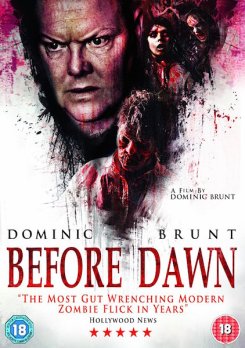
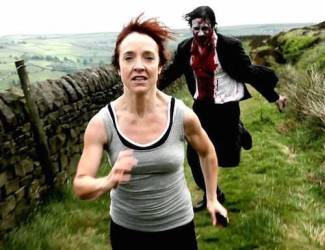
Directed by Emmerdale actor and zombie aficionado Dominic Brunt (who also stars), from a screenplay by Emmerdale writer Mark Illis based on a story by Brunt’s wife, Joanne Mitchell (who also co-stars), Before Dawn is a mash-up between remote-farmhouse zombie horror and kitchen-sink relationship drama.
The story sees struggling couple Alex (Brunt) and Meg (Mitchell) leaving their kids with her mother and heading off to the aforementioned remote farmhouse for a reconciliatory weekend. As they clash and argue, we see the signs around them that All Is Not Right… until suddenly they’re being chased by the undead.
Unfortunately, Brunt and Illis aren’t quite up to pulling off the film’s original concept. The relationship drama is lightweight, with nothing strikingly new or engaging about it, just rote “couple argue but maybe love each other really”-type shenanigans. It also takes way too long to get going. The scene saying goodbye to the kids is interminable, with nothing to add to the narrative or characters. I guess it’s trying to establish a rapport between the parents and their kids, designed to pay off later, but it offers nothing you wouldn’t get from literally showing that they have kids. If you want us to have an emotional investment, give us some emotion, not just instructions about bedtime and requests for hugs. Then there’s the wannabe-artsy shots of driving, and… just get a wriggle on, yeah?
Amateurish production values often let the side down. I don’t think Brunt’s direction would be too bad were it not for the cheap camerawork, although the action scenes are overrun with ShakyCam. There are some very good bits late on: the developments that come as a result of a stranger’s arrival; a phone call with the kids; perhaps even the very end, which is a bold climax.
Incidentally, no part of the plot has anything to do with something occurring “before dawn”, so I presume the title is a riff on Before Sunrise (relationship two-hander) and Dawn of the Dead (zombie movie) — in which case, the title goes from being oddly meaningless to quite neat. In that respect, it might be the best thing about the film.
The inherent idea of cross-pollinating these two genres isn’t without merit, so it’s a shame it’s come to pass in this fairly weak film. Maybe someone else will try it again someday.

 Oh (Jim Parsons) is a Boov, a race of friendly aliens looking for a new home planet to escape their enemies. When they arrive on Earth, Oh tries to invite everyone to a party, but accidentally alerts their enemies to their new home. Outcast, he bumps into Tip (Rihanna), a girl accidentally left behind when the rest of mankind was relocated by the Boov. Desperate for friendship, Oh agrees to help her find her mother.
 but the entire universe, including our enemies”? Why is there no option to cancel such a transmission that is going to take 40 hours to reach said enemies? I mean, that last one’s a stupid question, because why is there even a way to message the enemies?
 Blighted by behind-the-scenes difficulties, 47 Ronin wound up among
  High-fantasy adventure about some elves trying to stop a crystal from destroying their planet.
 Ah, the Wachowskis. They made
  The plot… oh, do I have to explain the plot? It’s some rubbish about a cleaner (Mila Kunis) getting attacked by aliens and some alien crossbreed in magic flying shoes (Channing Tatum) coming to her rescue, and taking her to a half-bee man (Sean Bean — there has to be a “Sean Bee-n” joke here…), and then into space, because she’s… nope, not the Chosen One (makes a change, at least) but a reincarnation of someone important, and her surviving family members (Douglas Booth, Tuppence Middleton, Eddie Redmayne) have a vested interest in her — which may or not be that they want her dead (again).
 I guess it works for some people, but while it’s not bad, it also didn’t do much for me. And every time something almost works, something else undermines it, like Tatum’s make-up, or his flying boots, or Redmayne’s bizarre, affected performance. Though, to be honest, I think he’s so bad he’s good, a phrase you often hear bandied around but rarely see actually happen.
 In a near future where Britain is part of a Cold War against China, a scientist (Toby Stephens) has been trying and failing to perfect artificial intelligence at a government research facility. When he hires a new associate (
 This may explain why the performances are a mixed bag. Toby Stephens can’t seem to find much to work with in his lead role, despite supposedly having a couple of emotional arcs. Lawson sleepwalks through his turn as a shady government higher-up. Lotz is unremarkable as a human, but fantastic as the AI-driven machine. Her performance as the latter is the primary reason to consider watching the film.
 I’m not a big one for Halloween, but I’ve acknowledged the horrific holiday on a couple of occasions now. For 2015, I decided to review one of the most notorious supernatural films of recent times. A movie so horrific, it sent critics cowering behind their sofas. A film so evil, it’s perverted the minds of children — and some adults — the world over. A movie so renowned, it strikes fear into the hearts of even hardened movie lovers.
 Edward is an odd, creepy stalker — turning up in Bella’s bedroom and staring at her while she sleeps, that kind of thing — who she then finds out is a century-old man (bit of an age gap) and, literally, a predator… but she instantly unconditionally loves him. What the merry fuck? She’s given no reason to even like the guy, and plenty of reasons to run away scared of him, but no, she falls in love. What message is this sending to young girls? That the guy who follows you around everywhere just staring at you and then confesses he’s having trouble controlling his impulse to murder you (yes, he says that) is the perfect soulmate? Not to mention that he’s 100-and-something years old and dating a 17-year-old. He shouldn’t be pre-teen girls’ idol, he should be Hugh Hefner’s!
 in particular its treatment of female characters. Yet she also wrote this. Even if you allow for her being hamstrung by the novel in story terms, the dialogue is appalling, in every respect. Characters bluntly state their own and each other’s emotions at each other. We’re always being told stuff instead of shown it. Scenes heavy with exposition are shot with frenetic camerawork and underscored with driving music as if that somehow makes it filmic and exciting.
 a little light ogling of someone around my own age pales in comparison.)
 The first commercial (i.e. non-student) feature by horror maestro-to-be David Cronenberg, Shivers depicts the sexually-charged chaos that erupts after the spread of a man-made sexually-transmitted parasite in an isolated hyper-modern tower block.
 Reuniting Pierce Brosnan and Greg Kinnear, stars of comedy-thriller
  This is not the Salvation Boulevard that has ended up on film. I tried to hunt down an explanation for why co-writer/director George Ratliff had deviated so, but the best I could unearth was
  I shouldn’t have expected much given the poor reviews, but I like the cast (which also includes Ciarán Hinds and Marisa Tomei), I really enjoyed The Matador, and the trailer was suitably promising, all of which encouraged me to seek it out. I wouldn’t say Salvation Boulevard was an entire waste of time, but I couldn’t help but feel there was potential for a funnier, more cutting movie hidden in the material. Shame.
 The kids’ phenomenon of the ’80s/’90s has never quite gone away, and this film is one thing that kept it ticking over in the ’00s. I watched out of nostalgia, which may’ve been a mistake.
 Directed by
  Amateurish production values often let the side down. I don’t think Brunt’s direction would be too bad were it not for the cheap camerawork, although the action scenes are overrun with ShakyCam. There are some very good bits late on: the developments that come as a result of a stranger’s arrival; a phone call with the kids; perhaps even the very end, which is a bold climax.
 100Films.co.uk