The Best of 2025

Featured

The whole point of these year-in-review posts is to reflect on the year just gone, of course, but this time round it’s made me think about more than just what films I watched, what films I missed, the various trends they contributed to or failed at, and which of them were better than which others. I’m not about to get too philosophical, but…

While it hasn’t been a great year for my blog (what with the total and entire lack of any new reviews whatsoever), my 100 Films in a Year Challenge has been important on a personal level to a degree it hasn’t been since perhaps even 2007, the year I first attempted the challenge. Back then, the whole point was to get me to watch more films. From about 2012 onwards, I got into such a groove that it was less “can I watch 100 films?” and more “how quickly can I watch 100 films? And how many more after that?” Recently, though, my attention has wandered to other forms of entertainment (even before I felt compelled to include comparative graphs in the statistics post). That’s no bad thing — for years I’ve mentioned how my focus on film viewing arguably detracts from other things I want to do — but, as I’ve finally cracked that (to an extent), the Challenge has resumed its old role of being a force to drag me back to movies. Without the “need” it provides to keep my progress ticking over and complete the goal, I’m certain I would’ve watched even fewer films than I did this past year.

That said, it hasn’t been a great movie year in another respect: quality. Indeed, as the statistics have already revealed, it was my second-lowest scoring year ever, a fact that bears out how I’ve felt about it all along. It’s not got so bad that I wanted to bring back my ‘worst of’ list (which I ditched in 2022 because we don’t need to celebrate negativity), but, truth be told, there aren’t many “all-time favourite”-level films in the list below. Nor was it a hotly-contested battle for the top spot (unlike some years, when half the list could have taken #1 if I’d been in a different mood). That doesn’t mean these are bad films by any means — I didn’t consider ditching the list entirely! — so it’s time for me to stop being such a downer on them and switch into praiseful mode.



The Twelve Best Films I Watched for the First Time in 2025

It’s ten years this year since I made a significant permanent change to my ‘best of’ list, but I still feel the need to clarify this every year. Maybe that’s unnecessary, but hey, it never hurts to be clear. So, what used to be a “top 10” is nowadays a “top 10%” — I watched 116 movies for the first time in 2025, which comes out as 12 films in this year’s top ‘ten’.

And another point I’ll continue to clarify year after year is that all 116 of those movies are eligible for this list, not just brand-new releases. Nonetheless, I have sometimes included a ranking for the current year; but as I only watched 17 films that had their UK release in 2025 and (no spoilers) very few of them have made the top ten, I haven’t bothered to note their ‘2025 rank’ this time.

Now, without any further caveats…

12

Anna Karenina
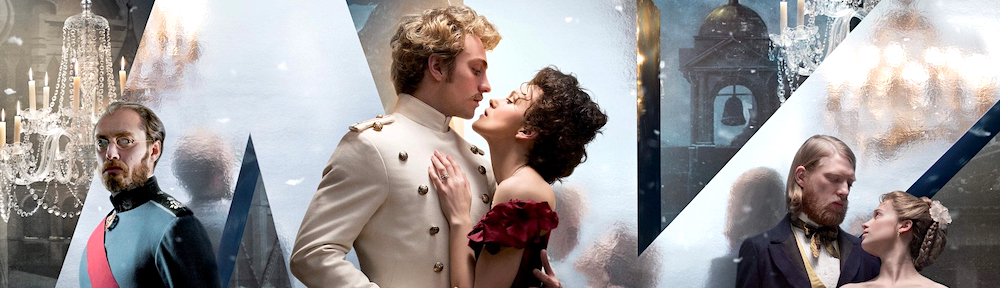

Joe Wright’s Tolstoy adaptation boasts phenomenal stylised production design and cinematography; enough that the characters and story are almost incidental — whatever their quality, the visuals would be worth it. I have no idea whether it’s a faithful or accurate adaptation, but as an overall work of art, it’s enchanting.

11

The Power of the Dog
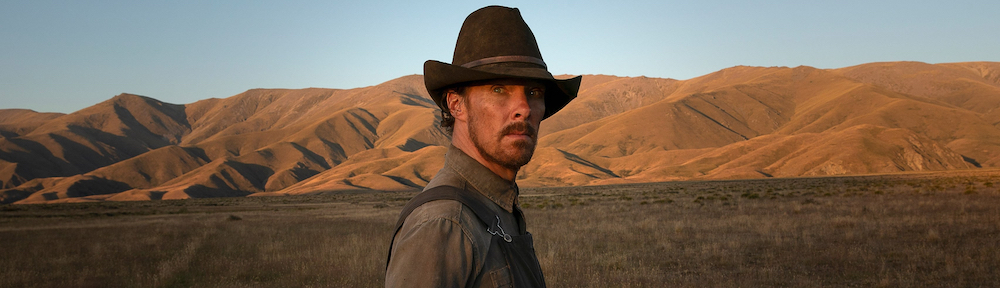

I sort of avoided this for a while, because I’ve not always got on with Jane Campion’s work and thought it might be a bit too abstruse for my taste. Indeed, it’s not always clear why you’re watching what you’re watching as it goes along, but it all clicks into place by the end; which, further, makes me think it might be even better on a rewatch.

10

Juggernaut
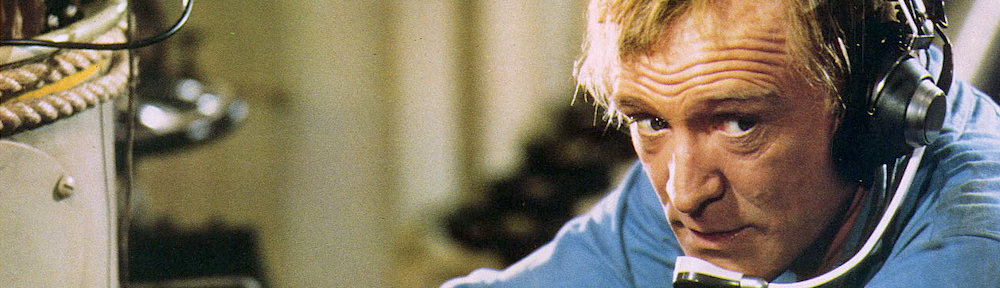

Considered dispassionately, Juggernaut deploys most of the familiar beats and clichés of any bomb-disposal-based thriller. But I overlooked all that when actually watching it thanks to the touch of director Richard Lester, who brings a kind of absurd mundanity to the “keep calm and carry on” attitude of the passengers even as bombs are going off beneath them. The silliness and tension work in harmony to make the latter hit home, clichés or no; and the star-studded cast give weight to even small scenes and moments, such that the manhunt on dry land feels as vital as the action at sea.

9

Predator: Killer of Killers
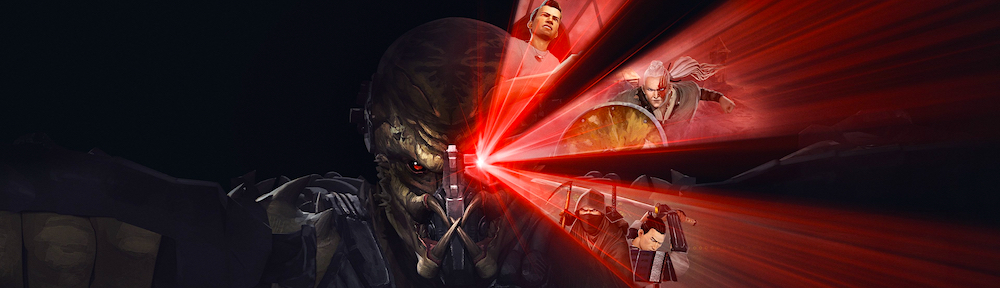

This first of two Predator movies released in 2025 (I haven’t yet seen the second), this was a direct-to-streaming animated anthology that could have been little more than a promo for the later film (a big-budget theatrical release). Perhaps that’s how it was conceived (I don’t know), but what we got was nothing so vacuous. As it barrels from one thrillingly-realised action sequence to another, you’d think it would become monotonous, yet it’s all so well done that instead it’s a non-stop adrenaline rush. It seems like Dan Trachtenberg (who was also responsible for Prey) just gets what a Predator movie should be.

8

The Untouchables
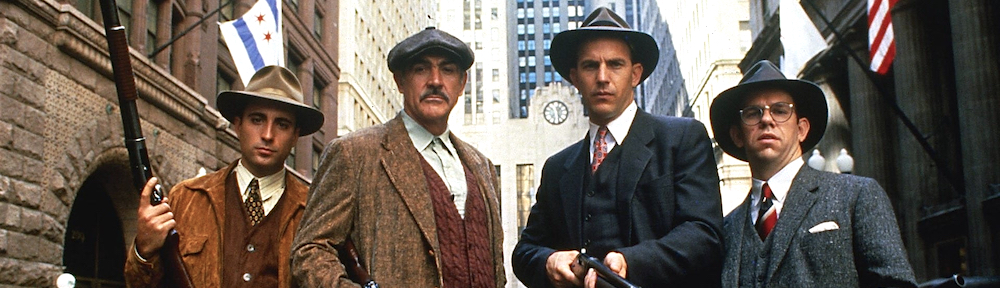

Quite a few films in this year’s list are great showcases for cinematic flair, and while some of them are very overt in that, others might not scream it in quite the same way, but it’s unmissable when you watch the whole thing. The Untouchables is, naturally, an example of the latter. The Battleship Potemkin-referencing stairway shootout is the most famous example (and, even now, it lives up to expectations as one of cinema’s greatest gunfights), but there are many more superb sequences scattered across the film, and Ennio Morricone’s score is an all-time selection of bangers to boot. No one should come to this film for a history lesson, but it is pure cinema.

7

The City of Lost Children


Jeunet & Caro’s steampunk fairytale boasts all the darkness and grotesquery you would expect of the latter’s traditional form, alongside production design so exquisite and cinematography so striking that they render it a contender for the best-looking film ever made. Three decades on, you can see where its influence has bled into various other films, but its off-kilter otherworldliness means it nonetheless feels totally unique.

6

Lifeforce
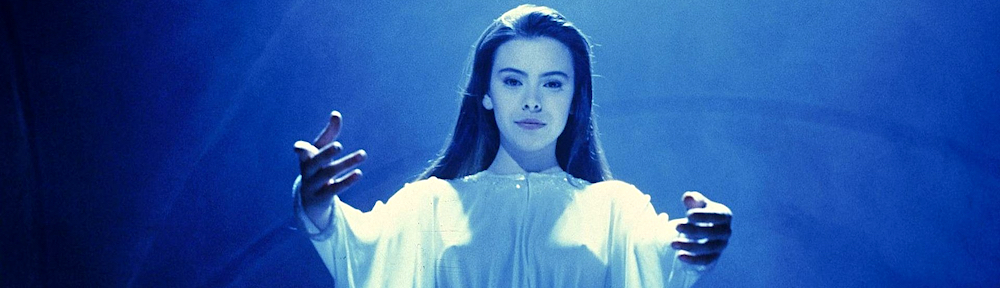

Lifeforce is probably best known for featuring Mathilda May naked and, yeah, there’s certainly plenty of that and, yeah, if you’re so inclined it’s certainly a highlight. It’s sort of gratuitous, but sort of justified because the film is then about how she’s so sexy it kills people and might end the world. That aside, it’s kind of like an updated Quatermass: a British-set sci-fi/horror about gruesome terrors arriving from outer space and potentially threatening us all. The way it escalates as it goes on is absolutely barmy and kinda inspired. They should make more films like this. Frankly, this is exactly the sort of stuff stereotypical 13-year-old boys should want to watch, not more Marvel slop.

5

I Saw the TV Glow
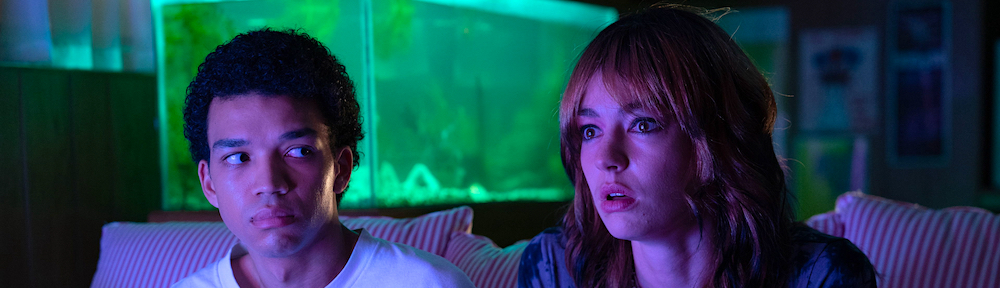

This does for the ’90s what Donnie Darko did for the ’80s, albeit even more obliquely. It’s a suburban sci-fi / fantasy / horror for anyone who grew up watching shows like Twin Peaks or Buffy the Vampire Slayer — so, me! As that, the vibes are immaculate and the cinematography is gorgeous, of the kind that really shines when augmented with HDR; but it’s certainly not style over substance, choosing to foreground some deeper themes (some would say at the expense of a story, but I thought they were just intertwined).

4

Wake Up Dead Man
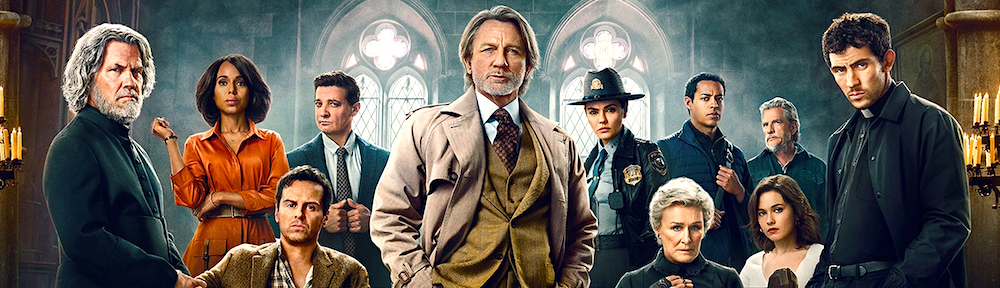

The third in Rian Johnson’s Knives Out Benoit Blanc series furthers the impression that the writer-director is a natural heir to Agatha Christie in terms of crafting compelling murder mysteries that also have something to say about people and/or society. The tone here swings darker than the caricatured satire of Glass Onion, but the eye for comedy is not totally lost even alongside weightier religious themes and some well-deserved poking of the American right. Plus, while it’s not as overtly stylised as several other films on this list, it looks gorgeous — like its predecessor, Knives Out, it manages to make digital photography look convincingly film-like and thus outclasses almost everyone else using the medium today.

3

Rebel Without a Cause
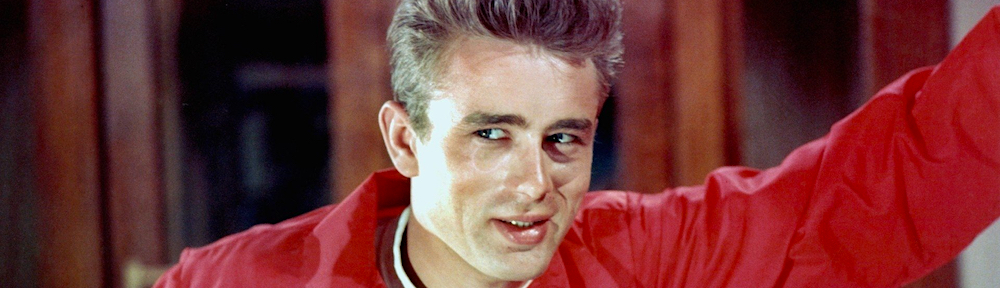

When choosing what to include in this list, there’s always a tension between “films I thought were examples of great cinema” and “films I personally enjoyed, for potentially esoteric reasons”. The latter usually wins out on balance — and I think some of the films we’ve already passed on this list speak to that, as will the films still to come — but the former is not unimportant. Rebel Without a Cause is definitely a case of the former. Not because I didn’t enjoy it (I’m happy to exclude films that are widely acclaimed but I didn’t like), but it didn’t give me that zing you get from a movie you love whatever its flaws. That said, it still surprised me (it wasn’t wholly what I thought it was going to be), and… well, I don’t want to turn this into a whole review, so I’ll sum up thus: all round, I think it’s an example of great cinema.

2

Tenebrae
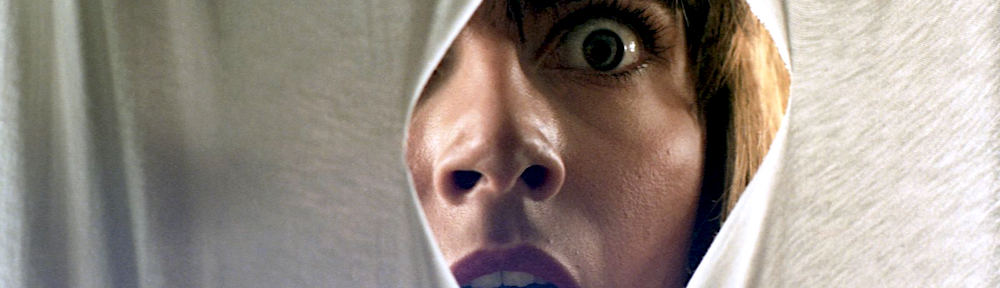

If I based this ranking solely on style, Dario Argento’s 1982 giallo would win hands down (though a couple of films from earlier in the list would give it a run for its money, to be fair). The camera moves, the colours, the editing, the banging soundtrack… the vibes are perfection. I’m not convinced the plot completely hangs together (which is not to say it’s not entertaining, I’m just not sure it fully adds up), but when everything else is firing on all cylinders like this, I can let that slide.

1

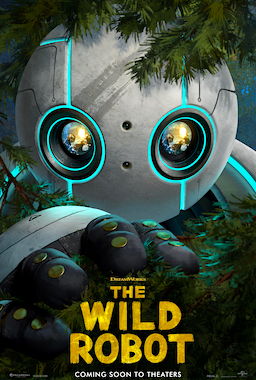
The Wild Robot
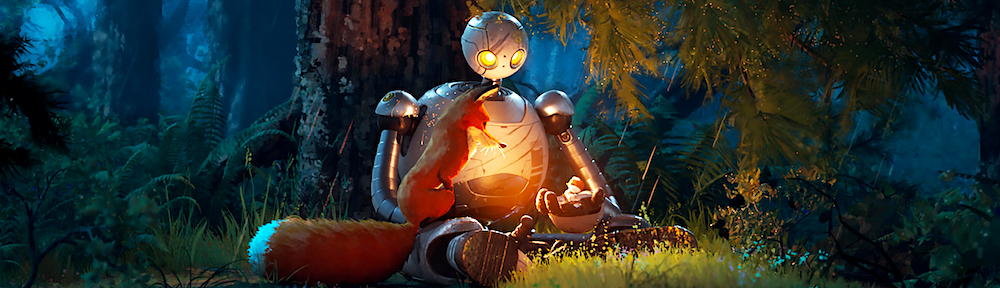

The genre of “animated movies about an emotive robot in an (initially) human-free world” may be small — as far as I’m aware, it’s just this and WALL•E (and, depending how you define “human-free”, Robot Dreams) — but I think this one is my favourite. In keeping with so many entries on this year’s list, it’s beautifully visualised; but it also features characters and a story that tug your heartstrings in multiple different ways, and it even manages to surprise occasionally in where it chooses to go and when. Incidentally, this is the first animated film to top my ‘best of’ list in 19 years of producing them, so that’s cool too.

My process for putting together this best-of is to create a long-list throughout the year of films that might end up in contention. I do occasionally look over it and remove things, so I can’t say how many were long-listed overall, but by December 31st it was at 54. Some of these are eliminated quickly — I take a broad view of “might end up in contention”, because an opinion can shift after a film sits with you a while, so I’ll long-list a title I’m only somewhat enamoured with if I feel I might settle into liking it more. Sometimes I do; often, I don’t. Others end up almost getting in to my final ranking, but don’t quite make it — so, as usual, I’d just like to highlight a few of them.

These are not #13–18 on my list (that would be cheating — if I wanted to do a longer list, I could), just a few of the films that came close and I had something to say about (for context, there were at least four or five more in a similar situation that I’m not bothering to touch on).

In no particular order…

  • A Real Pain almost made it onto the list thanks to just one scene that made the whole film click for me (which I quoted/summarised on Letterboxd), but that perspective wasn’t quite enough to squeeze it into a top 12 (top 15 or 20, maybe).
  • The Lodger: A Story of the London Fog is not one of Hitchcock’s very best works, but you can see the early signs of where he’s going to go. It feels like the product of a talented semi-amateur rather than the fully-fledged auteur he’d become.
  • Mission: Impossible – The Final Reckoning was too bloated and reminiscent of previous instalments (story-wise, the climax was just a do-over of the film-before-last) to reach the highs of the franchise’s very best entries, but I still enjoyed it overall, and the action was as impressive as ever (the aforementioned climax is also a jaw-dropping stunt showcase).
  • In 2023, one of my Challenge categories centred on film noir, and it ended with them dominating my best-of list. The same has not happened with poliziotteschi this year. (In fairness, it didn’t happen with gialli in 2023 or noir in 2022, and only one martial arts film made it last year.) My favourites — which were some of the last films to be pushed out of the final version of this year’s list — were The Italian Connection, Slap the Monster on Page One, and Street Law.

Now, let’s recap the 12 films that won the Arbie for my Favourite Film of the Month. Some of them have already been mentioned in this post, some haven’t, but either way, in chronological order (with links to the relevant awards), they were Milano Calibro 9, Macbeth, Lifeforce, The King of Kings, I Saw the TV Glow, The Untouchables, Live Like a Cop, Die Like a Man, The Wild Robot, Rebel Without a Cause, Tenebrae, Le Samouraï, and Wake Up Dead Man.

Finally, I’ve always ended this section by listing every film that earned a 5-star rating during the year. It seems right to acknowledge the films that scored top marks, and there’s normally far too many to include in my main list (even if it weren’t for the fact 4-star films usually sneak in too). But, as you’ll already know if you’ve read the statistics, this year there were only four films I scored so highly. It’s no real surprise that, with such a select list, for once all of them made it into the top 10%… but I’ve not actually said which they were anywhere yet, so they bear listing nonetheless: Rebel Without a Cause, Tenebrae, Wake Up Dead Man, and The Wild Robot.

For the last few years, I’ve done very poorly at keeping up with new releases… and 2025 was no exception: as noted earlier, I watched just 17 films that had their UK release during the year. For comparison, it was 57 in 2020; and even if you allow for that being a year when more than usual had home premieres, it was 50 in 2018.

That means this year’s “50 Unseen” list — my annual pick of 50 films designated as being from 2025 that I haven’t yet seen — features plenty of famous flicks, though I’ve also popped in a few smaller-but-acclaimed titles, as well as some that might become more prominent as awards season drags on. I will inevitably have forgotten or misjudged something noteworthy, but — as always — this list has been narrowed down from a much, much longer one based on a variety of factors, from box office success to critical acclaim via simple notoriety, and aims to represent a spread of styles and genres, successes and failures (though I still couldn’t bring myself to include the new War of the Worlds).
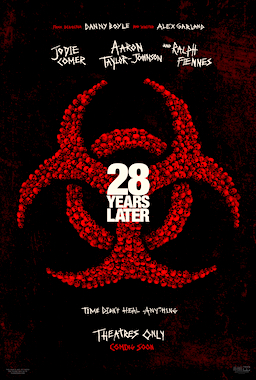
28 Years Later
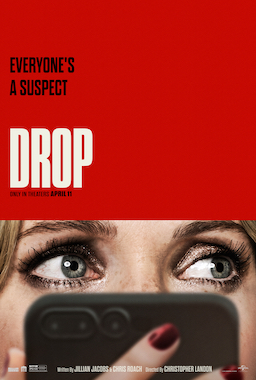
Drop
Final Destination Bloodlines
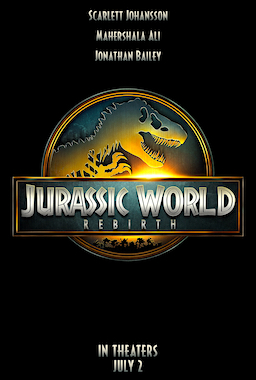
Jurassic World Rebirth
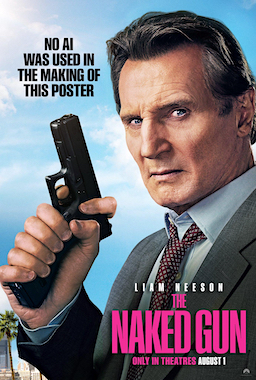
The Naked Gun
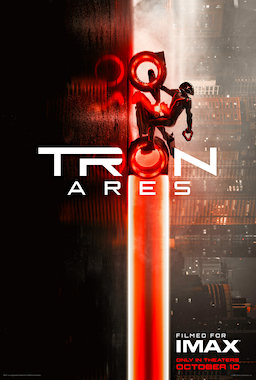
TRON: Ares
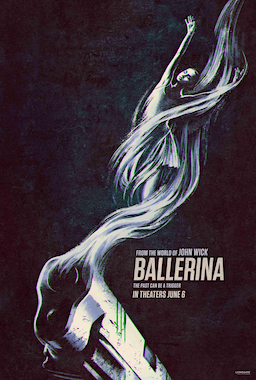
Ballerina
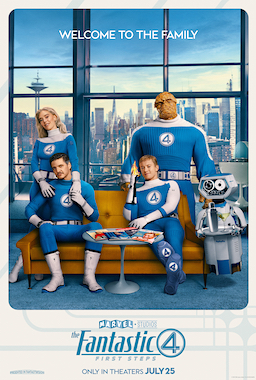
The Fantastic Four: First Steps
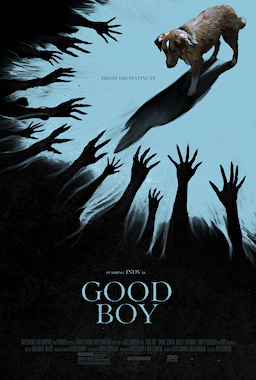
Good Boy
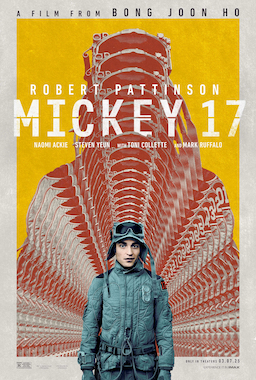
Mickey 17
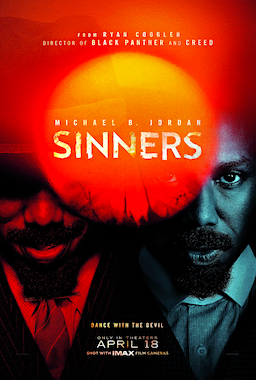
Sinners
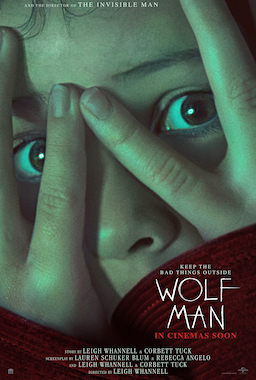
Wolf Man
28 Years Later
Avatar: Fire and Ash
The Ballad of Wallis Island
Ballerina
Black Bag
Blue Moon
Bridget Jones: Mad About the Boy
Bugonia
Captain America: Brave New World
Caught Stealing
Drop
Eddington
The Electric State
Elio
Eternity
F1
The Fantastic Four: First Steps
Final Destination Bloodlines
Good Boy
Hamnet
How to Train Your Dragon
It Was Just an Accident
Jurassic World Rebirth
Karate Kid: Legends
The Life of Chuck
Lilo & Stitch
The Long Walk
Marty Supreme
Materialists
Mickey 17
A Minecraft Movie
The Naked Gun
Now You See Me: Now You Don’t
One Battle After Another
The Phoenician Scheme
Predator: Badlands
The Roses
The Running Man
The Salt Path
Sentimental Value
Sinners
Snow White
Spinal Tap II: The End Continues
Thunderbolts*
Train Dreams
TRON: Ares
Weapons
Wicked: For Good
Wolf Man
Zootropolis 2

And with that, another year is over. It’s been a bit of an odd one in some ways, and I feel less confident than ever in predicting what the next year will bring blog-wise… except that I do plan to do it all over again, for the 20th time.

20 years! You know, I was only 20 myself when I started all this. Makes you think… but I’ll save what it makes me think for some future musing.

The Best of 2024

It’s time to finally let go of last year with my annual summation of what I liked best about it. Well, some of that, anyway. And then some more of that. And then a bunch of stuff I missed and so I don’t know if they were any good or not. Confused? Each bit will make sense when we get to it, I’m sure.

Anyway, before we get stuck in, my usual reminders. All the movies I watched for the first time in 2024 are eligible for this list, not just brand-new releases. And this is a ‘top ten’ in the sense that it’s the top 10% of my 2024 viewing. I watched 131 films for the first time last year, which means this time it’s a top thirteen.


The Thirteen Best Films I Watched for the First Time in 2024

I’ve called this “best films” because I always have, but this year I’ve definitely leant more into “favourites” in my decision-making. Maybe I always do, but when compiling this list, I was particularly conscious of choosing 4-star or borderline 5-star films I’d really enjoyed over 5-star films that I’d strongly admired.


I love a good sword fight, and this packs seven superb ones into a tight 85 minutes, while still finding room for some honour-based moral conflict. [Full review.]

12

The Adventures of Priscilla, Queen of the Desert


The perspective on drag- and trans-related issues feels ridiculously pertinent for something made 30 years ago, but it’s really the inherent joy, humour, and a degree of iconoclasm that makes this enduringly enjoyable.

11

The Menu


Some reviewers focused on the unsubtle social commentary, though I’d argue it’s only a significant problem if you disagree with it. Either way, set that aside and this is clearly an accessible edge-of-your-seat slow-burn thriller.

10

Dungeons & Dragons: Honour Among Thieves


In my Letterboxd review I commented that it’s “the kind of film I give 4 stars then put on my end-of-year top ten anyway” and, well, lookee here. I also said “it’s a stonkingly fun fantasy action-adventure flick whether you know the lore / rules [of D&D] or not”, and that’s also true.


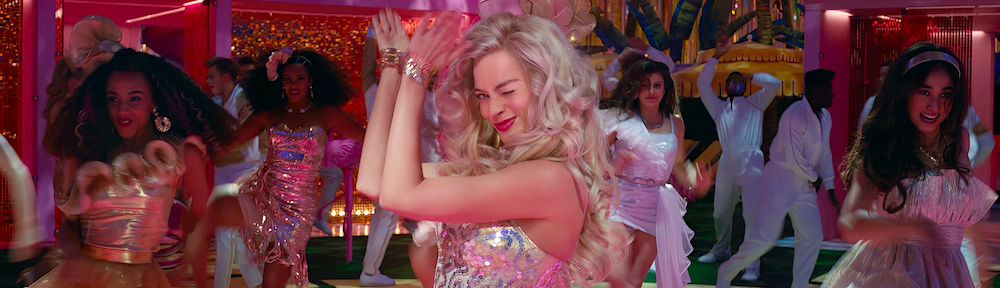
By all rights a live-action Barbie movie should be kiddie-aimed toy-advertisement slop, but put it in the hands of genuine auteurs (i.e. producer Margot Robbie and cowriter/director Greta Gerwig) and you end up with a movie that actually has something to say about women’s (and men’s) place in our world and how the toys we give to children have a role in reflecting and shaping — or perhaps distracting from — that reality. Lest that makes it sound like a lecture, it’s still a witty brightly-coloured entertainment. [Full review.]

8

Look Back


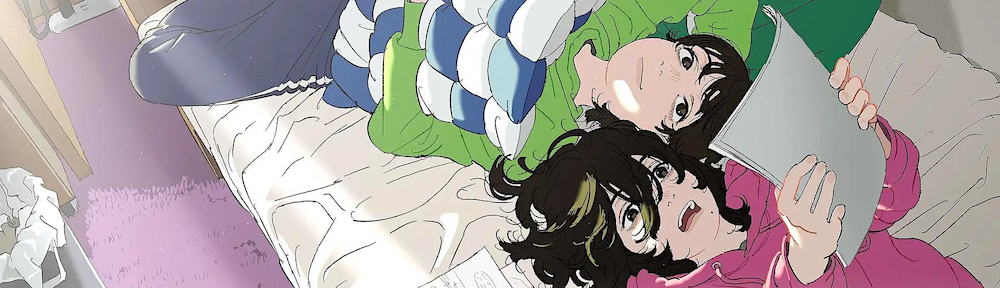
The only 2024 film to make my list this year is an hour-long anime about the evolving friendship between two girls as they develop from drawing manga for their school newsletter to producing it professionally… which is also kinda beside the point, but to say too much about where the story goes and what it’s really about would lessen its impact. It also serves a reminder that films don’t need an epic length to be powerful — let movies be as long as they need to be (and sometimes, that means let them be short).

7

The Best Years of Our Lives


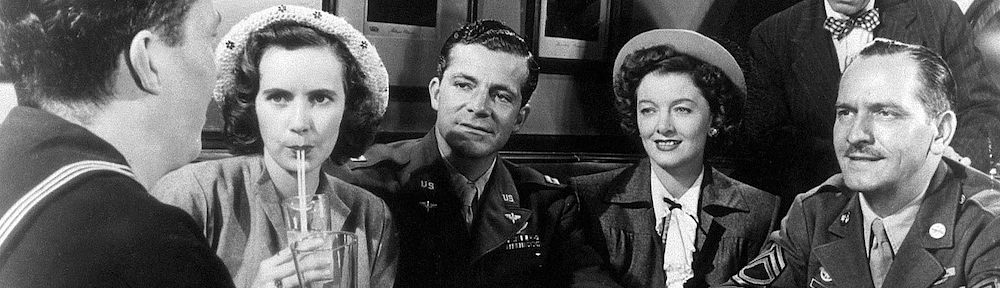
This won seven Oscars and sits on both the IMDb and Letterboxd Top 250s, and yet I’d argue it’s underrated; by which I guess I really mean you never hear anyone talk about it, which lessens its significance. It’s one of the last films from the IMDb list that I’ve watched for that reason: it was never a movie others made me feel I had to see. But I’m so glad I got there in the end, because it might just be a masterpiece, which depicts the fallout for American servicemen and their families in the wake of World War 2, via a trio of compelling storylines and across-the-board quality performances.

6

The Good, the Bad, the Weird


This self-described “Oriental Western” remixes Sergio Leone (the title is no coincidence) with a dash of Tarantino-esque modernism and a sprinkling of Mad Max dynamism, powered by whatever incredible energy has made South Korea a breeding ground for remarkable cult-hit movies over the past… well, quarter-century, now. It might technically be derivative (as I said, the Leone allusion is deliberate, as are other obvious homages), but the result still feels fresh, exciting, and boundlessly fun.

5

Army of Shadows


My list almost swings from one extreme to another now, as the next couple of films are Very Serious. First, Jean-Pierre Melville’s truth-based thriller about the French Resistance. Time has perhaps diluted the Anglosphere’s view of France in World War 2, thanks to comedies like ‘Allo ‘Allo! and that one oft-repeated Simpsons joke about “cheese-eating surrender monkeys” (if you doubt the significance of one gag, it has a Wikipedia entry which summarises its impact), but Army of Shadows is a brutal reminder of the dangers faced and sacrifices made by the Resistance. It’s a fittingly tense and uncompromising film, at times even uncomfortable, but the cumulative effect is an unparalleled thriller.


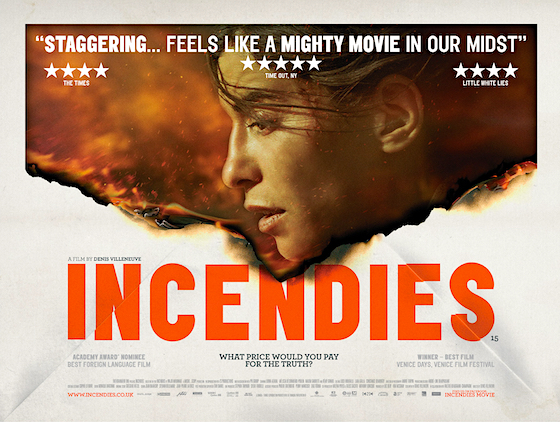
Similarly to Army of Shadows, Denis Villeneuve’s breakthrough film takes a real-life conflict (although here it’s anonymised into a fictional country) to examine the fallout of horrendous acts of violence, but in the cinematic form of an engrossing mystery thriller. Wanting those answers helps pull the viewer through the film’s bleaker sequences, including a bus-based centrepiece that is hellish, heartrending, and incredibly produced. And when we finally get the answers, they’re no less surprising and shocking than the rest. [Full review.]

3

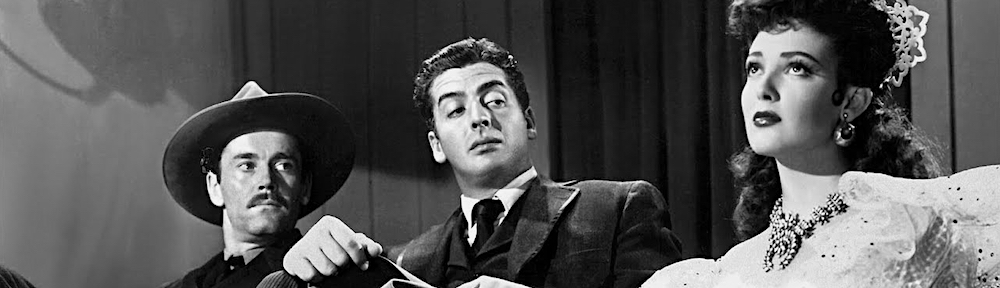
My Darling Clementine


Westerns have never been a particular favourite genre of mine. I don’t think I even saw one until I studied them for an A level module (Back to the Future Part III excepted). When I do watch them, I assume my taste will err more towards the revisionism of Spaghetti Westerns or more modern takes. Perhaps it does overall, but that doesn’t mean a classic Western can’t still hit the spot — and John Ford’s My Darling Clementine most certainly does that. As one of the earliest cinematic depictions of the gunfight at the O.K. Corral, it may not be historically accurate, but that scarcely matters when the entire film is so on-point otherwise. Heck, even the day-for-night photography looks good. Day-for-night never looks good! Remarkable.

2

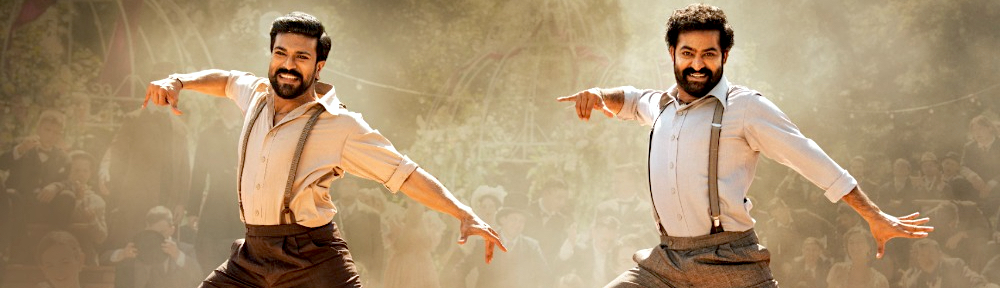
RRR


If all you’ve seen of RRR is the Oscar-winning Naatu Naatu sequence, you’d be forgiven for thinking it’s about Indian bros overcoming colonial bullies with the power of dance. And, well, you’d be correct, partly. Loosely (oh so loosely) based on the life of two real revolutionaries, RRR is also an action movie with sequences of unleashed imagination — the kind of over-the-top reality-defying CGI-aided fun Western filmmakers seem to be incapable of conjuring. It’s also a first-rate bromance, full of big emotion in its undulations of friendship and betrayal. Emotion so big it can only be conveyed through song, because of course it’s a musical too. Is there anything RRR isn’t? Yeah: subtle. But who needs subtlety when you’re this badass?

1

Bottoms


Regular readers may be aware that I don’t rewatch films all that often (that’s why I’ve had various strategies over the past few years to prompt rewatches) and I certainly don’t rewatch things quickly — if I watch a film twice within about five years, it feels like a fairly quick revisit (for a somewhat-timely example: I feel I watched Home Alone on a recent Christmas. I checked: it was 2017). This background is to help you understand the significance of the fact that, after I finished watching Bottoms for the first time, I immediately put it on again. I can remember one other occasion in my life when I’ve watched the same film twice back-to-back (my third and fourth viewings of Serenity, when it was screened by my university film society). Is that reason enough to declare Bottoms my favourite first-time watch of 2024? Not really (any number of factors could influence such a decision, not just “that was so perfect I must break the habit of a lifetime and watch it again immediately”), and I did pause to consider if I was letting that one aspect influence my decision (I concluded not). But it does help indicate how much I enjoyed it, and that’s why it’s #1.

As usual, I’ll take a moment to highlight a few other films.

Traditionally I don’t list “some more films I almost put in my top list” in this section, because if I’m going to do that, why not make the main list longer and rank them properly? That said, ranking is an imprecise art — on a different day, I might’ve erred a different way and my top 13 would be in a different order and/or include some different films. So, with that in mind, the films that survived my long list of 46 to be among the final considerations were (in strictly alphabetical order) American Fiction, The Cranes Are Flying, Dune: Part Two, The Holdovers, Rosemary’s Baby, and Scenes from a Marriage.

Now, to recap the 12 films that won the Arbie for my Favourite Film of the Month. Some of them have already been mentioned in this post, some haven’t; either way, in chronological order (with links to the relevant awards), they were Bottoms, RRR, My Darling Clementine, American Fiction, Dungeons & Dragons: Honour Among Thieves, Yi Yi, Army of Shadows, The Swordsman of All Swordsmen, Incendies, Rosemary’s Baby, The Cranes Are Flying, and The Good, the Bad, the Weird. (The first three being my eventual top three of the year is a whopping coincidence, not some kind of bizarre conspiracy, I promise.)

Finally, as always, a mention for the 14 films that earned 5-star ratings this year. (In my stats post I said it was 13, because I slipped up. None of these ratings are truly locked until I post a review, anyway (sometimes the process of writing the review causes me to reassess), so I’ll leave it as it is.) Nine of them made it into the top ten, including The Adventures of Priscilla, Queen of the Desert, Army of Shadows, The Best Years of Our Lives, Bottoms, The Good, the Bad, the Weird, Incendies, Look Back, My Darling Clementine, and RRR. The other five were American Fiction, The Cranes Are Flying, The Holdovers, Rosemary’s Baby, and Scenes from a Marriage.

Here’s an alphabetical list of 50 films from 2024 that I haven’t yet seen. They’ve been chosen for a variety of reasons, from box office success to critical acclaim via simple notoriety, representing a spread of styles and genres, successes and failures — with the caveat that I’ve almost certainly forgotten or misjudged something really noteworthy.

Abigail
Challengers
Ghostbusters: Frozen Empire
Kung Fu Panda 4
Mufasa: The Lion King
Wicked
Alien: Romulus
Deadpool & Wolverine
Kingdom of the Planet of the Apes
Moana 2
Nosferatu
The Wild Robot
Abigail
Alien: Romulus
Anora
Back to Black
Bad Boys: Ride or Die
Beetlejuice Beetlejuice
Better Man
The Brutalist
Carry-On
Challengers
Civil War
Conclave
Deadpool & Wolverine
Despicable Me 4
Drive-Away Dolls
Emilia Pérez
Furiosa: A Mad Max Saga
Ghostbusters: Frozen Empire
Gladiator II
Godzilla x Kong: The New Empire
Here
Horizon: An American Saga – Chapter 1
I Saw the TV Glow
It Ends with Us
Joker: Folie à Deux
Juror #2
Kingdom of the Planet of the Apes
Kraven the Hunter
Kung Fu Panda 4
Longlegs
The Lord of the Rings: The War of the Rohirrim
Love Lies Bleeding
Madame Web
Mean Girls
Megalopolis
Moana 2
Monkey Man
Mufasa: The Lion King
Nosferatu
Paddington in Peru
Queer
Rebel Ridge
Red One
The Substance
Transformers One
Trap
Twisters
Venom: The Last Dance
Wicked: Part I
The Wild Robot

Good golly, that’s another year over! In terms of the history of this blog, 2024 will be remembered as the year I completed my new-style Challenge for the first time. But I can’t rest there: it’s time to try to do it all over again for 2025.

The Cranes Are Flying (1957)

aka Letyat zhuravli

Mikhail Kalatozov | 97 mins | Blu-ray | 1.37:1 | Soviet Union / Russian | 12

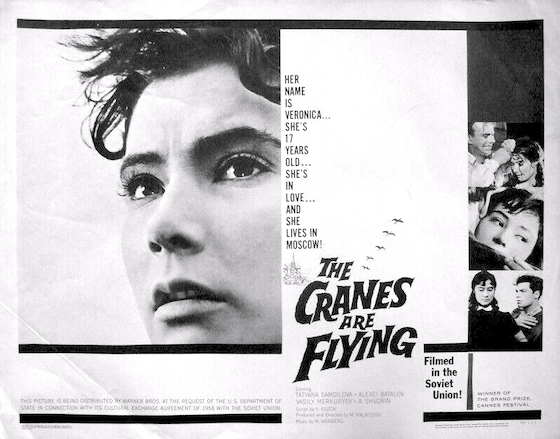
The Cranes Are Flying

The Russians seem to excel at making a certain kind of war movie; one that befits our stereotype of their national temperament. It might be most succinctly described as “grim as fuck”. The Cranes Are Flying is no Come and See in that regard, but it’s also a million miles away from the gung-ho, celebratory kind of World War II pictures being produced by the US and UK during the same era. No exciting commemorations of the heroic deeds of our brave boys here. Instead, this is a clear-eyed condemnation of the futility of sending the young off to war, and the devastation wreaked on those back at home.

Yet, for all of that, the film is underpinned by what feels like a broadly standard “wartime romance” storyline. Veronika (Tatiana Samoilova) and Boris (Aleksey Batalov) are young and in love, in that all-consuming do-or-die way only young people can be, when war is declared. He does some kind of important job so should be safe from the draft, but — spoiler alert! — he volunteers anyway. Will they survive the war so and be reunited? What other calamities will fate throw at them to prevent happiness? Yes, as if war weren’t enough, other Bad Shit goes down too. I suppose that’s part of what helps the film overcome what could have been a boilerplate plot: that it’s not just about Veronika pining away at home while Boris tries not to get killed on the front line. Indeed, the film is more focused on Veronika’s struggles than on Boris fighting the actual war, and it benefits immensely from a strong performance by Samoilova as Veronika navigates her own personal battles.

The war at home

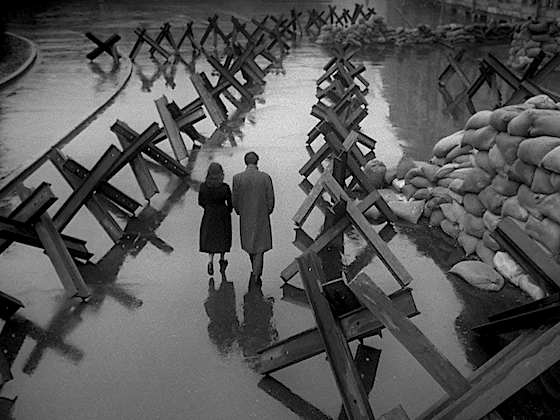
Nonetheless, what really elevates and defines the film is the truly remarkable camerawork by cinematographer Sergey Urusevskiy. Appropriately, his then-groundbreaking use of handheld cameras was a filming technique he had learned as a military cameraman during the war. But its effectiveness goes far beyond the mere fact the camera isn’t mounted. ‘Handheld’ tends to conjure an idea of rough, on-the-fly, documentary-esque filmmaking, but that’s not the impression you get here. The shots are still carefully composed, it’s just that they’re also often extraordinarily and innovatively designed, in a way that remains striking seven decades later. The very way the camera moves is sometimes part of the storytelling itself; at others, it cleverly imparts new information mid-shot, or reveals the scale of events. As an inherently visual success, there’s little point in trying to describe it — “just watch it” has rarely been more apt. (That said, Chris Fujiwara’s essay for the Criterion Collection neatly describes several of the film’s most memorable shots.)

The Cranes Are Flying was a huge success on its release, both at home in the Soviet Union — where it was a breath of fresh air for a nation used to positive propaganda pictures — and abroad, becoming the first (and last) Soviet film to win the Palme d’Or. (For our part, it was nominated for two BAFTAs, although it won neither: it was one of several still-acclaimed movies that lost Best Film from Any Source to a British film (Room at the Top) that also won Best British Film (do I smell bias?), and Samoilova lost Best Foreign Actress to the lead from that same film (hmm…) Next time someone tries to claim awards have become meaningless, maybe suggest they always have been.) They also don’t really matter, this many years later, when we can easily appreciate this film’s successes — both for the impact it had at the time, and the one it continues to have today.

5 out of 5

The Cranes Are Flying is the 91st film in my 100 Films in a Year Challenge 2024. It was viewed as part of Blindspot 2024. It was my Favourite Film of the Month in November 2024.

Rosemary’s Baby (1968)

Roman Polanski | 138 mins | UHD Blu-ray | 1.85:1 | USA / English | 18 / R

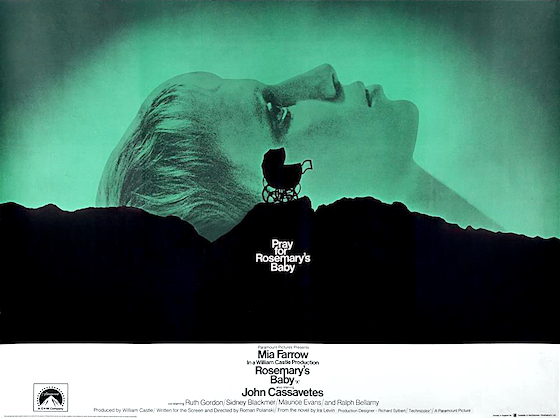
Rosemary's Baby

If you came to Rosemary’s Baby without any kind of context about its place in film history, you might well conclude it had been made in the last few years. Well, if you learnt about it on paper — visually, it’s obviously a film of the’60s thanks to its cinematography and production design (not a criticism; indeed, if anything, that’s praise). But in terms of its plot, its themes, its characters and their relationships, and what they might be signifying, that all feels quite ‘of the moment’. Maybe it did in the ’60s too. Maybe it has in every time period since — maybe that’s why the film has endured so well for over 50 years. (Plenty of other films have endured just as long — and longer — without feeling pressingly relevant to the present day, so I don’t want to overemphasise that point too much.) If it had been made more recently, the usual blowhards would be decrying it as “woke” and that it debases the traditional family unit, or something. The fact you can apply such ‘arguments’ as readily to something made over half a century ago as you can to something produced today is just one reason they’re absolute bollocks. But I digress.

To dig deeper into what the film is saying about such things, and how and why, necessitates some spoilers. I know some people think it’s ridiculous to consider spoilers in the context of a film as old as this, but there are always new generations and more people coming afresh to any film decades later — heck, I’ve only just watched it; that’s the whole point of this. That said, Rosemary’s Baby is sort of a self-spoiling film. We all know it’s a horror movie, so when it starts out like a pleasant slice-of-life domestic drama about a young couple moving into a new apartment building, making friends with their quirky neighbours, and deciding to start a family… well, we already know that’s not all it’s going to be, and the hints at more sinister goings-on are easy to spot.

Rosemary's scream

This is another way one might argue it feels modern, as it’s close to the “elevated horror” sub-genre that’s sprung up in the past few years. Again, the fact works like this have existed since at least the ’60s — and I’m sure there are other horror movies that could be similarly classified — shows that so many “new” things have actually been around before, we’ve just forgotten them, or not bothered to label them. Basically, rather than being an outright schlocky genre movie, it’s restrained and dramatic and realistic (in tone, at least). There’s not even an early fake-out jump scare to reassure you you’re watching a genre piece, a trick employed by so many films where the real frights only come in later. There’s a conceivable version of this film where the big reveal is that everyone’s normal, Rosemary was paranoid, and you’ve been watching a mental health drama, and literally all you’d have to change for that to work is the events of the final few minutes.

Indeed, it’s interesting to sort of take a step back and almost-objectively consider this as “a horror movie”. There are very few (if any) scares, and it doesn’t create the same kind of uneasy irrepressible mood as something like The Shining; although I would wager it can have a different effect on women, especially women of childbearing age, than it does on me, because the horrors are that much closer to home. I don’t think it’s failing in those respects — it’s not setting out to terrify you and then failing to achieve it — I just think it’s going for a different kind of horror. It’s the slow realisation that something is not just ‘not right’ but definitely very wrong; and by the time you grasp the scale of it, it’s too late to do anything; and too insidious to convince anyone else that it’s real. In that sense, it really is a good analogy for things like toxic relationships that look fine to the outside world.

And that’s the way in which the film is most modern, as I was saying at the start. Its central concerns seem to be issues of women’s bodily autonomy, controlling relationships, the way they isolate their victims and lead to abuse. If you want to close your senses to such unmissable subtext, I guess you could still see the film as no more than a genre piece about (spoilers!) a cult trying to birth the Antichrist, but I think you’d be burying your head in the sand to do so. Sure, the film doesn’t expressly call those elements out — doesn’t underscore them, or bluntly explain that’s what’s going on in modern terminology — but they’re inescapably in the mix. I do think that’s a difference between the film having been made in the late ’60s vs today: now, it would be hard to resist thoroughly leaning into those themes and making them more overt, because they’re things we’re much more aware of as a society, and much more concerned with combating. Again, it’s not that they’re exactly subtle here, but you get the sense some of the psychology involved was still not widely understood; that there perhaps wasn’t yet the agreed-upon terminology to explicitly call it out, other than to present it and show how negative it was.

Controlling relationships

All of which said, the timeliness or otherwise of the film’s concerns is irrelevant to its overall quality. As much as it would be a key point of interest to some, I’m sure it’s of no matter to others. Either way, though, Rosemary’s Baby remains a compelling story because of how it grounds its supernatural goings-on in day-to-day life. Without playing the “is it or isn’t it” angle, it nonetheless renders them almost mundane — these devil-worshippers aren’t wearing robes, enacting elaborate arcane rituals in ancient stone circles in the British countryside: they’re modern-day Americans, living pretty typical lives in a New York apartment block. Horror can exist everywhere and anywhere; it is everyday. Oops, maybe we’ve come back round to making a sociological point again…

5 out of 5

Rosemary’s Baby is the 82nd film in my 100 Films in a Year Challenge 2024. It was viewed as part of Blindspot 2024. It was my Favourite Film of the Month in October 2024.

Incendies (2010)

Denis Villeneuve | 131 mins | UHD Blu-ray | 1.85:1 | Canada & France / French & Arabic | 15 / R

Incendies

The Best Foreign Language Film category at the 2011 Oscars is, in retrospect, a pretty impressive year. Alejandro González Iñárritu was already well established before his nominated film, Biutiful, but his fellow nominees included Yorgos Lanthimos for only his third feature, Dogtooth, and Denis Villeneuve for this, his second after his career re-start. And yet the winner was In a Better World. Remember that? Me neither. (I don’t even recall it ever being mentioned in the last near-decade-and-a-half; although its director was Susanne Bier, who’s gone on to the likes of The Night Manager and Bird Box, so that’s something). It seems like an odd choice for victor with the power of hindsight, but that’s hindsight for you. On the other hand, watching Incendies, it’s hard to see how anyone could ever have missed its incredible power. (Or maybe In a Better World is even better. I struggle to believe that possibility, but you never know… and probably never will, because who’s still watching it nowadays? It’s certainly not getting a Collector’s Edition-style 4K UHD release from a boutique label — unlike, say, Incendies.)

Incendies is, on the surface, one of those films that can sound off-puttingly heavy: it’s about generational trauma caused by a long-running war in the Middle East. Sure, that kind of thing can be Worthy and Great filmmaking, but egads, hard going. But while Incendies is all those things, it’s also a compelling mystery, which leads to twists worthy of a great thriller. The first of those comes in the film’s setup: Nawal, the mother of a pair of grownup twins has died, and it’s only from her will they learn, first, that their thought-dead father is still alive and, second, that they have an older brother they didn’t know existed. They are tasked with finding both men, and only then will they receive the final letter she has left for them. To do this, they must travel to their mother’s homeland, an unnamed Middle Eastern country (heavily inspired by Lebanon) where the aforementioned war is over, but the scars still linger. As they investigate their mother’s previous life, we see it play out in flashbacks.

While the film at first seems to be about the twins, it’s really most about Nawal. That’s in part thanks to the incredible performance by Lubna Azabal. She has to portray this woman across decades, from a relative innocent to someone changed and hardened by all she’s been through, and charting every step of that journey, too. Plus, she’s left to convey almost all of that silently. Not that she’s mute, but she’s rarely allowed the shortcut of dialogue that discusses or exposes her emotions and motivations. That we still gain so much understanding of the how and why of Nawal is remarkable, really; a performance that, under different circumstances (let’s be honest: if it were in English) would surely have contended for every major award going.

You and whose army?

The film is not about a specific conflict — that’s part of the reason playwright Wajdi Mouawad didn’t explicitly set his original work in Lebanon, and why Villeneuve ultimately didn’t change that when adapting it. Rather, as Villeneuve says, it’s “about the cycle of anger, the heritage of anger in a family, where in a conscious and subconscious way anger is traveling among family members, and among a society”. The point is not “what happened in Lebanon”, but what happens when families are torn apart, emotionally just as much as physically; what the fallout from that is, and how healing can be found — if, indeed, it can.

Oh dear, it’s all sounding a bit heavy again, isn’t it? And yes, there is an element of Incendies that is like that. It’s the kind of film that uses Radiohead on its soundtrack multiple times. (That said, this is how I feel that band’s dirge-like ambient-noise style of music functions best: as background mood-creating film score, rather than as, y’know, songs.) But, as I said before, this is also a film that plays as an effective mystery. What, exactly, happened to Nawal? Who and where is their father? Who and where is their older brother? Why was this a secret Nawal took to her grave? Why did she feel the need to reveal it posthumously? Any and all of these are questions your stereotypical “art house” movie would leave unanswered, providing vague prompts for you to consider after the film ends — or, inevitably, provoke you to Google “Incendies ending explained”. But Incendies isn’t actually like that — all of those questions are answered, because they’re essential to what the film is about. That they can also be gasp-inducing all-timer reveals is another bonus.

Within that, Villeneuve also shows off the expert filmmaking that has since elevated him to Christopher Nolan-adjacent levels of big-budget auteurist blockbuster-making. There’s a sequence on a bus in the middle of the film that is as tense as any suspense movie, as scary as any horror movie, and as emotionally devastating as any hard-hitting drama. There’s a reason it’s the inspiration for almost every poster and key art piece related to the film. (The exception is the original American theatrical poster, which shows… a woman standing by some sand. Great marketing, folks. Maybe that’s why it didn’t win the Oscar.) It’s an event of such horror that — especially when combined with the shocking revelations later in the film (which, obviously, I’m not going to spoil) — I imagine this is the kind of movie some people swear off ever watching again, like Requiem for a Dream; a big comparison, maybe, but one Incendies is up to.

5 out of 5

Incendies is the 68th film in my 100 Films in a Year Challenge 2024. It was viewed as part of “What Do You Mean You Haven’t Seen All of the IMDb Top 250?”. At time of posting, it was ranked 101st on that list. It was my Favourite Film of the Month in September 2024. It placed 4th on my list of The Best Films I Saw in 2024.

Cecil M. Hepworth shorts

I know I’m generally quite poor about posting reviews nowadays (“nowadays” being “for the past five years”, considering that’s roughly how long ago my backlog stretches), but I do have the Archive 5 to dig into that, and sometimes post reviews of newer watches too. What really suffers, however, are short films. I have no consistent plan to correct that, but here at least are reviews of three shorts I’ve watched this year with a simple connection: they were all directed by early British filmmaker Cecil M. Hepworth.

  • Alice in Wonderland (1903)
  • Explosion of a Motor Car (1900)
  • The Indian Chief and the Seidlitz Powder (1901)


    Alice in Wonderland

    (1903)

    Cecil M. Hepworth & Percy Stow | 9 mins | digital HD | 4:3 | UK / silent

    The first screen adaptation of Lewis Carroll’s beloved novel is a whistle-stop tour of some of its best-known moments. What it loses in not being able to retain any of Carroll’s memorable prose or dialogue, it makes up for by being a neat showcase for some early-cinema special effects — Alice shrinks and grows; a baby turns into a pig; and so on. There’s little doubt that this isn’t the best filmed version of the tale (unless you have a fondness for early cinema over anything made later), but it’s a valuable glimpse into the ambition and skill of the form’s pioneers.

    The only surviving print is in terrible shape and missing several minutes of footage (it was originally 12 minutes long), but at least we have some way of seeing this important bit of film history. Talking of which, you can watch it on the BFI’s official YouTube channel, although they only provide it in standard definition. Fortunately, there’s a full HD version here.

    3 out of 5


    Explosion of a Motor Car

    (1900)

    Cecil M. Hepworth | 2 mins | digital SD | 4:3 | UK / silent

    Cars randomly exploding for almost no reason is a hallmark of action cinema, but it begins even earlier than the codification of that genre, as this short from 1900 shows.

    We watch as a car full of people merrily trundles along a suburban street… then, suddenly, there’s a puff of smoke and the vehicle is reduced to a pile of parts. A policeman comes over to inspect, at which point body parts rain from the sky. It would be gruesome if it weren’t so obviously comical… especially when the policeman begins to casually pile them up. And that’s the end.

    Basically, it’s a comedy sketch à la 1900. I guess it was probably inspired by fears of this modern new invention, the motor car, but at least it plays those for laughs. There are worse ways to spend 90-or-so seconds (depending on the playback speed of the version you watch — the BFI version is here).

    3 out of 5


    The Indian Chief and
    the Seidlitz Powder

    (1901)

    Cecil M. Hepworth | 2 mins | digital SD | 4:3 | UK / silent

    So, I bought the 88 Films Blu-ray of ’70s British-produced Western Hannie Caulder (mentioned in my May failures), had a little look at the booklet and, for whatever reason, the opening paragraph of the essay by Lee Broughton caught my eye. To quote: “The British have been making Westerns since the early days of silent cinema (see The Indian Chief and the Seidlitz Powder [Cecil M. Hepworth, 1901]) and they continue to make Westerns today (see The English [Hugo Blick, 2022]).” This, first off, reminded me that I’d meant to watch The English (I find Blick’s work to be both fascinating and somehow off-putting, so I always feel I should watch them but, when there’s such a plethora of choice nowadays, it’s easier to go for something, well, easier). More relevantly, it sent me off to Google this short, having recognised the director’s name (partly from watching the above-reviewed shorts a couple of months earlier) and, more importantly, being interested in the early days of cinema — especially as shorts such as these can usually be found online, if they survive. You often end up with low-quality DVD rips on YouTube, but, thankfully, this one is available on the BFI for free.

    All of that said, it’s… not all that. It’s a Western in technicality only: the sole character is a Native American chief; though you’d only infer that from the title, because his costume is terrible. There are no other signifiers that this is a Western — the basic set could be a store or storeroom anywhere, and presumably Seidlitz Powder was a product sold in British shops. I presume that because the short is a one-gag comedy based around the effects of that product, and so British audiences must’ve known about it. As far as I’m aware, it’s not a product still in existence today, so thank goodness for the BFI’s explanatory notes (also at the link above) to illuminate the context of the joke.

    Other than that, the film is noteworthy for containing a sequence in slow motion. It’s an inherently cinematic effect, so it’s always interesting to see it deployed so early in the form’s history. Indeed, it stands at odds with how the other ‘effects’ in the film are achieved: the chief’s belly swells by the performer (Hepworth himself, possibly? I don’t know, but I believe he often appeared in his own films; equally, someone is operating the camera) fiddling around inside his costume and shaking it about until it inflates. Then he “bounce[s] around like a balloon”, says the BFI — rather overselling it, as he just kind of leaps about a bit. There is one more cinematic technique: a jump cut to allow for a puff of smoke when his stomach bursts… followed by the performer awkwardly folding up his now over-large costume before darting out the door.

    So, two minutes filled with casual racism, 120-year-old topical humour, and some weak theatrical ‘special’ effects. But hey, at least we can experience British cinema’s early forays into uniquely cinematic technique and a key genre.

    2 out of 5


  • Archive 5, Vol.11

    I have a backlog of 515 unreviewed feature films from my 2018 to 2023 viewing. This is where I give those films their day, five at a time, selected by a random number generator.

    Today, the main emergent theme is “films that weren’t so great” — although there are a couple of bright spots to be found, still.

    This week’s Archive 5 are…

  • Dumb and Dumber (1994)
  • Bill & Ted Face the Music (2020)
  • Mangrove (2020)
  • Out of Africa (1985)
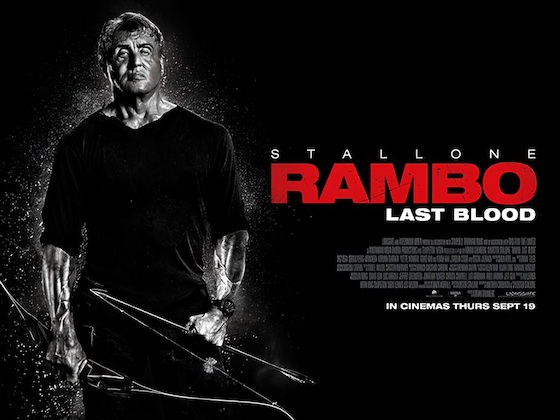
  • Rambo: Last Blood (2019)


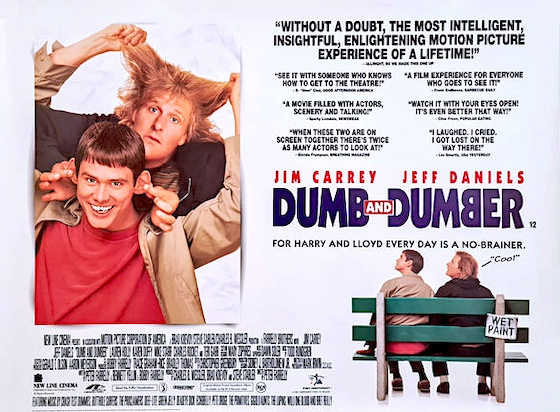
    Dumb and Dumber

    (1994)

    Peter Farrelly | 107 mins | digital HD | 16:9 | USA / English | 12 / PG-13

    Dumb and Dumber

    The nicest thing I can say about Dumb and Dumber is that it does at least live up to its title: it starts dumb and gets dumber.

    Despite the film’s later reputation in some circles as a modern comedy… if not “classic”, then certainly “success” — enough to eventually earn it both a prequel and sequel, at any rate — I’m clearly not alone in this view: apparently the original draft of the screenplay was so poor that it gained an enduringly negative reputation among investors; to the extent that, even once it had been rewritten, it had to be pitched under a fake title in order to get people to even read it. I feel like the final result only goes some way towards fixing that, with an oddly episodic structure and some bizarrely amateurish bits of filmmaking for a studio movie (the audio quality is relatively poor; there’s too much reliance on samey master shots).

    There are a few genuinely funny bits between all the gurning, guffawing, and scatology. It’s a shame they’re not in an overall-better film.

    2 out of 5

    Dumb and Dumber was #119 in my 100 Films in a Year Challenge 2021. It featured on my list of The Worst Films I Saw in 2021.


    Bill & Ted Face the Music

    (2020)

    Dean Parisot | 88 mins | digital HD | 2.39:1 | USA & Bahamas / English | PG / PG-13

    Bill & Ted Face the Music

    I wasn’t that big a fan of the original Bill & Ted films, so I didn’t have high hopes for this — after all, most decades-later revival/reunion movies are primarily about trying to please existing fans, not win round new ones; and it feels like a good number of them fail even in that regard. Face the Music is definitely full of the requisite nods and references, both explicit and subtle, major and minor; but they’re all in the right spirit and it kinda works (albeit a bit scrappily at times), bound together by a deceptively simple, pervasive niceness.

    Alex Winter is particularly great as Bill. Given all the stories we hear about how awesome Keanu Reeves is in real life, it’s no surprise that — despite being the much (much) bigger movie star — he’s generous enough to be a co-lead and let Winter shine. Brigette Lundy-Paine is absolutely bang on as Ted’s daughter, aping Reeves’ performance in all sorts of ways. As the younger Bill, Samara Weaving is clearly game, but doesn’t carry it quite as naturally (apparently she was cast after Reeves discovered she was the niece of Hugo Weaving, who he’d of course worked with on the Matrix trilogy, so that might explain that).

    “Be excellent to each other” is a message the world needs now more than ever, and that’s as true four years on as it was back in 2020. For me, that makes this third outing Bill and Ted’s most excellent adventure.

    4 out of 5

    Bill & Ted Face the Music was #136 in my 100 Films in a Year Challenge 2021.


    Mangrove

    (2020)

    aka Small Axe: Mangrove

    Steve McQueen | 127 mins | TV HD | 2.39:1 | UK / English | 15

    Small Axe: Mangrove

    The line between film and TV continues to blur with Mangrove: a 127-minute episode of an anthology TV series, Small Axe, conceived and directed by Oscar winner Steve McQueen, that premiered as the opening night film of the London Film Festival. It was made for television, but in form and pedigree it’s a movie. Just another example in a “does it really matter?” debate that continues to rage — and is only likely to intensify with the increasing jeopardy faced by theatrical exhibition. (I wrote this intro almost four years ago, and while theatrical is fortunately still hanging in there post-pandemic, I do think the line remains malleable.)

    I only ended up watching two episodes/films from Small Axe in the end. I did intend to go back and finish them, especially as they were heaped with critical praise, but the second (Lovers Rock) bored me to tears, which didn’t help. This first was better, but still not wholly to my taste. It tells an important true story about racially-motivated miscarriages of justice, but I found it overlong and with too much speechifying dialogue. That kind of thing works better in a courtroom setting, I find, so perhaps that’s why I felt the film was at its best once it (finally) got to the courtroom. When it’s good, it really is very good.

    4 out of 5

    Mangrove was #246 in my 100 Films in a Year Challenge 2020.


    Out of Africa

    (1985)

    Sydney Pollack | 161 mins | digital HD | 16:9 | USA & UK / English | PG / PG

    Out of Africa

    This is very much the kind of thing that was once considered a Great Movie, in an “Oscar winner” sense, but nowadays is sort of dated and attracts plenty of less favourable reviews. It’s long, historical, and white — not how we like our movies about Africa nowadays, for understandable reasons.

    Certainly, there are inherent problems with its attitude to colonialism, but to a degree that’s tied to how much tolerance you have for “things were different in the past” as an argument for understanding. In this case, just because these white Europeans shouldn’t have taken African land and divvied it up among themselves and treated the inhabitants as little better than cattle, that doesn’t mean the individuals involved weren’t devoid of feeling or humanity. People like Karen, the film’s heroine, were trying to do what they thought was right within the limited scope of what society at the time allowed them to think. With the benefit of a more enlightened modern perspective, we can see that was still wrong and that they didn’t go far enough, but (whether you like it or not) there is an element of “things were different then”.

    Morals aside, the story is a bit slow going, bordering on dull at times, but it’s mostly effective as a ‘prestige’ historical romance, which I think is what it primarily wants to be. It’s quite handsomely shot, although not as visually incredible as others make out, and John Barry’s score is nice — you can definitely hear it’s him: on several occasions it reminded me of the “love theme”-type pieces for his Bond work.

    3 out of 5

    Out of Africa was #212 in my 100 Films in a Year Challenge 2020.


    Rambo: Last Blood

    (2019)

    Adrian Grünberg | 89 mins | digital HD | 2.39:1 | USA, Hong Kong, France, Bulgaria, Spain & Sweden / English & Spanish | 18 / R

    Rambo: Last Blood

    Sylvester Stallone’s belated returns to the roles that made his name have worked out pretty well so far, I think, with Rocky Balboa and Rambo (i.e. Rambo 4) being among my favourites for both those franchises; not to mention Creed and its sequel. Unfortunately, here is where that streak runs out.

    Running a brisk 89 minutes (in the US/Canada/UK cut — a longer version was released in other territories), the film is almost admirably to-the-point. We all know where it’s going, and more or less what plot beats it will hit along the way, so it doesn’t belabour anything, it just gets on with it. However, you eventually realise why other films ‘indulge’ in the kind of scenes this one has done away with: movies are about more than just plot, they’re about character and emotion and why things happen. Last Blood is so desperate to get to the action that it strips those things back to their bare minimum, thus undermining our investment. And then, weirdly, it hurries through the action scenes too. The climax packs in as many gruesome deaths in as short a time span as possible, meaning none but the most stomach-churning have any impact; and even those disgusting ones are mercifully fleeting. More, it feels rushed and of little consequence. Far from a grand send-off to the Rambo saga (which a slapped-on voiceover-and-montage finale attempts to evoke), it feels like a short-story interlude.

    Did Rambo deserve better? Well, I wouldn’t necessarily go that far. But, on the evidence of this, it might be best if they don’t try again.

    2 out of 5

    Rambo: Last Blood was #74 in my 100 Films in a Year Challenge 2020.


  • I.S.S. (2023)

    Gabriela Cowperthwaite | 95 mins | Blu-ray | 2.39:1 | USA / English & Russian | 15 / R

    I.S.S.

    Here we have the kind of film that gets branded as “science-fiction”, simply because it’s set in space; but, as an opening title card is at pains to point out, the actual setting is the present day. Mankind has a permanent presence in space on the eponymous International Space Station — that’s not sci-fi, that’s reality. Any speculative elements here are no more implausible or futuristic than in, say, a Jack Ryan story. Heck, James Bond films have routinely featured more impossible, fictional gadgets than anything seen here, and no one’s seriously describing those as “sci-fi” — except maybe Moonraker, and that’s really only because it’s set in space. That said, if we take the genre at face value — fiction about science — well, space exploration is pretty sciencey, and the I.S.S.’s crew are scientists, so, yeah, I guess maybe it is science-fiction, in a literal sense.

    Anyway, as I said, the film is set in the present day, with the I.S.S. currently crewed by three American and three Russian astronauts. Is that often the case? I think they’re the two primary countries to crew the station, but astronauts of various nationalities end up on there; I’m just not sure how regularly. It certainly simplifies the film’s plot to keep everyone distinctly on one of the two sides, because of what happens next: down on Earth, war breaks out between the US and Russia, and each trio’s commander is instructed by their respective ground control to secure the station as a key asset. (Why would a war on Earth care about a scientific research space station at a time when space is hardly a key battleground? The film does have an explanation for that.)

    It is, in my view, an enticing setup; indeed, it’s what sold me on watching the film as soon as I heard about it. Unfortunately, it doesn’t have any fresh ideas beyond that inciting incident. What unfurls over the next hour-or-so (after a bit of character establishment and plot setup — the film runs under 90 minutes before credits) is a moderately tense “who can be trusted?” thriller, with both sides dubious of the other’s intent, as well as degrees of distrust within their own camps. But it never manages to take that anywhere surprising, with every twist feeling first-idea obvious. It’s not that the film telegraphs these narrative turns, but if you’ve seen a thriller before, you’ll likely expect every one.

    Perhaps if the sides hadn’t been so neatly divided — if there had been crew members from other countries, with conflicting loyalties — the film would’ve had more juice. Part of the problem is a limited cast size: the crew is just six people; teams of three are already quite limited for generating internal conflict, so if you cut that down to two with two floating (pun semi-intended) members… Well, now we’re perhaps getting into the territory of judging the film for what it isn’t than for what it is. Nonetheless, it feels like maybe those involved could or should have spent more time exploring those possibilities themselves.

    In space, no one can hear you scheme

    Presumably this was a relatively low-budget endeavour, given the shortage of marketing push (its UK release, three whole months after its US bow, seems to be fairly limited) and lack of major star wattage — though there’s a fair chance you’ll recognise most of the cast, depending what else you consume. The lead is Ariana DeBose, of West Side Story and “Angela Bassett did the thing” fame. Her commander is the generally-recognisable Chris Messina, with the American side rounded out by John Gallagher Jr, who I always remember from The Newsroom, but has also been in the likes of Westworld and 10 Cloverfield Lane. The Russians are led by The Americans’ Costa Ronin, alongside the prolific Pilou Asbæk (Borgen, Game of Thrones, Ghost in the Shell, etc) and the only cast member I didn’t recognise, Masha Mashkova (maybe you’ll know her if you watched McMafia).

    Despite the limited cost, the realisation of space and weightlessness is decent — don’t expect Gravity when one crew member sets off on a spacewalk, but the effects are more than serviceable. I’m even curious how they achieved weightlessness — I presume they didn’t have the budget for Apollo 13-style “vomit comet” flights, nor Interstellar’s complex rigs, and sometimes you do suspect the actors are just bobbing around a bit, but it mostly works. Sadly, the current Blu-ray release is entirely extras-free (not even a trailer), so it remains a mystery to me for now.

    It’s a shame that I.S.S. doesn’t offer something exceptional enough to elevate it to the ranks of those other space films I just mentioned. Personally, however, I just fundamentally enjoy seeing films set in the present-day/near-future of real-world space exploration, so I’m still glad it exists.

    3 out of 5

    I.S.S. is in UK and Irish cinemas from tomorrow, Friday 26th April 2024. It’s the 29th film in my 100 Films in a Year Challenge 2024.

    Archive 5, Vol.10

    I have a backlog of 520 unreviewed feature films from my 2018 to 2023 viewing. This is where I give those films their day, five at a time, selected by a random number generator.

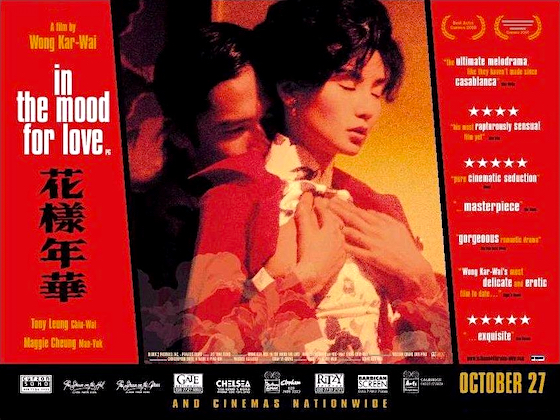
    Today, we’ve got quite the variety, from Oscar nominees to straightforward action entertainment; from super-timely recent documentaries to pioneering animation from almost a century ago. But they’re all connected by… the fact I wrote some notes after I watched them. Thank goodness, otherwise reviewing some of them years later would be bloomin’ impossible. (That’s not much of a connection, I know, but it was on my mind after In the Mood for Love last time.)

    This week’s Archive 5 are…

  • A Star Is Born (2018)
  • Boss Level (2021)
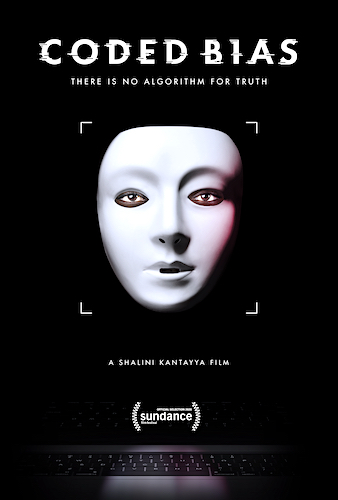
  • Coded Bias (2020)
  • Shadow of a Doubt (1943)
  • The Adventures of Prince Achmed (1926)


    A Star Is Born

    (2018)

    Bradley Cooper | 130 mins | digital HD | 2.39:1 | USA / English | 15 / R

    A Star Is Born

    This is the fourth version of A Star is Born, for whatever reason, but I’ve not seen any of the others so I won’t be making comparisons. I’m sure the story has been modernised (the last version was made in the ’70s, with the previous two in the ’50s and ’30s) without losing its fundamental essence: successful musician (here, Bradley Cooper) uncovers a new talent (Lady Gaga) who comes to outshine him. I guess it’s a timeless tale in the age of celebrity.

    Singers-turned-actors have a mixed history, though casting one in a story such as this is fitting, given how you need to believe they’re a top-drawer musical artist. Fortunately, Gaga actually can act as well as sing, so she’s an unqualified success here. The headline song, Shallow — a duet between the two leads, which attracted even more attention for how they performed it at the Oscars — is… perfectly fine. People went a little too crazy for it at the time, I feel. But it’s given weight by how well it’s used in the film, so I guess that could sway you.

    Also pulling double duty (well, triple if you count the singing) is Cooper, directing for the first time. (With all the talk this past awards season about how desperate Cooper is for an Oscar, it’s easy to forget that Maestro was only his second time behind the camera.) I seem to remember there being some complaints when he wasn’t nominated for direction for this one, but I think that was a fair omission. It’s not bad, but his directorial choices are a little too wavering. Like, in the early scenes, when the camerawork is all a bit documentary-ish, is effective — it undercuts the “glamorous story”, the almost-inherent fakeness of Musical as a genre, by making it feel Real. But later he gives in to glossy stylings too often; and too many of the song performances are captured with a lazily floating camera, lacking focus or decisiveness. It’s how they often shoot musical performances on TV: just kind of nothingy, moving the camera back and forth and side to side for the sake of making it ‘dynamic’. But, when you remember this is his first film, that’s fine — there’s a lot more good than bad about his work behind the camera.

    4 out of 5

    A Star Is Born was #18 in my 100 Films in a Year Challenge 2020.


    Boss Level

    (2021)

    Joe Carnahan | 101 mins | digital HD | 2.39:1 | USA / English | 15

    Boss Level

    For a long time, there was Groundhog Day. And then someone had the bright idea, “what if Groundhog Day but mixed with another genre?” So now we’ve had the sci-fi version (Edge of Tomorrow), and the horror version (Happy Death Day), and the YA version (The Map of Tiny Perfect Things), and the “what if there were two people” version (Palm Springs), and the TV series version (Russian Doll)… Here, we get the action movie version. And it’s pretty much exactly what you’d expect and hope “Groundhog Day as an action movie” would be. That’s praise, not criticism.

    Interestingly, considering the context I’ve chosen to place this in, the film itself acknowledges — you might even say relies on — the fact we’ve all seen time loop movies before. Rather than begin at the obvious beginning (i.e. the hero’s first loop), the story starts dozens of loops in, then fills in the backstory with flashbacks later on. It’s somewhere between a sensible choice (who hasn’t seen Groundhog Day?) and a bold move (what about people who haven’t seen Groundhog Day?) That said, I imagine people in the latter group can still follow it, it just might be what’s going on is mysterious for longer (most of us will instantly get “he’s in a day-long time loop”, they’ll just have to wait for that information to become clear).

    In fact, it’s a pretty economical movie across the board, hitting the ground running and rarely letting up. There’s very little repetition of “the same stuff every day”, instead taking our hero off in different directions. It does lean on voiceover quite a lot to get through some of the exposition, which won’t be to everyone’s taste, but it means it can hurry through the technicalities and get to what we came for — action and gags — so I can let it slide. On the basis of the kind of entertainment it’s designed to deliver, Boss Level succeeds admirably.

    4 out of 5

    Boss Level was #160 in my 100 Films in a Year Challenge 2021.


    Coded Bias

    (2020)

    Shalini Kantayya | 86 mins | digital HD | 16:9 | USA, China & UK / English & Chinese | 12

    Coded Bias

    Given the precipitous rise of AI in the past couple of years, I don’t know how relevant this documentary from 2020 still is. Back then, it was ultra-timely, but tech evolves so fast, I have to wonder if it’s already dated. Well, if you want to find out for yourself, it’s on Netflix.

    Not that it’s just about AI. It touches on a lot of interesting tech-related topics, like how facial recognition struggles with non-white people, or how algorithms were increasingly being allowed to control… pretty much everything. It makes a lot of broadly scary declarations about these things, but often lacks the detail to back them up. Not that it’s necessarily wrong, but it doesn’t prove its point; doesn’t clarify what’s scary beyond the gut reaction that this all sounds scary. This is partly because there’s so much to cover — it keeps jumping around between topics in short vignettes — which at least makes clear what a big field this is. There are also signs of hope, with the film offering some solutions (primarily: regulation in law) and highlighting fantastic people (almost all women, incidentally) doing great work to combat these things.

    Ultimately, the areas the film explores are interesting and it’s sometimes informative about them, but it’s also unfocused and disorganised in its structure, which is a shame.

    3 out of 5

    Coded Bias was #243 in my 100 Films in a Year Challenge 2020.


    Shadow of a Doubt

    (1943)

    Alfred Hitchcock | 108 mins | UHD Blu-ray | 1.33:1 | USA / English | PG

    Shadow of a Doubt

    I feel like Shadow of a Doubt sits in a certain tier of Hitchcock film; one where it’s not one of his very best known (Psycho, Vertigo, The Birds, etc), but regarded well enough that it definitely has its fans, for some of whom it probably is Hitchcock’s best film. Hitch himself repeatedly said it was his favourite of his own work, chiefly because he enjoyed how it brought menace into the surface-level perfection of small-town America. One critic has even described it as Hitchcock’s “first indisputable masterpiece”, which I would certainly dispute considering its predated by the likes of The 39 Steps, The Lady Vanishes, and Rebecca. Well, taste is relative.

    Personally, while Shadow of a Doubt definitely has a neat premise and strong moments, overall I felt it lacked any of the truly exceptional elements that mark out Hitch’s real classics. Sure, if most other filmmakers had made it, it’d probably be one of their best; but you’re competing with an incredibly strong body of work if you’re a Hitchcock film and, for me, this one is definitely second-tier. Of course, as I just intimated, being a second-tier Hitchcock film is still some achievement. It’s a shame the relative hype for this one is leading me to focus on the negative. Heck, maybe I’ll like it even more when I rewatch it someday. Until then, I feel it missed the mark of my expectations in places. I even thought it was the kind of movie someone could remake and possibly get something really great out of. (Blasphemy!)

    4 out of 5

    Shadow of a Doubt was #90 in my 100 Films in a Year Challenge 2023. It was viewed as part of “What Do You Mean You Haven’t Seen…?” 2023.


    The Adventures of Prince Achmed

    (1926)

    aka Die Abenteuer des Prinzen Achmed

    Lotte Reiniger | 66 mins | Blu-ray | 1.33:1 | Germany / silent | PG

    The Adventures of Prince Achmed

    The earliest (surviving) animated feature film is an ‘Arabian Nights’ fairytale about… well, the short version is in the title.

    But story schmory, because the real star here is the medium itself: Lotte Reiniger’s animation. There are so many wonderful little bits of work, it’s impossible to list. Consistent throughout, it’s remarkable how much character and personality Reiniger manages to convey through her ‘simple’ cutout silhouette puppets. Then there’s little naturalistic details, like boats bobbing on the water. Some of it even feels surprisingly modern. Not massively so, perhaps, but it doesn’t have that staid, stilted formality you might expect from a hundred-year-old rendition of a fairytale. And that’s not to mention the homosexual subplot. Plus, there’s so much more to the style than just silhouettes on plain backgrounds. There are shades and effects, to add depth or style: the wavy lines of a river; a mountain range fading into the distance; and subtler and clever things, too. It’s a visual feast.

    The restoration could be better, mind. There are a lot of dirt and scratches, which I can live with (there are so many of these, it would have to be manually patched up frame by frame, which would cost a fortune), but more egregious are stability and alignment issues. For example, during one scene, the top part of the next frame keeps appearing at the bottom. Surely that could’ve been fixed?

    Better is the soundtrack. The BFI Blu-ray offers a choice: the original 1926 score by Wolfgang Zeller (recorded in 1999) or an English narration (with effects), based on Reiniger’s own translation of her German text (recorded in 2013). Having watched the film with both, I’d say the narration adds nothing of value to the experience, especially as it sounds like narration from a preschool storybook. Just stick to the original music.

    But however you watch it, minor technical issues can’t distract from the artistry on display. This is truly the work of a master of her craft. Magnificent.

    5 out of 5

    The Adventures of Prince Achmed was #35 in my 100 Films in a Year Challenge 2021.


  • Archive 5, Vol.9

    I have a backlog of 525 unreviewed feature films from my 2018 to 2023 viewing. This is where I give those films their day, five at a time, selected by a random number generator.

    Today, a couple of Agatha Christie adaptations from very different eras; plus a heist, a horror, and a Hong Kong love story for the ages.

    This week’s Archive 5 are…

  • Evil Under the Sun (1982)
  • Sneakers (1992)
  • Us (2019)
  • Crooked House (2017)
  • In the Mood for Love (2000)


    Evil Under the Sun

    (1982)

    Guy Hamilton | 112 mins | digital HD | 16:9 | UK / English | PG / PG

    Evil Under the Sun

    The third in the run of Poirot adaptations that began with Murder on the Orient Express and continued with Death on the Nile — no, not the recent Branagh ones: this is the first time they did exactly that. But, funnily enough, both third films in their respective series (i.e. this and Branagh’s A Haunting in Venice) take a UK-set Christie and relocate it somewhere more exotic, to fit with the style of the rest of the series. So, rather than a small island off the north Devon coast (which likely stretches the definition of “under the sun”, based on my experience of Devon), here the action is located to the Adriatic Sea, although actually filmed on Mallorca.

    All of which is incidental when the rest of the movie is, at best, fine. It doesn’t help that the storyline is ultimately very similar to Death on the Nile, making the whole affair feel like more of a rehash than it needs to. Guy Hamilton’s direction underwhelms, giving a TV movie-ish feel, which is only exacerbated by the less-starry cast — there are recognisable names and faces here (James Mason, Diana Rigg, Maggie Smith), but, in totality, it’s not in the same league as the previous two films. It rather prefigures where Ustinov’s Poirot would appear next: literally, TV movies.

    3 out of 5

    Evil Under the Sun was #2 in my 100 Films in a Year Challenge 2020.


    Sneakers

    (1992)

    Phil Alden Robinson | 126 mins | Blu-ray | 1.85:1 | USA / English | 15 / PG-13

    Sneakers

    I never paid Sneakers any attention (not that it came up often) — I think, because it’s an American movie called Sneakers, I assumed it was about shoes — until indie magazine Film Stories announced a Blu-ray release (long since sold out, I’m afraid). I’m always keen to support small/new labels doing interesting things. And thank goodness for that, because, turns out, it’s actually very much my kind of film and good fun.

    So, turns out, in this context, “sneakers” are not an Americanism for trainers, but good-guy hackers who test security systems. When the team are hired to steal a code breaking device, they get suspicious about the setup and, of course, it turns out they’re right to be. Thus unfurls a tech-based heist thriller with a strong vein of humour, but without tipping over into being an outright comedy. Stylistically and tonally, that’s right up my street — I love a heist movie, and that kind of tone (funny without being silly; what I think of as a ‘real world’ awareness of humour) often works for me. It’s the kind of film that’s just a lot of fun to watch. I can imagine it being highly rewatchable; a go-to favourite for people who do that kind of thing.

    4 out of 5

    Sneakers was #132 in my 100 Films in a Year Challenge 2021.


    Us

    (2019)

    Jordan Peele | 112 mins | digital HD | 2.39:1 | USA, China & Japan / English | 15 / R

    Us

    Part of what made Jordan Peele’s debut feature, Get Out, such a success was the way it chimed perfectly with the cultural zeitgeist of 2017; indeed, of the whole decade (time may yet add “of the whole century”). This immediate followup doesn’t benefit from a similar boost, but it’s a strong work of horror cinema in its own right.

    Us follows a family who are attacked by a group of doppelgängers. That’s the most basic version, anyway — Peele seems to have a lot of ideas he wants to mix in here; almost too many. It seems to operate on the level of a home invasion/slasher kind of movie much of the time, but having more on its mind means it’s a bit too slow to satisfy as something so viscerally straightforward. Thus, all the Meaningful stuff ends up crammed into the third act, which perhaps leaves it feeling back-heavy. There’s also a big twist, naturally. On one hand, it seems really obvious, pretty much from the beginning; but on the other, it does cast the rest of the movie in a different light, which is quite interesting.

    If all that sounds rather negative… I blame my notes (I’m writing this review over four years later based solely on what little I wrote down at the time). Us is imperfect, but it’s also great in places, and is at least passably interesting to reflect on in light of the final reveal.

    4 out of 5

    Us was #23 in my 100 Films in a Year Challenge 2020.


    Crooked House

    (2017)

    Gilles Paquet-Brenner | 115 mins | digital HD | 2.35:1 | UK & USA / English | 12 / PG-13

    Crooked House

    Despite a moderately starry cast (Glenn Close, Terence Stamp, Gillian Anderson, Christina Hendricks fresh from Mad Men; plus Brits of varying degrees of recognisableness) and a screenplay by Julian “Downton Abbey” Fellowes, this Agatha Christie adaptation was virtually dumped straight to TV here in the UK (apparently it did have a theatrical release, but the TV premiere was less than a month later — and on lowly Channel 5 at that). Of course, some of the best Christie adaptations have been made for TV; but when something’s designed for theatrical and ends up skipping it, it’s never a good sign.

    Fortunately, Crooked House isn’t a disaster, though it’s far from a resounding success. Quite what attracted the big names I don’t know — it’s a reasonable setup (big dysfunctional family), but the screenplay isn’t exactly sparkling, aside from one or two moments or scenes. There is, at least, one helluva resolution. It also feels disjointed thanks to poor editing and/or direction. If the aim was to keep the pace up, it failed, because it begins to drag after a while. All of this is only partially masked by decent cinematography from Sebastian Winterø, which is the only thing that saves it from looking very TV-ish. Maybe it found its rightful home after all.

    3 out of 5

    Crooked House was #1 in my 100 Films in a Year Challenge 2020.


    In the Mood for Love

    (2000)

    aka Fa yeung nin wah

    Wong Kar-wai | 99 mins | digital HD | 1.66:1 | Hong Kong & China / Cantonese & Shanghainese | PG / PG

    In the Mood for Love

    If my four-years-late review of Us was hampered by largely-negative notes, my four-years-late review of In the Mood for Love is in even worse shape: no notes at all. Some trivia? I can do that! An interesting quote from the director? Got it saved! But anything on my own thoughts beyond settling on a five-star rating? Nope. I would try to repurpose my Letterboxd review, but all I wrote was: “I mean nothing but respect when I pithily describe this as Brief Encounter in Hong Kong.” Accurate but, indeed, pithy.

    On the bright side, this is a widely-acclaimed film, so if you’re after in-depth writing I’m certain you’ll find some somewhere else. Indeed, even if I did have more fulsome notes, I doubt I’d contribute anything more insightful. This is a subtle, almost delicate work, and that’s the kind of thing I feel I often struggle to properly get to grips with in my short, usually spoiler-averse reviews. Suffice to say, I concur that this is a very good film indeed; although, as with any understated work, some might prefer if the feelings and emotions were more overt. Each to their own.

    5 out of 5

    In the Mood for Love was #200 in my 100 Films in a Year Challenge 2020. It was viewed as part of Blindspot 2020.