
Taika Waititi | 101 mins | streaming (HD) | 2.35:1 | New Zealand / English | 12 / PG-13

The most recent feature from the director of the very-different-to-each-other What We Do in the Shadows and Thor: Ragnarok, this very-different-again* adventure-comedy-drama was a surprise hit in its native New Zealand, then around the rest of the world, before it wound up as Empire magazine’s pick for the best film of 2016.
Young Ricky Baker (Julian Dennison) is a delinquent who’s been rejected by every foster family in the city, so in a last-ditch attempt to avoid juvie he’s homed at the remote farm of kindly Bella (Rima Te Wiata) and her terse, irritable husband, Hec (Sam Neill). Despite initial misgivings, Ricky warms to his new home, so when child services threaten to take him away again he runs away into the bush. He’s soon found by Hec, but as child services launch a nationwide manhunt for the missing pair, they decide to go on the run as fugitives.
So yes, let’s get the obvious out of the way: Ricky and Hec end up bonding and working together and all that jazz. But this isn’t the kind of movie where it’s all about developing mutual respect and having heartfelt hugs and making declarations of everlasting father-son love. Well, maybe it is a little, in its own way — but it’s also the kind of movie where they (spoilers!) write awesome birthday songs, end up in a punch-up with some hunters, steal all-important loo roll, meet a girl worthy of the old Flake adverts, eat relaxing sausages, stumble into a vicious fight with a giant boar, and engage in the wildest third-act police car chase since… I dunno, Blues Brothers or something.

Writer-director Waititi (adapting the book Wild Pork and Watercress by Barry Crump) keeps a fairly tight hand on the film’s tone, a slightly leftfield view of the world that isn’t as extremely stylised as, say, Wes Anderson, but nonetheless is heightened beyond the normal boundaries of real-life. I only say a “fairly tight” grip because a couple of comic cameos arguably stretch things a little too far, but that’s a minor complaint. Mostly he’s skilful in balancing the comedy with genuine emotion, so that the former never neuters the latter, but equally the latter never dares become too sickly. The events of the plot may not be plausible, but the emotional underpinnings are.
Nonetheless, it’s regularly hilarious, especially when centred on Dennison and Neill’s interactions. It’s the kind of role and deadpan performance that will no doubt have some hailing Dennison as a real find, and maybe he will be, or maybe he’ll go the way of most child stars with “breakthrough” roles like this and never be heard from again. Pardon my cynicism, but it seems to be such a perfect marrying of actor and role that I’m not sure it marks the start of a glittering career so much as one superb turn. Maybe I’m wrong; time will tell. Neill, on the other hand, juggles grumpiness, likeability, and pathos in a manner that suggests his near-relegation to “the guy from Jurassic Park” for the last quarter-century is a real shame. I’m not intending to dismiss everything he’s done between then and now (some of which I’m a definite fan of), but this is likely the best showcase of his abilities for a long time.

The rest of the cast don’t shirk, with particular note to the kind of double act performed by Rachel House and Oscar Kightley as (respectively) the ‘dedicated’ child services agent and her escorting policeman who lead the manhunt. Whoever was in charge of the soundtrack did an excellent job with several amusing song picks, while the highlight of the score (credited to three composers) is an unusual use of the increasingly ubiquitous Christmas tune Carol of the Bells (the scene in question has nothing to do with Christmas, for starters). Cinematographically, DP Lachlan Milne makes marvellous use of New Zealand’s truly majestical scenery — well, why wouldn’t you?
Whether or not Hunt for the Wilderpeople is the best film of last year is immaterial — I mean, it’s a little film from a small country on the other side of the world: it’s not like it’s going to be in competition this awards season, is it? But maybe it should be. Few films get to be this funny without being overworked, this sweet without being cloying, and this quirky without being keraaazy, all at the same time.

In the UK, Hunt for the Wilderpeople is available on Netflix now, and is released on DVD and Blu-ray tomorrow.
It placed 4th on my list of The 17 Best Films I Saw For the First Time in 2017, which can be read in full here.
* Well, from what I know they all seem very different to each other — I’ve not seen the other two. ^






 A short film about a boy and his dog, The Present was a graduation short for the Institute of Animation, Visual Effects and Digital Postproduction at the Filmakademie Baden-Wuerttemberg in Ludwigsburg, Germany (yeah, I copy & pasted that), which has since won more than 50 awards after playing at film festivals around the world. Reportedly it also single-handedly landed its animator/director a job at Disney — he went on to work on
  I kind of knew The Transporter Refuelled was going to be bad before I even began, but I watched it anyway because, well, I watched the
 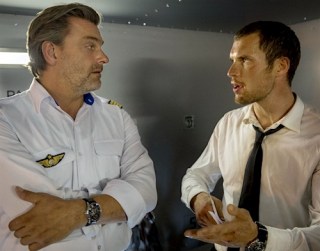 Unfortunately I wasn’t wrong about the acting, which is indeed pretty shit. Ed Skrein was truly dreadful in
  Between his popular English-language debut
 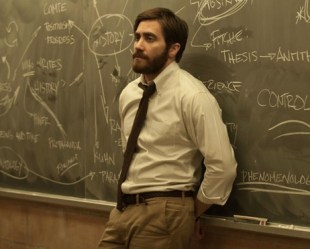 While looking up those various explanations, I read at least one review that asserted it’s a good thing that the film doesn’t provide a clear answer at the end. Well, I think that’s a debatable point. I mean, there is an answer — Villeneuve & co clearly know what they’re doing, to the point where they made the actors sign contracts that forbade them from revealing too much to the press. So why is it “a good thing” that they choose to not explain that answer in the film? This isn’t just a point about Enemy, it’s one we can apply more widely. There’s a certain kind of film critic/fan who seems to look down on any movie that ends with an explanation for all the mysteries you’ve seen, but if you give them a movie where those mysteries do have a definite answer but it’s not actually provided as part of the film, they’re in seventh heaven. (And no one likes a movie where there are mysteries but no one has an answer for them, do they? That’d just be being mysterious for precisely no purpose.) But why is this a good thing? Why is it good for there to be answers but not to give them, and bad for there to be answers and to provide them too? If the answers the filmmakers intended are too simplistic or too pat or too well-worn or too familiar, then they’re poor for that reason, and surely they’re still just as poor if you don’t readily provide them? I rather like films that have mysteries and also give me the answers to those mysteries. Is that laziness on my part? Could be. But I come back to this: if, as a filmmaker (or novelist or whatever) you have an answer for your mystery and you don’t give it in the text itself, what is your reason for not giving it in the text? Because I think perhaps you need one.
 Fortunately, Enemy has much to commend aside from its confounding plot. Gyllenhaal’s dual performance is great, making Adam and Anthony distinct in more ways than just their clothing (which is a help for the viewer, but not for the whole film), and conveying the pair’s mental unease really well. It would seem he errs towards this kind of role, from his name-making turn in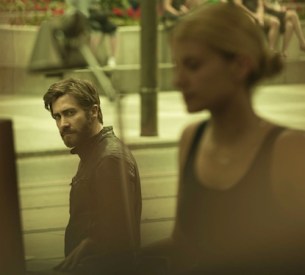
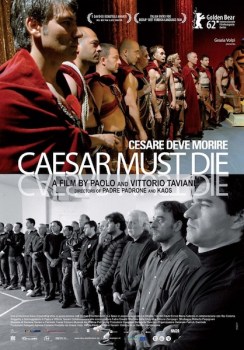 On the surface, this is a documentary about the inmates of Rome’s high-security Rebibbia prison — many of them with mafia connections — putting on a performance of Shakespeare’s Julius Caesar. However, it becomes clear fairly quickly that it’s all been staged, which is only more apparent when you learn some behind-the-scenes details (at least one prisoner had been released years earlier and returned to participate in this project).
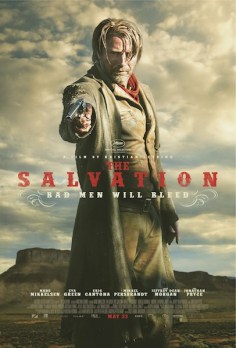 The spirit of the Spaghetti Western is kept alive in this Euro-minded South Africa-shot revenge Western.
 In this lesser sequel to

 Score:



 100Films.co.uk