
Richard Linklater | 96 mins | streaming (HD) | 1.85:1 | USA / English | 12 / PG-13
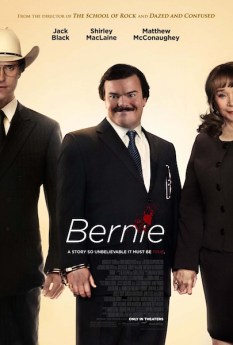 I seem to vaguely remember dismissing Bernie as just ‘Another Jack Black Comedy’ back whenever it came out (in the UK, that wasn’t until April 2013), and essentially forgot about it until earlier this month when it came up on the A.V. Club’s 100 best films of the decade (so far), at #38, which made it sound a very worthwhile watch for multiple reasons. Having seen it, however, I don’t think I’d rank it as one of the (half-)decade’s best. That’s putting an unfair burden on it, though: it’s a movie I’m glad I’ve seen, and certainly one with a good many points in its favour.
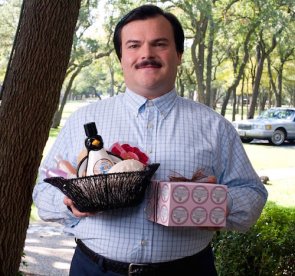
Black plays the eponymous Bernie Tiede, a mortician in the small town of Carthage, Texas, whose dedication to his job and friendly disposition, both far above and beyond the call of duty, soon find him at the centre of the community and beloved by its people. When the town’s renowned miser dies, Bernie forms a bond with his even-miserlier bitch of a wife (Shirley MacLaine), becoming about the only person she gets on with. They go on expensive holidays, dine at fine restaurants, and soon Bernie is managing her affairs. But she becomes increasingly controlling, making demands on his time that he struggles to meet, and treating him as wickedly as she does everyone else. One day, Bernie shoots her dead. When his crime is discovered, the people of his small town initially refuse to believe he did it; when it’s proven he did, they clamour for him to be released anyway.
By-the-by, this is a completely true story.
 (If you’re observing similarities to Midnight in the Garden of Good and Evil there, you’re not the first: the magazine article that inspired Bernie, published around the same time as that book’s film adaptation, is called “Midnight in the Garden of East Texas”.)
Co-writer/director Richard Linklater — who, as we know, often likes to mix up real-life and fiction in the way he produces his movies (cf. Boyhood; the Before trilogy) — tells this story in a docu-drama style, mixing talking head interviews with dramatic recreations. Many (most) of the interviewees are real-life Carthage residents, presumably giving their real recollections and opinions. It fits this narrative to a T, lending veracity to the unbelievable-if-it-weren’t-true story. They’re also amusing — not in a “laugh at the small town folks” kinda way (though there’s an inherent element of that for us as outside observers, let’s be honest), but in an honest-to-goodness “this is what real life’s like” fashion. This irreverence is how many people really react to and discuss momentous events, and in this case that gels with the tone of what happened.
No doubt spurred on by the fact he’s portraying a real person, Black gives a strong performance. It’s a comedy one, undoubtedly, but far more restrained than he normally offers. It doesn’t suggest a Robin Williams-esque versatility — I don’t imagine Black’s suddenly going to be popping up in serious parts all the time — but it is worthy of note. MacLaine does a lot with a little, her character’s vicious nature conveyed at least as much through glances, sneers, and a particular way of chewing food as it is through words and actions.
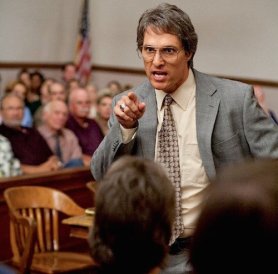 The local attorney seeking Bernie’s prosecution is played by man-of-the-moment Matthew McConaughey. I don’t know when we’re meant to deem the start of his “McConaissance”, but I’m not sure this really qualifies as part of it. Not that he’s bad, but it feels like the kind of played-straight comedy Southerner I’ve seen him do a few times now; indeed, it’s how he comes across in real life, from what I’ve seen. It fits the role like a glove, but doesn’t make for a remarkable performance.
Bernie is one of those stories that you’d never buy if it weren’t true, which makes it perfect fodder for the movies. Native Texan Linklater clearly understands the mindset of those involved and is the right kind of quirky-but-mainstream filmmaker to bring it to the screen. One might argue it doesn’t show suitable reverence to the fact a woman is dead, but the involvement of so many real townspeople suggests it’s got the level and tone bang on. It’s no true-crime mystery, nor the funniest comedy, but it is a tale so engrossingly bizarre that it begs to be heard in full. The real-life post-film ending — Bernie was released from prison last year on the condition he lives above Linklater’s garage — only adds to that fascination.

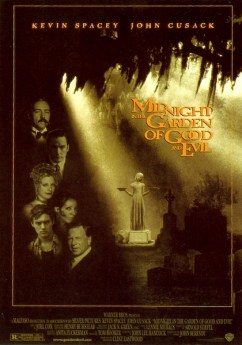 Sent to write “500 words on a Christmas party” in Savannah, Georgia, journalist John Kelso (John Cusack) instead finds himself covering a murder trial where he’s become friendly with the accused (Kevin Spacey).
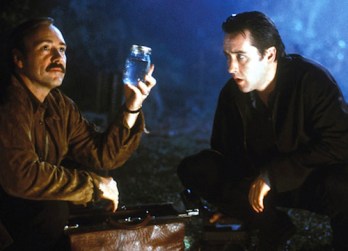 Like many an “adapted from a bestseller!” movies, I guess Midnight in the Garden was a big deal in its day that’s faded to semi-obscurity since (see:
 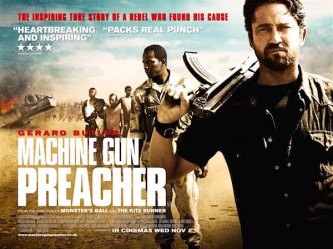 Between the mega-hits of
 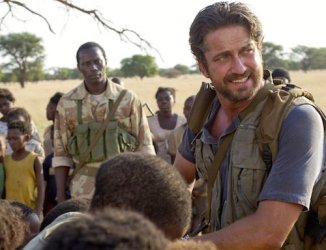 The problem with the last point is that, in real life, Sam is still over there, still doing the same thing, while conflicts rage on. But this is a film — you need to find some kind of conclusion. The makers have tried, but its an incredibly half-arsed climax; less a resolution to the entire story and more Sam having learnt one lesson from something that went wrong a little earlier.
 mashed together with a polemical charity documentary about Africa, and then with some
 2013 Academy Awards
 Argo is probably the most traditionally entertaining from 2012’s crop of Best Picture nominees. I know a lot of people awarded that honour to
 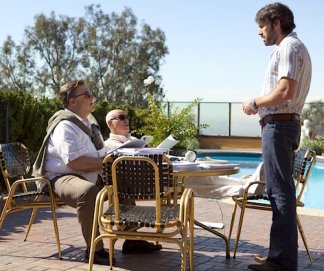 This is where we get the humour, mainly directed at the movie industry. Some say this is why it won the big awards: Hollywood loves a look at itself, and here it’s both satirical (“So you want to come to Hollywood, act like a big shot, without actually doing anything? You’ll fit right in!”) and congratulatory — after all, the plan goes ahead and so (spoilers) Hollywood saves the day. The film creates just the right balance between taking the mick out of Hollywood and bigging-up its role in saving some lives, while also not spending too long on this section that we forget the perilous situation on the other side of the world. After all, once all the fun and games in Tinseltown are over, it’s back to the serious business in Iran.
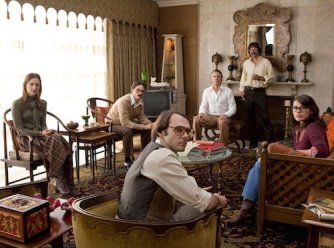 That’s just artistic licence, really — it’s not as if these people were safe, they just had a damn good plan; and, as I said, you need a dramatic ending for a thriller. However, all the “chasing them down the runaway” stuff is a bit full-on and action-movie-ish. It’s not even accurate to how it would go in real life, if it had happened, because the militia’s cars would need to be travelling phenomenally fast to keep up with the plane, and they aren’t seen to be affected by its jets either. For me, the rest of the climax — the guards checking the ‘crew’ out, phoning the LA office, later running up to the control tower, etc — all works; assuming you accept the film is still a Hollywood thriller, not a fact-bound documentary, and so needs a suitably dramatic climax. It’s a shame they didn’t leave it at that, but not a deal breaker either.
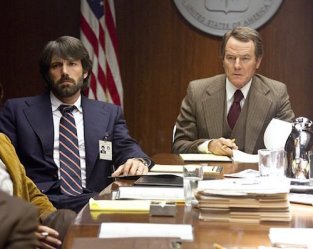 That was in the ’70s — adjusted for inflation, it comes to over $350 million. For a drama about a couple divorcing and arguing over custody of their kid! Today, it’d be lucky to earn a tenth of that, even if it was up for Oscars. But I digress.) It’s a surprising Oscar pick these days because it’s a genuinely enjoyable watch, rather than a gruelling look at something-or-other serious.
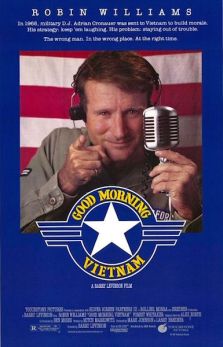 Inspired by the true story of a US Army DJ in Vietnam during the war, the resulting film is a showcase for star Robin Williams — reportedly, his antics aren’t even close to what really happened.
 Tom Hanks is Walt Disney and Emma Thompson is author P.L. Travers in “The Making of Mary Poppins: The Movie”. Disney has been desperate to turn Travers’ fictional nanny into a movie for years after he made a promise to his daughter; Travers has resisted, but now needs the money. She’s brought to LA to consult on the script, and proceeds to make life miserable for screenwriter Don DaGradi (Bradley Whitford) and songsmiths Robert and Richard Sherman (B.J. Novak and Jason Schwartzman). At the same time, we see the story of a family in Australia from the eyes of a little girl Ginty (Annie Rose Buckley), as they struggle with the whims of her father (Colin Farrell), a bank manager who’s a little too fond of the bottle. Guess what the connection is!
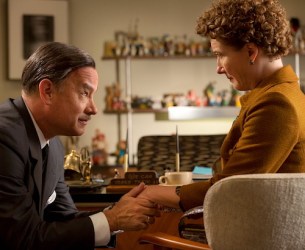 Similarly, Hanks’ part seems to be little more than a cameo at first, but he steadily appears often enough to make it a supporting role. Reportedly he has perfectly captured many of Disney’s real traits and idiosyncrasies, and who are we to doubt the word of people who knew the man? His performance is not just a shallow, simple impersonation, but there’s not that much meat to Disney’s character arc either.
 Some will find the story lacking in dirt, particularly when it comes to the portrayal of Disney. But it’s not whitewashed either, and do you really think the Disney Corporation would have allowed a movie to go ahead that depicts their founding father in a negative light? For that, I don’t think it’s as twee as it could have been — there’s definite conflict over what’s being done with Poppins, and, even with the film having turned out to be a solid-gold classic, we often find ourselves sympathising with Travers.
 1988: due to international pressure, Chile’s dictator, General Pinochet, has acquiesced to a vote on whether he should continue ruling the country. Despite the violent takeover he orchestrated, and subsequent murders and ‘disappearances’, the country has prospered under his rule, and many — especially influential affluent people — are keen for him to stay. The anti-Pinochet “no” campaign are allowed a daily slot on state-controlled television in the run up to the election, and they hire advertising exec René Saavedra (Gael García Bernal) to mastermind the campaign. Cue internal conflict — the politicos want dour films highlighting Pinochet’s evil; René wants to use the language of advertising to sell the promise of a happy future — before the campaign itself finally gets underway, and the “no” campaigners become targets of the ruling regime’s evil tactics…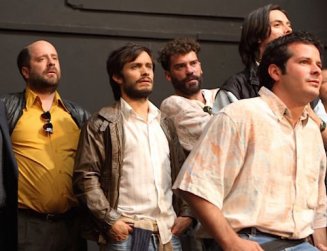
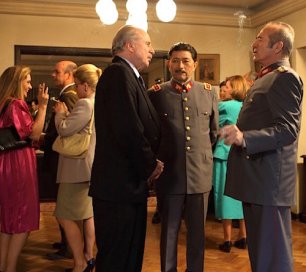 But seriously, there’s not really a comparison between the brutal military regime that ruled Chile — which nonetheless many were happy with because it had brought modernisation and prosperousness for some — and the voluntary union between the rest of the UK and Scotland. I’m sure some of “the 45”, as they now call themselves, would identify with those battling for freedom in this film, but I think that might be taking it a bit far.
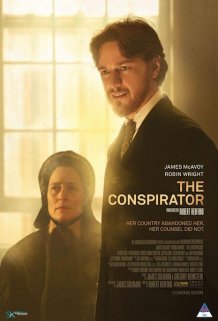 Although John Wilkes Booth is famous as the man who assassinated Abraham Lincoln, he was merely the person who pulled the trigger: eight people were tried for conspiracy to kill America’s 16th President; this is the story of what happened to the only woman among them.
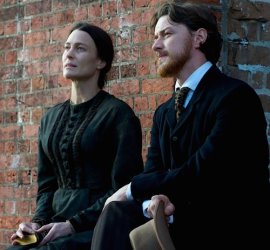 or rather, like an actress versed in playing modern characters struggling gamely with a period one, and coming up short.
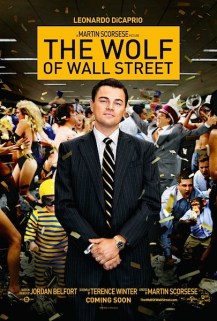 When someone says “100-million-dollar epic”, you probably don’t imagine a film about a swindling stockbroker; but, with a three-hour running time and a nine-figure budget, that’s exactly what Martin Scorsese’s black comedy biopic is.
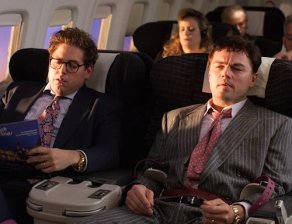 and the closing shot clearly shows how many people have already judged them to represent something desirable, regardless of what position the film might take. Some people want this lifestyle, in spite of all the problems it wrought, and even if the film had clearly condemned it that wouldn’t change. In the end, to say Scorsese approves of it purely because he doesn’t lambast it is too simplistic a reading.
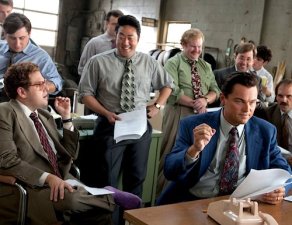 but almost every supporting character gets a memorable line or scene, a moment where they shine brighter than everyone else; and even when the smaller roles aren’t dominating a scene, they’re part of a first-rate ensemble that functions like a well-oiled machine. My personal favourite was P.J. Byrne’s ‘Rugrat’, but yours may well be someone else.
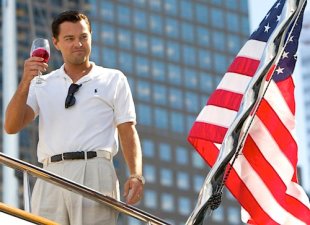 As one of
  The big winner at the 2002 Oscars (four gongs from eight nominations), A Beautiful Mind adapts the true story of John Nash (Russell Crowe), a Cold War-era mathematics student at Princeton who hit upon a groundbreaking theory and ended up working covertly for the government…
 but the display of range probably merited it; perhaps more so, in retrospect, than his win for Gladiator the year before.
 A Beautiful Mind won Best Picture in spite of being up against the incredibly more innovative, entertaining, and game-changing double-bill of
  100Films.co.uk