John Sturges | 123 mins | DVD | 2.35:1 | USA / English | PG
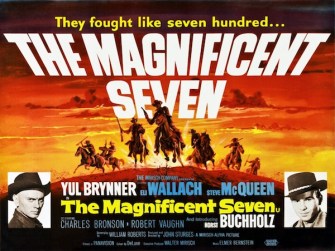 Described in the booklet accompanying the Ultimate Edition DVD release as “the last great American western before Sergio Leone reinvented the genre,” The Magnificent Seven doesn’t feel as dated as that might make it sound. Famously, it’s a remake of Akira Kurosawa’s Seven Samurai — a technique Leone would pilfer for his first Western, A Fistful of Dollars, which is a do-over of Kurosawa’s Yojimbo. Leone did his without permission, resulting in a lawsuit that was settled out of court, whereas Magnificent Seven was a fully-licensed re-do. As you’d expect, it therefore sticks fairly closely to the events of Seven Samurai, albeit getting through them an hour-and-a-half quicker.
Of course, it’s relocated — not to America, but to Mexico, where a farming village is being terrorised by a gang led by Eli Wallach. A couple of villagers head to the border to buy some guns to defend themselves, but end up recruiting Yul Brynner to put together a band of gunslingers to help. With no significant pay on offer, his slim pickings are pre-fame turns from Steve McQueen, Charles Bronson, James Coburn, and Robert Vaughn, plus Brad Dexter and Horst Buchholz.
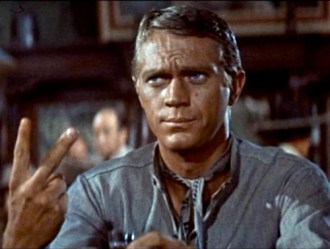 With even less screen time to go round than in Kurosawa’s original, the cast only get to provide thumbnail sketches of their characters. However, bearing that in mind, only Vaughn really feels shortchanged on time, while McQueen manages to steal every scene he’s in, even when he was supposed to just be in the background — much to Brynner’s annoyance. One reason this works is because the seven represent more or less the same things thematically, in some respects functioning as one hero character with seven parts. They are all unsettled drifters, good at killing but not at settling down; they have nothing to do but win and so be damned to go find another cause, or die trying. This is taken from Kurosawa’s film too, of course, but it fits just as well in its new setting, and the main scene where the seven discuss it is a definite highpoint of the movie.
Most of the action is saved for the big climax, a good old fashioned free-for-all that (like the rest) doesn’t quite have the epic scope of Kurosawa’s movie, nor the stylised discipline and suspense that would be Leone’s enduring contribution to the genre. I’ve yet to see this year’s remake, nor read too much about it, but I understand it’s changed the plot and characters a fair bit, and I imagine this is one area it’s really applied a new emphasis. Much has changed in what we expect from action movies, which is not to criticise the ’60s film, but more to observe that what once might’ve satiated an action fan’s thirst may no longer fit the bill.
 That’s not something that bothered me, but where I did find it suffering was in comparison to Kurosawa. While it has obviously been rejigged for its new setting, it’s not just borrowed the basic concept of seven violence-skilled loners defending a needy village, but rather retained all the bones of the samurai original. As with most remakes, it falters by not doing the same thing quite as well, for one reason or another. Still, if it is a faded copy then at least it’s of one of the greatest films ever made, which leaves it a mighty fine Western in its own right.

 The third English-language screen adaptation of Agatha Christie’s famed mystery, one of the best-selling novels of all time, relocates the action to the middle of a desert but is otherwise a word-for-word remake of
 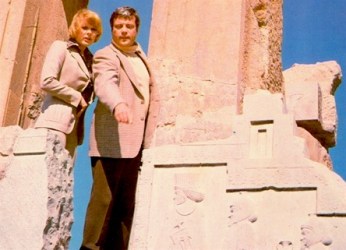 As a précis of the storyline, with some nicely photographed locations (the Iranian hotel they filmed in looks fairly stunning), this isn’t half bad. However, there are at least two better screen adaptations of the novel, and if what I’ve heard of
 1960 Academy Awards
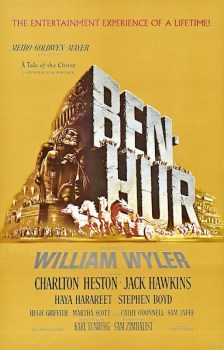 So claims Ben-Hur’s 1961 trailer. They were cocky back then, weren’t they?
 but was so invested that I stuck with it regardless. There are things that have aged poorly, be that the model effects in the sea battle or using a white actor in heavy make-up to portray an Arab, but I think you have to take these things with a certain element of the spirit of the era — I’m sure no offence was intended (see also:
 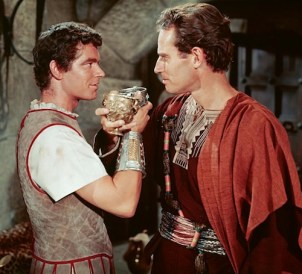 This Christian aspect contrasts sharply with the other subtext I alluded to earlier: the possibility that Judah and Messala were once lovers. The claim originates with screenwriter Gore Vidal, who may or may not have written some or all of the screenplay that was used for shooting. According to Vidal, he and Stephen Boyd discussed the idea before shooting began, and then Boyd played the scenes with it in mind. However, it was kept hidden from Charlton Heston because he’d never agree to it, and when the notion was put to him later he naturally denied there was any homosexual subtext. Whether this tale is true in the literal sense of that subtext being written into the screenplay and Boyd choosing to incorporate it into his performance, I don’t know, but the content of the film makes it easy to believe — the scenes between Messala and Judah, especially when they’re first reunited, absolutely play like there’s a romantic history between them. Bear that in mind and it seems to reoccur later, too: when the story returns to Jerusalem after several years, Messala seems particularly close to his deputy; and there are a couple of shots of Judah being chummy towards a random stableboy (I mean, they’re not much, but if you watch it with the assumption that Judah is gay or bi…) What does this signify? Perhaps not a great deal. I’m sure you can choose to completely ignore it. I imagine some would passionately deny even the possibility it’s there. Personally, I think it adds something to the characters’ relationship.
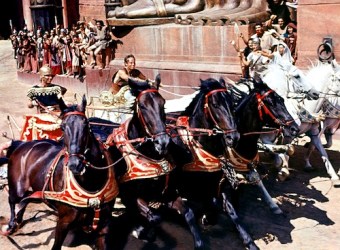 the technical awards the film scooped up are certainly merited. The cinematography is fantastic, with the landscape shots making particularly excellent use of the extra-wide frame. As for the chariot race, it stands up as an incredible action sequence even today, driven by thrilling camerawork and editing, and showcasing some daring stunt work.

 Score:



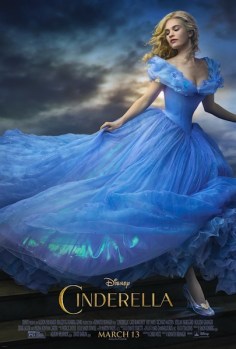 Disney’s animated classic is re-imagined in live-action, losing the songs but expanding the story. The latter serves to find a little more realism in the setup (how Cinders became a servant to her stepmother, etc), as well as in the characters’ motivations and actions.
 Back in the ’80s, everyone’s favourite actor whose name is also the punchline to a joke (“what do you call a man with three planks on his head?”), Edward Woodward, starred in
  and anyone who enjoys inventive deaths will be tickled by some sequences. Otherwise, it lacks originality, remixing familiar tropes and plot points into a passably-new shape.
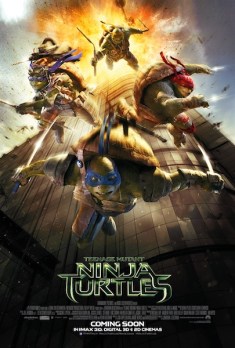 While I was killing time waiting for my coffee to brew before I sat down to watch Teenage Mutant Ninja Turtles, 2014 edition, I drafted the introductory paragraphs to this review. Yes, before I’d even started the movie, so sure was I that I would dislike it. Naturally they took an appropriately condemnatory tone, talking about how it was a product and not a movie, designed primarily to sell tie-in plastic to grown men who wish they were still children, etc etc. Unfortunately writing those paragraphs was a waste of my time, because I can’t use them, because — shock of shocks — I actually quite liked this movie.
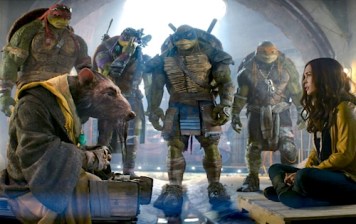 Mike into basically a turtle version of Michael Bay — i.e. he’s focused on lusting after Megan Fox and occasionally causing explosions — is a little cringe-y. Quite a few bits are a little cringe-y, actually; but they’re tempered by a few comedic bits that hit home, and a general veneer of “well, it could’ve been worse”.
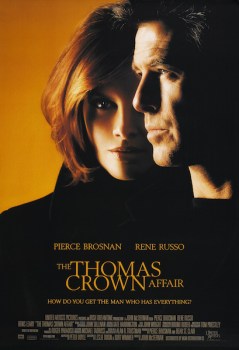 Once upon a time, John McTiernan was an action auteur, known for films that sat comfortably on the “mainstream modern classics” scale, like
 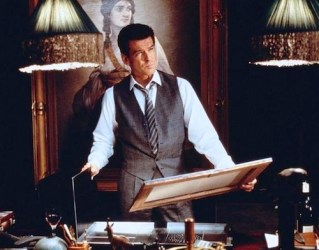 McTiernan’s action background comes to the fore in a pair of extended heist scenes at either end of the movie, which are surely the standout parts. The seductions and plot twists in between these bookends are certainly entertaining and may even keep you guessing, but it’s the heists that pack the most entertainment. They’re the kind of thing we don’t see so much nowadays, at least not in mainstream movies, because any sequence designed to provide excitement is a fight of some kind, and most of those are shot in the shaky-cam style. There’s none of that palaver here, just perfectly choreographed cutting between the various players in each heist, and some well-chosen music — as if being ably to do awesome stuff accompanied by the James Bond Theme wasn’t cool enough, here Brosnan gets to do the same to Nina Simone’s Sinnerman.
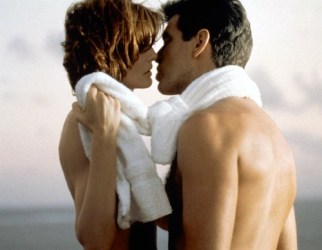 The Thomas Crown Affair may not be the best film on any of its principals’ CVs (well, except perhaps for Russo’s), but it’s a consistently enjoyable light thriller with a couple of particularly memorable sequences and a fun central dynamic. Apparently it’s better than the original, too. There’s long been talk of a sequel, but it seems to have gone the way of McTiernan’s career, which is a shame.
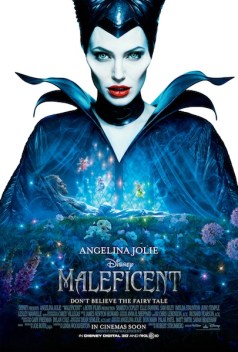 Disney seem to be embarking on a project to remake all of their most beloved animated movies in live action,
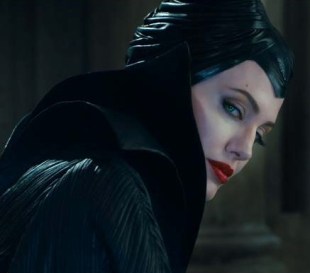 However, this is a Disney movie — you don’t get to turn a villain into the central character and have her be evil throughout. This is where the film gets really revisionist, because Maleficent keeps an eye on cursed Princess Aurora (Elle Fanning) as she grows, doing more to keep her alive than the trio of fairies she’s supposedly in the care of, and her heart is gradually warmed to the girl. Unfortunately, Maleficent was too good at the cursing malarkey: unable to lift her own spell, it plays out regardless, and the film serves us new renditions of the impassable thorns, giant dragon, and true love’s first kiss. It’s in the last where Maleficent is thematically revisionist rather than just a massive rewrite. Your mileage may vary on whether this version is obvious and cheesy, or actually more meaningful and (for the primary audience of little kiddies) more thought-provoking than the original’s — I’d go with the latter.
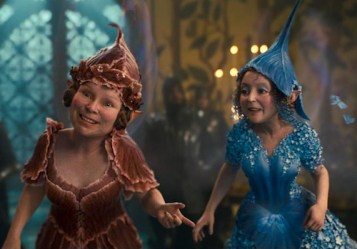 Parts of the film test-screened poorly — mainly the first act, with audiences wondering why it took so long for Jolie to turn up. Consequently, the whole thing was thrown out and reshot; in the process, Peter Capaldi and Miranda Richardson were deleted (and after they’d had to endure hours of transformative prosthetics for their roles, too), and Maleficent was given a new backstory. How far this extended into the rest of the movie, I’m not sure, but at times it feels like stuff has been cut or rearranged. Certainly the story flies past — if it wasn’t trimmed down in the edit, it needed expanding back at the screenplay stage.
 and even
 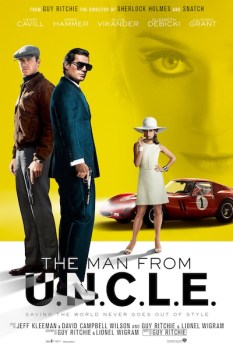 Guy Ritchie is a self-confessed non-fan of the classic ’60s spy-fi series
  100Films.co.uk