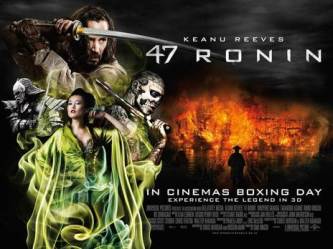
47 Ronin (2013)

2016 #18
Carl Rinsch | 119 mins | streaming (HD) | 2.35:1 | USA / English | 12 / PG-13

Blighted by behind-the-scenes difficulties, 47 Ronin wound up among the biggest box office bombs of all time — a fate not entirely undeserved.

It concerns a gang of samurai who set out to avenge their master, a true story that’s legendary in Japan. This telling is enhanced with fantasy elements — which, despite some critics’ views, is just fine, as the film’s historical advisor explains in this excellent defence.

Sadly, what falters is everything else: clumsy storytelling, poorly edited action, Japanese actors struggling with English dialogue, Keanu Reeves’ acting. Magnificent imagery and design stop it being a total disaster, but only just.

2 out of 5

For more quick reviews like this, look here.

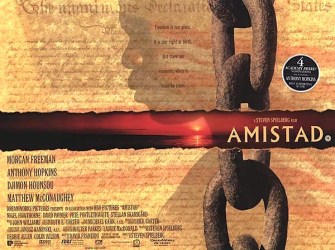
Amistad (1997)

2016 #16
Steven Spielberg | 155 mins | streaming (HD) | 16:9 | USA / English, Mende & Spanish | 15 / R

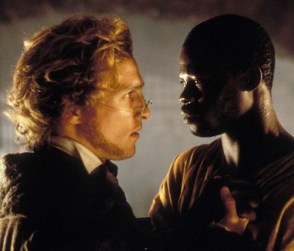
Feeling in need of more intellectual fare after helming The Lost World, Spielberg turned to a project already in development at Dreamworks: an adaptation of a non-fiction book about the 1839 mutiny on the slave ship La Amistad, and the ensuing legal battle. Although not poorly received by critics, there’s a sense that the consensus view dubbed it “black Schindler’s List”, the implication being that by aping the earlier film it was inevitably inferior. I don’t think that’s a watertight chain of logic, but, nonetheless, Amistad is clearly a ‘minor Spielberg’.

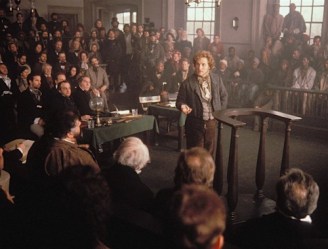
Despite being “a slavery drama”, most of the film functions as a legal drama: though it begins with the slave uprising, and later has an extended flashback showing their kidnap and transportation, the thrust of the film lies in the courtroom arguments about who owns the ship’s ‘cargo’ and consequently what should be done with them. This is a period when capturing Africans into slavery, and by extension their subsequent transportation, was illegal by international agreement, but actually owning slaves was not yet banned (at least in the US). It’s before the American Civil War too, so there’s a political dimension: if these ‘slaves’ are freed, what tension might that spark between the north and south?

Though Spielberg is certainly not immune to the Africans’ plight — the depiction of life on a slave ship is appropriately harrowing — it’s clear from early on which side he expects us to identify with, in terms of cultural background if not shared morality: as survivors of the mutiny talk the next day, the slavers’ Spanish dialogue is subtitled but the slaves’ African dialect is not. It’s a simple but effective technique to align us with one side — as I say, not morally (in no regard is Spielberg trying to apologise for the slavers), but socially. Unfortunately, it’s not sustainable: later, when we need to understand the Africans to follow a scene’s point, their dialogue is suddenly subtitled, and from then it’s sporadically translated as needed. I can see why that choice was made, but it makes the unsubtitled bits feel like a cheat.

In most other regards, it’s kind of an old-fashioned movie. In a few ways that works: it’s got classical cinematography, both the use of film (obviously, this being well before mainstream adoption of digital) and the framing, the pace, the editing. In other respects… well, it feels very late ’90s now, the overall style of the screenplay and the treatment of the story reminding you that it’s not actually a moderately-recent film (which I guess I’d personally filed it away as, being the most recent of Spielberg’s pre-2010s films that I’d not seen), but is now nearly 20 years old. And, though I may be damned for criticising him twice in as many weeks, John Williams’ score is a little heavy-handed.

This can be said of Spielberg’s approach to the drama, too. Some of the courtroom stuff is suitably mired in legal technicalities and argument, but by film’s end it gets a little bit too… what’s the word? Not “preachy”. Not “sentimental”, exactly, though it’s born of that old criticism of Spielberg. “Melodramatic” may be on the money, though. It doesn’t help that everything reaches a climax — not only narratively, but also in the way it’s written, shot, acted, and scored — only for it to be revealed that it’s just the end of act two. Okay, that’s the truth of what happened (or near enough, for the purposes of this dramatisation), and by adapting it in that way it emulates the emotions the characters experienced; but from the audience’s perspective, you feel like you’ve reached the end… only to be served up another half-hour of movie. And it’s a long film too, so you feel that. It gets by because it’s fundamentally a good film, with strong performances and technical merits, but it’s a little bumpy for a bit.

There also seem to be a startling array of factual inaccuracies to level at the film. As ever with fictional adaptations of real life, it’s a difficult line. No fact-based fiction is 100% like reality, especially when you factor in unavoidable variances in people’s memories and opinions. However, the more serious or famous the events being depicted, or the more they’re being used to indicate some wider point about their setting, the greater the responsibility to present something that is at least passably accurate. I think some would contend that Amistad is not that. I’m no expert, but this section on Wikipedia, which is bolstered by multiple citations to suggest its accuracy, indicates the extent of the issue.

It’s easy to criticise Amistad, because Spielberg makes the production of very good movies look effortless, so the missteps stand out all the more. The story of La Amistad and its ‘cargo’ is a powerful one, and Spielberg has — naturally — turned it into a good film; but by remixing history to over-egg the message, it loses a little something. A valiant effort, but a film like 12 Years a Slave makes many of the same points in a less grandiose manner.

4 out of 5

Children of Men (2006)

100 Films’ 100 Favourites #19

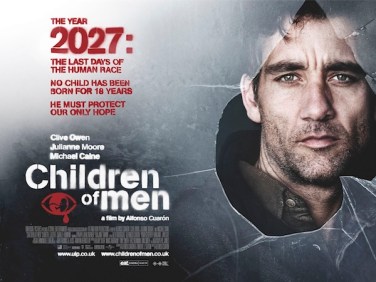
The year 2027:
The last days of the human race.
No child has been born for 18 years.
He must protect our only hope.

Country: USA & UK
Language: English… and German, Italian, Romanian, Spanish, Arabic, Georgian & Russian, apparently.
Runtime: 109 minutes
BBFC: 15
MPAA: R

Original Release: 22nd September 2006 (UK)
First Seen: cinema, October 2006

Stars
Clive Owen (Inside Man, Shoot ‘Em Up)
Julianne Moore (The Hours, Still Alice)
Michael Caine (The Italian Job, Batman Begins)
Chiwetel Ejiofor (Serenity, 12 Years a Slave)
Danny Huston (The Proposition, X-Men Origins: Wolverine)

Director
Alfonso Cuarón (Harry Potter and the Prisoner of Azkaban, Gravity)

Screenwriters
Alfonso Cuarón (Y Tu Mamá También, Gravity)
Timothy J. Sexton (Live from Baghdad, The Liberator)
David Arata (Brokedown Palace, Spy Game)
Mark Fergus (First Snow, Iron Man)
Hawk Ostby (First Snow, Cowboys & Aliens)

Based on
The Children of Men, a novel by P.D. James.

The Story
In the near future, mankind has become infertile, and no child has been born for 18 years. The world has gone to hell, with Britain one of the few countries that still has a functioning government, albeit a controlling, totalitarian one. In this world, government drone Theo is persuaded by his ex-wife, now head of an activist group, to escort a friend out of the country. Turns out that friend is a young woman… who’s pregnant — a situation that interests a lot of dangerous people…

Our Hero
Theo, disillusioned former activist, who’s roped back in, initially by kidnap, later with the promise of a hefty payday. Before long it turns out he’s actually a good guy at heart, of course.

Our Villains
“The rest of humanity” wouldn’t be a wholly bad answer here, as Theo and co keep bumping up against people violently concerned with their own interests. Within that, there’s the issue of if the activist group’s motives can be trusted…

Best Supporting Character
Theo’s friend Jasper, a former political cartoonist turned pot dealer, played by Michael Caine as a John Lennon-inspired old hippy.

Memorable Quote
“As the sound of the playgrounds faded, the despair set in. Very odd, what happens in a world without children’s voices.” — Miriam

Memorable Scene
Any of the (faked-)single-take action sequences is a worthy pick here. Alternatively, fans of a certain rock group will appreciate the inflatable pig floating over Battersea Power Station.

Technical Wizardry
As our heroes escape in a little Fiat, they’re attacked on a country road, the camera moving around the small person-filled vehicle in a single take. They used a special camera rig, along with a car modified to allow the windscreen to tilt out of the camera’s path, and seats that tilted to lower the actors out of the way too. The “single” shot took six takes in four locations, transition effects to seamlessly join shots, and CGI to create the motorbike, windscreen, blood, roof, and more.

Making of
The other most memorable single take is near the end, a running street battle during which Clive Owen’s layperson does his best to not get killed. It took 14 days to prepare the shot, with a delay of five hours every time it had to be reset. It was filmed over the course of two days, but only one complete take was actually captured. In the middle of one take, some blood spattered on the camera lens; Cuarón shouted “cut”, but was drowned out by the sound of tank and gunfire. Cinematographer Emmanuel Lubezki persuaded the director to leave it in, and that’s the shot in the final film. Pay attention during the sequence and you can see the liquid and dirt that gets splattered on the lens disappear during one of the ‘seamless’ cuts.

Awards
3 Oscar nominations (Adapted Screenplay, Cinematography, Editing)
2 BAFTAs (Cinematography, Production Design)
1 BAFTA nomination (Visual Effects)
1 Saturn Award (Science Fiction Film)
2 Saturn nominations (Actor (Clive Owen), Director)
Nominated for the Hugo for Best Dramatic Presentation, Long Form.

What the Critics Said
“[Cuarón] increasingly shoots the film’s set pieces in virtuoso long takes — gliding tracking shots that evoke Tarkovsky and handheld work that suggests Kathryn Bigelow. What makes these scenes stunning is not only mind-boggling choreography and timing, with Emmanuel Lubezki’s camera somehow capturing multiple planes of action even while continuously changing position, but also their ability to realistically evoke the frightening chaos and simultaneous madness of war. […] Such overwhelming studio work might be too arty for those who like their genre served sans showiness. But Cuarón is implementing a verisimilitude that both matches the film’s edge-of-your-seat escalations and demonstrates a new understanding of blockbuster realism.” — Michael Joshua Rowin, Stop Smiling

Score: 92%

What the Public Say
“Cuarón uses sequences evocative of Holocaust imagery and detention camps to implicitly communicate a world rife with injustice and pain. In designing the look of the film, Cuarón told his art department that he did not want inventiveness, but reference, so that an audience would be able to adequately recognize a distorted form of their own reality. For the reader and viewer who encounter this uncanny world, it feels all the more real because of its familiar elements.” — Mariel Calloway

Verdict

I saw Children of Men on a whim back in 2006. I can’t even remember why — I don’t think I’d seen any trailers or reviews, and it had been open for a good few weeks already. It was a time when I went to see loads at the cinema, though (in those days I paid good money to see Fun with Dick and Jane — does anyone even remember that?), and I think it may’ve been the only thing still on. Anyway, it meant I actually got in a little ahead of the hype that has gradually (and justifiably) grown around the film since, and still loved it. Cuarón mixes intelligent near-future sci-fi with exciting, and excitingly-realised, action sequences to create an action-thriller of a movie that stimulates both the mind and the adrenal glands. A fantastic film in every respect.

#22 will be next… to give the Devil his due.

The Man from U.N.C.L.E. (2015)

2016 #8
Guy Ritchie | 116 mins | streaming (HD) | 2.35:1 | USA & UK / English, Russian, German & Italian | 12 / PG-13

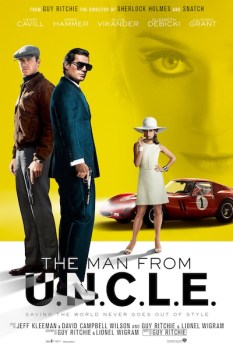
Guy Ritchie is a self-confessed non-fan of the classic ’60s spy-fi series The Man from U.N.C.L.E., so he seems a somewhat odd choice to helm this long-gestating big-screen reboot of the franchise.

Unsurprisingly, he gives it a bit of the Sherlock Holmeses (namely, a semi-comedic tone and appropriately swish, ’60s-ish direction), but loses some facets of the original (Russian agent Kuryakin is basically a completely different character). It’s entertaining nonetheless, if a little long.

The biggest let down is that it all feels like a fun preamble to a better sequel that, after its box office failure, will never happen.

4 out of 5

Trivia time: in the 12 months ending January 1st 2016, seven films were released in the UK starring The Man from U.N.C.L.E.’s female lead, Alicia Vikander. Seven. She deserved that Oscar for sheer employability if nothing else.

Kill List (2011)

2016 #51
Ben Wheatley | 92 mins | streaming (HD) | 2.35:1 | UK / English | 18

I appear to be coming at director Ben Wheatley’s films in reverse order (having covered A Field in England in 2013 and Sightseers in 2014), and now I reach, not his feature debut (that’ll be ‘next time’, I guess), but certainly the film that brought him wider attention.

To describe too much of the plot of Kill List, or to even name its genres, is to give away some of its mystery. It’s a problem for reviewers, and has been since it came out — I read an interview with Wheatley where he said he didn’t envy their job, trying to accurately assess and ‘sell’ the film without actually telling people why they should watch it! The marketing people go a little way towards that for us, though, billing it as a horror movie when it seems to be nothing of the sort for a very long time.

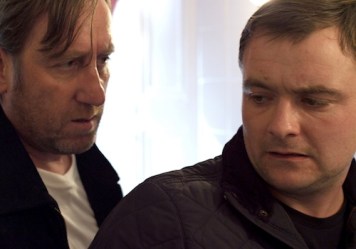
It begins in that classic British tradition, the “kitchen sink” drama. Jay (Neil Maskell) and his wife (MyAnna Buring) argue about the fact he’s not got a job and the money’s run out. It becomes clear something happened in Jay’s recent past to spook him out of work. Then his mate Gal (Michael Smiley) comes round with a new girlfriend, Fiona (Emma Fryer), for one of moviedom’s more uncomfortable dinner parties. Gal talks Jay into joining him on a new job (there’s some criticism of the film for being a “one last job” movie, but I don’t recall it being presented as that — Gal talks him back into work, not for a definitively final go-round. Maybe I missed something); elsewhere, Fiona’s actions hint at something more… unusual going on.

Kill List mixes in its genre elements — and they’re elements from a couple of different genres at that — so gradually that, as I said, it’s hard to discuss them without spoiling the film. (Much like the film itself, this review is getting progressively more revealing, so jump off when you’ve had enough.) It’s kind of a compilation of traditional British movie genres: we begin with kitchen sink, then discover we’re actually watching a crime film, before the final act swerves (though not without foreshadowing) into folk horror. The skill of Wheatley, and his co-writer Amy Jump, is in not making these transitions too implausible. That’s not to say they’re not surprising, but the doom-laden music, inexplicable proclamations by some characters, and a couple of very strange events should all clue the viewer in to the film not being a common-or-garden hitman flick.

Even as the latter, it is, again, very “low-key British”. It follows through on its domestic setup, presenting the mundanities of the profession — it’s the kind of film where the dealmaking and mission-giving are dealt with in a dialogue-free montage, but we do see characters discussing how they’ll get out of the hotel lobby without an injury being noticed, who’s going to clean up the blood in the sink, and the quality of the hotel’s free toiletries. The biggest threat the characters initially face is their credit card being declined, which might, potentially, later, draw attention to them.

The final act is naturally where the film reveals its overarching purpose… or rather doesn’t reveal, because there are a shortage of answers here. It’s a lot more straightforward than A Field in England, but it still offers few (or, some would say, no) explanations for what’s occurred. According to Wheatley, the screenplay was more explicit about what was happening and why, and so was some of what they shot, but he cut back on the exposition to leave it up to audience interpretation. This isn’t a film to passively watch and have everything explained, but even viewers prepared to do a little work for themselves may find it frustrating.

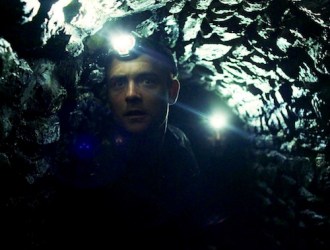
Nonetheless, there is striking, unnerving imagery to be found during the movie’s climax, Wheatley and regular DP Laurie Rose using the pitch-black nighttime setting to create dread rather than merely accidentally hide things, as so many under-lit movies seem to nowadays. The handheld camerawork and jumpy cutting that earlier in the film was just a little New Wave-y comes into its own here, aligning us with Jay’s disorientation and confusion. While the ultimate result is arguably predictable, to get too caught up in the minutiae of whether it’s a twist or not is to miss the point. What the point is… well, that’s debatable, but I don’t think it’s meant to be a twist for the sake of a twist. (Others disagree.)

The odd mash-up of domestic drama, mundane crime, and folk horror by all rights shouldn’t work, so credit is definitely due for the movie’s flow. Memorable sequences keep it ticking over throughout — and so they should: taking inspiration from the likes of Kubrick and Stephen King, Wheatley started from specific images and worked backwards to a plot. Here, I think that method has been effective. The abstruse ending won’t be to everyone’s taste, but the journey there is worth experiencing.

4 out of 5

It’s Ben Wheatley Night on Film4 this evening, beginning with Kill List at 10:45pm, followed by Sightseers at 12:35am and A Field in England at 2:15am.

Wheatley’s new movie, High-Rise, is currently showing in scattered preview screenings around the UK (mainly in London, because of course), and is on general release from next Friday, March 18th.

Daybreakers (2009)

2016 #24
The Spierig Brothers | 89 mins | streaming | 2.35:1 | Australia & USA / English | 15* / R

Most of mankind have become vampires, but the blood supply is running out and without it people mutate into monsters. Ethan Hawke’s scientist is developing a substitute, but when he encounters human resistance fighters he learns there may actually be a cure…

Made by the guys behind Predestination, Daybreakers offers an original and imaginative world (how would mankind cope if we couldn’t go out in daylight? Maybe like this). It’s somewhat let down by a few campy performances and a sensibility that reverts to action sequences, but originality counts for a lot, especially for genre fans looking for something different.

3 out of 5

* The distributor chose to make six seconds of cuts to get a 15 in cinemas. The uncut 18-rated version was released on DVD and Blu-ray. No idea which version is available through Channel 5, where I watched it. ^

Casino Royale (2006)

100 Films’ 100 Favourites #18
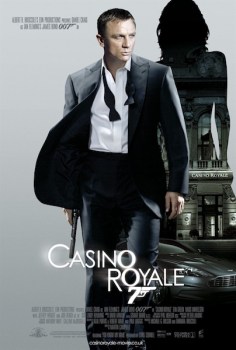
Everyone has a past.
Every legend has its beginning.

Country: UK, USA, Czech Republic & Germany
Language: English
Runtime: 144 minutes
BBFC: 12A (cut, 2006) | 15 (uncut, 2012)
MPAA: PG-13 (cut)

Original Release: 14th November 2006 (Kuwait)
UK Release: 16th November 2006
US Release: 17th November 2006
First Seen: cinema, 16th November 2006

Stars
Daniel Craig (Layer Cake, The Girl with the Dragon Tattoo)
Eva Green (The Dreamers, Sin City: A Dame to Kill For)
Mads Mikkelsen (Valhalla Rising, The Hunt)
Judi Dench (Iris, Philomena)
Jeffrey Wright (Shaft, The Hunger Games: Catching Fire)

Director
Martin Campbell (GoldenEye, Green Lantern)

Screenwriters
Paul Haggis (Crash, The Next Three Days)
Neal Purvis (Die Another Day, Johnny English)
Robert Wade (Stoned, Skyfall)

Based on
Casino Royale, the first James Bond novel by Ian Fleming.

The Story
British agent James Bond, newly promoted to exclusive double-oh status, investigates a terrorist plot that leads him to Le Chiffre. Banker to the world’s terrorists, Le Chiffre has managed to lose a lot of his clients’ money, and intends to win it back in a high-stakes poker game at the eponymous establishment. Bond is charged with joining the game and bankrupting the banker, with treasury employee Vesper Lynd along to keep an eye on the money and off Bond’s perfectly-formed arse.

Our Hero
“James before he was Bond,” as the awful US tagline went. Daniel Craig instantly disproved the not-that-numerous-but-certainly-vocal critics (remember all the “Bond isn’t blond” rubbish?) by being perhaps the most convincing actually-is-a-highly-trained-agent Bond since Connery.

Our Villain
Le Chiffre, a total banker. Fond of poker, bleeds from his eye, brilliantly played by Mads Mikkelsen, who has deservedly gone on to many other things, no doubt some wholly due to this.

Best Supporting Character
Eva Green is Vesper Lynd, a woman so remarkable that Bond names his personal Martini recipe after her. He also falls in love with her. Considering the rest of the Bond canon, that’s not likely to end well.

Memorable Quote
“I’m afraid your friend Mathis is really… my friend Mathis.” — Le Chiffre

Memorable Scene
At dinner on the train to Montenegro, Bond meets Vesper for the first time. They verbally size each other up. She wins. “How was your lamb?” “Skewered. One sympathises.”

Write the Theme Tune…
Easily the best Bond theme of the Craig era (though I like the QoS one more than most, and my main objection to Adele’s is that it’s about a flying baby horse and its receptacle for bread waste), You Know My Name was co-written by the series’ regular composer since the mid ’90s, David Arnold. That meant he could integrate the tune into his score, which was a Good Thing.

Sing the Theme Tune…
Far removed from Bond’s Bassey-imitating default style, the slightly gravelly sound of Soundgarden’s Chris Cornell (the first male vocalist on a Bond theme for nearly 20 years) helped indicate the series’ harder, manlier new direction.

Technical Wizardry
After four films of honing the Maurice Binder “naked silhouettes” style, title designer Daniel Kleinman cuts loose with an array of inventive playing card-based imagery. The most original Bond title sequence since at least Thunderball and, by being so atypical, the most unique of them all.

Truly Special Effect
Chasing after a kidnapped Vesper in the middle of the night, Bond suddenly sees her in his headlights, tied up in the middle of the road. He swerves, his Aston Martin crashes, and barrel rolls… seven times. The stunt team set a world record with that, which (despite Fury Road’s best efforts) is still unbeaten a decade later.

Making of
James Ferguson, a doctor from Aberdeen, came up with the idea for the scene in which Bond is poisoned and then remotely diagnosed by experts at MI6 HQ in London. Ferguson, a Bond fan, was retained as medical adviser for future Bond films.

Previously on…
Casino Royale was adapted for TV in 1954, starring the great Peter Lorre as Le Chiffre, and its title (and little else) was used for the awful 1967 Bond spoof. This version is the 21st in the canonical James Bond film series, and the first time that series has performed a reboot: the film opens with Bond attaining his famed double-oh status, something we’ve never seen before.

Next time…
Daniel Craig’s second outing, the somewhat misunderstood and underrated Quantum of Solace, was the first direct sequel in the Bond canon, picking up on various plot threads from Casino Royale and even resolving a few of them. After Craig’s third, Skyfall, went off on its own, last year’s Spectre tried to tie together the entirety of Craig’s era, with mixed success. Beyond that, James Bond will return indefinitely, though Craig may not.

Awards
1 BAFTA (Sound)
8 BAFTA nominations (British Film, Actor (Daniel Craig), Adapted Screenplay, Music, Cinematography, Editing, Production Design, Visual Effects)
1 Saturn Award (Action/Adventure/Thriller Film)
4 Saturn nominations (Actor (Daniel Craig), Supporting Actress (Eva Green), Writing, Music)
2 World Stunt Awards (Best High Work, Best Stunt Coordination and/or 2nd Unit Director)
1 World Stunt Awards nomination (Best Fight)

What the Critics Said
“I never thought I would see a Bond movie where I cared, actually cared, about the people. But I care about Bond, and about Vesper Lynd, even though I know that (here it comes) a Martini Vesper is shaken, not stirred. Vesper Lynd, however, is definitely stirring, as she was in Bertolucci’s wonderful The Dreamers. Sometimes shaken, too. Vesper and James have a shower scene that answers, at last, why nobody in a Bond movie ever seems to have any real emotions.” — Roger Ebert

Score: 95%

What the Public Say
“While there is very much a dramatic and sensitive undercurrent to this Bond film, Casino Royale doesn’t shortchange the audience on action. From Bond chasing a skilled free runner enemy to a brutal staircase battle, Casino Royale delivers a harsher and bleaker sense of violence that had been missing from some of the predecessors and not seen since Timothy Dalton’s dark turn in Licence to Kill.” — vinnieh

Elsewhere on 100 Films
Just before Quantum of Solace was released in 2008, I wrote that Casino Royale was “a damn fine Bond film, returning to Fleming and resetting the character without losing anything truly essential about the franchise. […] this one’s up there with the very best, not just of Bond but of action-spy-thrillers in general.”

Verdict

In the early ’00s, it didn’t feel like the Bond series was in need of a reboot. Die Another Day had been a huge hit at the box office and gone down pretty well with critics (no, really, it did), and Brosnan was all set to do a fifth (though, considering his age, likely final) film as Britain’s top secret agent. Then Bourne happened, shifting the playing field of the spy-action genre, at the same time as Bond’s producers finally regained the rights to Fleming’s very first Bond novel. For the first time in the series’ 40-year history, they decided to reboot.

What Casino Royale does skilfully is acknowledge the changes brought by Bourne, but adapt them to Bond’s slightly more classical style (something Quantum of Solace fumbled). At the same time, it acknowledges and frequently subverts that Bond formula (“Shaken or stirred?” “Do I look like I give a damn.”), the antithesis of DAD’s uber-referentiality. In itself, it took Fleming’s relatively slight novel, with its lack of action by modern blockbuster standards, and expanded and modernised it effectively to fit current tastes. The result is arguably the best Bond movie ever made.

#19 will be… the last days of the human race.

Macbeth (2015)

2016 #23
Justin Kurzel | 113 mins | Blu-ray | 2.39:1 | UK, France & USA / English | 15 / R

Macbeth is my favourite Shakespeare play. Not that I’m a great scholar of the Bard, but I’ve seen and/or read enough to have a favourite. I also think it’s one of his most accessible works: its story and characters are relatively straightforward without being devoid of complexity; it’s got some immensely effective imagery and dialogue, including a solid compliment of famous lines; and it’s not excessively long either (it’s Shakespeare’s shortest tragedy, in fact). I also studied it twice over in secondary school, so I know it fairly well. Now, this doesn’t mean I have exacting standards when it comes to film adaptations (Shakespeare is plenty open to interpretation), but it does mean I have my expectations up, especially as there isn’t a film version of Macbeth that could reasonably be described as “definitive” (though I know Polanski’s has its fans). After this latest effort, that’s still the case — but that doesn’t mean it’s without merit. Far from it.

For thems that don’t know, Macbeth is set in 11th Century Scotland, where the eponymous character (Michael Fassbender) is a lord and general in the army of King Duncan (David Thewlis). After winning a decisive battle, Macbeth and his BFF Banquo (Paddy Considine) bump into a coven of witches, who forecast Macbeth will receive a new title and eventually become king. Although the men are naturally dubious, they soon learn that Macbeth has indeed been granted the prophesied thaneship. With the prospect of being king too tantalising to ignore, Macbeth’s ambitious spouse (Marion Cotillard) eggs him on to plot regicide…

Although director Justin Kurzel (of Snowtown, a film I have no intention of watching thanks to ghost of 82’s review) wasn’t hired until after the film was in development and Fassbender had been cast, the final film has been very much guided by his vision. The text is heavily cut (a copy & paste & delete-bits job that somehow took three screenwriters), to the displeasure of some critics, though this is primarily because Kurzel chose to supplant some of the dialogue with Filmmaking. In a film?! How very dare he! What I mean, more specifically, is that he’s visualised parts of the text; applied the old rule of “show don’t tell”. So rather than a messenger giving the King a full account of Macbeth being awesome in battle, we see some of the combat; Banquo has hardly any lines early on, but we still understand his friendship with Macbeth just from the way they look at one another and go into battle together.
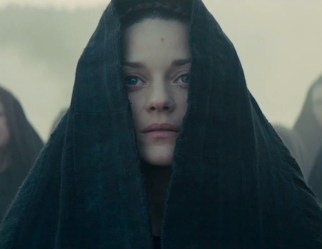
Throughout, it’s the imagery that Kurzel and DoP Adam Arkapaw have crafted that’s the real standout of this particular adaptation (however good the cast are, and I’ll come to them). The compositions, the unusual use of almost tableaux-like blocking, the lighting, the colour palettes, the rhythm of the editing and the use of slow-mo… This is a highly filmic film, in a good way. At times, it manages to turn Shakespeare into an action movie, a feat rarely (if ever) accomplished previously. At others, it’s just mighty purdy. The pictures are well complemented by the score, composed by the director’s younger brother, Jed Kurzel (he’s also scored the likes of The Babadook and Slow West, so it’s not just nepotism). His work here is appropriately haunting and folksy.

To say the text has been cut and the film is strongest in its visuals does not mean this is an empty-headed version of Shakespeare, however. The director and his cast have some interesting variations on the usual depictions of the characters, in particular Lady Macbeth’s motivations. Normally shown as greedy and power-mad, here she is grief-stricken — there’s a single line in the play that’s interpretable as the Macbeths having lost a child, which here is both made explicit and highlighted in an opening funeral scene. These characters are acting out of some kind of desperation or emptiness rather than pure greed. When, later, she (spoiler!) goes mad, it’s subtle and sad, rather than frantic and delirious. Cotillard is fantastic in all of this, and certainly worked hard for it: the way the French language applies emphasis is not suited to delivering iambic pentameter, apparently, so she worked hard with a dialect coach to nail her delivery. Her accent clearly marks Lady Macbeth as the only non-Scottish character here, which becomes another layer added to this interpretation.

As Macbeth, Fassbender negotiates well the accomplished general who is also dominated by his wife. Here the guiding concept was Macbeth The Warrior; to portray him both as someone looking to replace what he’s lost by the battle being over, and as suffering from PTSD after what he’s witnessed, hence repeated hallucinations of a boy killed in battle. This isn’t out of place with the text, of course — “is this a dagger I see before me” and all that. Fassbender is on furious form, particularly as Macbeth gives in to his paranoia later on. A word too for the supporting cast, in particular Sean Harris as Macduff, who makes the character feel more essential to the story (as he should, considering the climax) than I remember him being in previous versions.

Some of this analysis is thanks to the short handful of featurettes found on the UK Blu-ray (the US release, out tomorrow, has different special features, so I’ve no idea what the overlap will be, if any). There’s no commentary track, which is a real shame. I don’t often get round to listening to them, but I’d be interested to hear Kurzel talk through his and his cast’s decisions on a scene-by-scene basis. The special features that there are give some insight into how thoroughly they thought through their adaptation and prepared for it, but that only means the lack of further insight is even more pronounced. And Kurzel, Fassbender, Cotillard, and Arkapaw are all now working on the film of Assassin’s Creed, out this December, which is an intriguing prospect — is it going to be an arthouse video game adaptation? I suspect not, but maybe it will be the rarest thing in cinematic history: a good film based on a computer game.

I was initially on the fence about whether this Macbeth was a 4-star or a 5-star achievement, especially as I maintain it’s not the be-all-and-end-all of Macbeth on screen. But it’s one of those films that, whatever the experience of actually sitting and watching it is like (at times: odd), its imagery and feel really stay with you.

5 out of 5

Macbeth is released on DVD and Blu-ray in the US tomorrow, and is out in the UK already.
Next month, Polanski’s
Macbeth is one of the initial releases in Criterion’s new UK range (yay!)

Casablanca (1942)

100 Films’ 100 Favourites #17

They had a date with fate in Casablanca.

Country: USA
Language: English
Runtime: 102 minutes
BBFC: U
MPAA: PG (1992)

Original Release: 7th December 1942 (Brazil)
US Release: 23rd January 1943
UK Release: December 1942 (BBFC)
First Seen: DVD, 2006

Stars
Humphrey Bogart (The Maltese Falcon, The Big Sleep)
Ingrid Bergman (Notorious, Autumn Sonata)
Paul Henreid (Now, Voyager, Deception)
Claude Rains (The Invisible Man, Notorious)
Conrad Veidt (The Cabinet of Dr. Caligari, The Thief of Bagdad)

Director
Michael Curtiz (The Adventures of Robin Hood, Mildred Pierce)

Screenwriters
Julius J. Epstein (Arsenic and Old Lace, Cross of Iron)
Philip G. Epstein (Arsenic and Old Lace, The Last Time I Saw Paris)
Howard Koch (The Letter, Letter from an Unknown Woman)

Based on
Everybody Comes to Rick’s, an unproduced play by Murray Burnett and Joan Alison. (Despite the film’s popularity, a legal dispute between the playwrights and Warner Bros meant it wasn’t staged until 1991.)

The Story
Controlled by the German-subservient French government, Morocco in 1941 is a congregation point for German officials, collaborating French, and refugees attempting to get to neutral America. When letters of transit allowing that passage come into the possession of nightclub owner Rick Blaine at the same time as the love of his life, Ilsa Lund, walks into his joint with her husband, Resistance leader Victor Laszlo, Rick has some tough decisions to make — and quickly, with corrupt police captain Renault hunting for the letters and German Major Strasser gunning for Laszlo…

Our Hero
Of all the gin joints in all the towns in all the world, everybody comes to Rick’s. That’s because Rick is Humphrey Bogart. You’d go to a bar run by Humphrey Bogart, wouldn’t you?

Our Heroine
The most beautiful woman to ever visit Casablanca (a gross understatement), here’s looking at you, Ingrid Bergman. (Yes, I added this section pretty much just to say that.)

Our Villains
It’s set during World War 2 so, I mean, who do you think?

Best Supporting Character
Claude Rains was the Invisible Man, but here he’s Captain Louis Renault, a corrupt copper who — despite being fourth-billed in a film packed with memorable dialogue — still gets a good many of the best lines.

Memorable Quote
“Of all the gin joints in all the towns in all the world, she walks into mine.” — Rick

Quote Most Likely To Be Used in Everyday Conversation
“Louie, I think this is the beginning of a beautiful friendship.” — Rick

The Most Famous Misquote in Movie History
“Play it again, Sam.” — Rick
(Ilsa says “Play it once, Sam,” and “Play it, Sam.” Rick says, “You played it for her, you can play it for me. If she can take it, I can take it, so play it!”)

Memorable Scene
As Laszlo boards the plane out of Casablanca, Ilsa thinks she’s staying with Rick… until he convinces her to go. Standing in the doorway of an aircraft hanger, it’s probably the film’s most iconic scene — if you’ve not seen it, you’ve certainly seen it parodied.

Memorable Song
You must remember this: a kiss is just a kiss, a sigh is just a sigh. The fundamental things apply, As Time Goes By. Play it again, Sam!

Making of
Casey Robinson re-wrote the film’s romantic scenes and was offered a credit, but turned it down because he only took credit for screenplays he wrote entirely himself. Of course, with that decision he missed out on winning an Oscar.

Awards
3 Oscars (Picture, Director, Screenplay)
5 Oscar nominations (Actor (Humphrey Bogart), Supporting Actor (Claude Rains), Black-and-White Cinematography, Editing, Score)

What the Critics Said
“bear in mind that it goes heavy on the love theme. Although the title and Humphrey Bogart’s name convey the impression of high adventure rather than romance, there’s plenty of the latter for the femme trade. Adventure is there, too, but it’s more as exciting background to the Bogart-Bergman heart department. Bogart, incidentally, as a tender lover (in addition to being a cold-as-ice nitery operator) is a novel characterization” — Variety

Score: 97%

What the Public Say
“the script’s greatest strength is not quotability. It’s character development. Rick, Ilsa, Renault and Laszlo are complex individuals, about whom we care, no matter their flaws. Sam (Dooley Wilson), an African American pianist, is layered by loyalty to Rick and emotional acuity, while Major Strasser, the antagonist, is not a comic book villain. Because he’s a Nazi, we do not like the Major, but director Michael Curtiz and his writers are smart enough not to make him stereotypically evil, instead opting to develop him as determined and efficient. Because all of the characters are so genuine, the filmmakers earn our emotional investment” — Josh, Cinema Parrot Disco

Verdict

Casablanca is remembered now as much for its selection of ever-quotable lines as for anything else — you don’t have to have seen the film to know that if you go walking into all the gin joints in all the towns in all the world and someone’s looking at you, kid, then maybe not today, maybe not tomorrow, but soon you should round up all the usual suspects again, Sam, for the beginning of a beautiful friendship. Or something. It’s much more than that, though: an engaging romantic drama, with enough overtones of noir to keep it snappy, set in perhaps a ’40s equivalent of the Wild West. It may be three-quarters of a century old next year, but it still merits playing again.

#18 will see… Bond begin.

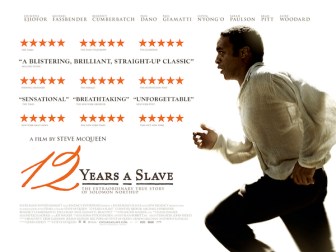
12 Years a Slave (2013)

2016 #3
Steve McQueen | 134 mins | streaming (HD) | 2.35:1 | USA & UK / English | 15 / R

Oscar statue2014 Academy Awards
9 nominations — 3 wins

Winner: Best Picture, Best Supporting Actress, Best Adapted Screenplay.
Nominated: Best Director, Best Actor, Best Supporting Actor, Best Film Editing, Best Costume Design, Best Production Design.


As we know, the Oscars are racist and always have been, especially recently. Like two years ago, when they didn’t give a load of nominations and several awards to a film about slavery from a black director and black screenwriter.
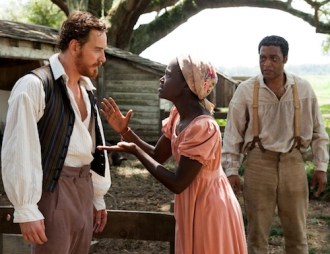
Oh, wait…

That film was, obviously, 12 Years a Slave, the true account of Solomon Northup (Chiwetel Ejiofor), a free black man who was kidnapped from his New York home and sold into slavery in the South. His story provides an overview, of sorts, of the experience of working as a plantation slave, both for a relatively decent master (Benedict Cumberbatch) and an evil SOB (Michael Fassbender).

One person who didn’t win an Oscar was Ejiofor (he lost to Matthew McConaughey, but he did win the BAFTA). His nomination was certainly deserved, though, because it’s an incredible lead performance — restrained most of the time, evoking Solomon’s internal life subtly rather than showily, but with carefully executed break-outs of emotion. Indeed, I’m slightly baffled by online commenters who felt the film was cold and lacking emotion or character. At the risk of getting on a high horse, I wonder if it was just too subtle for some? Ejiofor isn’t sat there tearing his heart out, but I thought there was considerably more to his performance than “looks happy in flashbacks, looks miserable in slavery”.

Nonetheless, the supporting performances are uniformly excellent, too. Paul Giamatti and Brad Pitt may be mere cameos, the presence of such actors highlighting their roles more than their function within the narrative does, but there are very strong turns from Cumberbatch, Paul Dano, Sarah Paulson, and in particular Oscar-winning Lupita Nyong’o, who will break your heart, and Michael Fassbender, who is overdue the gong for his many varied and accomplished performances. (I doubt his forthcoming triple of X-Men 6, video game adaptation Assassin’s Creed, and prequel-sequel Alien: Covenant will do anything for him in that regard, but he’s not yet 40, and that’s the prime part of a man’s life for Oscar winning, apparently.)

Steve McQueen’s direction is classical but effective, rarely drawing attention to itself when it has more important things to convey. That’s not to sell it short, though. A scene in which Fassbender’s plantation owner forces Solomon to do something unthinkable is achieved in a single roaming take that lasts nearly five minutes; a tour de force of camerawork, performance, and behind-the-scenes choreography, which only serves to heighten the tension and horror of the experience by never cutting.

Unsurprisingly, 12 Years a Slave is not an easily digestible film — it’s about a disgusting part of human history, and doesn’t shy away from some of its horrors. That said, it’s watchable thanks to the top tier performances, consummate direction, and moving storytelling.

5 out of 5

12 Years a Slave was viewed as part of my What Do You Mean You Haven’t Seen…? 2016 project, which you can read more about here.