

now it needs a body.
Original Title: Kôkaku Kidôtai
Also Known As: Mobile Armored Riot Police: Ghost in the Shell (Japan)

Country: Japan
Language: Japanese
Runtime: 83 minutes
BBFC: 15
Original Release: 18th November 1995 (Japan)
UK Release: 8th December 1995
First Seen: DVD, 2000
Stars
Atsuko Tanaka (Ghost in the Shell 2: Innocence, Bayonetta: Bloody Fate)
Akio Ôtsuka (Black Jack, Paprika)
Kôichi Yamadera (Ninja Scroll, Cowboy Bebop: The Movie)
Yutaka Nakano (Cowboy Bebop: The Movie, Ghost in the Shell 2: Innocence)
Tamio Ôki (Journey to Agartha, Wolf Children)
Director
Mamoru Oshii (Patlabor: The Movie, Ghost in the Shell 2: Innocence)
Screenwriter
Kazunori Itō (Patlabor: The Movie, .hack//SIGN)
Based on
The Ghost in the Shell (攻殻機動隊 Kōkaku Kidōtai, literally Mobile Armoured Riot Police), a manga by Masamune Shirow.
The Story
Japan, 2029: Public Security officer Major Motoko Kusanagi and her team are assigned to track down and capture a dangerous hacker known as the Puppet Master, but they soon find themselves embroiled in a far-reaching conspiracy…
Our Hero
In a future world where humans can undergo varying degrees of cyberisation, Major Motoko Kusanagi is a “full-body prosthesis augmented-cybernetic human” — only her brain is organic. Her body is a generic mass production model, so she can blend in while being a kick-ass law enforcement officer.
Our Villain
The Puppet Master, a cyber criminal who hacks into people’s brains and gives them false memories. But is there something even worse going on behind the hacker?
Best Supporting Character
Kusanagi’s second-in-command Batou is stoic to the point of brusqueness — apparently quite a different characterisation to his portrayal in other Ghost in the Shell media.
Memorable Quote
“If we all reacted the same way, we’d be predictable, and there’s always more than one way to view a situation. What’s true for the group is also true for the individual. It’s simple: overspecialise, and you breed in weakness. It’s slow death.” — Major Kusanagi
Memorable Scene
Pursuing the Puppet Master, Kusanagi comes face to face with a six-legged tank. After a blazing gun battle, she tries to physically rip it open, her cybernetic body straining to breaking point — and beyond…
Technical Wizardry
Ghost in the Shell was groundbreaking in its skilful combination of traditional 2D animation with CGI additions. It used a process called “digitally generated animation” (DGA), which combined cel animation with computer graphics to create lens effects that simulated depth, motion, and unusual lightning techniques, as well as mixing in 3D CGI and digital audio.
Letting the Side Down
In 2008, Oshii revisited the film to create Ghost in the Shell 2.0, which regraded the colour, replaced some of the original animation with new CGI, omitted several scenes, and featured a remixed and re-recorded soundtrack. (More details here.) As is almost always the case when directors fiddle with their creations decades later, it wasn’t well received by fans.
Next time…
As befalls many a popular anime franchise, Ghost in the Shell has spawned a raft of sequels and reboots. The only direct sequel, Innocence, was released in 2004. TV series Ghost in the Shell: Stand Alone Complex ran for two seasons between 2002 and 2005, with the first run compiled into movie The Laughing Man and the second into Individual Eleven, all of which were followed by a final film, Solid State Society. Another reboot came in 2013 with direct-to-video series Ghost in the Shell: Arise, which so far totals five episodes and, last year, continuation film Ghost in the Shell: The New Movie. (Only four episodes have so far been released in the West, but the movie — which continues the story from the fifth episode — came out on Monday in the UK. Just to make things more complicated.) A live-action American remake is currently shooting for release in March 2017 — you’ve probably heard about it.
Awards
5 Annie Awards nominations (Animated Feature, Directing, Producing, Writing, Production Design)
What the Critics Said
“When Akira first blasted out of Japan back in 1991 it looked like the Western concept of widescreen animation would be changed forever. […] Unfortunately, it was not to be. Sure, on video, the Manga scene has gone from strength to strength, but as far as theatrical releases are concerned, nothing has really come along to match Akira’s sheer retina-scalding magnificence. Until now. […] From its baddie-eviscerating opening sequence through innumerable car chases, shoot outs and tongue-in-cheek dialogue exchanges, this is exactly the kind of film that James Cameron would make if they ever let him through the Disney front gates.” — Clark Collis, Empire
 Score:
 95%
95%What the Public Say
“both the film and Oshii have fallen into a kind of disrepute among the anime community. The common line on GITS is that it’s wordy, masturbatory, and pretentious with nothing going on intellectually and that the (plainly inferior but more easily accessible) GITS: SAC is a better alternative. I wanted to write this article to respond to that notion. GITS is a highly thoughtful film and worthy of comparison to virtually any scifi feature you could name. ” — tamerlane, too long for twitlonger

Ghost in the Shell was the first anime I consciously saw, which maybe helps it earn a place here. It’s an initially accessible movie that’s also very complicated — there are pulse-pounding action scenes and a thriller storyline to keep things exciting, but also a lot of deep philosophical discussions, touching on themes of gender and identity. I think for some viewers the latter are a negative, while for others they’re the entire point. (I imagine the forthcoming Hollywood remake will either ditch or seriously curtail them, but you never know.) The combination makes for a stimulating (in multiple senses) sci-fi actioner.

Next… who ya gonna call? #37 !
 I wasn’t as impressed as some were by
 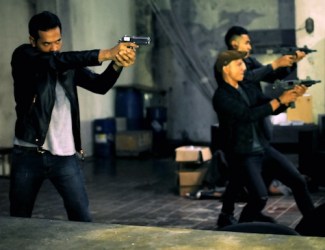 Where the first film was an efficient, simple thriller designed almost solely to link the startling action sequences, here writer-director Gareth Evans has created a sprawling crime epic. Anyone who’s seen the kind of gangster actioners Hong Kong cinema has produced since the ’80s or so will feel in familiar territory. That’s no bad thing, however, just a point of genre comparison. By expanding the world he’s created out in every direction, Evans has created a work that is not only bigger in a literal sense, but also deeper, more complex, and more interesting than the straightforward adrenaline rush of the movie that made his name.
 But as incredible as each of those are — and indeed they are — the highest of highlights is surely the car chase. There’s a chance you’ll have heard about this even if you’re not especially interested in the film: a bit of behind-the-scenes detail about how they achieved one particular shot went viral a couple of years ago. If you haven’t seen that, nor the film, then don’t seek it out — it actually kinda spoils it a little bit, knowing how it was done. (Without spoiling it, it was all done practically, whereas a Hollywood blockbuster would undoubtedly have done it with CGI — and spent as much on that one shot as Evans and co have on this entire movie.) The sequence is more than just one technically-impressive shot, however, but an exciting and innovative action scene all round, that definitely pushed the boundaries of the filmmakers’ capabilities (they had to get in a specialist outfit from overseas to help realise their ambitions).
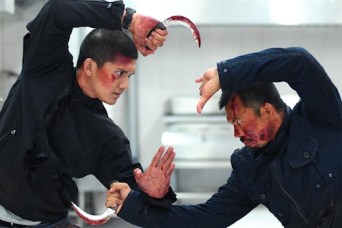 Most Hollywood blockbusters seem to push (or exceed) the two-and-a-half hour mark these days, and even when it fills that time, it feels like it’s partly because no one quite knew when to cut back. The Raid 2, however, feels suitably epic — just as you think a film that’s two-and-a-half hours long ought to feel, really.



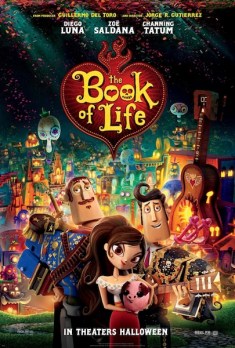 A myth-like animated musical adventure based around Mexico’s Day of the Dead, most notable for its unique art style that presents gorgeous visuals throughout.

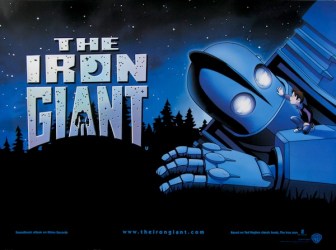 Adapted (loosely) from Ted Hughes’ children’s novel The Iron Man, the feature debut of director Brad Bird (
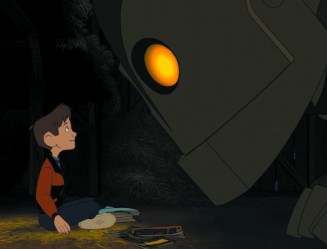 The story, as reconstructed by Bird and screenwriter Tim McCanlies, integrates influences from ’50s B-movies (very apt for a giant robot ‘monster’) and Cold War/Space Race paranoia for a potent storyline that has a different emphasis from the novel’s “world peace” finale, but nonetheless is promoting understanding of alien/foreign powers and, y’know, deep stuff like that. Alternatively — or, rather, concurrently — it’s an
  reputation it has gradually amassed — and which only continues to grow, I think. Last year saw the release of an extended Signature Edition, with a couple of short scenes added, which comes to US Blu-ray (alongside the original version) later this year. Just from reading about those new scenes, I’m not convinced they’ll improve the experience, but it’ll certainly be worth finding out.
 The third feature (but first you’re likely to have heard of) by writer-director Alexander Payne (


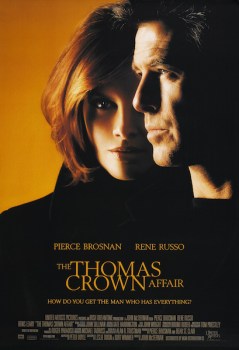 Once upon a time, John McTiernan was an action auteur, known for films that sat comfortably on the “mainstream modern classics” scale, like
  McTiernan’s action background comes to the fore in a pair of extended heist scenes at either end of the movie, which are surely the standout parts. The seductions and plot twists in between these bookends are certainly entertaining and may even keep you guessing, but it’s the heists that pack the most entertainment. They’re the kind of thing we don’t see so much nowadays, at least not in mainstream movies, because any sequence designed to provide excitement is a fight of some kind, and most of those are shot in the shaky-cam style. There’s none of that palaver here, just perfectly choreographed cutting between the various players in each heist, and some well-chosen music — as if being ably to do awesome stuff accompanied by the James Bond Theme wasn’t cool enough, here Brosnan gets to do the same to Nina Simone’s Sinnerman.
 The Thomas Crown Affair may not be the best film on any of its principals’ CVs (well, except perhaps for Russo’s), but it’s a consistently enjoyable light thriller with a couple of particularly memorable sequences and a fun central dynamic. Apparently it’s better than the original, too. There’s long been talk of a sequel, but it seems to have gone the way of McTiernan’s career, which is a shame.
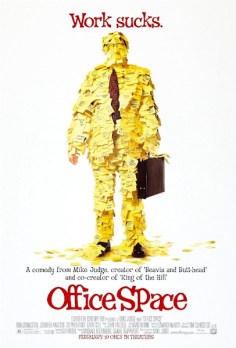 “From the creator of Beavis and Butt-Head” is not a designation that’s going to help sell a film to many people anymore. That the same fella also went on to write and direct the mediocre
 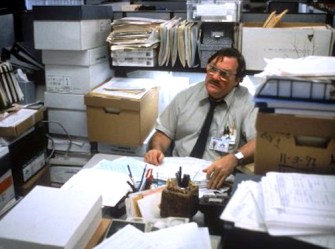 In truth, the plot doesn’t quite fill the slight running time, and Judge doesn’t seem to quite know how to end it — clearly he doesn’t want his hero figure getting caught out, but it can’t just go on forever. Fortunately, this is a comedy, and so plot matters only so much if the rest is funny. In some respects it’s a story of “first world problems” — these guys have decent jobs, making decent money, but it’s boring — but at least it finds the humour in this. Little vignettes of office life, a mix of light satire and gentle surrealism, keep the amusement ticking over too.
 100Films.co.uk