The Knockout Monthly Update for November 2018

When Rocky snuck its way onto my “What Do You Mean You Haven’t Seen” list back in January, I didn’t have particularly high hopes — I’ve never liked boxing movies, and I was only going to watch it because I ‘should’. Well, in the eight months since I watched it I’ve gone on to watch all six sequels, ending this month when I gave Creed full marks precisely because of how much it was a Rocky movie. And that’s why this month is a knockout.

Also, because I watched a tonne of films.


#223 Their Finest (2016)
#224 Going for Golden Eye (2017)
#225 Jurassic World: Fallen Kingdom 3D (2018)
#226 The Other Side of the Wind (2018)
#227 Batman & Mr. Freeze: SubZero (1998)
#228 Jodorowsky’s Dune (2013)
#229 Have a Good Funeral, My Friend… Sartana Will Pay (1970), aka Buon funerale amigos!… paga Sartana
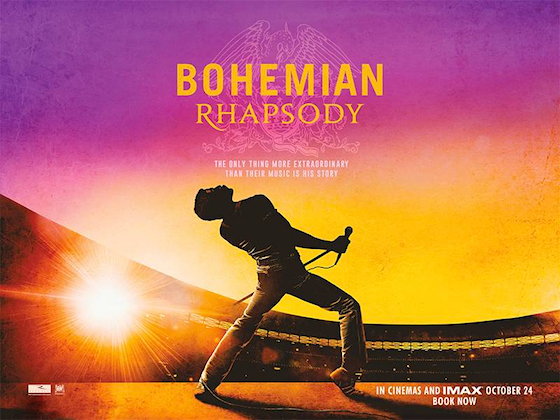
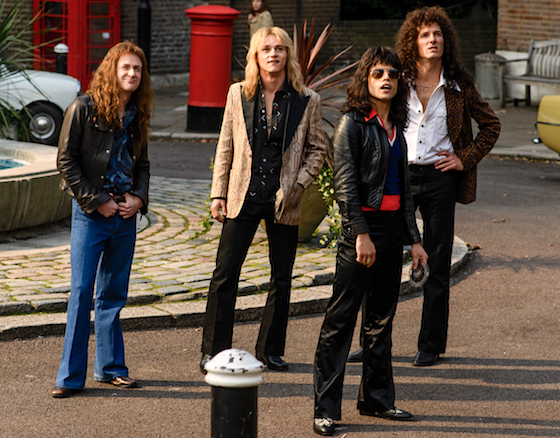
#230 Bohemian Rhapsody (2018)
#231 Attack the Block (2011)
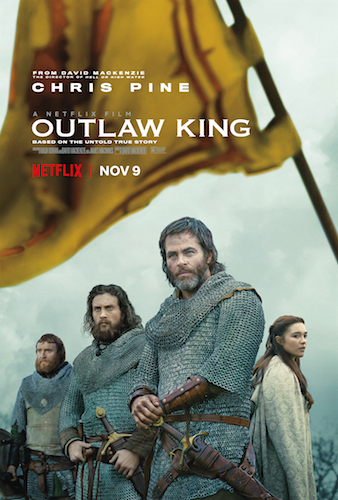
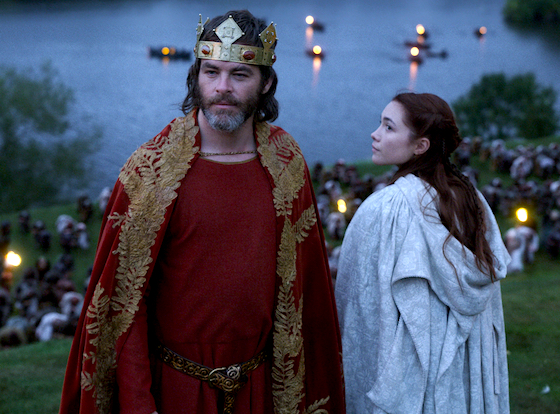
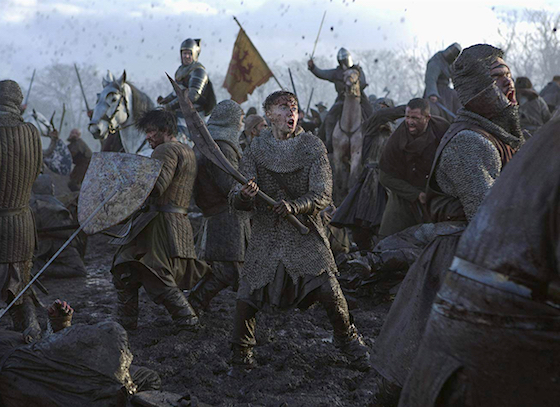
#232 Outlaw King (2018)
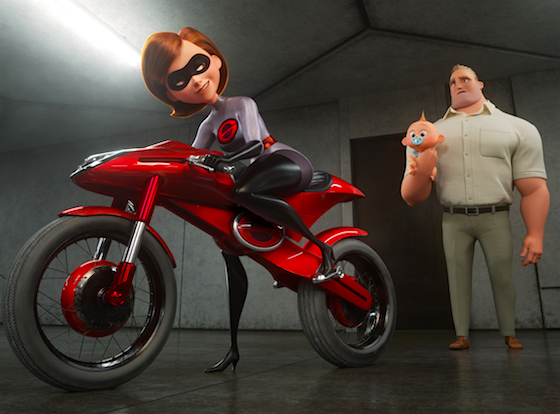
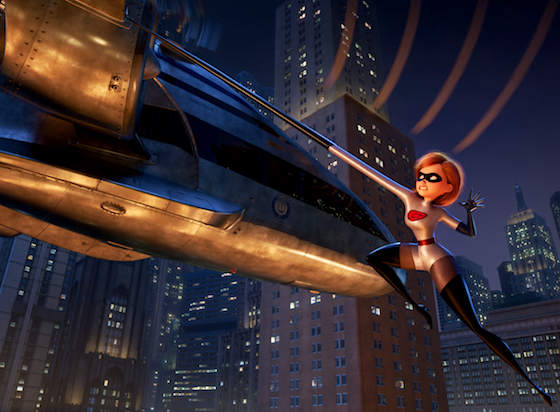
#233 Incredibles 2 3D (2018)
#233a Bao 3D (2018)
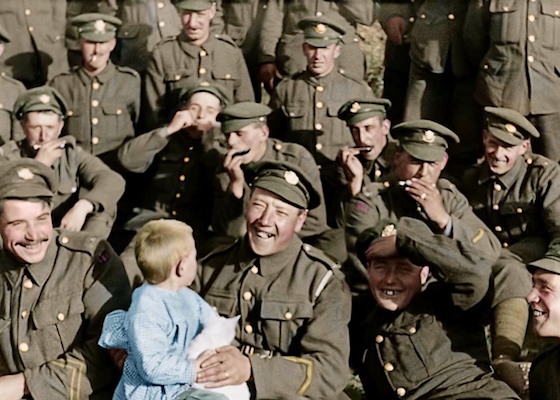
#234 They Shall Not Grow Old (2018)
#235 Paper Moon (1973)
#236 Hitchcock/Truffaut (2015)
#237 The Greatest Showman (2017)
#238 The Ballad of Buster Scruggs (2018)
#239 The Tale of the Princess Kaguya (2013), aka Kaguyahime no monogatari
#240 Redline (2009)
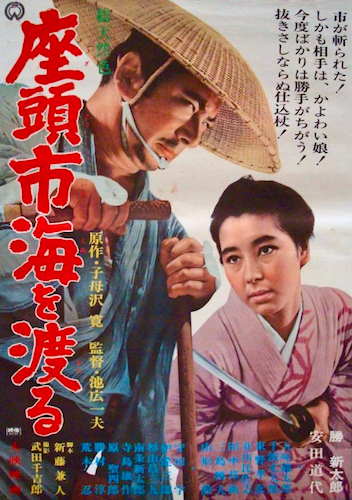
#241 Zatoichi’s Cane Sword (1967), aka Zatôichi tekka-tabi
#242 Creed (2015)
#243 Danger: Diabolik (1968), aka Diabolik
#244 Boy (2010)
#245 Dad’s Army (2016)
#246 Teen Titans Go! To the Movies (2018)
#247 Ant-Man and the Wasp 3D (2018)
Bohemian Rhapsody

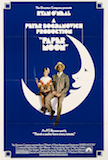
Paper Moon

Creed

Teen Titans Go! To the Movies

.


  • With 25 new films watched, November is the fourth best month of 2018. That’s not particularly impressive — it’s only just inside the year’s top third — but on an all-time scale…
  • That number makes November 2018 my joint fifth best month of all time (tied with August 2007), putting it in the top 5% of all months. Sounds a lot more impressive put like that, doesn’t it?
  • It’s the best November ever by some margin (the previous was 2016’s 14), in the process dragging the month’s average from 8.8 to 10.3. That leaves just July with an average below 10.0 (but it’s on 9.9, so hopefully I’ll get it over the line next year).
  • Also, as this is the first November with over 20 films, that leaves just December as the only month never to have reached the 20s. Will next month be the first? Only time will tell.
  • This month’s Blindspot film: aliens invade a London council estate in Attack the Block. The aliens may be violent, feral monsters, but they didn’t count on chavs…


The 42nd Monthly Arbitrary Awards

Favourite Film of the Month
There were many films I really liked this month, including a couple that surprised me, and ending with two colourful superhero movies that I enjoyed as much or more than the genre’s more serious-minded efforts earlier in the year. But, as the introduction to this post probably made clear, the victor has to be Creed.

Least Favourite Film of the Month
Where Creed worked because it had respect for its legacy, this month’s loser is a film that puts on the surface sheen of caring about its forebear, but doesn’t demonstrate that reverence — because it’s pretty rubbish. The film in question is 2016’s Dad’s Army remake.

Most Listened-to Song from a Movie of the Month
I thought this was going to be Last Breath by Future from the Creed soundtrack, which makes nice use of the famous Rocky theme to give that inspirational anthem a modern spin. But iTunes informs me the actual winner is the number I highlighted in my Greatest Showman review, the almost-titular The Greatest Show. Well, I did bung it on loop while I was writing that review…

Most Surprising Male Nudity of the Month
Sure, everyone was talking about Chris Pine’s penis in Outlaw King, but did you know Teen Titans Go! To the Movies features baby Superman’s naked, wiggling arse? Okay, he’s just a cartoon, but still.

The Audience Award for Most-Viewed New Post of the Month
November 2018 was my second largest month ever for views and visitors, much of that powered by the continued popularity of my Bodyguard review (which has now entered my top ten of all time). As for new posts, regular readers may know that the winner of this award is often a review of a just-released film posted while that film is still brand spanking new. So when I posted my review of Bohemian Rhapsody a whole 18 days after its UK debut and 9 days after its US release, I didn’t expect much hit-wise. But, lo and behold, a mega-popular film is a mega-popular film, and Bo Rhap bested the likes of Outlaw King (a review I posted the day after it popped up on Netflix) and They Shall Not Grow Old (a review I posted the morning after it was on TV) to be November’s most-viewed new post.




This month, a few recent blockbusters I watched for the first time in 3D…

#42 Jurassic World 3D (2015)
#43 Dodgeball: A True Underdog Story (2004)
#44 Thor: Ragnarok 3D (2017)
#45 Justice League 3D (2017)

People seem to have become increasingly sour towards Jurassic World in the years since it came out, but I still think it’s pretty great, a blockbuster ride with sufficient spectacle. In 3D, the extra dimension is superb, really adding to the film’s scale.

The same can be said of Thor: Ragnarok, which also benefited from a shifting IMAX aspect ratio. I enjoyed it even more on a second viewing — having been reminded of what a ‘normal’ Marvel movie is like tonally by Black Panther and Infinity War, Taika Waititi’s influence was much more pronounced.

Conversely, I was a bit more attuned to Justice League’s flaws this time around. Not that I was unaware of them before, and I still mostly enjoyed it, but it’s so clearly a compromised movie. Its 3D is fine, but rarely as spectacular as a film of this scope should be.


2018’s record-obliterating total.

Plus, could the combined final tallies of the main list and Rewatchathon result in— no, shh, it’s a secret…
The Greatest Showman (2017)

2018 #237
Michael Gracey | 105 mins | streaming (UHD) | 2.39:1 | USA / English | PG / PG

The Greatest Showman

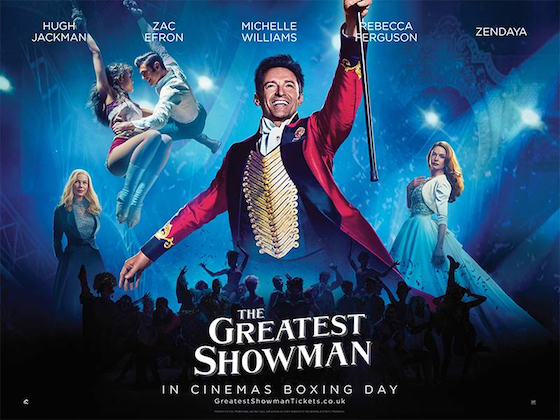
There’s nothing inherently festive about The Greatest Showman (if it has even one scene set around Christmas, I can’t immediately recall it), yet it was initially released on Boxing Day last year and now kicks off December’s premieres on Sky Cinema, and somehow the association feels entirely fitting. I guess it’s something to do with the tone and style of the film itself: a big, cheesy, schmaltzy, cheery musical — just the kind of thing many people like to wallow in during the big, cheesy, schmaltzy, cheery end-of-year festival. It’s almost a John Lewis advert in feature film form, only with upbeat original songs instead of whispery female covers of old hits.

Inspired very, very, very loosely by a true story, the eponymous gentleman is P.T. Barnum (Hugh Jackman), a man of low station in mid-19th century America who, via a cunning fraud, manages to buy a building that he turns into a museum of curiosities. With attendance poor, he adds a floor show featuring acrobatics and freaks. It’s slated by the critics, but curious audiences flock en masse. Barnum is suddenly a massive success — but at what cost to his personal life?

Well, virtually none, because there’s barely any jeopardy to be found here (apart from a little forced something to push it into a third act). But jeopardy is not the point of The Greatest Showman, which is all about being a crowd-pleasing good time — like the show-within-the-show, it was poorly received by critics but a huge word-of-mouth success: it never made it to #1 at the US box office, but nonetheless stayed in the top ten for 11 weeks and earned $434 million worldwide; its soundtrack album was such a hit that they’ve already released another album of cover versions. It’s a phenomenon, basically, and I do think the lack of worry or tension in the story is a contributing factor, especially in these troubling times. That kind of lightweightness doesn’t please the critically-minded, but it doesn’t bother those simply after a good time. And why should it?

The greatest show

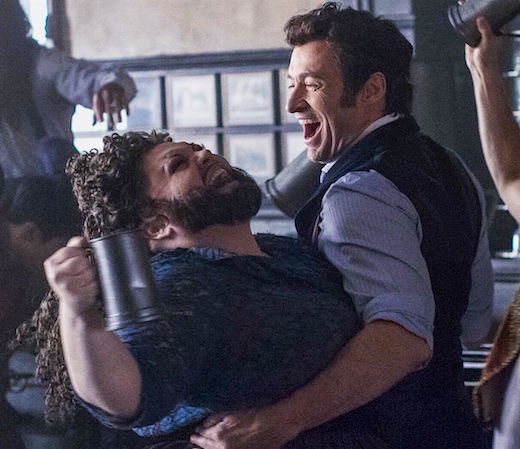
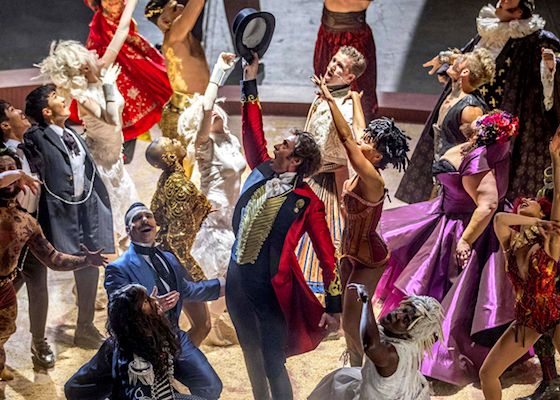
It’s a Musical through and through, the movie equivalent of a broad stage-grin and jazz hands. The numbers are of a different ilk to traditional Broadway style, but not misplaced — it’s modern chart-pop style songs and music video choreography, wrapped up in a big showy old-school musical vibe. I know everyone’s latched onto This Is Me as the film’s anthem, and Rewrite the Stars earned a single release because it’s a pop love song sung by kid-friendly Zac Efron and Zendaya, but the one number that really works for me is opener/closer The Greatest Show (it’s even better on the soundtrack, because it isn’t awkwardly sliced in two with the rest of the movie shoved in between, as it is on screen). If that song doesn’t end up being co-opted for opening ceremonies and things like that, it’ll be kind of a shame. And if I was to point to a runner-up favourite, I’d go for The Other Side purely for how it’s staged: a barroom duet between Jackman and Efron with impressive drinkography. And talking of the songs, the Honest Trailer contains some excellent spoofs of them.

Still probably best known as surly superhero Wolverine, Jackman was an established musical theatre star before his big-screen breakthrough, so this stuff is very much within his skill set — indeed, as his recently-announced world tour could attest, this show of song and dance may be more in his comfort zone than the superhero shenanigans. Either way, that he’s so effortlessly consummate at both proves he’s a performer of underestimated range. Less remarkable as allrounders are former Disney brats Efron (as a bored rich kid roped into Barnum’s enterprise) and Zendaya (whose qualifier for a freakshow seems to be that she’s somewhat dark skinned), but they’re perfectly adequate for their poppy against-all-odds romantic subplot. Less at home is Michelle Williams — not that she’s bad, but seeing her smiling and happy is weird

Drinkography

Altogether, I can see why The Greatest Showman was unpopular with critics but a huge hit with audiences — it’s a proper crowd-pleaser; a big, cheesy, easy extravaganza, similar to its pop-style music. That’s not the sort of thing critics are enamoured of, but it is the kind of thing that tickles the fancy of the masses. On the whole, it didn’t appeal to me — there were things it could’ve done better without betraying what it was aiming for, I think, like that total lack of risk in the plot, but also things I was never going to like, such as the music style — but it did have its moments.

3 out of 5

The Greatest Showman will be available on Sky Cinema from midnight tonight.

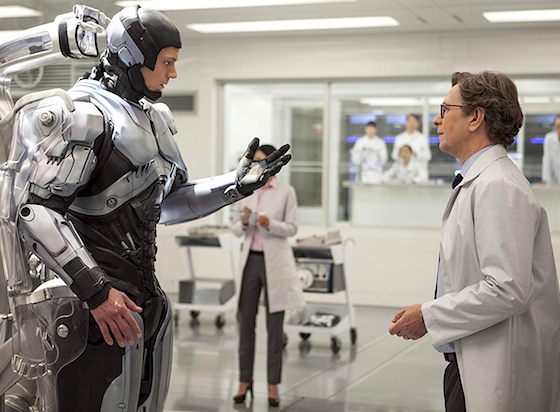
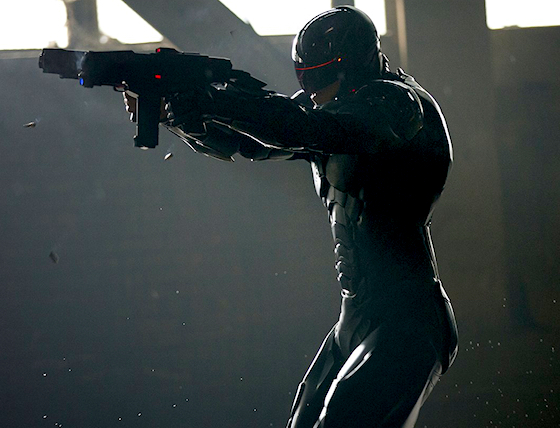
RoboCop (2014)

2018 #151
José Padilha | 118 mins | streaming (HD) | 2.35:1 | USA / English | 12 / PG-13

RoboCop

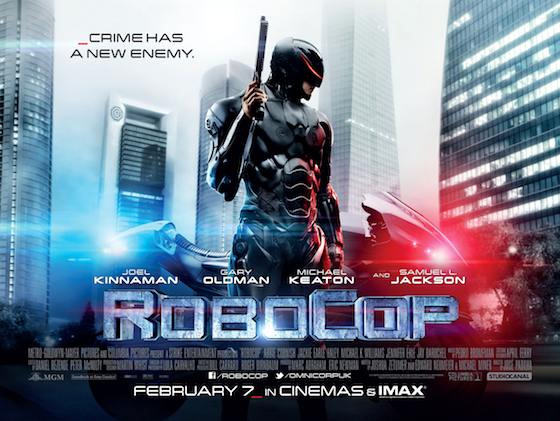
This reboot of the popular sci-fi/action satire wasn’t received too warmly on its release back in 2014, but nonetheless I’d been vaguely meaning to watch it (just because every high-profile sci-fi/action-y kind of movie goes on my back-burner). Then, after the news earlier this year that Neil Blomkamp had signed on to direct a new sequel to the ’87 original, I saw a fair few people say this reboot was actually quite good; that it only suffered due to comparisons with an original that’s a beloved genre classic. So I watched it, and, well, those people were being too kind.

The year is 2028, and mega-corporation OmniCorp have transformed warfare with their robot soldiers. Keen to deploy the same product as domestic law enforcement but blocked by legislation, they instead develop a proposal for a cyborg police officer — all the physical benefits of a machine, but controlled by the mind of a man. When Detroit cop Alex Murphy (Joel Kinnaman) is fatally injured in the line of duty, they have the perfect candidate; but they haven’t anticipated the emotional toll the procedure will take on its subject… So, it’s broadly the same plot as before, then. Well, it is a remake.

I wasn’t actually a huge fan of the original — I didn’t dislike it, but in my review I did say I thought it’d had its day and the idea of a remake was fine because “the concept’s a good’un and could withstand a refresh.” I stand by that assertion, I just don’t think this remake is a very good film. Reportedly the screenplay was based on an unfinished draft from 1985, which was commissioned by director Paul Verhoeven when he was considering making the film more serious. After reading that draft he realised he was wrong, returning to the original idea of “humour and brutal satire on the corporate future.” To put it another way: this film is based on a serious/humourless screenplay that was rejected because it wasn’t as good, rather than the one that was made and which garnered all the praise and fans and everything. What a bright idea.

Machine man

It’s clear that the writers (whoever they are — there were numerous uncredited rewrites) have serious things on their mind, with the film touching on various topical issues — overseas wars, prosthetics, murderous law enforcement — but instead of satirising them it mostly wants to take them seriously. There is a bit of satire left (Samuel L. Jackson ranting away as a commentator on a Fox News-esque TV network), but it lacks anything deeper than surface spoofery. Primarily, I think the film wants to say something about corporate America — about big business being above the law, and indeed manipulating politicians to set the law — but it doesn’t have anything particularly insightful on that subject. Indeed, I think my previous sentence summed up all of the film’s points on the matter. And that’s annoying because, now more than ever, takedowns of that Fox News mentality are important to how America-as-it-knows-itself is being destroyed from the inside.

The film also seems to have tried to switch satire for psychological matters, asking how this procedure would really affect a man. That aspect was in the original film too, but I felt it had greater focus here. Unfortunately, they cast personality vacuum Joel Kinnaman as the lead, immediately undercutting any attempt to effectively explore the character. He’s surrounded by an all-star supporting cast (Jackson, Gary Oldman, Michael Keaton, many other recognisable faces), who give decent performances, but the material hardly gives them a lot to work with. Oldman fares best: his character actually has an arc (unlike, well, pretty much anyone else in the movie), as he gradually sells out his ethics to attain his desired result. This brings in a theme of how good people can be corrupted bit by bit, but it’s still pretty thin. You never really feel that he’s selling his soul, meaning his redemption is kind of muddled. It doesn’t come off in the triumphant way you imagine someone had in mind when they wrote/filmed/edited it.

Shoot 'em up

If you want to block all of that out, sadly it’s not particularly satisfying as an action movie either. The attempt to genuinely focus on the morals leaves action pushed aside for most of the running time, which might be admirable if it worked, but it doesn’t. When it finally arrives, the action is as bland as the rest of the movie. In the original film’s climax, Robocop fought a stop-motion animated ED-209 that looks kinda clunky and cheap today; in this one, he fights half-a-dozen CGI ED-209s, but now they lack any weight and the sequence has no tension.

Basically, the film does nothing particularly well. It’s not outright bad, but it’s not good either. It’s fine. It’s adequate. Normally I’d now say it’s good for a couple of hours of brain-off entertainment, but is it? The action quotient isn’t really high enough for that. More likely you’ll end up pondering all the things the film itself doesn’t bother to adequately work through. It should be cutting and provocative, but it’s just bland. That’s the biggest shame, because if there’s a movie 2018 needs it’s one about corrupt businessmen hijacking the government’s decision-making while right-wing TV chatterers cheer them on and police officers are replaced by an ultimate-killing-machine robot. Put another way: 2014 probably didn’t need a new RoboCop movie, but 2018 does — but it needs one with more smarts than this.

2 out of 5

RoboCop is part of the opening night of Film4’s Fantastica season, airing this evening at 11:50pm.

Zatoichi’s Pilgrimage (1966)

aka Zatôichi umi o wataru

2018 #214
Kazuo Ikehiro | 83 mins | Blu-ray | 2.35:1 | Japan / Japanese

Zatoichi's Pilgrimage

Zatoichi’s Pilgrimage is the ‘lost’ Zatoichi movie: at some point the Weinsteins bought the rights to it because Quentin Tarantino was considering a remake, with the side effect of making it unavailable legally for years — while all the other Zatoichi films appeared on DVD in the US, Pilgrimage remained AWOL.* Its legal release finally came in 2013 as part of Criterion’s Blu-ray box set (which, coincidentally enough, is out in the UK this week). Clearly it was felt to be worth the wait, because it’s a highly-regarded instalment in the series. That might cause a newcomer to wonder if said wait led to some bias — that “hurrah, a new one!” feeling. Well, if it did it was entirely justified, because Pilgrimage is superb.

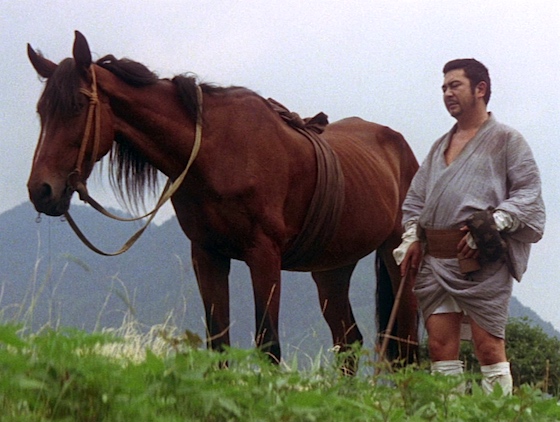
I’ve often written in my Zatoichi reviews about the inaccuracies of the English-language title “translations”. Pilgrimage is another one… but, for once, the English title seems more apt. The original translates along the lines of Zatoichi’s Ocean Voyage, and while the film does begin with Ichi going on a voyage across the ocean, that’s the extent of its relevance — after that, he’s on his pilgrimage. Well, until he kills a guy and is followed by the chap’s horse, who then leads Ichi to the man’s home. Maybe Zatoichi and the Horse would be the most accurate title… but he’s sort of on a metaphorical pilgrimage even after he abandons his official one, so that’s okay. What develops could pithily be described as Seven Samurai meets High Noon: a group of humble farmers need protection from a violent gang, but, despite Ichi’s efforts to recruit them to defend themselves, they cowardly leave him as their sole protector.

Zatoichi and the horse

We’re up to the 14th film in the series now, and in a bid for something different star Shintaro Katsu and director Kazuo Ikehiro tapped Kaneto Shindo (director of Masters of Cinema/Criterion-friendly films Onibaba and Kuroneko) to write a screenplay focused on Ichi doing penance for all his killing, hence the titular pilgrimage. But by this point the Zatoichi series was a reliable money-spinner for studio Daiei, so the head of the studio ensured they didn’t let things stray too far from the formula. They got away with enough, I think. Ichi’s early attempts at atonement set the tone for the piece, and the final many-on-Ichi fight is more of a struggle for our hero than usual.

Indeed, the way Ikehiro and Shindo build up to the finale — Ichi’s late-night heart-to-heart with latest love interest Okichi, then slowly walking out alone as the villagers hide away in their houses — actually creates a bit of tension and suspense before the battle, something rarely felt as we know Ichi’s always going to win. In the fight itself, Ichi actually seems overwhelmed by the onslaught of so many opponents. It’s a (slightly) more realistic take on the character: we’ve seen him take on this many with ease before now, but it wouldn’t really be easy; here we feel his struggle to come out on top, which makes the action more tense and exciting. The series’ other big final fights have marked themselves out with gimmicks or trickery (fire, drums, bird’s-eye camerawork, etc), but with this one it’s just how hard-won it is, how tough it is. Plus, as noted, it also recalls High Noon quite effectively: Ichi stands alone in the middle of the empty village, ready to face the attackers, while Okichi runs from house to house, begging the villagers to help, and we see them cowering inside.

Oh, Okichi

Ah, Okichi. Ichi has had many female admirers before (one per film, more or less), but most of the time their interest in him isn’t reciprocated; or, if it is in Ichi’s heart, he never lets his head get in the way and always leaves. Here, though, this feels genuinely like a romance. A lot of credit for this surely belongs to actress Michiyo Yasuda — as Walter Biggins lays out at Quiet Bubble, she “gives simmering intensity and density to a role that seems implausible on the page. It’s not that Katsu is unattractive, and he definitely has a bumbling charm, but this woman falls in love with the dude who killed her brother and who she savagely slashed with a knife during their first meeting. Yasuda makes Okichi’s turnabout seem natural and realistic […] rather than crazed.”

There’s quality throughout Pilgrimage’s supporting cast. Isao Yamagata makes for a top-drawer villain as ‘smelly’ Tohachi, the local boss and horse trader (hence why he smells of horse manure). He gets a lot of good screen time alongside Ichi himself, trading veiled threats as much as physical assaults. His confidence makes for a nice change from the recent bad guys, who generally cower from Ichi’s reputation. Also, his weapon of choice is a bow and arrow, an unusual armament for this sword-focused series, but it leads to a couple of fun demonstrations of Ichi’s skill. Equally great is Masao Mishima as village headman Gonbei, jovially smiling and laughing while he’s threatened, or while discussing the conquering of their village, or while scheming and plotting to let Ichi fight on their behalf but without their backing. The villagers’ hiding is partly cowardice, but also a cunning scheme that, basically, gives them plausible deniability. Sneaky so-and-so.

Tis but a scratch!

The skilfulness extends behind the camera, too. I’ve already discussed screenwriter Shindo, but fans of the Zatoichi series will have good reason to recognise the name of director Kazuo Ikehiro: he previously helmed Chest of Gold and Flashing Sword, two of the best-directed Zatoichi films, and Pilgrimage can comfortably join their ranks. The whole film is nicely directed, with beautiful shot choices and framing, but particular standout sequences include an underwater sword fight (it’s only brief, but it’s effective), and a fantastic opening scene where Ichi punishes a brazen purse snatcher (credit to Shindo, again, for setting up some of the film’s themes and mirroring its finale as Ichi steps up from a crowd of do-nothings to bring justice). Some bad news, though: this is Ikehiro’s final contribution to the series, sadly.

At least he goes out on a high. As Bill Hunt and Todd Doogan of The Digital Bits put it, Zatoichi’s Pilgrimage is “one of the crown jewels of the series.” It’s little wonder Tarantino was considering a remake.

5 out of 5

Zatoichi’s Pilgrimage placed 13th on my list of The 26 Best Films I Saw For the First Time in 2018.

Criterion’s Blu-ray box set of the Zatoichi films is available in the UK as of this week.

* If you purchased a UK DVD titled Zatoichi’s Pilgrimage back in the ’00s, it wasn’t this film. For reasons unknown, a company called Artsmagic released the 23rd film, Zatoichi at Large, under the wrong title. There’s more information about that here. ^

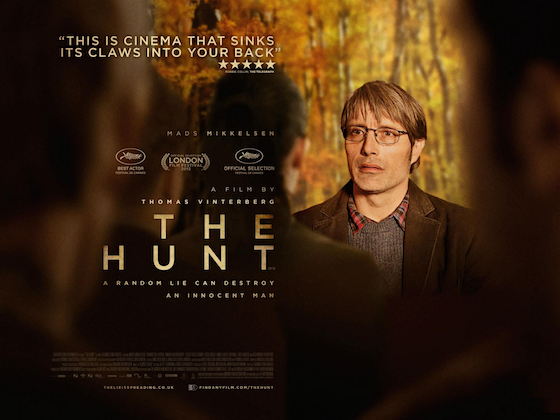
The Hunt (2012)

aka Jagten

2018 #195
Thomas Vinterberg | 111 mins | streaming (HD) | 2.35:1 | Denmark & Sweden / Danish, English & Polish | 15 / R

The Hunt

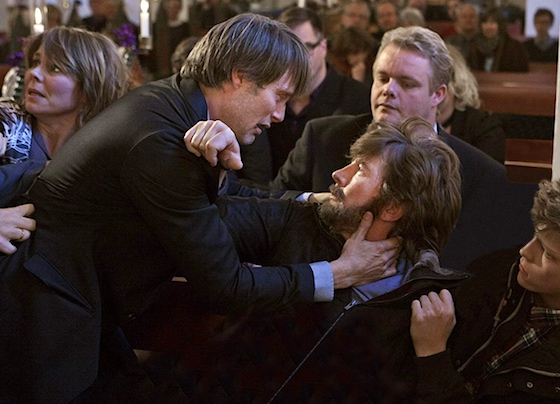
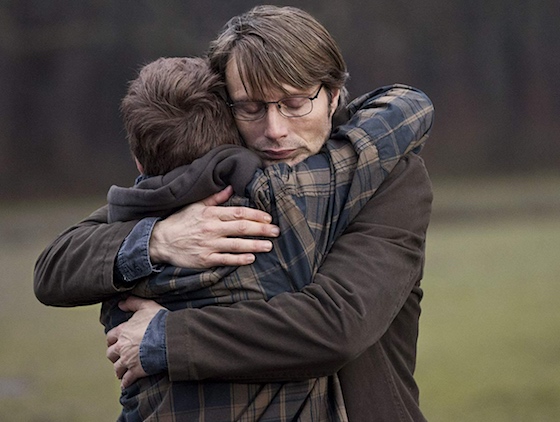
Mads Mikkelsen stars as Lucas, a preschool teacher falsely accused of sexually abusing a child in his class, in this hard-hitting drama directed and co-written by Thomas Vinterberg, one of the co-founders of Dogme 95. That filmmaking movement is pretty firmly relegated to the past at this point, but its goals — to focus on story, acting, and theme — live on somewhat in powerful films like this.

In this case, primarily, one of the film’s great strengths is how plausibly the matter is handled. There are no screaming histrionics and no raging against the world from Mikkelsen, as slowly the entire town turns against him based on a few misguided and poorly-understood words from a confused child. Instead, he mainly conveys a lot of quiet desperation — a man who knows he’s innocent but can’t work out how to prove it, and is increasingly hurt as people he called friends almost all turn against him. And that, I suspect, is how a real-life version of this would go down, despite what some of the film’s few critics would prefer to think: most people would hunker down and hope the law would come through to prove innocence, not go on some screaming rampage.

Nonetheless, it’s quite a damning film in its view of society. Most of what happens is due to adults getting carried away, misspeaking, and jumping to assumptions. It begins with a lie told by a child, but the intent is not truly malicious, but then things spiral out of her control. It’s also, naturally, even more pertinent now than it would’ve been when it came out, with allegations and denials of sexual abuse ever more often in the news. Fortunately, The Hunt is a mature and considered film, with something to say for audiences to consider, rather than hysterically coming down on one ‘side’ of an argument.

With friends like these, who needs enemies?

That said, I’m not sure some viewers are mature enough to take the film in. I’ve come across more than a couple of reviews that didn’t like it just because it was a difficult film full of unlikeable people. Sorry, but that’s life — there are annoying, stupid people out there just like the ones depicted here. Yeah, it’d be better if these morons didn’t exist, but they do, and that’s how shit like this happens in real life. Just because dickheads are real, and many of the characters in this film are inspired by those dickheads, doesn’t make this a badly-made film for depicting them.

Obviously this is in the writing, by Vinterberg and Tobias Lindholm, and the way the former has translated it to the screen, but also the performances. Mikkelsen is fantastic, of course, offering a restrained and unassuming performance characterised by inner desperation that only occasionally leaks out, which makes the injustices against him feel all the more hurtful — it is, in the most literal way, not his fault. Even more incredible, however, is Annika Wedderkopp as the little girl who first accuses Lucas. I mean, with a child that young it’s as much the skill of the direction as the actress, but they’ve given real depth and nuance to her character. You can actually see and feel the conflicting emotions she’s struggling with written across her face, most of all in an extended scene where she’s first interviewed about her accusations, as she’s visibly torn between wanting to back out of the lie but also not wanting to be thought a liar.

It's okay, that's his son

It all comes together to make a movie that is plausible, powerful, and pertinent — and kinda depressing for it, to be frank. I don’t want to spoil the ending (though I will say: dog lovers beware), but however it turns out legally for Lucas, the film suggests the reality of such situations: that some people will always follow the maxim “there’s no smoke without fire”. Once accusations have been made, is there ever really any going back?

5 out of 5

The Hunt is on BBC Two tonight at 12:25am, and will be available on iPlayer for a week afterwards.

It was viewed as part of my Blindspot 2018 project, which you can read more about here.

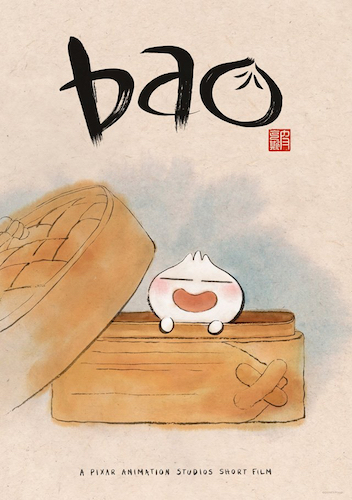
Bao (2018)

2018 #233a
Domee Shi | 8 mins | Blu-ray (3D) | 1.85:1 | USA / silent | PG / G

Bao

This short film from Pixar played before Incredibles 2 in cinemas, so naturally it accompanies it on Blu-ray too. In it, a Chinese-Canadian woman is steaming dumplings (the titular bao) when one comes to life and grows into a little dough boy, who she begins to raise as a son.

As with many of the best short films, Bao takes a simple theme (though to say what the real core of the short is would give away some of the ending) and executes it succinctly. As is often the case with Pixar’s work, it aims at packing an emotional wallop, using it’s fantastical story to elucidate a real-life situation. It also doesn’t stint visually, with an overall animation quality that wouldn’t be out of place in a feature.

Bao is perhaps most notable as the first Pixar short to be directed by a woman. It only took 35 years and 35 shorts to get there. Considering some of the recent stories about the company, and the reputation it was gaining as a “boy’s club”, I guess this couldn’t come at a better time, though perhaps it’s to their credit that they didn’t seem to harp on about this aspect (I stumbled across the fact on Wikipedia). Given the quality and clarity of work on display, perhaps writer-director Domee Shi will get to be Pixar’s first female feature director too.

4 out of 5

Incredibles 2 (2018)

2018 #233
Brad Bird | 118 mins | Blu-ray (3D) | 2.39:1 | USA / English | PG / PG

Incredibles 2

Brad Bird — the director behind The Iron Giant, Ratatouille, and not letting them release the IMAX version of Mission: Impossible – Ghost Protocol on Blu-ray (I will never be over that) — returns to the movie that made his name with what must be Pixar’s most-requested (probably “only requested”, actually) sequel, Incredibles 2.

It’s been 14 years for us viewers since the last Parr family adventure, but in-universe it’s been no time at all — literally, as Incredibles 2 picks up by recapping the closing moments of The Incredibles, which saw the eponymous family of superheroes about to face off against villain The Underminer. That confrontation goes disastrously awry, landing the family in a whole heap of trouble; but it also attracts the attention of media mogul Winston Deavor (Bob Odenkirk), who believes superheroes should be made legal again. Recruiting parents Bob and Helen Parr — aka Mr Incredible (Craig T. Nelson) and Elastigirl (Holly Hunter) — and their friend Frozone (Samuel L. Jackson) to his cause, the first step in Deavor’s public relations plan revolves around public crimefighting appearances by Elastigirl… alone. This leaves Bob holding the baby, literally, as he’s stuck at home with the kids while his wife gets to have all the fun.

At its most basic, Incredibles 2 is a gender-reversed do-over of the first movie… to a fault, in fact. The closing moments of the first film suggest a “family of superheroes” future for the Parrs, with them battling crime together. The sequel immediately works to put everything back in its place: the kids aren’t allowed to use their powers (until they must for the climax, natch); one of the parents gets to go off and be a superhero, while the other has to stay at home. The difference is it’s the man staying at home, and where Helen was consummate at looking after the kids, Bob finds it a challenge — because Men, amirite?

Left holding the baby... literally

Part of what made The Incredibles so successful as a movie was it mixed a plausible family dynamic in with the superhero capers, but here that home life aspect is what holds the film back, because Bob’s struggles with the kids are 66.6% cliché. His son struggles with homework, and Bob doesn’t know how to do it either! His daughter has boyfriend problems! The 33.3% that works comes courtesy of baby Jack-Jack, who is beginning to develop powers — plural. As the middle of the film drags on, becoming a bit “we get the point!” with Bob’s familial woes, the bright spot is continually Jack-Jack’s humorous madcap antics.

Mind you, the actual storyline in the superhero section isn’t much better. It revolves around the hunt for a mysterious villain, which naturally ends in a twist reveal… but as their true identity is pretty obvious as soon as they first appear earlier on, that reveal is a long time coming. Depending how critical you want to be, this part of the movie also has a lot of thematic points that seem to peter out or had nowhere to go in the first place. Is the film trying to say something about our addiction to screens and media? About the merits of vigilantism over bureaucracy? The dangers of being reliant on ‘higher powers’ to look after us? It touches on these things, and more, but they’re only given passing reference. Okay, yes, when you boil it down this is “just” a kids’ action-adventure movie and maybe we shouldn’t expect too much depth of thought… but Pixar are always hailed as being much more than that. Is it too much to expect that, if they’re going to introduce a topic or perspective, they’ll also at least close it out somehow?

Yet for all these story woes, Incredibles 2 does indeed work as a colourful action-adventure movie; gloriously so. The action sequences are absolutely thrilling, beautifully choreographed and constructed. They’re even better in 3D, too — Elastigirl’s stretchy powers seem to have been made for the format. And while the middle of the film may refuse to pay off the “family of superheroes” thing, the opening sequence and climax let them all in on the action, and it’s all the better for it.

Stretchy superheroics

What made The Incredibles one of Pixar’s best films, and one of the best films in the whole superhero genre, was the way it combined the action and adventure with family dynamics and concerns, seamlessly marrying the two. The sequel lacks the clarity and connectedness that first movie boasted, working very well as a fun superhero action movie but struggling as a family comedy-drama. It’s still an entertaining time (the sometimes-slow mid-section aside), but it’s not the genre and studio standout that the first film was.

4 out of 5

Incredibles 2 was released on DVD and Blu-ray (2D & 3D, but no 4K) in the UK this week.

They Shall Not Grow Old (2018)

2018 #234
Peter Jackson | 95 mins | TV (HD) | 1.85:1 | UK & New Zealand / English | 15

They Shall Not Grow Old

Commissioned by 14-18 NOW (the UK’s arts programme for the First World War centenary) and the Imperial War Museum to see what he could do to make their old World War One footage more engaging for a modern audience, director Peter “Lord of the Rings” Jackson’s initial tests at restoring the footage were so successful that the project was eventually worked up into this feature-length documentary. It tells the story of the Western Front from the point of view of ordinary Tommies living and fighting on the frontline, using only footage from the period (plus photos, posters, artwork, maps, and so on) and narration taken from interviews with men who were really there — no historians to provide context or analysis here.

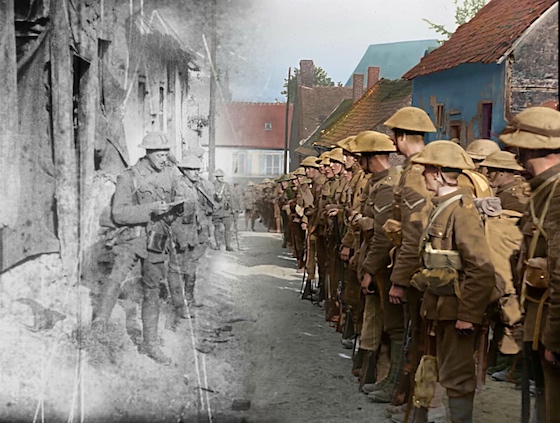
This presents two distinct things to consider when looking at the film: not only its success as a documentary, but also the methods Jackson and co have undertaken to produce it. In terms of the latter, what Jackson and his computer wizards have done goes far beyond the normal realms of “restoration”. For starters, the original footage has been cleaned up (removing scratches and dirt, stabilising the image, etc) — so far, so normal. But that original footage was shot on hand-cranked cameras, giving it a frame rate of anywhere from 10 to 18fps (sometimes varying within one piece of film). So, computers have created additional frames to bring all the footage up to a standard, smoother 24fps. Then the footage has been painstakingly colourised, and also converted into 3D (if you see it at a 3D cinema screening, anyway. Maybe there’ll be a Blu-ray). The goal of all this is to make it seem more immediate and real; to try to connect modern viewers to these men in a more direct fashion, without the distancing effect of watching juddery, indistinct black & white film.

Before and after

Calling the work Jackson and co did to old footage “restoration” has been controversial in some circles, because it goes beyond mere “restoration” and into the realm of revisionism, like the colourisation of old movies that came to prominence in the ’80s and was widely criticised (though it still occasionally rears its head today — try buying a Blu-ray of It’s a Wonderful Life without both black & white and colour copies of the film). Jackson has a different and specific aim with his work here, however. He’s not saying this is a better way to view old film footage fullstop, but rather is looking for a way to bring these past events to life for a modern viewer; to try to erase the past 100 years and put us in their shoes, to make us see how much these people, though separated by so much time, were really very similar to us. The effectiveness of the end result in achieving this goal — of bringing that long-gone war vividly to life — is undeniable.

Indeed, anecdotally, a lot of people do find the addition of colour to be revelatory — after the film’s screening on BBC Two last night, I saw many tweets talking about the “extraordinary”, “breathtaking”, “jaw dropping”, “spine tingling”, “astounding” moment when colour faded in. Personally, however, it rarely seemed like more than a special-effects veneer painted over the original footage. Well, that’s exactly what it is, in fact. It’s not necessarily a criticism, either — it may be for the best, even, because this isn’t a kind of ‘restoration’ we want to see applied across the board to old films. Either way, I do agree that it added a new perspective to see the war presented in this way; but the idea that it’s a perfect, genuinely lifelike ‘restoration’ didn’t quite wash with me. In fact, I thought one of the film’s most striking, identifiable moments came early on, before it had made the transition to colour: as the narrators talk about how young they were when they signed up, we’re shown closeups of soldiers’ faces, and you can really see how young they were — many of them literally just boys. I think it’s pretty common knowledge that, although the age to sign up was 19, lads as young as 14 lied to get in, but seeing it so clearly is another matter.

Faces

Moments like that prove that They Shall Not Grow Old’s success as a documentary doesn’t just lie with its “restored” footage. The film’s worth lies as much in the way the story is told — the voiceover narration taken from genuine soldiers’ testimonies, recorded by the BBC and IWM in the ’60s and ’70s; the editing of certain sequences — as it does in the “modernising” of old footage. The added colour and clarity do bring some bits to life and make them feel closer to today, as per Jackson’s stated goal, but a lot of the time the smeary, blurry quality of the colourisation makes it feel as much like a painting come to life as it does real footage. Nonetheless, the truthfulness of what we’re being told burns through that, and it’s the combination of visuals and audio that aids our understanding of what life was like for those men in that place at that time.

It’s quite a dense film too, packed with information, constantly surging forward with the images, an imagined soundtrack to match them, and almost non-stop narration. At times it becomes like a tone collage, where you almost absorb it more than process it, getting an impression of life on the front more than specific experiences. In this interview, Jackson says the film uses about 120 narrators, edited together to sound almost like they’re telling one story — the “common story” of the experience of a soldier on the Western Front, with extreme or uncommon anecdotes having been edited out. It means a lot of the war isn’t touched on (other fronts, other experiences, like the Navy or Air Force), but there were budgetary reasons for that as much as anything (they originally offered Jackson enough money for a film about 30 minutes long).

Western Front

While those other stories are undoubtedly worth telling too, I think it was wise of Jackson to retain a degree of focus here. Rather than attempt to cram a wide-ranging account of a complex conflict into the brief running time of a single film, he’s instead painted a picture of what it was like to be an ordinary Tommy in the trenches of Europe. This is not the story of commanders and generals, of presidents and kings, but of ordinary blokes on the ground — the people most of us would’ve been, had we lived 100 years ago — and Jackson’s methods help make that story as real and relatable as it’s ever been.

5 out of 5

They Shall Not Grow Old is available on iPlayer until Sunday 18th November. A documentary about the making of the film airs on BBC Four tonight at 7:30pm.

Bohemian Rhapsody (2018)

2018 #230
Bryan Singer | 134 mins | cinema | 2.39:1 | UK & USA / English | 12A / PG-13

Bohemian Rhapsody

Is this the real life? Is this just fantasy?

So go the opening lines to the song Bohemian Rhapsody (Bo Rhap to its friends), Queen’s six-minute prog-rock suite that is one of the best-selling and most-acclaimed songs of all time. And those lines could hardly be more relevant to the film that’s borrowed its title, given that much of the discourse about the film has revolved around the issue of its truthfulness. This (in part) has led to a huge divide in the opinions of critics and audiences: whereas the former gave it a Rotten Tomatoes rating of just 55% when it released (it’s since climbed up to 61%), audiences have driven it to be the #1 film at the worldwide box office and placed it on the IMDb Top 250, where it’s actually rising up the chart (it was at #136 after I saw it last Thursday, but is at #126 as of writing). Well, there’s a scene in the film where Bohemian Rhapsody debuts on the radio, and as it plays the screen gradually fills with quotes from contemporary reviews, all of them mercilessly slagging it off — the irony, obviously, being that we all know what a ginormous hit the song would become. Some things never change, eh?

Bohemian Rhapsody: The Movie is, of course, a biopic of performer extraordinaire Freddie Mercury and the band he fronted, Queen. The film begins in 1970, introducing us to Farrokh Bulsara (Rami Malek) — Heathrow baggage handler by day, wannabe party animal by night, who prefers to go by the name Freddie. He’s been following the fortunes of student band Smile, and when their lead singer quits he offers his services to the remaining members, guitarist Brian May (Gwilym Lee) and drummer Roger Taylor (Ben Hardy); and with the addition of bassist John Deacon (Joe Mazzello), the line-up is complete. As he begins a relationship with shopgirl Mary Austin (Lucy Boynton), Freddie’s confidence as a performer grows: he changes his surname to Mercury and coerces the band into recording an album, where their unusual style gets them noticed by a record label and… well, you can imagine where it goes from there.

Killer Queen

And that’s another problem that critics have had with the movie: you can imagine where it goes from there not just because you know Queen are an incredibly popular and successful band, but because you’ve seen this story a dozen times before in any other music biopic you care to name. Many critics have favoured naming Walk Hard, a spoof of the genre, wondering how audiences can accept such familiar tricks after they’ve already been spoofed. Well, consider this: 2½-week-old Bo Rhap already has more IMDb ratings than 11-year-old Walk Hard.

Look, I’m trying not to gloat, but here’s a thing: I’ve been a fan of Queen’s music for as long as I can remember. I grew up listening to their first Greatest Hits album a lot. I’d wager a lot of British people have a similar affiliation, considering that’s the best-selling album of all time here. Heck, it’s only really Americans that should’ve been caught by surprise by the film’s success: it’s my understanding that Queen have always been something of a niche, cult group there, whereas in the rest of the world they’re pretty damn huge (some estimates put them among the top ten best-selling music artists of all time). As the aforementioned Bo Rhap reviews scene suggests, audiences have often been ahead of the critical curve when it comes to appreciating the band’s genius, and maybe it’s the same with their biopic.

That said, a lot of the film is made up of quite run-of-the-mill music biopic material. I don’t think it merits the level of vitriol some critics have hit, because it’s not executed badly, it’s just nothing particularly unusual either. But the film does have one big advantage: it’s about Queen. Some of their magic can’t help but rub off. We’re not watching any old band playing any old songs — it’s Freddie Mercury and Queen, creating Bohemian Rhapsody, We Will Rock You, Another One Bites the Dust; performing Killer Queen, Fat Bottomed Girls, Love of My Life, I Want to Break Free, Radio Ga Ga, We Are the Champions… The film itself may be not be a classic-in-waiting, but with these people, those songs, and the performances of both, fans of Queen’s music surely can’t help but be entertained. And when their fans number, well, most people, that’s when you get a crowd-pleasing #1-in-the-world box office hit.

We Will Rock You

Much of the film toddles along nicely, mixing some predictable plotting with other bits that really work. It does a good job of little things that make the band feel like a group of friends — the scenes where they’re conceiving songs, collaborating, teasing each other; just little touches that sell the atmosphere of mates working together. Any scene where they’re called on to perform on stage has all the strutting majesty of the real band (I’ll come to the biggest instance of that later). Inhabiting those roles, the actors playing Queen are superb. It’s never easy playing an icon, but Malek excels as Freddie, and an Oscar nomination may well be on the cards. In the less showy roles, Gwilym Lee and Ben Hardy are both likeable as the thoroughly decent Brian and more hotheaded Roger, respectively, though Joe Mazzello has less to do as quiet John Deacon, often just pulling silly faces in the background.

I also think the film makes a fair fist of depicting Freddie’s love life. We’ve had a fair few high-profile gay movies recently (Moonlight, Call Me by Your Name, Love Simon), and compared to those Bo Rhap clearly didn’t foreground his homosexuality as much as some viewers would like. Each to their own, but I reckon the film splits itself about 50/50 between Freddie’s personal life and the band’s story, and I don’t think it shies away from his gayness (albeit in a PG-13 way — no beach stroking or peach abusing here).

Even more of an elephant in the room has been the film’s directorial situation: planned and part-directed by Bryan Singer, he was eventually fired from production, with the rest of the shoot (reported to be about a third) and post-production completed by Dexter Fletcher. Singer gets the sole credit because the Director’s Guild of America specifies that only one director may be credited (that’s a whole kettle of fish we’ll leave for another day) and there seems little doubt Singer contributed more on balance than Fletcher, especially as Fletcher has said his job was to complete the work that had already been started. Bearing this situation in mind, it’s particularly interesting that, while much of the film is shot quite matter-of-factly, there are occasional bold directorial flourishes that make you query: who was responsible? Did Fletcher tart things up? Were they Singer’s idea (and so should there have been more)? Unless we ever get a breakdown of who did what, I guess we’ll never know.

Love of My Life

One thing that did intrigue me slightly is that the film isn’t in 3D. That format’s mainly reserved for post-converted blockbusters now, sure, but both Singer and Queen guitarist (and a producer of the film) Brian May are fans of stereography: Singer actually shot his last two X-Mens in 3D (as opposed to just post-converting, as most do nowadays), while May is something of an authority on the subject, even having designed a viewer for 3D photos and published several books (including one of his 3D photos of Queen). So, basically, I’m passingly surprised they didn’t choose to shoot in 3D. Maybe they asked and the studio just wouldn’t pony up the cost. Who knows. It doesn’t really matter… though, actually, I think the finale could’ve looked fantastic in three dimensions.

Ah, the finale. Earlier, I said the film begins in 1970 — that’s not quite true. It actually begins with a flash-forward to Live Aid, the 1985 charity concert that included a famous set by Queen, and which the rest of the film eventually leads us back to. It’s a natural place to choose to conclude the movie: it was a huge triumph for the band, their set regarded by many as among the greatest rock concerts of all time, and certainly a happier endpoint than Freddie’s death a few years later — it seems more fitting to end with him on top of the world than sadly fading away. But even knowing all these facts doesn’t prepare you for the power of what’s actually on screen. It’s truly an incredible set piece, especially when experienced on a huge screen with a thumping surround sound setup. It literally made my hair stand on end and almost brought tears to my eyes. The version in the film isn’t actually the whole set that was played, but they did film it all and it’s being cut together as a Blu-ray extra. I can’t wait. Even as it stands, though, it’s a barnstorming conclusion to the movie; a sequence of such power it justifies the film’s very existence.

We Are the Champions

And so we come to the rub: the rating. Can you give a film full marks for pulling off one key 20-minute sequence so exceptionally? Well, that’s sort of what I was just saying: by itself, the Live Aid scene is enough to tempt me to give the whole film full marks, I thought it was that good. But the rest of the movie isn’t at the same level — it ticks along decently and I enjoyed it all, don’t get me wrong, but it doesn’t really transcend its genre or subject matter. So, it’s a 4… but Live Aid may yet earn the film a spot on my best-of-year list nonetheless.

4 out of 5

Outlaw King (2018)

2018 #232
David Mackenzie | 121 mins | streaming (UHD) | 2.39:1 | UK & USA / English | 18 / R

Outlaw King

If Netflix’s latest original movie is known for one thing, it’s for featuring a shot of Chris Pine’s penis. It’s no slight on the chap to say its appearance has generated more column inches than he possesses, though admittedly it’s hard to be certain when (penis spoilers!) it only appears for a split second in a long shot as he rises from a lake — who knows how far beneath the surface it may continue?

If the film is known for two things, the second would probably be the muted reception its premiere screening received at TIFF back in September. Director David Mackenzie scurried back to the edit suite, motivated as much by personal displeasure with how the film was playing as by the critics’ reaction, and chopped out around 20 minutes ahead of its wide Netflix debut. By the account of people who’ve seen both cuts, this has definitely improved the film’s pacing.

If the film’s known for three things, the next might actually be what it’s about. Picking up more or less where Braveheart left off, it’s the story of Scotland’s (possible) rightful king, Robert the Bruce (Chris Pine) — or, as the English king seems to keep calling him, Robert da Bruce (yo!) — and his attempt to unite the Scots and take back their land from the English (what else is new, eh?) Robert’s new English wife, Elizabeth (Florence Pugh), must decide whose side she’s on as King Edward I (Stephen Dillane) and his petulant son, the Prince of Wales (Billy Howle), employ any means necessary (with preference to brutally violent ones) to keep Scotland English.

Penis King. Er, I mean, Pine is King.

Outlaw King kicks off in style, with a superb eight-minute single-take that moves in and out of a candle-lit tent during daytime (a feat of camera operating to seamlessly handle the changing exposures required… assuming it wasn’t faked), during which we take in important scene-setting political discussions, a playful (but not really) sword fight, and the siege of a distant castle by a gigantic trebuchet. As opening salvos go, this is first rate. The whole movie is gorgeously shot by Barry Ackroyd, in particular some stunning aerial shots of wide-open scenery — all of it genuinely Scottish, too. In terms of individual sequences though, the opener is not challenged until the climactic Battle of Loudoun Hill, a bloody, muddy, sometimes confusing (deliberately, I think) scrap between the small Scottish forces and the huge English army. How can the Scots possibly win? Tactics. I love a good medieval-style battle with proper tactics (rather than just a free-for-all of troops running at each other), and I’d say this delivers.

In between these bookends, the film is almost a Robin Hood movie: after Robert has himself crowned King of the Scots, he’s declared an outlaw, and ends up on the run with a small band of followers, which leads them to use guerrilla tactics against occupied castles. There’s also a subplot about the relationship between Robert and Elizabeth, his second wife, forced upon him by the conquering English king at the start of the film. Apparently this is one thing that’s suffered from Mackenzie’s new cut, with less time given to seeing their relationship blossom early on. It didn’t feel fatally underdeveloped to me, but it might not’ve hurt to add an extra scene (one would probably do) to help connect the dots between their initial wariness and later trusting devotion.

The overall effect doesn’t feel rousing and celebratory in the way classical historic war epics (like, of course, Braveheart) normally do, but I also don’t think that’s Mackenzie’s goal. He’s talked about endeavouring to make it reasonably historically accurate, and real-life is seldom as clear-cut and triumphant as those movies would have us believe. That said, there’s no doubting who the heroes and villains are here, with the honourable Robert trying to regain his homeland and keep his people safe, while the ineffectual Prince of Wales flounders around, all bluster and no success, slaughtering people for kicks. Boo, nasty English!

Muddy; bloody

As that Robert, I thought Chris Pine made a more convincing Scotsman than Mel Gibson. I did praise the latter’s performance in my review of Braveheart, but nonetheless I never quite forgot that William Wallace was being played by American Movie Star Mel Gibson, whereas here Pine — and his (to my non-Scottish ears) perfectly passable accent — blends seamlessly with the rest of the cast. With supporting roles filled with quality performers like James Cosmo and Tony Curran, you can be assured there are no small parts. Stephan Dillane doesn’t grandstand as the villain, making him more genuinely threatening thanks to an air of calm menace, whereas Billy Howle as his son is a bit more outré, desperate to show his worthiness as heir to the throne, and failing.

Most memorable, however, is Aaron Taylor-Johnson as James Douglas. Even when the other Scottish nobles are being allowed to surrender and have their lands returned, Edward remains so disgusted by Douglas’ father’s traitorousness that he refuses to grant him the same. That makes him keen to sign up to Robert’s cause, where he’s a screamingly effective fighter. Taylor-Johnson, caked in mud and blood, wild eyed and screaming at the top of his lungs as he slaughters the English, is a sight to behold. “What’s ma fuckin’ name?” he bellows. No one’s going to forget.

Finally, a lot of praise has been reserved by others for Florence Pugh. She’s certainly a rising star, having attracted great notices in Lady Macbeth last year and currently leading the cast of the BBC’s Little Drummer Girl, but something felt off here. I don’t think it’s her fault, though. This Elizabeth feels dropped in from another time, with a very modern confidence and headstrong attitude. If Pugh was playing a woman from a few hundred years later, I’d buy it entirely, but in this setting, I’m not sure. But this is perhaps less her fault and more that of the five(!) credited screenwriters.

“What’s ma fuckin’ name?”

Another thing those scribes haven’t really included are gags. Some have criticised the film for being too serious, lacking in levity, which… I mean, have you not noticed what it’s about? I’m the first person to argue that a film about serious things doesn’t have to be 100% serious — that it’s always okay to include a variety of tones, just like real life — but it’s also okay to, well, not; to create a different experience. I don’t think Outlaw King is shooting for portentousness, which I guess is what those critics mean, but it does aim for a certain kind of intensity. After all, it’s about a small band of men trying to stand up to the greatest army in the world, and the stakes couldn’t be higher. And if Pine referring to someone as “ye cheeky wee shite” doesn’t raise a smile, well, you don’t know the Scottish well enough.

Even in its new tightened form, Outlaw King is not the outright-success Oscar-hopeful Netflix once touted it as. It’s unlikely to attain the crowd-pleasing success of Braveheart, a film that remains an obvious point of comparison but not an unreasonable one, though on balance I’d struggle to say which of the two I preferred. What this lacks in its spiritual predecessor’s grandstanding, it makes up with grit and guts (literally), making an historical war movie that frequently thrills.

4 out of 5

Outlaw King is available on Netflix everywhere now.