Absolutely Fabulous: The Movie (2016)

2018 #96
Mandie Fletcher | 87 mins | streaming (HD) | 2.35:1 | UK & USA / English | 15 / R

Absolutely Fabulous: The Movie

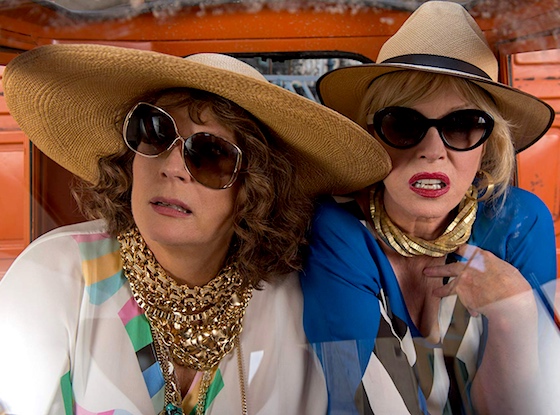
“Most movies are a script in search of some money,” said Jon Plowman, producer of every episode of Ab Fab, “but this was more a case of some money in search of a script. From the minute the word got out that Jennifer was contemplating writing the film of Ab Fab, lots of financiers threw their hats in the ring.” A cruel critic might therefore be tempted to accuse the cast and crew of doing this poorly-received film continuation of the popular TV series “just for the money”, but I think that would be disingenuous — I think there was a real desire to put an appropriate capstone on the beloved sitcom. Whether that merited a 90-minute theatrical release, or would’ve been better served as a 60-minute TV special, is another matter…

Primarily, I think Ab Fab: The Movie is targeted at fans of the series, and isn’t really designed to stand on its own feet as an independent movie. I’ve only seen some of the TV show, and I think that was essential to understanding who all the characters were, how they were connected, and why they behaved in certain ways. Even then, I felt like there was stuff flying over my head because I haven’t seen all of the original episodes and/or because it’s been some years since I did watch any.

So, I’m no expert on Ab Fab, but it’s always been my impression that when it started it was satirising the fashion world of the era (i.e. the ’90s). However, as it’s gone on it seems to have become about itself, as it were — its own characters and in-jokes, rather than any commentary on the wider world. That’s what we get here, therefore: basically, a 25th anniversary special amped up to full-blown movie status. One of the selling points for it as a big-screen variant was that it’s Eddie and Patsy on the French Riviera, continuing the age-old tradition of big-screen outings for British sitcoms being just “send the characters abroad”. Despite that, the first half is still set in London, and it’s pretty funny. When they do finally head overseas, it doesn’t exactly drag, but it seems a bit desperate.

Wheels on fire, off screen

In terms of broader relevance, creator/writer/star Jennifer Saunders has spoken about how the film was supposed to be about ageing; about, apparently, the “reality” of these youth-obsessed characters getting old when they don’t know how to. Well, there’s not much reality in it it, given the typically outlandish situations the already-exaggerated characters find themselves in (for example, the emotional climax comes while Eddie and Patsy are trapped in a tiny van sinking in a swimming pool). That doesn’t mean such OTT antics aren’t amusing, but expecting an examination of the human condition from them is a bit… unlikely.

A more notable feature is the insane number of cameos — “around 60”, according to this list on IMDb. I guess the notoriety of Ab Fab attracts big names… though plenty of them, er, aren’t. Basically, if you’re not a Brit, assume everyone who pops up for only one scene and opens their mouth is some degree of famous here. There are some international (i.e. American) faces too, though, to remind you of the series’ worldwide cult appeal.

Overall, I enjoyed the film, but it definitely leans into being a fan-friendly exercise, which I’m not sure was appropriate for a belated big-screen debut. It’s not an ideal starting point for the uninitiated, then, but it’s not a terrible send-off for existing fans.

3 out of 5

The UK TV premiere of Absolutely Fabulous: The Movie is on BBC One tonight at 9pm, and will be available on iPlayer afterwards.

Black Mirror: Bandersnatch (2018)

2018 #261
David Slade | “90” mins | streaming (HD) | 2.20:1 | UK & USA / English | 15

Black Mirror: Bandersnatch

The latest addition to Charlie Brooker’s Black Mirror universe is the kind of work that pushes at the boundaries of form and medium — and therefore is the kind of work that challenges how I count things here at 100 Films. Is it a film? An episode of TV? A video game? Or is it genuinely something new? Well, it’s not really a video game — it’s not interactive enough to qualify as that. So is it a TV episode, then? It carries the Black Mirror branding, and that is a TV series. Plus it’s not a theatrical release… but then, neither are most Netflix films. Indeed, Bandersnatch carries its own listing on Netflix (as a standalone title, not an instalment of the series), and is promoted by Netflix as an “interactive film”. So, taking them at their word, I’ve decided that means it counts as a film.

It’s also, I think, very accurate branding — they debated internally how it should be promoted, and I think they’ve landed on the right term for it. As I said before, it’s not really a video game — it’s not as interactive as a gamer would expect it to be. The debate between film vs. TV episode is tighter, but when isn’t it these days? Either way, it’s not just your regular passive Netflix-viewing experience, because it is interactive. In practice, it plays like a video version of Choose Your Own Adventure books — you know what those are, right? I’ve heard some Young People don’t, which saddens me in my apparently-old-now early 30s. If you don’t know, in a CYOA book you’d read a passage of story, then be asked to make a choice on behalf of the hero; for Option A, you’d turn to page X, and for Option B you’d turn to page Y, and so on from there, with your choices dictating your path through the story.

No reading required

Bandersnatch is similar, only without all the manual flicking back and forth: every so often (roughly every three to five minutes, determined as the optimal period of time by Netflix’s product testers) you’re presented with two choices on screen and have ten seconds to pick one. Which you choose decides what you see happen next. (If you don’t choose, Netflix decides for you. Make no choices whatsoever and you’re led on a predetermined route that gets you through a full story in the shortest time possible.) Sometimes these choices are small (which breakfast cereal to eat?), sometimes significant (accept a job offer?). Netflix remembers them all, even the minor ones, which have knock on effects later. They made a rod for their own back in this respect, because having to account for viewers’ early choices led to requiring alternate scenes later on that only vary in how they include the viewers’ fundamentally-meaningless earlier choice. But that’s Netflix’s behind-the-scenes problem, not ours as viewers. Suffice to say, they’ve put the work in, and those little touches help make for an even more immersive experience: the choices themselves may have no bearing on the plot, but the fact the film remembers them and then uses them again later is a kind of meaning in itself.

By this point you’re probably wondering what it’s actually all about, especially if you’re not merely wowed by the technology. (If you are wowed by the technology, check out this article at Wired which goes into more detail about what was required.) Set in 1984, we’re introduced to 19-year-old Stefan (Fionn Whitehead), who lives with his dad (Craig Parkinson) and wants to be a video game designer. He’s managed to wangle a meeting with the company who publish games by his idol, Colin Ritman (Will Poulter). Stefan’s pitch is Bandersnatch, an adaptation of a classic Choose Your Own Adventure novel by Jerome F. Davies, who went mad. Stefan found the book among the possessions of his dead mother, an event which has left him seeing a therapist (Alice Lowe). As Stefan begins to write the program for Bandersnatch… well, what happens next is up to you.

Everybody play the game of life

You can already see how content is reflecting form (you’re playing a Choose Your Own Adventure game about a guy writing a Choose Your Own Adventure game, just in case you needed that spelling out for you), and, well, I don’t want to spoil anything (as much as you can spoil anything about a film where every viewer will have a different experience), but it goes further down the rabbit hole than that. Trust Brooker and the Black Mirror team to have taken a new, emerging technology and made a drama about it — I mean, that’s pretty much the series’ MO. You can rely on them to not make things as straightforward as they first appear, either. Most of the time the film offers two options, each leading you down a different path, but sometimes it mixes it up (to say how would be to spoil the experience, like attempting to relate a joke from a comedy). And if you’re curious about how alternate pathways play out, don’t worry, you won’t have to watch the film from the start every time: after certain “game over” points, Bandersnatch offers the chance to jump back to earlier decisions and choose differently. If you’re interested enough to continue, this is definitely worth doing: as I said earlier, Netflix remembers all your choices — there are sometimes advantages to choosing that ‘continue’ option instead of starting from scratch at a later date.

Perhaps the most impressive thing about Bandersnatch, considering all the myriad choices and paths and possibilities it presents to the viewer, is that it all makes sense. That might sound like Filmmaking 101, but it’s a massive pitfall that would’ve been so, so easy for them to fall into. And they made it a more complicated job for themselves too, insisting the choices viewers make were genuinely meaningful and affected what happened and where the story went. It’s very cleverly written and constructed — it’s not designed to force you down a certain path, or give you a fake choice that doesn’t really change anything, but instead to do those things while still building to a cohesive whole. Yes, of course it’s not total free will to do whatever you fancy, and sometimes there’s no escaping a certain choice or development… but, with the way Brooker has married story and presentation medium, that’s all kinda part of the point.

Suspicious Stefan

If you think about how Bandersnatch was made — the challenge it presented to Brooker as writer, to director David Slade, and to the cast having to negotiate their characters’ various emotional arcs across different permutations of similar scenes — it becomes even more impressive on a technical level. And that’s partly because you don’t have to consider the behind-the-scenes logistics to find this an enjoyable experience. They’ve executed it so consummately that you can just watch it, play it, experience it without needing to perform mental gymnastics to make it fit together, because they’ve accounted for all that and filmed the necessary alternate stuff and been certain it all pieces together. So you can instead apply brain power to what the film has to say about choice and free will, and to working out which alternative options you could choose and which parts of the story you perhaps haven’t experienced yet.

Plus, to an extent, how much you get out of Bandersnatch is rewarded by how much you’re prepared to put in. As I mentioned earlier, at the simplest level you can just put your remote down and watch it play out a 40-minute-ish Black Mirror episode via its default choices (selected by Brooker), giving you the most basic version of the story (I haven’t done this, but I’m tempted to give it a go). Or you can play through until you reach one of the five endings that bring you to the choice of a credits scroll. (Netflix’s official line is that there are five endings. Depending how you count it, there are definitely more.) Or you can keep going and going, taking those “continue” options and seeing where different choices lead you. Sometimes, they lead you to entirely new places. And while there are multiple endings, there’s an “official” ending, too; one where the credits roll and you end up back at the Netflix menu screen (or, I guess, go to something else playing, if you’re one of those weirdos who hasn’t turned that feature off), rather than another continue option.

Play on

I played on until I came across that particular finale — partly because I’m a completist, partly because I was so engrossed in what I was watching. Did I experience every permutation the film has to offer? No, I’m pretty sure I didn’t; but I’m also pretty sure I experienced the bulk of the major ones. Did I get “lucky” that it took me so long to find that final-ending, meaning I saw a lot of the film before I got there? Put another way: is there a quicker path to that final-ending which would mean you saw less of the whole film than I did? Maybe there is. Or maybe there isn’t — maybe the only way to that ending is trial and error through multiple permutations. Or maybe there are multiple “final” endings, and when you’ve exhausted what the film feels it has to offer it throws you the appropriate one. Such are the secrets of Bandersnatch, which Reddit users will surely reveal in time. They’ve already made a start, although a thorough-looking flowchart doing the rounds on Twitter has already been proven to be missing at least a few possibilities.

However much time you choose to spend on it (Netflix say a thorough session would take two-and-a-half hours, although the BBFC certification reveals that there’s over five hours of footage required to make the whole thing function), Bandersnatch is a genuine experience, once again putting Netflix at the cutting edge crossroads of modern visual entertainment. Is it a film? A TV episode? A video game? All of those things? None of them — something else? Something new? Those who must experience such new things will need to try this out, of course — they probably already have. But it’s one for regular viewers, too, with a rewarding story to tell; one which could only have been adequately told with this newly-imagined technology. In my opinion, it’s a magnificent success, and a must-have experience.

5 out of 5

Black Mirror: Bandersnatch is available to watch/play/whatever on Netflix now.

It placed 10th on my list of The 26 Best Films I Saw For the First Time in 2018.

Christine (2016)

2018 #114
Antonio Campos | 114 mins | streaming (HD) | 1.85:1 | UK & USA / English | 15 / R

Christine

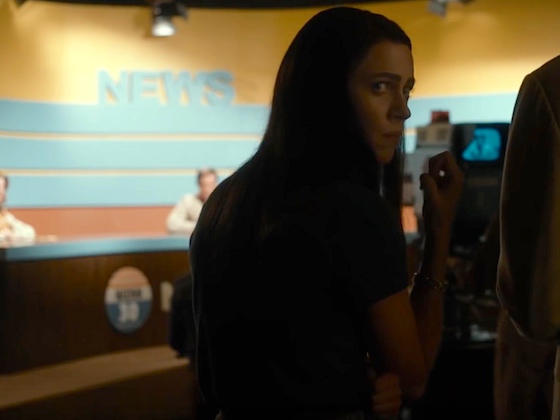
The true, tragic story of newswoman Christine Chubbuck is told in this affecting drama. For those that don’t know, it’s the ending that is why her story is famous: Christine was the first person to commit suicide live on television. The film attempts to help us understand Christine’s life and mental state, and what led her to that moment.

The overwhelming impression I got was of Christine’s existence being quietly sad. She’s shown to have the kind of life that isn’t loudly and forcefully horrible, but just… disappointing. So terribly and thoroughly disappointing that “why bother?” becomes a legitimate question for the person having to live it. That made it a somewhat uncomfortable film to watch, but that could be a personal thing — I can relate to Christine’s social awkwardness, and could see some of the pitfalls she was headed towards. (That said, not everything goes exactly as one might expect, specifically her infatuation with Michael C. Hall’s handsome anchorman.) I’ve known people like Christine, too, who do all the right things and try to put good out in the world, but somehow the world spits it all back, like it doesn’t matter.

Performance anxiety

In part because of this psychological realism, the film feels respectful, but without being either neutered or over-explanatory. By the former I mean that it doesn’t present Christine as some perfect soul — she can be bolshy and trying even for people who like her. By the latter, that it doesn’t hype up how bad her life was to make sure you ‘get’ why she’d do it. For example, everyone around her cares so much. You’d expect a terrible home life, bullying or teasing colleagues, some kind of gross betrayal, but no: they’re mostly nice; they like her; they try to be her friends. And you feel like she sees that, too, even as she… doesn’t. I suppose it must be mostly speculative in what it reveals about her psychologically, but you feel like it understands the responsibility of taking that approach — that it must try to be truthful, rather than histrionic; but that it’s important it attempts to find that truth, not just be enigmatic and vague.

Rebecca Hall gives a fantastic performance in the title role, completely immersed in what must be a difficult part to play: the viewer has to understand, identify, and empathise with Christine, even as she’s a bit standoffish, awkward, and maybe doesn’t even understand herself all that well. Between Hall’s masterly performance and Antonio Campos’ understated direction, they’ve created a film that dodges the pitfall of being melodramatic, and managed to make you sympathise with Christine and why she would do what she did, even as you empathise with her enough to wish she wouldn’t.

4 out of 5

Christine is available on Netflix UK from today.

Ready Player One (2018)

2018 #183
Steven Spielberg | 140 mins | Blu-ray (3D) | 2.40:1 | USA / English | 12 / PG-13

Ready Player One

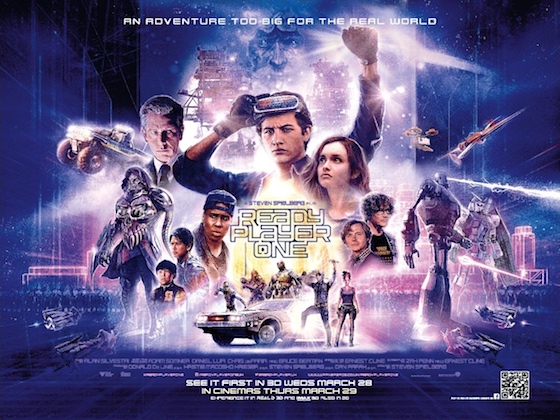
Steven Spielberg’s latest foray into the style of popular moviemaking he helped create in the ’70s and ’80s — the summer tentpole action-adventure mega-blockbuster — is an adaptation of a novel so bedded in the popular movies of the ’70s and ’80s that the whole thing is a bit too meta: it’s a movie obsessed with the brilliance of ’80s pop culture, made by one of the primary creators of that culture. At least Spielberg insisted that all references to his own work be cut, otherwise it could’ve become a mite self-congratulatory. Though it does mean that Spielberg becomes conspicuous by his absence in a Spielberg movie. Oh, it’s enough to make your head spin…

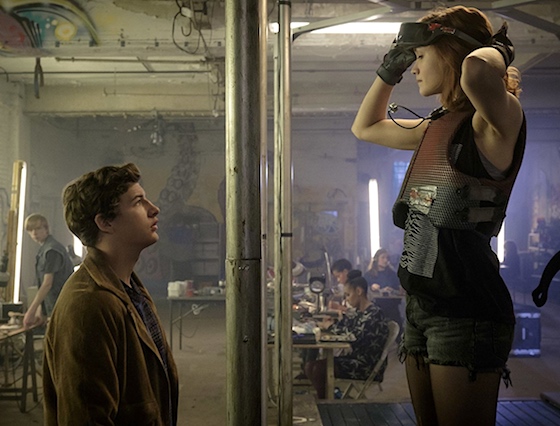
The plot, then: in the year 2045 the real world is a mess, so people spend most of their time in the virtual reality playground of the OASIS. When the game’s creator died, he left behind the first in a series of challenges, and whoever completes them will inherit the OASIS itself. (If you’re thinking, “isn’t that Charlie and the Chocolate Factory but with video games?”, I guess we’ll chalk that up as just another reference. (If you’re thinking, “isn’t that Willy Wonka and the Chocolate Factory but with video games?”, tsk, go read more Dahl.)) Unfortunately, no one’s even been able to crack the first clue… until someone does, of course, because this is an action-adventure blockbuster, not some existential mood piece on the futility of trying to please the dead… or, you know, something. Anyway, cue lots of whizzy CG antics, with CGI that’s actually allowed to look like CGI because it’s all set in a CG environment — I bet the animators were thrilled when that brief came along, because who doesn’t love their job being made easier?

What other car is an '80s lover gonna choose?

Unfortunately, the same amount of effort seems to have gone into the screenplay. Some of this no doubt stems from the original work: the world of 2045 makes no plausible sense (check out the ghost of 82’s review for more on this theme), and there’s the least convincing romantic relationship outside of a George Lucas movie. Worst for me was something an adaptation can readily fix, the dialogue, but which here is frequently full of clunky, hand-holding exposition. This rears its head not just when establishing the film’s world and its rules, which would be bad enough, but also for relatively minor and easily-followed plot points throughout. It’s like the film has been written so even a goldfish could follow it — you don’t need to remember the start of a sentence because its end will explain the same thing again. Equally ill-considered is the movie’s apparently pro-gaming stance. Certainly, a lot of gamers seem to have embraced it as a film that understands their culture; and yet its final message is, “go spend more time in the real world, ya nerds!”

And yet, I mostly enjoyed it. It may not hang together if you engage your brain, but as a bit of fluff it’s largely a fun virtual romp. There are more Easter eggs than a Cadbury’s warehouse in January, which are fun for geeks like me to spot, and those whooshy visuals are even more entertaining when viewed in 3D, which (as Blu-ray.com’s review put it) is “a compelling demonstration of why the format is worth keeping alive.”

Watching other people play video games

But, even though I liked it overall, I can’t help feeling it was a bit of a waste of Spielberg’s time. It’s not that he’s done a bad job — he’s still a god amongst men when it comes to crafting a blockbuster movie — but I also think the end result lacks a certain something that his best work contains. I don’t really know why, but for some reason I feel like he should’ve spent the time it took to make this doing something else, and left this film to be helmed by someone… less important. I mean, there are a lot of other filmmakers who could’ve done a fine job with the material, and wouldn’t have felt the need to cut all the book’s references to Spielberg’s films either.

4 out of 5

Ready Player One is available on Sky Cinema as of this weekend.

Spider-Man: Into the Spider-Verse (2018)

2018 #254
Bob Persichetti, Peter Ramsey & Rodney Rothman | 117 mins | cinema | 2.35:1 | USA / English | PG / PG

Spider-Man: Into the Spider-Verse

When it was announced a couple of years ago that Sony were developing an animated Spider-Man movie, there was, I think, some confusion about what they were playing at. The live-action movies were continuing, so this wasn’t a replacement. Was it connected? If so, why was it animated? If not, why did it exist? What was the point? Besides the obvious, anyway (popular brand + movie = money). Maybe Sony were just ahead of the game: where previously only one actor or series took on the mantle of a character at any one time, we’re increasingly in a world where multiple screen versions can exist simultaneously. Not that this film focuses on the same Spider-Man as the other ones…

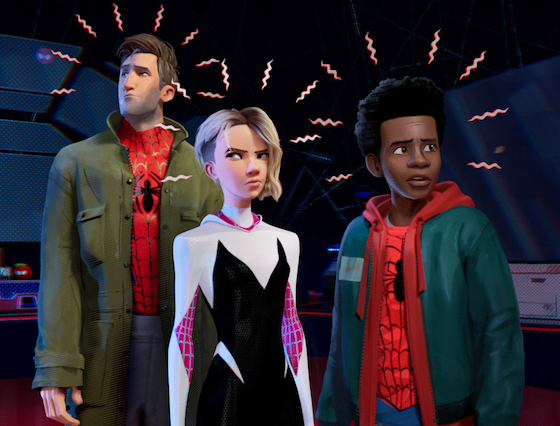
Into the Spider-Verse begins by introducing us to… Peter Parker. Well, of course it does — he’s Spider-Man, right? But after a witty do-over of his backstory (second only to Batman’s in terms of the number of times we’ve seen it adapted, I should think), focus shifts to one Miles Morales (Shameik Moore), a Brooklyn teenager struggling to fit in at his new private boarding school and deal with the pressure put on him by his police officer father. Escaping school one night to hang out with his Uncle Aaron (Mahershala Ali), Miles gets bitten by a genetically-modified spider and… well, you know the rest, more or less. But Miles has more than just new powers to contend with: evil scientists have created a machine to open a doorway to other dimensions (who they are and why they’re doing it, I’ll leave for the movie to reveal). But the malfunctioning machine is likely to rip the universe apart, and it falls to Miles to stop it. Fortunately, the dimensional instability means a whole host of alternate-universe Spider-People show up to help him.

Spider-People

It’s bold to do a team-up movie with a whole host of characters we’ve never met before — it’s something DC were criticised for with Justice League as soon as it was announced, and we were actually introduced to half of that team before the team-up happened. Well, Spider-Verse isn’t really a team-up movie in the Avengers Assemble sense. This is Miles’ movie; the other heroes are a supporting cast. This is the kind of thing that goes on all the time in comic books — heroes popping up for cameos or supporting roles in other heroes’ books — and, of course, something Marvel have increasingly brought to the screen in the MCU. Spider-Verse handles its big cast smartly, both in terms of how much screen time they get, but also how they’re introduced. Comic books will often have a cameo occur assuming you know who that character is and why they’re significant, and if you’re not an avid fan this can be confusing. Spider-Verse is a bit smarter. Brand-new characters get a solid introduction, but there are others certain others who pop in with the assumption you’ll know who they are — and, considering we’ve had over 15 years of immensely-popular Spider-Man movies, you probably do. This isn’t really a film aimed at total newcomers to Spider-Man’s world, though you’d probably get by if you are.

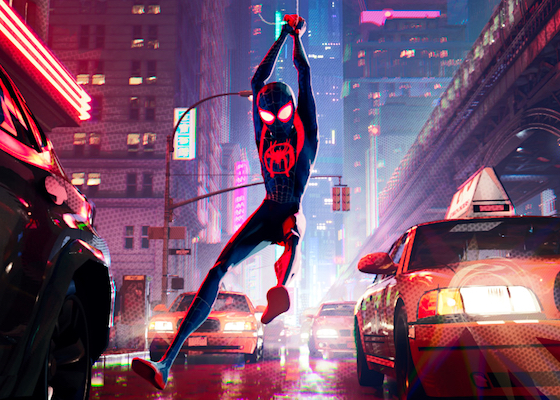
That’s just one way in which Spider-Verse is perhaps the most comic-book-y comic book movie ever made. Another is the animation style, which works overtime to evoke comic books of old, while still being suitably modern and detailed. To describe the minutiae of all the little visual tricks and treats going on would take paragraphs and, frankly, get a bit dull — they’re interesting to watch, but not so much to read about spelled out in prose. Suffice to say the cumulative effect is certainly unique. Whether it always works… well, there were times I worried I’d actually wandered into a 3D screening and not brought any glasses, let’s put it that way. (I hadn’t.) But while it might take some getting used to, ultimately I really liked it.

King of the swingers

Indeed, that could be said of the film as a whole. Having heard a lot of advance hype from critics and preview screenings, Spider-Verse comes laden with expectation. Some earlier parts of the film play out a broadly standard superhero origin story, and, while it’s by no means bad, it doesn’t necessarily feel exceptional. But as more characters and concepts are introduced, and the film begins to pay off what it’s been setting up, it really comes together. It culminates in a powerful message — underlined by a closing quote from the great Stan Lee himself — that’s especially pertinent in the current climate of media criticism, which seems to see most people pushing for greater diversity of representation and artistic voices, while a vocal minority push back with thin “I’m not a racist but” arguments. Spider-Verse has an inclusivity at its core that is well balanced: if you want to shut out any messages and just enjoy a bunch of super-powered people engaging in hyper-kinetic action sequences, it can scratch that itch; but it demonstrates its core values, only stating them in summation at the end, rather than preaching them.

So it turns out that, yeah, Into the Spider-Verse lives up to the hype, if you give it the time to get there. It’s a movie that will satisfy comic book fans in particular, I think, but also anyone who enjoys animation as an artform. This isn’t your standard Disney/Pixar/Illumination/etc fare, but a thrillingly-realised vision of what animation can do.

5 out of 5

Spider-Man: Into the Spider-Verse is officially released in the UK today and the US on Friday.

It placed 9th on my list of The 26 Best Films I Saw For the First Time in 2018.

Light the Fuse… Sartana is Coming (1970)

aka Una nuvola di polvere… un grido di morte… arriva Sartana

2018 #253
Giuliano Carnimeo* | 100 mins | Blu-ray | 2.35:1 | Italy & Spain / English | 15

Light the Fuse… Sartana is Coming

Unlike the Zatoichi films, where the English titles basically ignore the Japanese originals most of the time, the Sartana films come with English names that are pretty literal translations of the original Italian… except this one, whose original title translates as A Cloud of Dust… A Cry of Death… Sartana Arrives. Personally, I like that better — it’s more dramatic. Neither title particularly evokes the film itself, mind, which is notable as the final instalment in the official Sartana series.

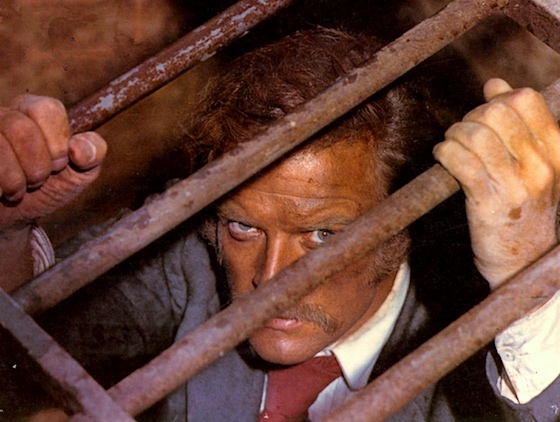
The film starts very well, with the opening 20 minutes devoted to an entertaining prison break situation: Sartana (the likably cocky Gianni Garko) gets himself thrown in jail on purpose, because another inmate has (somehow) called for his help. He’s been accused of murdering his business partner to pocket the loot from a deal-gone-sour, and now everyone wants to get their mitts on that money, including the corrupt sheriff that’s locked him up. So Sartana breaks him out, sends him into hiding, and sets about investigating what really went down.

The plot seems relatively straightforward at first — it looks like it’ll be some kind of murder mystery, with Sartana cast as the detective. There are even multiple flashbacks to the night of the crime, with different accounts revealing different information for the detective to piece together — so far, so Agatha Christie. (Roberto Curti’s essay in the booklet accompanying Arrow’s Blu-ray release boldly compares it to Rashomon, but that’s a bit generous — the flashbacks don’t really offer conflicting versions of events, but piece together a timeline from characters having turned up at different times.)

Sartana locked up

A whodunit offers a nice, clear structure: you interrogate all the suspects, you work out who did it. Make the confrontations shootouts instead of verbal sparring and you’ve got a Sartana movie… right? Sadly, no — it’s not long before the story devolves into the series’ usual double-cross-athon runaround. The initial clarity gives way to another massively over-complicated and sometimes unfollowable plot involving a large cast of characters, all of whom turn out to be involved somehow and eventually wind up dead. It feels a bit rinse-and-repeat at this point.

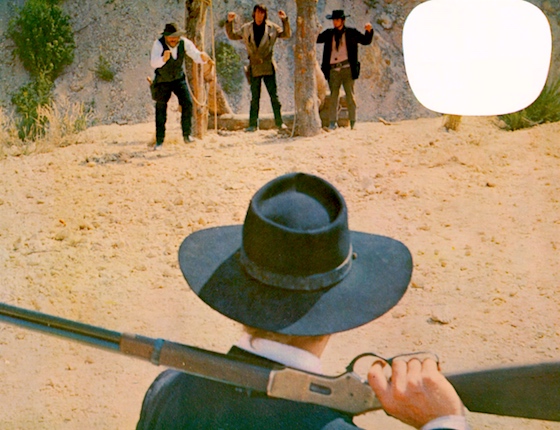
Fortunately, the devil’s in the details — not the details of the plot, which, as I said, are baffling, but in the film itself. There are some amusing moments, like the guy who keeps claiming he’s the best shot in the West before being shown up by someone else, or a novelty wind-up cigarette lighter than Sartana finds some clever uses for. Then, for the finale, Sartana whips out his massive organ in the middle of the street to show off its hidden talents. By which I mean a church organ which, by some clever manipulation of the keys, turns out to be full of deadly tricks. The series has always had a penchant for gadgets and impossible displays of skill, but this is certainly the most cartoonish.

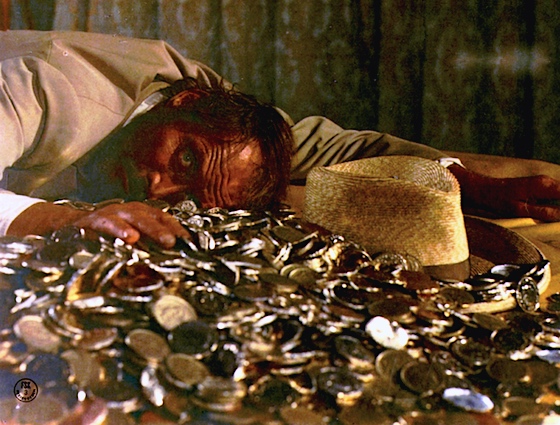
Greed

Arrow’s blurb for Light the Fuse says it’s “equal parts playful, violent, inventive and entertaining.” I don’t disagree those parts are present and of equal size, but their size is relatively small. They claim it “brings the series to a fine conclusion”; that it “sees Sartana sign off on a high [in] one of the best entries in the series”. I’d almost go so far as to say the opposite — it was one of my least favourite. There’s fun along the way, to be sure, but the plot borders on the meaningless and therefore becomes a tad boring. It’s not a bad film, as this series goes, but it certainly feels like a generic one.

3 out of 5

* Credited as Anthony Ascott. ^

A Monster Calls (2016)

2018 #129
J.A. Bayona | 109 mins | streaming (HD) | 2.35:1 | UK, Spain & USA / English | 12 / PG-13

A Monster Calls

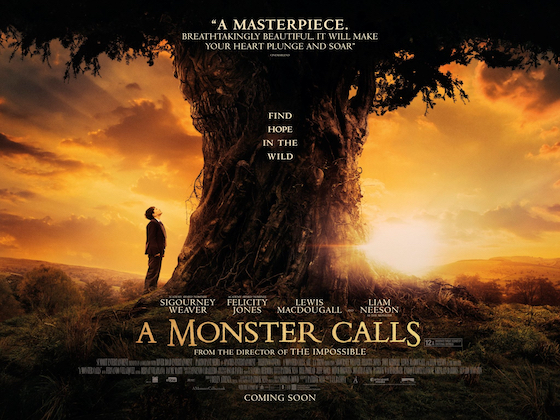
Twelve-year-old Connor (Lewis MacDougall) is having a pretty shit time of it: his dad (Toby Kebbell) has buggered off and started a new life in America; his grandmother (Sigourney Weaver) is frustratingly strict; he’s being bullied at school; and, worst of all, his beloved mum (Felicity Jones) has terminal cancer. No wonder he has nightmares. Then, one night, he’s visited by a walking, talking yew tree — the eponymous Monster (Liam Neeson) — who will tell Connor three true stories, after which Connor must tell the Monster the truth behind his nightmares.

The most immediately striking element of A Monster Calls may be that it stars a giant tree monster with the grumbling voice of Liam Neeson, but this isn’t just a fantasy adventure, it’s a powerfully emotional drama about the pain of impending loss and grief. In this respect it’s not just a good movie, but potentially an important one — I can imagine it being of great help to children who find themselves in similar circumstances to Connor. The lessons the film imparts are considerably more palatable when they come in the form of a fantasy adventure, as opposed to a straight-up grim social drama.

But that doesn’t mean it’s without lessons for the rest of us, too. It might seem obvious where it’s all headed, especially to experienced viewers, but it still pulls out real emotional truths at the end; the kind of revelations that are so cut-to-your-core true that you can’t anticipate them.

All the feels

The journey to those is a success too, with screenwriter Patrick Ness (adapting his own novel) and director J.A. Bayona skilfully handling the potentially-awkward integration of depressing reality with fantasy. The film was made on what we’d call a fairly small budget nowadays ($43 million), but that hasn’t hindered its visual style. In particular, the three stories the Monster tells are told through animation, which look gorgeous. If I have one criticism it’s that the pace seemed a bit off, sometimes dragging its heels.

Talking of the budget, A Monster Calls was a box office disappointment, earning just over $47 million worldwide. A disappointment for the producers, certainly, but I feel like this is a film that is more likely to find its audience over time — it’s a truthful, moving drama (that happens to feature a prominent role for a giant walking, talking tree) that will surely affect anyone who watches it, and perhaps help them with their own problems too.

4 out of 5

A Monster Calls is available on Netflix UK as of yesterday.

Mowgli: Legend of the Jungle (2018)

aka just Mowgli

2018 #252
Andy Serkis | 104 mins | streaming (HD) | 2.39:1 | UK & USA / English & Hindi | 12 / PG-13

Mowgli: Legend of the Jungle

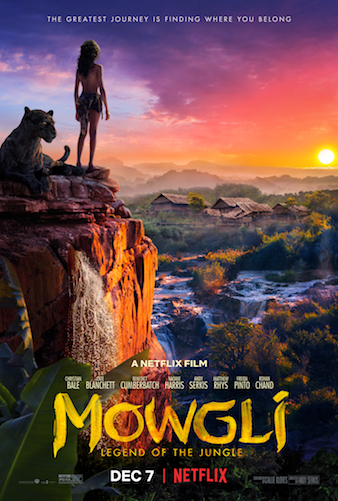
Hollywood has a long history of different people coming up with the same idea resulting in competing films — asteroid-themed Armageddon and Deep Impact is perhaps the best-known example. But often when the ideas are too similar, one of the projects gets scrapped — Baz Luhrmann ditched plans for an Alexander the Great biopic once Oliver Stone’s got underway, for instance. When Disney and Warner Bros both announced CGI-driven live-action adaptations of Rudyard Kipling’s The Jungle Book, I don’t know about anyone else, but I figured one studio would blink and we’d end up with just one film. That didn’t happen, and both movies entered production around the same time, and were even originally scheduled to come out the same year. In this respect it was Warner who blinked first, putting their version back to allow more time to finesse the motion-capture-driven animation, while Disney got theirs out on schedule. Unfortunately for Warner, it was a huge hit with critics and audiences alike, putting their version in a rather precarious position.

So when the news broke that Mowgli (as the film had been retitled to help distance it from Disney’s) was to be released direct to Netflix, well, I don’t think anyone was surprised: the streaming service has become a regular dumping ground for movies that studios have lost confidence in, seemingly happy to pay for any castoff a major studio throws their way. Apparently that’s not what went down this time, though: Mowgli had a theatrical release date set and the promotional campaign had begun, when Netflix approached Warner saying they loved the film and wanted to buy it. I guess the certainty of a large Netflix payday vs. the gamble of box office success on a film that could be seen by the general public as a Johnny-come-lately cash-in rip-off was an easy choice for Warner to make. And so here we are.

A legend in the jungle

Mowgli (as it’s always called in the film itself, the subtitle presumably being a Netflix marketing addition) has a story that will be broadly familiar to anyone who’s seen any other version of The Jungle Book, most especially that recent Disney one: the eponymous boy is orphaned when his parents are murdered by man-eating tiger Shere Khan, but he’s rescued by black panther Bagheera, who takes him to be raised by a pack of wolves. Shere Khan wants to kill the man-cub, however, and looks for an opportunity to separate him from the wolves’ protection. The difference, then, lies in the details: where Disney’s version was PG-rated and family-friendly, director Andy Serkis has given this a darker, PG-13 spin. It’s not an Adult movie by any means, but it’s definitely suited to slightly older children. That said, there’s a revelation at the 80-minute mark which is horrendously misjudged, and is liable to upset children of all ages (i.e. including some adults too).

That moment aside, the film’s more realistic tone manifests in multiple ways. One is characterisation, most notably of the bear Baloo. As we know him from Disney’s takes, he’s decidedly laid-back and chummy, casually teaching Mowgli some ways of the jungle. Here, he’s more of a drill sergeant for the wolf pack, explicitly training Mowgli (and his wolf brothers) in the skills required to fully join the pack. He has a softer side — he definitely cares for the man-cub — but this never manifests in the Disney-ish way. Elsewhere, there’s a drive at some kind of psychological realism for our hero. With Mowgli driven out for his own safety (again, an example of the animal characters being somewhat harsher than in Disney), he ends up in a human village. There, he comes to realise he doesn’t truly belong in the world of animals… but nor does he truly belong in the world of men. This internal conflict about his place in the world comes to underpin the climax, and arguably makes it superior to the over-elaborate forest-fire spectacle of Disney’s film.

Not burning bright, but he is in a forest of the night

The realism extends to the overall visual style, too. Where Disney’s live-action version was all shot on L.A. sound stages, with the young actor playing Mowgli frequently the only real thing on screen, Serkis and co travelled overseas and actually built sets on location to shoot a significant portion of the film. Accompanied by cinematography that often goes for a muted colour palette, it seems clear the aim was to make a film that is perhaps not “darker” in the now-somewhat-clichéd sense, but more grounded and less cartoonish than certain other adaptations.

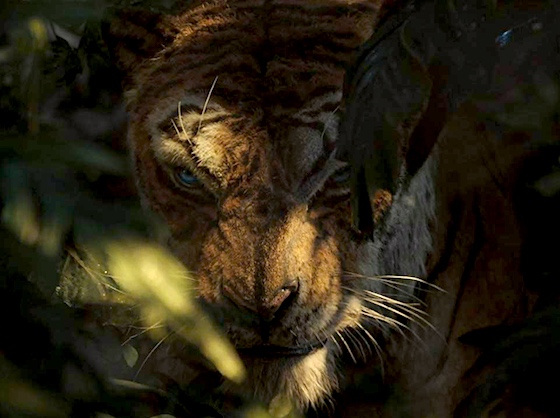
Unfortunately, Serkis made one design decision that threatens to scupper the entire endeavour: having motion-captured famous actors for most of the animal roles (including the likes of Christian Bale, Benedict Cumberbatch, Cate Blanchett, Tom Hollander, Peter Mullan, Eddie Marsan, Naomie Harris, and, of course, Serkis himself), someone thought it would be a good idea to try to integrate the actors’ features into the animal faces. The result is… disturbing. There’s so much realism in the overall design, but then they have these faces that are part realistic, part cartoon, part like some kind of grotesque prosthetic. It is so bad that it genuinely undermines the entire movie, for two reasons: one, it’s a distraction, making you constantly try to parse what you’re watching and how you feel about it; and two, a more serious take on the material asks for us to make a more serious connection to the characters, and that’s hard when they look so horrid. The section in the human village — which, by rights, should be “the boring bit” because it doesn’t involve fun animal action — is probably the film’s strongest thanks to its location photography and real actors making it so much more tangible. It suggests how much more likeable the entire film would be if they’d gone for real-world-ish animal designs — like, ironically, the Disney film did. (Now, that might’ve got away with cartoonish semi-human animals thanks to its lighter tone. Or it might not, because these are monstrous.)

Monstrosity!

It sounds petty to pick one highly specific element and say it ruins the film, but I really felt like it did. It’s a barrier to enjoying the bits that work (Rohan Chand is often superb as Mowgli; the always-brilliant Matthew Rhys is brilliant as always; there’s some welcome complexity and nuance to several characters and situations), and therefore it does nothing to help gloss over any other nits you want to pick (Serkis is miscast; Frieda Pinto is completely wasted; Cumberbatch is a little bit Smaug Mk.II; that revelation I mentioned back in paragraph three is brutal and I can’t believe it was okayed by the studio). Also, on a somewhat personal note, I felt there were times you could tell Serkis had made the film in 3D, but Netflix haven’t bothered to release it in that format (outside of some very limited theatrical screenings) — as someone who owns a 3D TV because, you know, I enjoy it, that miffed me.

On the whole, Mowgli: Legend of the Jungle is a frustratingly imperfect experience. I believe it’s fundamentally a unique-enough variation on the material that it could’ve escaped the shadow of Disney’s film, but a few misguided creative decisions have dragged it down almost irreparably.

3 out of 5

Mowgli is available on Netflix worldwide now.

Ant-Man and the Wasp (2018)

2018 #247
Peyton Reed | 118 mins | Blu-ray (3D) | 2.39:1 + 1.90:1 | USA / English | 12 / PG-13

Ant-Man and the Wasp

After the huge (in every respect) Avengers: Infinity War, the comically-minded Ant-Man and the Wasp feels like a palate cleanser for the MCU; a bit of light entertainment to help smooth the long gap between the Avengers film’s devastating cliffhanger and 2019’s double whammy of Captain Marvel (trailer today!) and Avengers 4 (trailer Wednesday!) Some people didn’t take too kindly to the ‘abrupt’ tonal swing (they’re completely separate movies, so that’s a pretty daft complaint to have, frankly), but I thought this sequel was a ton of fun.

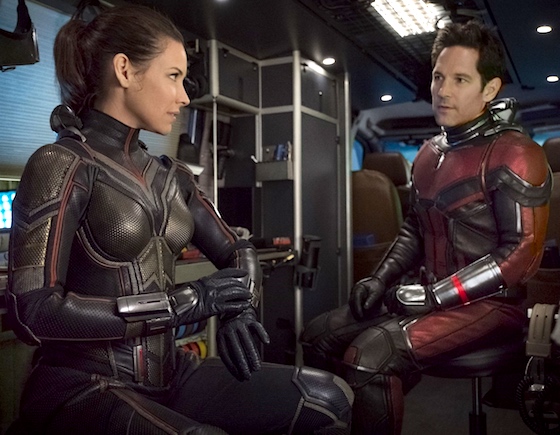
It actually takes place before Infinity War anyhow: Scott Lang (Paul Rudd), aka Ant-Man, is finally coming to the end of two years of house arrest, his punishment for being involved in the events of Civil War. He’s also been forbidden from contacting the inventor of the Ant-Man suit, Dr Hank Pym (Michael Douglas), or his daughter, Hope Van Dyne (Evangeline Lilly), who are wanted fugitives; but when Scott has a vision of Hank’s wife and Hope’s mother, Janet (Michelle Pfeiffer), from his trip to the Quantum Realm (see the first Ant-Man), he becomes involved in Hope and Hank’s attempt to travel their and rescue Janet. Along the way they also have to deal with black market dealer Sonny Burch (Walton Goggins), who wants to monetise the tech he’s been helping them build, and a mysterious masked figure known as Ghost (Hannah John-Kamen), who can phase through solid objects and is trying to steal said new tech.

The Wasp and Ant-Man

Got all that? I haven’t even touched on some of the other subplots that get thrown in for good measure. For something that’s clearly been designed as a light romp, Ant-Man and the Wasp certainly has a lot of plot going on. That might be part of what keeps it romp-y, mind: with so much to get through, there’s always something happening, it’s always pushing forward. It arguably gets a bit bogged down having to line everything up in the middle, with some scenes that lean a little heavily on exposition, but it always finds time for a gag or two. Personally, I’ll let quite a lot slide if I’m having fun, and this keeps the fun quotient high throughout.

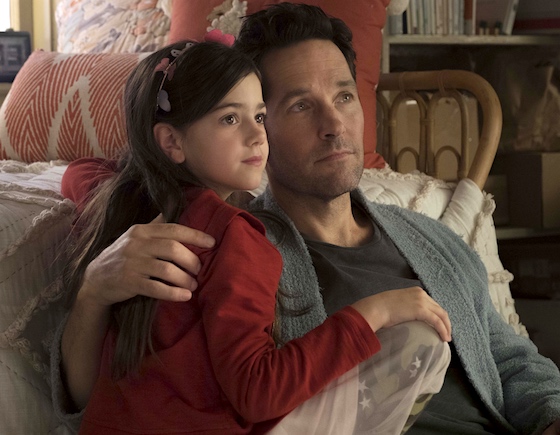
Entertainment is definitely the name of the game here, and to that end director Peyton Reed and the five credited screenwriters (including star Paul Rudd) set out to tickle various emotional responses. The most obvious one is, as mentioned, the funny — there are laugh-out-loud moments here, as well as a never-ending barrage of one-liners and comedic business. But it also takes time to be emotive and heartfelt. Scott’s relationship with his daughter (a charming and likeable performance by young Abby Ryder Fortson) is a major character point, and a key touchstone for a definite parent/child theme across the movie. What we might actually ‘learn’ about parent/child relationships from all this, I don’t know, but it feeds some surprisingly heartwarming material at times.

But which is the parent and which is the child?

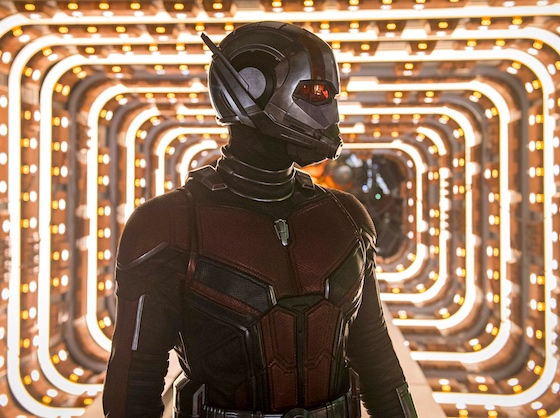
Thirdly, there are thrills in the shape of multiple fantastic action sequences. Hope dons the Wasp suit — all the powers of Ant-Man, plus wings and blasters — shrinking and growing at speed to kick plenty of ass, though Ghost’s ability to just phase through objects presents a unique challenge. There’s a heist sequence, too, recalling the overall theme of the first movie… though as it’s in a primary school and occurs while Scott’s suit is malfunctioning, it’s played more for laughs. Well, so’s almost everything in this movie, but it works. Best of them all is the extended car chase finale, with the good guys’ size-changing vehicles used for some highly inventive antics, plus all sorts of other goings-on in a race with multiple pursuers. I’ve seen some criticise this part for going on too long, but I thought it was just right, and is a strong contender to be remembered as an all-timer chase sequence.

Often when I watch stuff in 3D nowadays I don’t actually mention it in my reviews — I still enjoy the experience more often than not (some stuff underwhelms, naturally), but I know most people don’t have the option and, frankly, it’s rarely essential. Well, the 3D probably isn’t essential here either, but it is superb, really adding to the scale and impact of the big scenes — when things are switching sizes all over the place, that’s no bad thing. Plus it’s clearly effective in just regular moments, too: the film’s opening shot is just of a house, but the dimensionality is still palpable. Top work by whoever did the post-conversion.

Plus, the 3D Blu-ray comes with the benefit of the film’s shifting IMAX ratio, where the frame expands upwards from 2.39:1 to 1.90:1 for certain scenes. This is commonplace for Marvel films nowadays, which means sometimes it seems to occur just for the sake of it, but Reed has put the effort in to make great use of the larger image. Okay, it’s no surprise that it’s used for the action scenes (including opening up for a whole half-hour-or-so at the film’s climax), but he’s mindful of the transitions between ratios and the effect that can have — at least twice the actual moment the film moves from one ratio to another is as effective as the bigger image itself. Some people hate shifting aspect ratios on Blu-rays, I know, but I love ’em, and this is a great example of why.

Ant-Man will return... but will anybody else?

In the year of Black Panther and Infinity War, the relatively frothy Ant-Man and the Wasp was always destined to be “the other one”. But just because it’s not Big or Meaningful doesn’t mean it has no merit. Far from it. Whether you want to view it as a palate cleansing instalment of the MCU or as a standalone adventure, I think it’s pitched almost perfectly as a fun, entertaining ride of a movie.

The first Ant-Man is, to date, the only MCU film to make it onto one of my year-end best-of lists. The way things have gone in 2018, I won’t be surprised if this sequel is the fourth.

4 out of 5

Ant-Man and the Wasp is out on DVD and Blu-ray (regular, 3D, and 4K UHD flavours) in the UK today.

Have a Good Funeral, My Friend… Sartana Will Pay (1970)

aka Buon funerale amigos!… paga Sartana / “Have a nice funeral on me, Amigo” …Sartana

2018 #229
Giuliano Carnimeo* | 93 mins | Blu-ray | 2.35:1 | Italy & Spain / English | 12

Have a Good Funeral, My Friend… Sartana Will Pay

Gianni Garko’s back in the saddle as the titular roguish hero for the fourth official Sartana movie, which is apparently regarded as the best one — that’s what the guys on Arrow’s commentary track say, anyway, and it’s borne out by viewer ratings on websites like IMDb. I can’t say I felt similarly, though after listening to that audio commentary, their enthusiasm and highlighting of the good stuff did help increase my enjoyment.

The plot this time sees Sartana arrive at a remote shack just after its occupants have been massacred. Turns out one of the victims owned the land, previously thought to be worthless but now revealed to contain a gold mine, and everyone in the nearby town is eager to acquire it. As the deceased landowner’s daughter arrives to claim the property, Sartana sets about investigating who was really behind the slaughter, and possibly get involved in the land purchase himself.

That’s more or less the basis of the story, anyway. The plot has a “made up as it goes along” feel — it’s basically an endless series of “twists” where every character is revealed to be involved somehow, one by one, and there’s always something happening. I mean, at one point a whole gang of outlaws turn up merely to instigate another shoot-out and extend the running time by about five minutes. If you were to stop and unpick the plot, there’s actually quite a neat twist at the end, but it’s easy to miss its significance when there are so many other double-crosses and reversals going on. On the audio commentary they argue that, although people accuse these films of being badly plotted, they actually fit together and abide by their own rules, they just don’t unfold in the way you might normally expect. That’s one way of looking at it, I guess.

Sartana so cool

The affair is at least enlivened by some inventive and fun moments, which do eventually begin to mount up in such a way that the film seems to improve as it goes on. Highlights include Sartana using playing cards as a weapon, and one of the villains having a trick gun so ingenious even Sartana pauses to admire it.

Another member of the guest cast is a Chinese casino owner, played by Gordon Wang, who’s a bit of a “yellow peril” Orientalist cliché: a scheming gangster who always quotes Confucius and unleashes a barrage of kung fu at the end. Whether you find this offensive or let it slide (or even enjoy it) as being part of the era when the film was made is up to you. I think it could be worse: the guy isn’t a total villain, nor totally stupid (no more so than any of the white characters, certainly), and he does get some solid verbal sparring with Sartana (as well as the more literal sparring of the kung fu climax). At least he’s memorable.

Also memorable is a great Morricone-esque score by Bruno Nicolai (a friend and long-time collaborator of Morricone’s, so that explains that). There’s decent direction from Giuliano Carnimeo, though it’s not as immediately striking as in his two previous Sartana films. There are still a few well put-together sequences, not least the pre-titles massacre. According to Garko (quoted in Arrow’s booklet), cinematographer Stelvio Massi “had a significant weight in the direction of the ensuing Sartana films. It can almost be said that those films were made by two directors, Carnimeo and Massi. Carnimeo had a great sense of humour […] But, as regards the technical part, the camera movements were conceived almost entirely by Stelvio Massi.” One particular example of Massi’s superb camerawork comes in a scene highlighted by the commentary: it’s just a simple three-way dialogue exchange, but Massi lenses it in a single take that uses zooms, pans, and reflections in a mirror to create different close-ups and two shots, all within one take.

Sartana about to pay for more funerals

Maybe Have a Good Funeral is an above-average Sartana film after all. Or maybe the whole series exists within quite a narrow quality range and so it’s swings and roundabouts which you say is better than the others. At least the film’s extravagant title has direct relevance for once: a running gag sees Sartana pay for lavish funerals for everyone he kills — and, naturally, he kills a lot of people. At the other end of the film, the print used for Arrow’s Blu-ray concludes with the word “fine” appearing on screen, which about sums it up.

3 out of 5

* Credited as Anthony Ascott. ^