Finding Dory (2016)

2018 #122
Andrew Stanton | 97 mins | Blu-ray (3D) | 1.78:1 | USA / English | U / PG

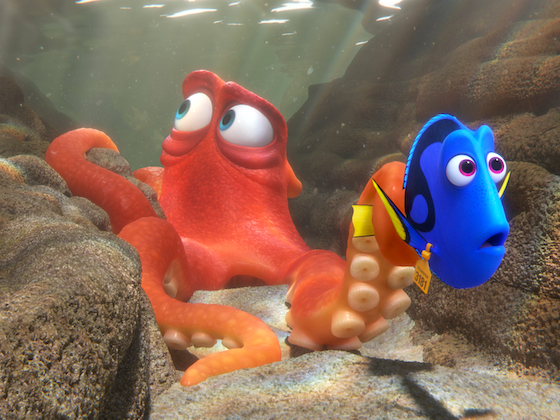
Finding Dory

I was never that big a fan of Finding Nemo. I mean, I like it well enough — it’s a very good movie — but I’ve never loved it. My rewatch last year confirmed that feeling. It was something of a surprise, then, that I mostly really enjoyed this sequel. It’s a weird thing where I wouldn’t necessarily say it’s better than the first film, but I think I like it more.

Made 13 years later but set not too long after the events of the first movie (I don’t know what the lifespans of these fish are in real life, but I imagine considerably less than 13 years), the plot revolves around Nemo comedy sidekick Dory (Ellen DeGeneres) — in the first film her memory loss was a comedy bit, but here it’s front and centre, as Dory goes searching for the family she forgot she had. Accompanied by Nemo (Hayden Rolence) and his dad Marlin (Albert Brooks), she heads to California and the theme park-ish Marine Life Institute.

Like so many Pixar movies, Nemo didn’t desperately need a sequel, so I was worried this would seem like little more than an excuse to return to these characters. In fact, the plot actually works very well. Far from being a desperate stretch, it actually feels like a worthwhile development and follow-up from the first movie. Alongside the worth of the narrative, it’s also just a lot of fun to watch, even if it gets a bit outlandish in the final act (fish driving cars…?)

Something fishy going on...

Another concern I had was that I remember thinking Dory was a bit irritating in the first film, so making her the central character could’ve scuppered it for me (other people seem to find her endearing, so I can see why Pixar went with this concept). But no, she makes for a likeable enough companion. The film does a really good job of handling her memory loss, too. It’s more than just a joke this time round, what with Dory being the central character. The easiest route to take for the filmmakers would’ve been to cop out of it somehow, either by flat-out fixing her memory, or at least not being wholly true to how short-lived it was before. Instead, they’ve put the problems and the scariness of having no memory at the forefront of the film. For example, at one point Dory needs to enter a network of pipes to get somewhere vital within the Institute, but she won’t go in because she knows she’ll forget the directions. A more constant fear is that she’ll forget about her family or friends, the people she loves, which I think is the kind of notion a viewer of any age could empathise with.

As a Pixar movie, it goes without saying that it looks superb, but I’ll nonetheless take a moment to mention that I thought the 3D aspect was really great too. It seems to be pot luck with this stuff (I found Nemo’s rather underwhelming, and I wasn’t that impressed by Coco’s either, for example). I guess most people don’t care anymore, but there we go.

Finding Dory was a pleasant surprise all-round. In fact, I’d go so far as to say this is Pixar’s best non-Toy Story sequel. Maybe that’s not saying much (half its competition is Cars movies), but I mean it positively nonetheless.

4 out of 5

Pixar’s latest sequel, Toy Story 4, is out in the UK and US next Friday.

Zatoichi Meets Yojimbo (1970)

aka Zatôichi to Yôjinbô

2019 #60
Kihachi Okamoto | 116 mins | Blu-ray | 2.35:1 | Japan / Japanese | 12

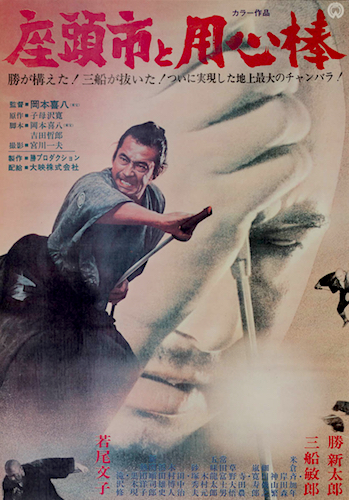
Zatoichi Meets Yojimbo

Having released anything up to four films a year for seven years, the Zatoichi series took 1969 off (apparently producer/star Shintaro Katsu had some other projects to focus on). But when it returned in 1970 it was with a big gun: as the title indicates, the main guest star for this film is the lead character from Akira Kurosawa’s films Yojimbo and Sanjuro, played by the great Toshiro Mifune. I don’t know if that was a deliberate move to mark the series’ 20th movie or if they weren’t even conscious of the milestone, but it certainly feels like it was meant to be a special occasion. “Meant to be” being the operative part of that sentence, because the result is sadly one of the least enjoyable entries in the series so far.

The film sees Ichi (Katsu) return to his hometown, which has rather gone to the dogs thanks to a local yakuza gang. Never one to just stand back or move along, Ichi ends up embroiled in the arguments between a powerful merchant (Osamu Takizawa) and his two wayward sons, one a yakuza boss (Masakane Yonekura), the other an employee of the government mint (Toshiyuki Hosokawa), who’s up to some kind of shenanigans with the gold that drives the plot… I think. Mifune’s character factors into all this as a ronin who’s been hired by the yakuza son to protect him, or kill his father, or something along those lines.

As you may have gathered, the plot here is by turns confusing and dull — one of those that loses you so thoroughly you just want to give up on trying to work it out. It has something to do with the people who make gold coins making them less well, and a hidden bar of gold that has something to do with that somehow, and a bunch of spies and stuff who are all looking for the gold bar, and some kind of feud or rivalry or disagreement between the local yakuza and Takizawa’s businessman, which may or may not have nothing to do with all the gold stuff… I think. This wouldn’t be the first Zatoichi film with an underwhelming or unintelligible plot, but it tells it with so little verve, and with so few entertaining distractions (there’s not much action, and even less humour), that there’s nothing to make up for it.

Katsu vs Mifune

And to add insult to injury, the titular concept of the movie is a bait and switch: Mifune is not actually playing the character from Kurosawa’s films. “Yojimbo” means “bodyguard”, so it’s not like, say, casting Sean Connery in a film and calling it Meets James Bond only to have him play some unrelated character, but the promise of the title is clear and unfulfilled. It’s not like Mifune is playing an off-brand knock-off, either: he happens to be fulfilling the same job as bodyguard so that everyone can keep calling him yojimbo, but his actual name is Taisaku Sasa (not Sanjuro, as in Kurosawa’s films) and his character is nothing like his role in Kurosawa’s films (he doesn’t even look the same!) Seeing Zatoichi go head-to-head with the ‘real’ Yojimbo, with all his cunning scheming, could’ve been great. Instead, while Sasa is still a skilled swordsman, he’s a bit pathetic — lovelorn and, it would seem, not actually very good at his real job (which, as it turns out, is spying). Some of the scenes between Katsu and Mifune are good, at least. Not all of them, but some is better than none, I suppose. Ultimately, however, it’s one of the biggest disappointments in a film filled with them.

There’s plenty to be filled, too, because this is by far the longest of the original Zatoichi films: the others average 87 minutes apiece, making Meets Yojimbo a full half-hour longer than normal, and almost 20 minutes longer than even the next longest. There’s quite an extensive supporting cast, bringing with them all the varied subplots that having so many characters entails. Whether that’s what produced the extended running time, or whether an extended running time was desired so they shoved all those extra people in, I don’t know. It’s a bit of a chicken-and-egg situation, because either way the result is a jumble that I don’t think was a good idea. Few of them have an opportunity to leave a mark — there’s too much going on, and we’re all here for Mifune and Katsu anyway.

Something I could have learned...

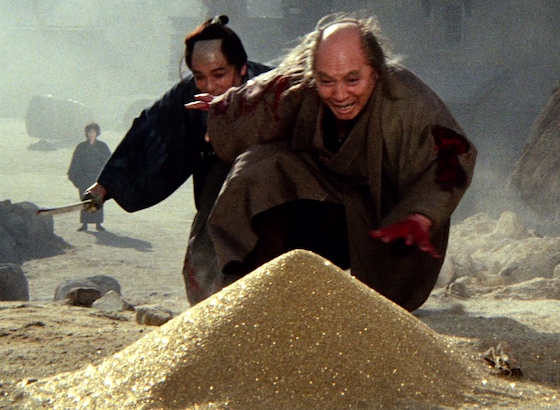
Eventually the story comes down to a simple, familiar message: “greed is bad”. The much-desired gold bar turns out to be hidden as gold dust, which ends up blowing away in the wind. It’s almost fitting and symbolic… except it only happens once most of the cast are dead or past it anyway, so it doesn’t necessarily symbolise much. I mean, there’s hardly anyone left to notice it happen. And it’s followed by a final scene that, like most of the rest of the plot, left me slightly confused. The town blacksmith tells yojimbo that Ichi isn’t motivated by gold… then we see Ichi realise his pouch of gold dust has been cut and emptied, so he scrabbles around in the dirt searching for the rest (which has blown away), when Mifune joins him. “You too?” “Just like you,” they say. And then they go their separate ways. So… they are motivated by gold? Or… they’re not, because it’s gone and they… aren’t? I don’t know if I’m being dim, or if the film bungled its own message, or if it just doesn’t have anything to say. It could be no deeper than a straight-up samurai adventure movie, of course. It would be better if it were.

This is the only Zatoichi film for director Kihachi Okamoto, who apparently was a prestige hire. I don’t think he did a particularly good job, to be honest. There’s the muddled plot, as discussed, which unfurls at a slow pace. The action scenes, often such a highlight, aren’t particularly well shot. It’s visually a very dark film, which kinda matches the grim tone, but is arguably taken too far. As Walter Biggins puts it at Quiet Bubble, “murk dominates. People wears blacks and browns. Eyes are cold, haunted, even in daytime[…] Even supposedly well-lit interiors look like homages to Rembrandt. This is a world half-glimpsed, that we squint at”. It was shot by cinematographer Kazuo Miyagawa, who worked on numerous Japanese classics and several other Zatoichi movies — I praised his work on Zatoichi and the Chest of Gold, for example. It’s not that what he’s done here is bad per se — there are certainly some nice individual shots, particularly around the climax — but, well, there were clearly some choices made about lighting and the colour palette.

Windswept

I knew going in that Zatoichi Meets Yojimbo isn’t a particularly well regarded film, but I held out hope it was one of those occasions where I’d find the consensus wrong. Unfortunately, it wasn’t. In fact, it’s arguably the worst film in the series. It’s not just that it’s a poor Zatoichi film (which it is), it’s that it should’ve been a great one, showcasing the meeting of two top samurai heroes and the charismatic actors who play them. There may be outright lesser films in the Zatoichi series than this, but none could equal the crushing disappointment it engenders.

2 out of 5

For what it’s worth, Katsu and Mifune co-starred in another samurai movie the same year, Machibuse, aka Incident at Blood Pass. I’ve heard it’s a lot better, so I’ll endeavour to review it at a later date.

Review Roundup

As foretold in my most recent progress report, June is off to a slow start here at 100 Films. Or a non-start, really, as I’ve yet to watch any films this month and this is my first post since the 1st. Hopefully it won’t stay that way all month (I’ve got my Blindspot and WDYMYHS tasks to get on with, if nothing else).

For the time being, here a handful of reviews of things I watched over a year ago but have only just written up:

  • O Brother, Where Art Thou? (2000)
  • Allied (2016)
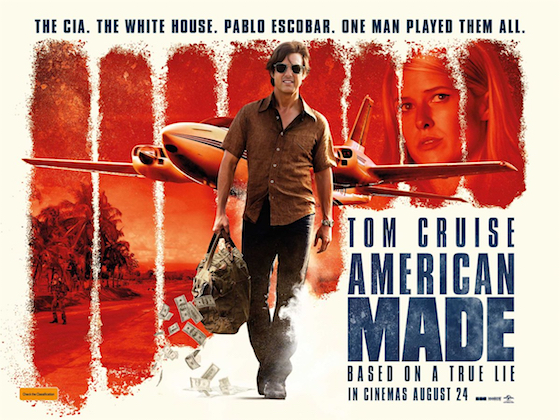
  • American Made (2017)


    O Brother, Where Art Thou?
    (2000)

    2018 #106
    Joel Coen | 103 mins | streaming (HD) | 2.39:1 | UK, France & USA / English | 12 / PG-13

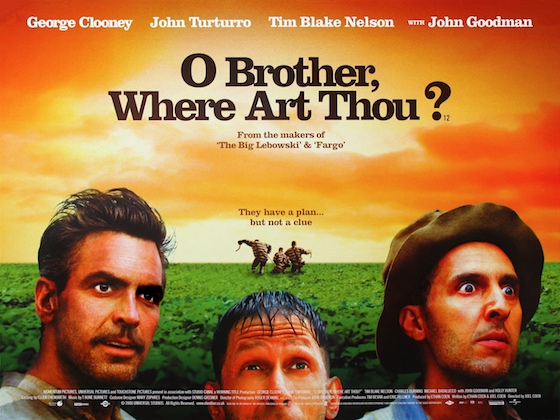
    O Brother, Where Art Thou?

    The eighth movie from the Coen brothers (eighth, and yet they still weren’t being allowed a shared directing credit! No wonder that stupid DGA rule pisses people off) is one of their movies that I found less objectionable. Oh, sure, most of their stuff that I’ve reviewed I’ve given four stars (as well as a couple of threes), but that’s more out of admiration than affection — for whatever reason, their style, so popular with many cineastes, just doesn’t quite work for me; even when I like one of their films there’s often still something about it I find faintly irritating.

    Anyway, for this one they decided to adapt Homer’s Odyssey, but set in the American Deep South during the Great Depression. Apparently neither of the brothers had ever actually read The Odyssey, instead knowing it through cultural osmosis and film adaptations, which is perhaps why the film bears strikingly minimal resemblance to its supposed source text. Rather, this is a story about songs, hitchhiking, and casual animal cruelty, in which the KKK is defeated by the power of old-timey music. Hurrah!

    It’s mostly fairly amusing. If it was all meant to signify something, I don’t know what — it just seemed a pretty fun romp. I thought some of the music was okay. (Other people liked the latter more. Considerably more: the “soundtrack became an unlikely blockbuster, even surpassing the success of the film. By early 2001, it had sold five million copies, spawned a documentary film, three follow-up albums (O Sister and O Sister 2), two concert tours, and won Country Music Awards for Album of the Year and Single of the Year. It also won five Grammys, including Album of the Year, and hit #1 on the Billboard album charts the week of March 15 2002, 63 weeks after its release and over a year after the release of the film.” Jesus…)

    Anyway, that’s why it gets 4 stars. I liked it. Didn’t love it. Laughed a bit. Not a lot. Some of the music was alright. Not all of it. Naturally it’s well made (Roger Deakins!) without being exceptionally anything. Harsher critics might say that amounts to a 3, but I’m a nice guy.

    4 out of 5

    Allied
    (2016)

    2018 #116
    Robert Zemeckis | 119 mins | streaming (HD) | 2.39:1 | USA, UK & China / English & French | 15 / R

    Allied

    Brad Pitt and Marion Cotillard star as a pair of intelligence agents who fall in love in Mr. & Mrs. Smith: WW2 Edition. Settling down together in England, all is lovely for them… until one comes under suspicion of working for the enemy…

    Overall Allied is a very decent spy thriller, let down somewhat by a middle section that’s lacking in the requisite tension and a twee monologue coda. But the first 40 minutes, set in Morocco and depicting the mission where the lovers first meet, are pretty great; there’s plenty of neat little tradecraft touches scattered throughout; and there are some pretty visuals too. There are also some moments that are marred by more CGI than should be necessary for a WW2 drama, but hey-ho, it’s a Robert Zemeckis film.

    That said, Brad Pitt’s performance is a bit… off. He never really seems connected with the material. Perhaps he was trying to play old-fashioned stoic, but too often it comes across as bored. It also constantly looked like he’d been digitally de-aged, but maybe that’s because I was watching a 720p stream; or maybe he had been, though goodness knows why they’d bother.

    Anyway, these are niggles, so how much they bother you will affect your personal enjoyment. I still liked the film a lot nonetheless.

    4 out of 5

    American Made
    (2017)

    2018 #124
    Doug Liman | 109 mins | streaming (HD) | 1.85:1 | USA & Japan / English & Spanish | 15 / R

    American Made

    Described by director Doug Liman as “a fun lie based on a true story,” American Made is the obviously-not-that-truthful-then ‘true story’ of Barry Seal, a pilot who was recruited by the CIA to do some spying and ended up becoming a major cocaine smuggler in the ’80s.

    Starring ever-charismatic Tom Cruise as Seal, the film turns a potentially serious bit of history (as I understand it, the events underpinning this tale fed into the infamous Iran-Contra affair) into an entertaining romp. Indeed, the seriousness of the ending is a bit of a tonal jerk after all the lightness that came before, which I guess is the downside of having to stick to the facts.

    Still, it’s such a fun watch on the whole — a sliver long, perhaps, even though it’s comfortably under two hours, but it does have a lot of story to get through. Parts of that come via some spectacular montages, which convey chunks of story succinctly and are enjoyable in their own right. Liman doesn’t get a whole lot of attention nowadays, I think, but it seems he’s still got it where it counts.

    4 out of 5

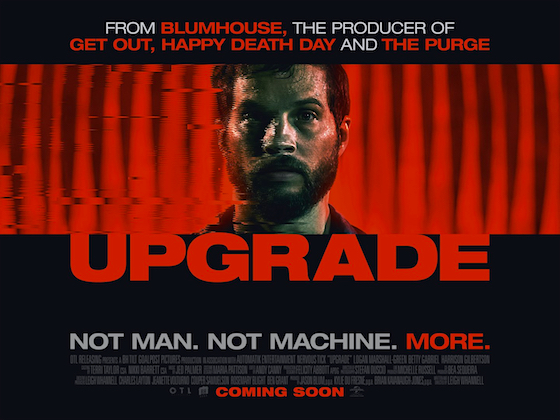
  • Upgrade (2018)

    2019 #44
    Leigh Whannell | 100 mins | streaming (HD) | 2.35:1 | Australia / English | 15 / R

    Upgrade

    Leigh Whannell is best known for co-creating the Saw and Insidious franchises, so he steps outside of his horror stomping ground to write and direct this cyberpunk action-thriller. It’s set in the kind of near future where we have self-driving cars (and similar tech), but there are still people who prefer the old ways, like mechanic Grey (Logan Marshall-Green), who makes his living restoring classic cars for people like tech genius and entrepreneur Eron Keen (Harrison Gilbertson). After an incident leaves Grey paralysed, Eron offers to help by implanting him with a cutting-edge top-secret chip he’s developed called STEM. It works even better than expected, and Grey begins to use his newfound abilities to hunt for the men who did this to him.

    On one level, Upgrade is a straightforward sci-fi action-thriller, following Grey’s investigation as it leads him to some shady figures who have near-future tech of their own, and then they fight. While that may seem simplistic, it’s full of neat little touches, particular in the action’s choreography — it almost begs a rewatch just to see everything that’s going on in the frantic fight scenes. I don’t mean “frantic” in the over-cut, can’t-see-shit sense of so many action sequences in the last couple of decades — in fact, Whannell often uses wide shots and long-ish takes — but there’s so much going on, with the characters making decisions at such speed (boosted by that body-modifying tech), that parts do become a bit of a blur.

    Change can be painful

    On another level, the film has something to say about the technology that drives its storyline. Okay, maybe it doesn’t have a lot to say, and if you’re well-versed in sci-fi they’re not necessarily original comments either, but it poses questions and makes you think about what could be just around the corner, and what value it might have, or what danger it might pose. Plus it pushes the story into some interesting places; places a low-budget Australian-produced movie can go that other mainstream-minded sci-fi/action flicks wouldn’t dare. If you’ve ever seen a Saw film then you can guess that Whannell likes twists, especially of the “sting in the tail” variety, and Upgrade has more than its fair share of last-minute switcheroos. How many you see coming is up to you — one seemed glaringly obvious to me, but anticipating that ‘reveal’ blinded me to some more that came after.

    Combining those two levels renders Upgrade a strong mix of straight-up action thrills and thought-provoking near-future sci-fi. A definite must-see for genre fans.

    4 out of 5

    Upgrade is available on Sky Cinema from today.

    BlacKkKlansman (2018)

    2019 #86
    Spike Lee | 135 mins | download (UHD) | 2.39:1 | USA / English | 15 / R

    BlacKkKlansman

    Oscar statue2019 Academy Awards
    6 nominations — 1 win

    Won: Best Adapted Screenplay.
    Nominated: Best Picture, Best Director, Best Supporting Actor (Adam Driver), Best Editing, Best Original Score.

    “A black man infiltrates the KKK.” Sounds like the setup for a joke, doesn’t it? Or possibly some outrageous blaxploitation movie. But it’s something that actually happened, and here co-writer/director Spike Lee tells the story of the guy who did it.

    Ron Stallworth (John David Washington) is the first black officer in the Colorado Springs police department. After seeing a small advert in the local paper for information on the Ku Klux Klan, Ron phones the number and pretends to be an angry white racist. The ruse works and he’s invited to meet them, which obviously he can’t, so the department agrees to send intelligence officer Flip Zimmerman (Adam Driver) in his place. So begins an undercover operation where Zimmerman pretends to be Ron in person, and Ron pretends to be white on the phone.

    Although the premise sounds comical, the fact it’s a true story concerning an organisation as inhumane and pernicious as the KKK made me worried the film would be serious, grim, and heavy-going. In actuality, it’s lively, funny, and fast-paced. Humour is woven throughout the story in a way that is neither incongruous nor forced, and it doesn’t undermine the stakes when things get serious. And there remain parts that remind you of the true horrors of racism in America, in particular a sequence that intercuts a Klan initiation with an old black man remembering the stomach-churning details of a lynching he witnessed in his youth. It’s horrific; it’s sad; it’s enraging.

    Spot the black man

    The same could be said of the film’s final few minutes, which powerfully connect these events from decades ago to what’s going on in the US right now. The effect is hair-raising. Some have accused this finale of being exploitative or disconnected to the rest of the movie, but I don’t hold with that. On a literal level, a certain real-life figure turns up in the news footage to provide a very concrete link to the film’s main narrative. Even without that, the whole content of the film is incredibly timely, which is depressing and terrifying, really. It doesn’t have to bash you round the head with echoes of the present state of things in the US, because those parallels are unavoidably there.

    If I have a criticism, it’d be that there’s inadequate follow-up on the internal conflict of Driver’s character. Lee made him Jewish to raise the stakes (the real-life guy wasn’t Jewish; and, if you didn’t know, the Klan hates Jews too), and so we get a beginning and middle for his personal narrative: at first he’s just doing his job, and he doesn’t care about his heritage because it wasn’t part of his upbringing; but then, in one of the film’s most memorable lines, he says he never used to think about being Jewish but now he thinks about it all the time. It feels like some kind of reconciliation of that internal conflict is needed later on, but it doesn’t come. A counter argument is that that’s the point — that he’s been subsumed as just a “White American”, but he is a Jew, and having to handle that dichotomy is something he’s never grappled with before. Still, if that’s the point where his character arc was intended to end, maybe reaching it halfway through the film wasn’t the best idea.

    Black power

    I’d still say it’s a relatively minor concern in a film that does so much else right as to render it more or less trivial. The film’s real triumph lies in how it tackles a very serious, concerning, and timely issue: luring you in with a “too good to be true” premise, engaging you with the entertaining way it’s told, thrilling you with some tense undercover-cop sequences, and finally delivering some gut punches of truth. You’ll have a good time, but also leave incensed at the state of the world — or, perhaps, of one particular country. Not many filmmakers could naturally pull off both of those opposing emotional states within the same movie, but Lee’s cracked it.

    5 out of 5

    BlacKkKlansman is available on Sky Cinema from today.

    It placed 8th on my list of The 15 Best Films I Saw For the First Time in 2019.

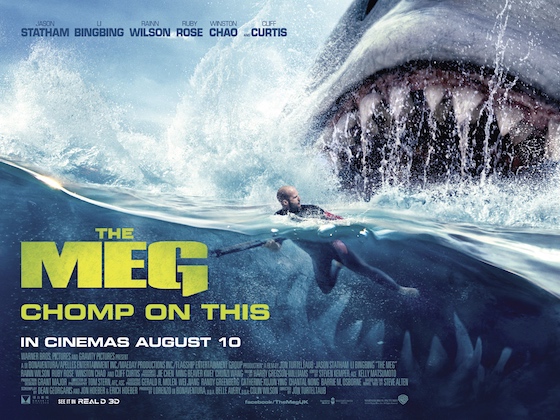
    The Meg (2018)

    2019 #77
    Jon Turteltaub | 113 mins | download (HD+3D) | 2.39:1 | USA & China / English & Mandarin | 12 / PG-13

    The Meg

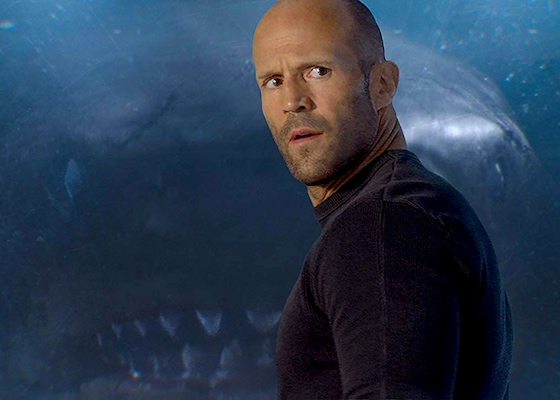
    Jason Statham vs. a giant prehistoric shark — what more do you need to know?

    Okay, well, despite the obvious pulp-blockbuster nature of this premise, it’s actually based on a novel, which was originally published in 1997 and so I guess arrived in a wave of post-Jurassic Park interest in man vs. prehistoric creatures thrillers. Well, Jurassic Park and the other obvious comparison, Jaws, were also both adapted from novels, so perhaps it’s not so weird after all. I’d never heard of the book before, but apparently it has a dedicated fanbase (there are multiple sequels), who were disappointed with this film because it makes some radical changes to the source material. Clearly, I’m not the right person to make that comparison.

    Judged as a film in its own right, then, I thought it was a ton of fun. You know what you’re getting into with that pitch, and doubly so if you’ve watched the trailer. This isn’t some thought-provoking docu-drama about “what if we really discovered a prehistoric creature still lived?” This isn’t even Jaws, a relatively grounded adventure movie about normal people defeating a larger-than-average killer shark. This is a movie about a super-high-tech underwater research facility that accidentally unleashes a prehistoric monster and then all the scientists and submariners and whatnot on board have to track it down and stop it. This is a move about Jason Statham fighting a giant shark.

    Stath vs shark

    All of that said, some people have criticised the movie for not being quite as daft or out there as they wanted from a B-movie-inspired effects spectacular. I guess that’s a real “your mileage will vary” situation. Personally, I had a lot of fun with it. It keeps things more grounded than the utter batshit craziness of, say, Sharknado, but it’s clearly still allowing itself to have fun with the situations and concepts. It also doesn’t feel too samey, which considering there are only so many ways to interact with a giant shark is some kind of achievement.

    Other criticisms I’ve read include that it’s too slow to get going, focusing on undersea rescues rather than getting straight to Stath-on-shark action. Again, this was something I actually liked about the film — that it allowed at least some time to build the Meg up as a mysterious unseen force (and, in the grand scheme of things, not that much time — this isn’t Jaws). It also gave the film a certain scope and scale. It’s not like this shark rocks up and they defeat it in an afternoon — the plot spread out over a couple of days, at least. I don’t know, there’s just something I like about that pacing.

    Also, the film is a Chinese co-production, and so features many major and minor Chinese characters, and the climax is set in the vicinity of a Chinese beach. I’ve seen people criticise this aspect of the film because… um… Yeah, not liking that aspect smacks of racism, let’s be honest. I’m not saying everyone who dislikes The Meg is a racist — that would be stupid — but some reviews I’ve seen come with this slightly weird sense that part of the reason they dislike it is because it’s 50% (if that) a Chinese blockbuster.

    Who fancies Chinese for dinner?

    At the end of the day, I come back to what I said at the start: it’s a movie about a giant prehistoric shark being unleashed and attacking humans, and Jason Statham has to fight it. That’s all. It delivered on that in spades for me and I had a great time with it. And I guess tied to that pulpiness, if you have the option and enjoy the effect, I thought it looked fantastic in 3D.

    4 out of 5

    The Meg is available on Sky Cinema from today.

    Holmes & Watson (2018)

    2019 #38
    Etan Cohen | 90 mins | download (HD) | 2.40:1 | USA / English | 12 / PG-13

    Holmes & Watson

    From the moment it was announced, I knew two things about Holmes & Watson: that it would not be up my street, and that I’d definitely see it. Basically, Will Ferrell is not to my taste — I thought Anchorman was OK at best; I didn’t like The Other Guys despite it having a premise I loved; I remember enjoying Wedding Crashers specifically apart from his one scene; and, cementing my opinion shortly before Holmes & Watson’s release, I finally saw Step Brothers, Ferrell and John C. Reilly’s previous major co-starring turn, and didn’t care for it. (I also haven’t got round to reviewing it, but when I do it won’t be positive.) Despite my personal antipathy, most of those films are highly regarded, at least in certain circles; so when Holmes & Watson finally debuted trailers that no one liked, then garnered reviews that damned it as one of the worst movies released for years, I abandoned all hope of enjoyment. But it’s still a Sherlock Holmes movie, and so I’ve still felt compelled to watch it.

    As you could no doubt infer from the title and aforementioned leads, the film sees Will Ferrell take up the mantle of the Great Detective, Sherlock Holmes, with John C. Reilly as his trusty sidekick and biographer, Dr John Watson. The plot, such as it is, sees the pair investigating a threat to assassinate Queen Victoria by Holmes’ nemesis, Professor Moriarty (Ralph Fiennes). Really, it’s just an excuse for Ferrell and Reilly to lark about in a series of Holmesian sketches. Full of truly terrible accents, reheated gags, and comedy bits that go on far too long, it would be tedious if presented as individual skits in a sketch show, but strung together as a movie… ugh.

    Incompetence on both sides of the camera

    The incompetence isn’t just present in front of the camera either. It’s hard to believe this was a professionally-produced, studio-released movie given the lack of technical skills on display, including atrocious dubbing, sloppy editing, and even shots that are out of focus. It’s so poor that Netflix, who seem to purchase any scraps the major studios decide to throw their way, turned down the chance to buy it (so they do have some standards!)

    Amazingly, it’s not completely terrible. In supporting roles, Fiennes, Rebecca Hall, and Kelly Macdonald improve it just by showing up. There’s one bit that riffs off the Guy Ritchie Sherlock Holmes movies, which might’ve felt original-ish if those weren’t already nine years old. There’s a bit of dialogue where it’s suggested America is forward-thinking about female equality, which isn’t the intended joke but is a laugh nonetheless. And as it’s the only laugh in the whole sorry 90 minutes, I guess we should take what we can get.

    If they’d deliberately set out to make a film that was ostensibly a comedy but contained no actual humour, I’m not sure they could’ve achieved it any more thoroughly than this. It’s so terrible that it’s almost a remarkable achievement of just how badly it’s possible to fail.

    1 out of 5

    Holmes & Watson is released on DVD and Blu-ray in the UK this week.

    It featured on my list of The Five Worst Films I Saw For the First Time in 2019.

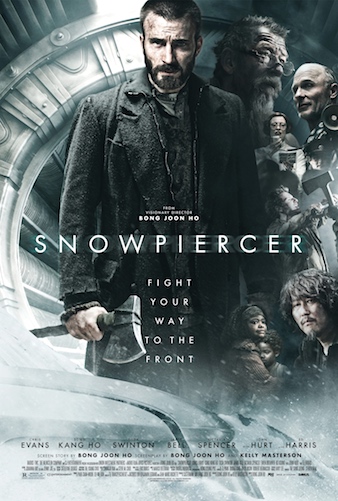
    Snowpiercer (2013)

    2018 #251
    Bong Joon Ho | 126 mins | Blu-ray | 16:9 | South Korea & Czech Republic / English & Korean | 15 / R

    Snowpiercer

    Before we knew about Harvey Weinstein’s real, vile crimes, his offences against cinema were already widely discussed. From manipulating the Oscars to re-editing foreign films himself before distribution, he’d managed to become powerful often at the expense of films themselves. Snowpiercer was another example: having acquired distribution rights while the movie was in production, Weinstein later insisted on severe cuts (reportedly 20 minutes) and changes (adding opening and closing monologues), but co-writer/director Bong Joon Ho refused. It was eventually released in the US uncut, but only on a limited number of screens, and the planned worldwide distribution either didn’t happen or was curtailed — I don’t know about other countries where Weinstein had the rights, but there was no UK release at all. But the downfall of Weinstein has seen the rights to various films shopped to other distributors, and so Snowpiercer finally made it onto Amazon Video in the UK last November, and as of this week is available to Netflix subscribers. For my part, I heard the good reviews back on its US release and, with no sign of it coming to the UK, imported the US Blu-ray when it came out in 2014; but, me being me, I only actually got round to watching it last year.

    Based on the 1982 French graphic novel Le Transperceneige by Jacques Lob and Jean-Marc Rochette, Snowpiercer is set in the far future, after an apocalyptic event has left the world an arctic wasteland. What survives of humanity all live on the titular train, which constantly circles the planet. The rich people live in luxury at the front; the poor people live in squalor at the back. Numerous attempted uprisings by the lower class have failed, but, with nothing to lose but their shitty lives, they’re going to try again.

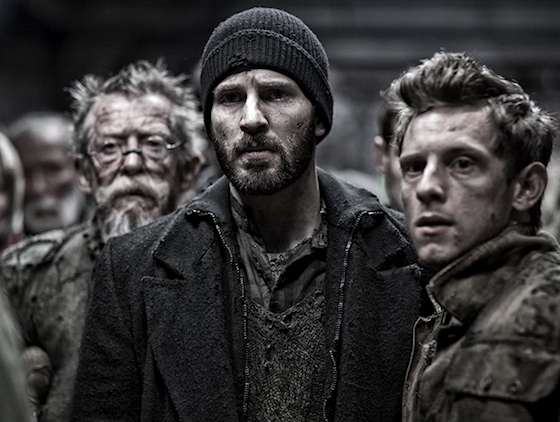
    The War Doctor, Captain America, and Billy Elliot step aboard a train...

    Yeah, it’s a pretty out-there, not-at-all-plausible premise, but just go with it and the film has rewards aplenty. If you want to get intellectual, the train’s societal structure and how it’s maintained offers an allegorical commentary about class divides and the interdependence of the oppressed and the oppressors. But if that sounds a bit heavy, the film wraps it up in a pulse-pounding action thriller, dressed up further with mysterious backstories ripe for exposing and an array of memorable performances, not least Tilda Swinton as a toothy commandant. So, it’s by turns seriously thought-provoking, outrageously hysterical, and wondrously exciting — there are several superbly staged action sequences as our heroes literally battle their way up the train.

    It may’ve taken an unconscionably long time to reach our shores — but hey, what could be more British than a mega-train only turning up after a mega-delay? Unlike our shoddy rail service, however, Snowpiercer proves worth the wait

    5 out of 5

    Snowpiercer is available on Netflix UK now.

    It placed 3rd on my list of The 26 Best Films I Saw For the First Time in 2018. I watched it as part of my Blindspot 2018 project.

    The $1.2 Billion Monthly Review of April 2019

    We’re in the endgame now… except we’re not, because it’s only May — there’s two-thirds of the year left yet.

    And because it’s May, it’s time to look back at what I watched in April…


    #50 The Howling (1981)
    #50a Cotton Wool (2017)
    #51 Searching (2018)
    #52 The Gold Rush (1925)
    #53 Creed II (2018)
    #54 A Good Year (2006)
    #55 Aquaman 3D (2018)
    #56 Early Man (2018)
    #57 The Purge: Anarchy (2014)
    #58 The Silence (2019)
    #59 Amour (2012)
    #60 Zatoichi Meets Yojimbo (1970), aka Zatôichi to Yôjinbô
    #61 Rampage 3D (2018)
    #62 Ralph Breaks the Internet (2018)
    #63 Scott Pilgrim vs. the World (2010)
    #64 Click (2006)
    #65 The Man Who Knew Infinity (2015)
    #66 Captain Marvel (2019)
    #67 Avengers: Endgame (2019)
    #68 Resident Evil: Apocalypse (2004)
    #69 Mortal Engines 3D (2018)
    #70 The Help (2011)
    Searching

    Creed II

    Scott Pilgrim vs. the World

    .


    • So, I watched 21 new feature films in April.
    • That’s a long way down from last April’s total of 33, but then that was my second best month ever.
    • In every other respect, April 2019 did good. It’s the joint best month of 2019 so far (tied with March), and is also in the top 11% of all months. It smashed the April average (previously 12.1, now 12.8), overleapt the 2019 average (previously 16.3, now 17.5), and equalled the rolling average of the last 12 months (previously 21.083, though it now drops by exactly one whole film to 20.083).
    • Not content with having about 15 different film series on the go (depending how you count it), this month I picked up three more: The Purge (after watching the first last year), Resident Evil, and Ice Age. The first of those was because the sequel’s on Netflix UK and the threequel was on TV this month, so the stars kinda aligned; the other two… I dunno, it’s a whim as much as anything. As they both began with rewatches, I’ve written a little more under Rewatchathon.
    • This month’s Blindspot film: Edgar Wright’s comic book-adapted video game homage, Scott Pilgrim vs. the World. I kinda expected it to be a bit hipsterish and self-consciously ‘cool’, but I bloody loved it.
    • This month’s WDYMYHS film: Charlie Chaplin’s The Gold Rush, in its original longer form. No Chaplin film I’ve yet seen has lived up to The Great Dictator for me, but, as with them all, this has its moments.
    • From last month’s “failures” I watched Captain Marvel, Creed II, The Help, Searching, and Game Night (see Rewatchathon).


    The 47th Monthly Arbitrary Awards

    Favourite Film of the Month

    This month was a right old mixed bag, with films ranging from terrible to exceptional, from adequate to underwhelming, from surprising to disappointing. The two films that are frontrunners for this category both took a digital-based gimmick and turned it into something special. In the case of Scott Pilgrim vs. the World, that was to apply arcade video game aesthetics to what is, really, an indie romance; and in the case of my ultimate pick, Searching, it was to present a missing person mystery entirely from the point of view of the computer screens our characters are using for their investigation. It’s fascinating, engrossing, and ultra-timely.

    Least Favourite Film of the Month

    As I said above, lots of middling-but-not-really-bad films this month, but there were a couple of genuine clunkers too. The worst of the bunch was probably Resident Evil: Apocalypse. There’s nothing wrong with a trashy zombie action B-movie, but its low genre aspirations are no excuse for it being so poorly made.

    Best Movie Actually Based on a Video Game of the Month
    Step aside, Scott Pilgrim and Ralph Breaks the Internet — we’ve got some based-on-real-video-game movies here! (Incidentally, how come I watched so many game-based movies this month?! Total coincidence.) As already outlined, Resident Evil: Apocalypse was a borderline disaster, but Rampage turned out to be very enjoyable. Its concept is pretty bloody stupid, obviously, but the end result was a lot of daft fun.

    Biggest Missed Opportunity of the Month
    Mortal Engines was so almost excellent, with astounding production design and visuals, but lacking something in character and narrative. But that’s trumped by Zatoichi Meets Yojimbo, which takes the exciting, surefire combination of two remarkable screen heroes and bungles it into a dreary mess.

    The Audience Award for Most-Viewed New Post of the Month
    Avengers: Endgame may’ve obliterated every box office record going this past weekend, but it wasn’t the most popular post on this blog. In fact, it finished third. It was a victim of extraordinary circumstance, because I had two other uncommonly popular new posts this month. Indeed, together they weren’t just my three most-viewed new posts, but the top three most-viewed posts overall. That never happens — even the winner is normally only somewhere in the top five (sometimes even lower), with second and third way down the overall chart. So, each of those three posts received enough views to be the clear winner most months, but instead it was a close-run thing. In second place, fuelled by Game of Thrones, was my latest TV column. But the winner was, of all things, mediocre direct-to-Netflix horror rip-off The Silence. Better luck next time, Marvel. I’m sure you can wipe away your tears with some of those 1.2 billion dollar bills…


    After failing to watch the Matrix sequels last month, this month I only failed to watch one of them.

    #13 Resident Evil (2002)
    #14 The Matrix Reloaded (2003)
    #15 Game Night (2018)
    #16 Ice Age (2002)

    Resident Evil and Ice Age each kick off series, as I mentioned earlier. In both cases, the initial instalment is the only one I’d previously seen, and both many years ago, close to their original releases — both of which were in 2002, coincidentally. I always intended to continue Resident Evil; Ice Age not so much. But two of them are on my 50 Unseen lists (2009’s and 2012’s, if you’re interested; two Resident Evil films are on those lists too, weirdly enough), and the fact the series somehow rolled on to five financially-successful films (even the last made over $400m worldwide) long after it felt like everyone had stopped paying any attention (or Americans had, anyway: only $64m of that $400m came from the US, down almost $100m from the film before) kinda fascinates me. Oh, and three of them are in 3D (in fact, that’s also true of Resident Evil — this is getting weird now).

    If you remember my review of Game Night (and if you don’t, it’s linked above), you might remember I bemoaned the Blu-ray’s dearth of special features (it only has about ten minutes’ worth). Having now watched them, it’s actually even worse, because the cast seem pretty fun to hang around with in the brief interview clips that are included (and I even laughed at some of the gag reel, which is a rarity). A little more of that (the interviews, not outtakes) might’ve been enjoyable, or a cast commentary. And considering how well-made the film is, a commentary from the directors would’ve been nice as well. Ugh. Anyway, I enjoyed the film even more on a second viewing — I think it’s a consistently hilarious, genuinely superb piece of work.


    This month’s misses on the big screen include the poorly received Dumbo, the well received Shazam, and the belated UK theatrical release of Eighth Grade. They thought it would be a good idea to release that last one on the same day as Endgame, and consequently it’s not even screening near me.

    At home, I’ve got rentals of Bad Times at the El Royale and Widows awaiting me on Amazon. Recent Blu-ray purchases include Finnish fairytale horror The White Reindeer, Fritz Lang film noir Human Desire, and far too much from Arrow’s recent sale. I also imported the German box set of The Hunger Games quartet for the sake of Mockingjay (both parts) in 3D, as well as all the special features that were missing from the UK releases. It doesn’t include the IMAX ratio on Catching Fire, though, so I’ll also be hanging onto my UK Steelbooks… though I guess I could sell the other three, but then I wouldn’t have a complete set. Ah, the life of a collector.

    Last month I noted there were 29 films recorded on my V+ TiVo, and that I’d never get round to all of them. Well, me being me, I only went and recorded some more; namely Everybody Wants Some!!, Filmworker, The Hound of the Baskervilles (1983 version), Nebraska, The Purge: Election Year, Snowden, Wild Bill, and Franco Zeffirelli’s Jesus of Nazareth — all 8 hours of it! That’s not getting watched, is it? I did watch some things though, and downloaded or bought others (for various reasons), so the current tally stands at… 29. Ha!


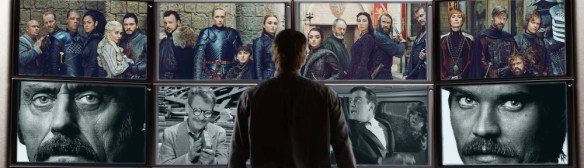
    Films and stuff, sure, but also: the end of Game of Thrones! If that TV review isn’t my most-viewed post next month, [episode 3 spoiler warning] I’ll take off my magic necklace and go die of old age in the snow.

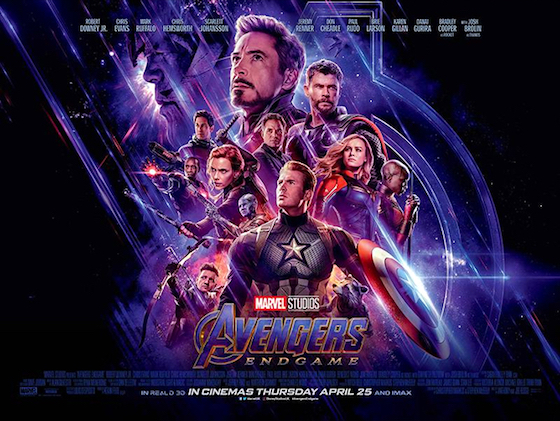
    Avengers: Endgame (2019)

    2019 #67
    Anthony & Joe Russo | 181 mins | cinema | 2.39:1 | USA / English & Japanese | 12A / PG-13

    Avengers: Endgame

    A trilogy each of Iron Mans, Captain Americas, and Thors; a pair of Ant-Mans and two volumes of Guardians of the Galaxy; an Incredible Hulk, a Doctor Strange, a Black Panther, a Spider-Man, and a Captain Marvel; plus, of course, a trio of previous Avengers — they’ve all been leading us here, the culmination of 11 years and 22 movies in the Marvel Cinematic Universe. It’s an unparalleled achievement in moviemaking; a combination of blockbuster scope with TV-esque serial storytelling that is so 21st century. Within its three hours and one minute running time, Endgame encompasses and represents almost all of the tendencies of other MCU movies — for both good and ill. This is not a perfect movie, and this will not be a 5-star review, which I’m saying upfront because massive spoilers may follow. There’s not much to discuss about the film if we limit ourselves to what’s been revealed in trailers and promos, because they’ve purposely kept almost the entire movie a secret, so I’m just going to talk freely.

    If you’ve seen the movie then a plot recap is unnecessary. But in case you just don’t care and have decided to read on regardless: Endgame picks up days/weeks after the cliffhanger ending of Infinity War (maybe I missed or misunderstood something, but I swear one character said it had been 23 days then later someone said it had been two days). The surviving Avengers, plus newly-summoned addition Captain Marvel, manage to track down super-villain Thanos and set off to retrieve the Infinity Stones and use them to bring back the 50% of the universe’s population he turned to dust. Unfortunately, Thanos has destroyed the stones. All hope is lost. Cue title card: five years later.

    Thanos no more

    Okay, we’ll return to the plot in a minute, because this is the first structural oddity of the film. This opening salvo — made up of a pre-Marvel logo sequence in which we learn what happened to Hawkeye and his family, a pre-titles sequence which sets up the plan to beat Thanos, and the pre-timejump action I just described — is almost a self-contained unit dealing with the hangover from the last film. It wouldn’t fit as a closing act to Infinity War — that movie ended at the perfect point in the story — but nor does it really belong at the start of Endgame, which begins properly after the “five years later” card. I have mixed feelings about it, because I like that we see both the heroes’ immediate attempts to rectify the situation, but also that they can’t, so we get to see how they’ve coped (or failed to) over the ensuing years. But, structurally, it felt a little clunky to me; a bit of business from the previous movie that has to be wrapped up before this one can start. I’m not sure what the solution is. If movies still bothered with opening credits, something as simple as separating it all off as a pre-titles sequence might’ve been the answer.

    Anyway, back to the plot. It’s five years later and the world is still coming to terms with the snap. There are too many characters in too many different places to recap what everyone’s up to — that’s part of why this film has a three-hour running time, because there’s simply so much to tackle. But in many ways this is the best part of the movie, especially if you’re invested in these characters rather than just here for action or spectacle. It’s a bit grim, obviously — no one’s going to be cheery about half the world being wiped out — but it digs into the differing reactions this would provoke in ways that are character-specific and mostly plausible. I say “mostly” because, when Hulk (or whatever he is now) turns up, I didn’t quite follow the logic of why he’d turned himself into this Banner/Hulk hybrid. Still, seeing how the characters come to terms with their new reality is an effectively thoughtful way to start off.

    Crying Cap

    But that’s not going to fuel a superhero blockbuster, is it? Here the little mid-credit scene from Ant-Man and the Wasp comes into play. Marvel have always used their credit stings to connect up the films, but has it ever been so vital as this? They’re normally little teases, basically trailers to remind you which film is next, but what happens in that Ant-Man 2 scene is vital to the plot of Endgame. Basically, Scott has been stuck in the Quantum Realm for the past five years, but this provides them with an opportunity: it might be possible to use it for time travel, allowing them to go back in time and undo Thanos’ actions. Or something. Endgame’s relationship with time travel is… variable. Time travel movies are always complicated, and because it’s not a thing that’s really possible they get to set their own rules for how it works. The problem is, Endgame isn’t very clear what those rules are. It makes a great show of saying “it’s not like in the movies” and reeling off a slew of pop culture references (Back to the Future is mentioned more than once), but then it struggles to clearly define how it does work in this movie. And once the characters set off into the past, any explanations it did give seem to go out the window.

    It’s in this long middle act that Endgame was most often problematic for me. Act one is largely committed to being solemn, and act three is largely committed to being Epic, so it’s in the middle that the film shoots for the MCU’s trademark “light and breezy” tone. Unfortunately, sometimes this is so shoehorned in that it rubs against the serious stuff, resulting in a tonal mishmash. I’ve frequently advocated for movies that mix seriousness and comedy side-by-side, because real life often does the same, but there are points where Endgame undercuts its own stakes or undermines its characters for the sake of a one-liner or a comedy bit, rather than embracing the seriousness of the situation and letting comedy evolve naturally when it’s warranted.

    There can be only one...

    Conversely, some of the humour is accidental. One of the more egregious examples for me is when Black Widow and Hawkeye are faced with the Soul Stone dilemma: one of them has to die as a sacrifice for the stone to be released to the other. They both decide to sacrifice themselves, which leads to a protracted series of attempts to stop the other from committing suicide first. The constant back and forth of who had the upper hand gets almost to the point where it’s comical — I began to wonder if it was meant to be a comedy bit. But then, just as it was reaching the height of absurdity where I was about to conclude I should be laughing rather than just thinking “this is silly now”, it abruptly stops when one of them ‘wins’ and we get a Tragic Death Scene. It’s clearly meant to be a shocking, affecting moment of heroic sacrifice; instead, I found it a jumble of intentions that neutered any genuine feelings.

    Another moment that’s well-meaning but fumbled comes during the big climax, when all the Lady Superheroes unite to do something. It’s a moment of such brazen, uncalled-for “feminism” that it feels like pandering, and that’s a bad thing. I’m searching for a better word to use in that last sentence, because overall feminism is a good thing, but this particular moment is so out-of-nowhere, so fundamentally meaningless (there’s no need for it to be just the women involved), that it’s egregious. When crybaby fanboy trolls scream about unnecessarily forcing political correctness onto genre movies, they’re unerringly wrong… except this time they’ll be right, because that’s exactly how this plays. There’s a broadly similar moment in Infinity War, when a couple of the female heroes defeat whichever of Thanos’ sidekicks is the female one, and I thought that worked, partly because no one made a big deal of it. Here, it’s clear they’re making a point. I’m not sure what the exact goal of it was — to say “women are as capable as men”; to say “look how many female heroes we have now”; or something else — but there are better, subtler ways to make that same point.

    Nebulous plotting

    Where Infinity War found room for almost all of the MCU’s ongoing franchises and characters (an impressive feat), Endgame cements its finale status by re-centring us on the original lineup from the initial Avengers team-up… er, plus a couple of other characters, who are important to varying degrees for various reasons. It’s that kind of “it’s almost this… but not quite” construction of content and/or theme that belies a certain lack of focus or forethought. If this is a last hurrah for the original team, why is Ant-Man vital to the story even being possible? Why does Nebula get one of the most significant subplots, intimately connected to her character arc from Guardians Vol.1 and 2? Why is brand-new (to the movies) character Captain Marvel repeatedly required to come in and save the day?

    This extends to the time travel too: when they go back, it’s into the timelines of specific movies, but why those movies were chosen isn’t always clear. Avengers Assemble? Makes sense — it was where the crazy project of the MCU proved it was working, making that film both the end of the beginning and a beginning in itself. Guardians of the Galaxy? I mean, I guess — it’s where Marvel proved they could turn even the most obscure property into a massive, popular hit; plus it’s where a lot of the Thanos storyline really got going. Thor: The Dark World? …wait, what? Seriously?! Yes, perhaps the greatest trick Marvel have ever pulled is making Thor 2 — one of their least well regarded films — a moderately essential component of this finale. You need to have seen that movie to fully understand what’s going on here, and now you can’t really skip it in your rewatches either.

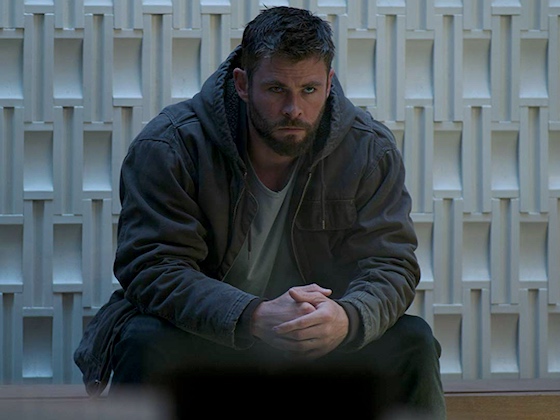
    Thor after being told which movie he had to revisit

    Talking of connectivity, Infinity War surprised by being a standalone movie, not just a Part 1. Okay, it was a standalone movie which ended with our heroes losing, which you could call a cliffhanger, but if you look at it from the other side — i.e. with Thanos as the main character — it’s a whole, completed, no-more-story-to-tell tale. Therefore it’s a fresh surprise (kinda) that Endgame is very much a Part 2 — and also, in fact, a Part 22 — freely nodding to and paying off stuff from previous movies on the assumption you’ll know what it’s referencing, more like the last instalment of a serial than a standalone film. Anyone who’s skipped a film or two (or three or four, etc) on the way to Endgame is likely to miss all the nuances, at the very least, and perhaps be left with more serious questions too. Newcomers definitely need not apply. But if there’s anyone who’s a fan of part of the MCU but not all of it, they’ll need to find their way into and through Endgame one way or another, because a whole bunch of stuff is wrapped up for good here; some heroes won’t be getting another standalone movie to put a button on their story.

    I feel like this review has focused on the negatives and debatable drawbacks of Endgame, but that’s partly because a lot of the discussion right now seems unrelentingly praiseful. I mean, as I type this the film is ranked as the 5th best of all time on IMDb, a position it’s actually risen to over the past 24 hours (it debuted around 19th). I didn’t think it was perfect, or quite as good as that (for comparison: I thought Infinity War was more consistent and successful as a movie, and IMDb raters have currently ranked that 61st), but I did enjoy it overall. I don’t think it needed to be as long as it is (at times it meanders through scenes or comedic bits rather than getting on with things), but it doesn’t drag or bore. It’s a bit of an irreconcilable dichotomy that I think both it didn’t feel excruciatingly long and also that they should’ve tightened it up and brought the running time down.

    The end for Tony?

    Still, that runtime means they felt there was space for more than just action sequences. Allowing the film to focus on the emotions of the characters (at least some of the time) is suitable payoff for the investment people have in them. Indeed, as I said earlier, in many ways the first act is the film’s best stuff. This isn’t just an empty effects spectacle. But when it is a spectacle, it can be spectacular. Okay, the climax, where two sizeable armies rush at each other on a brown battlefield under a grey sky, degenerates into a massive free-for-all of whooshing pixels where it’s frequently hard to discern exactly what’s going on and who’s doing what to who (it actually reminded me of Aquaman, only with less colour. I’m sure such a comparison to a DC movie will be sacrilege to some Marvel fans, but it’s the truth). But within and around that there are still things that are a thrill, not least the big moment when the previously-dusted heroes turn up en masse in the nick of time. And when all is said and done, the end credits offer a special acknowledgement of the main Avengers who started it all, which was quite possibly my favourite bit of the whole movie.

    There are no mid- or post-credit scenes, making this only the second MCU movie without them. (The first was The Incredible Hulk, which basically had its post-credit scene before the credits started. I’m sure they’d’ve placed that scene differently if they’d known it would become a trademark of the franchise.) It’s an appropriate decision: we know this isn’t the end (the next Spider-Man movie is out in a couple of months; many more officially-unannounced Marvel films are on the horizon after that), but this is supposed to serve as an ending nonetheless, and so letting it actually end, rather than attaching a tease for the future, is welcome. Though, really, how much of an ending is it? Yeah, it officially closes off the first era of MCU films, but a bunch of those characters are continuing into the future, and even some of the ones primarily associated with the first era — characters who died here — are coming back in prequels and the like.

    Goodbye to MCU

    However, the lack of credits scenes did allow me to enjoy some schadenfreude: I knew going in there were no scenes, but that there was a “meaningful sound effect” at the end of the credits. I had nowhere else to be, so I stayed to see what it was. Everyone else who stayed, however, was chattering about what the end credits scene might show. The credit roll came to an end, everyone went quiet in anticipation, that “meaningful sound effect” played, and I started getting ready to leave while all around me stared at a black screen while the cinema’s filler muzak played, thinking they were witnessing the beginning of another scene. It took them a good 30 seconds to twig. (Maybe I should’ve said something… maybe the usher stood at the front of the auditorium should’ve said something… maybe he and I are both just horrible people…)

    That literally brings me to the end of Endgame. There’s much more that could be said about it, and will be said about it. For me, an interesting thing now will be to see what is its long-term reception. As I said, right now it’s riding high on a wave of audience euphoria, but it’s only just come out: most of the people who’ve seen it already are the really keen ones; the diehard fans. What will wider audiences think? What will the diehards think when they get a chance to revisit it, removed from the heat of initial emotion? Will the consensus remain that Avengers: Endgame ranks in the echelons of the very greatest movies of all time, or will cooler heads prevail?

    4 out of 5

    Avengers: Endgame is in cinemas everywhere (except Russia) now.