
Paul Thomas Anderson | 152 mins | DVD | 15 / R
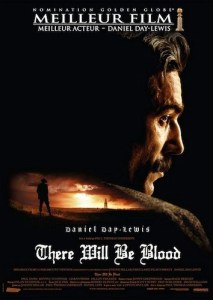 I used to consider myself a fan of Paul Thomas Anderson; however, I’ve come to the conclusion that I’m merely a fan of the film Magnolia. As I explained when I covered Boogie Nights, I love Magnolia, thoroughly dislike Punch-Drunk Love, and was ultimately uncertain about Boogie Nights. There Will Be Blood’s significant Oscar nominations and wins seem to have cemented it as Anderson’s most acclaimed work, but I wouldn’t consider myself a fan of this either.
That’s not to say it’s a bad film, but it is at times a baffling one. It makes minimal concessions to its audience from the very start, beginning with an extended montage that covers relatively vast tracts of time with virtually no dialogue, before segueing into a story that introduces and discards characters and events with little hint of their relevance, and eventually makes a huge leap forward for an equally impenetrable ending, all the while under- (or perhaps over-) scored with Jonny Greenwood’s disquieting music, sounding like the THX logo writ large. I can’t help but wonder if I missed something crucial along the way because, even after two and a half hours, I had no real idea what the film was about.
Leaving that aside, the film is technically excellent in just about every field. Daniel Day-Lewis easily deserved his Best Actor wins for his role as oil magnate Daniel Plainview, a performance so subtle that there initially seems little to it but which slowly peels away the layers to uncover much more. Anderson’s screenplay helps him along with an array of scenes written to textbook levels of perfection (almost literally: in a screenwriting class we studied in depth the scene where Plainview negotiates a land purchase from the Sunday family). Little Miss Sunshine’s Paul Dano delivers a superb supporting turn too, even if his casting as brothers Paul and Eli Sunday adds a level of confusion where there isn’t meant to be one (considering there was originally a different actor cast as Eli). Dillon Freasier also offers good, understated work as H.W., Plainview’s 11-year-old son.
Individual scenes are certainly well handled. The opening may offer little in the way of explanation, but with minimal dialogue, well-chosen images and events it expertly conveys Plainview’s rise to prominence and establishes his position without ever doing more than is necessary. The sequence with the burning oil derrick is visually stunning and, for me, the first point at which the discomforting score really worked (though it must be worth noting that Greenwood actually composed that cue for a different film). As already mentioned, many of the dialogue scenes are also exemplary, among them the much-quoted bowling alley finale. Anderson is capable of crafting moments of immense power, even if their cumulative effect is perhaps unclear.
It’s difficult to judge a film I have such conflicted feelings about, especially when its high critical consensus leaves me with a nagging feeling that, somewhere along the way, I missed something of vital importance. I’m not really a fan, and I’ll no longer call myself a fan of Paul Thomas Anderson, but his work is certainly interesting and definitely merits revisiting.

Originally posted on 5th March 2010.
 Having only recently subjected myself to the full horror of
  “The paths of glory lead but to the grave,” wrote Thomas Gray, and Stanley Kubrick — adapting from the novel by Humphrey Cobb — sets about proving him right.
 Sixth in the series of Wallander films starring Krister Henriksson as the titular Swedish detective, though only the second to be released theatrically.
 I really didn’t expect to like this: a series of straight-to-camera monologues, performed in front of just plain-coloured backgrounds, about the fashion industry, written and directed by the writer/director of
 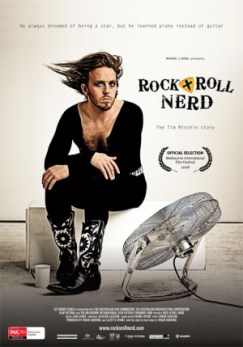 I don’t usually bother with plot summaries at the start of my reviews, working on the assumption most readers will know (or know of) the film and so don’t really need one. My assumption here is that most won’t have even heard of this film, though.
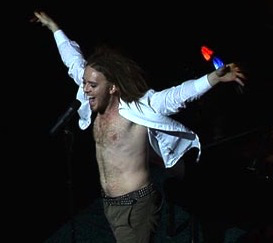 TV appearances, offers from Hollywood and the West End, the best management in the business and a gig at Albert Hall.” Not what either Minchin or Skirving had expected, that’s for certain!
 aren’t boastful or immodest, the viewer privy to how his hopes were unrealistically raised in spite of himself.
 and it may be they wouldn’t engage with this film because of it. However, some stories are capable of transcending one’s feelings about the subject covered, and Rock n Roll Nerd may just be one of those: even if you don’t enjoy Minchin’s songs, or indeed comedy music in general, the tale of his success — and what it’s like for an ordinary person to live through such a thing — is a story whose unique interest extends beyond fans-only territory.
 It doesn’t seem like 18 months since the RSC brought Hamlet to the stage with British TV’s biggest star actor (probably) as the titular Dane, but it is (more or less). Thanks to sold-out performances and largely positive reviews (theatre critics seem even less keen to agree on anything than film ones), we’re now treated to this film adaptation, shown on BBC Two on Boxing Day and released on DVD (but not Blu-ray, boo
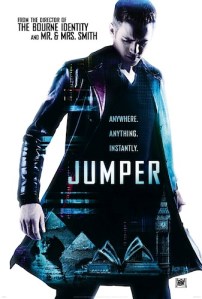 In honour of Jumper’s central conceit — that certain people can instantaneously transport themselves to any other point on the planet — I will conduct this review by jumping about through paragraphs I wrote without bothering to link them properly. (Also done in honour of my laziness.)
 Children of Heaven is an Iranian film, which means it’s in a Foreign Language and it’s Subtitled. And yet, it was on ITV. Sometimes the mind boggles. Still, it was relegated to a post-midnight showing, so some things never change. Indeed, the one thing that inspired me to watch it is that it’s referred to by Roger Ebert in his wonderfully evangelical (about film, not Christianity (thank God!))
  Murder on the Orient Express is arguably Agatha Christie’s most famous novel, perhaps because of its widely-known twist ending, or perhaps because it’s inspired in part by a high-profile true story, or perhaps because of this multi-Oscar-nominated all-star adaptation.
 100Films.co.uk