A Bunch of Amateurs (2008)

2011 #46
Andy Cadiff | 92 mins | TV | 15

A Bunch of AmateursA faded action movie star (Burt Reynolds) thinks he’s been signed up to play King Lear with the RSC… but when he arrives in England, he finds it’s just a small village amateur dramatics group. Hilarity, and the odd heart-warming message, ensue.

To put it simply, A Bunch of Amateurs is entertaining enough and has its moments. It’s thoroughly predictable — most viewers could probably map out the plot before the film even begins, so it’s certainly easy to guess what’s coming next as it trots along — but there’s also something reassuring about that predictability — it’s exactly the sort of Quaint British Movie you expect it to be. Some will find that insufferable; I’m sure there are some who find it absolutely lovely and it’s the only kind of film they ever want to watch. I think it’s fine for what it is, a nice hour-and-a-half on a Sunday afternoon with something unchallenging but likely to raise a smile.

It’s certainly well cast. Well, mostly. Reynolds isn’t a great actor, is he? Appropriate casting when his bad-actor character is acting, then, but not so hot the rest of the time. (Reportedly he struggled to learn his lines and consequently many differ significantly from the play. So I’m not wrong, am I.) Luckily he’s made up for by a cast that includes Samantha Bond, Not Bond, BondImelda Staunton and Derek Jacobi, all ceaselessly watchable, plus a supporting cast of faces you’ll likely recognise from British telly.

Late on, there are a couple of jumps in the plot that suggest cut scenes. Or bad writing. So we’ll go with the former. I appreciate the (presumed) desire to keep the running time tight, but there were a couple of glitches I observed and it would be nice if they’d been smoothed over. Ian Hislop is a credited writer — I guess we know the source of some light newspaper satire that’s sprinkled across the film (most notably in the final act), then.

The worst gap in the writing is that it goes unexplained why the am-dram group thought he was a good idea at any time. It’s ‘explained’ as the school-age daughter of the group’s director suggesting him, but no idea is given as to why — he’s not a great actor; he’s a wash-up who used to be in crap action films. If he’d been suggested by a version of Nick Frost’s character from Hot Fuzz, or by the B&B lady who fancies the pants off him, that might make sense, but why the schoolgirl? And why did anyone agree to it? It’s sort of ignored in the hope we won’t notice this massive whole in the logic, but… well, I noticed.

Not so amateursProbably the best bit is the series of films Reynolds’ character is known for: Ultimate Finality 4 plays as a nice, subtly-used background gag.

The 15 certificate is overdoing it. There’s a couple of instances of swearing that make it clear how that rating was achieved (according to the BBFC, ten in total, including seven in one sentence), but those aside it’s really not a 15 kind of film; it’s far too gentle for the vast majority of its running time to merit so high a classification. Not that anyone under the age of 15 is going to be dying to see it, but the implication of what a 15 contains is more likely to put off the real prospective audience. Maybe. Oh I don’t know, but it doesn’t seem right.

IMDb reports that “Queen Elizabeth II and Prince Philip requested a copy of this film after attending it’s Premiere 2008 Royal Film Performance so they could show it at Sandringham Castle for the rest of the family over the Christmas holidays.” Take from that what you will.

3 out of 5

Pirates of the Caribbean: On Stranger Tides [3D] (2011)

2011 #61
Rob Marshall | 137 mins | cinema | 12A / PG-13

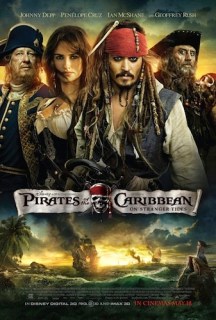
Pirates of the Caribbean: On Stranger TidesNo one had high hopes for Pirates of the Caribbean when it set sail for the big screen (sorry) in 2003. It was based on a Disney theme park ride, for chrissake! But no, as it turned out: a witty and exciting screenplay, some properly photo-real CG from ILM, and an immediately-iconic Oscar-nominated performance from Johnny Depp were some of the ingredients that helped it become an instant blockbuster classic.

And then, drunk on success, they churned out two disappointing, overblown sequels. Picking up on elements left vaguely dangling from the first film, the filmmakers somehow fashioned it to look like a trilogy (not that the first film doesn’t work absolutely fine by itself), and given the lacklustre critical reception and conclusive nature of the story, I think everyone assumed that would be that.

But no. Not when you’re Disney and have a franchise capable of grossing over $1 billion per film. And so here we get Pirates 4, with high hopes: they seemed aware the two-part-ish sequels hadn’t gone down so well, promising a standalone adventure that returned to the quality of the first film; it’s adapted in part from a largely unknown but beloved by those that do novel (which also inspired the Monkey Island games, which in turn contributed a lot to Pirates 1 — it’s all very incestuous); plus Disney insisting on cuts for a tighter budget suggested there’d be less of the sequels’ excesses.

Surfing UKIt still cost $250m, mind, and the fact that’s what’s considered a cutback arguably shows.

Things start really well. The opening sequences in London are a hoot, Depp bringing some of the joy back to the character of Jack Sparrow that went awry during the last two films. We also get to see why he is actually a great hero, something occasionally lost under the drunken swaggering — look at his well-plotted escape from the King’s court, which initially looks like pure lunacy but turns out to be all clever set-up, for instance. The carriage chase through London streets that follows is good fun too, undoubtedly the film’s high point.

It’s pretty much downhill from there though. The film burns through ideas and plot points at a rate of knots. While I’m all for not stretching ideas thin — something that can happen too often in blockbuster movies these days — here the opposite is true, with not enough time devoted to explaining things, to characterisation, to making us give a damn about what’s going on or why it’s going on. They seem to think we’ll care about Sparrow, Barbossa and Kevin McNally’s character just because they were in the three previous films… and, in fairness, we do, to a point (well, the first two); but they also seem to think this will transfer to the new cast, and it doesn’t.

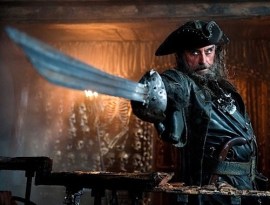
Orlando Bloom and Keira Knightley... notThe love story between a missionary and a mermaid barely factors. Word was this pair would be the series’ new Orlando Bloom and Keira Knightley, but whereas Elizabeth Swann and Will Turner were central to the plot of all the previous films (appearing before even Captain Jack in the first, if I recall), these two turn up late in the day and never have a chance to go anywhere. There’s also a surfeit of villains, meaning they either barely appear (the Spanish) or aren’t given close to enough screen time (Ian McShane’s Blackbeard). Every introduction is rushed, every subplot underdeveloped, every ending unsatisfactory. There’s too much, even for a movie that still runs over two hours.

There’s potential here, as there has been for all the Pirates films that followed in the wake of the first one, but as the quality continues to slip it’s becoming easy to believe that screenwriters Ted Elliott and Terry Rossio hit a fluke with the quality of the first film and haven’t been able to meet it again since. And I would say most of the fault lies with the screenplay, because there’s little fundamentally wrong with the rest of it.

Except the 3D, maybe. I have no idea if this was a post-conversion or shot for real, but it doesn’t matter — it’s dull. Either things are too dark to matter, or it just doesn’t pop in the way you’d like. A couple of sweeping scenery shots aside, it offers no benefit. 3D is a gimmick and all about spectacle — I believe anyone who thinks it’s a serious filmmaking tool for the future is deluding themselves, at least until someone can prove otherwiseSword in audience (much-heralded work like Avatar certainly hasn’t) — but it’s a gimmick On Stranger Tides doesn’t engage with, in the process showing it lacks spectacle. And considering dark scenes obviously don’t work well in the format, I dread to think what Ridley Scott’s Prometheus will look like. (I probably won’t see it ’til 2D Blu-ray anyway, so that might be a moot point.)

I’m certain some will think my score for On Stranger Tides is generous, but despite all the flaws it still has its moments. I just wish that instead of churning Pirates films out ASAP they’d put more effort into developing the screenplay. Perhaps hiring new writers would help. But with a fifth and possibly sixth film on the horizon, and no significant change of scribe imminent, any such hopes are already dashed. And as this poorly-reviewed effort still grossed a phenomenal amount (third highest of the year; eighth of all time), Disney will still get their money and keep pumping them out. The whole situation is not so much yo-ho, more ho-hum.

3 out of 5

Pirates of the Caribbean: On Stranger Tides is out on DVD, Blu-ray and 3D Blu-ray in the UK from Monday, 12th September, and in the US from 18th October. Why can’t the Marvel releases from this summer be that way round, hm?

The UK TV premiere of Pirates of the Caribbean: On Stranger Tides is on BBC One tonight, 29th December 2013, at 8pm.

Nirvana (1997)

2011 #75
Gabriele Salvatores | 89 mins | TV | R

NirvanaThe Radio Times film section may be steadily going down the drain, but when anyone describes something as “one of the best science-fiction films ever made” it’s worth paying attention. “Yet few people outside Italy have seen it,” they add. Indeed, despite screening at Cannes (albeit out of competition), this Italian movie has never been classified by the BBFC, so I presume it’s never been released here (though this was its third showing on the BBC). It’s been released in America though… by Miramax. They did their usual foreign film job, chopping out 17 minutes, changing the music and adding an English dub. This is the version shown by the BBC (at the time of posting, also available on iPlayer) and reviewed here.

Most sci-fi we see is of the American variety — partly due to the fact most of any cinema and the vast majority of imported TV we get is from there, partly due to that being where the money is for special effects and what have you — and that tends to mean tonnes of CGI, a fast pace and action sequences up to the eyeballs. Nirvana is more stereotypically European, however: it’s clearly a Deep and Meaningful film, though unlike many examples of Thoughtful cinema it at least has a slightly thriller-ish plot and a hefty dose of cyberpunk styling for us plebs to pick up on.

Sometime in the future (I read 2005 in one review, but best to ignore that now), Christopher Lambert is a computer game designer working on a new title for Christmas. Somehow a virus invades his system, in the process making his lead character, Solo, fully sentient. Unable to escape the game, Solo wishes to be deleted, but Lambert can’t because the final software is owned by some giant corporation and will be released in just three days… so he has just three days to get into their computer system and delete the file, before Solo is condemned to never-ending life stuck in the game.

Nirvana's SoloThe most obvious point of reference for Nirvana is Blade Runner, which I’d wager was a hefty inspiration. Writer/director Salvatores introduces themes of what it means to be human and a lead character one might like to decide isn’t after all, and sets it in a perma-night, dystopian, multi-cultural future. It doesn’t quite have Ridley Scott’s consistency of vision, though: while he just rendered an Asian-American future L.A., Salvatores takes globalisation to the max, running us through locations named after Marrakech and Bombay City, which may or may not be part of the same sprawling metropolis, and which all exhibit appropriately specific cultural stylings. These aren’t just pretty backgrounds, but in some ways reflect the film’s use of video games — in which you can, of course, constantly re-spawn your character — as a metaphor for reincarnation.

In aid of this, while Lambert is collecting the plot pieces needed to attack that corporation — at the same time as following a subplot about a missing girlfriend — we get to witness Solo’s experiences inside the game, frequently dying and re-living the same story with a group of characters who aren’t aware in the way he is. To be blunt, the in-game stuff is a bit odd. It doesn’t really go anywhere, and builds to a lacklustre climax — indeed, the word climax is a bit strong. But perhaps this is part of the point: as the only character in the game capable of independent thought, Solo is stuck in a loop of story and fellow characters who just re-enact what they were programmed to re-enact. Literally, he can’t go anywhere.

This part of the film calls to mind eXistenZ, David Cronenberg’s film about a virtual reality game that blurs the line between reality and the game. It’s rather a surface similarity though — Lambert barely spends any time in his game, I think there's something in my eyeinteracting with Solo merely though a series of screens on his journeys (and, one presumes, a series of microphones too). Cronenberg’s film was made a couple of years after this, so commending it for not doing the same thing would obviously be a bit rich. It is to be commended for not descending into a needlessly twist-strewn third act though, which I had thought was coming — there’s plenty of bits along the way that could be used to build a ‘surprise’ or two. There’s some ambiguity in the ending, but not too blatantly (unlike later versions of Blade Runner, for instance), and Emmanuelle Seigner’s ex-girlfriend character is never quite used in the way I expected.

For all its intellectualising, Nirvana can still be a fun film, and not just because Lambert’s accent is always set to provoke a giggle. That sounds horribly xenophobic written down, but it’s all Highlander’s fault: there’s no reason he shouldn’t sound European here (and he has dubbed himself), but the memory of that accent supposedly being Scottish does linger. (And, just so we’re clear, I love Highlander.) But no, there are proper dashes of humour, scattered here and there to provide some subtle texture. And there are action sequences too, and dated ’90s music (presumably thanks to Miramax), and even some boobies. To be honest, though, if you just want humour, action, dated music and boobies, there are dozens of films that will serve you better. At least they stop it becoming too dry, and give you a chance to let what’s going on sink in, helping prevent total confusion every time the film threatens to become incomprehensible (maybe it’s just me, but it took a little while to work out what Lambert was actually getting up to in the main plot).

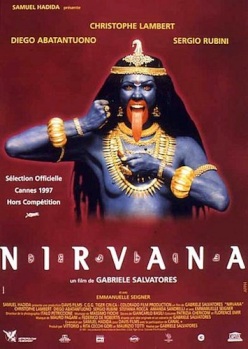
I’d quite like to see the original version. Who knows what changes Miramax have wrought with their fiddling (that woman on the poster certainly isn’t in this version, at least), Smells like teen somethingand I imagine subtitles could be easier to follow than this dubbed version, in which everyone’s covered by either the original actors straining with English (based on the accents) or the typically bad voice actors employed for such dubs. The Italian DVD is reportedly English-friendly and very good quality, so perhaps I’ll get hold of that (expect another review if/when I do… well, eventually).

Apparently Nirvana “has achieved something of a cult status, especially in Europe”, and I think I can see why: there’s a few themes that might be worth a ponder, and enough splashes of style and action to keep one’s attention… most of the time. It might not be as stylistically delineated as either of the films it brought to mind, but then Blade Runner is perhaps the pinnacle of screen SF and eXistenZ… well, now I really want to see that again. I don’t know if this is “one of the best science-fiction films ever made” — especially not in this Americanised version — but it certainly has a few things going for it.

4 out of 5

Nirvana is available to UK viewers on the BBC iPlayer until 3AM on Saturday 3rd September (i.e. Friday night).

My Neighbour Totoro (1988)

aka Tonari no Totoro

2011 #41
1988 | Hayao Miyazaki | 83 mins | TV | U / G

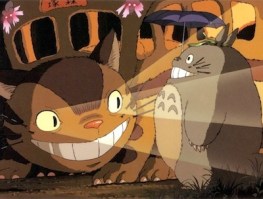
My Neighbour TotoroOnce, a few years ago, SFX published an anime special (it was their first, I think) with a rundown of the Best Ever Anime Films. You’d expect it to be topped by something regularly cited and, considering the source magazine, science-fiction/fantasy-y — Akira, probably; or perhaps Ghost in the Shell; or maybe Oscar-winner Spirited Away. But it was actually My Neighbour Totoro that rose victorious on that occasion, an unexpected choice you could tell the magazine felt the need to justify even in the article accompanying the list. But they weren’t wrong — this is a deserving champion.

Totoro tells a charming story, where very little of significance seems to happen, yet is never dull or overly stately. It works to build a lot of character and affection for them, so that by the climax, when something definitely does happen, all the work that’s gone into the characters really pays off. It doesn’t whack you round the head with its impressiveness, in the way those other films I mentioned might, but instead sneaks up on you with the realisation that it’s a beautiful work.

The fantasy element is quite light, perhaps surprisingly considering the titular character is a giant teddy-bear-like creature. There are sequences of pure fancy, but it doesn’t saturate the film; it’s as much a gentle drama about two young girls in a new home waiting for their mother. It’s a little like Pan’s Labyrinth in this respect (or, rather, Pan’s Labyrinth is a little like this). Light fantasyIt’s not scary in the slightest (well, maybe in the slightest, for some kids, but note the U and G ratings), but in terms of how it balances real-life dramas with the fantasy element. Only in both the real and fantasy worlds it’s a lot nicer, friendlier and cheerier than del Toro’s acclaimed fantasy-horror. To put it more succinctly, they share a similar structure and balance, but a completely different tone.

The story and characters are supported by the huge talents at Ghibli. It’s exquisitely animated, from the detailed painted backgrounds, to the well-observed character animation, down to little touches like flies around a nighttime light — things that have no need to be there but bring the frame alive. Jô Hisaishi’s music is equally beautiful. The music regularly plays more than its usual role in storytelling too, accompanying otherwise silent (bar sound effects) scenes perfectly. “Accompanying” is the wrong word — it’s not just accompaniment; it’s integral to the mood and the action. Normally such use of music is heavy-handed — “feel sad NOW”, “feel scared NOW” — but Hisaishi’s work is never that crass. It’s not omnipresent either, just appropriate; and it’s always adding something, without it necessarily being obvious what that something is.

CatbusThe English-friendly version has advantages too: I love any subtitles which use semicolons. It’s not inundated with them, but there was at least one. Semicolons are so underused. I love a good semicolon.

My Neighbour Totoro is a very nice film — and not in a mediocre way. That’s not to say there’s no drama — see the climax — but there’s no enforced peril, no nasty characters. They’re not needed. It’s quite refreshing. Is it the best anime film ever? I’m not qualified to say. But it must be a contender.

5 out of 5

My Neighbour Totoro placed 7th on my list of The Ten Best Films I Saw For the First Time in 2011, which can be read in full here.

The King’s Speech (2010)

2011 #57
Tom Hooper | 113 mins | Blu-ray | 12 / R

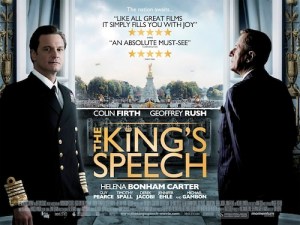
The King's SpeechBritain seems to be having a grand time of it at the Oscars of late — following Slumdog Millionaire’s triumph two years ago, the last ceremony saw this scoop all the major gongs (and that’s not to mention the other films that have gained isolated noms and wins in the past couple of years). Considering, as someone said recently, there’s no such thing as a “British film industry”, that’s not bad. But award wins mean diddly-squat in the long run — look at the number of classic films and acclaimed directors who’ve never won — so is The King’s Speech actually worth it?

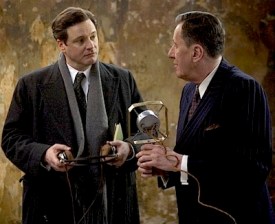
The core of the film, the screenplay, is excellent — dramatic, funny, truthful. It won Best Original Screenplay… but surely it was an adapted screenplay? It’s so grounded in real events, based (at least in part, or so I thought) on the real man’s diaries and the book that was in turn based on them. When the Adapted Screenplay nominations include films loosely inspired by short films and semi-spin-offs from TV series that don’t even feature many of the same characters, never mind actually adapting their source for the big screen, surely something like this is definitely adapted? Who knows… or, frankly, cares — it’s still good, that’s what matters. The King making a speechAnd if the authors of the book missed out on an on-screen credit, at least they’ve had plenty of tie-in promotion (including a featurette on the Blu-ray).

Hooper’s direction is fine, good even, but it’s no Social Network. Fincher was robbed there. At least he’s in good company. Hooper’s one of those directors (who seem to have emerged recently) who sometimes frame their actors small with a lot of empty wall around and above them. I don’t like this one bit. Stop it. Otherwise, I don’t think he has a distinct style (and that awful type of shot certainly isn’t distinctly his anyway). I’m not saying it needs to be obviously, batteringly A [Director]’s Film to deserve best direction — indeed, one can go so far down that route that it definitely doesn’t deserve the award — but Hooper’s work doesn’t hold a candle to Fincher’s refined style.

The headline win, though, was Colin Firth for Best Actor. I think it’s fair to say there was an element of It’s About Time about him taking it, but unlike, say, Scorsese’s win for The Departed, this wasn’t just a lifetime achievement award dressed up as a real one — Firth equally earnt it with this performance alone. Taking on the part of a stammerer is always a tricky job, and does play into the Academy’s fondness for actors playing at being disabled or impaired, Colin Firth is the Kingbut Firth presents a much more convincing stammerer than you usually see (I have this on good authority from someone who knows several stammerers). It’s not just the Oscar bait element he nails though, as he also brings truth and gravitas to the rest of the role. It’s a complex part — he’s a man who has the throne unexpectedly thrust upon him, at a transitional time for the monarchy, as the nation is launched into one of its most difficult periods.

While Firth garnered all the praise, co-lead (not just Supporting Actor) Geoffrey Rush has been a little more overlooked. It’s a subtle turn but it’s the relationship between the two men that really makes the film. It’s easy to see how such an unshowy part was missed in some quarters during awards season, but Rush is wonderful. Rounding out the leads, Helena Bonham Carter seems to be returning to the heritage roles of her early career, but the more alternative path she’s carved since then lends an edge to the forthright but supportive spouse. It’s interesting to keep in mind the image we have of the Queen Mother from the modern era when looking at her as a younger woman.

But the quality casting doesn’t end there: in support are an array of cameo-sized roles from some exceptional actors, many of them leads in their own right normally. Most notable are Michael Gambon as the old-fashioned, but loving, King George V; Geoffrey Rush is the SpeechGuy Pearce as the youthful, playboy-ish David / King Edward VIII; Timothy Spall doing a decent Churchill impersonation, which sparks one nice moment just before the titular speech; plus Outnumbered’s Ramona Marquez, pretty much stealing every scene she’s in (as usual) as the young Princess Margaret.

I don’t usually comment on my viewing medium — I include it at the top because it can affect all sorts of things, but I don’t feel especially qualified to review the quality of a Blu-ray or cinema or much else — but, occasionally, there’s something worth noticing. The UK BD of The King’s Speech is one of those: instead of running at film-speed 24fps in 1080p, like most movie BDs, this is 1080i/25fps — to put it another way, it has PAL speed-up (how much difference there is between “p” and “i” is debatable). This is naturally disappointing and begs the question “why?”, though when actually viewing the movie the audio doesn’t sound off (but then I’ve never thought it does when watching UK DVDs, so if you’re attuned to that kind of thing maybe it is) and it still represents a definitely HD image.

But I also felt I should mention it before commenting on the film’s visuals, in case it’s affected the visual style. I was going to comment on its slightly unusual look, for instance, which often represents strong pastel colours (when its not succumbing to the ubiquitous teal-and-orange), at the same time presenting a kind of desaturated, often cold feel. The sound quality's alright thoughIt looks odd, and to be honest I’m struggling to place my finger on what exactly is odd about it, but it’s slightly off-normal, slightly stylised, and I quite like it… but considering Momentum seem to have ballsed up the transfer to at least some degree, I’m not sure how much the oddness is a choice of Hooper and DoP Danny Cohen and how much a dodgy transfer/compression. Screen-grabs of the US release (which is at least 1080p, but not wholly praised in other areas, it seems) don’t help much. But as I said, I’m no real expert on Blu-ray quality, so don’t take my word as gospel by any means.

Let’s try not to get too distracted by such oddities, though. Even if directorially and cinematographically The King’s Speech isn’t the triumph a film lover might like their Oscar winners to be, it’s more than made up for by an exceptional screenplay and an array of highest-quality performances. It’s impossible to say how any film will be remembered in the future, but it seems to me this one is a solidly deserving winner.

5 out of 5

Catfish (2010)

2011 #49
Henry Joost & Ariel Schulman | 84 mins | TV | 12 / PG-13

CatfishCatfish is a documentary (probably — we’ll come to that) in which 20-something Nev falls in love with a girl somewhere else in America over the internet. He and his friends become suspicious that she’s not who she claims and set off to find out The Truth.

Some have said that Catfish reflects our current relationship with social networking technology more than the highly-acclaimed-for-reflecting-our-current-relationship-with-social-networking-technology The Social Network did. They’re right. That’s no criticism of Fincher and Sorkin’s work, though, because I’ve never really held with the notion that their film was a generation-defining tale — it’s about the birth of the largest social networking tool yet seen, but it’s only about that in part; it’s more about relationships between people in business. Catfish, however, is about how said tool (and others) are and can be used, and what effects this can have on human relations.

It’s hard to meaningfully discuss Catfish without looking at what happens towards the end of it, which is obviously spoiler territory, a no-no for any half-decent review aimed at viewers who’ve not viewed the viewing in question. The film’s ‘big reveals’, which everyone talks about coming at the end, actually begin to stack up from about halfway through; there’s no last-minute twist here — the answers are a huge part of the whole film. And so they should be, I think; but it also means if you don’t want to reveal them you have to not discuss a good chunk of the film — the most important chunk, to my mind, because it is after the reveals that Catfish finds its greatest weight and importance.

This bit is definitely fakeBefore I get spoilersome, then, let me say this: you will probably guess where it’s going. Even if you’ve not had it in some way revealed (however little of it) before you watch, early scenes will lead to the obvious conclusion: why am I being shown this if it doesn’t go somewhere? And what’s the obvious place it’s going to go? I think most viewers must guess. But I think many — probably even most — will not guess precisely where it ends up; the exact nature of the truth it finds. So this is not as much of a Thriller as it’s been sold in some quarters. It has suspense, certainly, and it has mysteries that have answers… but there’s not some dark secret at the heart of it all; instead, there’s a painful emotional situation. Already I’m saying too much.

And now I shall go on to discuss things that might get spoilery, including the much-debated topic of whether the film is real or a hoax. If you’ve not seen it, I encourage you to skip to my final two paragraphs.

All documentary is constructed in some way — it is, at best, an edited account of real filmed events. As a society/culture we’ve been taught to assume it’s edited in such a way as to present a true-to-life-(but-abbreviated) account of what Really Happened, but that’s not necessarily the case. When you throw in an authorial voice — an onscreen presence or a voice over — it becomes if anything less truthful, especially if the filmmaker has a particular message they want to convey. Sadly, despite the masses of “don’t trust what you read”/”don’t trust what you see” comments that come from more responsible sourcesWho films the filmer? and/or satire, I still think most people fundamentally believe what they see in a documentary (or they read in a newspaper) to be the truth.

So whatever the reality behind it, Catfish is unquestionably a construct — it has been edited (like all documentaries), so it automatically is; it can’t be anything else. The filmmakers have chosen what they want us to see, whether that be real or staged. The questions of veracity, then, are: did these events really happen, and/or did they happen as the film depicts them?

Some have noted the makers got lucky to be filming when all the major points of the story happened. Rubbish. Poppycock. Stronger words with swearing in them. If they were making a documentary, surely they’d be filming a lot? Especially whenever they knew Nev would be having a phone call with Angela/Megan/etc. There’s nothing in the film to suggest they didn’t shoot dozens or hundreds of hours of footage of Nev reading out Facebook messages and text messages, or dozens of phone calls, then trimmed them right back to the most interesting or relevant (in their eyes, naturally). If they were committed to making a documentary, the likelihood is they would have shot almost all the time, recorded him reading out every message (or as much as they could), then selected the most relevant or revealing bits in the edit. That’s how documentary filmmaking works. And when it gets to the point, surprisingly early on, where they suspect something’s amiss, of course they’re filming all the time: they’re on an investigation and they’re filming that investigation! But is it only the camera being set up?The allegation that it can’t be real because they happened to film everything that happened is nonsense.

That said, there is a theory that some of the earlier scenes were shot later; that they realised they were on to something around the time it started to go awry, then went back and staged earlier events for the sake of storytelling. That explanation I can buy.

In some respects, I find the reaction of viewers more interesting than whether the film is wholly truthful or not. Some people seem to hate and despise Angela for what she did. Really? How heartless a human being are you? What she did was wrong, to a degree (it’s hardly robbery, or murder, or worse, is it?), but she is clearly a woman stuck in a life she’s not happy with and looking for a means of escape; but she’s a fundamentally good person, who won’t abandon the people she cares for and cares about. How people can reach the end of Catfish and still be condemning her I don’t know. She earns our sympathy. If anything, the filmmakers look bad — at times, it looks very much as if they’re about to exploit her or use the film to attack her. They don’t, because they see the truth and they sympathise too. If anything, they use it to try to help her.

If you have any interest in the internet and the way so many people now live their lives through it, with all the social networking it offers, and how that impacts back on their ‘real’ lives, then Catfish demands to be seen. I don’t want to suggest you’ll definitely like or even appreciate it, but I do think you need to see it for yourself. As much as I loved The Social Network The girl... A girl(it’s still on track as the best film I’ve seen in 2011), Catfish probably has more to say about the actual impact of Facebook on our lives than Fincher/Sorkin’s biopic does.

And for those wondering about the unusual title, it’s eventually explained in the film itself. The anecdote that inspired it is interesting, memorable, and quite possibly fictional — how appropriate.

4 out of 5

Catfish is on More4 tomorrow, Tuesday 26th July, at 10pm, and again at 1am.

Easy Virtue (2008)

2011 #19
Stephan Elliott | 93 mins | TV (HD) | PG / PG-13

Easy VirtueThere doesn’t seem to be much love in the world for Easy Virtue, a witty adaptation of Noel Coward’s play (previously filmed in the ’20s by Alfred Hitchcock). A quick peek at some of my regular go-tos for such opinion-canvassing reveals a lamentable 6.6 on IMDb and an even worse 52% rating at Rotten Tomatoes. I don’t understand.
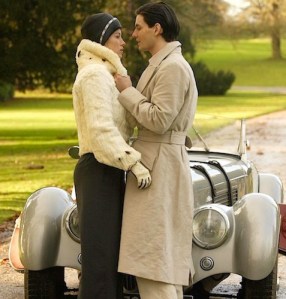
The plot concerns a young aristocratic Brit bringing his new American girlfriend — shockingly, a divorcee racing driver — back to his family’s stately home. The family are old money — the proper kind, where all the money’s gone. Cultural clashes and all sorts of other hijinks follow. Hilarity, with pleasant inevitability, ensues.

Obviously Easy Virtue is, primarily, a comedy. Fortunately, it’s frequently hilariously funny. You’d expect nothing less from a work taken from Coward, I suppose, and it doesn’t disappoint… well, didn’t disappoint me — as we’ve seen, others are a different matter. But hush, we’ll try to ignore them for the moment. There’s a decidedly wicked streak to the humour at times (a subplot about the fate of the family Chihuahua; lots of double entendres), which is welcome. The overall tone is light, largely, but not light in the head.

Director Stephan Elliott adds something extra to the wit with his choice of a wonderfully inventive soundtrack. (No disservice to those directly in charge of the music, but I’m certain I read somewhere — Couples and carspossibly in the soundtrack CD’s liner notes — that the following was Elliott’s idea.) Standards from the era are present and correct, but Cole Porter-styled reinterpretations of modern songs like Car Wash and Sex Bomb raise a smile whenever they turn up unexpectedly. It’s fabulously cheeky.

My notes also add that it is “beautifully shot [and] magnificently directed”, but unfortunately I come up short for examples after so long.

It’s not all giggles, though: there’s some surprisingly deep drama and emotions tucked in here, like the truth about Jessica Biel’s character’s past, central to the climax of the film. Naturally it falls largely on the cast to make this work, and they certainly do. The performances are frequently exceptional, especially Colin Firth, who negotiates the humour and drama with ease — his recollections of World War One being one of the darker points, for instance. I’m not entirely sure why but I have a distinct dislike of Kristin Scott Thomas, but here she’s very good as the nasty, coldly cruel mother.

I also particularly want to highlight Phillip, the awkward brother of the neighbours, and as such a minor character, played by Christian Brassington. This is the kind of character who turns up in plenty of comedies; a role that usually stops at “bumbling fool who likes the lead female but has no chance in a sweet, humours kind of way” (succinct, I know). Here, however, the character is redeemed at the end, when he tells a nasty character how cruel she’s been and aids in the ‘rescue’ of said lead female when she’s embarrassingly stranded. Colin Firth is always excellentIt’s still not a big part, nor a showy one, but those little closing tweaks left him standing out for me.

Describing Easy Virtue in a single word is easy: “underrated”. A shame that’s the word to reach for, but equally I’m not sure what other could appropriately encapsulate it. Witty, cheeky and irreverent, with surprisingly dramatic undertones — perhaps “jolly good fun” would suffice. Apart from that being three words.

5 out of 5

Easy Virtue placed 8th on my list of The Ten Best Films I Saw For the First Time in 2011, which can be read in full here.

Law Abiding Citizen: Director’s Cut (2009)

2011 #63
2009 | F. Gary Gray | 118 mins | Blu-ray | 18

Law Abiding CitizenLaw Abiding Citizen is a revenge movie with a (slight) difference: wronged man Gerard Butler isn’t just going after the two criminals who invaded his home and murdered his wife and daughter — he’s going after the legal system that let one of the men walk free.
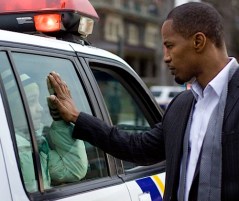
As I say, the film begins in the home of Butler’s character, an apparently quiet family man of unclear occupation (you won’t notice this first time round — why would they clarify his occupation? what would it matter? — but it does become significant later) with a wife and a young daughter. Two men break in to rob them. One is uncertain, wants to be done and gone; the other is more aggressive — he ties them up, he attempts to rape the wife, and, ultimately (and off screen) murders the wife and daughter and leaves Butler for dead.

Months later, attorney Jamie Foxx strikes a deal: one of the attackers will get a reduced sentence for informing on the other, guaranteeing him the death penalty. Butler objects but Foxx is having none of it — the deal will be done. And then we learn that it’s the objector who’ll be getting the death penalty, while the actual murderer gets the reduced sentence. Foxx goes home, to his pregnant wife, fairly sure he did the right thing.

Ten years later… Foxx’s kid is now a similar age to Butler’s when she died. He still does the same job, by the same rules. Law abiding lawman?He attends the execution of the aforementioned criminal, but something goes wrong — instead of going to sleep with a lethal injection, the attacker suffers an agonising and horrific death. Someone must have swapped the chemicals. The prosecutors’ thoughts leap to the other criminal, but I’m sure we’ve all guessed who’s really behind this. And so Butler’s sprawling revenge mission begins…

Normally I don’t spend three paragraphs outlining the plot of a movie — heck, normally I don’t grant it one (plot descriptions are easy to come by these days) — but I think the setup for Law Abiding Citizen is what makes it more interesting than your regular revenge movie. Despite it looking like a simplistic action movie, we’re actually presented with a situation where there are no clear-cut heroes and villains. Butler is wronged, he wants the killers of his family to suffer — normally, this vigilante is the hero. But did the accomplice deserve such agony? And what of the legal system he sets his sights on next, murdering lawyers and judges and the like. He’s a terrorist, normally the villain. Similar goes for Foxx — he’s the attorney, the good guy, he locks up criminals… but he’s part of a corrupt system that let a guilty man go more or less free with no thought for the truth or just punishment. So he’s not exactly a clean-cut hero either.

This isn't SpartaOn the issue of who the film thinks is good and who it thinks is bad, Empire’s review asserts that “Death Wish vigilantism goes too far when you no longer grasp who you are supposed to be rooting for.” But isn’t that part of the point? Oh, wait, she’s headed me off on this one: “One might argue for the defence that this is meant to be provocatively subversive, with the ‘good guys’ becoming indistinguishable from the bad. The jury doesn’t buy it.” Well, I buy it. Both the lead characters are supposedly the good guys, but both do bad things to one degree or another. The film challenges us about who to side with. Sure, some viewers will come down hard one way… but some viewers will come down hard the other. Plenty of the rest will be left somewhere in between, sympathising with the wronged man but abhorring the extremes to which he goes. And what of Foxx at the end, who on the one hand has learnt his lesson (or says he has), but on the other resorts to the same kind of violent tactics employed by his opponent. Is he in the right now? Well, I suppose he did approve of the death penalty all along. Tsk, Americans.

There is action and violence in the film, and I’m sure that appeals to some viewers, but it’s not wholly central and not distracting from the other offerings: both the debatable morals mentioned above, and the mystery of how Butler is affecting his campaign of vengeance from within a maximum-security prison. This is where his previously-unmentioned prior occupation becomes relevant, but I won’t go that deep into the plot here. Some find the final act, where this is ultimately revealed and explained, to be a ludicrous step too far. BoomIt is a little far-fetched, granted, but it’s not so outside the rules the film sets up for itself that I find it unacceptable.

As for the violence, it can be a little extreme, but mostly it isn’t. One sequence threatens to be the definition of torture porn, but other than a verbal description we’re spared the majority of the gory details. The Director’s Cut runs about 10 minutes longer than the theatrical, and yes includes a smidgen more gore (though a graphic shot of a disembodied, mutilated head might be considered more than a smidgen), but seems to be largely made up of short character scenes and insignificant extensions to a variety of sequences. The film was cut to get an R in the US after being awarded an NC-17; this is officially released unrated, but I think we know what that means. (Both are 18 in the UK.)

Law Abiding Citizen seems to be far more popular with audiences than critics: on Rotten Tomatoes the critic score is a measly 25%, but the reader score is 77%; on IMDb it ranks 7.2; and on LOVEFiLM it has a solid four stars (and they allow half-stars). I must be more of a viewer than a critic, then, because I liked it. It is distasteful in a way, but, like its lead character, it has a point to make in a bold and attention-grabbing manner. Sure, you could make a more intelligent movie debating these points in a reasonable fashion, but you’re not going to interest the same audience — again, the same strategy employed by Butler’s character.

Heroes or villainsAs an action-thriller that actually has something to think about wrapped up in it, I considered being a bit lenient in my score (much as I was to The Condemned). It’s let down by a few things though — its own far-fetchedness, especially toward the end, plus being generally overblown — so I’ve eventually gone on the lower end. Maybe I should start using half-stars after all
3 out of 5

Jonah Hex (2010)

2011 #59
Jimmy Hayward | 81 mins | Blu-ray | 15 / PG-13

Jonah HexJonah Hex is not a good film. Let’s just establish that, before I start being nice about it.
In fact, you don’t need me to be nasty about it — there are plenty of reviews that do that already. Those I’ve read are largely accurate. Despite that, I kind of liked the film, and not because I wanted to. I’ve read a few of the recent comics and enjoyed them, but this version isn’t really like those — they’re straight Westerns, whereas this iteration returns to a supernaturally-tinged version of the comics from some time in the past.

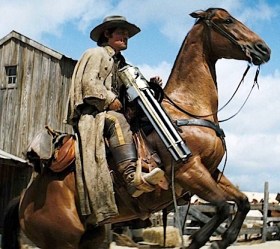
It’s difficult to know where to begin trying to praise Hex because, as I’ve implied, there isn’t much to praise. Unless you’re a 12-year-old boy, that is. Horses with Gatling guns! Giant cannons firing explosive balls! Corpses coming to life! Megan Fox’s corset-boosted cleavage! The undemanding pre-/early-teen is well catered for here. Possibly the undemanding child-minded adult too. I don’t think that’s why I enjoyed it though.

The movie is unrelentingly comic book, if one can use “comic book” as an adjective. Look at that last paragraph again: horses with Gatling guns? The physics of that boggles. But it has a certain Cool. The same for the ridiculously huge cannon that fires some kind of magic exploding cannonball. It doesn’t make historical sense, or even modern-science sense, but it is… well, it’s a Big Gun that makes things Blow Up. Awesome! A horse. With Gatling guns.Much of the film rattles on in this way. And rattle it does: 73 minutes before credits. As blockbuster running times spiral out of control, such brevity is almost welcome. It doesn’t feel exceptionally short, mind, except for when the plot occasionally jumps forward.

As the lead, Josh Brolin growls along marvellously. He deserves a better film. The character does too, actually. The President wants him to save America; he doesn’t care, except for that the person who needs stopping murdered Hex’s wife and child. Handy coincidence, that. There’s surely some drama to be wrung from that situation — grief, vengeance, all sorts — though no one involved seems to know how to go about it properly. The closest we get is a weird dreamy hallucinogenic fistfight. You’re right, that’s no substitute, but I did say closest.

John Malkovich does what he does as said villain. He’s been worse. Michael Fassbender is completely wasted as a henchman. I hope he was well paid. Megan Fox isn’t in it much. Her prostitute character, Hex’s new lover, is woefully underwritten and underused, turning up now and then to further the plotMegan Fox. Who has breasts. — usually improbably — or generally be a female. By “female” I mean “cleavage delivery device”. Considering her acting ability, her lack of presence is no real shame.

Jonah Hex isn’t good enough to be a guilty pleasure (like, say, The Transporter), nor bad enough to qualify as so-bad-it’s-good (like, say, Flesh for Frankenstein). Yet, while being fully aware it’s rubbish, I enjoyed myself. Not a massive amount, but a bit. Maybe it is one of those after all, then. It has a certain kind of B-movie charm, which is then intriguingly undercut by the A-list budget/promotion and awards-worthy cast. If it had been shot in Italy in the ’60s, a certain kind of person might just love it. Shot in America in the ’00s, however, its appeal probably lies with 12-year-old boys and… well, me, clearly.

2 out of 5

Harry Brown (2009)

2009 #13
Daniel Barber | 103 mins | Blu-ray | 18 / R

Harry BrownMichael Caine killing hoodies. How great does that sound? As a film premise, that’s awesome. If it doesn’t get you excited about seeing this movie, then what kind of film fan are you, eh?

A mentally mature one, probably. But hush, don’t spoil our fun — those of us who may occasionally hanker for a morally simple form of voyeuristic vigilante justice want to see Sir Michael shooting yobs who definitely Have It Coming. Harry Brown delivers this wonderfully.

Politically and morally, in a real-world sense, Harry’s actions are as questionable as those in any vigilante movie. And yet, for that, it’s hard to avoid the sense that he’s bloody well right. Even as someone against capital punishment, against unnecessarily arming the police, and so on, there’s still satisfaction in witnessing Harry carry out his revenge; justice. When police raids kick off a violent riot at the climax, there’s the thought that Harry was dealing with this more effectively; that cutting the yobs down in a swathe of machine-gun fire might be the best solution for the future of humanity. Michael Caine is Harry BrownWhich in some ways is quite a chilling way to feel. I’ll be buying the Daily Mail and watching Sky News next.

Barber’s film tries to dress itself up as plausible social drama, mind. Of course it’s more revenge fantasy wish-fulfilment, but perhaps the veneer of believability makes what happens even more satisfying. The bright side of that is the film manages to be a bit more than just a celebration of violence. It takes the moral question head on… sort of. “Where does it stop?” asks one character, once Harry’s dispatched with all but one of the main bastards who need dispatching. There’s a twist, which is neatly built up and I didn’t see coming so I won’t spoil, and it does make you briefly question, “where does it stop?” And that’s why vigilantism, or revenge in any way, is an ineffective solution in the real world. But this is a film and there comes a solution, so that’s OK. As with the rest, it is deserved, and it’s difficult not to think, “well, Harry was right, actually”.

Caine gives a stunning performance as the titular pensioner. The film bothers to invest you in the character: a man shattered by the death of his wife, the murder of his only friend, the past loss of a daughter, and buried experiences serving as a Marine in Northern Ireland. The evolution from quiet, downtrodden everyman to skilled vigilante is plausibly created — or, at least, plausibly enough. It’s to the credit of screenwriter Gary Young that he doesn’t dive to the vengeance action as soon as possible; to the credit of Barber that he’s not afraid to let the early scenes play out slowly, often with lots of silence, conveying the reality of the lonely pensioner. King of CoolWhatever you may think of the revenge thriller it turns into, I think it’s hard to deny these early scenes have a realism and power. It is, of course, to the credit of Caine that he performs all this flawlessly. Oh yes, he’s (to quote another review) “the king of cool” when blowing away the scum that surround him, but before that he’s an affecting old gent, abandoned by the world.

Comparisons with Death Wish should probably be made, because yes, they do have much in common. Harry Brown is more skilled, though: Caine out-acts Charles Bronson at every turn, and Barber clearly is a director of not inconsiderable talent, something Michael Winner patently is not. The structure is the same, really — motivation from a brutal attack on the closest person to our lead character; spurred by his general feeling of useless ineffectiveness in the face of the modern, violent world; a long, steady slide downhill before our hero turns to vigilantism; his struggle to pull off the attacks — he’s no superman, they don’t go perfectly. But Harry Brown feels superior. Perhaps because it’s more vital to our times — this is a situation occurring in our country right now, not a somewhat abstract rape and murder. Not that those aren’t foul crimes, but Harry Brown has more of a relevant social conscious. Killing criminalsThe counter to that would be that a murder spree may be viscerally satisfying but isn’t a real-world solution, so this is just as useless at relevancy as Death Wish.

One might also argue that Harry Brown loses Death Wish’s strongest aspect: Bronson never gets the men who attacked his family, only able to exact vengeance on criminals he happens across; Caine, on the other hand, gets to attack those responsible… and a couple of others who are peripherally connected and at least as deserving of his bullets. It’s more narratively satisfying to get revenge on the actual perpetrators, but not always as realistic. While that is a strength in Death Wish, it doesn’t make Harry Brown a lesser film for not following the same path. This is a different story, despite the similarities — it’s set in a more confined area, with more specific problems, and the murder is the catalyst for Caine’s character to take action against the people who are perpetrating all the crime, not just the particular one that galvanises him.

This is the kind of movie that can polarise an audience. For one thing there’s lurid and extreme language and violence, and lots of it — this well earns its 18 — but it is, largely, justified by the context. Beyond that, there are a lot of political and moral implications raised by the film’s realist tone. Harry Brown is Michael CaineSome will think it tackles these, others that it’s just a facile revenge movie; some will think it’s cool, others despicable; some will think it plausible, others anything but. Or maybe, rather like me, you’ll think it’s all of those things, however mutually exclusive they may seem.

Harry Brown is satisfying when you know it probably shouldn’t be, and because of that it’s also thought-provoking, and because of those things it’s five stars from me.

5 out of 5