Waxworks (1924)

aka Das Wachsfigurenkabinett

2020 #232
Paul Leni | 82 mins | digital (HD) | 1.33:1 | Germany / silent | PG

Waxworks

Often billed as the first portmanteau horror movie, Waxworks only fits the bill in the loosest sense: its “three stories” are actually two stories and a dream sequence, the first (and longest) of which is, if anything, a swashbuckling farce.

But I’m getting a little ahead of myself. The film begins with a young writer (William Dieterle, who would later become a Hollywood director, responsible for 1938 Best Picture winner The Life of Emile Zola, amongst others) who is hired to pen backstories for the four statues in a carnival wax museum. Yes, four — the filmmakers ran out of money before they could film the fourth tale. As he begins writing, into each story he injects both himself and the museum’s curator’s daughter (Olga Belajeff) as his love interest.

The first tale is set in Arabian Nights-style Bagdad (IMDb says this part inspired Douglas Fairbanks to make The Thief of Bagdad, but a quick look at their release dates shows Fairbanks’ film came out months before Waxworks), and concerns a lecherous Caliph (Emil Jannings) who sets his sights on wooing a baker’s wife. It’s quite a sexualised segment all round: the baker kneads dough so erotically it sends his wife (and himself) all aquiver (I doubt it’ll do the same for many viewers, but it clearly works for them); later, the disguised Caliph sneaks into the baker’s home and spies the wife lying in bed with her back to him, and his gaze (and, by extension, ours) clearly lingers on her bottom (clothed, lest you think the film is uncommonly explicit). I guess the characters were too busy perving to apply logic to their decision-making: when the baker is too wary to slip a ring off the sleeping Caliph’s finger, he decides to chop his whole arm off instead. Totally reasonable. Meanwhile, why is the all-powerful Caliph worried about being found out by a lowly baker? Indeed, why’s he so worried that his guards will know he sneaks out at night? He’s the boss! On the bright side, there’s some beautiful and striking Expressionist set design; an exciting chase scene, set to dramatic percussive music in the new score by Bernd Schultheis, Olav Lervik, and Jan Kohl; and the wife’s save at the climax is a cunning twist. But, overall, it’s a bit of a daft farce.

Arabian nights

The second story stars Conrad Veidt as a Rasputin-esque Ivan the Terrible, who revels in killing prisoners in the Kremlin’s dungeons with an ultra-specifically-timed poison. If that wasn’t clue enough, this segment is thematically much darker. A bride’s father invites Ivan to attend the wedding, then the Czar insists they switch roles to travel there and the dad is killed by mistaken assassins. Then his arrow-pierced corpse is unceremoniously dumped on the front steps of his home while the wedding banquet continues inside; and when daughter sneaks away to grieve over his body, Ivan has some guards snatch her; and when the angry groom tries to attack Ivan, he’s ordered off to the torture chamber. Puts people who complain about rain on their wedding day into perspective, doesn’t it? Veidt is great as the deranged Ivan, although he’s so mentally unstable that it borders on comical. The finale doesn’t make much sense (he lets the girl go… then doesn’t?), but the denouement delivers a neat and fitting fate to Czar Terrible.

The third and final story begins with just five minutes of screen time left, so you know it’s not going to be wholly-realised tale. (Incidentally, the original German version of the film is lost, leaving us with only the English version, which is about 25 minutes shorter. What’s in those minutes? If anyone knows, they’re not saying online (to the best of my knowledge). Perhaps there was more linking material in the museum? Perhaps the third ‘story’ really was a whole story? Perhaps the first two were once even longer, though it’s hard to imagine how much more there could be to do in either of them — maybe the cuts were for the best…) Anyway, the third segment is the aforementioned dream sequence, in which the waxwork of Jack the Ripper comes to life and pursues the writer and his love (they met earlier that day but already seem pretty committed) through a series of highly impressionist sets, their disjointed oddity exacerbated by differently-aligned multiple exposures. It’s Expressionism to the max, and it’s suitably effective as a chiller. But, of course, it’s all a dream… and that’s suddenly the end!

Ivan's terrible, but Veidt's great

Like so many of the portmanteau films that have followed in its wake, Waxworks struggles to be the sum of its parts. It’s ultimately a bit underwhelming, with the first two stories being slower than necessary (and this is the cut version!) before giving way to a rushed finale. Make no mistake, there’s some very nice stuff in here, but it comes in bits and pieces. It’s a welcome watch for fans of silent cinema or early horror (with caveats about its “horror” content duly noted), and there are enough good parts to recommend it, but I wouldn’t argue it’s a classic in any enduring sense (beyond its obvious influence as a stepping stone to future portmanteau films).

3 out of 5

Waxworks is streaming on AMPLIFY! until 22nd November, and is released on Blu-ray as part of the Masters of Cinema Series today.

Also, new on AMPLIFY! today are…

  • what sounds like a German riff on Whiplash, but with violins, in The Audition
  • a documentary about the drawbacks of algorithms, Coded Bias
  • the UK premiere of Viggo Mortensen’s directorial debut, Falling
  • Catalan coming-of-age drama The Innocence
  • and unusual found footage documentary My Mexican Bretzel.

(If you don’t know, “bretzel” is the German word for “pretzel”.)

Disclosure: I’m working for AMPLIFY! as part of FilmBath. However, all opinions are my own, and I benefit in no way (financial or otherwise) from you following the links in this post or making purchases.
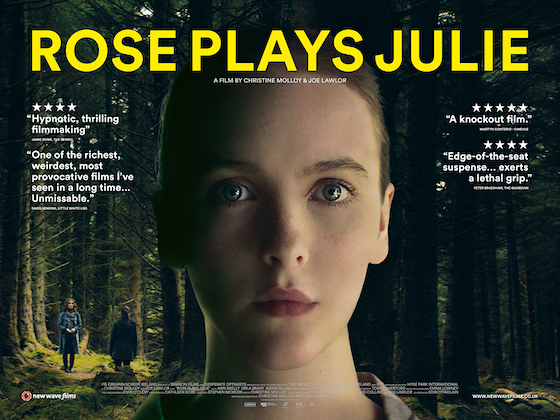
Rose Plays Julie (2019)

2020 #239
Joe Lawlor & Christine Molloy | 101 mins | digital (HD) | 2.39:1 | Ireland & UK / English

Rose Plays Julie

Long Lost Family meets rape revenge thriller in this Irish drama about a veterinary student, Rose (Ann Skelly), who was adopted as a baby and now decides to finally meet her birth mother, Ellen (Orla Brady), only to uncover a dark secret about their shared past. Well, I’ve kinda given away the ‘secret’ in my opening ten words, haven’t I? My apologies if you’re a total spoilerphobe, but here’s the thing: some blurbs and whatnot try to conceal that reveal (and when it comes in the film, it is played as a revelation; more on that in a bit), but, frankly, even if you haven’t already had it spelled out (and most reviews don’t try to hide it), it’s pretty easy to guess where things are going — perhaps even from reading one of those oh-so-oblique blurbs (that’s when I figured it out).

But this isn’t your standard rape revenge movie. The act itself is historical, with only its aftermath shown in a couple of fuzzy flashbacks — this isn’t one of those trashy flicks that has its cake and eats it by ickily revelling in the assault before also enjoying the violent vengeance. And instead of the avenger being a dismayed husband/partner, or the (attractive, young) wronged woman who’s suddenly an expert assassin, it’s the daughter who came of it. If you’re after the visceral thrills of the aforementioned kind of rape revenge movies, you won’t find them in this slow-burn, introspective drama; but if you’re open to that style, the mother-daughter angle of how it approaches its subject matter is a unique element.

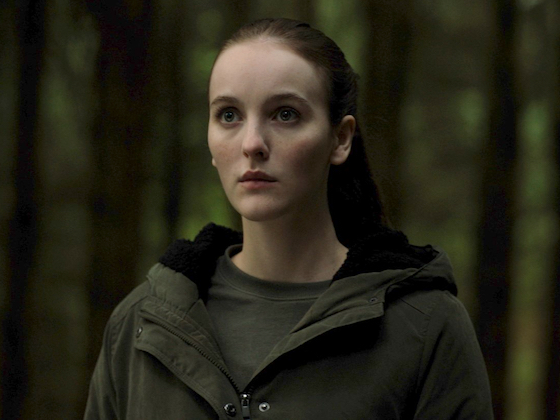
This is where the Long Lost Family part remains relevant, because the tentative new relationship between Rose and the mother who gave her up two decades ago is almost a big a part of the film as her seeking out and confronting her biological father. This rides a lot on Skelly and Brady as actors, because writer-directors Joe Lawlor & Christine Molloy aren’t the sort of filmmakers who write big speeches where their characters explain their feelings — quite the opposite. Instead, we study their passive faces in extended closeups, trying to discern what’s going on as they think things over. One of the most outwardly expressive moments comes when Ellen reveals their shared past to Rose, in a blunt statement just hours after they’ve first met. It’s probably not the best way to go about telling someone that was how they were conceived, but it makes for a slap-in-the-face moment of drama, and Skelly’s reaction is powerful: she doesn’t ‘do’ anything, but her face changes entirely.

The secret comes out

The film’s quiet, subtle mode must be challenging for an actor — no grand emotive speeches to show off with — but this cast are up to the challenge. Skelly is obviously the standout, letting through just glimmers of reaction that allow us to understand how much she’s struggling with all this troubling new information. Brady is very good also, even though I feel like some of her character arc has been left offscreen, between scenes. Rose’s father, Peter, is played by Aidan Gillen, who always excels at embodying smarmy bastards, and that extra-textual awareness helps him to, again, keep his performance mostly subdued and realistic. He’s not some overt monster stomping across everyone’s lives, but an outwardly nice guy with an evil core.

The film’s biggest detriment is that it perhaps takes its serious subject matter a bit too seriously. It’s a very portentous film, in which the restrained performances, gloomy photography, slow-burn pace, and ominous music combine to create an intensely fateful atmosphere. Something is, inevitably, going to happen… eventually… On the one hand, it means that, as Rose gets in deeper, the tension steadily begins to grow. On the other, I’m aware some viewers think it’s so self-serious that it tips over into being laughable. There’s something to be said for varying your tone.

Conversely, I can see why Lawlor & Molloy weren’t in the mood for levity: this is a film about two women, damaged in different ways, who need to come to terms with what has happened to them; both searching for something, even if they don’t know it. You could argue, even, that applies to three people, because Gillen’s character also comes to realise he’s broken — though, in his case, how much sympathy we can feel for him is a whole other discussion. And mixed into all that are major ethical dilemmas: reaching out to birth parents who requested no contact; euthanising healthy animals (if you’re squeamish about injured and dying animals, do not apply); and, by extension, the question of what is appropriate restitution for transgressive behaviour by humans.

Peter the rapist

The latter leads to an ending that I’m not sure how I feel about (massive spoilers follow!) Peter is killed by Ellen, but only because he acquiesces — he accepts what’s happening and allows Ellen to finish it. It’s not exactly suicide (he wouldn’t have done it if Ellen hadn’t turned up and stabbed him with a syringe full of poison), but, by the end, he’s also not protesting. He accepts his guilt and punishment; almost seems to welcome the relief, in fact. If only all rapists were so helpful… and the fact they wouldn’t be is what makes this such a grey area. But then, maybe that’s the point: the film isn’t arguing that this is how things should be done, but asking the question: is this ok? If not, what would be? On another level, from a story structure perspective, it feels somewhat unsatisfying that Rose isn’t involved, after the rest of the film was primarily about her. That might be morally correct (it’s really Ellen’s trauma to deal with), but it feels wrong dramatically to end the film with resolution for Ellen more than for Rose.

Between its heavy issues and unwaveringly doom-laden tone, Rose Plays Julie is not a light viewing experience. If you like the idea of slow-burn dramatic thriller that spends a lot of time focused on people’s still faces as they process information silently and internally, and leaves you with a lot to chew over when it’s done, this is a film for you. If you think that sounds inscrutable or dull, steer clear.

4 out of 5

Rose Plays Julie is streaming on AMPLIFY! until Thursday 12th November. It includes a half-hour Q&A with the directors, actor Orla Brady, and composer Stephen McKeon.

Disclosure: I’m working for AMPLIFY! as part of FilmBath. However, all opinions are my own, and I benefit in no way (financial or otherwise) from you following the links in this post or making purchases.

The Mole Agent (2020)

It’s Day 2 of the AMPLIFY! film festival (new content goes live at 1am, FYI). Among today’s additions is the UK premiere of The Mole Agent — one of 18 UK premieres that are part of the festival.

My review of that in a moment, but first, also debuting today are…

Incidentally, I’d recommend Rose Plays Julie, an engrossing and powerful psychological thriller (I’ll review it in full soon, time permitting).

The Mole Agent
(2020)

2020 #231
Maite Alberdi | 90 mins | digital (HD) | 1.85:1 | Chile, USA, Germany, Netherlands & Spain / Spanish

The Mole Agent

It’s easy to make The Mole Agent sound like the setup for a comedy: it’s about a doddery 83-year-old who must learn to be a spy. And, indeed, there are scene where the film is very amusing; particularly early on, when the octogenarian in question, Sergio Chamy, struggles to get to grips with the technology he’ll need to use, much to the exasperation of his spymaster, Rómulo Aitken.

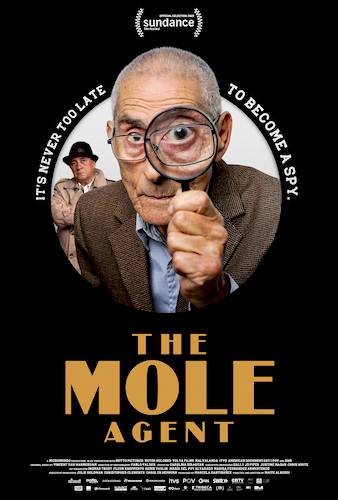
Except that premise, which the film has leant its promotion on (note the tagline on the above poster: “it’s never too late to become a spy”), is slightly misleading. Aitken isn’t a spymaster, he’s a private detective, who’s been hired to investigate allegations of abuse at an old people’s home — hence the need for an old person to go in as an undercover observer. It’s not exactly Bond, or even Le Carré, is it?

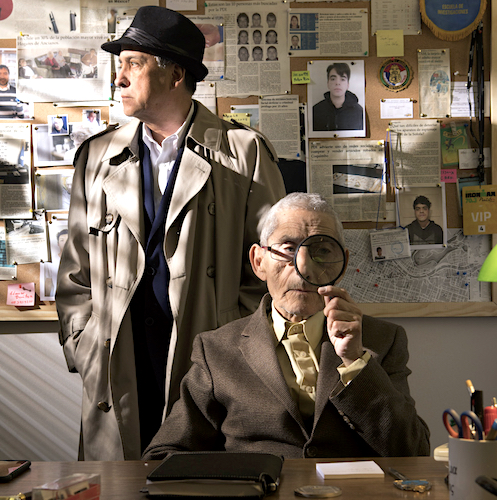
Indeed, director Maite Alberdi leans into a different genre — film noir — shooting the early briefing scenes with a heavy use of venetian blinds, either peering through them or employing their distinctive shadows. It’s a level of visual panache you’re not used to from a conventional documentary. It might lead you to question if what you’re watching was entirely documentary in nature, were it not for the fact that these scenes take place in the ‘safety’ of the PI’s office —it’s not unreasonable to assume the film crew semi-staged a couple of ‘scenes’ to add a bit of visual interest. (They clearly did it for the promo photos, too. I mean, just look at this one…)

Secret agent men

The real questions of form begin to emerge once Sergio begins his undercover mission. To be able to film what he’s up to, the documentary crew have inveigled themselves into the same old people’s home with the cover story that they want to make a film about a new resident — so when Sergio turns up, what a perfect coincidence, and excuse to focus their filming on him. Except… if this care home is abusing its residents, are they going to continue doing that with a film crew present? Heck, surely they wouldn’t even agree to a film being made at all?

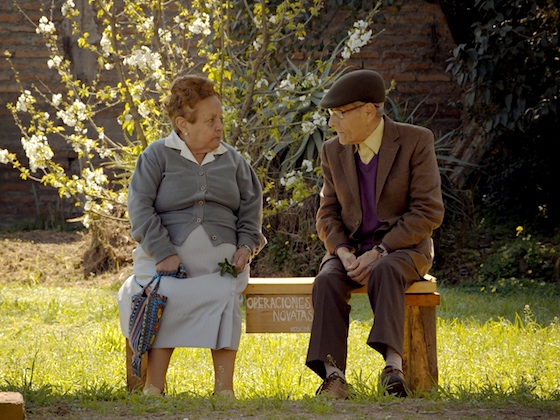
Well, the whole investigative goal goes out the window pretty quickly, anyway. Sergio is initially diligent about snooping around and secretly recording his reports for Rómulo, but he soon begins to make friends and become involved in the life of this little community. The other residents become his friends, and he’s more invested in their wellbeing as their comrade than as an outside observer. Concurrently, the film becomes less interested in the comedic fumbles of an octogenarian secret agent, and more in exploring the lives of these old people. Sergio’s fellow residents aren’t faceless possible-victims, but characters we get to know too.

What Sergio ultimately finds (spoilers!) is neglect — not by the staff, but by the families that shoved their elders away and forgot about them. For the film, that’s a much bigger observation; one on the state of society as a whole, rather than the misdeeds of a single care home. (If anything, the home is wholly vindicated, because we see how much they care for and support their residents.)

Friends to the end

If The Mole Agent has a fault it’s that it can be a little slow at times — though, given the pace these (often delightful) oldies move at, perhaps that was unavoidable. But it’s worth the investment nonetheless, because it’s ultimately a powerfully affecting experience. It’s a film that intrigues you with its laughable premise, then swings round to punch you in the emotions with a crystal-clear message.

4 out of 5

The UK premiere screening of The Mole Agent is on AMPLIFY! until Friday 13th November. It’s on general release in the UK from 11th December.

Disclosure: I’m working for AMPLIFY! as part of FilmBath. However, all opinions are my own, and I benefit in no way (financial or otherwise) from you following the links in this post or making purchases.

The 100-Week Roundup XIV

I love deadlines. I like the whooshing sound they make as they fly by.

While I’ve been busy with FilmBath and AMPLIFY!, a lot of review dates I intended to hit have flown by, which naturally brought to mind the Douglas Adams quote above. All those reviews that would’ve tied in to something now won’t, but they’ll find a home here someday.

In the meantime, I’m far behind on my 100-week roundups, which is why I’ve put some energy into this little lot. They finish up my reviews from October 2018, as well as dipping a toe into the waters of November 2018. It’s a mixed bag in every sense: very different genres; very different styles; very different ratings…

The films in question are…

  • It’s Such a Beautiful Day (2012)
  • The Lives of Others (2006)
  • Jennifer’s Body (2009)
  • Going for Golden Eye (2017)


    It’s Such a Beautiful Day
    (2012)

    2018 #218
    Don Hertzfeldt | 62 mins | Blu-ray | 1.33:1 | USA / English

    It's Such a Beautiful Day

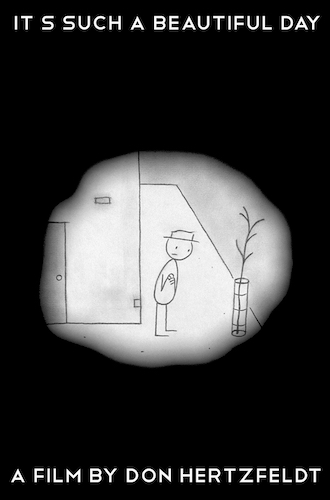
    In 2014, when Time Out New York ranked It’s Such a Beautiful Day 16th on their list of the 100 Best Animated Movies Ever Made, critic Tom Huddleston described it as “one of the great outsider artworks of the modern era, at once sympathetic and shocking, beautiful and horrifying, angry and hilarious, uplifting and almost unbearably sad.” That’s a description I’m about to singularly fail to better.

    Animator Don Hertzfeldt enjoys a cult following — you might never have heard of him (though chances you heard about his Simpsons couch gag, if nothing else), but if you have, well, you have. After releasing numerous shorts, It’s Such a Beautiful Day was his first feature — and, indeed, it was first released as a trilogy of short films between 2006 and 2011. Hence my notes break down into three parts, which I shall now share unedited…

    Part 1, Everything Will Be OK. Okay, so, this is weird. Interesting depiction of some kind of mental collapse (I guess we’re meant to infer it’s a brain tumour). Odd everyday events — what does it mean? Maybe that’s the point — Bill [the central character] is pondering what it all means too, after all.

    Part 2, I Am So Proud of You, is like, “you thought that was weird? Get a load of this!” A lot of it seems to be weird — what some people would describe as “disturbed — just for the sake of it. But at other times, it’s almost casually profound. There’s something interesting about its relationship to time and the order of events, or at least the presentation of the order of events.

    Part 3, It’s Such a Beautiful Day. See above. It’s interesting that it was three short films, made over a period of six years, because it really does feel of a piece. Maybe it was just easier to fund/produce shorts rather than a feature, and this was always the end goal.

    Well, there you go. This is not an animated movie for everyone (if you think “animated movie” means “Disney musical”… hahaha), but it’s certainly something unique and special.

    4 out of 5

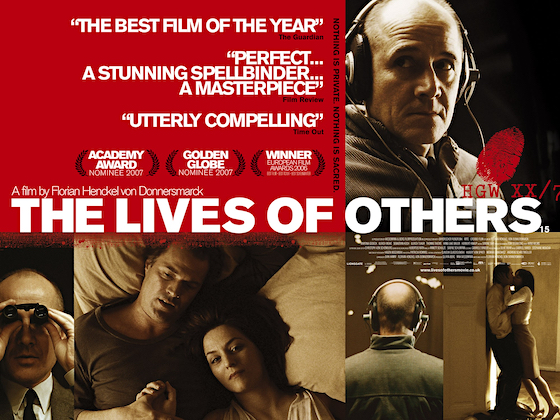
    The Lives of Others
    (2006)

    aka Das Leben der Anderen

    2018 #220
    Florian Henckel von Donnersmarck | 137 mins | digital (HD) | 2.35:1 | Germany / German | 15 / R

    The Lives of Others

    In 1984 East Berlin, an agent of the secret police, conducting surveillance on a writer and his lover, finds himself becoming increasingly absorbed by their lives.IMDb

    This German movie won the Best Foreign Language Film Oscar and BAFTA (as well as a host of other similar awards), and is currently ranked as the 59th best film of all time on IMDb. It lives up to its accolades. It’s tense and thrilling like a spy movie; emotionally and politically loaded like an art house drama.

    Of particular note is Ulrich Mühe, superb as the increasingly-conflicted Stasi agent. He conveys so much with so little — the character’s massive ideological change is all portrayed as inner conflict. I was wondering why we hadn’t seen a lot more of him since, but sadly he passed away the year after the film came out, aged just 54.

    As the film focuses so much on him, it might be easy to underrate the technical merits, especially because they’re unobtrusive; but it’s perfectly shot by Hagen Bogdanski, with crisp, cold, precise photography. As for writer-director Florian Henckel von Donnersmarck, his followup was infamous Johnny Depp / Angelina Jolie vehicle The Tourst, a film so maligned it seems to have derailed his career. Shame.

    5 out of 5

    The Lives of Others placed 24th on my list of The Best Films I Saw in 2018. It was viewed as part of What Do You Mean You Haven’t Seen…? 2018.

    Jennifer’s Body
    (2009)

    2018 #222
    Karyn Kusama | 102 mins | digital (HD) | 1.85:1 | USA / English | 15 / R

    Jennifer's Body

    Jennifer’s Body didn’t go down well on its original release, but the past few years have seen it develop a cult following, with people regularly recommending it on social media as an under-appreciated horror flick. I didn’t dislike it, but I’m not ready to join their ranks.

    You can see what they were going for, in some respects — it’s trying to be a very feminist horror movie, with the female friendship at the core and so on. And yet, despite the female writer and female director and female stars, chunks of it feel so very male fantasy. I mean, Megan Fox goes skinny dipping for no reason. We don’t see anything explicit, but I’d wager that has more to do with Fox’s contract than authorial intent. Later, there’s a lingering kiss between the two girls that looks like it’s trying its hardest to best the famous one from Cruel Intentions. And talking of references, the whole film sounds like it’s trying really, really hard to be Heathers, with an overload of slang ‘n’ shit. It’s a bit, well, try-hard.

    Megan Fox is surprisingly good though, and there are some neat bits of direction, like the intercut murder/virginity-losing scene. It’s just a shame the whole film doesn’t show that kind of consistency. It did grow on me as it went on (I’m not sure if it took me time to settle into its rhythm or if it just had a clunky start), though exactly how much is debatable: it ends up being a moderately entertaining comedy-horror, but one that’s never really scary and rarely that funny.

    3 out of 5

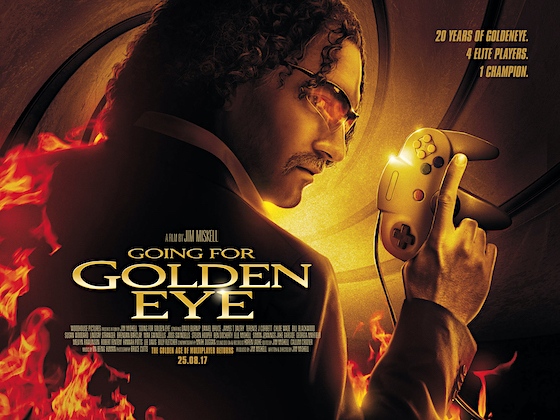
    Going for Golden Eye
    (2017)

    2018 #224
    Jim Miskell | 60 mins | digital (HD) | 16:9 | UK / English

    Going for Golden Eye

    According to IMDb trivia, this is “the first video game mockumentary”. Well, you’re not going to mistake it for a real documentary — the acting is uniformly amateurish, which is one of the film’s biggest hindrances (it certainly gets in the way of selling the documentary conceit).

    Making allowances for such amateur roots, the film does manage some decently amusing bits, although just as many that don’t land. Very little about it will surprise or delight, but more forgiving or nostalgic viewers may be tickled at times. Plus, you have to have a certain amount of admiration for zero-budget filmmakers who managed to produce and get distribution for their film. Even if there’s an occasional for-friends-and-family feel to parts of it, they’ve still completed something many wannabes only dream of.

    Outside of aforementioned relatives, this is only really going to appeal to people with nostalgia for playing GoldenEye on N64 back in the day. In a way, the best part of the whole film is the opening montage about how GoldenEye was unexpectedly great, bucking expectations of both movie tie-in games and first-person shooters. A genuine well-made documentary about the game — why it was so important; what made it so popular — would be interesting…

    2 out of 5

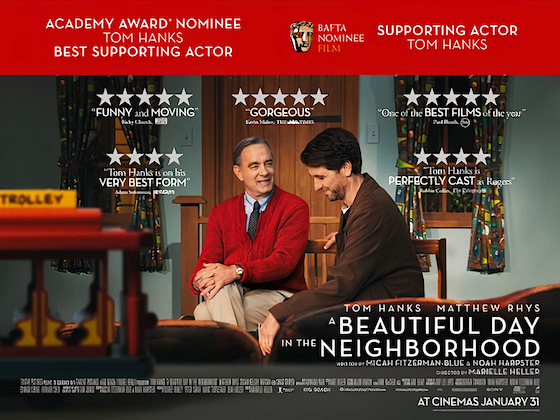
  • A Beautiful Day in the Neighborhood (2019)

    2020 #195
    Marielle Heller | 109 mins | digital (UHD) | 1.85:1 + 1.33:1 | USA & China / English | PG / PG

    A Beautiful Day in the Neighborhood

    Thanks to the ubiquity of their films and television programmes, American culture permeates the world. Even if something isn’t directly exported, there are enough references to it in other media that we all get to know it by osmosis. (If you think I’m exaggerating, here’s one example: there are many documented cases of people trying to “plead the fifth” when being interviewed by law enforcement in countries where the fifth amendment to their constitution has nothing to do with criminal procedure.) So, it’s all the more unusual that Mr Rogers is apparently an influential part of American childhoods, but he wasn’t (as far as I’m aware) widely known outside of the US until a couple of years ago. That was thanks to the acclaim garnered by documentary Won’t You Be My Neighbor? As these things often go, that was followed by a biopic — which is this.

    However, rather than try to tell Mr Rogers’ whole life story, A Beautiful Day in the Neighborhood (a reference to the fictional land in his TV series, which is presumably why the US spelling was retained even for the UK release (except on DVD covers, etc)) focuses on one man’s encounter with Rogers. That man is Lloyd Vogel (Matthew Rhys), a cynical journalist with familial problems aplenty. He’s assigned to write a puff piece on Rogers — a couple of hundred words for a magazine issue about “heroes”. The pair seem an ill fit, but that’s the point — it’s basically a punishment from his long-suffering, usually-indulgent editor. Lloyd is initially reluctant, then sceptical — surely the whole “Mr Rogers” thing is a persona; an act? But as he spends more time with the man, it begins to change his view on the world too.

    Okay, it probably takes a while for the film to get to that point, exactly, but I’m not spoiling anything — you know that’s where it’s going. “I met this guy whose world view was so much more positive and optimistic than mine… and it didn’t affect me at all, I’m still a grumpy bastard.” That’s not a story Hollywood’s going to tell, is it? Heck, that’s not even a story. So, yeah, of course Mr Rogers’ fundamentally decent and kindly nature is going to have an impact on Lloyd.

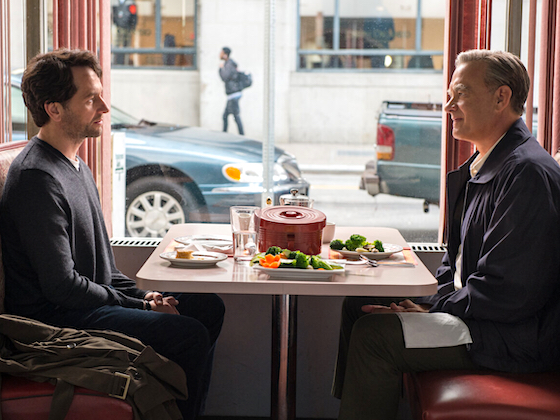
    A beautiful lunch in the neighbourhood

    Despite Mr Rogers being the focal point, then, the film is really more about Lloyd’s personal journey. But that journey is instigated and facilitated by Mr Rogers, so his “supporting character” part is vital. And who better to portray the very embodiment of decency than Tom Hanks? Rogers’ widow has said that Hanks was the perfect actor to play her husband; for his part, he’s said taking the role was “terrifying” due to the cultural significance. Hanks is as accomplished in the role as you’d expect, and it deservedly earnt his sixth acting Oscar nomination (his first in almost 20 years, and long overdue, I think).

    If it all sounds a bit predictable, director Marielle Heller dodges that with some indie-movie-esque flourishes. There’s a touch of Wes Anderson to how she uses Mr Rogers’ TV show, switching into Academy ratio to demarcate us entering a different ‘world’ — not just literally clips from the show, but bookend narration, dream sequences, location transitions, and so on. IMDb lists the 1.33:1 ratio as just being used for “TV scenes”, but I think that undersells its use and effectiveness, which is more comparable to (say) how Anderson used three different ratios in The Grand Budapest Hotel.

    Its those kind of inescapable but well-considered flourishes — plus the believable transition in Lloyd’s character, which is more grounded in reality than the “slightly unlikeable guy becomes super positive” cliché — that elevate A Beautiful Day in the Neighborhood out of the predictable or twee, and into being a genuinely heartwarming kinda film.

    4 out of 5

    A Beautiful Day in the Neighbourhood is available on Sky Cinema and Now TV from today.

    Bloodshot (2020)

    2020 #178
    David S.F. Wilson | 109 mins | digital (UHD) | 2.39:1 | USA & China / English |
    12 / PG-13

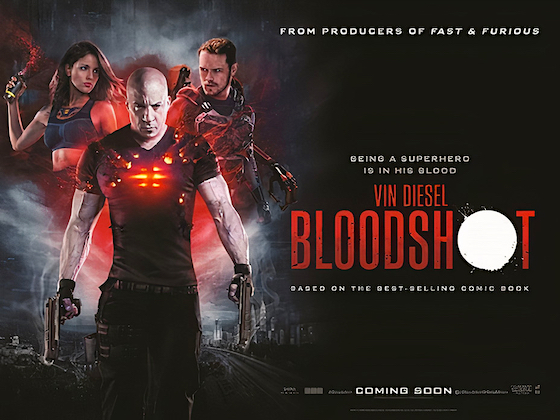
    Bloodshot

    If you only know about comic books from the movie universes they spawn, you’d be forgiven for thinking Marvel and DC are the be-all and end-all of that medium. Not so, of course. One of the other publishers with their own stable of superheroes just waiting to make the leap to the screen is Valiant, and (if you hadn’t already guessed) Bloodshot is one of theirs. Indeed, at one point it was intended that it would be an Iron Man-style jumping off point for another cinematic universe, but I can’t imagine that’s still on the cards.

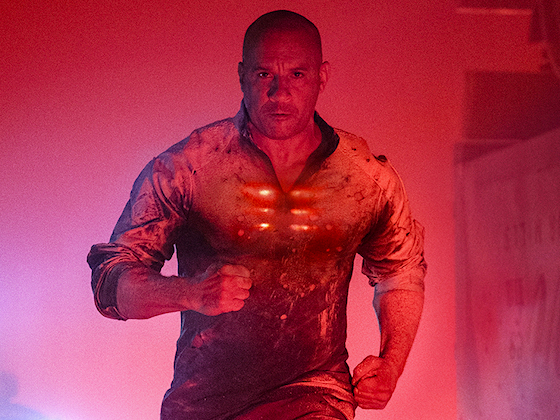
    Anyway, in this screen incarnation, Bloodshot stars Vin Diesel as Ray Garrison, a US Marine who is kidnapped and killed along with his wife… but then he wakes up, albeit with amnesia. An experimental scientific programme has seen nanite tech injected into his bloodstream, giving him increased strength and healing abilities. Increased strength? Speed healing? Amnesia? I guess he’s Cyber-Wolverine, only without the cool claws. Anyway, Ray begins to have flashbacks, and he heads off to kill the terrorists who killed him and his wife. But all is not as it seems…

    I don’t know why I’m holding back — the trailer spoiled more of the plot than that. And I’m not trying to spare you so you can enjoy the story as the movie unfolds, because Bloodshot is not a film I particularly recommend; and what is enjoyable about it has nothing to do with its storyline. That said, the twist I’ve implied exists would’ve been quite good — certainly one of the film’s higher points — if they hadn’t blown it in the trailer. The only other thrills come from its action sequences, which are passable, albeit constructed with a prominent degree of sloppiness that indicates the filmmakers either weren’t skilled enough or weren’t attentive enough to truly get it right. For example, they didn’t even bother to put British number plates on any of the cars during a chase that supposedly takes place in London; not to mention that the streets they’re darting around look nothing like the UK.

    Kind of a superhero

    Poor location scouting aside, there’s copious amounts of the computer-generated bombast that’s par for the course in a modern blockbuster. But underneath that digital set dressing, Bloodshot feels like a throwback to the comic book adaptations of 20 years ago; one of those superhero-movies-they’d-rather-weren’t-superhero-movies we got in the late ’90s or early ’00s, before X-Men and Spider-Man finally straightened everyone out. It even has the kind of plasticky CGI stunt doubles you haven’t seen in at least 15 years (Marvel & co use CGI stunt doubles all the time, of course, but they’re better done than these ones).

    Like those half-arsed efforts of old, Bloodshot is, when taken as a brain-off sci-fi actioner, mostly adequate. That’s about the best that can be said for it. I was going to say that it’s probably bland enough to scrape a passing grade, but, the further I get from it, the more it lessens in my memory. My score sides with that hindsight.

    2 out of 5

    Bloodshot is available on Sky Cinema and Now TV from today.

    Enola Holmes (2020)

    2020 #214
    Harry Bradbeer | 123 mins | digital (UHD) | 2.35:1 | UK / English | 12 / PG-13

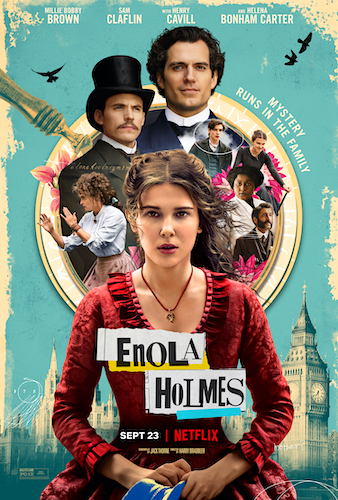
    Enola Holmes

    The latest screen incarnation of Sherlock Holmes is not really about the Great Detective at all. Instead, Enola Holmes introduces us to his eponymous young sister — not part of Sir Arthur Conan Doyle’s original canon, but a creation of author Nancy Springer, on whose series of young adult mystery novels this film is based. (Nor, I feel I should point out, was Sherlock’s Eurus drawn from canon, despite what some hardcore Sherlock fans berating Netflix’s Enola promos seem to believe.) Indeed, the film imagines a whole family for Sherlock and his elder brother Mycroft: a father who died when Enola was young; and a mother, Eudoria, who has since raised Enola to be a multi-talented, independent, forward-thinking young woman.

    But when Enola (Mille Bobby Brown) wakes on her 16th birthday, she finds that Eudoria (Helena Bonham Carter) has disappeared. She summons her brothers, famous detective Sherlock (Henry Cavill) and uptight government man Mycroft (Sam Claflin), and various clues to Eudoria’s actions and intentions are unearthed — but not always shared among the siblings, because the brothers want little to do with their younger sister, resolving to send her to a finishing school to learn how to be a ‘proper’ lady. That doesn’t fit with Enola’s plans, though, so she escapes and runs away to find her mother. On her journey, she runs into similarly young Lord Tewkesbury (Louis Partridge), who is also on the run from his family, for reasons that, it will emerge, are even more sinister than Enola’s…

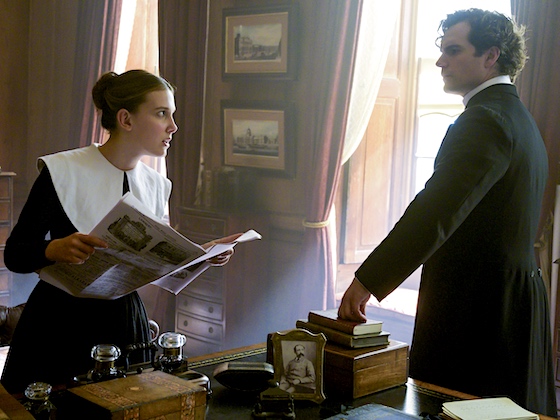
    Enola and Sherlock

    As a story set in the world of Sherlock Holmes, Enola Holmes is… well… um… Look, I’ve been fond of Henry Cavill since The Tudors, but he’s not my idea of Sherlock Holmes; and apparently Dr Watson doesn’t even exist? Sacrilege! While I can’t forgive the latter, the weird casting decision of Cavill is somewhat justified by the film itself. I’m not sure it was conceived to include a ‘traditional’ Holmes, and Cavill fits the character as he has been written: as an admirable, kindly, almost mentor-like older brother to Enola. Perhaps if they’d cast a more traditionally Holmesian actor then that person would have managed to shift it towards a traditional portrayal, but I suspect that’s not what the filmmakers wanted. Arguably that makes this a bad Holmes adaptation (if you’ve changed the style and nature of the character, is it actually an “adaptation”?), but then, it’s not really about him.

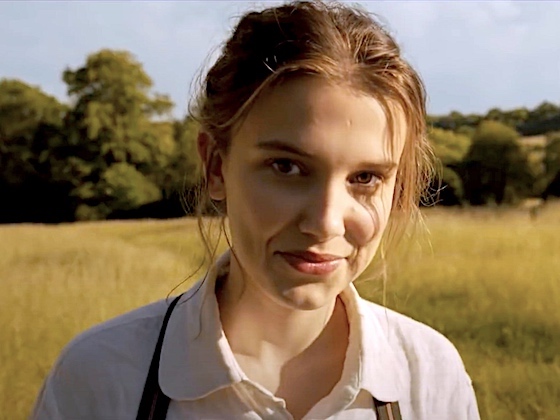
    It’s about Enola — as per, y’know, the title — and in that role Mille Bobby Brown proves that her success as Eleven in Stranger Things was not a fluke. In the wrong hands, the confident, capable, and headstrong Enola could have been brattish, but Brown brings enough charm to sweep us along. She frequently turns to speak to camera, like some kind of Victorian teenage Fleabag, which, again, could have been irritating, but mostly works to bring us into her confidence and, occasionally, underscore the fun and thrill of her adventure. However, there’s more room for nuance in how the character is written. Enola is by no means perfect, but we’re rarely allowed to see deficiencies. This works when she’s putting on a brave face to a world that would underestimate her, but a little more sense that she’s new to all this and doesn’t always get it right wouldn’t go amiss.

    Victorian teenage Fleabag

    So, while I don’t imagine Sherlockians will be inducting this into their favourite screen iterations of the Great Detective, it works as a female-led YA mystery-adventure. Originally produced by Warner Bros for a cinematic release, but sold to Netflix after the pandemic hit, I suspect this might have actually done quite well in cinemas. It’s good fun, accessible entertainment; the kind of thing that once upon a time would have been a PG-rated family blockbuster hit (nowadays it’s rated 12/PG-13, though with their “allow children in so long as they’re with adults” rules, those certs are really the modern-day equivalent of what used to be PG). Now, it looks to have been a hit for Netflix: it seems to have been widely viewed, based on how the number of ratings on IMDb and Letterboxd shot up over the first 24 hours (and kept going), and it’s been the #1 film on Netflix UK for a whole week (and, apparently, set a record for being #1 in the most countries on its release day). I suspect this won’t be the last adventure we see for Miss Holmes…

    4 out of 5

    Enola Holmes is available on Netflix now.

    Bait (2019)

    2020 #9
    Mark Jenkin | 89 mins | Blu-ray | 1.33:1 | UK / English | 15

    Bait

    The past and the present — the old ways and the new — clash head-on in Mark Jenkin’s Bait, both in its storyline and its production.

    The former is the tale of a fisherman without a fishing boat: Martin (Edward Rowe) is a Cornishman through-and-through, a lover of his community and resistant to change; but his brother, Steve (Giles King) has turned their boat into a tourist vehicle, and they’ve had to sell their childhood home to well-to-do city-dwellers (played by Simon Shepherd and Mary Woodvine, as the very embodiment of upper-middle-class London-types with the money for a rural second home). As the summer season arrives, and upcountry tourists descend on the small town, flashing their cash, Martin struggles to get by; and the clash between two different worlds comes to a head.

    As to the latter (the production method), Jenkin has steeped his film in both older filmmaking methods and the place it was made. It was shot on 16mm black-and-white stock with a wind-up camera, with all the sound post-synced because the camera was too noisy to record on set. All 130 rolls of film were hand-developed by Jenkin in his Cornish studio, with a deliberate degree of what some might call “carelessness” to add authenticity: scratches come from washing the film under a running tap; exposure varies because the film was wound manually, therefore at an inconsistent speed; a “strange sparkle” on one bit of film was caused by leaving the studio door open and pollen blowing onto the drying film (there’s more about tall that in an interview with Jenkin by British Cinematographer). It’s a defiantly hand-crafted and old-fashioned method for making a movie; a way that’s becoming ever rarer thanks to the appealing ease of digital, both to blockbuster and low-budget productions. It’s funny that the only people ‘allowed’ to use film are either your Christopher Nolans — big-name auteurs who make tonnes of money for the studios, so they can do what they want — or your Mark Jenkins — tiny independent artists producing films for a pittance, so they can do it how they want.

    Beautiful black and white

    Some might consider Jenkin’s method to be unnecessarily pretentious — self-consciously Arty — but it’s actually a wonderful marriage of form and content; the earthy, hand-hewn visuals reflect the film’s themes. It’s not just an exercise in style, either. This would be a worthwhile narrative if told in a more conventional manner, but it would feel less striking and authentic with a glossy digital sheen. Of course, all filmmaking is “technology”, but there’s something about using such old cameras and film stock, developing the footage by hand, post-dubbing the sound, that all feels like The Old Ways, like it’s traditional and handmade, in a way that matches up with Martin’s desires and goals.

    Some reviews have compared the end result to silent film, which doesn’t wash for me. The damaged visual quality might initially call to mind a poorly-preserved and unrestored print, which, if one has encountered such a thing at all, is likely to be from a silent film. But the actual feel is more 1950s location-shot social realism, with the themes of everyday rural working life, naturalistic acting and lighting, and post-dubbed dialogue (there’s none of that on your average silent movie, is there?)

    Lest you think Jenkin is a one-note polemical storyteller, different points of view are allowed to exist: the upcountry folk aren’t all ‘evil’ (Martin may feel they’re a thorn in his side, but sometimes they’re actually on his side), and not all the locals long for the past (some are happy, or at least resigned, to fitting in and making their way with how things are). These are issues Cornwall has been dealing with for decades — it’s one of the poorest regions of the UK, thanks in part to so much property being bought as holiday homes and only occupied for a few weeks a year. But now is the right time to tell a story like that, because those problems are coming to a head: Brexit is set to be a disaster for Cornwall, because they’re going to lose a lot of EU funding. Will the British government replace it? The Cornish people, who did vote for Brexit, presumably assume so. I think they’ll be lucky.

    This is a local pub for local people

    Not that Jenkin is directly engaging in the Brexit debate here. In one scene we can overhear it being discussed on the radio, leaving us in no doubt when we are, but this isn’t a commentary on political upheaval. This is a story of normal people and how their lives have been altered by changing times. It may be unquestionably set now, but, as the filmmaking style underlines, the story is fairly timeless; it’s grounded and everyday.

    Well, until a shocking event near the end, anyhow. No spoilers, but I have mixed feelings about that plot development. In one sense, it takes away from the feeling that this is an everyday situation that plays out across modern Cornwall; but, in another way, it’s a realisation of all the tensions that have been brewing throughout the film, like it’s almost inevitable that some tragedy would occur. Fortunately, how the film then deals with the aftermath is typically coolheaded and understated. We don’t get to see the immediate fallout (there are some characters we don’t even see again), just what ultimately happens later. In some ways that’s almost too little (for example, we’re not shown how it affects the locals’ relationship with the upcountry folk), but it also lands its overall point.

    Bait has mostly been a regional success; regional not just to the UK, but to specific parts of the UK: according to figures published in Sight & Sound (and repeated in the BFI’s booklet accompanying the film’s Blu-ray), a typical movie makes 4.9% of its UK box office in the southwest, but for Bait that’s up at 35%. Hopefully time will see it break out further, because it’s a compelling story, both timely and timeless, uniquely told.

    5 out of 5

    The UK TV premiere of Bait is on Film4 tonight at 11:20pm.

    Bait placed 5th on my list of The Best Films I Saw in 2020.

    Safety Last! (1923)

    2020 #172
    Fred Newmeyer & Sam Taylor | 74 mins | Blu-ray | 1.37:1 | USA / silent | U

    Safety Last!

    I’ve seen films by Charlie Chaplin and Buster Keaton, so it’s overdue that I acquaint myself with the so-called “Third Genius” of silent comedy, Harold Lloyd. I would say that, of those three, Lloyd is considered a distant third place today: Chaplin is a name that transcends cinema to be known in the general consciousness; Keaton has accrued fame down the years for his still-impressive stunts; but Lloyd, I feel, has faded from consciousness a bit. If everyone’s heard of Chaplin, and a lot of people have heard of Keaton, I feel like only those in the know even consider Lloyd. But that wasn’t always the case. In fact, some would assert that, in their day, Lloyd was the most successful of them all — per Wikipedia, he made $15.7 million to Chaplin’s $10.5 million. (Nothing is ever as straightforward as all that, of course. Here’s a good article at Silentology all about the history of popularity of the silent comedians, which ultimately makes it quite clear that (a) Chaplin was the biggest; (b) Lloyd and Keaton were the runners-up; and (c) the pack of other comedians was far behind that trio.)

    The dwindling of his reputation seems to be at least partly his own fault: according to revered film historian Kevin Brownlow (paraphrased in this article), “Lloyd was so nervous about how audiences would react to his later movies that he withheld the films from distribution, so that only some very early pictures (made before his talent blossomed around 1920) were widely available for viewing. An effort to reintroduce his work after his death in the early ’70s was also botched, adding narrations and showy music scores to movies that don’t need extra gimmicks.” Nowadays, silents are re-released with more respect to their original presentations, but, for whatever reason, I think Lloyd still awaits the reappraisal that the other two have enjoyed and/or never even needed. Indeed, if we look at their current availability on disc in the UK, Chaplin has several extensive Blu-ray sets to his name; Masters of Cinema have made a fine fist of getting Keaton onto Blu-ray, with four box sets so far; and Lloyd… has a total of two films. And one of those (this one) is only out today. (I’ve focused on the UK because that’s where I am, but it’s not a whole lot better in his native US, where a total of four of his films are on Blu-ray.)

    What a way to make a living

    My opinion on the three is still forming — as I said, this is the first Lloyd film I’ve seen, so it wouldn’t be fair to base an entire comparison off it. But I have now seen the majority of Chaplin’s most-acclaimed features, and a couple of Keaton’s too, so a view is beginning to coalesce. And that is that, either I’m always in the wrong mood when I watch a Chaplin film, or I just completely prefer Keaton, and now Lloyd too. Aside from The Great Dictator, I’ve found every Chaplin I’ve seen to be a bit of a slog. That’s not to say I dislike them — I can see admirable stuff aplenty, and greatly enjoyed some of the exceptionally amusing sequences — but they always feel very long to me. That’s not a sensation I’ve yet experienced during a Keaton film, nor with Safety Last. But who knows, maybe Safety Last is Harold Lloyd’s Great Dictator in terms of how my opinion pans out. Only time, and more films, can tell.

    But, for now, Safety Last is why we’re here. It’s the story of a small-town boy (Lloyd) who travels to the city to find employment, planning to have his girl (Mildred Davis) follow him out just as soon as he makes his fortune. His letters home inform her of his increasing success, but in reality he works a lowly job at a department store, rushed off his feet to serve the baying mass of consumers. The ensuing century has conferred on that a degree of timelessness: working hard to appease others but getting nowhere yourself. It’s not the American Dream, but, for many low-level workers, it’s the American Reality. Replace working on the fabric counter of a department store with filling packages at an Amazon warehouse and, really, how much has changed?

    This is the milieu the film plays in for the first 50-or-so minutes, more or less. There are digressions outside the workplace, the best being a fateful morning commute that sees Lloyd accidentally bundled into a van heading further and further in the wrong direction, leading to an array of tricks and stunts to head back to work on time. Keaton may be the more famed daredevil, but here Lloyd appears every bit his equal.

    Climbing a building? Sounds like an impossible mission...

    And never more so than in the film’s final act. A series of events leads us to the point where Lloyd has to climb the sky-scraping outside of the department store building in order to earn the big payday he’s been needing. What follows is a 20-minute climb; a phenomenal extended sequence that is both funny and tense. It was shot on location, on fake buildings built atop real buildings — not as dangerous as fully doing it for real, but not exactly health-and-safety conscious (if Lloyd had fallen, he would’ve dropped only a storey or so onto a mattress; but if he bounced off that…) It has the same kind of thrill that Tom Cruise employs today when he climbs skyscrapers or dangles off the side of planes, only with more humour. You might think that would undercut the tension, but, if anything, it exacerbates it. You can push things closer to the edge when being funny, and, boy, does Lloyd get close to the edge…

    The first two-thirds of the film are a very solid 4-out-of-5 farce, but the final act mixes laughs with thrills in a perfectly executed, constantly escalating sequence that is a 6-out-of-5-level climax.

    5 out of 5

    The Criterion Collection edition of Safety Last! is released in the UK today.

    The 100-Week Roundup XII

    In the interests of catching up, this roundup combines two separate weeks.

    The first contains two of the most acclaimed films of all time (both feature on numerous “greatest ever” lists, including those from IMDb, Letterboxd, TSPDT, and Empire), which happen to be my final reviews from September 2018.

    The second is a pair of movies I watched back-to-back in October 2018 that share an obvious pregnancy theme — but, oh, they could hardly handle it more differently.

    This week’s films are…

  • Network (1976)
  • Ran (1985)
  • Prevenge (2016)
  • Bridget Jones’s Baby (2016)


    Network
    (1976)

    2018 #201
    Sidney Lumet | 121 mins | digital (HD) | 1.85:1 | USA / English | 15 / R

    Network

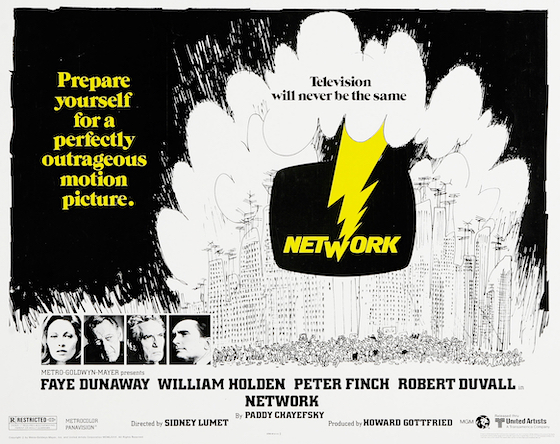
    no predictor of the future — not even Orwell — has ever been as right as Chayefsky was when he wrote Network.

    So wrote Aaron Sorkin, who has cited Network’s screenwriter Paddy Chayefsky as a major inspiration on his own writing; he even cited the man when accepting his Oscar for The Social Network; and Sorkin’s TV series The Newsroom feels like it could’ve been called Network: The Series.

    Well, maybe not. The first half-hour or so of Network feels like The Newsroom (which was a series very much aimed at being realistic, to the extent that it was set in the recent past and mostly used real news stories for its plots), whereas Network spirals off into its own level of satirical craziness, far beyond what Sorkin’s series attempted.

    But whereas The Newsroom looked to the recent past and real events, Network is as indicative of the future as Sorkin said in that opening quote. The film may be 44 years old, but I’m pretty sure you could Chayefsky’s this screenplay, change only a couple of minor specific words, and film it as being set today. It forecasts the future of TV news as angry men ranting as if they were prophets (this was 20 years before Fox News launched), as well as commentating on the place of terrorism in driving TV ratings.

    It’s cynical and ultimately bleak, but, worst of all, it’s entirely accurate.

    5 out of 5

    Network placed 21st on my list of The 26 Best Films I Saw For the First Time in 2018.

    Ran
    (1985)

    2018 #203
    Akira Kurosawa | 161 mins | Blu-ray | 1.85:1 | Japan & France / Japanese | 12 / R

    Ran

    Akira Kurosawa returns to Shakespeare (after Throne of Blood quite closely adapted Macbeth and The Bad Sleep Well may or may not have been based on Hamlet) for an adaptation of King Lear, relocated to feudal Japan. At the time, it was speculated to be his final film. It wasn’t — he made three more — but this was his last large-scale work.

    The title translates roughly as “chaos”, “pandemonium”, or “turmoil” — I guess they didn’t bother retitling it for the West because the original is a nice, simple word we can understand. But the original meaning is clearly apt, because the film depicts the mayhem that ensues when a warlord abdicates and tries to divide his kingdom between his three sons.

    It’s testament to Kurosawa’s greatness that he can make a movie this magnificent and I wouldn’t even put it in his top five. That might be my failing, though — this is a longer and more complex work than, say, Throne of Blood or Sanjuro. I need to revisit all of Kurosawa’s movies, but none more so than this.

    5 out of 5

    Ran was viewed as part of What Do You Mean You Haven’t Seen…? 2018.

    Prevenge
    (2016)

    2018 #208
    Alice Lowe | 88 mins | TV (HD) | 2.35:1 | UK / English | 15

    Prevenge

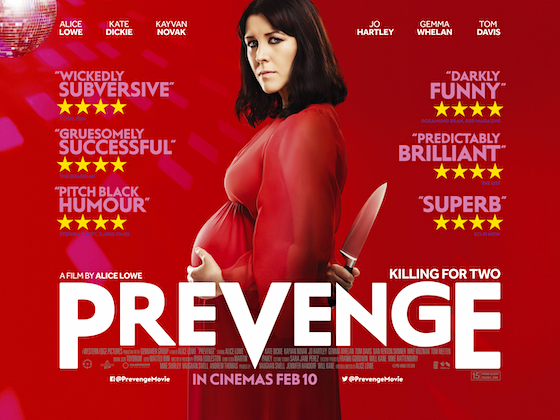
    Seven-months-pregnant Ruth (played by Alice Lowe, who also writes and directs) believes she can hear the voice of her unborn baby, and it’s telling her to kill people. Why is a mystery… unless you read the Wikipedia entry, which just tells you upfront. (Don’t read the Wikipedia entry.)

    The behind-the-scenes story of Prevenge is impressive: it was made while Lowe herself was pregnant; she wrote it in just four days, and shot it in just 11. Speed is no indicator of quality, either positively nor negatively, but Prevenge is very good. The premise is obviously absurd, but it leans into that by being darkly funny. As a horror movie, it’s not scary, more kind of creepy, although not even quite that — it’s not playing on those kind of thrills.

    Perhaps this means it fails to satisfy “horror fans”, thus explaining its fairly low score on IMDb, which I think is unwarranted. But it’s also not what people have started to call “elevated horror” (i.e. horror that is acceptable as a Quality Movie too), because it’s too transgressive for that. Perhaps it is best taken as an exceptionally black comedy.

    4 out of 5

    Bridget Jones’s Baby
    (2016)

    2018 #209
    Sharon Maguire | 123 mins | digital (HD) | 2.39:1 | UK, USA, France & China / English | 15 / R

    Bridget Jones's Baby

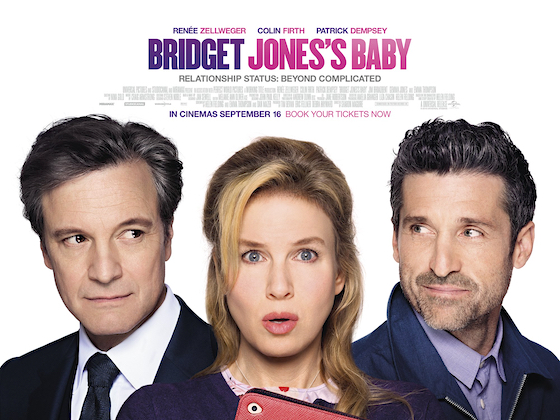
    I first and last watched the original Bridget Jones’s Diary and its sequel, The Edge of Reason, many years ago (probably close to when they were originally released, in 2001 and 2004 respectively; certainly well before this blog existed). I didn’t dislike them, but all I can really remember about them is broad-sweep stuff, including barely anything from the second one. So I didn’t come to this belated third movie as an all-read-up fan; but, just like the first two, I didn’t dislike it… and, 100 weeks later, can barely remember any details about it. (I read the detailed plot description on Wikipedia and some of it came back to me.)

    The storyline is mostly pretty obvious — it’s a recycle of the previous films’ love triangle thing, now with the added complexity of a pregnancy — which means the over-two-hours running time feels somewhat excessive (I continue to believe all comedies should be about 90 minutes). In spite of that, it’s often pretty funny. Some of the riffs on modern media and whatnot are a bit tired (“those young people, just posting photos of their food on Instagram!”), but other gags land well enough.

    In the earlier movies, Renée Zellweger attracted praise for her ability to inhabit a British lass. It feels like she’s forgotten how to do the accent in the 12 year gap; or maybe it’s just thanks to the work she’s obviously had done on her face… At least she’s helped by a supporting cast so stuffed with quality performers from UK comedies that some literally just appear in the back of shot (presumably there were deleted scenes).

    Reasonably successful at what it sets out to do, then; enough so that there’s been talk of a fourth one.

    3 out of 5