After last month was all centennial, because I reached 2015’s #100, this month is millennial, because I made it to 1,000 Films in a Decade Eight Years and Eight Months.
More on that soon, as well as all this:


 #103 Space Station 76 (2014)
#104 The Thing (2011)
#105 Shallow Grave (1994)
#106 Sherlock Holmes (1922), aka Moriarty
#107 Life of Pi (2012)
#108 Contagion (2011)
#109 Justice League: The New Frontier (2008)
#110 Interstellar (2014)
#111 End of Watch (2012)
 #112 The Story of Film: An Odyssey (2011)
#113 Inherent Vice (2014)
#114 The Theory of Everything (2014)
#115 Monsters: Dark Continent (2014)
#116 Shivers (1975)
#117 Stranger by the Lake (2013), aka L’inconnu du lac
#118 Seeking a Friend for the End of the World (2012)

- As you may have noticed, this month I reached my 1,000th film. More about that here.
- Before that, there was a countdown — with pictures! Thrilling stuff. It’s archived here.
- As #1000 was 15-hour documentary The Story of Film, it took over a few extra slots in my schedule. If I’d been watching regular-length films instead, August’s tally would be four or five films larger.
- No WDYMYHS films this month — just The Story of Film adding more ideas for future iterations!

In October 2014 I commented that, at best, “one of 2015’s last films will be #1000”. Hahahaha, how times have changed! “One of 2015’s last films”? Oh no, dear sir (“dear sir” in this instance being “me 11 months ago”) — there are still four months of 2015 to go!
In fairness to past-me, the three previous occasions on which I’d reached a #112 (2007, 2010, 2014) were all in November. It just continues 2015’s extraordinary run, though: this month, it passed 2013 to become my fourth most successful year, even with four months still to go. #118 is further than I’ve ever reached by the end of October, never mind August.
As for this August in itself, a tally of 16 makes it the 15th month in a row to reach double figures. It easily passes the August average (previously 10.57, now 11.25) and is just above 2015’s rolling average (currently at 14.75). It’s the third month this year to reach 16, and the fifth ever, which makes it part of a five-way tie for my third highest-tallying month ever. It’s also the 10th month in a row to best the same period a year ago, when August 2014 totalled 15. That may be the end of that though: September will have to be my second highest-totalling month ever to beat its 2014 counterpart. Of course, if I can keep up my current pace — and without a schedule-hogging behemoth like The Story of Film to stand in the way — that’s not an impossible expectation.
Last August, I pointed out how inaccurate August was for predicting the final tally… but then used those inaccurate predictions to spot a new pattern and offer a revised prediction. Which, naturally, I completely obliterated: having predicted a final total of 115-120, I reached 136. Nonetheless, there’s no fun in offering no predictions — and I’ve been remarkably consistent with my viewing this year, actually — so here we go regardless.
To be honest, whatever I forecast is good news. Four more months of my ten-film-minimum goal has 2015 becoming my best-ever year before the end of October, and a final tally of at least 158. If my rolling average of 14.75 holds I’ll make it even further, to #177, and if I can continue my year-on-year monthly increase (with, as mentioned, September being the greatest challenge) then I’ll pass #178. I’ve been forecasting a finish in the 170s ever since February, so, to be honest, I’ll be a bit disappointed if I don’t make that. And all of these numbers are slight increases on their counterparts from last month, so perhaps #180+ isn’t out of the question…
 The 3rd Monthly Arbitrary Awards
 Favourite Film of the Month
It’s a toughie this month — lots of films I really enjoyed, including five I gave full marks to. Five! (If you were going to look to see which, know that I haven’t posted reviews for four of them yet.) But the one that most surprised me, and created the strongest emotional connection to boot, was Seeking a Friend for the End of the World.
Least Favourite Film of the Month
Conversely, not many poor films this month. That said, there were a couple I found to be below par, but none felt like they squandered their potential quite as much as Justice League: The New Frontier.
Space-Set CGI That Looked Most Like Models (Pleasingly)
Space Station 76.
Space-Set Models That Looked Most Like Reality (Pleasingly)
Interstellar.
The Audience Award for Most-Viewed New Post of the Month
It always helps give hits a boost if someone else promotes a post. In August, thanks to a tweet by the film’s producers, the most-viewed post was Space Station 76.

Ben-Hur (1925) A Silent Film Review @ Movies Silently
For her 200th silent film review, Fritzi has penned a “mammoth” about the first feature-length adaptation of Lew Wallace’s novel, including a comparison to the more-famed 1959 adaptation. “Mammoth” is the word: by my quick count it clocks in at over 12,000 words! I confess I haven’t even read all of it yet, but I think we can trust it to be worth every syllable.
The highest ranked feature length narrative film on Letterboxd for each year 2014-1920
An interesting way of looking at film history, shared by Letterboxd’s own Twitter courtesy of someone on Reddit who since deleted their name. The gallery can still be viewed here, though.
The Last Unicorn (1982) Review @ Cinema Parrot Disco
This month’s lesson is “don’t judge a film by its cover”, because The Last Unicorn looks like some dated, cheesy, little-girl-y crap, but table9mutant’s review makes it sound awesome, and there are lots of other pretty pictures to cement the point.
My Top 7 James Bond Opening Title Sequences @ Film Grimoire
Who doesn’t love a Bond title sequence? Here, Anna explains her top seven picks (in honour of 007, of course), and while I can’t say I agree with all of them (Quantum of Solace? No thanks) it’s still a good read.
My Top Ten Drew Struzan Movie Art Pieces @ Cinema Parrot Disco
What movie fan doesn’t love the work of Drew Struzan (even if you don’t know his name), the renowned poster artist who created enduring imagery for a host of ’80s and ’90s films, and whose style tends to influence at least one poster for every major movie still, even as they’ve moved on to nought but photo montage. Here, table9mutant takes on the tough job of selecting favourites from Struzan’s extensive oeuvre.
Peculiar opening credit text @ Dial M For Movies
Rhett Bartlett mounts a collection of opening-credit oddities, things “the film maker feels they must tell the audience” right at the start. My personal favourite is the first, from The Old Dark House: “We explain this to settle all disputes in advance…”
The Serpent and the Rainbow @ Vinnieh
The sad news of the death of horror auteur Wes Craven reached us yesterday, but this is an incidental tribute. A carry-over from last month, this write-up by Vinnie meant Craven’s true story-inspired tale of voodoo in Haiti really piqued my interest. It seems it was recently released on a poor UK Blu-ray, though a Shout Factory release is expected in the US early in 2016, which will no doubt be excellent.
Shaun the Sheep Movie (2015) A Silent Film Review @ Movies Silently
The Wallace & Gromit spin-off’s spin-off movie opened to much acclaim here way back in February, but finally made it across the pond at the start of August. Here, Fritzi offers her typically irreverent take on why it really is a true silent movie. No, really.
Straight Outta Compton (2015) [Review] @ movieblort
It’s not an area of music I know much (read: anything) about, nor especially care for, but movieblort has me sold on why this biopic about the rise and fall of hip-hop group N.W.A. will be worth a look.
The Western Godfather @ True West
Bending the “articles from the past month” rule, but this interview — of Kurt Russell by Henry Cabot Beck — was too interesting not to share. In it, Russell reveals for the first time some of the truth behind the filming of Tombstone. The piece is nearly nine years old now, so I’m sure aficionados are well aware of its contents; but if you’ve not come across it before, it’s rather fascinating.


This is the last archive review summary. My dedicated effort to re-post all my old reviews began in July 2014, and 14 months later they’re finished. (After the reviews: what comes after the reviews.)

With all the reviews up, it’s now on to the rest of my unposted posts. More details in the first. (The one with the mop.)
 Films I Hadn’t Heard of Before Watching The Story of Film
But Now Really Want to See
Mark Cousins’ documentary features somewhere north of 500 films. Kudos to anyone who’s seen all of them (especially if it was before the documentary came along and automatically became a checklist for some people). For us mere mortals, however, it’s a mix of ones we’ve seen, ones we want to see, ones we’re merely aware of, and a whole load of stuff we’ve never even heard of. The series also has a propensity to make you really want to see the films it features — not just ones you already knew you wanted to get round to it, but out-of-the-blue discoveries. So in tribute to the latter, I present this month’s highly personal (when isn’t it?) top five.
- Napoleon (1927)
 A cheat, because I have heard of Abel Gance’s 5½-hour biopic about the diminutive French general, but I’ve kind of ignored it because it’s hard for normal folk to see: Kevin Brownlow’s acclaimed restoration has never been released on any home format, only screening at festivals and the like (with two intermissions — one for dinner!), apparently due to some dubious copyright claim by Francis Ford Coppola. Shame.
 Cairo Station (1958)
Cousins has a tendency to label films “the first great [insert name of place] film”, and I believe this was his pick for Africa; certainly for Egypt. Patrick Heenan in The International Dictionary of Films and Filmmakers may seem to disagree, but he does concur that it has “visual brilliance”.- Black Girl (1966)
 Another thing Cousins has a tendency to do is give away the ending of films he covers. I suppose the only way to examine a work’s full meaning or worth is to discuss it in its entirety, and any truly great film is going to withstand having its plot revealed. Indeed, it may only have been Cousins’ full explanation of Black Girl that made it so intriguing.
 The Emperor’s Naked Army Marches On (1987)
And the same could be said of this Japanese documentary, which follows a former soldier as he attempts to find out the truth about what happened to some of his comrades during World War 2, and unearths some very, very dark secrets. Sounds to me like a film about a kind of paranoia being vindicated. Hyenas (1992)
Three of these films are from Africa, which possibly says as much about Western awareness of African cinema as it does about the inherent quality of that continent’s output. This Senegalese comedy-drama explores consumerism in a way that apparently “brings human folly and cynicism into sharp focus”.
…and there are so many, many more. Whatever you think of the documentary as a whole (and opinions are certainly mixed), as a showcase for great cinema it may be unparalleled.

After three months where the new-style titles of these progress reports actually signified something, the parade of meaningless monthly update adjectives begins…
And I’ll probably watch some films and write about them, too.

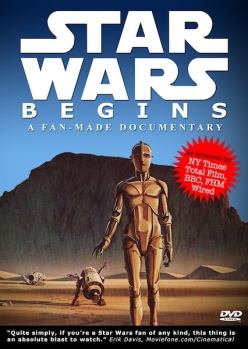 This year, I finally got round to watching the Star Wars Blu-rays I bought back whenever they came out, so I thought what better time to also finally watch Jamie Benning’s trilogy of “filmumentaries”. What’s a filmumentary, you ask? Well, here’s the opening text of the film itself:
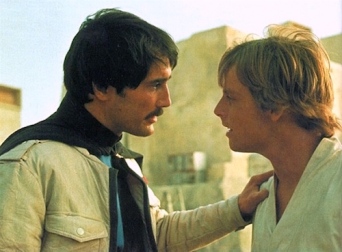 (i.e. before we even meet Luke in the finished film), the sequences were removed en masse due to execs’ fears they made the movie feel like “American Graffiti in space”. And for once, an exec was right! They give the movie a completely different tone; more grounded and less mythic. Thank goodness they were done away with, to be honest.
 Star Wars Begins may not be the first port of call for anyone looking for an overview of the making of Star Wars, but it’s a goldmine of behind-the-scenes titbits and occasional candid revelations for anyone with a strong enough interest.
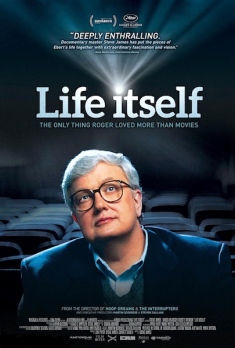 Roger Ebert was an influential, respected, beloved critic for decades, and one with an interesting life: he began in old-school newspaper journalism, defined TV movie criticism, and eventually spearheaded the profession’s move online. So it merits recounting in this documentary by the director of
 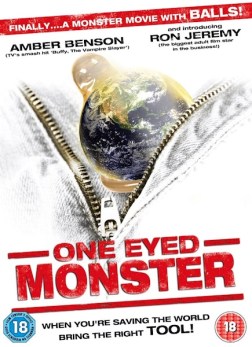 Sometimes, I swear off consciously watching any more likely-to-be-bad movies. And sometimes, I just feel like attempting something like One-Eyed Monster. And this is why: it’s actually pretty fun.
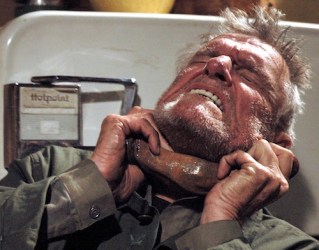 hide it behind an age barrier in the euphemistically-titled “adult” section of their website. Anyone looking for those kind of kicks is going to be disappointed, although there’s still plenty of vulgar and crude dialogue to justify its 18 certificate. In actuality, it’s mostly above using “we said a rude word!” as a ‘joke’, which is one positive it has over many more mainstream ‘comedies’.
 This informative documentary uses interviews with all the key players to tell the story of how a small indie comic, created incidentally and published almost on a whim, became a true cultural phenomenon.
 As for this documentary, it nonetheless finds an almost emotional conclusion with Eastman and Laird today talking about the chain of chance and coincidence that brought them together three decades ago to accidentally create something that transformed their lives, and which continues to endure in all kinds of media (no one liked
  2015 Academy Awards
 I started the week by reviewing
 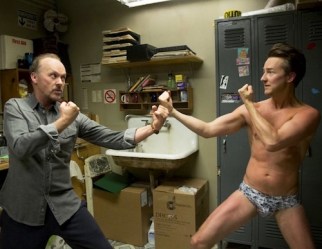 In part this is thanks to Keaton, who gives quite an immersive performance as the numbed, self-deluded star. Some people were very much behind him for the Best Actor gong, but I think it found its rightful home: Eddie Redmayne’s performance
 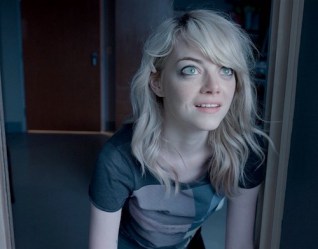 Famously, almost the entire film takes place in a single take. A fake one, of course. Well, I say of course —
 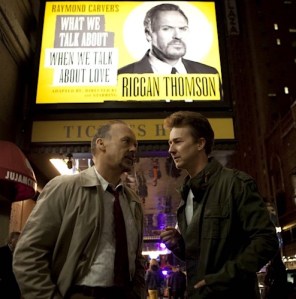 Birdman is an entertaining film, both funny enough to keep the spirits up and dramatic enough to feel there’s some depth there. It’s also a mightily impressive feat of technical moviemaking, but then I do love a long single take (even a fake one). Is it the Best Picture of 2014? Well, from the nominees, it’s not the funniest (
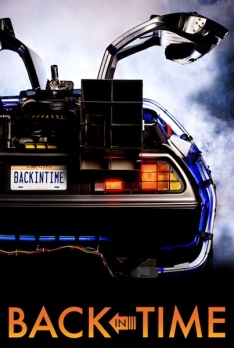 If you’re on social media (or even just frequent pop culture news sites), you can’t fail to have noticed that Wednesday just passed was “Back to the Future Day”, the exact date Marty McFly and Doc Brown (and Marty’s girlfriend) travel to in
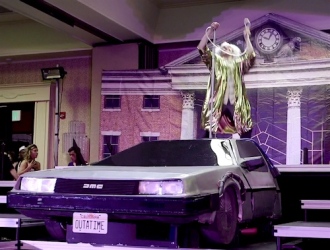
 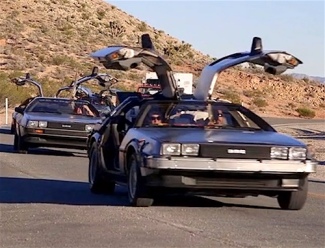 Then it moves on to the fans — what the film means to them, and what that’s led them to do. Those we meet include a couple who travel around the US in a DeLorean fundraising for Michael J. Fox’s charity; the team of aficionados who restored Universal Studios’ decrepit display DeLorean; the family of collectors who own the only film-used DeLorean that will ever be in private ownership; a guy who built a mini-golf course in his yard with a Back to the Future-themed hole that he’s used for charity events with some of the films’ cast; the people who have had some success developing a real-life hoverboard; and the guy who set up a fansite that was so good it became the official site, and is now regularly employed as an official consultant about the films, not least for the rafts of merchandise that comes out these days. We also get a look at the Secret Cinema event in London from a year or two ago that made headlines for all the wrong reasons. Naturally, none of that gets mentioned here (in fairness, because it has nothing to do with Back to the Future itself).
 That glaring error aside, Back in Time is not a bad film, provided you know what to expect. It’s a shade too long and the storytelling is occasionally a little jumbled, but there are some nice interviews and stories — hearing Michael J. Fox recount the Royal Premiere where he was sat next to Princess Diana pretty much makes the whole exercise worthwhile.
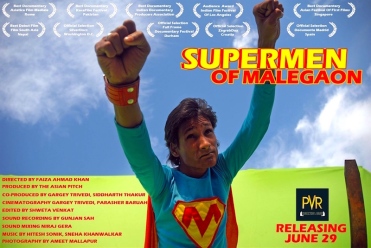 In the impoverished Indian town of Malegaon, everyone either works on the power looms and is paid a pittance, or is unemployed and so has even less; apart from the women, who are squirrelled away out of sight at home. The population is 75% Muslim, the remainder Hindu, and that leads to tension. Outside of work, there is nothing to do for entertainment… except go to the movies. And Malegaon loves the movies.
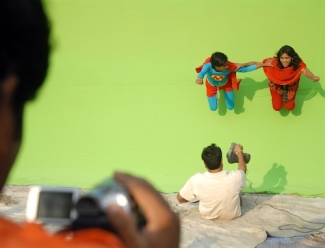 Supermen of Malegaon is the making-of story of Nasir’s most ambitious production to date. Having seen the use of greenscreen in one of those behind-the-scenes outtakes, he realised he could use the process to make a special effects movie — specifically, to make Superman fly to Malegaon. This documentary follows the trials and tribulations of Nasir and his band of hobby filmmakers through their film’s writing, planning, and its sometimes troubled shoot, until it’s completed. In the process, we meet some genuine characters, learn something of the unique lifestyle of Malegaon itself, and maybe even learn something about ourselves too.
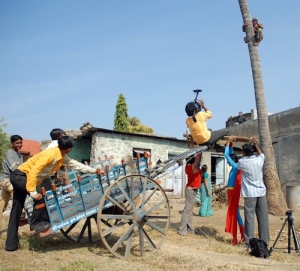 Even if it doesn’t, the situation in ‘Mollywood’ is an interesting one. This is a cottage industry: everyone involved has day jobs, funding the movies out of their own pocket, or by borrowing cash, or with favours, or by selling in-film adverts to local businesses — yes, that’s right, product placement, not that anyone involved would know that term. Women from Malegaon cannot appear in or work on the films due to local attitudes, so actresses are hired from nearby villages; the screenplay is written and shooting schedule arranged so that the actress only needs to be involved for the minimum number of days, to save money. Bicycles and motorbikes are used to create tracking shots; the director gets a piggyback for a high angle, or is raised and lowered on the arm of a cart to create a crane shot. The ingenuity and inventiveness of these literally-self-taught moviemakers is astonishing.
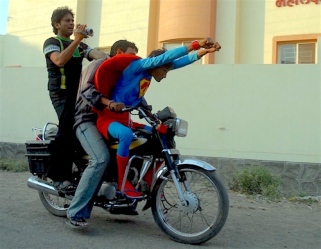 which he turns down because he could make four whole films for that much money. Even that little is scraped together. Mollywood moviemaking isn’t a money spinner, it’s a hobby. Still, one of the writers wants to make it as a proper writer; wants to go to Bombay and do it as his career. This has been his aim for 15 years, he says, and Bombay is no closer.
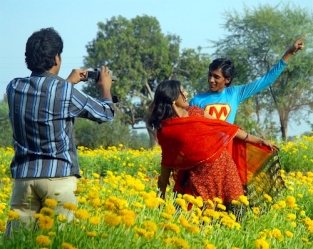 It’s an incredible, one-of-a-kind film; more powerful and life-affirming than it perhaps has any right to be. But then the filmmakers of Malegaon don’t really care about such things. They make movies because they want to, whether they ‘should’ or not; they make them better than you might expect; and it enriches their lives. Their story may do the same for you. In my opinion, it’s an essential film; a true must-see.
 For generations of people, the work of Gerry Anderson and AP Films / Century 21 are an irrevocable part of their childhood. For my part, I grew up during their big ’90s revival — the era of Anthea Turner’s make of Tracy Island on Blue Peter (though as no one in my family is particularly crafty (as it were) I had a Proper One), etc — so memories of
  And finally (for this summary, at least), Anderson’s ever-present desire for realism led him to invent an aid system to aid his puppeteers. In order to control the puppets, the operators were positioned above the sets, afforded only a bird’s eye view — a hard position from which to make them perform well, considering they couldn’t see what they were actually doing as it appeared on camera. So Anderson devised a way for a video feed to be run from the film camera up to a TV monitor for the puppeteers. The process also meant the director and cinematographer could see exactly what the camera saw, including the ability to rewind and review footage, meaning that, if there was a worry about a mistake, it was no longer necessary to either wait for the film to be developed or shoot another take just in case. This system, if you aren’t familiar with it, is known as video assist and is an industry standard on film shoots (digital filming removes the need for it, of course, but that’s a very recent development).
 For instance: for all his achievements in the field, Anderson never actually wanted to work with puppets — as a burgeoning TV production company desperate for work in the ’50s, AP Films were approached by a writer to produce a puppet series, so they did; that led to her commissioning another; they thought they could do better work by themselves, so they did; and it continued to spiral from there. Anderson constantly pushed for the puppets to be better — for their movements to be more realistic, for their lip-sync to be genuinely synced (again, innovating new technology to achieve this), for their proportions to be like humans rather than caricatures. But these advances eventually went too far, at times angering the puppeteers. They didn’t approve of the realistically-scaled puppet heads featured from Captain Scarlet onwards — they were harder to puppeteer convincingly, divorced of the margin of error that bigger heads allowed (and, arguably, needed); and they removed the puppet-ness of the puppets.
 I’ve wound up telling interesting stories of Anderson & co rather than really reviewing Filmed in Supermarionation per se, but that’s because it’s an interesting story and the film tells it so very well (better than me. Oops.) For anyone who grew up with these programmes, this is an insightful, informative tribute to their ingenuity and quality. If you’re not familiar with them — if you don’t feel that ineffable childhood affection — I guess it doesn’t offer quite as much. Nonetheless, it remains the story of an incredible, pioneering endeavour that helped put the quality of British filmmaking on the map. It’s fun to think that, at a time when British culture was conquering the world and breaking new ground, through the likes of the grand extravagance of the James Bond movies and the subversive brilliance of the Beatles, standing toe to toe with them were a bunch of people in a tin shed with some puppets.






























 Jon Schnepp’s widely-reviewed documentary about the batshit-crazy Nic Cage-starring Tim Burton-directed Superman movie that almost happened in 1999. If all you’ve seen are the photos of a stoned-looking Cage in a light-up abomination of a Superman costume that leaked onto the internet a few years ago, prepare to be amazed. Indeed, those infamous photos and footage are an aberration that this documentary explains.
 There seem to be an increasing number of “making-of documentaries about films that didn’t get made”, to the extent where it’s almost turning into a sub-genre. The highly-praised
  100Films.co.uk