Ron Clements & John Musker | 97 mins | Blu-ray | 1.78:1 | USA / English | U / G
 With box office and critical acclaim sliding, Disney abandoned traditional 2D animation for their significant films in the early ’00s, switching to the computer-animated 3D that was doing so well for Pixar and Dreamworks. I don’t know if it helped the box office any, but it didn’t help with critics — it wasn’t the medium that was at fault, it was the storytelling. Notoriously, as soon as Pixar’s John Lasseter was put in creative control of the whole of Disney he instituted a return to 2D animation. The Princess and the Frog was the much-heralded first film after this change.
The resultant film is very enjoyable — not because it’s in 2D animation, but because it’s just good. Set in ’20s New Orleans, it retells the well-known story of a prince turned into a frog who needs a kiss to return to human form in typical Disney style: expanded, funny, contemporary, with songs. And that largely works. OK, so no individual song is exceptionally memorable, but their jazzy style suits the film down to the ground. There are no bad or dull ones (not something that can be said of even some classic Disneys, in my opinion) and all are certainly entertaining while they last. Though it’s a little brief, the villain once again gets the pick of the bunch. I’m biased that way though; others may well disagree.
It’s also a bit long. A tighter opening and, especially, journey through the bayou in the middle would’ve improved it. While I enjoyed sequences like the crocodiles, guiding fireflies or frog-hunters when considered in isolation,  there are just too many stacked up back to back for my taste. The voodoo material seems like it might be a bit on the scary side for kids, though maybe that’s just because too many children’s films are sanitised these days — I agree with the regular argument that it was better when films and TV aimed at kids included a bit of a scare or sadness, rather than more modern entertainment’s attempts to keep them wrapped in cotton wool for too long. The death of a character in the climax also sits in the same vein.
One thing that can’t be faulted, however, is the animation. It’s beautifully done: backgrounds are gorgeously painted, character animation is fast and fluid. There are some stunning individual shots, like when the fireflies become involved in creating glorious lighting and patterns in the bayou, for instance. There’s a nice use of different styles when appropriate too: a blocky art deco rendering of Tiana’s dream restaurant during Almost There; a splash of something hallucinogenically psychedelic during Dr Facilier’s number.
Many other Disney films have stand-out sequences; things to latch an appreciation on to. The best often have several of these stacked up, in some cases non-stop from start to finish. The Princess and the Frog is missing anything like that (though some may grab on to Almost There or, like me, Facilier’s song), but what it has instead is a very consistent tone, 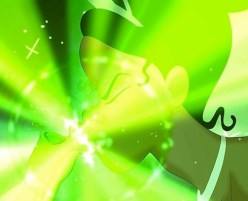 where the musical numbers fit effortlessly into the flow of the story rather than stopping the film for a showpiece. This is also true of the very best entries in the canon — Beauty and the Beast, for arguably the greatest example — and while I don’t claim Princess and the Frog reaches such giddy heights, I think its consistency makes it entertaining as a whole film, rather than as an up-and-down collection of varying-quality set pieces.
Not Disney’s best film, then, but one I believe has come in for an unfair amount of flack. I really liked it.

The Princess and the Frog is on Disney Cinemagic today at 5:40pm and tomorrow at 4pm.
 Disney’s 50th animated feature is Rapunzel in all but name, for no particularly good reason. It seemed to be met with universal praise on its release last year, critics hailing it as a return to Disney’s previous quality after a run of lacklustre releases, in particular the underwhelming return to 2D in the year before’s
  a number I usually particularly enjoy. It has one, I suppose, but it’s one of the weakest examples I’ve ever heard.
 No one had high hopes for
  It still cost $250m, mind, and the fact that’s what’s considered a cutback arguably shows.
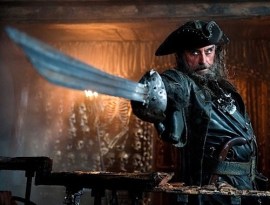
 The love story between a missionary and a mermaid barely factors. Word was this pair would be the series’ new Orlando Bloom and Keira Knightley, but whereas Elizabeth Swann and Will Turner were central to the plot of all the previous films (appearing before even Captain Jack in the first, if I recall), these two turn up late in the day and never have a chance to go anywhere. There’s also a surfeit of villains, meaning they either barely appear (the Spanish) or aren’t given close to enough screen time (Ian McShane’s Blackbeard). Every introduction is rushed, every subplot underdeveloped, every ending unsatisfactory. There’s too much, even for a movie that still runs over two hours.
 (much-heralded work like
 Bolt is the 48th film in Disney’s animated canon (whatever the official name for that is these days), from their CG-only era that filled most of the ’00s. It’s a period already remembered as When Disney Lost Its Way, after the second (or is it third? I forget) ‘golden era’ of the early ’90s; the time that produced flops like
 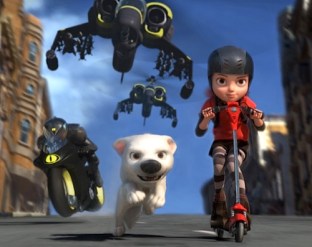 Also noteworthy are the action sequences. Far from being perfunctory attempts at liveliness, these are properly exciting, making full use of 3D CGI to create exciting and dynamic sequences. I’m not just talking about the couple we get from the TV-series-within-the-film either, but also the ‘real world’ ones as Bolt, Mittens and Rhino jump onto trains, out of moving vans, escape from a pound, etc. Of course, the TV-series-within-the-film is completely implausible — like you could film a TV show with massive action sequences in such a way that you only ever do a single take, never mind achieve all those effects on a TV budget. But then this is a film where a talking dog, cat and hamster work together to travel from New York to Hollywood entirely of their own volition — I think it’s safe to say no one’s aiming for documentary levels of realism.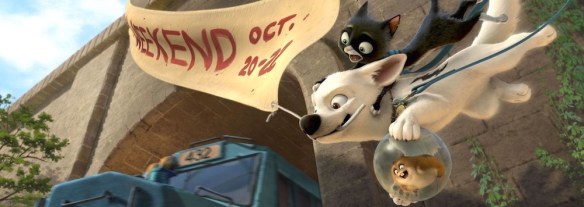
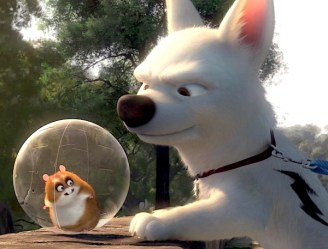 It would be easy to dismiss Bolt as part of Disney’s CG folly, especially as it stars Miley Cyrus and is immediately followed by their return to 2D animation, but I think that would be a mistake. It’s a fast-paced and fun adventure, with accurately-captured animals meaning it’s especially likely to appeal to dog lovers. Disney’s next golden era just might begin here.
 Much was written about Toy Story 3 when it was released this summer, so I’m not sure how much I have to add, but here we go. It’s no surprise either — that’s what happens when a preeminent and popular studio releases a sequel to a beloved and acclaimed film franchise 11 years after the last instalment. High expectations abounded. For once, they weren’t necessarily unrealistic: if anyone could pull off such a feat, it’s Pixar.
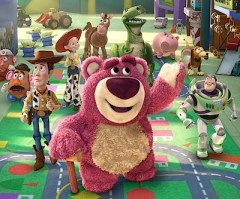 who’ve grown up with these films and these characters and, in a way, are letting them go along with Andy; and for adults, who may have left childish things behind but can hopefully still appreciate the thematic sentiment.
 even more emotional seeing them go through what they do here. Similarly, it pays to be aware of events and jokes in the preceding films. You don’t need to know intricate plot details, but there are plenty of pleasing references to catchphrases and moments.
 Do you need me to tell you how great Beauty and the Beast is? I imagine not. If you’ve seen it, you’ll know. If you haven’t, you really should, and then you’ll know.
 It’s not a bad song — not at all — but it’s a notch below the others. (There are a few more changes to the film than just adding the song, listed
 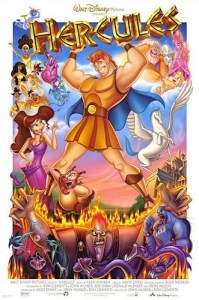 Hercules is the first post-me Disney; the point where, for whatever reason, I stopped watching their output. But, of course, Disneys — good Disneys, at any rate — are suited to every age group.
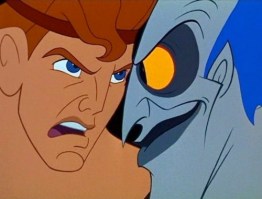 animal-sidekicks-with-no-dialogue-who-can-still-convey-their-thoughts-and-feelings-perfectly (I feel this tradition needs a snappier name.) Love interest Meg, meanwhile, starts out intensely irritating but is gradually redeemed. Good work, I say to the film’s
 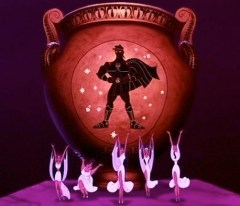 (though even mentioning it in the same sentence as that number makes it sound better than it is). Only love interest Meg gets a passable song, not that I could remember it within hours of watching the film. Maybe it’s not all that bad really, but when early-’90s Disneys could produce several unforgettable tunes per film, it feels like a weak album from a band you usually enjoy.
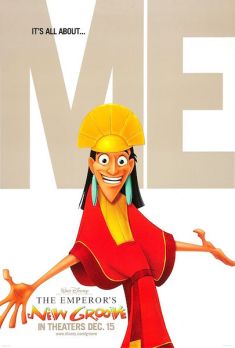 Disney’s 40th (canonical) animated film had a very troubled production, which, from what I can tell, turned it from a derivative riff on The Prince and the Pauper into this load of tosh.
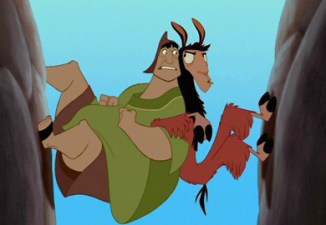 In reality it doesn’t suffer from that too much, and again looked nice and crisp in HD. I usually ignore image quality when it comes to reviews — not that I don’t care, but in these reviews I’m aiming to look at the content of the film rather than the particular copy I watched — but HD has such noticeable benefits for animation (when done well).
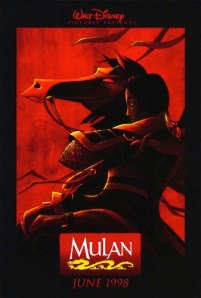 I realised recently that I haven’t seen an animated Disney film produced after
  (It’s this kind of thing that has caused uproar for
  100Films.co.uk