2010 #75
Kirk Jones | 94 mins | TV | U / PG
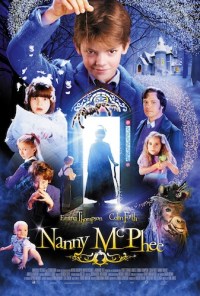 Nanny McPhee is brilliant. But to expand more directly on that sentence would be a conclusion, and so, before that, I present a collection of thoughts on bits I liked. Let’s call it “a review”.
The story is excellent, the kind of tale that imparts moral messages and lessons without you even realising — perfect for kids… and adults. It rattles along throughout, but particularly during the opening, which is surely what you want in a kids’ film: keep their attention! Emma Thompson’s screenplay is a delight. She’s in full control of her material, which allows her to set up rules — such as Nanny McPhee having five lessons to teach — and than almost immediately subvert them — though to tell you how would be to ruin a bit of the fun. Humour is rife, and without even realising it you develop a care for the characters.
Some have criticised the film for having no likeable characters. I can only think they were actually watching something else. Are the children a menace? Certainly — but they clearly have hearts of gold; they’ve been neglected and to an extent rejected; they’re acting up for attention. And they care about each other and always band together — they aren’t squabbling brats, they’re a gang, sticking together to defend themselves from a world that they perceive is out to get them. This is never clearer than when Angela Lansbury’s evil, rich Aunt turns up to take one away, and they do all they can to prevent it. And there are consequences; consequences, in fact, that matter to them, rather than more of the semi-neglectful treatment they’re used to.
 And even if you can’t engage with the troublesome children, surely Nanny McPhee coming in to sort them out is therefore a blessing? To say the children are a naughty, nasty rabble but McPhee is an oppressive, overbearing force is just trying to have your cake and eat it — pick a side, or pick both, oh awkward viewer. (And by “viewer” here I mean “one IMDb commenter I read”.)
The cast are exemplary without exception. Thompson, ‘uglying up’ as the titular nanny, conveys all the quiet authority necessary at the start, then softens without ever losing the sense she’s doing what is required; as she states, she never chooses sides. Colin Firth is naturally suited to being a dashing-if-bumbling type, so is also spotless as the father who does care but has forgotten how to show it, with the weight of the realities of the world — otherwise known as Money — pressing down on him. They’re ably supported by an array of British talent: Celia Imrie as a pink, fluffy, and dastardly potential fiancee; Imelda Staunton as a beleaguered ex-army chef; David Jacobi and Patrick Barlow as a Tweedledum and Tweedledee-style pair of comedy funeral attendants; Angela Lansbury as the controlling old Aunt.
 Not to mention Kelly MacDonald, the film’s sweetness and light — not like Anne Hathaway’s caricatured (deliberately) White Queen in Tim Burton’s Alice, thank goodness, but more Cinderella-y; the downtrodden but caring servant, who, when given the chance, — well, I wouldn’t want to spoil the ending. You’ll probably guess it anyway. But that’s not the point; indeed, that’s Good Writing, isn’t it — everything must be seeded well in advance, otherwise it’s all a deus ex machina. But this isn’t a time to rant about storytelling mores.
Even the rabble of children are pitch-perfect. With a cast this young that’s as much the skill of Thompson’s writing and Kirk Jones’ directing as any genuine acting talent, but that doesn’t make it any less of an achievement. As the eldest and therefore leader, Thomas Sangster is superb as ever. He gets the most to do, evolving from the awkwardest of the awkward to reveal intelligence and caring. The scene where he visits his father at work to ask him not to marry is almost heartbreaking, the boy’s well-meaning confused for his previous obstructiveness; and what he does next just shows how much he’s evolved. If there’s one flaw among the children it’s that Eliza Bennett (seen to good effect in Inkheart, shot just a year later) isn’t given much to do as the eldest girl; that’s an inevitable side effect when you’ve got a mass of kids fighting for time alongside several significant adult parts.
 Around the large cast, there’s plenty more to see. The primary-coloured sets and costumes work marvellously, a delightful mash between reality (the actual buildings, sets, costumes, etc, all look real and period-accurate) and fantasy (the bright colours!) It could’ve been garish; instead, it’s vibrant. The effects are properly magical. They don’t overwhelm, always serving the story rather than themselves, which is probably what makes them all the more effective. The climax is another highlight — though what occurs at the wedding (oh, it’s obvious there’ll be one) I shan’t spoil by describing.
I confess, Nanny McPhee took me by surprise. It always sounded a bit too much like Mary Poppins; it might be passably nice but little more, I thought. But no. It’s its own film, with its own magical nanny. It’s a children’s film, but with plenty for adults to engage with — assuming it doesn’t simply unleash your inner child, which it may well do. It’s exciting, funny, touching, magical and charming, quite often all at once. It’s brilliant.
Nanny McPhee placed 5th on my list of The Ten Best Films I Saw For the First Time in 2010, which can be read in full here.

 A Good Woman adapts Oscar Wilde’s 1892 play Lady Windermere’s Fan, switching the setting to the Amalfi Coast in 1930. If one didn’t know better, one would believe that’s when and where it was always set.
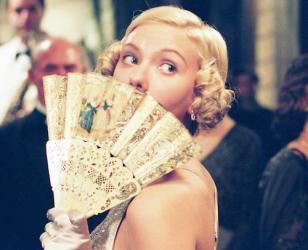 So it seems one’s perception of the film lies in what it is compared to. Compared to Wilde’s original, it may indeed be a pale imitation, relocated to an inappropriate country and period, with lacklustre performances and incongruous Wilde-penned lines crowbarred in. Taken without the context of the work it’s adapted from, however, I thought it was a flawed but, more importantly, highly amusing film.
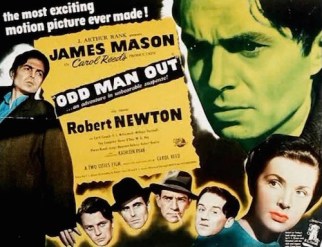 It may be a bit of a cop out to begin a review by pointing you to another, but I must recommend
 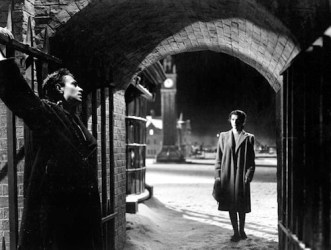 Robert Newton’s Lukey. (You’ll also note Newton’s performance is criticised in Colin’s piece so, in aid of not sounding like I’m too easily influenced, I’d like to point out I didn’t make the connection between his comments and my own notes on Newton until afterwards.) Shell and Lukey have a bit of a point in the end, but I didn’t enjoy getting through them in comparison to the rest of the film.
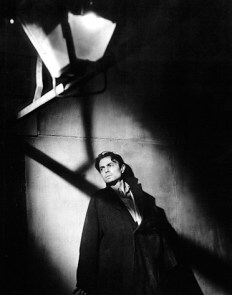 The score, by William Alwyn, is really nice, particularly in certain places — for example when it begins to snow and Johnny wanders the streets, or at its most effective during the haunting climax, as Kathleen hauls a near-dead Johnny through the falling snow towards the safety of the shipyard as the police finally close in.
 In the world of
  which could well have gone down a more modern-styled route.
 It’ll be interesting to see how it fits into the film when I finally get round to watching The Ultimate Cut — I already have some reservations waiting to be expressed in my review.
 If you’ve ever seen Akira Kurosawa’s classic
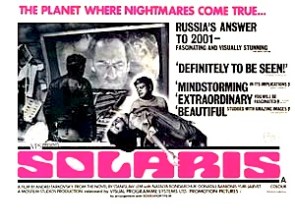 I don’t know if you’re aware of a website, dear reader, called
 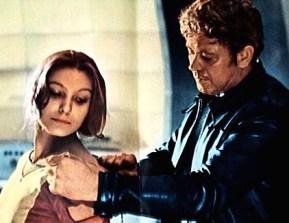 The fact that it’s the better part of three hours long, in Russian, and notoriously slow-paced, adds a different kind of weight. It’s quite easy to see how Soderbergh felt able to
 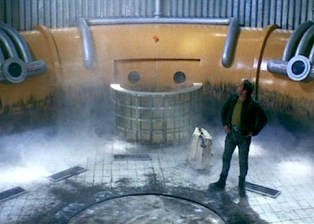 how it might work, or any other scientifically-bent notions that other films or filmmakers might choose to focus on. It also doesn’t centre on the romantic side of events, the route Soderbergh chose to pursue; or, if it does, it does so coldly and clinically and doesn’t feel romantic in the slightest. Alternatively, that could be the point.
 Robin Williams surprised everyone when he started appearing in films as a serious actor in the early ’00s. Previously — and, if you’ve seen him on chat show in recent years, still — an outrageous funnyman, Williams turned in excellent straight performances in the likes of
  Still, Robin Williams is excellent, once again displaying his recently-found gift for serious acting. His character’s homosexuality is nicely handled too. It seems to have overshadowed the rest of the film for some viewers, but I’m confused as to why. Perhaps precisely because it doesn’t come out screaming “look, look, he’s gay! Isn’t that edgy!”, leaving it as just a fact of his character — and one that’s only important because his personal life is part of the story — means some viewers are so shocked by their own realisation of his sexual orientation that it gets in the way for them.
 this “but it happened!” logic seems to allow the filmmakers to get away with not offering adequate explanation. Then again (not sure how many “other hand”s I’m on now), it’s just like real-life: sometimes things can’t be explained in a rational way. Some people will have a problem with that from their films; sometimes I’m among them, but in this instance I think there are enough explanations and ambiguities. My problem was more that getting to them seemed to provide nothing, particularly as, being twist-free, they only confirmed one of the options that had been supposed an hour earlier.
 Do you need me to tell you how great Beauty and the Beast is? I imagine not. If you’ve seen it, you’ll know. If you haven’t, you really should, and then you’ll know.
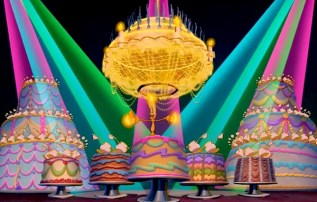 It’s not a bad song — not at all — but it’s a notch below the others. (There are a few more changes to the film than just adding the song, listed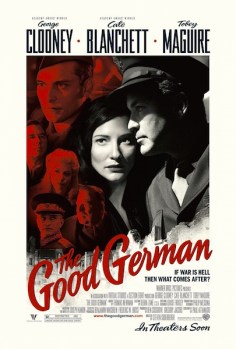
 the visual, audio, acting and plot styles of the era, why not ensure the dialogue and action follow suit? There’s no need for the violence, sex and swearing in this particular tale; at least, no need for it in a way that couldn’t be conveyed as effectively using Production Code-friendly methods. I’m uncertain if I like the film less for failing on this measure, but it does add to its inherent oddness.
 But how much do we get to know them, really? It’s easy to see why critics said “not very well”, because they’re too busy uncovering the conspiracies and revealing their part to actually show us much about themselves. But then why should that be a problem? It’s a noir thriller, not a character drama. Surely it’s about the mysteries and, if you like, the themes, rather than letting us understand the people caught up in them?
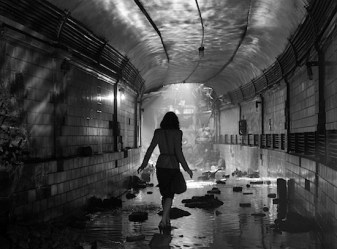 production intentions rather than being invented to slot into them — provides meat on the stylistic bones.
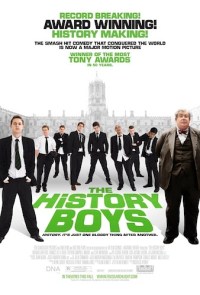 Nicholas Hytner’s film of Alan Bennett’s play, about a group of unlikely ’80s grammar school boys trying out for Oxbridge, sticks with a Bennett screenplay and the original West End/Broadway cast. However, it succeeds in not being very stagey — to the credit of Bennett’s screen adaptation and Hytner’s direction, I should imagine.
 I said it wasn’t stagey. That’s not entirely true: the exception is the finale, which in both execution and dialogue feels incredibly Theatrical. But it’s a nice idea — much better than a half dozen “what happened next” screens of text — and I wouldn’t want to lose something so effective. It also succinctly reminds us that, though this story is over, lives go on.
 100Films.co.uk